Had to share a few Wessex snowy pictures with you………
Stonehenge Tour Guide
HisTOURies UK – The Best Tours in bad weather
Posted in Avebury, christmas, Salisbury Cathedral, sightseeing tours, stone circle, Stonehenge, wessex, Wiltshire on December 20, 2010| 1 Comment »
Had to share a few Wessex snowy pictures with you………
Stonehenge Tour Guide
HisTOURies UK – The Best Tours in bad weather
Posted in Avebury, british history, Celts, Druids, History, prehistory, stone circle, Stonehenge, wessex, Wiltshire on December 9, 2010| 2 Comments »
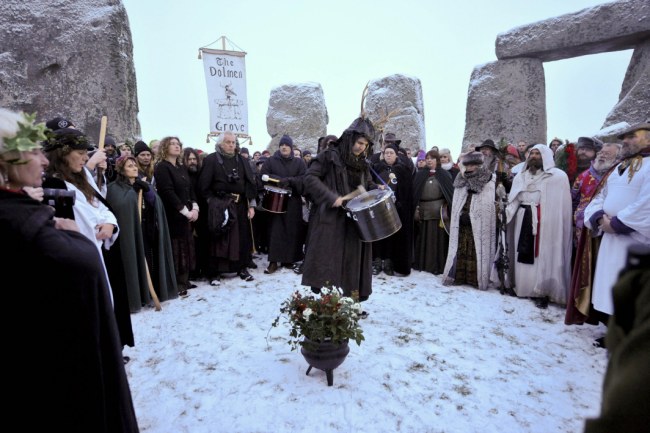
Pagans at Stonehenge
No one knows what day Jesus Christ was born on. From the biblical description, most historians believe that his birth probably occurred in September, approximately six months after Passover
One thing they agree on is that it is very unlikely that Jesus was born in December, since the bible records shepherds tending their sheep in the fields on that night. This is quite unlikely to have happened during a cold Judean winter. So why do we celebrate Christ’s birthday as Christmas, on December the 25th?
The answer lies in the pagan origins of Christmas. In ancient Babylon, the feast of the Son of Isis (Goddess of Nature) was celebrated on December 25. Raucous partying, gluttonous eating and drinking, and gift-giving were traditions of this feast.
In Rome, the Winter Solstice was celebrated many years before the birth of Christ. The Romans called their winter holiday Saturnalia, honoring Saturn, the God of Agriculture. In January, they observed the Kalends of January, which represented the triumph of life over death. This whole season was called Dies Natalis Invicti Solis, the Birthday of the Unconquered Sun. The festival season was marked by much merrymaking. It is in ancient Rome that the tradition of the Mummers was born. The Mummers were groups of costumed singers and dancers who traveled from house to house entertaining their neighbors. From this, the Christmas tradition of caroling was born.
In northern Europe, many other traditions that we now consider part of Christian worship were begun long before the participants had ever heard of Christ. The pagans of northern Europe celebrated the their own winter solstice, known as Yule. Yule was symbolic of the pagan Sun God, Mithras, being born, and was observed on the shortest day of the year. As the Sun God grew and matured, the days became longer and warmer. It was customary to light a candle to encourage Mithras, and the sun, to reappear next year.
Huge Yule logs were burned in honor of the sun. The word Yule itself means “wheel,” the wheel being a pagan symbol for the sun. Mistletoe was considered a sacred plant, and the custom of kissing under the mistletoe began as a fertility ritual. Hollyberries were thought to be a food of the gods.
The tree is the one symbol that unites almost all the northern European winter solstices. Live evergreen trees were often brought into homes during the harsh winters as a reminder to inhabitants that soon their crops would grow again. Evergreen boughs were sometimes carried as totems of good luck and were often present at weddings, representing fertility. The Druids used the tree as a religious symbol, holding their sacred ceremonies while surrounding and worshipping huge trees.
In 350, Pope Julius I declared that Christ’s birth would be celebrated on December 25. There is little doubt that he was trying to make it as painless as possible for pagan Romans (who remained a majority at that time) to convert to Christianity. The new religion went down a bit easier, knowing that their feasts would not be taken away from them.Christmas (Christ-Mass) as we know it today, most historians agree, began in Germany, though Catholics and Lutherans still disagree about which church celebrated it first. The earliest record of an evergreen being decorated in a Christian celebration was in 1521 in the Alsace region of Germany. A prominent Lutheran minister of the day cried blasphemy: “Better that they should look to the true tree of life, Christ.”The controversy
External links:
http://ukpagan.com/
Stonehenge Stone Circle
http://www.paganfed.org/
http://www.pagan-network.org/site/
Stonehenge Tour Guide
HisTOURies UK – The Best Tours of Stonehenge
Posted in Avebury, battles, Celts, History, neolithic, prehistory, Romans, sightseeing, stone circle, Stonehenge, wessex, Wiltshire on November 13, 2010| 1 Comment »
Rich in History is something Wiltshire is famous for, particularly Salisbury Plain, the large area of chalk downland within Wiltshire.
Salisbury Plain is steeped in history, both ancient and modern and can justifiably claim to be the cradle of English civilisation. In prehistory, tribes from Europe migrated north and settled on Salisbury Plain.
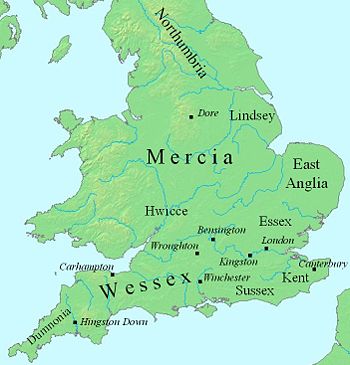
Wessex Map
Remains of defence earthworks, burial and ceremonial grounds are scattered throughout Wiltshire. Many of these sites have public access. The most world renown is Stonehenge, a World Heritage Site, north of Salisbury and close to Amesbury. Also a World Heritage Site are the Avebury stone circles (both an outer and a smaller inner circle), not so famous as Stonehenge but equally impressive. Avebury is a few miles west of Marlborough in the north of Wiltshire.
From Overton Hill, near Avebury, the famous Ridgeway begins. This is thought to be Britain’s oldest road, used by prehistoric man, herdsmen and soldiers, and follows the northern escarpment of Salisbury Plain north-eastwards through the ancient landscapes of Wiltshire into the Chiltern Hills of Berkshire. The Ridgeway is 85miles (139km) in length, accessible to the public, and has National Trail status.
As well as the more ‘modern’ Roman Roads that criss-cross the Wiltshire countryside, Roman and Norman settlements continue very much in evidence, often developed on earlier Iron Age hill fort sites such as Old Sarum. This location was the original Salisbury site, a hill fort occupied by the Romans then latterly by Normans following the Norman Conquest of 1066. The exposed nature of the Old Sarum site and disagreements between the clergy and the military led to the building of the new Salisbury cathedral in 1220 A.D. to the south. The townspeople soon followed and medieval Salisbury grew to the city it is today. Old Sarum, rich in history, with its ruined fortifications is open to the public throughout the year.
The Middle Ages were a time of great prosperity for Wiltshire with sheep grazing the chalk downlands and the handwoven woollen cloth in great demand. Many famous buildings, villages and even towns were built from the proceeds. The Industrial Revolution changed everything as mechanical production took over and the weaving industry moved north into the West Riding of Yorkshire.
In more recent times much of Wiltshires rich prosperity has come from the many military establishments scattered over the Plain. Wiltshire airfields and army garrisons have trained and deployed troops and aircraft across the world on both fighting and peace-keeping operations and played pivotal roles in the great military campaigns of both World War I and II.
Each week I will be blogging on a specific area of Wilsthire and talking about its rich history.
Stonehenge Tour Guide
HisTOURies UK – The Best Tours in Wessex
Posted in Avebury, sightseeing, stone circle, Stonehenge, UK Tourism updates, wessex, Wiltshire on November 13, 2010| Leave a Comment »
If you are visiting Wiltshire as an independant tourist, you will find a
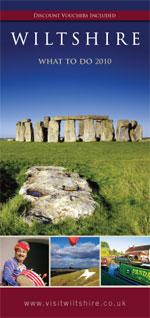
great selection of tourist information links from various online sources I have put together for you.
Wiltshire, England – a county of contrasts and diversity. Steeped in history, yet alive to the present – Wiltshire repays the time you spend here with interest.
Explore lively market towns, rolling open scenery, stately homes and magnificent gardens plus experiencing the bustling city culture of Swindon and Salisbury.
VisitWiltshire offers a great range of quality assured accommodation with splendid Wiltshire hotels, friendly B&Bs, self-catering cottages, camping and caravan sites.
There are attractions galore – including iconic Stonehenge, and Avebury. Famous sites such Salisbury Cathedral, Longleat,Wiltshire’s White Horses, Stourhead, and the Kennet & Avon Canal combine with lesser known gems such as Lacock and STEAM.
Here you’ll find interestingly different local shops, quaint tea rooms, gastro pubs, restaurants and events throughout the year.
Whether it’s indoors or outdoors, in front of a roaring fire, walking or cycling, Wiltshire is waiting to welcome you, . . again, and again.
A Taste of Wiltshire
Britain’s finest 13th century cathedral with the tallest spire in Britain. Discover nearly 800 years of history, including the world’s…
Originally erected 4,500 years ago, Avebury is the largest stone circle in the world. many of the stones were re-erected…
Around Wiltshire
Wiltshire is a beautiful county of great diversity. With a population of nearly 430,000 and with much of the county designated as an Area of Outstanding Natural Beauty, Wiltshire is the perfect destination for a relaxing break at any time of the year. Visit the World Heritage Sites of Stonehenge and Avebury, admire the beauty of our gardens and country houses; walk the White Horse Trail to see our eight white horses carved into the hillsides; meander along the towpath of the Kennet and Avon Canal or take a leisurely wander through our market towns and pick up the real flavour of country life.

To help you plan your break to this special part of England, find out more about the towns and villages of Wiltshire, the bustling town of Swindon and the cathedral city of Salisbury.
When you’ve decided where you want to go, you can plan your journey using our Travel page and if you need more information you will find a list of Tourist Information Centres with contact details.
A relatively sparsely populated county with grassy uplands and vast rolling plains, sleepy picture box villages like Castle Combe near Chippenham which has one several awards for being the prettiest village in England and Bradford-on Avon in the west close to Bath.
Wiltshire is the gateway to the West Country but also meets Cotswold country in the northern part of the county. It is also surrounded by the extremely picturesque counties of Somerset, Dorset, Hampshire, Gloucestershire, Oxfordshire and Berkshire. Much of the county is agricultural and a very large part is devoted to pasture land.
Salisbury, the county town, is particularly beautiful and dominated by its Cathedral and spire. This is the tallest in England and rises majestically over the plain.
Wiltshire is also the home of some historic attractions – Splendid Longleat in Warminster, Bowood, the magnificent family home of the Marquis and Marchioness of Lansdowne, Corsham Court, Wilton House, Stourhead and there can be no monument in Britain more steeped in legend and mystery than Stonehenge.
External Links
The official tourism website for Wiltshire
http://www.visitwiltshire.co.uk
Wiltshire Tourist Guide
http://www.wiltshiretouristguide.com/
Enjoy Wiltshire!
Stonehenge Tour Guide
HisTOURies UK – The Best Tours of Wiltshire
Posted in Avebury, british history, Celts, England facts, History, Romans, stone circle, Stonehenge, wessex, Wiltshire on October 28, 2010| Leave a Comment »
On October 31st, we celebrate Halloween,thought to be the one night of the year when ghosts, witches, and fairies are especially active.
Most people think of Halloween today as simply a day when children dress up in costumes and go from home to home to “trick or treat” and 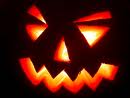 collect enough candy to make any parent cringe. Halloween was much more significant in ancient times, however. October 31st was a very important day to the ancient Celts of Ireland, Scotland and Great Britain. No kidding around in costumes and trick or treat bags; Halloween was much more serious to the non-Christian Cults a thousand years ago.
Halloween remains a popular day in the U.S., Canada, Puerto Rico, Ireland, the UK, Australia, and New Zealand. Children get to dress up in their favorite costumes and ring doorbells throughout their neighborhood to collect as much candy as possible. In the United States’ Halloween is the second most popular holiday (after Christmas) for decorating and reaps a huge financial bounty of retail selling of frightening costumes to children and adults alike, decorations and candy. But for eons, the history of Halloween encompased ancient beliefs about the world – both living and dead.
Understanding the history of Halloween can perhaps help you decide what to let your children take part in, and what to keep your children away from. Also, knowing the origin of Halloween and its history can also help Christians view the adult, youth, and child activities associated with Halloween celebrations in the light of Christ’s truth.
What Is The History of Halloween?
Halloween originated among the Irish Celts, Scots and Anglo-Saxons in Britain long before the Christian era. Originally called Samhain, it was a time when they believed the division between the worlds of the living and the dead became very thin and when ghosts and spirits were free to wander as they wished. The name “Halloween” is a shorter form for the Gaelic name All-hallow-evening. Pope Boniface IV instituted All Saints’ Day in the 7th century as a time to honor saints and martyrs, replacing the pagan festival of the dead. In 834, Gregory III moved All Saint’s Day to Nov. 1, thus making Oct. 31 All Hallows’ Eve (‘hallow’ means ‘saint’).
On the night of Samhain, it was believed spirits of the restless dead and mischievous spirits would freely roam about with humans and during this one night spirits were able to make contact with the physical world as their magic was at its height. The Celts believed that by allowing the dead to have access to the world on this one evening, they would be satisfied to return to the land of the dead. The Celtic people would put out food offerings to appease the spirits who might inflict suffering and violence on them and Celtic priests would offer sacrifices, animal and human, to the gods for the purpose of chasing away the evil, frightening spirits. They built fires where they gave sacrifices to the Celtic deities to ensure protection from the dead spirits. Samhain was also a time when it was customary for the pagans to use the occult practice of divination to determine the weather for the coming year, the crop expectations, and even who in the community would marry whom and in what order.
When Rome took over their land, the Samhain was integrated with two other Roman festivals: Feralia and a festival to honor Pomona, the Roman goddess of fruit and trees. By the time Christianity come on the scene, Halloween had already taken root from the pagan beliefs and was integrated into Christian practices. As the Europeans found their way to the New World, they brought with them their traditions which soon evolved to fit their new country.
Many customs still observed today come from these ancient beliefs. For example, the elaborately carved jack-o-lantern is said to have been named after the Irish story of a greedy, hard-drinking gambling man, Stingy Jack, who tricked the Devil into climbing a tree and trapped him there by carving a crude cross into the trunk of the tree. In revenge for being stuck in the tree, the Devil cursed Jack and made him walk the earth at night for eternity. The jack-o-lantern of today is carved with a scary face to keep Jack and other spirits from entering their homes.
A problem for the Celtic people was… if the souls of dead loved ones could return that night, so could anything else, human or not, nice or not-so-nice. So, to protect themselves on such an occasion, these superstitious people would masquerade as one of the demonic hoard, wearing masks and other disguises and blackening the face with soot to hopefully blend in unnoticed among them. This is the source of modern day Halloween costumes portraying devils, imps, ogres, and other demonic creatures.
Should Christians Celebrate Halloween?
For Christians, the origins, history, and current practices of Halloween has its root in Satan, the author of deception.
He was a murderer from the beginning, not holding to the truth, for there is no truth in him. When he lies, he speaks his native language, for he is a liar and the father of lies. [John 8:44]
While some might say that Halloween is now only a fun children’s holiday, it should be noted how much the modern day American practices and modern day witchcraft have in common with the ancient beliefs of the Celtic people. Contrary to some beliefs, the historic Samhain was not a time for witches and the worship Satan. Samhain was the end of the crop season and the official beginning of autumn. The ancient Celts celebrated a successful crop season on Samhain, giving thanks for the bounty of the harvested crops. The satanic celebrations now observed on Halloween is a more recent invention of more contemporary Satanists who have focused more on this season as a time when the dead can easily communicate with the living therefore making divinations and sacrifices more attainable. Modern day Halloween has thus become a mixture of ancient beliefs, occult practices and a highly commercialized children’s holiday.
While some people consider celebrating Halloween to be a sin, others simply feel that Halloween quite simply shouldn’t be a holiday at all! A few Southern states have been known to ban trick-or-treating on Halloween, especially when it happens to fall on a Sunday. Halloween parties are renamed “fall festivals” and children replaced scary costumes with costumes of Bible figures, historical figures, or no costume at all.
Considering that Satan is the father of lies, it can be understood how many are confused and deceived about this holiday. Like Christmas and Easter, both Christian celebrations, the true origins of Halloween, a non-Christian celebration, are eons old and some of the true meanings of the traditions of these celebrations have been distorted over time. In recent times, Christmas appears to be more about presents, parades and feasts than about celebrating the birth of Jesus Christ. Traditions surrounding Halloween have followed the same fate. All too often we think of Halloween merely as a time of dressing up in costumes in going trick or treating around the neighborhood. In antiquity, the traditions of Halloween were of enormous significance throughout Scotland, Ireland and Britain.
Have a spooky one! I will be at Avebury Stone Circle for the Samhain gathering.
Stonehenge Tour Guide
HisTOURies UK – The Best Tours in Wessex
Posted in Archaeologists, archaeology, Avebury, battles, british history, Celts, crop circles, History, King Arthur, Salisbury Cathedral, sightseeing, stone circle, Stonehenge, wessex, Wiltshire, world heritage on October 25, 2010| 1 Comment »
When one thinks of Wiltshire the images which spring most readily to mind are the spacious rolling downland of Salisbury Plain and associations with pre-history which are at their most stunning at Avebury and Stonehenge. Whilst Wiltshire is more complex than this a journey northwards to the Marlborough Downs will reinforce this picture of sweeping chalk downland and ancient times. Here, there is also the handiwork of more recent history, in the famous Wiltshire White Horses. There are now eight of them and they have their own newly opened long distance path, ‘The White Horse Trail’.
The Vale of Pewsey and Savenake Forest, part of the Kennet District, offer a complimentary landscape which also has many enjoyable walking opportunities; and the Kennet and Avon canal, joining the two rivers, provides delightful waterside rambling through peaceful rural countryside.
South of Salisbury Plain the Wylye and Nadder river valleys offer lovely walks, once again through a quiet rural landscape a million miles away from the hustle of industrial Swindon in the north of the county.
Guide Books:
| Guide Books: [For further information] | |
 |
100 Walks in Wiltshire by: Various contributors. An omnibus of local walks covering the whole of Wiltshire. The book is ideal for family outings and as a valuable reference book for residents and visitors to the region. There is a wide choice of routes with perhaps two thirds spread over the northern part of the county. Salisbury Plain is not well represented, but this is largely due to Ministry of Defense activities, which do not co-exist well with peaceful country walking. However all the best parts of Wiltshire are covered. The walks vary in length from 2 to 12 miles, the majority being in the 4/6 mile range. Sketch maps and route descriptions are on facing pages. |
 |
Walks in Mysterious Wiltshire by: Laurence Main. Discover Wiltshire’s secret places. Wiltshire has long been associated with both historic and prehistoric sites, most notably Avebury and Stonehenge. See and experience these for yourself and contemplate their significance as temples, secular monuments or ancient observatories. Many more mysteries await walkers in this historic area; white horses carved on Wiltshire’s hillsides, sites of ancient battles, neolithic burial sites and a network of ley lines, those ancient trackways often associated with spirit pathways. There are stories of Wiltshire’s witches, folklore traditions, Arthurian legends and even UFO’s! These are just some of the prospects offered in 27 well planned routes of interest to all the family. |
 |
Waterside walks in Wiltshire by: Nick Channer. The 20 circular routes in this book are all between 2 and 9 miles in length. Each walk instruction also includes details on how to get to the start by car, where to park, and what food and drink are available locally. For greater clarity, the route descriptions are divided into numbered paragraphs, which correspond with the numbers on the accompanying sketch maps. There are also seperate sections about places of interest to visit nearby. From walks near Heytesbury, once the home of war poet Siegfried Sassoon, the Vale of Pewsey and the National Trust village of Laycock to Salisbury’s watermeadows and Devizes’ flight of 29 canal locks, this book provides the walker with many interesting and exhilarating hours in the open air. |
 |
50 Walks in Wiltshire by: David Hancock. 50 themed walks of between 2 and 10 miles, each with fascinating background reading, clear, easy-to-follow route descriptions and detailed sketch maps. Locations include: Chute Standen; Great Bedwyn; Savernake’s Royal Forest; Wootton Rivers; Ramsbury; Clarendon; Amesbury; Avon Valley from Downton; Pepperbox Hill; Vale of Pewsey and Oare Hill; Salisbury; Lydiard Park; Great Wishford; Till and Wylye Valleys; Fyfield Down; Old Sarum; Avebury; Barbury Castle; Cricklade; Dinton and the Nadder Valley; Ansty; Wardour Castle; Ebble Valley; Bowood Park; Bremhill; Heytesbury; Devizes; East Knoyle; Fonthill; Tollard Royal; Roundway Hill; Holt; Castle Combe; Lacock; Bowden Park; Malmsbury; Sherston; Box Hill; Stourhead; White Sheet Hill; Westbury White Horse; Corsham; Longleat Estate; Bradford-on-Avon; Frome Valley; Bath. |
 |
Ten Walks in West Wiltshire by: RA West Wilts Group. All are circular and they vary in length from 4 to 11 miles. Locations are as follows: Bradford on Avon – Little Ashley (6km); South Wraxall – Stonar School – Little Chalfield (8km); Warminster – Arn Hill – Upton Scudamore (9km); Holt – Staverton – Whaddon – Broughton Gifford – Great Chalford (10km); Brown’s Folly – Farleigh Wick – Monkton Farleigh (10km); Westbury – Upton Scudamore – Old Dilton (11km); Steeple Ashton – West Ashton – Yarnbrook (13km); Bradford on Avon – Westwood – Freshford – Farleigh Hungerford – Avoncliff (13km); Bratton – Bratton Castle – Edington (14km); Nockatt Coppice – Bidcombe Wood – Cold Kitchen Hill – Brimsdown Hill ( 18km). |
 |
Walking in West Wiltshire Book 2 by: RA West Wilts Group. The ten walks in this booklet have been devised and written by ten members of the group. Accordingly the descriptive narratives show a variety of different styles. For ease of use a detailed sketch map is shown opposite each walk description with the route clearly highlighted. Paragraph numbers in the description are shown on the maps at relevant points. This guide allows you to share in the discoveries of experienced ramblers with good local knowledge. The walk starting locations are as follows: North Bradley (8.5km); Semington (8km); Trowbridge (9km); Bradford on Avon (9km); Steeple Ashton (6.5km); Thoulstone (9km); Kingston Deverill (11.5km); Shearwater (10km); Melksham (10.5km); Heytesbury (7km). |
 |
Walking in West Wiltshire Book 3 by: RA West Wilts Group. In this book members of the RA West Wilts Group have devised a further ten interesting and enjoyable walks using their local knowledge and experience. For ease of use a detailed sketch map is shown opposite each walk description. Also highlighted are paths providing links with adjacent walks described in the book. The walk starting locations are: Edington (8.5km); Heytesbury (11km); Melksham (10.5km); Horningsham (10.5km); Bradford on Avon (11.5km); Codford (15km); Warminster (12km); Westbury (8km); Broughton Gifford (9.5km); Sutton Veny (15.5km). |
 |
Somerset, Wiltshire and the Mendips Walks by: Brian Conduit. 28 routes colour coded for difficulty, varying from extended strolls to exhilarating hikes.The guide introduces you to the area and highlights the most scenic walks. OS Explorer mapping is included. Locations include: Nunney Combe; Nettlebridge and Harridge Wood; Devizes and Caen Hill Locks; Ilminster and Herne Hill; Langport and Muchelney Abbey; Salisbury and Old Sarum; Lacock and Bowden Park; Fovant Down; Old and New Wardour Castles; Avebury; West Kennett and Silbury Hill; Glastonbury; Lambourne Downs; Uffington Monuments and Vale of the White Horse; Ham Hill, Montacute and Norton Sub Hamdon; Cadbury Castle and the Corton Ridge; Hinton Charterhouse and Wellow; Bradford-on-Avon, Pewsey Downs; Stonehenge; Barbury Castle and Ogbourne St Andrew; Wells, Ebbor Gorge and Wookey Hole; Savernake Forest. |
 |
Literary Strolls in Wiltshire ans Somerset by: Gordon Ottewell. 40 attractive strolls throughout Wiltshire and Somerset, each with a strong literary association. In Wiltshire, you follow in the footsteps of such remarkable people as multi-talented William Morris, architectural commentator Nikolaus Pevsner, war poet Siegfried Sassoon and Celia Fiennes, the pioneer travel writer. The walk locations include: Swindon and South Cotswold Area – Inglesham; Marston Meysey; Oaksey; Broad Town; Hodson; Barbury Castle; Bishopstone. Chippenham and Devizes Area – Kington St Michael; Kington Langley; Bremhill; Bromham; Broughton Gifford; Poulshot; Bishops Cannings. Salisbury and Warminster Area – Heytesbury; Steeple Langford; Hindon; Tisbury; Mere; Newton Tony; Pitton. |
 |
Ten Walks Around Devizes by: Graham Hillier and Ron Wiltshire. 10 circular walks created with the intention of starting and finishing at the focal point of Devizes Town – The Market Place. There is much of interest to see on these walks including a visit to the site of the Civil War battle of Roundway Down; a stroll along Quakers Walk, once an elm lined avenue from Roundway Park to Devizes; the remains of Devizes Castle and a medieval deer park enclosure; several stretches along the Devizes canal and the sites of several macabre events desribed in the text. Other locations visited on the walks are Gypsy Patch, Roundway Hill, Hartmoor, Potterne Village, Potterne Woods, Drew’s Pond, Hillworth Park, Sleight and Stert, Consciences Lane, Rowde, Lower Foxhanger’s, and Rangebourne Mill. |
 |
11 Half Day Walks in North East Wiltshire by: North East Wiltshire Group – Ramblers’ Association. All the walks are around five miles in length so that only a morning or afternoon is needed to complete them. The walks are well described and sketch maps are included. The walks have been chosen to show the variety of countryside in the area. The walk locations are: Avebury and the Sanctuary; Berwick Bassett Common and Windmill Hill; Love’s Copse and Love’s Lane; Poulton Downs and the Railway Path; Wexcombe and Grafton Downs; Castle Hill and Stanton Fitzwarren; Hare, Aughton and Inham Downs; Hippenscombe Bottom; The Kennet Valley; The Ridgeway and Hinton Downs; Rivers Key, Ray and Thames. |
 |
20 Walks Around Swindon by: North East Wilts Group – Ramblers’ Association. This booklet describes 20 circular routes from 2 to 7 miles. Locations are: Cotswold Water Park; Highworth, Red Down and Hannington; Cricklade and Cotswold Water Park; Blunsdon, Stanton Fitzwarren and Kingsdown; Lechlade, Buscot and Kelmscot; Bishopstone, The Ridgeway and Ashbury; Liddington Hill and Downs; Chiseldon and The Ridgeway; Upper Upham; Chilton Foliat and Hungerford; Downs and Og Valley; Barbury Castle, Smeathes Ridge and Burderop Down; Manton and Fyfield Downs; Wootton Bassett, Little Park Farm and Wilts and Berks Canal; Clouts Wood and Elcombe; Peatmoor, Shaw and River Ray Parkway; Lydiard Park and Purton; Coate, Day House Lane and Greenhill; Coate Water and Broome Manor; Old Town Railway and West Leaze. |
 |
12 Walks Around Marlborough by: Bert Toomer. The walks in this booklet were devised to take you to the best vantage points in the area and to bring you back to your starting point. Locations are: Circular from Ramsbury; Aldbourne, Ewin’s Hill and Ramsbury; Baydon, Hodd’s Hill and Membury; Great Bedwyn, Wilton and Kennet and Avon Canal; East Croft Coppice; Ramsbury and Littlecote; Piggledene, Stony Valley and Devil’s Den; Marlborough and Mildenhall; Martinsell Hill, Draycot and Gopher Wood; Martinsell Hill, Kennet and Avon Canal and Wootton Rivers; West Woods, Gopher Wood, Knap Hill and Wansdyke; Milk Hill, Wansdyke, Tan Hill and Kennet and Avon Canal; Milk Hill, Wansdyke, Stanton St Bernard and Kennet and Avon Canal. |
 |
Nine Downland Walks by: BertToomer. The collection of walks in this booklet will help you make the most of the fine countryside that lies between Swindon and Marlborough. Clear route instructions and sketch maps are provided. The walk locations are: Barbury Castle, The Ridgeway and Burderop Down; Upper Upham and Snap; Smeathe’s Ridge, the Ogbournes and Four Mile Clump; Chiseldon and Hodson; Rockley, Totterdown and Fyfield Down; Ridgeway Path, Shipley Bottom and Sugar Hill; Burderop Down and Smeathe’s Ridge; Hackpen Hill, Rockley, Totterdown and the Ridgeway; Ogbourne St. George, Whiteshard Bottom and Chase Woods. |
 |
8 Easy Walks Around Salisbury by: South Wilts Ramblers’ Association. This is a set of eight walk cards contained in a plastic wallet. Each card has a brief description of the walk, the starting point and a sketch map on the front and the route directions on the reverse. The walks are between 2 and 5 miles long. The walk locations are: Charlton All Saints and the River Avon; Godshill Enclosure and Millersford Circular; Breamore House and The Mizmaze; Bowerchalke and over Marleycombe Hill; Fovant Badges and Chiselbury Camp; Old and New Wardour Castles; Great Wishford, Grovely Wood and River Wylye; Battlesbury, Middle and Scratchbury Hills. |
 |
10 Short Walks Around Salisbury by: South Wilts Ramblers’ Association This is a set of ten walk cards contained in a plastic wallet. Each card has a brief description of the walk, the starting point and a sketch map on the front and the route directions on the reverse. The walks are between 4 and six miles long. The walk locations are: Salisbury to Old Sarum; Figsbury Ring and Winterbourne; East Grimstead, Bentley Wood, Blackmoor Copse, Farley; Pepperbox Hill and Barford Down; Charlton, Downton and Trafalgar House; Breamore and Whitsbury; Nunton and Odstock; Broad Chalke and The Ox Drove; Dinton, Compton Chamberlayne and Fovant; Great Wishford and Grovely Wood. |
 |
10 Longer Walks Around Salisbury by: South Wilts Ramblers’ Association. This is a set of ten walk cards contained in a plastic wallet. Each card has a brief description of the walk, the starting point and a sketch map on the front and the route directions on the reverse. The walks are between 8 and 13 miles long. The walk locations are: Old Sarum to Stonehenge and Amesbury; Around Downton; Woodfalls; Martin Down, Pentridge and Vernditch Chase; Downlands and Valleys; Swallowcliffe, Ansty and Alvediston; The Inner Chase; Old Wardour, Tisbury and Castle Ditches; Sherrington, Great Ridge Wood and Knook; Salisbury Plain and the Till Valley. |
Needless to say we feel its better to join a local guide to explore the area but if you are visiting the area then the books I have listed above may be of great use, enjoy!
Stonehenge Tour Guide
HisTOURies UK – The Best Tours in Wiltshire
Posted in Avebury, british history, Celts, Glastonbury, History, King Arthur, sightseeing tours, Stonehenge, wessex, Wiltshire on October 12, 2010| Leave a Comment »
Wessex is the ancient kingdom of the West Saxons that defeated its rivals and created England. The counties of Essex, Middlesex and Sussex remain with us to recall the East, Mid and South Saxons that Wessex conquered but when King Edgar of Wessex was crowned as the first King of England in Bath in 973, Wessex, the dominant and most civilised of the Anglo-Saxon states, ceased to be a government entity.

Kingdom of Wessex Map
The area with which Histouries UK is concerned was recognised in the early ninth century when the four West Saxon shires, now Counties, were created. The name of each reflected the name of the town on which the surrounding shire was dependent. They were:
| West Saxon Shire | Shire Town | Present County |
| Dornsaete | Dorchester | Dorset |
| Somersaete | Somerton | Somerset |
| Wiltunscir | Wilton | Wiltshire |
| Hamtunscir | Southampton | Hampshire |
The history of the area goes back much further than this. Its Neolithic inhabitants built a large number of sacred hills, camps, rings, barrows and henges to honour their dead, celebrate the seasons or mark their boundaries. Wessex has an almost unparallelled wealth of archaeological sites including Avebury and Stonehenge. It is a land of myths and legends. Among them are the story of Joseph of Aramathea bringing the Holy Grail to Glastonbury and, perhaps above all the legends, that of King Arthur and the Knights of the Round Table.
Wessex reached its peak in the ninth and tenth centuries and especially in the reign of Alfred the Great, one of the most remarkable men in England’s long history. He was not only a military genius who reformed the army and established the navy. He was also a learned man who greatly influenced the development of the English language and whose laws formed a base for much of the English law we know today.
In 1066, the Normans came to conquer and brought great changes with them. The name of Wessex fell into the background but the area remained important in the flow of English history. The concentration of its heritage with us now, bears witness to this. In more recent times, the work of writers, Thomas Hardy, in particular, has breathed new life into the use of “Wessex”to represent an area and now there are hundreds of companies that have it as part of their name.
Destination Wessex describes it this way:
“Wessex is the land of King Arthur and King Alfred, of Jane Austen and Thomas Hardy, of Bath and Stonehenge. It was the birthplace of England and England’s heritage remains very much part of the Wessex way of life. It is a land of beautiful countryside, historic market towns and ancient villages not far from London, but in every other way very far from the pressure, pace and congestion of the urban world.”
The four counties have a rural culture. Major urban communities such as Bristol, Swindon and Southampton are situated near the perimeter. Elsewhere, there is a feeling of timeliness. What you see has been there for hundreds of years and there it will be hundreds of years from now. The industrial revolution largely passed it by and, while the modern world may have a degree of physical presence, the flow of Wessex life and the priorities of its people stay much as they were.
The area has a common sense of place that is made up of green fields, hedges and woods, of stone, thatch, village churches and historic inns, of architecture and archaeology, of cows and sheep and horses and wildlife, and a serene balance between man and nature. County boundaries do not affect this. Unless there is a sign to tell you, you will not know when you cross, for example, from Somerset into Dorset. But, if you leave Wessex to go towards London, you feel the change. The pressure, the degree of urgency, the congestion begins to evidence itself. The sense of place has changed.
Wessex is a destination that overseas visitors will recognise, much as they recognise the Cotswolds or the Lake District. It is unique, compact and readily accessible. Beneath its common sense of place is a wealth of variety that can offer memorable holidays to a wide range of visitors. Come and stay for a few days and get to know Wessex, the heart of ancient England.
Wessex Life. Rural, peaceful and timeless. The small market towns and villages, the churches and pubs, the local fairs and festivals, the farms and fields and hedgerows. And the people who live there. The annual Bath & West Show, market days in the small towns, race meetings, and village open garden days. They all reflect the Wessex way of life.
Christian Heritage Five cathedrals, twelve abbeys and some of the finest churches in England. Ecclesiastical history is also reflected in Bishop’s palaces, legends and tradition.
Family History Over the centuries, many people have migrated from Wessex, especially to North America. Wessex has excellent Records Offices where comprehensive data is maintained and family history associations keen to help visitors in tracing their ancestors.
Antiques Antique shops and dealers, shows and auctions are features of life in Wessex. Bath, Bradford on Avon, Shepton Mallet and Sherborne are well known antique centres .
Literary Wessex Jane Austen, Thomas Hardy, Anthony Trollope, William Wordsworth, Samuel Coleridge, Evelyn Waugh, T.S.Eliot, John Betjeman, Geoffrey Chaucer, T. E Lawrence and many other outstanding literary figures have close associations with Wessex.
Arts and Crafts The arts are very much in evidence. The Theatre Royal in Bath, the Bournemouth Symphony Orchestra and the choirs of the cathedrals are perhaps the best known but there are also the local theatres, auditoriums, art galleries and craft centres. Music and drama festivals, art exhibitions and book fairs are scheduled every year.
Wessex in History From prehistory to the age of aviation. Special periods of interest are the bronze and iron age settlements, the Roman Wessex, the Saxon kingdom that gave birth to England, the Norman Conquest, Elizabethan Wessex, the Civil War and the Eighteenth century.
Historic Houses of Wessex There are 75 historic houses from which to choose. Some of them medieval, some Tudor and many from the seventeenth and eighteenth centuries. Each reflects the society, culture and history of its time. Also included are some of the charming smaller manor houses.
Architecture The vast collection of ecclesiastical, military, manor house and domestic architecture in Wessex means that the area contains excellent examples of almost every period of architecture in England: Roman, Saxon, Norman, Medieval, Elizabethan, Jacobean, Georgian and Victorian.
Archaeology 40 archaeological sites are in the Wessex inventory including two World Heritage Sites, Stonehenge and Avebury, and the fortress of King Arthur at Cadbury.
Military Heritage This ranges from forts and castles and fortified manor houses to battle sites, regimental history and the outstanding naval, army and air force museums
Veterans Many military personnel from USA, Canada, Australia and elsewhere were based in Wessex during the Second World War. Many left from Wessex harbours on D-Day. The area has many memories for them and much interest for their families.
Download PDF tourist map of the Wessex area
Wessex Tour Guide
HisTOURies UK – The Best Guided Tours in Wiltshire
Posted in Avebury, british history, Celts, Druids, History, Romans, stone circle, Stonehenge, Wiltshire on October 3, 2010| Leave a Comment »
Druidry has been recognised as an official religion in Britain for the first time, thousands of years after its adherents first worshipped in the country.

The Druid Network has been given charitable status by the Charity Commission for England and Wales, the quango that decides what counts as a genuine faith as well as regulating fundraising bodies.
It guarantees the modern group, set up in 2003, valuable tax breaks but also grants the ancient religion equal status to more mainstream denominations. This could mean that Druids, the priestly caste in Celtic societies across Europe, are categorised separately in official surveys of religious believers
Supporters say the Charity Commission’s move could also pave the way for other minority faiths to gain charitable status.
Phil Ryder, Chair of Trustees for The Druid Network, said it had taken four years for the group to be recognised by the regulator. “It was a long and at times frustrating process, exacerbated by the fact that the Charity Commissioners had no understanding of our beliefs and practices, and examined us on every aspect of them. Their final decision document runs to 21 pages, showing the extent to which we were questioned in order to finally get the recognition we have long argued for,” he said.
Emma Restall Orr, founder of The Druid Network, added: “The Charity Commission now has a much greater understanding of Pagan, animist, and polytheist religions, so other groups from these minority religions – provided they meet the financial and public benefit criteria for registration as charities – should find registering a much shorter process than the pioneering one we have been through.”
In its assessment of the Druid Network’s application, the Charity Commission accepts that Druids worship nature, in particular the sun and the earth but also believe in the spirits of places such as mountains and rivers as well as “divine guides” such as Brighid and Bran.
The document lists the “commonality of practice” in Druidry, including its eight major festivals each year; rituals at different phases of the moon; rites of passage and gatherings of bards on sacred hills, known as “gorsedd”.
All charities must now demonstrate their benefit to the public, and Druidry was said to qualify since its followers are keen to conserve Britain’s heritage as well as preserve the natural environment.
The document even addresses the claims made by the Romans about Druids committing human sacrifice, but finds “no evidence of any significant detriment or harm” arising from modern beliefs.
It notes that although there are only 350 members of the Druid Network, a BBC report in 2003 claimed as many as 10,000 people followed the ancient faith across the country.
Membership of the Network costs £10 a year but ritual ceremonies such as that marking the summer solstice at Stonehenge are open to all.
Stonehenge Tour Guide
HisTOURies UK. The Best Tours in Wiltshire
Posted in Avebury, british history, stone circle, Stonehenge, wessex on October 3, 2010| Leave a Comment »
Although Druids are believed to have existed throughout Celtic societies in Europe during the Iron Age, almost all the surviving evidence about them is found in the writings of later Roman authors.

Julius Caesar wrote one of the first, and most detailed, accounts of Druids, explaining that along with the “knights” they were the highest-ranking orders in Gallic societies.
He said they were “engaged in things sacred” but Druids also appeared to function as judges, as they decreed “rewards and punishments” if there were murders or disputes over boundaries or inheritance.
Although they worshipped nature, Caesar claimed that Druids made human sacrifices to appease the gods including burning people to death inside “figures of vast size”, a ritual depicted vividly in the classic horror film, The Wicker Man.
Tacitus claimed the altars of Druids in Anglesey were “drenched with the blood of prisoners” while other Roman authors told how they sacrificed white bulls in groves formed of oak trees.
Pliny described Druids as “magicians” who wore white robes and used golden sickles to cut mistletoe, a sacred plant which they believed had healing powers. This description lives on in the figure of Getafix, the Druid in the Asterix books.
Druidry was suppressed during the Roman occupation but interest in it was revived in the 18th century as the ancient stone circles at Avebury and Stonehenge – which actually pre-date Druids – were examined properly for the first time.
Followers began to hold ceremonies known as “gorsedd”, where bards would gather on hills or sacred mounds, with the first held at Primrose Hill in 1792.
These events continue, particularly at the Eisteddfod celebration of traditional Welsh culture where the Archbishop of Canterbury, Dr Rowan Williams, and the former Chief Constable of North Wales, Richard Brunstrom, have both been inducted as honorary Druids and given Bardic names.
Druids hold festivals eight times a year to mark stages in the solar and lunar cycles. At the summer solstice, Druids gather at Stonehenge to greet the dawn. One of the best-known modern Druids, who has often led protests against restricted access to the site, is a former soldier who changed his name to King Arthur Pendragon.
See also ‘Stonehenge recognised as a religion in England’ October 2nd 2010
Stonehenge Tour Guide
HisTOURies UK – The Best Tours in Ancient History
Posted in Archaeologists, archaeology, Avebury, stone circle, Stonehenge, wessex, Wiltshire, world heritage on September 29, 2010| 1 Comment »
A million visitors from around the world flock to Stonehenge  every year. But the monument’s status as an international attraction is nothing new.
Yesterday scientists said the stones were attracting overseas tourists thousands of years ago – after discovering that a Bronze Age teenage boy buried there around 1550BC grew up in the Mediterranean.
The boy – aged 14 or 15 – had travelled to Britain from Spain, Italy, Greece or France, crossing the English Channel in a primitive wooden boat, they said.
He was placed in a simple grave alongside an amber necklace just a mile from the stone circle.
Known as the Boy in the Amber Necklace, his is the third burial site of a foreigner discovered at the World Heritage site in the past few years.
The finds raise the intriguing possibility that Stonehenge was attracting tourists and pilgrims from across the globe thousands of years ago.
Archaeologists have previously shown that the Amesbury Archer – a man buried with a treasure trove of copper and gold and discovered in 2002 – was born in the Alps.
They also believe that the Boscombe Bowmen – a group of seven men, women and children found the following year – originated from Wales, the Lake District or Brittany.
Professor Jane Evans, who traces the birthplace of Bronze Age skeletons using a chemical analysis of teeth, believes the visitors were travelling to Britain specifically to see Stonehenge.
‘If you went to Westminster Abbey today and looked at the people buried there, how many are Londoners?
‘I don’t think many because the great, the good and famous are buried at Westminster Abbey,’ said Prof Evans of the British Geological Survey.
 The boy’s skeleton was discovered in 2002 at Stonehenge. Today scientists revealed that he must have been born and brought up in the Mediterranean
‘Stonehenge in a similar way is obviously a very important place and people from all sorts of origins came to Stonehenge and were buried there.’
The boy’s virtually intact skeleton was discovered at Boscombe Down, a mile from Stonehenge, by Wessex Archaeology during a housing development.
The remains were radiocarbon dated to around 1550BC – a time when the monument was already more than 1,500 years old.
Prof Evans said: ‘He’s about 14 to 15 years old and he’s buried with this beautiful necklace. From the position of his burial, his age, and this necklace, it suggests he’s a person of significant status and importance.’
She used a slither of tooth enamel the size of a nail clipping to trace his origins.
 The amber beads that were found buried by his side more than 3,500 years ago
By analysing the ratio of two different forms – or isotopes – of oxygen, the professor found that the boy came from a warmer climate.
And an isotopic comparison of the mineral strontium, which is absorbed by the body from plants, revealed that he was born and grew up in the Mediterranean.
 The boy’s grave was alongside dozens of other graves at the site but it was the only one that was not from Britain
In contrast, the Amesbury Archer, who was buried 1,000 years earlier, was most likely to have been raised in the Alpine foothills of Germany, Prof Evans said.
Mike Pitts, editor of British Archaeology, said: ‘Archaeologists for a long time have been fighting the idea that there was any migration going on at this time.
‘But, clearly, there were individuals moving across huge distances.’
The Boy with the Amber Necklace was found alongside dozens of other graves.
However, all other skeletons studied so far at the site were raised in Britain. Dr Andrew Fitzpatrick, of Wessex Archaeology, said: ‘We don’t know why these people made these long journeys.
‘It’s possible they were coming to visit Stonehenge but we know people had been travelling great distances for thousands of years for trade and exploration.’
Stonehenge was built by early Bronze Age farmers – who lived in homes made of wooden stakes, twigs, chalk and clay – in stages between 3000BC and 2400BC.
It was actively used for at least another 1,000 years.
Stonehenge Tour Guide
HisTOURies UK – The Best Tours in Ancient History
 HisTOURies U.K Tours
STONEHENGE TOURS
| M | T | W | T | F | S | S |
|---|---|---|---|---|---|---|
| 1 | ||||||
| 2 | 3 | 4 | 5 | 6 | 7 | 8 |
| 9 | 10 | 11 | 12 | 13 | 14 | 15 |
| 16 | 17 | 18 | 19 | 20 | 21 | 22 |
| 23 | 24 | 25 | 26 | 27 | 28 | 29 |
| 30 | 31 | |||||
 Visit London
 Wessex Guided Tours