Feeds:
Posts
Comments

Archive for the ‘british history’ Category

  • The 15ft-high road ran from London to Exeter viaOld Sarum

    It was a route once trod by legionnaires as they marched across a conquered land.

    But, eventually, the Romans left Britain and the magnificent highway they created was reclaimed by nature and seemingly lost for ever.

    Now, some 2,000 years after it was built, it has been uncovered in the depths of a forest in Dorset.
    And, remarkably, it shows no sign of the potholes that blight our modern roads.
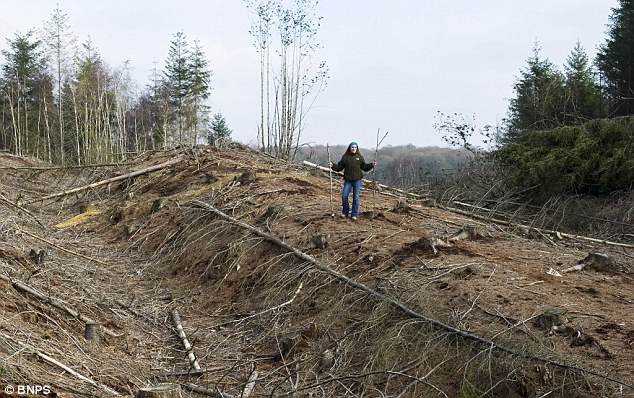
    Half-mile long: Laurence Degoul from the Forestry Commission stands on a 15ft-high section of Roman road uncovered in Puddletown Forest in Dorset

    Half-mile long: Laurence Degoul from the Forestry Commission stands on a 15ft-high section of Roman road uncovered in Puddletown Forest in Dorset

    Constructed by the Roman invaders as part of a route from London (Londinium) to Exeter (Isca), the 85ft wide earthwork stands more than 15ft high and consists of a sweeping road with deep ditches at the side.

    It was so densely covered by trees, however, that although its existence was known about, it simply could not be found until now.

    One of the country’s first roads, it was uncovered when the Forestry Commission, acting on advice from English Heritage expert Peter Addison, cleared the Norway spruce fir trees in Puddletown Forest.

    Mr Addison said it was the biggest Roman road he had come across and that it was probably designed to make a statement. It is thought that it might have been built shortly after the Roman conquest in the first century and its scale would have been chosen to intimidate people living nearby.

    The sight of a Roman legion marching along it would surely have had the desired effect.
    It is thought the road would have been made from layers of gravel and the fact it still exists is testimony to the skills of the builders.

    There is a central cobbled ‘street’, which would have been used for rapid troop movements, and outer ‘droving’ roads for livestock, as well as ditches for water drainage.

    Mr Addison said: ‘It’s extraordinary. It has been known about but when the Forestry Commission wanted to find it, they struggled.

    ‘The trees were planted so tightly it was difficult to move through them. But they called me in and I managed to find it.

    ‘It is part of the road that goes from Badbury Rings to the fort at Dorchester and was part of the network of roads from Old Sarum (now Salisbury) to Exeter.
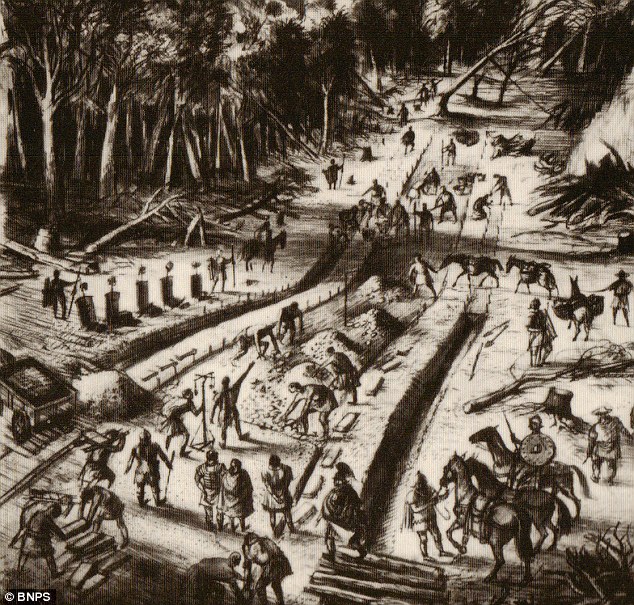
    Artist's impression: The Roman road being built in the Dorset forest 1,900 years ago

    Artist's impression: The Roman road being built in the Dorset forest 1,900 years ago

  • It is absolutely huge and unlike anything I have ever seen. Here you have a large road with huge ditches either side. It is raised very high which is unusual. It is only speculation, but the height might have been to make a statement.

    ‘It is thought this was a road made early in the occupation and not used for long. If so, then it would have been incredibly impressive to the local people.

    ‘In other parts of the forest we know the road was made using gravel and they probably used layers to build up the agger (embankment). They built ditches on either side to act as soakaways to prolong the life of the road.

    ‘But more work needs to be done to find out these details.’

    It is hoped that archaeologists will be able to examine the road.

    A Forestry Commission spokesman said it would not be planting any more trees on it.

    The road will probably be grassed over in the future, he added.

    ‘We have painstakingly uncovered one of the UK’s most remarkable sections of ancient Roman road,’ the spokesman said.

    Wessex Tour Guide
    HisTOURies UK – The Best Tours in History

    Read Full Post »

    Neil Oliver tells the epic story of how Britain and its people came to be over thousands of years of ancient history – the beginnings of our world forged in ice, stone, and bronze.

    About the Programme

    A History Of Ancient Britain will turn the spotlight onto the very beginning of Britain’s story. From the last retreat of the glaciers 12,000 years ago, until the departure of the Roman Empire in the Fifth Century AD this epic series will reveal how and why these islands and nations of ours developed as they did and why we have become the people we are today. The first series transmits in early 2011 and there will be a following series in 2012.

    As well as being a presenter, Neil is also an archaeologist, historian and author. He began his television career in 2002 with the BBC2 series ‘Two Men in a Trench’. This battlefield archaeology series explored iconic British battle sites, focusing on human stories, tragedies and drama.

    Neil became a familiar face on television thanks to the hugely popular, award winning programme, ‘Coast’, in which the landscapes, history, geography and people of the British Isles are given centre stage in a continuing voyage of discovery, remembrance and reminiscence.

    Neil also presented ‘A History of Scotland’ on BBC 1 and BBC2. In this series he revealed how the story of his native Scotland is instrumental to the history of, not only Britain, but also Europe and much of the wider world.
    Neil Oliver takes us on an epic journey expoloring how Britain and its people came to be.
    Watch the trail here
    Neil Oliver’s official website

    Stonehenge and Ancient Britain Tour Guide
    HisTOURies UK – The Best Tours in History
    Read Full Post »

    Bath Abbey Tours

    Bath Abbey Tours

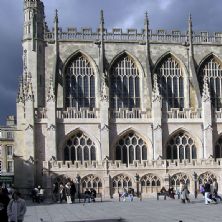
    As part of an on-going project, led by architects Feilden Clegg Bradley, looking at possible future improvements to the Abbey, this month sees the start of a series of archaeological digs in and around the building, which dates back to 1499, (it’s the third church on the site, the original Anglo-Saxon Abbey Church was founded in 757).  There will be seven digs in total, six in the Abbey: choir vestry, shop, near the Montague Tomb, Alphege Chapel, South Transept, and one near the font; the seventh will be outside, between Kingston Buildings and the Abbey.

    The digs, which will be carried out by two local firms, Emerys, who will be responsible for the building work and reinstatement, and Cotswold Archaeology, who will carry out the archaeological observation and recording.  The purpose of the digs is to discover what may or may not be possible in terms of ensuring the Abbey is fit for the 21st century.  One possibility to be explored is the installation of an underfloor heating system, drawing on the springs that feed the nearby Roman Baths.
    The Abbey will remain open during the work, and whilst visitors may find a few views to be limited and some of the Victorian pews missing, it is also hoped that they will be able to observe some of the archaeological work, perhaps via closed circuit television.

    There is an air of excitement at the Abbey as everyone looks forward to seeing ledger stones that have been invisible for 150 years and underground views that were hidden from their predecessors, as well as looking forward to new possibilities.

    The work has been made possible due to a generous donation from the Friends of Bath Abbey, who are very interested in the Abbey Development Project.   If you are interested in becoming a Friend, or making a donation, visit http://www.bathabbey.org/friends.htm

     For further information about the Abbey, including the times of services, its history and information about visiting, please visit www.bathabbey.org

    BBC – Historic Bath Abbey hosts big archaeological dig

    Tower ToursBath Abbey

    A Tower Tour gives visitors to the Abbey a chance to look at the building from a very different perspective. There are 212 steps to the top of the Tower

    Neeldess to say we offer guided tours of the Roman Baths and Bath Abbey.  Visit our website for more details.
    Bath Tourist Guide
    HisTOURies UK – The Best Tours in History
    Read Full Post »

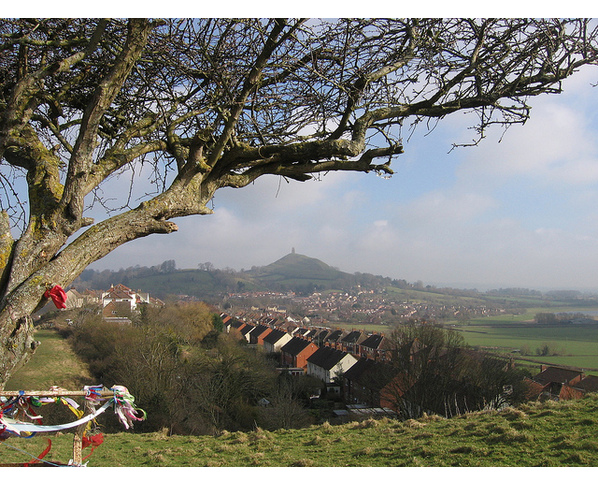
    A film is set to be made by Hollywood producers on the Glastonbury legend of Joseph of Arimathea and the Holy Thorn.

    The £50m-budget film Glastonbury: Isle of Light is set for release in 2012 and has been written and produced by Daniel McNicholl with Galatia Films.

    Holy Thorn - Glastonbury Holy Thorn – Glastonbury

    A film is set to be made by Hollywood producers on the Glastonbury legend of Joseph of Arimathea and the Holy Thorn.

    The £50m-budget film Glastonbury: Isle of Light is set for release in 2012 and has been written and produced by Daniel McNicholl with Galatia Films.

    In December the Holy Thorn on Wearyall Hill was cut down by vandals but efforts are being made to re-grow it.

    The legend relates to Joseph who planted Jesus’s staff into the ground on Wearyall Hill 2,000 years ago.

    A tree grew, and it is believed the hawthorn sprouted from a cutting of the tree. It is one of several Holy Thorns planted around Glastonbury.

    Daniel McNicholl said: “This is a British story so I think it needs to be told through British landscape.

    “We want ancient Glastonbury to be shot in places like the Isle of Man, Ireland, Wales, and Somerset.

    “Clearly the topography is much different than it was 2,000 years ago and we will be using digital effects to take out some of the modern buildings, so it is very much a different place.”

    The film producer has said he was aware of the Holy Thorn being vandalised which he described as “punch in the gut” but believes the tree will re-grow successfully.

    Avon and Somerset police are still continuing their enquires and a reward of £200 has been offered by the town council for more information.

    Glastonburymovie.com
    http://www.bbc.co.uk/news/uk-england-somerset-12160098

    We offer guided tours of Glastonbury Tor (Isle of Avalon) , Glastonbury Abbey, Challice Well Gardens and King Arthurs Avalon

    Glastonbury Tour Guide
    HisTOURies UK – The Best Tours of Ancient Britain

    Read Full Post »

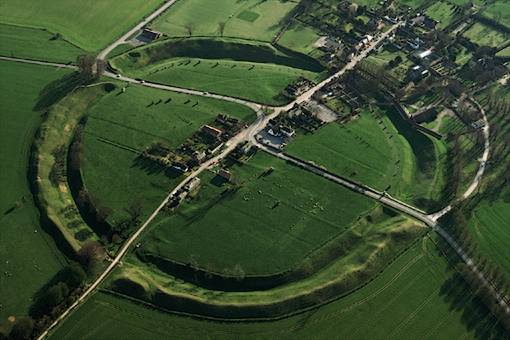
    Today, we must celebrate John Aubrey’s dramatic rediscovery of Avebury – the world’s largest prehistoric stone circle. 

    Avebury Stone Circle today: with its ditches excavated, unsightly cottages demolished, and unnecessary enclosures removed, it’s difficult to imagine the snarl of 17th-century domestic chaos that greeted John Aubrey’s visionary gaze that January morn.

    Avebury Stone Circle today: with its ditches excavated, unsightly cottages demolished, and unnecessary enclosures removed, it’s difficult to imagine the snarl of 17th-century domestic chaos that greeted John Aubrey’s visionary gaze that January morn.

    Whilst out hunting with fellow royalists during the English Civil War, exactly three hundred and sixty-two years ago. For Aubrey’s heroic retrieval of this vast but (by then) long forgotten Stone Age temple confronted the then-accepted notion that only the coming of the Romans had forced a degree of culture upon the barbaric Ancient British, and also confounded the then-popular 17th-century belief – propounded by the highly influential Scandinavian antiquaries Olaus Magnus and Ole Worm – that all such megalithic culture had its archaic origins in Europe’s far north. Indeed, so rich were the cultural implications of John Aubrey’s re-discovery that – come the fall of Oliver Cromwell’s 11-year-long Commonwealth and the subsequent Restoration of the Monarchy – even the returned King Charles II would himself insist on taking one of Aubrey’s celebrated tours of the Avebury area. But how could the world’s largest stone circle have suffered such a total cultural extinction in the first place? Why, the Avebury standing stones themselves must average at least ten feet in height apiece, while the temple’s enormously bulky northern and southern entrance stones rivalled even nearby Stonehenge’s celebrated trilithons. And how could Avebury’s vast 400-metre-diameter earthen embankment and the equally deep ditch that encircled these huge monoliths have for several centuries become invisible even to local historians? Ironically perhaps, the initial blame for this pagan temple’s centuries in cultural oblivion goes not to scheming Christians but to the 5th century arrival from Germany of another group of pagans – the invading Saxons – who, recognising Avebury’s possible use as a defended settlement, broke with the traditions of the previous Roman and Romano-British occupiers by setting up their homes and farmsteads directly within the mighty earth banks of the temple itself. Blasphemers! Thereafter, many centuries of harsh day-to-day living within the Avebury henge conspired to obscure then finally obliterate all physical traces of this vast Earthen Temple. Saxon ploughing within the henge tumbled soil into the deep ditches, which silted up considerably and became repositories of household refuse. Residents fearful of disturbing the ‘Devil’s work’ incorporated the Avebury megaliths into the hedges of their allotments, gardens, fields, and even saved energy by employing those monoliths most vertically aligned as supporting walls for their stone cottages. And when villagers lost their fears of the stones, deep pits were dug into whose depths several of the most intrusive monoliths were unceremoniously tumbled. Thereafter, the magnificent geometric shape of this robust 4,500 year-old landscape temple became lost in the chaos of domesticity; until that fateful day three hundred and sixty-two years ago, that is, when John Aubrey and his friend Dr. Walter Charleton joined their hunting party and galloped westwards across Fyfield Down along the chalky London-Bath ‘rode’. Aubrey himself recounts in his posthumously published two-volume tome Monumenta Britannica:

    “The chase led us at length through the village of Avebury, into the closes there: where I was wonderfully surprised at the sight of those vast stones: of which I had never heard before… I observed in the enclosures some segments of rude circles, made with these stones; whence I concluded, they had been in the old time complete.”

    It’s been my experience that no story about Avebury ever concludes without some vicious act of destruction by some pious know-it-all or other; this On This Deity entry is no different. For, despite King Charles II’s fascination with the Avebury stone circle, it was his return to the English throne that prompted the temple’s most vivid and desperate period of destruction. For in their determination to stamp out the Non-Conformism of Cromwell’s time, Charles II’s paranoid Restoration Government in 1665 passed the Five Mile Act (or Non-Conformist Act 1665), which specifically forbade all itinerant Non-Conformist preachers from speaking within five miles of their old parishes. Avebury stone circle is nine miles south of Swindon, eight miles north-east of Devizes, five miles west of Marlborough and six miles east of Calne. Non-conformist preachers throughout northern Wiltshire looked to the ancient pagan temple and regarded the Five Mile Act as a divine sign: let us make our new home here, and every pagan stone we break we’ll make righteous by incorporating it into our Non-Conformist church. And so to Avebury they did come and such destruction so they did: the church remains at the circle’s centre even to this day, self-effacing and easily overlooked but engorged nevertheless with as many splendid sarsen stones of that former 4,500 year-old monument as those Non-Conformist preachers could muster. Our hero John Aubrey would, for his pains, die unpublished and in penury. Today, however, his legend burns with an unquenchable fame due to that pioneering archaeological tome Monumenta Britannica, that gossipy biography of his many contemporaries Brief Lives, and – most of all – for that splendid vision of Avebury exactly three hundred and sixty-two years ago today. To John Aubrey – Culture Hero and how!
    http://www.onthisdeity.com

    Stonehenge and Avebury Tour Guide
    HisTOURies UK – The Best Tours of Ancient Britain

    Read Full Post »

    Archaeologists hail oldest wooden structure ever found on river, despite security services’ armed response to researchers
    The headquarters of MI6 on the banks of the Thames in London. Photograph: Bertrand Langlois/AFP/Getty Images
    The headquarters of MI6 on the banks of the Thames in London. Photograph: Bertrand Langlois/AFP/Getty Images

    When MI6 set up home on the banks of the Thames one secret escaped its watchful eyes. The oldest wooden structure ever found on the river, timbers almost 7,000 years old, have been discovered buried in the silt below the windows of the security services’ ziggurat headquarters at Vauxhall, south London.

    The archaeologists who uncovered the six hefty timber piles had to explain to the security services what they were up to when armed police turned up after they were spotted pottering about on a foggy day in the mud, armed only with tripods, cameras and measuring equipment – not, as one spectator had apparently reported, shoulder-mounted rocket launchers.

    “They accepted there wasn’t much damage we could do with a tripod,” said Gustave Milne, the archaeologist who leads the Thames Discovery programme that has been surveying the entire prehistoric foreshore, uncovering centuries of ancient wharves, fish traps, jetties and ship timbers.

    The timbers, partly scoured bare by erosion of the river bed, the largest up to a third of a metre in diameter, were discovered in work during exceptionally low tides last February, but carbon dating work – revealed in the new edition of London Archaeologist journal – has only recently been completed, proving that the trees were felled between 4790 BC and 4490 BC.

    Although the site is now exposed only at the lowest tides, the ancient Thames was narrower and deeper, and Milne believes that 7,000 years ago the timbers may have been built on dry land, possibly at the highest point of a small island.

    “The find is very interesting, because in the mesolithic period the people were nomadic hunter-gatherers, living in temporary camps – not at all given to building substantial structures like this,” Milne said.

    “At the moment we don’t have enough timbers to give any kind of alignment, they’re not in a straight or a circle – but they could have supported a substantial platform with some form of domestic structure or dwelling.”

    The site is just where a smaller river, the Effra, enters the Thames, and it was clearly important to the prehistoric Londoners. The archaeologists, working with experts from the Museum of London and English Heritage, also found worked flint from the same date as the timbers, older pottery, and just upstream, on the far side of the modern Vauxhall bridge, a much later Bronze Age structure.

    “There may have been a ford, it may have had some religious significance, or it may just have been very rich hunting grounds – but it was clearly what my colleague at the Museum of London calls ‘a memorable place’,” Milne said.

    “We’re just sorting out which are the lowest new year spring tides to go back for another look – if Mr Bond will let us.”

    External link: http://www.guardian.co.uk/science/2011/jan/06/ancient-timbers-mi6-headquarters
    Thames Tours: http://www.bestvaluetours.co.uk/

    British Tour Guide
    HisTOURies UK – The Best Tours in History
    Read Full Post »

    More than 2,000 people gathered in the snow of Stonehenge to celebrate the winter solstice.

    Druids, lead by Arthur Pendragon (centre), take part in the winter solstice at Stonehenge in Wiltshire

    Druids, lead by Arthur Pendragon (centre), take part in the winter solstice at Stonehenge in Wiltshire

    Despite the actual sunrise, – which took place at 08.09am – being obscured by mist, Peter Carson of English Heritage said: “Stonehenge looked spectacular in the snow and it was a great way for people to start their festive season.”

    The Pagan community came out in force to celebrate the annual festival, along with many whom were merely curious to experience the event.

    As well as the traditional Druid and Pagan ceremonies, a snowball fight erupted as people enjoyed the cold weather.

    “The popularity of the winter solstice has grown over the years as more is known about Stonehenge and the winter solstice and the whole celebration has grown in popularity, ” Mr Carson said.

    Lance Corporal Paul Thomas, a serving soldier of 15 years who fought in Iraq, was “knighted” with a sword by a Druid calling himself King Arthur Pendragon.
    The word solstice comes from the Latin phrase for “sun stands still”. During the winter solstice the sun is closer to the horizon than at any other time in the year, meaning shorter days and longer nights. The day after the winter solstice marks the beginning of lengthening days, leading up to the summer solstice in June.

    The Sun’s passage through the sky appears to stop, with it seeming to rise and set in the same two places for several days. Then the arc begins growing longer and higher in the sky, reaching its peak at the summer solstice.

    The solstices happen twice a year because the Earth is tilted by 23.5 degrees as it orbits the sun. Since ancient times people have marked the winter and summer solstices.

    The stones at Stonehenge are aligned with the sunlight on both the summer and winter solstices. These times told prehistoric farmers that harvest was coming or that the shortest day of winter had passed.

    Recent excavations of animal bones at the site suggest that huge midwinter feasts were held at Stonehenge, with cattle moved there to be slaughtered for the solstice celebrations.
    External links:
    http://www.telegraph.co.uk/news/picturegalleries/uknews/8219063/Druids-gather-in-the-snow-and-ice-at-Stonehenge-for-the-winter-solstice-sunrise.html
    http://visit-stonehenge.blogspot.com/2010/12/stonehenge-summer-solstice-tour-2011.html
    http://blog.stonehenge-stone-circle.co.uk/2010/12/21/stonehenge-winter-solstice-21stdecember-2010/
    http://www.telegraph.co.uk/news/uknews/8219230/Druids-and-Pagans-celebrate-winter-solstice-at-Stonehenge.html

    Stonehenge Tour Guide
    HisTOURies UK – The Best Tours of Ancient Britain

    Read Full Post »

    The main Christmas customs were those that were common throughout

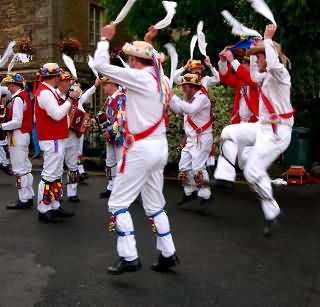
    Morris Dancers

    Morris Dancers

    the country and which came from a time when farm labourers worked most days of the year, and often on Christmas Day morning. Mummers plays were a favourite and would normally be performed in the evenings in the big houses and farmhouses of the area. The performers would be rewarded with food and drink and, sometimes, with money. Most villages had a group of men who were the mummers and both words and actions of the play and costumes and props would be handed down from one generation to the next. Places from which mummers’ plays are remembered include, Stourton, Cricklade, Limpley Stoke, Amesbury, Maiden Bradley, Horningsham, Wootton Rivers, Woodford, Quidhampton, Stockton and Winterslow. Around Swindon in the 1830s, when it was still a small market town, they are recorded as going from door to door and, more especially, from pub to pub.

    Carol singers were often groups of boys, or sometimes the church choir, who would visit the big houses of the neighbourhood collecting money. As with carol singers until the 1970s, these always gave good value by singing the full carol. At the larger houses they might sing two or three. There were some local carols, most of which have been lost, and some of these were original while others were adaptations of well known carols. At Berwick St. James it was the custom to wake up householders on Christmas morn by singing carols, which were learned by one generation from the preceding one.

    An earlier tradition was wassail. Originally a fertility rite with live animals this later degenerated into processing around the streets, singing and collecting money in the wassail bowl. This happened at Cricklade where a live ox was once involved; by the 19yth century this had become a withey frame covered with a cured ox hide. In a few parts of the county, such as Everleigh, the parson organised a Christmas Ale for his parishioners, where instead of money being raised for the church the participants were provided with bread, cheese and beer. These seem to have died out in the early 17th century.

    (Source: http://www.wiltshire.gov.uk/community/getfaq.php?id=194 and http://www.wiltshirefolkarts.org.uk/wfmummers.htm, A Wiltshire Christmas, by John Chandler. Alan Sutton, The Folklore of Wiltshire, by Ralph Whitlock. Batsford)

    Stonehenge Tour Guide
    HisTOURies UK – The Best Tours in Wesse

    Read Full Post »

    New video explains geophysics, 3D laser scanning and finds processing

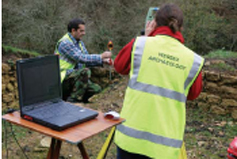
    What technologies do modern archaeologists turn to? Mark Langdon speaks to experts at Wessex Archaeology to find out about the modern techniques employed at digs

    Watch our experts explain how the techniques are used and how archaeology works in the supporting video:
    http://kn.theiet.org/news/dec10/time-team.cfm

    Geophysics is the physics of the Earth and its environment in space. Its subjects include the shape of the Earth, its gravitational and magnetic fields, the dynamics of the Earth as a whole and of its component parts, the Earth’s internal structure, composition and tectonics, the generation of magmas, volcanism and rock formation, the hydrological cycle including snow and ice, all aspects of the oceans, the atmosphere, ionosphere, magnetosphere and solar-terrestrial relations, and analogous problems associated with the Moon and other planets.

    Geophysics is also applied to societal needs, such as mineral resources, mitigation of natural hazards and environmental protection. Geophysical survey data are used to analyze potential petroleum reservoirs and mineral deposits, to locate groundwater, to locate archaeological finds, to find the thicknesses of glaciers and soils, and for environmental remediation.

    External links:
    British Geophysical Association
    Stonehenge Riverside Project
    British Academy – Science and Stonehenge – summaries
    Wessex Archaeology – One of the UK’s leading heritage practices

    Stonehenge Tour Guide
    HisTOURies UK – Private Guided Tours of Wiltshire

    Read Full Post »

    Vandals have destroyed one of the most celebrated Christian pilgrimage sites in Britain and chopped down a tree said to have sprouted from the staff of Joseph of Arimathea 2,000 years ago.

    The Holy Thorn Tree of Glastonbury, Somerset, is visited by thousands every year to pay homage and leave tokens of worship. Those visiting today were moved to tears on finding the tree cut to a stump.

    The sacred tree is unique in that it blossoms twice a year – at Christmas and Easter – and sprigs taken from the thorn are sent to The Queen each year for the festive table.

    the vandalised holy thorn tree Police tape surrounds the vandalised Holy Thorn tree on Wearyall Hill in Glastonbury as stunned locals look on. The branches were cut off overnight and a police investigation has been launched


    The tree in all its glory before it was hacked apart. Legend says it sprang from the staff of Joseph of Arimathea, the man who helped Jesus of the cross. To the right of the tree, in the distance, is Glastonbury TorThe tree in all its glory before it was hacked apart. Legend says it sprang from the staff of Joseph of Arimathea, the man who helped Jesus of the cross. To the right of the tree, in the distance, is Glastonbury Tor


    A member of the public gathers sprigs from the vandalised Holy Thorn tree that was cut down overnight
    People come to say prayers over the vandalised remains of the hawthorn tree on Wearyall Hill

    A member of the public gathers sprigs from the chopped branches while (right) onlookers cry and say prayers

    BROUGHT TO LIFE BY JOSEPH OF ARIMATHEA, CHOPPED DOWN BY CROMWELL’S ROUNDHEADS, REBORN THANKS TO LOCALS

    oliver cromwell

    Christian legend dictates that Jesus’s great uncle, Joseph of Arimathea, came to Britain after the crucifixion 2,000 years ago bearing the Holy Grail – the cup used by Christ at the Last Supper.

    He visited Glastonbury and thrust his staff into Wearyall Hill, just below the Tor, planting a seed for the original thorn tree.

    Roundheads felled the tree during the English Civil War, when forces led by Oliver Cromwell (pictured) waged a vicious battle against the Crown.

    However, locals salvaged the roots of the original tree, hiding it in secret locations around Glastonbury.

    It was then replanted on the hill in 1951. Other cuttings were also grown and placed around the town – including its famous Glastonbury Abbey.

    Experts had verified that the tree – known as the Crategus Monogyna Bi Flora – originated from the Middle East.

    A sprig of holy thorns was taken from the Thorn tree by Glastonbury’s St Johns Church on Wednesday and sent to the Queen.

    The 100-year-old tradition will see the thorns sit on Her Majesty’s dinner table on Christmas Day

    Avon and Somerset Police have launched an investigation after locals found that vandals had hacked off the branches of the iconic tree. They were dumped next to the trunk which is protected by a metal cage.

    Locals wept openly today at the foot of the tree, on the town’s Wearyall Hill opposite its world-famous Tor as they struggled to contain their emotion.

    Katherine Gorbing, curator of Glastonbury Abbey, said: ‘The mindless vandals who have hacked down this tree have struck at the heart of Christianity.

    ‘It holds a very special significance all over the world and thousands follow in the footsteps of Joseph Arimathea, coming especially to see it.

    ‘It is the most significant of all the trees planted here and can be linked back to the origins of Christianity.

    ‘When I arrived at the Abbey this morning you could look over to the hill and see it was not there.

    ‘It’s a great shock to everyone in Glastonbury – the landscape of the town has changed overnight.’

    Glastonbury Mayor John Coles rushed to the tree site after he heard the news.

    Mr Coles, 66, said: ‘I’m stood on Wearyall Hill looking at a sad, sad, sight. The tree has been chopped down – someone has taken a saw to it.

    ‘Some of the main trunk is there but the branches have been sawn away. I am absolutely lost for words – I just do not know why people would want to do this.

    ‘This tree was visited by thousands of people each year and is one of the most important Christian sites. It is known all over the world.’

    Deputy Mayor William Knight, 63, added: ‘This is absolutely mindless. We are all devastated.’

    I lived in Glastonbury for many years and this is a sad day……………

    Stonehenge Tour Guide
    HisTOURies UK – King Arthur Tours

    Read Full Post »

    « Newer Posts - Older Posts »