Feeds:
Posts
Comments

Archive for the ‘England facts’ Category

Archaeologists hail oldest wooden structure ever found on river, despite security services’ armed response to researchers
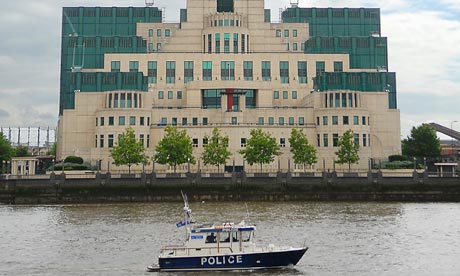
The headquarters of MI6 on the banks of the Thames in London. Photograph: Bertrand Langlois/AFP/Getty Images

When MI6 set up home on the banks of the Thames one secret escaped its watchful eyes. The oldest wooden structure ever found on the river, timbers almost 7,000 years old, have been discovered buried in the silt below the windows of the security services’ ziggurat headquarters at Vauxhall, south London.

The archaeologists who uncovered the six hefty timber piles had to explain to the security services what they were up to when armed police turned up after they were spotted pottering about on a foggy day in the mud, armed only with tripods, cameras and measuring equipment – not, as one spectator had apparently reported, shoulder-mounted rocket launchers.

“They accepted there wasn’t much damage we could do with a tripod,” said Gustave Milne, the archaeologist who leads the Thames Discovery programme that has been surveying the entire prehistoric foreshore, uncovering centuries of ancient wharves, fish traps, jetties and ship timbers.

The timbers, partly scoured bare by erosion of the river bed, the largest up to a third of a metre in diameter, were discovered in work during exceptionally low tides last February, but carbon dating work – revealed in the new edition of London Archaeologist journal – has only recently been completed, proving that the trees were felled between 4790 BC and 4490 BC.

Although the site is now exposed only at the lowest tides, the ancient Thames was narrower and deeper, and Milne believes that 7,000 years ago the timbers may have been built on dry land, possibly at the highest point of a small island.

“The find is very interesting, because in the mesolithic period the people were nomadic hunter-gatherers, living in temporary camps – not at all given to building substantial structures like this,” Milne said.

“At the moment we don’t have enough timbers to give any kind of alignment, they’re not in a straight or a circle – but they could have supported a substantial platform with some form of domestic structure or dwelling.”

The site is just where a smaller river, the Effra, enters the Thames, and it was clearly important to the prehistoric Londoners. The archaeologists, working with experts from the Museum of London and English Heritage, also found worked flint from the same date as the timbers, older pottery, and just upstream, on the far side of the modern Vauxhall bridge, a much later Bronze Age structure.

“There may have been a ford, it may have had some religious significance, or it may just have been very rich hunting grounds – but it was clearly what my colleague at the Museum of London calls ‘a memorable place’,” Milne said.

“We’re just sorting out which are the lowest new year spring tides to go back for another look – if Mr Bond will let us.”

External link: http://www.guardian.co.uk/science/2011/jan/06/ancient-timbers-mi6-headquarters
Thames Tours: http://www.bestvaluetours.co.uk/

British Tour Guide
HisTOURies UK – The Best Tours in History

Read Full Post »

The main Christmas customs were those that were common throughout

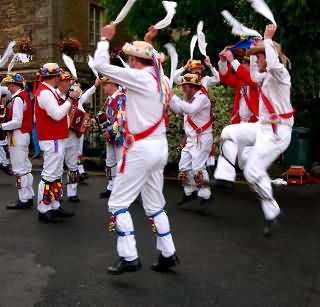
Morris Dancers

Morris Dancers

the country and which came from a time when farm labourers worked most days of the year, and often on Christmas Day morning. Mummers plays were a favourite and would normally be performed in the evenings in the big houses and farmhouses of the area. The performers would be rewarded with food and drink and, sometimes, with money. Most villages had a group of men who were the mummers and both words and actions of the play and costumes and props would be handed down from one generation to the next. Places from which mummers’ plays are remembered include, Stourton, Cricklade, Limpley Stoke, Amesbury, Maiden Bradley, Horningsham, Wootton Rivers, Woodford, Quidhampton, Stockton and Winterslow. Around Swindon in the 1830s, when it was still a small market town, they are recorded as going from door to door and, more especially, from pub to pub.

Carol singers were often groups of boys, or sometimes the church choir, who would visit the big houses of the neighbourhood collecting money. As with carol singers until the 1970s, these always gave good value by singing the full carol. At the larger houses they might sing two or three. There were some local carols, most of which have been lost, and some of these were original while others were adaptations of well known carols. At Berwick St. James it was the custom to wake up householders on Christmas morn by singing carols, which were learned by one generation from the preceding one.

An earlier tradition was wassail. Originally a fertility rite with live animals this later degenerated into processing around the streets, singing and collecting money in the wassail bowl. This happened at Cricklade where a live ox was once involved; by the 19yth century this had become a withey frame covered with a cured ox hide. In a few parts of the county, such as Everleigh, the parson organised a Christmas Ale for his parishioners, where instead of money being raised for the church the participants were provided with bread, cheese and beer. These seem to have died out in the early 17th century.

(Source: http://www.wiltshire.gov.uk/community/getfaq.php?id=194 and http://www.wiltshirefolkarts.org.uk/wfmummers.htm, A Wiltshire Christmas, by John Chandler. Alan Sutton, The Folklore of Wiltshire, by Ralph Whitlock. Batsford)

Stonehenge Tour Guide
HisTOURies UK – The Best Tours in Wesse

Read Full Post »

Wanted to claryfy that we have not misspelt our tour company name. HisTOURies comes from two words  ‘history’ and ‘stories’ – clever eh?
We operate guided historical (hisTOURical) sightseeing tours of Britain.  Our expert guides (historians or hisTOURians) bring Britain’s rich history (hisTOURy) alive with tales’s and stoiries (sTOURys or sTOURies) of ancient England.
‘It is not spelt incorrectly.’
Hope thats clear (clear as mud)……………..
Our award winning tours can depart from London, Salisbury, Bath or Glastonbury.  Please visit our website:
HisTOURies UK – The Best Tours in British History (hisTOURy)

Histories (Herodotus)

The Histories of Herodotus is considered one of the seminal works of history in Western literature. Written from the 450s to the 420s BC in the Ionic dialect of classical Greek, The Histories serves as a record of the ancient traditions, politics, geography, and clashes of various cultures that were known around the Mediterranean and Western Asia at that time. It is not an impartial record but it remains one of the West’s most important sources regarding these affairs. Moreover, it established without precedent the genre and study of history in the Western world, although historical records and chronicles existed beforehand.

Perhaps most importantly, it stands as one of the first, and surviving, accounts of the rise of the Persian Empire, the events of, and causes for, the Greco-Persian Wars between the Achaemenid Empire and the Greek city-states in the 5th century BC. Herodotus portrays the conflict as one between the forces of slavery (the Persians) on the one hand, and freedom (the Athenians and the confederacy of Greek city-states which united against the invaders) on the other.

The Histories was at some point through the ages divided into the nine books of modern editions, conventionally named after the Muses.

Herodotus seems to have travelled extensively around the ancient world, conducting interviews and collecting stories for his book. At the beginning of The Histories, Herodotus sets out his reasons for writing it:

British Tour Guide
HisTOURies UK Stories in History

Read Full Post »

Mid-winter festivals were observed in Britain long before Christianity reached our shores. In ancient Britain, the Winter Solstice (near December 22) was seen as a turning point in the cold dark months. Rituals were held to encourage the return of the sun and banish evil spirits believed to lurk in the bleakest days. On the last day of winter, called Yule, a huge log was added to a bonfire and people gathered round to summon the sun by singing and dancing. Houses were decorated with green plants, particularly mistletoe and holly, as a symbol of fertility and rebirth the new season would bring.
Victorian Christmas Celebration

Saturnalia, a very popular Roman festival, was held in mid-December. It was celebrated in countries across the Empire, including Britain which was occupied by the Romans from 43 to the early part of the fifth century. The week long party was held in honour of the Roman God Saturn. Revellers enjoyed feasting, visiting family and sharing gifts. The festival offered temporary social freedom for slaves who were excused from work and allowed privileges, such as the right to gamble.

In 596, St. Augustine undertook a mission to bring Christianity to the Anglo Saxons. He and his monks introduced the Christian calendar to Britain, including the Christmas date. The Christian church decreed Christ’s birthday be celebrated on December 25, a decision made by the Pope in 336. As Christianity spread across Britain, pagan celebrations were mainly engulfed by or assimilated in to Christmas ritual.

Varied Christmas activities were adopted across Britain.

In England, people ate frumenty (a type of porridge made from corn) on Christmas morning. The recipe changed over time and eggs, fruit, spice, lumps of meat and dried plums were added. The whole mixture was wrapped in a cloth and boiled. This is the origin of plum pudding.

Christmas festivities in Ireland last from Christmas Eve to the feast of the Epiphany on 6th January, which is referred to as Little Christmas. Many Irish women bake a seed cake for each person in the house. It is also Irish tradition to bake three puddings, one for each key day of the Epiphany – Christmas, New Year’s Day and the Twelfth Night.

In Scotland, Christmas has traditionally been celebrated very quietly because the Presbyterian Church places no great emphasis on the date. The season is however enjoyed by many Scots. A popular Scottish festive party involved the building of big bonfires which people could gather round for warmth, dancing and to play bagpipes. A time-honoured Scottish Christmas treat is Bannock cakes made of oatmeal.

In Wales, music was vital to the festive celebrations. Christmas morning between 3am and dawn men gathered at churches to sing carols until the cockerel crowed. This was called Plygrain.

Taffy making on Christmas Eve was one of the most important festive traditions of the Welsh. Taffy is a special kind of chewy toffee made from brown sugar and butter. It is boiled and then pulled until it becomes lovely and glossy.

Britain today is home to many different cultures and mid-winter is, as it always has been, a time for diverse cultural celebration.

Thankyou for all your Christmas wishes.  Have a wonderful Christmas from all the Histouries UK team.

External Links:
http://www.welcome2london.org.uk/christmas-xmas-festive-new-year-london-tours-uk.htm
http://www.visitlondon.com/events/christmas/
http://www.christmasinlondon.net/

British Tour Guide
HisTOURies UK – The Best Tours in British History

Read Full Post »

A gentleman’s disagreement

© Hulton Archive - Getty

The contest for cricket’s Ashes is being fought again. Mike Cronin and Richard Holt consider the place of the Bodyline Series, in the context of its times
 (see bottom of blog for ‘The rules of cricket)

This winter, cricket fans in Australia and in England will be captivated by cricketing battles between the two nations. While this current Ashes series will be tense, it will surely never equal the notorious Bodyline Series of 1932–33 for drama on the field and rancorous politics off it.

Why is it still so controversial? Why do books and films still ponder the ethics of a test series of 70 years ago in which the gentleman amateur Douglas Jardine, (ex-Winchester School and Oxford University), ordered his fearsome fast bowlers, Larwood and Voce, both working class professionals, to bowl at the upper body of the Australian batsmen. The theory was that they would either be caught out by a ring of close leg side fielders or be so intimidated they would lose confidence and give their wicket away. Contrary to widespread public perception, there was no intention to knock them out though that was clearly a serious risk.

The plan worked. England regained the Ashes with a 4–1 series victory. The bodyline tactic was aimed at the brilliant young Australian batsman, Don Bradman, who had destroyed England’s team on their home ground in 1930 with an astonishing series average of 139.14. Jardine came to believe Bradman could be intimidated and that it was legitimate to do so. It was not forbidden by the laws of the game and therefore in his view not against the code of sportsmanship by which Englishmen were supposed to live and the ethic of fair play through which the British supposedly governed their vast Empire.

It was precisely this sacred code which the Australians claimed that Jardine had broken and his methods were denounced in a mysteriously leaked telegram to Lord’s as “unsportsmanlike”. In a reversal of the established stereotypes, the English became ruthless win-at-all-costs Aussies and the Australians the decent English gents.

  Cricket– but not as we know it

 England’s cricketing authorities defended their captain during the series, only to distance themselves later and dangerous fast bowling from both ends. In fact, it was the declare bodyline bowling against the laws of the game. After a couple of years the moral order of the British Empire symbolised by cricket had been restored. The narrative that wrapped itself round the Bodyline Series was simple and monolithic. Douglas Jardine emerges as an upper class snob who despised the Australians.

His bowlers, Harold Larwood and Bill Voce, are seen as honest but misdirected working class professionals who unquestioningly did the bidding of their fl awed captain. Set against the pantomime villain and his stooges there is Bill Woodfull, the brave Australian captain, and most famous victim of Larwood’s fast bowling onslaught, hit over the heart at Adelaide in the third test, and uttering the most famous words in the long history of the Ashes: “there are two teams out there. One is trying to play cricket and the other is not”.

While the established narrative of bodyline makes a nice moral tale – essentially a battle of good against evil – this history of the event is far too simple. Jardine is branded as the instigator of intimidating batsmen with dangerous fast bowling from both ends. In fact it was the massive Warwick Armstrong who started this in 1920 when he led the Australians to the only 5–0 whitewash of England in Ashes history. Armstrong used his fearsome pace attack of Jack Gregory and Ted Macdonald to terrify batsmen both in Australia and on the return trip to England in 1921 where one batsman after another was injured by the captain’s ruthless tactics.

Perhaps the 1932–3 Australians got things out of proportion.Warwick Armstrong, by then a journalist, thought so. Here the economic and political context come in, as the game was played against a background of world depression. Trade and constitutional disputes were aggravating the painful memories of the First World War, in which many Australians felt their lives were sacrificed because of the arrogance of the British public school officer class – the Jardine type, the colonial ruling class so many Australians had left Britain to escape.

As Brett Hutchins (author of a book on Don Bradman) noted, the whole series, for the Australians at least, spoke of “a transcendent nationalism represented by Bradman, ‘the legend’, is squared off against the English enemy”. In a similar vein, one writer in the Sydney Morning Herald noted “the Bodyline Series of 1932/3 had special significance. It was not only the Old Country determined to win in a way that was not cricket; it was young Australia coming to maturity and a new sense of independence. Leading the resistance, striking blows for Australia, was ‘our Don Bradman’. The Bradman legend was created by bodyline bowling”.

It’s war out there

 That Australia had its own national agenda tends to be forgotten in all the furore over bodyline. Another factor was that the British public was largely unaware of what was happening. Reports from the English press in Australia that arrived in England one or two days late largely ignored Australian reactions to Jardine’s tactics. Similarly newsreel footage didn’t make its way into English cinema until three or four weeks after the event. By the time the English team arrived home, in May 1933, what mattered to the public was not how Jardine had played the game, but the fact that England had won back the greatest prize in cricket. Despite his rejection by the gentlemanly establishment, Larwood remained popular with most fans, especially in the north.

As English supporters watch the Ashes unfold this winter they must decide what kind of captain they want. A man like Jardine who persevered, used everything in his cricketing arsenal and brought the Ashes home, or a captain who plays to the spirit of the game before he plays to win? Significantly neither England nor Australia seem to ask this question now.

The old cultural bond of sportsmanship has largely gone as the links between the two countries have been loosened by the nationalism on both sides. In the 2005 Ashes series, Australian batsman Ricky Ponting’s treatment at the hands of Steve Harmison and the refusal of the England captain, Vaughan, to show any concern for Ponting’s injuries (he had been hit in the face) prompted the other Australian batsman, Justin Langer, to remark “This really is war out here, isn’t it?” Like it or not, far from being the outcasts of English cricket, perhaps Jardine and Larwood have turned out to be its inspiration.


Jardine – the contemporary hero

 Born in India in October 1900, Jardine was very much a son of empire. He was not an aristocrat but the son of a solicitor and as such perhaps even more conscious of his status as a gentleman and more active in asserting it. Narrowly missing the First World War, he volunteered for the Second despite being past the normal age for active service. Between the wars he fought his own battles on the cricket field. He was aloof, superior, stern and commanding; he was also loyal, fiercely protective of his players and mellowed somewhat with the years, hardly the monster depicted in the Australian press. He left no autobiography and his deeper psychological motivations remain obscure.

His upbringing and education were rooted in Victorian certainties of class and behaviour, Britain’s role as an imperial power, and the superior place of Wykehamists (pupils from Winchester) within that society. But the First World War shook these certainties. The amateur ideal of sacrifice was challenged by a new emphasis on the popular hero as a winner.

The heroic ideal became more ambivalent, still influenced by imperial and Victorian visions but subtly transformed by the advent of the mass media, especially popular reconfigurations of the hero such as Bulldog Drummond, Sexton Blake, Tarzan and Biggles, who moved quickly from the pages of comics and novels into radio and cinema. These fictional heroes were accompanied by real life heroes such as Egyptologist Howard Carter, Everest climber George Mallory and world water speed record holder Sir Henry O’Neal de Hane Segrave.

What the fictional and real life heroes shared with Jardine was a degree of selfishness. None of them were particularly interested, as their Victorian counterparts had been, in ideas of service, team spirit and the common good, but were driven by a desire for mastery, success and recognition.

These were modern themes which challenged the established rules of society. Jardine, acting as he did in pushing the rules of cricket and seemingly caring little for the general good of the imperial game, challenged the committee men of cricket and pursued selfish victory whatever the cost. In that, he was a thoroughly modern and contemporary hero.
 Further reading

 Stiff Upper Lips and Baggy Green Caps: a Sledger’s History of the Ashes by Simon Briggs (Quercus 2006);

Bodyline Autopsy by David Frith (Aurum 2002);

Don Bradman. Challenging the Myth by Brett Hutchins (Cambridge University Press, 2002)

External Link: http://www.bbchistorymagazine.com/

Overseas visitors keep asking me about the rules of Cricket, here we go:

The Rules of Cricket

You have two sides, one out in the field and one in.

Each man that’s in the side that’s in goes out, and when he’s out he comes in and the next man goes in until he’s out.

When they are all out, the side that’s out comes in and the side thats been in goes out and tries to get those coming in, out.

Sometimes you get men still in and not out.

When a man goes out to go in, the men who are out try to get him out, and when he is out he goes in and the next man in goes out and goes in.

There are two men called umpires who stay out all the time and they decide when the men who are in are out.

When both sides have been in and all the men have out, and both sides have been out twice after all the men have been in, including those who are not out, that is the end of the game!

Hope that helps…………………………

British Tour Guide
HisTOURies UK – Bespoke Tours of Britain

Read Full Post »

— Prince William is engaged to long-time girlfriend Kate Middleton, spokesmen for the monarchy announced Tuesday.

Royal engagement: Prince William proposes to Kate Middleton

Royal engagement: Prince William proposes to Kate Middleton

The pair will marry in the spring or summer of 2011, a statement from Clarence House, the prince’s official residence, said.

The price, second in line to the throne, proposed during an October vacation to Kenya, the statement said.

“Prince William has informed The Queen and other close members of his family,” the statement said. “Prince William has also sought the permission of Miss Middleton’s father.”

After they’re married, the couple will live in north Wales, where Prince William is currently serving with the Royal Air Force.

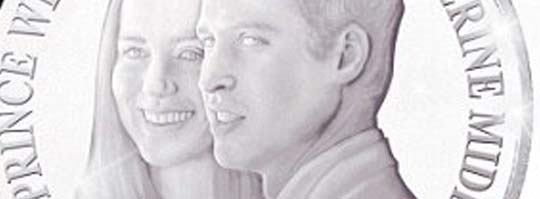
Royal wedding coin

Royal wedding coin

The Royal Mint has made preparations to begin production of a commemorative coin to celebrate the wedding of Prince William and Kate Middleton, fuelling speculation that they are poised to announce their engagement.

The project is so secret that staff at the Royal Mint’s plant at Llantrisant have been banned from talking about the coin, but insiders have confirmed that the initial design work has been done.

One source said: ‘I have seen the plaster model from which they will cast the die. They are ready to go. All they are waiting for is the date.’

Last night Clarence House said it was unaware that the Royal Mint had prepared for production of the coin.
Full story: http://www.dailymail.co.uk/news/article-1321225/Prince-William-Kate-Middletons-wedding-What-does-royal-mint-know-dont.html

The British Monarchy website
http://www.royal.gov.uk/
http://www.britishroyalwedding.com/category/royal-engagement/

I assume it will be in Westminster……………
Great news, just what England needs during these difficult times

British Tour Guide
HisTOURies UK – The Best Tours in British History

Read Full Post »

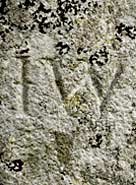
Sir Christopher Wren, the famous 17th century architect, left his mark on Stonehenge – but in a quite unexpected way. His name is skillfully chiselled into one of the 40-tonne sarsens that watches over the dig.
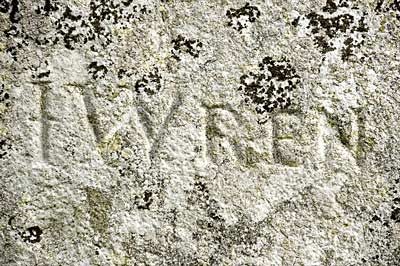
Christopher Wren Grafitti - Stonehenge

Christopher Wren Grafitti - Stonehenge

Was Christopher Wren a Mason ?

“Records of the Lodge Original, No. 1, now the Lodge of Antiquity No. 2”
mention him as being Master of the lodge.

Christopher WrenOne of the most distinguished architects of England was the son of Dr. Christopher Wren, Rector of East Knoyle in Wiltshire, and was born there October 20, 1632. He was entered as a Gentleman Commoner at Wadham College, Oxford, in his fourteenth year, being already distinguished for his mathematical knowledge. He has said to have invented, before this period, several astronomical and mathematical instruments. In 1645, he became a member of a scientific club connected with Gresham College, from which the Royal Society subsequently arose. In 1653, he was elected a Fellow of All Souls College, and had already become known to the learned men of Europe for his various inventions.
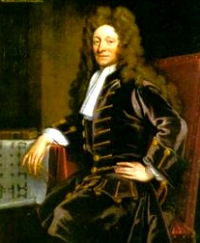
Christoher Wren

Christoher Wren

In 1657, he removed permanently to London, having been elected Professor of Astronomy at Gresham College. During the political disturbances which led to the abolition of the monarchy and the establishment of the Commonwealth, Wren, devoted to the pursuits of philosophy, appears to have kept away from the contests of party. Soon after the restoration of Charles II, he was appointed Savillian Professor at Oxford, one of the highest distinctions which could then have been conferred on a scientific man. During this time he was distinguished for his numerous contributions to astronomy and mathematics, and invented many curious machines, and discovered many methods for facilitating the calculations of the celestial bodies. Wren was not professionally educated as an architect, but from his early youth had devoted much time to its theoretic study. In 1665 he went to Paris for the purpose of studying the public buildings in that city. and the various styles which they presented.

He was induced to make this visit, and to enter into these investigations, because, in 1660, he had been appointed by King Charles II one of a Commission to superintend the restoration of the Cathedral of Saint Paul’s, which had been much dilapidated during the times of the Commonwealth. But before the designs could be carried into execution, the great fire occurred which laid so great a part of London, including Saint Paul’s, in ashes.

Wren was appointed assistant in 1661 to Sir John Denham, the Surveyor-General, and directed his attention to the restoration of the burnt portion of the city. His plans were, unfortunately for the good of London, not adopted, and he confined his attention to the rebuilding of particular edifices. In 1667, he was appointed the successor of Denham as Surveyor General and Chief Architect.

In this capacity he erected a large number of churches, the Royal Exchange, Greenwich Observatory, and many other public edifices. But his crowning work, the masterpiece that has given him his largest reputation, is the Cathedral of Saint Paul’s, which was commenced in 1675 and finished in 1710. The original plan that was proposed by Wren was rejected through the ignorance of the authorities, and differed greatly from the one on which it has been constructed. Wren, however, superintended the erection as master of the work, and his tomb in the crypt of the Cathedral was appropriately inscribed with the words Si monumentum requiris, circumspice; that is, If you seek his monument, look around.

Wren was made a Knight in 1672, and in 1674 he married a daughter of Sir John Coghill. To a son by this marriage are we indebted for memoirs of the family of his father, published under the title of Parentalia.

After the death of his wife, he married a daughter off Viscount Fitzwilliam. In 1680, Wren was elected President of the Royal Society, and continued to a late period his labors on public edifices, building, among others, additions to Hampton Court and to Windsor Castle. After the death of Queen Anne, who was the last of his royal patrons, Wren was removed from his office of Surveyor-General, which he had held for a period of very nearly half a century. He passed the few remaining years of his life in serene retirement. He was found dead in his chair after dinner, on February 25, 1723, in the ninety-first year of his age.

Notwithstanding that much that has been said by Doctor Anderson and other writers of the eighteenth century, concerning Wren’s connection with Freemasonry, is without historical confirmation, there can, Doctor Mackey believed, be no doubt that he tools a deep interest in the Speculative as well as in the Operative Order.

The Rev. J. W. Laughlin, in a lecture on the life of Wren, delivered in 1857, before the inhabitants of Saint Andrew’s, Holborn, and briefly reported in the Freemasons Magazine, said that “Wren was for eighteen years a member of the old Lodge of Saint Paul’s, then held at the Goose and Gridiron, near the Cathedral, now the Lodge of Antiquity; and the records of that Lodge show that the maul and trowel used at the laying of the stone of Saint Paul’s, together with a pair of carved mahogany candlesticks, were presented by Wren, and are now in possession of that Lodge.” By the order of the Duke of Sussex, a plate was placed on the mallet or maul, which contained a statement of the fact.

C. W. King, who was not a Freemason, but has derived his statement from a source to which he does not refer (but which was perhaps Nicolai) makes, in his work on the Gnostics (page 176) the following statement, which is here quoted merely to show that the traditionary belief of Wren’s connection with Speculative Freemasonry is not confined to the Craft. He says:
Another and a very important circumstance in this discussion must always be kept in view: our Freemasons (as at present organized in the form of a secret Society) derive their title from a mere accidental circumstances connected with their actual establishment. It was in the Common Hall of the London Gild of Freemasons (the trade) that their first meetings were held under Christopher Wren, president, in the time of the Commonwealth.

Their real object was political-the restoration of monarchy; hence the necessary exclusion of the public and the oaths of secrecy enjoined on the members. The presence of promoting architectures and the choice of the place where to hold their, meetings, suggested by the profession of their president, were no more than blinds to deceive the existing government.

Doctor Anderson, in the first edition of the Constitutions, makes but a slight reference to Wren, only calling him “the ingenious architect, Sir Christopher Wren.” Doctor Mackey was almost afraid that this passing notice of him who has been called “the Vitruvius of England” must be` attributed to servility. George I was the stupid monarch who removed Wren from his office of Surveyor-General, and it would not do to be too diffuse with praise of one who had been marked by the disfavor of the king. But in 1727 George I died, and in his second edition, published in 1738, Doctor Anderson gives to Wren all the Masonic honors to which he claims that he was entitled.

It is from what Anderson has said in that work, that the Masonic writers of the eighteenth century and the first half of the nineteenth, not requiring the records of authentic history, have drawn their views of the official relations of Siren to the Order. He first introduces Wren (page 101) as one of the Grand Wardens at the General Assembly held December 27, 1663, when the Earl of Saint Albans was Grand Master, and Sir John Denham, Deputy Grand Master. He says that in 1666 Wren was again a Grand Warden, under the Grand Mastership of the Earl of Rivers; but immediately afterward he calls him Deputy Wren, and continues to give him the title of Deputy Grand Master until 1685, when he says (page 106) that “the Lodges met, and elected Sir Christopher Wren Grand Master, who appointed Mr. Gabriel Cibber and Mr. Edmund Savage Grand Wardens; and while carrying on Saint Paul’s he annually met those Brethren who could attend him, to keep up good old usages.”

Brother Anderson (on page 107) makes the Duke of Richmond and Lennox Grand Master, and reduces Wren to the rank of a Deputy; but he says that in 1698 he was again chosen Grand Master, and as such “celebrated the Cape-stone” of Saint Paul’s in 1708. “Some few years after this,” he says, “Sir Christopher Wren neglected the office of Grand Master.” Finally he says (on page 109) that in 1716 “the Lodges in London finding themselves neglected by Sir Christopher Wren,” Freemasonry was revived under a new Grand Master. Some excuse for the aged architect’s neglect might have been found in the fact that he was then eighty-five years of age, and had been long removed from his public office of Surveyor-General. Brother Noorthouek is more considerate. Speaking of the placing of the last stone on the top of Saint Paul’s-which, notwithstanding the statement of Doctor Anderson, was done, not by Wren, but by his son-he says (Constitutions, page 204): The age and infirmities of the Grand Master, which prevented his attendance on this solemn occasion, confined him afterwards to great retirement; so that the Lodges suffered from many of his usual presence in visiting and regulating their meetings, and were reduced to a small number.

Brother Noorthouck, however, repeats substantially the statements of Doctor Anderson in reference to Wren’s Grand Mastership. How much of these statements can be authenticated by history is a question that must be decided only by more extensive investigations of documents not yet in possession of the Craft. Findel says in his History (page 127) that Doctor Anderson, having been commissioned in 1735 by the Grand Lodge to make a list of the ancient Patrons of the Freemasons, so as to afford something like a historical basis, “transformed the former Patrons into Grand Mastefs, and the Masters and Superintendents into Grand Wardens and the like, which were unknown until the year 1717.” Of this there can be no doubt; but there is other evidence that Wren was a Freemason. In Aubrey’s Natural History of Wiltshire (page 277) a manuscript in the library of the Royal Society, Halliwell finds and cites, in his Early History of Freemasonry in England (page 46) the following passage: This day, May the 15th, being Monday, 1691, after Rogation Sunday, is a great convention at Saint Paul’s Church of the Fraternity of the Accepted (the word Free was first written, then the pen drawn through it and the word Accepted written over it) Seasons, where Sir Christopher Wren is to be adopted a brothers and Sir Henry Goodrie of the Tower, and divers others. There have been Kings that have been of this sodality.

If this statement be true-and we have no reason to doubt it, from Aubrey’s general antiquarian accuracy-Doctor Anderson is incorrect in making him a Grand Master in 1685, six years before he was initiated as a Freemason. The true version of the story probably is this: Wren was a great architect-the greatest at the time in England. As such he received the appointment of Deputy Surveyor-General under Denham, and subsequently, on Ocnham’s death, of Surveyor-General. He thus became invested, by virtue of his office, with the duty of superintending the construction of public buildings.

The most important of these was Saint Paul’s Cathedral, the building of which he directed in person, and with so much energy that the parsimonious Duchess of Marlborough, when contrasting the charges of her own architect with the scant remuneration of Wren, observed that “he was content to be dragged up in a basket three or four times a week to the top of Saint Paul’s, and at great hazard, for £200 a year.”

All this brought him into close connection with the Gild of Freemasons, of which he naturally became the patron, and subsequently he was by initiation adopted into the modality Wren was, in fact, what the Medieval Masons called Magister Operis, or Master of the Work. Doctor James Anderson, writing for a purpose naturally transformed this title into that of Grand Master-an office supposed to be unknown until the year 1717. Aubrey’s authority, in Doctor Maelsey’s opinion, sufficiently establishes the fact that Wren has a Freemason, and the events of his life prove his attachment to the profession.

Whether Sir Christopher Wren was or not a member of the Fraternity has long been debated with lively interest. The foregoing statement by Doctor Mackey gives the principal facts and we may note that two newspapers announced his funeral, Lost boy (No. 5245, March 2-5, 1793) and the British Journal (No. 25, March 9, 1723).

Both of them allude to Wren as “that worthy Freemason.” Brother Christopher Wren, Jr., the son of Sir Christopher Wren, was Master of the famous Lodge of Antiquity in 1729. The subject is discussed in Doctor Mackey’s revised History of Freemason also by Sir John S. Cockburn, Masonic Record, March, 1923, in Square and Compass, September, 1923, and many other journals, as well as in Records of Antiquity Lodge, volume i, by Brother W. H. Rylands, and volume ii, by Captain C. W. Firebrace, there is much additional and valuable firsthand information favoring Wren’s active connection with the Fraternity, some items personally checked by us at the Lodge itself.

Brother K. R. H. Mackenzie in the Royal Masonic Cyclopaedia says,

There can be little doubt that Wren took a deep interest in speculative as well as operative Masonry (see Book of Constitutions) and that he was an eminent Member of the Craft cannot be doubted, but the dates respecting Wren’s initiation are vague and unsatisfactory, none of the authorities agreeing. It would seem certain, however, that for many years he was a member of the old Lodge of Saint Paul’s, meeting at the (Bose and gridiron, in Saint Paul’s Churchyard.

Brother Robert F. Gould (History of Freemasonry, me ii, page 55) says, The popular belief that Wren was a Freemason, though hitherto unchallenged, and supported by a great weight of authority, is, in my judgment, unsustained by any basis of well-attested fact. The admission of the great architect-at any period of his life-into the Masonic fraternity, seems to me a mere figment of the imagination, but it may at least he confidently asserted, that it cannot be proved to be a reality.

Rev. A. F. A. Woodford, Renning’s Cyclopedia of Freemasonry, says, In Freemasonry it has been general for many years to credit Sir Christopher Wren with every thing great and good before the ” Revival,” but on very slender evidence. He is said to have been a member of the Lodge of Antiquity for many years; “and the maul and trowel used at the laving of the stone of Saint Paul’s, with a pair of carved mahogany candlesticks, were presented ” by hind and are in the possession of the Lodge.

Doctor Anderson chronicles him as Grand Master in 16S5; but according to a manuscript of Aubrey’s in the Royal Society, he was not admitted a Brother Freemason until 1691. Unfortunately, the early records of the celebrated Lodge of-Antiquity have been lost or destroyed, so there is literally nothing certain as to Wren’s Masonic career, what little has been circulated is contradictory. It is, of course, more than likely he took an active part in Freemasonry, though he was not a member of the Masons Company; but as the records are wanting, it is idle to speculate, and absurd to credit to his labors on behalf of our Society what there is not a title of evidence to prove.

Brother Hawkins, an editor of this work, also prepared for the Concise Cyclopedia of freemasonry, the following summary of the arguments on both sides of the question at issue: Those who contend that he was not a Freemason reply as follows:

1. No reference to the convention mentioned by Aubrey has yet been discovered elsewhere, and it remains uncertain whether it ever was held and whether the proposed adoption of the illustrious architect took place or not; also it is inconsistent with the dates given in the 1738 Constitutions.

2. In the Constitutions of 1723, he is only described as lithe ingenious architect,” without any hint of his being a Freemason.

3. It is incredible that Doctor Anderson, when compiling the 1723 Constitutions, should have been ignorant of the details of Wren’s Masonic career which he gave so from in 1735; moreover, he has claimed as Grand Masters are most all distinguished men from Adam downwards, though there was no such office as Grand Master until 1117, and his dates are inconsistent with that given by Aubrey.

4. Subsequent writers all quoted from the 1738 Constitutions and therefore their evidence is worth no more than Doctor Anderson’s, and no such records as Preston refers to can now be found, nor can the legendary history of the candlesticks and the mallet be authenticated. Such are the arguments for and against Wren’s connection with the Craft; those who claim him as a Freemason must reconcile as best they can the conflicting dates given by Aubrey and Anderson: and those who regard his membership as equally a fable with his Grand Mastership must somehow explain away the contemporary evidence of the two newspapers that in the year of his death called him ‘ ‘ that worthy Freemason.”

– Source: Mackey’s Encyclopedia of Freema
sonry

External links:
http://www.freemasons-freemasonry.com/christopher_wren_freemasonry.html

http://www.themodernantiquarian.com/site/609

http://www.stonehenge-stone-circle.co.uk

http://www.StonehengeTours.com
The only way to get close up to the stones and see 5000 years of grafitti carved onto them is by joing in private access tout.  This is where you visit Stonehenge when the site is closed to the public, usually at sunrise or sunset. 

If you look very  closely at the heel (south west view)stonesits even possible  to se a funny carved handshake?

Stonehenge Tour Guide
HisTOURies UK Tours – The Best Tours in Wessex

Read Full Post »
The British Flag: a symbol of Unity

The Union Jack is a transnational flag full of historical significance. It represents the union of different countries and the growth of a family of nations whose influence extends far beyond the British Isles. This far-reaching influence is still seen today in the incorporation of the Union Jack in other national flags such as that of Australia. The British flag is called the “Union Jack”, an expression that needs to be explained.

The Union Jack is a fine expression of unity as well as diversity. The British flag incorporates the national symbols of three distinct countries, England, Scotland and Northern Ireland. In fact its name “Union Jack” emphasises the very nature of the United Kingdom of Great Britain and Northern Ireland as a union of nations. The flag is also known by another name, this too, emphasising the idea of union: the “Union flag”, perhaps a less common term but a little more precise. The countries comprising the British Isles are not inward-looking or isolated states with an insular mentality; together they constitute a powerful union that has spanned centuries. Recent devolution that gave Scotland its own Parliament and Wales its own Assembly has also emphasised the importance of individual national identities within the union without affecting the essential unity of Great Britain. On the contrary, it has strengthened it. Recognition of, and respect for national identities are an essential ingredients for effective union. The Union Jack symbolises all this: respect for individuality within a closely knit community.

The “Union Jack” or “Union Flag” is a composite design made up of three different national symbols:

st_georges's_cross st_andrew's_cross
St. George’s Cross,
the flag of England
St. Andrew’s Cross,
the flag of Scotland


st_patrick's_cross
St. Patrick’s Cross,
the flag of Ireland

The cross represented in each flag is named after the patron saint of each country: St. George, patron saint of England, St. Andrew, patron saint of Scotland and St. Patrick, patron saint of Ireland.

The image below renders the idea of the union of the three flags forming one unified, transnational Flag.

The image below renders the idea of the union of the three flags forming one unified, transnational Flag.

union_jack

No mention has been made of the Welsh flag. The Welsh dragon was not incorporated into the Union Flag because Wales had already been united to England when the first version of the Union Flag was designed in 1606. It is, however, in common use:

welsh dragon
The Welsh Dragon

 THE HISTORY OF THE UNION JACK

The first step taken in the creation of the flag of Great Britain was on 12th April 1606. When King James VI of Scotland became king of England (King James I) it was decided that the union of the two realms under one king should be represented symbolically by a new flag. Originally It consisted in the red cross of England superimposed on the white cross of Scotland on the blue background of the Scottish flag as in this illustration:
gb-1606 

Thus we have the first flag of the union called, in fact, the “Union Flag”.

What was meant to be a symbol of unity actually became a symbol of international controversy. The English resented the fact that the white background of their cross had disappeared and that the new flag had the blue Scottish background. On the other hand the Scottish resented the fact that the English red cross was superimposed on the Scottish white cross!! The old adage says you cannot please everyone but this first version of the Union Flag seemed to please no-one!!

Apparently there was an unofficial “Scottish version” that attempted to rectify the sense of injustice that the Scottish felt at this innovatory flag. A distinct reference was made to this version when the King visited Dumfries in 1618. Here is what it looked like: 

gb-altsc 

The controversy was destined to last!! There is conflict in the best of families!!

However, the flag was usually restricted to use at sea until the two kingdoms of Scotland and England were united in 1707. It was most probably from this use at sea that it got the name “Jack” (“Union Jack“). It was usually flown at the bow end of the ship, from the jack staff.

An attempt was made to modify the flag under Oliver Cromwell. A harp was placed in the centre, representing Ireland. However, the original design was restored along with the restoration of the monarchy in 1660.

The flag continued to be used in its original form until Jan. 1, 1801. At that time, with the union of Ireland and Great Britain, it became necessary to represent Ireland in the Union Flag and so the cross of St. Patrick was include thus creating the flag as we now have it. When the southern part of Ireland gained its independence in 1921 and became the Irish Free State no alteration was made to the Union Jack.

The name “Union Jack” became official when it was approved in Parliament in 1908. It was stated that “the Union Jack should be regarded as the National flag”.

British Tour Guide – Fly the Flag!
HisTOURies UK Tours – See the very Best of Britain

Read Full Post »

Guy Fawkes and Bonfire Night

Guy Fawkes Effigy

Guy Fawkes Effigy

The tradition of Guy Fawkes-related bonfires actually began the very same year as the failed coup. The Plot was foiled in the night between the 4th and 5th of November 1605. Already on the 5th, agitated Londoners who knew little more than that their King had been saved, joyfully lit bonfires in thanksgiving. As years progressed, however, the ritual became more elaborate.

Soon, people began placing effigies onto bonfires, and fireworks were added to the celebrations. Effigies of Guy Fawkes, and sometimes those of the Pope, graced the pyres. Still today, some communities throw dummies of both Guy Fawkes and the Pope on the bonfire (and even those of a contemporary politician or two), although the gesture is seen by most as a quirky tradition, rather than an expression of hostility towards the Pope.

Preparations for Bonfire Night celebrations include making a dummy of Guy Fawkes, which is called “the Guy”. Some children even keep up an old tradition of walking in the streets, carrying “the Guy” they have just made, and beg passersby for “a penny for the Guy.” The kids use the money to buy fireworks for the evening festivities.

On the night itself, Guy is placed on top of the bonfire, which is then set alight; and fireworks displays fill the sky.

The extent of the celebrations and the size of the bonfire varies from one community to the next. Lewes, in the South East of England, is famous for its Bonfire Night festivities and consistently attracts thousands of people each year to participate.

Bonfire Night is not only celebrated in Britain. The tradition crossed the oceans and established itself in the British colonies during the centuries. It was actively celebrated in New England as “Pope Day” as late as the 18th century. Today, November 5th bonfires still light up in far out places like New Zealand and Newfoundland in Canada.

The Gunpowder Plot of 1605

In 1605, thirteen young men planned to blow up the Houses of Parliament. Among them was  Guy Fawkes, Britain’s most notorious traitor.

After Queen Elizabeth I died in 1603, English Catholics who had been persecuted under her rule had hoped that her successor, James I, would be more tolerant of their religion. James I had, after all, had a Catholic mother. Unfortunately, James did not turn out to be more tolerant than Elizabeth and a number of young men, 13 to be exact, decided that violent action was the answer.

A small group took shape, under the leadership of Robert Catesby. Catesby felt that violent action was warranted. Indeed, the thing to do was to blow up the Houses of Parliament. In doing so, they would kill the King, maybe even the Prince of Wales, and the Members of Parliament who were making life difficult for the Catholics. Today these conspirators would be known as extremists, or terrorists.

To carry out their plan, the conspirators got hold of 36 barrels of gunpowder – and stored them in a cellar, just under the House of Lords.

But as the group worked on the plot, it became clear that innocent people would be hurt or killed in the attack, including some people who even fought for more rights for Catholics. Some of the plotters started having second thoughts. One of the group members even sent an anonymous letter warning his friend, Lord Monteagle, to stay away from the Parliament on November 5th. Was the letter real?

The warning letter reached the King, and the King’s forces made plans to stop the conspirators.

Guy Fawkes, who was in the cellar of the parliament with the 36 barrels of gunpowder when the authorities stormed it in the early hours of November 5th, was caught, tortured and executed.

It’s unclear if the conspirators would ever have been able to pull off their plan to blow up the Parliament even if they had not been betrayed. Some have suggested that the gunpowder itself was so old as to be useless. Since Guy Fawkes and the other conspirators got caught before trying to ignite the powder, we’ll never know for certain.

Even for the period which was notoriously unstable, the Gunpowder Plot struck a very profound chord for the people of England. In fact, even today, the reigning monarch only enters the Parliament once a year, on what is called “the State Opening of Parliament”. Prior to the Opening, and according to custom, the Yeomen of the Guard search the cellars of the Palace of Westminster. Nowadays, the Queen and Parliament still observe this tradition.

On the very night that the Gunpowder Plot was foiled, on November 5th, 1605, bonfires were set alight to celebrate the safety of the King. Since then, November 5th has become known as Bonfire Night. The event is commemorated every year with fireworks and burning effigies of Guy Fawkes on a bonfire.

Some of the English have been known to wonder, in a tongue in cheek kind of way, whether they are celebrating Fawkes’ execution or honoring his attempt to do away with the government.

Doing something different this November 5th – Go to the Ottery st Mary Tar barreling night

Roll Out the Barrel
Pagan Traditions survive in Devon Town

Driving through the main square of Ottery St Mary on the afternoon of November 6th, the only townspeople I see are two elderly gentlemen with sturdy little dogs and a young girl on a bicycle. The quiet Devonshire town in the beautiful Otter Valley shows no signs of the previous night’s revelry. Nearly a week before, on October 31st, the annual festival had started with the traditional procession through the village, complete with Carnival Queen and Princesses and brightly-coloured floats sponsored by local groups.

The final day, November 5th (Guy Fawkes’ Night), culminates in rituals far more hair-raising than the traditional bonfire and fireworks enjoyed by the rest of the country. Before dawn, the local people come out into the streets and fire ‘cannon’ – hand-held pieces of piping which are filled with gunpowder and fired in the traditional way, to create an almighty flash and a loud bang. This is repeated at 1pm and again at 4pm.

However, the real treat is kept for the evening, when thousands of people from across the county and beyond congregate to watch barrels full of burning tar being rolled up and down the streets and through the main square. This is an extremely ancient tradition, possibly older than that of the unhappy Guy Fawkes himself. Fire festivals around the time of Halloween are deeply rooted in British folklore and have been connected with the ritual burning of witches. It is a great honour to be allowed to take part in the barrel rolling and this has continued in some local families for generation after generation.

The weather was against us, both windy and raining hard and we arrived late, around 8pm. It was only a short walk into town from the car park, along the main street past the softly floodlit church. All the roads had been closed since 5pm and the reason was clear: all the public areas were filled with people from elderly pensioners to tiny children, watching the burning barrels and frantically trying to dodge as they came closer and then moved off again. The barrel rollers carry the barrels on their shoulders and protect their hands with dampened sacking. They run back and forth with the barrel until they can no longer stand the heat and then they pass it to the next person in line. The more experienced bearers achieve this by whirling the barrel around their heads until their successor is ready to accept it.

Some of the rollers are quite sedate, clearly experienced, travelling up and down amongst the crowd. Others are keen to prove their strength and race along, taking the crowd by surprise and scattering people in their wake. All end up sooty from head to foot. As I watched, one teenager’s hair caught fire but was rapidly extinguished by his neighbour. The emergency services stand by for more serious situations. Barrels are rolled at designated times at various sites across town, mostly associated with and sponsored by the nearest pub. They start with the smaller barrels for women and boys in the afternoon and progress to ever-larger barrels carried by the men late into the night. As the evening progresses, so the drinking takes effect, the atmosphere becomes wilder and the experience more hazardous. It is not unknown for people to break the glass shop fronts of the main square as the throng heaves to and fro.

For those who lose their nerve or simply want to take a break from the main spectacle, there is a vast bonfire with a traditional Guy on it down by the water. Across the river from the bonfire are the bright lights of the travelling funfair, with all kinds of stalls and rides. The thousands of visitors are catered for by mobile vans selling everything from candy floss to hog roast and the pubs are open all night, although you’d be lucky to get a drink with the numbers of people who gather there. The most highly prized souvenir of the evening is one of the metal rings from the burnt out barrels.

Since the traditional rolling of burning barrels at Lewes in Sussex was banned following a tragic accident some years back, this is probably the most important festival of its kind. The exemplary organisation of the Ottery event has warded off similar threats but be warned: on a damp night the car park becomes a marsh and if you don’t want to go through a change of clothes and several car washes, you might do well to join one of the many coach parties run from Exeter.

Ottery St Mary Tar Barrels link

Have a safe ‘Guy Fawkes’ night

British Tour Guide
HisTOURies UK – The Best Tours in History

For 400 years, bonfires have burned on November 5th to mark the failed Gunpowder Plot.

Read Full Post »

Engineers are to carry out emergency repairs on an 18th Century bridge in Bath after cracks were found in a support.

Subsidence was found in a basement built into the base of Pulteney Bridge.

Pultney Bridge

Pultney Bridge

Bath and North East Somerset Council (Banes) said mortar from previous repair work had shifted but there was no danger of the bridge collapsing.

The council wants to close the historic structure to traffic, but some residents are objecting to the plans.

Banes says the bridge – a Grade I listed structure – is unsuitable for modern traffic.

They submitted a closure plan before the current repair work was needed.

However, some residents fear the bridge’s closure would cut them off from the city centre.

The issue had been due to go before the council on 3 November, but this has now been put back to some time in 2011.

A temporary scaffolding system is being put in place to support the bridge until permanent repairs can get under way.

History of Pultney Bridge

Pulteney Bridge (Photo Bath and North East Somerset Council)

Pulteney Bridge is one of the most admired buildings in a beautiful city.

Pulteney Bridge is one of only four bridges lined with shops in the world, but Robert Adam’s creation has more than novelty value. His graceful composition is one of the unqualified successes of English Palladianism and provides the perfect integrating link between two halves of a Palladian city.

Across the River Avon from Bath lay the 600 acre estate of Bathwick. This was entirely rural when it was inherited by Frances Pulteney in October 1767, but its potential was obvious. No other English spa could rival Bath in this period and the city was in the midst of a building boom. Frances was married to an Edinburgh lawyer, William Johnstone Pulteney, and this energetic and frugal Scot immediately began to make plans to develop his wife’s estate. His first problem was that the only direct route from Bath to Bathwick was by ferry. By February 1768, he was conferring with Bath City Council about a new bridge. At first Pulteney contemplated just a simple, functional bridge, designed by a local architect, but by the summer of 1770 the brothers Adam were involved and the plans had undergone a dramatic change.

Pulteney Bridge by Thomas Malton 1785 (Victoria Art Gallery, Bath)

Pulteney had approached the Adams with his new town in Bathwick in mind. We may guess that Robert Adam then suggested putting shops on the bridge. He had visited both Florence and Venice, where he would have seen the ancient Ponte Vecchio and the striking Ponte di Rialto. But the most direct influence on Adam was clearly Andrea Palladio’s rejected design for the Rialto. Stripped of its heavier ornamentation, this tribute to ancient Rome emerged from Adam’s hands as the coolest of English understatements.

England also had housed bridges of medieval origin, but by the 18th century these were being seen as impediments to traffic. Adam’s designs therefore caused some consternation in Bath. The Corporation, who had not been consulted, wrote to Pulteney in protest. They evidently thought it perverse that after London and Bristol had cleared their bridges of houses, he was proposing to bring this outdated phenomenon to Bath. But Pulteney remained adamant. Perhaps the prospect of the bridge paying for itself through shop rents appealed to his love of economy. Pulteney Bridge by Thomas Malton 1779 (Victoria Art Gallery, Bath)

Adam planned a row of eleven small shops on each side, with staircases to attics above. Lofty Venetian windows formed the centrepiece of his design for the river façades, while matching Venetian doors faced the street. These were echoed in a pattern of recessed, columned windows, creating an interesting play of light and shadow for passers-by. Malton’s aquatint gives us our only view of these lovely street façades, subsequently much altered.

Pulteney Bridge was complete and ready for occupation in late 1773, but tenants were slow to come forward. The shock of the American War of Independence had fallen like an axe on Bath’s development. The plans for Bathwick were shelved and for many years, Adam’s elegant and urbane bridge led out onto meadows, rather than a Palladian townscape. When building eventually began in March 1788, it was Thomas Baldwin, a Bath architect, who provided the detailed plans. Pulteney Bridge was left as Adam’s only work in Bath.

Pulteney at least had the tact to see Adam to his grave before desecrating his handiwork. On 26 March 1792, less than a month after Adam’s death, a lease of most of the bridge was granted, with Baldwin’s plans for conversion to larger shops. The roof was raised and the windows transformed into bays. No doubt it all made sound commercial sense, but Adam’s street elevations were utterly ruined.

This was just the first of many distortions of Adam’s original vision. Disaster struck in September 1799, when a pier gave way after high floods. The remaining pier collapsed when the river rose in a great storm in November 1800. The houses on the north side were so badly damaged that Pulteney seriously considered dismantling the whole structure and building a single-span iron bridge, designed by his protégé Thomas Telford. But in the end only the north side was rebuilt. Adam’s pavilions were reduced to token pediments, but at least the design had unity.

It was not to last. 19th-century shopkeepers altered windows, or cantilevered out over the river as The north side of Pulteney Bridge in 1872 (Victoria Art Gallery, Bath)the fancy took them. By 1948, the buildings had become pathetic travesties of the original design, as Walter Ison sadly noted.

But the tide was already on the turn. Bath City Council showed concern to retain the Adam features of the bridge as early as 1903, when the south-west pavilion had to be moved. In January 1936, Pulteney Bridge was scheduled as a national monument. The Council already owned a few of the shops on it; now they bought the rest and the following year the City Surveyor carefully traced Adam’s own plans and designed a restored façade.

But war intervened. The restoration was finally executed in time for the Festival of Britain in 1951. Then in 1975 the Georgian Group partially restored the southern street facade to mark European Architectural Heritage Year. Now the restored bridge is a delight to photographers and one of the enduring images of Bath that visitors take away with them.

We operate tours of the city of Bath and they can depart from London or Salisbury

Stonehenge Tour Guide
HisTOURies UK – The Best Tours in History

Read Full Post »

« Newer Posts - Older Posts »