Feeds:
Posts
Comments

Archive for the ‘English Heritage’ Category

Out of Earth Exhibition

Out of Earth Exhibition

Renowned potter Chris Carter and archaeologist Martin Green share their fascination with the prehistoric past of Cranborne Chase.  Through art and artefact, they reveal a story of the humans that occupied the landscape before history was written.

Out of the Earth explores a dialogue between artist and archaeologist as they respond to the objects excavated from flint-rich soils of Cranborne Chase.  Artefacts from Martin’s own museum, which displays the finds he has discovered over the years, will be on display alongside Chris’s artwork and objects from Salisbury Museum and Wiltshire Heritage Museum.  Together, the objects describe and uncover the imprints left by farming, community and ritual activities in the past.

Chris and Martin describe themselves as ‘sons of the soil’, both having been raised on farms in the countrysides of Warwickshire and Dorset.  They met following a BBC4 radio show ‘Open Country’ which featured Down Farm on Cranborne Chase.  Martin had been excavating there since he inherited it in 1979 and Chris’s interest in the Chase landscape soon developed into a passion for exploring it through his art.

The exhibition shows new developments in Chris’s work and is itself a testimony to the continuing influence of prehistoric people on us today as their artistry, communities and ritual activities are re-discovered through archaeology.  Chris describes the way he searches for his pots in the clay as akin to the archaeologist’s search for an object in the earth.  Cranborne Chase has encouraged his art to take new routes which have seen him sculpting from flint and creating 2D collage works.  A deep-seated influence of the landscape and farming is apparent in his work; his pots suggest the sinuous twist of the plough and the symmetry of the stone axe, whilst the surface textures reflect the processes of people and nature on the landscape.

Both pot and artefact have a power and contemplative quality that makes Out of the Earth an exhibition not to be missed.  Here, the passion for the Cranborne landscape and for the people who lived on and moulded it, is deep-seated, inherent and heartfelt.  The stories revealed are told by two people who know the landscape intimately, both inside and out, and can tell those stories with an authority and understanding that cannot be disputed. 

Link: http://www.salisburymuseum.org.uk/exhibitions/exhibitions/174-out-of-the-earth.html
Sponsors: The Stonehenge Tour Company – www.StonehengeTours.com

Well worth a visit!

HisTOURies UK – Mystical Landscape, Magical Tours
The Best Tours in British History
Read Full Post »

A metal detector enthusiast located more than 100 bronze items, thought to be about 2,700 years old, on a farmland site which is being kept secret.

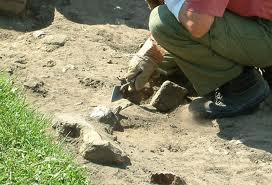
Having first found a spearhead, he decided not to disturb the ground and notified archaeologists, who were able to conduct a meticulous excavation.

The finds, from the late Bronze Age and early Iron Age, include tools such as chisels, axe heads and gouges, and weapons including fragments of a sword and scabbard and more spearheads.

Experts are hugely excited about the hoard, which is still being catalogued. They are not prepared to guess at its value yet but say it is the biggest in the area since the Salisbury Hoard – now in the British Museum – was discovered in the 1990s.

Salisbury & South Wilts Museum director Adrian Green said: “It’s a very rare and important find, and it’s still fresh out of the ground. This was not previously a known archaeological site. The guy was just metal detecting as a hobby.

“What was significant about it was that he very responsibly told the finds liaison officer for the county, Katie Hinds, who is paid by the British Museum to record finds made by chance like this, rather than just digging it up himself and potentially losing valuable archaeological information.

“This was brilliant, and exactly what we want detectorists to do. She was able to arrange a specialist team to go and dig it up. That’s very important from an academic point of view.

“You could count on two hands the number of Bronze Age hoards which have been recorded professionally by archaeologists in this way.”

The hoard will go to the British Museum to be assessed and there will be an inquest to determine whether it is treasure trove.

If so, Salisbury Museum will have a chance to raise funds to buy it.

Neither the finder nor the landowner wish to be identified
Link : http://www.salisburyjournal.co.uk/news/9336972.Ancient_artefacts_unearthed_in_Tisbury/

The Best Tours in Wessex
HisTOURies UK.  Mystical Landscape, Magical Tours

Read Full Post »

Archaeologists have found the first intact Viking boat burial site in the UK. The 5m-long grave contained the remains of a high-status Viking who was buried with an axe, sword, spear and bronze ring-pin.

”]Excavations at the Ardnamurchan Peninsula [Credit: Ardnamurchan Transitions Project]
The 1,000-year-old find, on the remote Ardnamurchan Peninsula, in the Highlands, was made by Ardnamurchan Transitions Project, a team led by experts from the universities of Manchester and Leicester, CFA Archaeology Ltd and Archaeology Scotland. 

Other finds included a knife, a sharpening stone from Norway, a ring pin from Ireland and Viking pottery. 

Dr Oliver Harris, project co-director from the University of Leicester’s School of Archaeology and Ancient History, said: “This project examines social change on the Ardnamurchan Peninsula from the first farmers 6,000 years ago to the Highland clearances of the 18th and 19th century. 

“It has also yielded evidence for what will be one of the best-dated Neolithic chambered cairns in Scotland when post-excavation work is complete.” 

Source: This is Leicestershire [October 18, 2011]

The Best Tours in British History
HisTOURies UK

Read Full Post »

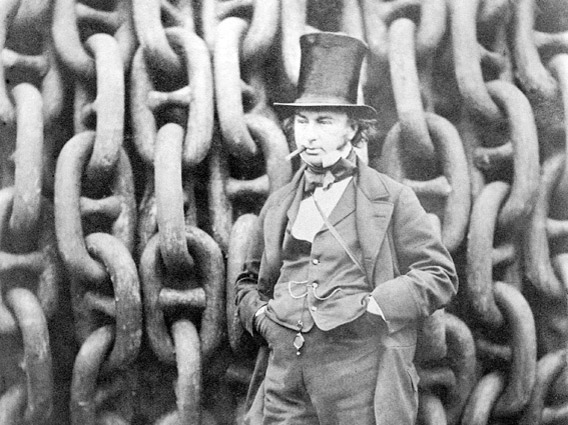
Isambard Kingdom Brunel was born in Portsea, Portsmouth on 6 April 1806. His father Isambard Marc Brunel was also an engineer. He was born in France in 1769 but he fled abroad in 1793 during the French Revolution. In 1799 he married Sophia Kingdom and they had 3 children, Sophia, Isambard and Emma.

Isambard was sent to a boarding school in Hove then in 1820 he was sent to France to finish his education. He returned to England in 1822 and worked with his father as an engineer. In 1824 Marc Isambard Brunel was appointed Engineer to the Thames Tunnel Company. (The company was formed in 1824 to dig a tunnel under the Thames). Work on the project began in 1825 and Isambard Kingdom Brunel assisted his father. In January 1827 he was formally appointed Resident Engineer, in charge of day to day work.


However all did not go well. In January 1829 water rushed into the tunnel and swept away Isambard and all the men working there. Isambard was rescued but 6 men died. Afterwards the tunnel was bricked up. Work on it did not begin again till 1836 and it was not completed till 1843.


Meanwhile Isambard was left without a job so he went to Bristol where he learned of a plan to build a bridge across the Avon Gorge. Brunel’s design for a bridge was adopted and he was appointed Engineer of the Clifton Bridge. Work on the bridge began in 1831. However there were riots in Bristol in 1831 and as a result work on the bridge stopped for 5 years. It began again in 1836 but the builders ran out of money and all work stopped in 1843. It began again in 1862. Clifton Suspension Bridge was finally opened in 1864, 5 years after Brunel’s death.


Meanwhile Isambard was left without a job so he went to Bristol where he learned of a plan to build a bridge across the Avon Gorge. Brunel’s design for a bridge was adopted and he was appointed Engineer of the Clifton Bridge. Work on the bridge began in 1831. However there were riots in Bristol in 1831 and as a result work on the bridge stopped for 5 years. It began again in 1836 but the builders ran out of money and all work stopped in 1853. It began again in 1862. Clifton Suspension Bridge was finally opened in 1864, 5 years after Brunel’s death.


Brunel’s next project was the Great Western Railway. Plans for a railway from London to Bristol were made in 1833. An Act of Parliament allowing the building of the new railway was passed in 1835 and work began the same year. The first section of the Great Western Railway opened from London to Maidenhead in 1837. The last section of the railway opened in 1841.


Meanwhile in July 1836 Brunel married Mary Horsley. They had a son named Isambard in May 1837. Another son, Henry was born in 1842. The couple also had a daughter called Florence.


Meanwhile Brunel worked on two great steamships. The Great Western Steamship Company was formed in 1836 and the Great Western was launched on 19 July 1837. After fitting out she left Bristol on her maiden voyage on 8 April 1838. A second ship, this one made with an iron hull, was launched on 19 July 1843. The Great Britain made its maiden voyage in June 1845.


Among Brunel’s other projects were a railway from Bristol to Exeter, which was completed in 1844 and a railway from Swindon to Gloucester, which opened in 1845.


In 1844 Brunel was appointed engineer of the South Wales Railway, which opened to Swansea in 1850. It opened all the way to Milford Haven in 1856.


Brunel designed Chepstow railway bridge which opened in 1852. Brunel also designed a bridge from Saltash to Plymouth, which opened in 1859.


Brunel also designed a third great steamship the Great Eastern, which was launched in 1858.


However in 1858 Brunel was diagnosed with a kidney disease called Bright’s disease so in November he went abroad to relax. Brunel and his family spent Christmas in Egypt then they spent some time in Italy before returning to England in May 1859. On 5 September 1859 Brunel suffered a stroke. Isambard Kingdom Brunel died on 15 September 1859.

The Best Tours in British History
HisTOURies UK


Read Full Post »

An ancient burial site which dates back thousands of years has been reopened to the public after two years of repairs.

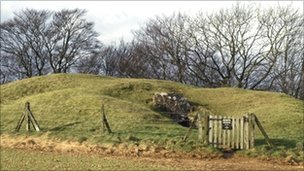
The Long Barrow, known as Hetty Pegler's Tump, could date back as far as 3200BC

The Long Barrow, known as Hetty Pegler's Tump, could date back as far as 3200BC

Uley Long Barrow in Gloucestershire, known as Hetty Pegler’s Tump, was closed while urgent structural work was carried out at the Neolithic site.

Structural damage to the interior dry stone walls of the burial chamber had left it in an unsafe condition.

English Heritage has overseen the work to restore the 120ft (37m) long monument which dates back to 3200BC.

Mark Badger, from English Heritage, said: “We are delighted that this very significant Long Barrow is once again open to visitors.

“The archaeological investigations carried out during the urgent works by the Cotswold Archaeology team have also confirmed the original plan of the burial chambers which were excavated in both 1821 and in 1854.”

Samples of original Neolithic mound material will now be taken away for analysis in a bid to establish a more accurate date.

The scheduled monument is managed by Gloucestershire County Council on behalf of English Heritage and is named after Hester Pegler, the 17th century owner of the field in which it sits.

It is one of a series of ancient stone structures known as the Cotswold-Severn barrow group, sited near Dursley and overlooking the Severn Valley.

Very little is known about who was buried there other than that they were from some of the first settled farming communities

Link: http://www.english-heritage.org.uk/daysout/properties/uley-long-barrow-hetty-peglers-tump/

Wessex Tour Guide
HisTOURies UK – The Best Tours in Ancient History
Mystical Landscape, magical tours………….

Read Full Post »

« Newer Posts