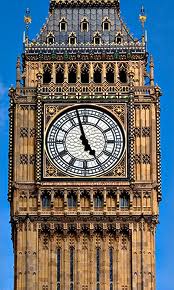
The clocks will go back by one hour at 2.00 am on Sunday 30 October. At 2.00 am, the clocks will return to 1.00 am as British Summer Time ends for another year.
British Summer Time
British Summer Time (BST) starts each year on the last Sunday in March and ends on the last Sunday in October. On Sunday 27 March the clocks will go forward, meaning we lose an hour. British Summer Time is due to end this year on 30 October.
BST is operational on the following dates:
2011
2012
2013
Start of BST (clocks go forward)
27 March
25 March
31 March
End of BST (clocks go back)
30 October
28 October
27 October
Summer time changes on standard dates throughout the EU. Britain and Ireland constantly remain an hour behind most of Central Europe.
The history of daylight saving time
In 1907 an Englishman, William Willett, campaigned to advance clocks by 80 minutes. He proposed four moves of 20 minutes at the beginning of the spring and summer months, and to return to Greenwich Mean Time in a similar manner in the autumn. The following year, the House of Commons rejected a Bill to advance the clocks by one hour during the spring and summer months.
Summer time was first defined in an Act of Parliament in 1916. The clocks were moved one hour ahead of GMT from the spring to the autumn.
During the Second World War, double summer time (two hours in advance of GMT) was introduced, lasting until July 1945.
Since the 1980s, all parts of western and central Europe have co-ordinated the date and the time of their clock changes.
Why Change the Clocks?
Twice a year the clocks change, forward in the Spring and then back again in the Autumn. But why?
It happens twice a year. We all change our clocks and watches by one hour. In the spring, we add an hour, and go onto what is called British Summer Time, while in the autumn, we do the reverse, and adhere to Greenwich Mean Time.
Why bother?It’s all to do with saving the hours of daylight, and was started by a chap called William Willett, a London builder, who lived in Petts Wood in Kent.
Basically, he reckoned that you could improve the population’s health and happiness by putting forward the clocks by twenty minutes every Sunday in April and do the opposite in September.
EconomiesHis idea was not taken up, even though a ‘Daylight Saving Bill’ was introduced some five years before the outbreak of World War One. But once the war started, it was considered prudent to economise, to promote greater efficiency in using daylight hours, and in the use of artificial lighting. And so in 1916, ‘Daylight Saving Time’ was introduced.
Even though most countries abandoned this after that war, some eventually decided that it was a good idea, and most of these nations began to keep it throughout the year.
ExperimentSince 1972, Britain has decided to go with Greenwich Mean Time in winter, and British Summer Time in Summer. But back in 1968, Britain tried a four-year experiment by advancing time one hour ahead of GMT throughout the year.
But those living further north, particularly in Scotland, found it most unsatisfactory, with dark mornings for much of the year, and the experiment was dropped.
If you find yourself gasping, “Wow, that tree’s fatter than anything else like it around here!” the chances are you’ve probably found an ancient tree
The mighty Bowthorpe Oak, near Bourne in Lincolnshire is Europe's greatest girth English Oak at a massive 42 feet Photograph: Alamy
What is an ancient tree? The definition varies from species to species, so a silver birch may be ancient at 150 years old, while an oak of the same age is still a baby. But if you find yourself gasping, “Wow, that tree’s fatter than anything else like it around here!” you’ve probably found one. If you’re tempted to hug it, don’t hold back – ancient trees are essential to biodiversity, providing homes to thousands of species. Hugging is also the easiest way to measure a tree’s girth, to get some clue to its age. The “British standard hug”, as defined by the Woodland Trust, is 1.5 metres (5ft) from fingertip to fingertip.
Here are a few notable specimens; you can find 80,000 more, or log your own discoveries, at ancienttreehunt.org.ukAncient Tree Hunt.
Fortingall yew, Perthshire
Estimated to be at least 3,000 years old and possibly 5,000, this is the oldest yew in Britain. In 1769 its girth was recorded as about 17 metres (55ft). Today you can see only remnants of the old plus new growth amounting to no more than two hugs – a shadow of its former glory but still remarkable.
This 1,000-year-old tree stands in a field at Manthorpe, near Bourne. Its hollow trunk has been used for parties; at one point, it is claimed, three dozen people managed to stand within it.
Llangernyw yew, Conwy
Possibly more than 4,000 years old, the tree in the grounds of St Dygain’s church in Llangernyw is one of the oldest living things in Wales.
Belvoir oak, County Down
This fine oak is thought to be somewhere between 500 and 700 years old, making it probably the oldest tree in Northern Ireland. It is one of many ancient trees in Belvoir Park Forest.
Tolpuddle Martyrs’ tree, Dorset
Under this sycamore in the village of Tolpuddle in 1834, six poverty-stricken agricultural labourers formed the first trade union in Britain.
Spanish chestnuts, Croft Castle, Herefordshire
Among more than 300 veteran trees in the grounds of this castle near Leominster is an avenue of magnificent sweet chestnuts. Some of them are rumoured to have come from nuts from the wrecks of the Spanish Armada in 1592.
Archaeologists have found the first intact Viking boat burial site in the UK. The 5m-long grave contained the remains of a high-status Viking who was buried with an axe, sword, spear and bronze ring-pin.
”]
The 1,000-year-old find, on the remote Ardnamurchan Peninsula, in the Highlands, was made by Ardnamurchan Transitions Project, a team led by experts from the universities of Manchester and Leicester, CFA Archaeology Ltd and Archaeology Scotland.
Other finds included a knife, a sharpening stone from Norway, a ring pin from Ireland and Viking pottery.
Dr Oliver Harris, project co-director from the University of Leicester’s School of Archaeology and Ancient History, said: “This project examines social change on the Ardnamurchan Peninsula from the first farmers 6,000 years ago to the Highland clearances of the 18th and 19th century.
“It has also yielded evidence for what will be one of the best-dated Neolithic chambered cairns in Scotland when post-excavation work is complete.”
Samhain marks one of the two great doorways of the Celtic year, for the Celts divided the year into two seasons: the light and the dark, at Beltane on May 1st and Samhain on November 1st. Some believe that Samhain was the more important festival, marking the beginning of a whole new cycle, just as the Celtic day began at night. For it was understood that in dark silence comes whisperings of new beginnings, the stirring of the seed below the ground. Whereas Beltane welcomes in the summer with joyous celebrations at dawn, the most magically potent time of this festival is November Eve, the night of October 31st, known today of course, as Halloween.
Samhain (Scots Gaelic: Samhuinn) literally means “summer’s end.” In Scotland and Ireland, Halloween is known as O�che Shamhna, while in Wales it is Nos Calan Gaeaf, the eve of the winter’s calend, or first. With the rise of Christianity, Samhain was changed to Hallowmas, or All Saints’ Day, to commemorate the souls of the blessed dead who had been canonized that year, so the night before became popularly known as Halloween, All Hallows Eve, or Hollantide. November 2nd became All Souls Day, when prayers were to be offered to the souls of all who the departed and those who were waiting in Purgatory for entry into Heaven. Throughout the centuries, pagan and Christian beliefs intertwine in a gallimaufry of celebrations from Oct 31st through November 5th, all of which appear both to challenge the ascendancy of the dark and to revel in its mystery.
In the country year, Samhain marked the first day of winter, when the herders led the cattle and sheep down from their summer hillside pastures to the shelter of stable and byre. The hay that would feed them during the winter must be stored in sturdy thatched ricks, tied down securely against storms. Those destined for the table were slaughtered, after being ritually devoted to the gods in pagan times. All the harvest must be gathered in — barley, oats, wheat, turnips, and apples — for come November, the faeries would blast every growing plant with their breath, blighting any nuts and berries remaining on the hedgerows. Peat and wood for winter fires were stacked high by the hearth. It was a joyous time of family reunion, when all members of the household worked together baking, salting meat, and making preserves for the winter feasts to come. The endless horizons of summer gave way to a warm, dim and often smoky room; the symphony of summer sounds was replaced by a counterpoint of voices, young and old, human and animal.
In early Ireland, people gathered at the ritual centers of the tribes, for Samhain was the principal calendar feast of the year. The greatest assembly was the ‘Feast of Tara,’ focusing on the royal seat of the High King as the heart of the sacred land, the point of conception for the new year. In every household throughout the country, hearth-fires were extinguished. All waited for the Druids to light the new fire of the year — not at Tara, but at Tlachtga, a hill twelve miles to the north-west. It marked the burial-place of Tlachtga, daughter of the great druid Mogh Ruith, who may once have been a goddess in her own right in a former age.
At at all the turning points of the Celtic year, the gods drew near to Earth at Samhain, so many sacrifices and gifts were offered up in thanksgiving for the harvest. Personal prayers in the form of objects symbolizing the wishes of supplicants or ailments to be healed were cast into the fire, and at the end of the ceremonies, brands were lit from the great fire of Tara to re-kindle all the home fires of the tribe, as at Beltane. As they received the flame that marked this time of beginnings, people surely felt a sense of the kindling of new dreams, projects and hopes for the year to come.
The Samhain fires continued to blaze down the centuries. In the 1860s the Halloween bonfires were still so popular in Scotland that one traveler reported seeing thirty fires lighting up the hillsides all on one night, each surrounded by rings of dancing figures, a practice which continued up to the first World War. Young people and servants lit brands from the fire and ran around the fields and hedges of house and farm, while community leaders surrounded parish boundaries with a magic circle of light. Afterwards, ashes from the fires were sprinkled over the fields to protect them during the winter months — and of course, they also improved the soil. The bonfire provided an island of light within the oncoming tide of winter darkness, keeping away cold, discomfort, and evil spirits long before electricity illumined our nights. When the last flame sank down, it was time to run as fast as you could for home, raising the cry, “The black sow without a tail take the hindmost!”
Even today, bonfires light up the skies in many parts of the British Isles and Ireland at this season, although in many areas of Britain their significance has been co-opted by Guy Fawkes Day, which falls on November 5th, and commemorates an unsuccessful attempt to blow up the English Houses of Parliament in the 17th century. In one Devonshire village, the extraordinary sight of both men and women running through the streets with blazing tar barrels on their backs can still be seen! Whatever the reason, there will probably always be a human need to make fires against the winter’s dark.
Divination at Halloween
Samhain was a significant time for divination, perhaps even more so than May or Midsummer’s Eve, because this was the chief of the three Spirit Nights. Divination customs and games frequently featured apples and nuts from the recent harvest, and candles played an important part in adding atmosphere to the mysteries. In Scotland, a child born at Samhain was said to be gifted with an d� shealladh, “The Two Sights” commonly known as “second sight,” or clairvoyance.
Apple Magic
At the heart of the Celtic Otherworld grows an apple tree whose fruit has magical properties. Old sagas tell of heroes crossing the western sea to find this wondrous country, known in Ireland as Emhain Abhlach, (Evan Avlach) and in Britain, Avalon. At Samhain, the apple harvest is in, and old hearthside games, such as apple-bobbing, called apple-dookin’ in Scotland, reflect the journey across water to obtain the magic apple.
Dookin’ for Apples
Place a large tub, preferably wooden, on the floor, and half fill it with water. Tumble in plenty of apples, and have one person stir them around vigorously with a long wooden spoon or rod of hazel, ash or any other sacred tree.
Each player takes their turn kneeling on the floor, trying to capture the apples with their teeth as they go bobbing around. Each gets three tries before the next person has a go. Best to wear old clothes for this one, and have a roaring fire nearby so you can dry off while eating your prize!
If you do manage to capture an apple, you might want to keep it for a divination ritual, such as this one:
The Apple and the Mirror
Before the stroke of midnight, sit in front of a mirror in a room lit only by one candle or the moon. Go into the silence, and ask a question. Cut the apple into nine pieces. With your back to the mirror, eat eight of the pieces, then throw the ninth over your left shoulder. Turn your head to look over the same shoulder, and you will see and in image or symbol in the mirror that will tell you your answer.
(When you look in the mirror, let your focus go “soft,” and allow the patterns made by the moon or candlelight and shadows to suggest forms, symbols and other dreamlike images that speak to your intuition.)
Dreaming Stones
Go to a boundary stream and with closed eyes, take from the water three stones between middle finger and thumb, saying these words as each is gathered:
I will lift the stone
As Mary lifted it for her Son,
For substance, virtue, and strength;
May this stone be in my hand
Till I reach my journey’s end.
(Scots Gaelic) Togaidh mise chlach,
Mar a thog Moire da Mac,
Air bhr�gh, air bhuaidh, ‘s air neart;
Gun robh a chlachsa am dh�rn,
Gus an ruig mi mo cheann uidhe.
Carry them home carefully and place them under your pillow. That night, ask for a dream that will give you guidance or a solution to a problem, and the stones will bring it for you.
Article from ‘The Stonehenge Stone Circle’ Website
I don’t normally do articles on ancient sites outside of my own Country, Britain. However I felt this was a significant discovery in Europe and has a Stonehenge connection.
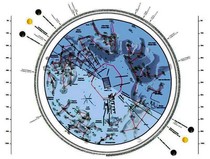
General plan of the early Celtic burial mound with sky constellations.
A huge early Celtic calendar construction has been discovered in the royal tomb of Magdalenenberg, nearby Villingen-Schwenningen in Germany’s Black Forest. The order of the burials around the central royal tomb fits exactly with the sky constellations of the Northern hemisphere.
Whereas Stonehenge was orientated towards the sun, the more than 100-meters-wide burial mound of Magdalenenberg was focused towards the moon. The builders positioned long rows of wooden posts in the burial mound to be able to focus on the Lunar Standstills. These Lunar Standstills happen every 18.6 year and were the corner stones of the Celtic calendar.
Archaeo-astronomic research resulted in a date of Midsummer 618 BCE, which makes it the earliest and most complete example of a Celtic calendar focused on the moon.
After the complete destruction of the Celtic culture by Rome, these types of calendars were completely forgotten.The full dimensions of the lost Celtic calendar system have now come to light again in the monumental burial mound of Magdalenenberg.
Like other European Iron Age tribal societies, the Celts practiced a polytheistic religion. Rites and sacrifices were carried out by priests known as druids. The Celts did not see their gods as having human shapes until late in the Iron Age. Celtic shrines were situated in remote areas such as hilltops, groves, and lakes.
Roman reports of the druids mention ceremonies being held in sacred groves. La Tène Celts built temples of varying size and shape, though they also maintained shrines at sacred trees and votive pools.
Druids fulfilled a variety of roles in Celtic religion, serving as priests and religious officials, but also as judges, sacrificers, teachers, and lore-keepers. Druids organized and ran religious ceremonies, and they memorized and taught the calendar. Other classes of druids performed ceremonial sacrifices of crops and animals for the perceived benefit of the community. Neo-druidism is still practiced today.
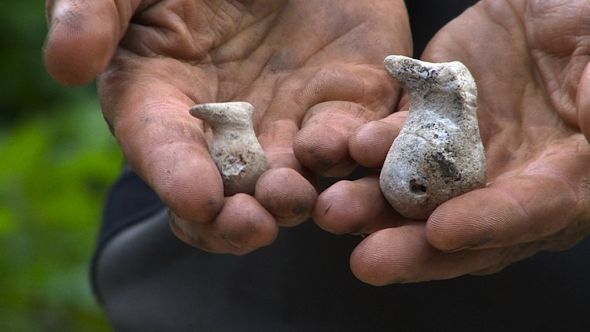
A pair of carved stone ducks unearthed at Vespasian’s Camp near Stonehenge are believed to be the oldest known figurines found in the UK, and are amongst other findings that suggest the sacred site was in use several thousand years before the megalith itself was constructed.
Two stone carvings, in the shape of ducks, dated to around 700 BC. (Luke Beaman/The Open University)
Led by archeologist David Jacques at The Open University, several students uncovered a hoard of artifacts from the mid-Stone Age, including a ceremonial dagger, the remains of an aurochs feast, and more than 5,000 flints and tools.
“We thought it was probably a mixed cache of early prehistoric tools, and assumed some were contemporary with Stonehenge,” Jacques said in a press release.
“When we took them back to Cambridge and a number of experts suggested they were all Mesolithic, we started to get very excited.”
The team found evidence of a fire with over 200 cooked animal bones from at least one aurochs, which were radiocarbon dated back to about 6,250 BC, more than 3,000 years before the giant stone circle was erected.
“Mesolithic people were nomadic hunter-gatherers who would have had temporary settlements,” Jacques explained.
“Salisbury Plain would have been something like the Serengeti with herds of animals roaming across it, and people could have used the hills that sort of create a basin around it as vantage points from which to see the movement of animals.”
Now extinct, aurochs were a type of large cattle that once roamed Eurasia and North Africa, reaching almost two meters in height.
“An aurochs was something like a large minivan in size,” Jacques said. “To catch an animal this big would have been a major feat.”
“It would have fed a lot of people. It’s likely there was a large gathering, possibly as many as 100 people, who cooked and feasted on the aurochs.”
Meanwhile, the ducks were dated back to 700 BC, and the dagger to around 1,400 BC. The figurines are believed to be part of a Bronze Age tradition based on casting sacrificial offerings into water.
Only a few other Mesolithic artifacts have previously been found in the area. Field archeologist Tom Lyons at Oxford Archaeology East said in the release that the discovery is highly significant.
“It’s really exciting to get such a cache of material,” he said. “This certainly makes this find nationally important, if not internationally important”
Three very different national histories are marred by their refusal to admit neighbours into the narrative, writes David Cannadine from the Financial Times.
“There are,” John Julius Norwich notes with pardonable exaggeration in his lively and engaging volume on the subject, “a thousand histories of England, ranging from the scholarly to the popular, the impartial to the tendentious, the consistently riveting to the utterly unreadable.”
The Venerable Bede was the first in the field with his Ecclesiastical History of the English People, completed in AD731. Almost 1,200 years and much more history later, another Northumbrian, G.M. Trevelyan, produced the defining account of the national past, not only for his generation but for the next as well. Yet few histories of England have ever attained the canonical status of Bede or Trevelyan, and the best put-down to what has all too often been a formulaic, parochial and self-satisfied genre remains 1066 and All That by W.C. Sellar and R.J. Yeatman. In a bravura display of historical comedy, they unrelentingly sent up the conventional national narratives built around dates and dynasties, which categorised all people and events as either “good” or “bad”, which chronicled England’s pre-destined rise to being “top nation”, and which lamented that history came to a “full stop” when that pre-eminence was given up at the close of the first world war.
Sellar and Yeatman published their incisive masterpiece of historical hilarity in 1930 but it would be another 50 years before the no-longer-deniable decline of Britain as a great power, and the growing demands for devolution in Wales and Scotland, combined with the “Troubles” in Northern Ireland, encouraged a fundamental rethink of the traditional English national narrative – a reappraisal beginning in 1984 with the Oxford Illustrated History of Britain, developed by Hugh Kearney in his “four nations” history of the British Isles, and brought to broader public attention either side of the millennium by Norman Davies in The Isles: A History and by Simon Schama in his television series History of Britain.
As they saw it, the history of England was no longer the right way to define, approach or understand the national past: instead, they urged a more complex and nuanced treatment, exploring the relations between England, Ireland, Scotland and Wales, recognising the constructed and contingent nature of “Britishness” and paying appropriate attention to the constant interactions between the British and continental Europe and the wider world beyond. Thus understood, the English past was merely one specific component of a much bigger history and multilayered narrative.
“We are told that Hampshire is ‘older’ than France – but what exactly does that mean, and do the French know or care?”
But if the three books under review here are any indication, English history has carried on regardless: for their authors are wholly unengaged with or unimpressed by the scholarly rethinking and upscaling of what constitutes our national past that has by now been going on for three decades and more. John Julius Norwich would shed no tears if Scotland became independent and he focuses exclusively on England because writing its history in one hundred places was just about possible, whereas dealing with Britain as a whole with the same number was not.
For Simon Jenkins, too, England is the subject of his concern. Wales, Scotland and Ireland are separate countries with separate histories, which have only occasionally connected with England: Wales was “a thorn in the side of Norman monarchs”; Scotland had an unrivalled “capacity for causing trouble” for the English; while after the Act of Union, Ireland was “a curse on British political leaders”. And although he had thought of including the histories of Wales, Scotland and Ireland, Peter Ackroyd also concentrates on England, on the grounds that a broader approach would run the risk of “their seeming to become merely extensions of England” – which is exactly how he treats them anyway.
So here, once again, are three little England histories: 1066 and All That, but without the jokes. In A Short History of England, Simon Jenkins provides a brisk and confident narrative from the Saxon dawn beginning in 410 to David Cameron exactly 1,600 years later. He focuses on high politics: kings and queens, war and peace, with (as might be expected of a National Trust chairman) occasional allusions to landscape, churches and country houses. There is nothing here that is new and his account is devoid of context, analysis or explanation, falling back on such banalities as “England had a genius for opportunistic social change” and “new forces were now coming into play”. The Black Death, the “rising middle classes” of Tudor and Stuart times, and the Industrial Revolution are dismissed in little more than a few lines. The marriage of the Prince of Wales and Lady Diana Spencer is thought of more importance than the publication of Darwin’s On the Origin of Species or the Indian Mutiny. If the book has a theme, it is the growth of parliament, but this is insufficiently developed. In the conclusion, we are told on one page that no extra-parliamentary movement has ever acquired political traction but, soon after, we learn that progress in England has always been the result of social, economic and political change welling up from below. It is impossible to make sense of such contradictory signals.
Peter Ackroyd’s Foundation is not only on a larger scale than Jenkins’ brief canter across the centuries, it is also the first of a projected six-volume history of England, which will test the stamina not only of the author but also of his readers. In this opening instalment, he takes us from pre-Stonehenge times to the death of Henry VII in 1509. As with Jenkins, the narrative is built around the reigns of kings and queens, and their interminable quarrels, and even Ackroyd’s talents as a storyteller are taxed when he takes us through the Wars of the Roses, where everyone seems to have been called Henry or Edward or, alternatively, Norfolk or Suffolk, or Gloucester or Salisbury. These chapters stress chance, contingency and unintended consequences, and he interleaves them with accounts of the ordinary lives of ordinary people: religion, family, education, crime, medicine and so on. According to Ackroyd, it is in the deep continuity of ordinary people’s lives and circumstances, rather than in the chaos and confusion of royal politics and dynastic quarrels, that the essence of English history and national identity is to be found. But he offers no convincing explanation as to how or why this has been true or could be true; and he seems unaware of the fact that the job of the historian is at least as much to investigate and question identities as to support and create them.
Like Jenkins, Ackroyd adopts a traditional style of exposition, and tells us little that is new, whereas John Julius Norwich adopts a wholly novel approach, whose obvious indebtedness to Neil MacGregor’s recent History of the World in 100 Objects in no sense diminishes his own book’s interest. In A History of England in 100 Places, he takes us from Stonehenge to the Gherkin, via Offa’s Dyke, Bodiam Castle, Blenheim Palace, Ironbridge, the Albert Memorial and the National Theatre; but he also includes such unexpected places as Brick Lane Mosque in London, Old Sarum in Wiltshire, the Liverpool houses in which John Lennon and Paul McCartney grew up, and Greenham Common. In these short histories, Norwich succeeds in conveying the complex texture and endless fascination of English history in ways that elude both Jenkins and Ackroyd. He has wise things to say about, for example, the general ghastliness of medieval life and medieval monarchs, the splendours of the King James Bible (“the only world-class masterpiece ever created by a committee”), the limitations of the English educational system, and the inexcusable destruction of Dresden by the allies during the second world war (though he does harbour a particular – and unexplained – animus against Queen Anne).
Despite their differences of scale and approach, dates and names and kings and queens loom very large in all three of these books. Ackroyd takes us through English history from the Saxons to the Yorkists reign by reign; Norwich prints a list of monarchs from Offa to Elizabeth II; and Jenkins not only has his own table of English sovereigns but also adds the names of all prime ministers from Sir Robert Walpole to David Cameron, along with his choice of 100 key dates, which he regards as “the finger-posts of history”, and as “the most important turning points in the national story”.
No one would deny that names and dates, narrative and chronology, are important in our past or in that of any other nation. But as these lists serve eloquently (and inadvertently) to show, without context and explanation, so-called “finger posts” and “turning points” can be as meaningless as the names and numbers in a telephone directory. When some politicians call for a “return” to history taught around kings and queens, they need to be reminded that such calls have repeatedly been made for the best part of a century, and that all too often, the cult of names and dates can be a substitute for teaching or learning history, rather than opening up the real thing itself.
In addition to their excessive stress on kings and queens, all three authors go too far in asserting the singular importance and identity of England. Ackroyd tells us that Hampshire is “older” than France (but what exactly does that mean, and do the French know or care?). Jenkins insists that England’s history is “the most consistently eventful of any nation on earth” (he does not seem to have heard of China or Iran). And while writing his book, Norwich was constantly struck by “how unlike the English are to any of their neighbours” (though most of their neighbours would probably say the same thing about themselves).
But while these claims to exceptionalism seem overstated and, indeed, inappropriate to the middle-ranking European power that Britain has for several decades been, all three authors are to be congratulated for offering relatively even-handed accounts of the national past, and for avoiding the sort of cheerleading propaganda that some politicians are also again urging. Each of these books describes extraordinary achievements and (on occasions) admirable and exemplary lives. But they also describe poverty and suffering, cruelty and destruction, duplicity and aggression on a scale that calls to mind what is happening in the most impoverished and war-ravaged parts of the world today.
By focusing as they do so specifically on the history of England, all three authors are in ignorant or deliberate denial of a generation’s scholarship that has done so much to make us aware of the many and more complex interactions between England, Wales, Scotland and Ireland, between Britain and France, Scandinavia and Germany, and between Britain and the wider world beyond. A national narrative that gives no more than walk-on parts to the rest of the British Isles, to continental Europe, to the British Empire, and to those places that were never coloured red, is in too many ways a contradiction in terms.
Little England has always been part of a bigger world and, for good or ill, English history has taken place in many parts of the globe beyond its boundaries and its shores. It was Rudyard Kipling (among other things the author of a distinctly tendentious national history) who once inquired: “What do they know of England who only England know?” As these three books inadvertently make plain, there are two very different answers to that question. The first is “a considerable amount”. But the second is “not nearly enough”.
Sir David Cannadine is Dodge professor of history at Princeton University. His ‘The Right Kind of History’, co-authored with Jenny Keating and Nicola Sheldon, is published in November by Palgrave Macmillan
Foundation: The History of England, Volume 1, by Peter Ackroyd, Macmillan, RRP£25, 352 pages
A Short History of England, by Simon Jenkins, Profile, RRP£25, 384 pages
A History of England in 100 Places: From Stonehenge to the Gherkin, by John Julius Norwich, John Murray, RRP£25, 512 pages
The Best Tours in British History HisTOURies UK – Priveat guided sightseeing tours of Britain
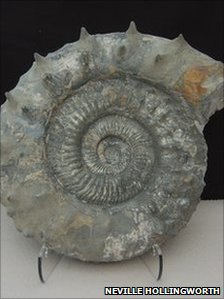
Two children have found “rare” specimens of a fossilised sea creature at the Cotswold Water Park.
Another Rieneckia ammonite was found in the park several years ago
Emily Baldry, five, from Chippenham, discovered the Rieneckia ammonite during a fossil hunt organised by the Cotswold Water Park Society on Sunday.
Hugo Ashley, from Poulton, and his grandfather also found an ammonite cadoceras, and another Rieneckia ammonite.
A society spokeswoman said Rieneckia ammonites were “extremely rare”.
Ammonites were free-swimming molluscs of the ancient oceans, living around the same time as dinosaurs.
‘Quite phenomenal’
Society spokeswoman Jill Bewley said: “The chances of finding something like this [Rieneckia ammonites] are really, really slim.
“It’s the proverbial needle in a haystack so to hit upon something like this is quite phenomenal.”
After Emily hit upon the fossil with a spade, her father and palaeontologist Dr Neville Hollingworth helped her dig out the block of mudstone the 162.8 million-year-old object, which had spikes to ward off predators, was encased in.
A range of other fossils, including many ammonites, were also found during the hunt, in a sand and gravel quarry within the water park.
Ms Bewley said that once work to expose the Rieneckia ammonite, which measures about 40cm (16in) in diameter is complete, it will go on display at the Gateway Information Centre along with a range of other fossils.
She said Dr Hollingworth found another Rieneckia ammonite in a similar quarry in the park several years ago.
The 42 sq mile site of the Cotswold Water Park, which has 150 lakes, is on the Gloucestershire-Wiltshire border.
During the Jurassic period, 165 million years ago, the area was a warm shallow sea.
The Best Tours in British History HisTOURies UK – Private Guided Tours of Britain
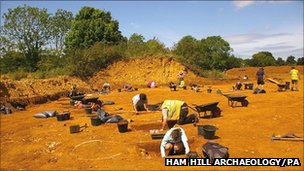
A major excavation is under way to explore the unclear history of Britain’s largest Iron Age hill fort.
The Ham Hill Iron Age hill fort site spreads over 80 hectares making it the largest in Britain
The purpose of the Ham Hill site in Somerset is not known but researchers are now hoping to gain a deeper insight into life 2,000 years ago.
A joint team from the universities of Cambridge and Cardiff have begun a dig at the 88-hectare site to learn more.
Work is due to continue until September 2013 by which time the team hope to have a clearer map of its interior.
Niall Sharples, from Cardiff University, said: “It’s a bit of an enigma. Ham Hill is so big that no archaeologist has ever really been able to get a handle on it.
“People think of these places as defensive structures, but it is inconceivable that such a place could have been defended.
“Thousands of people would have been required; militarily, it would have been a nightmare.
“Clearly, it was a special place for people in the Iron Age, but when did it become special, why, and how long did it stay that way?”
Researchers believe the site may have been a monument and was somehow meant to create a sense of community, collective identity, or prestige.
‘Communal identity’
Christopher Evans, from the Cambridge archaeological unit, said it was a rare opportunity to tackle the site’s big issues on the scale they deserve.
“We don’t know if the site’s development was prompted by trade, defence or communal identity needs,” he said.
“Equally, should we be thinking of it as a great, centralised settlement place – almost proto-urban in its layout and community size?”
One of the key aims of the current excavation will be to pin down the rough date of the hill fort’s construction.
Smaller scale digs at the site have produced a number of finds, including human remains, the skeleton of a dog, pottery, iron sickles and the remains of a house.
‘There is also a wonderful pearched right on the top of Ham Hill tat serves a mean ‘Ploughmans’ and a great pint’ – Somerset tour guide
The Best Tours in British History HisTOURies UK – Private Guided Tours of th West Country
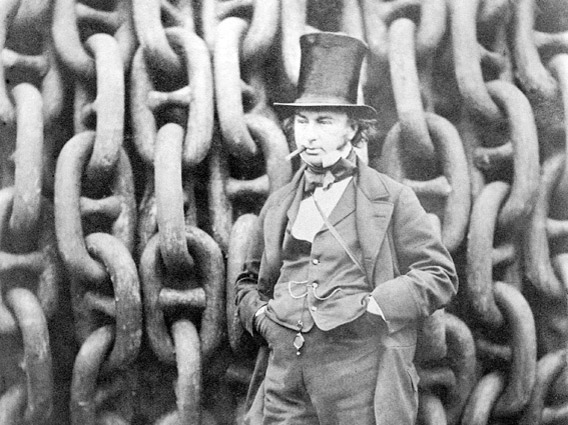
Isambard Kingdom Brunel was born in Portsea, Portsmouth on 6 April 1806. His father Isambard Marc Brunel was also an engineer. He was born in France in 1769 but he fled abroad in 1793 during the French Revolution. In 1799 he married Sophia Kingdom and they had 3 children, Sophia, Isambard and Emma.
Isambard was sent to a boarding school in Hove then in 1820 he was sent to France to finish his education. He returned to England in 1822 and worked with his father as an engineer. In 1824 Marc Isambard Brunel was appointed Engineer to the Thames Tunnel Company. (The company was formed in 1824 to dig a tunnel under the Thames). Work on the project began in 1825 and Isambard Kingdom Brunel assisted his father. In January 1827 he was formally appointed Resident Engineer, in charge of day to day work.
However all did not go well. In January 1829 water rushed into the tunnel and swept away Isambard and all the men working there. Isambard was rescued but 6 men died. Afterwards the tunnel was bricked up. Work on it did not begin again till 1836 and it was not completed till 1843.
Meanwhile Isambard was left without a job so he went to Bristol where he learned of a plan to build a bridge across the Avon Gorge. Brunel’s design for a bridge was adopted and he was appointed Engineer of the Clifton Bridge. Work on the bridge began in 1831. However there were riots in Bristol in 1831 and as a result work on the bridge stopped for 5 years. It began again in 1836 but the builders ran out of money and all work stopped in 1843. It began again in 1862. Clifton Suspension Bridge was finally opened in 1864, 5 years after Brunel’s death.
Meanwhile Isambard was left without a job so he went to Bristol where he learned of a plan to build a bridge across the Avon Gorge. Brunel’s design for a bridge was adopted and he was appointed Engineer of the Clifton Bridge. Work on the bridge began in 1831. However there were riots in Bristol in 1831 and as a result work on the bridge stopped for 5 years. It began again in 1836 but the builders ran out of money and all work stopped in 1853. It began again in 1862. Clifton Suspension Bridge was finally opened in 1864, 5 years after Brunel’s death.
Brunel’s next project was the Great Western Railway. Plans for a railway from London to Bristol were made in 1833. An Act of Parliament allowing the building of the new railway was passed in 1835 and work began the same year. The first section of the Great Western Railway opened from London to Maidenhead in 1837. The last section of the railway opened in 1841.
Meanwhile in July 1836 Brunel married Mary Horsley. They had a son named Isambard in May 1837. Another son, Henry was born in 1842. The couple also had a daughter called Florence.
Meanwhile Brunel worked on two great steamships. The Great Western Steamship Company was formed in 1836 and the Great Western was launched on 19 July 1837. After fitting out she left Bristol on her maiden voyage on 8 April 1838. A second ship, this one made with an iron hull, was launched on 19 July 1843. The Great Britain made its maiden voyage in June 1845.
Among Brunel’s other projects were a railway from Bristol to Exeter, which was completed in 1844 and a railway from Swindon to Gloucester, which opened in 1845.
In 1844 Brunel was appointed engineer of the South Wales Railway, which opened to Swansea in 1850. It opened all the way to Milford Haven in 1856.
Brunel designed Chepstow railway bridge which opened in 1852. Brunel also designed a bridge from Saltash to Plymouth, which opened in 1859.
Brunel also designed a third great steamship the Great Eastern, which was launched in 1858.
However in 1858 Brunel was diagnosed with a kidney disease called Bright’s disease so in November he went abroad to relax. Brunel and his family spent Christmas in Egypt then they spent some time in Italy before returning to England in May 1859. On 5 September 1859 Brunel suffered a stroke. Isambard Kingdom Brunel died on 15 September 1859.
 British Summer Time ends: clocks go back – Why?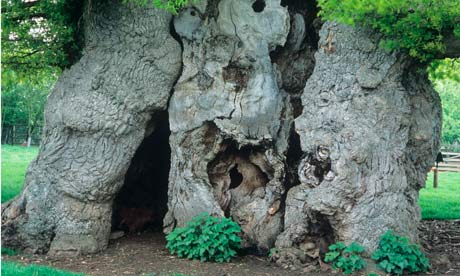
![Excavations at the Ardnamurchan Peninsula [Credit: Ardnamurchan Transitions Project]](https://blog.histouries.co.uk/wp-content/uploads/2011/10/viking-sanna-bay-ardnamurchan_02.jpg "Viking-sanna-bay-ardnamurchan_02")


 HisTOURies U.K Tours

 Wessex Guided Tours