Feeds:
Posts
Comments

Archive for the ‘History’ Category

A chance discovery of coins has led to the bigger find of a Roman town, further west than it was previously thought Romans had settled in England.

The town was found under fields a number of miles west of Exeter, Devon.
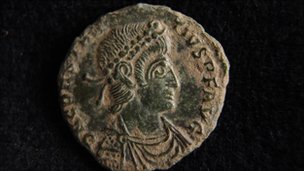
Roman coins found by two local men led to the discovery of a town

Roman coins found by two local men led to the discovery of a town

Nearly 100 Roman coins were initially uncovered there by two amateur archaeological enthusiasts.

It had been thought that fierce resistance from local tribes to Roman culture stopped the Romans from moving so far into the county.

Sam Moorhead, national finds adviser for Iron Age and Roman coins for the PAS at the British Museum, said it was one of the most significant Roman discoveries in the country for many decades.

“It is the beginning of a process that promises to transform our understanding of the Roman invasion and occupation of Devon,” he explained.

After the coins were unearthed by the local men out using metal detectors, Danielle Wootton, the University of Exeter’s liaison officer for the Portable Antiquities Scheme (PAS), which looks after antiquities found by the public, was tasked with investigating further.

After carrying out a geophysical survey last summer, she said she was astonished to find evidence of a huge landscape, including at least 13 round-houses, quarry pits and track-ways covering at least 13 fields, the first of its kind for the county.

“You just don’t find Roman stuff on this scale in Devon,” said Ms Wootton.

She carried out a trial excavation on the site, and has already uncovered evidence of extensive trade with Europe, a road possibly linking to the major settlement at Exeter, and some intriguing structures, as well as many more coins.

“This was a really exciting discovery,” said Ms Wootton. But she said most exciting of all was that her team had stumbled across two burial plots that seem to be located alongside the settlement’s main road.

“It is early days, but this could be the first signs of a Roman cemetery and the first glimpse of the people that lived in this community,” she explained.

Romans in Devon

Not enough excavation has been done yet to date the main occupation phase of the site, but the coins that were found range from slightly before the start of the Roman invasion up until the last in 378AD.

The Romans reached Exeter during the invasion of Britain in AD 50-55, and a legion commanded by Vespasian built a fortress on a spur overlooking the River Exe. This legion stayed for the next 20 years before moving to Wales.

A few years after the army left, Exeter was converted into a bustling Romano-British civilian settlement known as Isca Dumnoniorum with all the usual Roman public buildings, baths and forum.

It was also the principal town for the Dumnonii tribe, a native British tribe who inhabited Devon and Cornwall. It was thought that their resistance to Roman rule and influence, and any form of ‘Romanisation’ stopped the Roman’s settling far into the south west.

For a very long time, it was thought that Exeter was the limit of Roman settlement in Britain in the south west, with the rest being inhabited by local unfriendly tribes.

Some evidence of Roman military occupation has been found in Cornwall and Dartmoor, thought to be protecting supply routes for resources such as tin.

However on this site, more than just the coins are Roman. Pottery and amphora fragments recovered suggest the town embraced trading opportunities in Europe that came with Roman rule, and a fragment of a Roman roof tile has also been found.

Danielle Wootton received some funding from the British Museum, the Roman Research Trust and Devon County Council in June to carry out the trial excavation but said more money was needed as they still had not reached its outer limits.

“We are just at the beginning really, there’s so much to do and so much that we still don’t know about this site.

“I’m hoping that we can turn this into a community excavation for everyone to be involved in, including the metal detectorists,” she explained.

Sam Moorhead said he believed more Roman settlements may be found in the area in the next few years.

The excavation of this unique site will feature in the forthcoming BBC Two series Digging For Britain.

The Best Tours in British History
HisTOURies UK
Read Full Post »

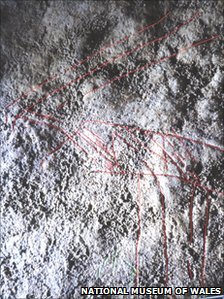
An archaeologist believes a wall carving in a south Wales cave could be Britain’s oldest example of rock art.

The location of the wall carving is being kept secret for the time being

The location of the wall carving is being kept secret for the time being

The faint scratchings of a speared reindeer are believed to have been carved by a hunter-gatherer in the Ice Age more than 14,000 years ago.

The archaeologist who found the carving on the Gower peninsula, Dr George Nash, called it “very, very exciting.”

Experts are working to verify the discovery, although its exact location is being kept secret for now.

Dr Nash, a part-time academic for Bristol University, made the discovery while at the caves in September 2010.

He told BBC Wales: “It was a strange moment of being in the right place at the right time with the right kit.

“For 20-odd years I have been taking students to this cave and talking about what was going on there.

“They went back to their cars and the bus and I decided to have a little snoop around in the cave as I’ve never had the chance to do it before.

“Within a couple of minutes I was scrubbing at the back of a very strange and awkward recess and there a very faint image bounced in front of me – I couldn’t believe my eyes.”

He said that although the characteristics of the reindeer drawing match many found in northern Europe around 4,000-5,000 years later, the discovery of flint tools in the cave in the 1950s could hold the key to the carving’s true date.

Continue reading the main story

“Start Quote

This drawing was done with the right hand and the niche is very, very tight”

End Quote Dr George Nash

“In the 1950s, Cambridge University undertook an excavation there and found 300-400 pieces of flint and dated it to between 12,000-14,000 BC.

“This drawing was done with the right hand and the niche is very, very tight and the engraving has been done by somebody using a piece of flint who has drawn a classic reindeer design.

“My colleagues in England have been doing some work in Nottinghamshire at Creswell Crags and got very nice dates for a red deer and one or two other images of around 12,000-14,000 BC.

“I think this [newly found carving] may be roughly the same period or may be even earlier.”

Glacial geology

The limestone cliffs along the Gower coast are known for their archaeological importance.

The Red Lady of Paviland, actually the remains of a young male, is the earliest formal human burial to have been found in western Europe. It is thought to be roughly around 29,000 years old.

It was discovered at Goat’s Hole Cave at Paviland on Gower in 1823 by William Buckland, then a geology professor at Oxford University.

Dr Nash added: “We know from the glacial geology of the area this was an open area just before the ice limit came down from the glaciers 15,000-20,000 years ago and it stops just about 2km short of the cave site.

“We know hunter fisher gatherers were roaming around this landscape, albeit seasonally, and they were burying their dead 30,000 years ago and making their mark through artistic endeavour between 30,000 and 40,000 years ago.”

The find is now being officially dated and verified by experts at the National Museum of Wales and Cadw.

Its location will be revealed to the public in the future.

The Best Tours in British History
HisTOURies UK
Read Full Post »

CELTIC AND ROMAN TOWNS

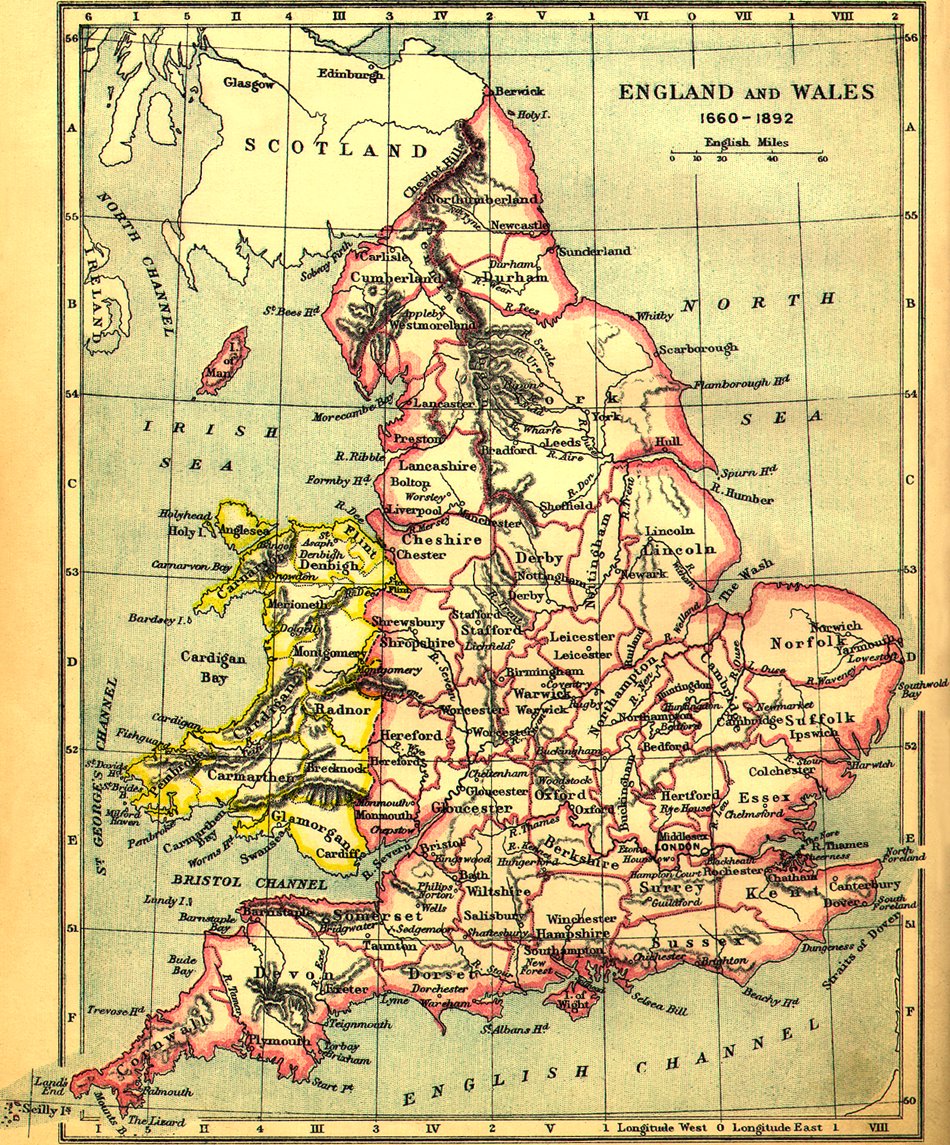
The Celts who lived in Britain before the Roman invasion of 43 AD could be said to have created the first towns. Celts in southern England lived in hill forts, which were quite large settlements. (Some probably had thousands of inhabitants). They were places of trade, where people bought and sold goods and also places were craftsmen worked. The Romans called them oppida.

Old England MapHowever the Romans created the first settlements that were undoubtedly towns. Some Roman towns grew up near forts. The soldiers provided a market for the townspeople’s goods. Some were founded as settlements for retired legionaries. Some were founded on the sites of Celtic settlements.

Roman towns were usually laid out in a grid pattern. In the centre was the forum or market place. It was lined with public buildings.

Life in Roman towns was highly civilised with public baths and temples. At least some of the buildings were of stone with glazed windows. Rich people had wall paintings and mosaics.

However Roman towns would seem small to us. The largest town, London, may have had a population of only 35,000. The next largest town was probably Colchester with a population of around 12,000. Roman Cirencester may have had a population of 10,000. Most towns were smaller. Roman Chichester probably only had around 3,000 to 4,000 inhabitants.

Then in the 4th century Roman towns declined and in the 5th century town life broke down.

SAXON TOWNS

From the 5th century Angles, Saxons and Jutes invaded England. At first the invaders avoided living in towns. However as trade grew some towns grew up. London revived by the 7th century (although the Saxon town was, at first, outside the walls of the old Roman town). Southampton was founded at the end of the 7th century. Hereford was founded in the 8th century. Furthermore Ipswich grew up in the 8th century and York revived.

However towns were rare in Saxon England until the late 9th century. At that time Alfred the Great created a network of fortified settlements across his kingdom called burhs. In the event of a Danish attack men could gather in the local burh. However burhs were more than forts. They were also market towns.

Some burhs were started from scratch but many were created out of the ruins of old Roman towns. Places like Winchester rose, phoenix like, from the ashes of history.

TOWNS IN THE MIDDLE AGES

The thing that would strike us most about medieval towns would be their small size. By the time of the Domesday Book in 1086 London probably had a population of about 18,000. Winchester, the capital of England, probably had about 8,000 people. At that time a ‘large’ town, like Lincoln or Dublin had about 4,000 or 5,000 inhabitants and a ‘medium sized’ town, like Colchester had about 2,500 people. Many towns were much smaller.

However during the 12th and 13th centuries most towns grew much larger. (London may have had a population of around 45,000). Furthermore many new towns were created across Britain. Trade and commerce were increasing and there was a need for new towns. Some were created from existing villages but some were created from scratch. In those days you could create a town simply by starting a market. There were few shops so if you wished to buy or sell anything you had to go to a market. Once one was up and running craftsmen and merchants would come to live in the area and a town would grow.

In the Middle Ages most towns were given a charter by the king or the lord of the manor. It was a document granting the townspeople certain rights. Usually it made the town independent and gave the people the right to form their own local government.

In 1348-49 British towns were devastated by the Black Death. However most of them recovered and continued to prosper. Another danger in medieval towns was fire and many suffered in severe conflagrations.

ENGLISH TOWNS 1500-1800

In Tudor times towns remained small (although they were a vital part of the economy). The only exception was London. From a population of only about 60,000 or 70,000 at the end of the 15th century it grew to about 250,000 people by 1600. Other towns in Britain were much smaller. The next largest town was probably Bristol, with a population of only around 20,000 in 1600.

Nevertheless in the 16th century towns grew larger as trade and commerce grew. The rise in town’s populations was despite outbreaks of plague. It struck all the towns at intervals in the 16th and 17th century but seems to have died out after 1665. Each time it struck a significant part of the town’s population died but they were soon replaced by people from the countryside.

In the 18th century conditions in most towns improved (at least for the well off). Bodies of men called Improvement Commissioners or Paving Commissioners were formed with powers to pave, clean and light the streets (with oil lamps). Many towns also employed night watchmen. Most towns gained theatres and private libraries. However despite some improvements 18th century towns would seem dirty and crowded to us.

TOWNS IN THE 19TH CENTURY

From the late 18th century the industrial revolution transformed Britain. Many villages or small market towns rapidly grew into industrial cities. However, although most towns gained gas light in other ways conditions were appalling. They were dirty, overcrowded and unsanitary. Lack of building regulations meant poor peoples houses were often hovels. Not surprisingly British towns suffered outbreaks of cholera in 1832 and in 1848.

However in the late 19th century things improved. Most towns built sewers and created a clean water supply. New housing regulations meant that new houses were much better. Furthermore public parks and public libraries were created. At the end of the 19th century and the beginning of the 20th most towns changed to electric street lighting.

At the end of the 19th century transport in towns was improved. From c.1880 horse drawn trams ran in the streets of many towns. At the beginning of the 20th century they were replaced by electric trams. In the 1930s most trams were replaced by trolley buses (buses that ran on overhead lines). However by the late 1950s most trolley buses had been replaced by motor buses.

Meanwhile a new kind of town had arisen – the seaside town. At the end of the 18th century spending time by the sea became fashionable with the wealthy. At first only they could afford it but from the mid-19th century trains made it easier for poorer people to reach the seaside. From the 1870s bank holidays (and for some skilled workers paid annual holidays) made the day at the seaside popular and many resorts boomed.

TOWNS IN THE 20TH CENTURY

At the beginning of the 20th century councils began the work of demolishing the dreadful 19th century slums. They also began building council houses. The work of slum clearance continued in the 1920s and 1930s. More council houses were built at that time. However most of the houses built in between the wars were private.

The 1920s and 1930s were difficult ones for northern towns as the traditional industries such as coal mining, ship building and textiles all declined. They suffered mass unemployment. However in the Midlands and the South some towns prospered with new industries such as electronics and car making.

During the Second World War many British towns suffered severely from German bombing. So many people were made homeless that after the war ‘prefab’ houses were built. They were made in sections in factories and could be assembled in a few days.

In the 1950s, 1960s and 1970s slum clearance began anew. Vast swathes of old houses were demolished and replaced with council accommodation. Unfortunately much of it was in the form of high-rise flats, which suffered from social problems. In the late 20th century the emphasis changed from demolishing old houses to renovating them.

Furthermore following an act of 1946 new towns were built. Villages or small market towns were selected to take the ‘overflow’ populations of large cities like London. The new towns were greatly enlarged. New houses and factories were built to take the ‘immigrants’ from the big cities. It was the first time since the Middle Ages that large numbers of new towns were created. Among the new towns were Andover, Basingstoke, Crawley and Stevenage,

Meanwhile many town centres were ‘redeveloped’ in the 1960s and new shopping centres and car parks were built. Ironically at the same time increasingly strenuous efforts were made to protect old buildings.

In the late 20th century many northern towns suffered from the decline and even extinction of traditional manufacturing industries. However at the end of the century many managed to reinvent themselves and attract new service industries. In some towns trams were reintroduced.

British Tour Guide
HisTOURies UK The Best Tours in History

Read Full Post »

Scour the floor near most offices and there’ll be plenty of signs of the modern worker’s addiction to tobacco.

But archaeologists investigating a site in Bath have found evidence of the grip on life of smoking two centuries ago.

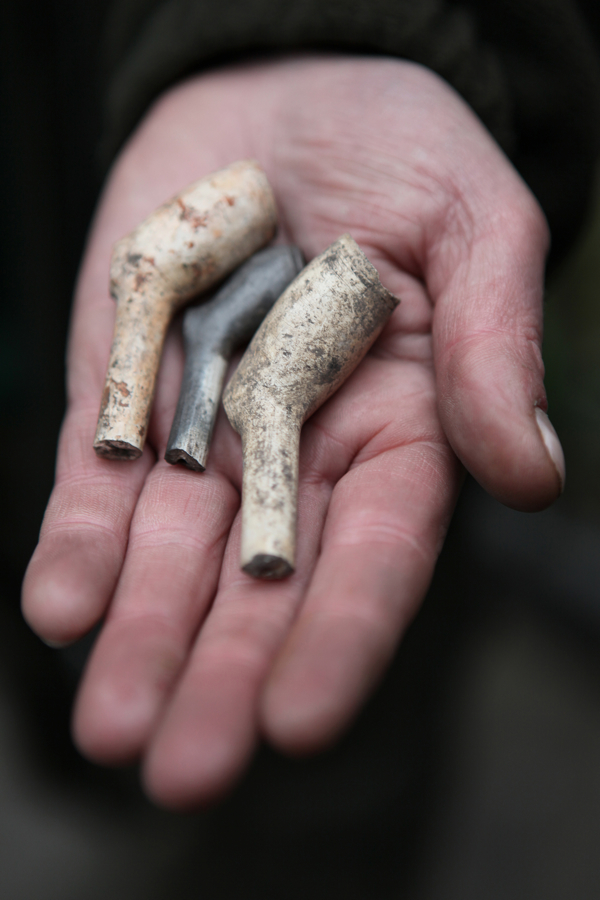
A dig at a city centre car park has unearthed clay smoking pipes.

The pipes were discovered by specialists exploring the area under the Sawclose car park.

They date back to the 19th century, when there was a factory at the site.

Senior project officer for Cotswold Archaeology Chiz Harward said: “We found quite a few clay pipes while digging. Pipes were the principal way of smoking tobacco until the late 19th century when cigarettes came in.

“Some of the bowls are still intact, which is good as clay pipes are very fragile.”

The dig is being carried out ahead of possible redevelopment in the area and the private car park behind the public spaces has been closed while the work takes place.

Meanwhile, an open day was held at the scene of a dig carried out by the Bath and Camerton Archaeological Society at Laverton near Norton St Philip.

The group is excavating a medieval building at Upper Row Farm as part of the Homefield Project, which aims to answer specific questions about settlement in the area.

The event was part of the National Festival of Archaeology, which will also see two free events at the Museum of Bath at Work this Saturday.

There will be a walking tour of the working heritage of Bathampton, presented by director of the museum Stuart Burroughs, starting at 11am from the car park of the Bathampton Mill restaurant. It will feature the Kennet and Avon Canal, and the site of the village’s Plasticine factory.

The second event is a discussion called Industrial Heritage at Risk: Bath and Beyond, led by Keith Falconer from English Heritage.

It starts at 2pm at the Julian Road museum, with a light lunch available from 1pm.
Join us on a private guided tour of Bath soon and discover more……….

The Best Tours of Stonehenge and Bath
HisTOURies UK – Mystical Landscape, Magical Tours

Read Full Post »

Legends of Glastonbury

There are so many myths associated with Glastonbury that it is difficult

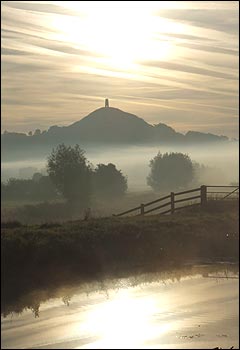
Glastonbury Tor

Glastonbury Tor

to know where to begin to talk about them. There are two main streams of legend that surround Glastonbury, though they twine around each other to some degree. The two streams revolve around the romantic figures of Joseph of Arimathea and King Arthur. Let’s take them one at a time.

Joseph of Arimathea
Joseph was the Biblical figure who took Jesus’ body after the crucifixion. According to some legends he was actually Jesus’ uncle, and had visited Britain years before with Jesus in the pursuit of his interests in the tin trade. It appears that there actually was a strong Jewish presence in the west of England at that time, and many of the tin miners may have been Jewish settlers.

At any rate, when Jesus died, Joseph thought it prudent to flee Palestine, and after many travails he came to Britain with a company of followers. He brought with him the Holy Grail, the cup used by Jesus at the Last Supper. Some versions of the legend have it that the Grail contained two drops of blood captured from Jesus’ side when he was wounded on the cross.

When Joseph came to Britain he was granted land at Glastonbury by the local king. When he arrived at Glastonbury, Joseph stuck his thorn staff in the earth, whereupon it rooted and burst into bloom. A cutting from that first tree was planted in the grounds of the later Glastonbury Abbey, where it continued to bloom every year therafter at Christmas time. There is still a thorn tree in the Abbey grounds, of a variety native to the Holy Lands, and it does indeed bloom around Christmas time.

Joseph was said to have established the first church in England at Glastonbury, and archaeological records show that there may well have been an extremely early Christian church here. What happened to the Holy Grail is another matter. Some legends have it that Joseph buried the Grail at the foot of Glastonbury Tor, whereupon a spring of blood gushed forth from the ground.

There is a well at the base of the Tor, Chalice Well, and the water that issues from it does indeed have a reddish tinge to it, from the iron content of the water.

Other legends have it that the Holy Grail was interred with Joseph when he died, in a secret grave. The search for the mysterious Grail emerges again and again in the tales of Glastonbury.

Further legends tell that the church founded by Joseph continued for many years. Eventually it became a monastery, and one of the first abbots was the future St Patrick, who was born in the west country.

King Arthur and Glastonbury

Glastonbury Abbey, where King Arthur is said to lie buriedLegends of King Arthur swirl about Glastonbury like a tantalizing fog from the nearby Somerset marshes. The nearby hill fort at South Cadbury has long been suggested as the location for Camelot. Indeed, excavations of South Cadbury suggest that it was in use during the early 6th century, which is the likeliest era for the real Arthur to have lived.

The association of Arthur and Glastonbury goes back at least to the early Middle Ages. In the late 12th century the monks of Glastonbury Abbey announced that they had found the grave of Arthur and Guinivere, his queen. According to the monks, an excavation found a stone inscribed “Here lies Arthur, king.” Below the stone they found the bones of a large man, and the smaller skeleton of a woman. The monks reburied the bones in the grounds of the abbey, where they were a very handy draw for pilgrims. The site of the grave can be seen today in the abbey grounds.

Glastonbury Tor, the enigmatic conical hill that rises above Glastonbury, has been linked with the Isle of Avalon, where King Arthur was buried after his death. This isn’t so farfetched as it may sound, for a millennium ago the water level was much higher, and the tor would indeed have been an island. Avalon was also called “the isle of glass” which does suggest similarities to the name “Glastonbury”.

The Holy Grail, the object of Arthur’s questing, is said to be buried beneath Glastonbury Tor, and has also been linked to Chalice Well at the base of the Tor.

One final myth of Arthur at Glastonbury: the landscape around Glastonbury is said to have been moulded and shaped so that the features (such as roads, churches, and burial mounds) create a zodiac calendar replete with Arthurian symbology. Like so many of the Arthurian myths, so much is open to interpretation and your own predisposition to believe or disbelieve.

Glastonbury Abbey
Is there a place more steeped in legend and myth than Glastonbury? Glastonbury AbbeyProbably not. Legend holds that the earliest church here was founded by St. Joseph of Arimathea in about 60AD, and that when he planted his staff in the earth a thorn tree burst forth.
In the grounds of the ruined Benedictine monastery there is a thorn tree of a variety common to the Middle East which is given to bloom around Christmas time.

By the late Middle Ages Glastonbury had become the richest abbey in England, due to the heavy pilgrimage trade. It was rich enough to build an inn for well-to-do pilgrims (the George Inn, on nearby High Street, which still welcomes guests 500 years later). The best preserved building in the abbey grounds is the old Abbot’s Kitchen (see photo), a curious square building which appears round due to its octagonal roof. In the abbey grounds are the reputed graves of King Arthur and Queen Guinevere, which were conveniently discovered by the Glastonbury monks in the 12th century, when the abbey needed a financial boost. Outside the grounds are the abbey tithe barn, which now serves as the Somerset Rural Life Museum (well worth a visit), and 4 miles away at Mere is the abbey’s Fish House, were fish was salted and cured.

The abbey is entered through the Abbey Gatehouse  an imposing arched gateway located on off Magdalene Street. Visitors pass through a fascinating museum depicting life at Glastonbury during the Middle Ages, and then enter the Abbey grounds proper. The first building you see on entering the grounds is St Mary’s Chapel, a roofless structure that boasts wonderful architectural details, from the recessed arches of the door to the repetitive arcading that rings the interior. Look up, where the curious small towers at each corner of the chapel seem almost Georgian in style.

If you continue past the chapel you will soon reach the Abbot’s Kitchen, probably the most recognizable symbol of the Abbey, and subject of numerous postcards! This is a peculiar building, with a high octagonnal tower over a square base bedecked with gargoyles. The interior is notable for the very large ovens and the high dome supported on reed-thin vaulting ribs.

Return from the Abbot’s Kitchen towards St Mary’s Chapel and you will pass a small sign on the green lawn. This marks the old burial ground, where, in the 12th century, monks conveniently found bones beneath an engraved stone indicating the burial place of legendary King Arthur. The bones and those presumed to belong to Arthur’s queen, Guinivere, were reburied within the Abbey Church, where a small memorial can be seen.

The grounds of Glastonbury Abbey emanate a sense of calm and peace; it is truly a magical place, and taken as a whole with the other attractions of this ancient town, make Glastonbury well worth an extended visit.

Visitor Information
Glastonbury Abbey
The Abbey Gatehouse
Magdalene Street
Glastonbury
Somerset
UK
BA6 9EL
Web: http://www.glastonburyabbey.com
Email: nfo@glastonburyabbey.com
 
Join us on a private guided tour of the West Country.   Visit Glastonbury, Stonehenge and Avebury Stone Circle.

Mystical Landscape, Magical Tours……………….
HisTOURies UK – The Best Tours in History

Read Full Post »

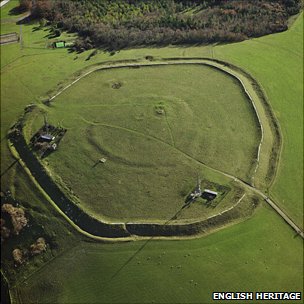
The Trundle near Chichester, Sussex, is one of the first large monuments built in Britain

The Trundle near Chichester, Sussex, is one of the first large monuments built in Britain

Researchers have developed a new dating technique that has given the first detailed picture of the emergence of an agricultural way of life in Britain more than 5,000 years ago.


A new analysis of artefacts recovered from the first monuments built in Britain shows that the Neolithic period had a slow start followed by a rapid growth in trade and technology.

Scientists say the new approach can be used to unravel the detailed sequence of events of many more important moments in human prehistory.

It relies in part on radio-carbon dating – counting the amount of a radioactive type of carbon atom in decaying matter. But the methodology also incorporates many other dating sources, together with some powerful statistical analysis, to produce far more discrete timings for happenings in the past.

The Neolithic period in Britain occurred between 4000 and 2000BC.

It was when people took up agriculture as a way of life and stopped being nomadic hunter-gatherers.

It also saw the emergence of trade across the British Isles and the development of new technologies. But until now, we have had only a rather coarse picture of the chronology of events during this eventful period in our history.

The new analysis by Dr Alex Bayliss, an English Heritage dating expert, has brought the occurrences of that time into sharper focus.

“We can start to tell a bigger story and write a history for the prehistory of Neolithic Britain,” she told BBC News.

“What we thought before was very imprecise. We simply knew that all sorts of different sites and all sorts of new kinds of practices started to happen sometime in the 500 or 600 years of the early Neolithic in Britain.

“We’ve actually now been able to give a timetable, or story of what happened when, to disentangle these things so that we can start to see why certain things may have followed others.”

According to Dr Bayliss’s analysis, Neolithic farming practices began in south-east England probably a few decades before 4,000BC. But then they spread very, very slowly, taking about two centuries to reach western parts of England. And then, she says, there was a sudden increase in activity.

“Monuments, cattle, sheep, the whole farming way of life, bursts across Britain and suddenly – having taken 200 years from getting from Kent to Gloucestershire – it then takes 50 years to get from Cheltenham to Aberdeen.”

The new dating also indicates that by 3700-3800BC, early Britons had developed pottery with regional styles of decorations. Long-distance trading networks were also being established in stone axes and certain other types of pottery

Windmill Hill, a large Neolithic causewayed enclosure in Avebury, was previously thought to have been built around 3700-3100 BC. The new dating shows it was built in 3700-3640 BC

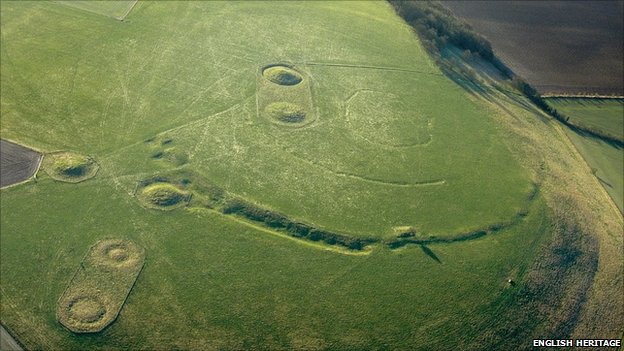
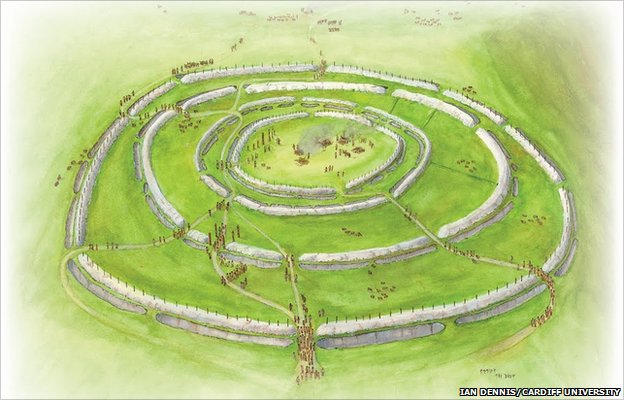
Of particular interest are the first monuments that were built in Britain, called causewayed enclosures. These were made up of concentric rings of ditches and banks – the largest of which can span 300m (1,000ft).

It had been thought that they spread slowly across the country over five centuries. But the new dating approach suggests they spread rapidly within 75 years.

This revelation has been described by archaeologists working on the project as Britain’s first “building boom”.

Professor Alistair Whittle of Cardiff University said: “With more accurate dating, the Neolithic period is no longer the sleepy, hazy swathe of time where it is the default position to lump everything together.

“This research fundamentally challenges the notion that little happened among our Stone Age farmers. We can now think about the Neolithic period in terms of more rapid changes, constant movement of people and fast diffusion of ideas.”

Collective violence

One interpretation of these events is that once the initial “pioneer” phase of the Neolithic period was over, independent groups of people came over from the continent and set up villages across Britain and social structures began to form.

These social structures led to the construction of the enclosures for people to gather and possibly for chieftains to emerge and amass power.

The new dating suggests that there was more collective violence once the enclosures were built. Several of them, particularly in western Britain, were attacked by large numbers of people with showers of arrows, and enclosures’ ramparts were burned down.

This indicates that the enclosures created a hierarchy that was being contested in some way.

The new dating technique involves comparing carbon dates with other markers in the archaeological record. On its own carbon dating is imprecise, but when it is cross-reference with documented events it allows researchers to more accurately date artefacts.

Researchers say this new methodology could in principle be used shed further light on any significant event in our prehistory, such as the emergence of farming in China and the collapse of the Mayan civilisation in the Americas.


A reconstruction of the Whitehawk causewayed enclosure in the South Downs, Sussex

Why not visit Windmill Hill and nearby Avebury and learn more about Neolithic Britain?

Stonehenge and Avebury stone Circle Tour Guide
HisTOURies UK – The Best Tours of Ancient Wiltshire


Read Full Post »

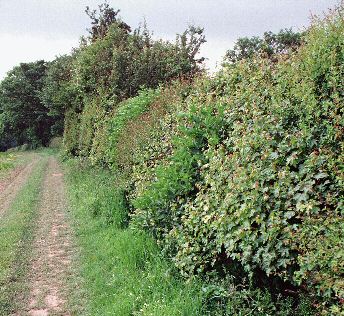
Few things have helped create the look of the English countryside more British Hedgerowthan hedgerows. Hedges have been used for a long time in England, yet for all their antiquity, much of the familiar checkerboard pattern they help create is of very recent vintage.

Hedges have been used as field boundaries in England since the times of the Romans. Excavations at Farmoor (Oxon) reveals Roman hedges made of thorn. The Anglo-Saxons also used hedgerows extensively, and many that were used as estate boundaries still exist. Although these early hedges were used as field enclosures or to mark the boundaries of one person’s property, there was no systematic planting of hedges in England until the first enclosure movement of the 13th century.

The pressures of population expansion led to a widespread clearing of land for agriculture, and the new fields needed to be marked clearly.

Later, farming expansion in the 15th century led to more widespread hedge planting, but the greatest use of hedges came in the Enclosure Movement of the 18th and 19th centuries.

The Enclosure Movement is a fancy term that historians use to describe the habit of wealthy landowners enclosing common fields for their own use, usually for the purpose of raising sheep.

Hedges are used as field boundaries in the lowland regions of England. In the highlands, such as the Yorkshire Dales, dry stone walls are commonly used.

Aerial Hedgerow ViewSo great was the need for hedges during the Enclosures, that a whole new industry sprang up supplying hawthorn plants to be used in planting new hedges.

In the process of enclosure many rural labourers lost their livelihood and had to move to the new industrial urban centres. So the next time you sigh over the timeless quality of the English hedge-shaped countryside, spare a thought for the misery and hardship caused by the erection of hedged fields to much of England’s rural population.

Hedge Facts
When: Roman, Anglo-Saxon, 13thC, 15thC, 18th-19thC
Where: Lowland areas
Why: Field boundaries
How
: planting bushes or trees and pleating them together at an angle as they grew
Materials: huge variety based on local availability, but the most common were hawthorn, blackthorn, and holly

A lot of effort and ingenuity has been brought to bear on the problem of dating hedges. Several historians have advanced mathematical formulae for calculating the age of a hedgerow based on the number of plant species found in a certain length of hedge. As an extremely rough rule of thumb, one species of hedge plant per 100 years seems to get close to the truth.

Unfortunately, recent years have seen the disappearance of many miles of English hedgerows. It is easier for modern farmers to string new metal fence wire than to maintain ancient hedgerows. Conservation efforts have introduced incentives to farmers to maintain the hedges, and losses have slowed somewhat. Estimates vary, but there may be upwards of 500,000 miles of hedgerows in England today.

Links:
http://en.wikipedia.org/wiki/Hedge
http://www.britainexpress.com
http://www.BestValueTours.co.uk

The Best Tours of the Britich Countryside
HisTOURies UK Private Guided Tours

Read Full Post »

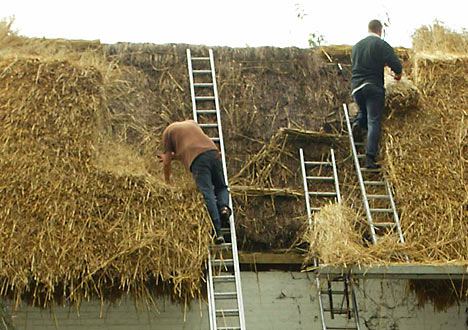
Loosely speaking, thatching is the use of straw or grasses as a building material. Using thatch for roofing goes back as far as the Bronze Age in Britain. At Shearplace Hall in Dorset there are remains of a round hut that shows signs of thatching.

Thatching a roof is an age-old tradition. Not only is it environmentally friendly but also very much back in vogue

Thatching a roof is an age-old tradition. Not only is it environmentally friendly but also very much back in vogue

Thatched cottages and farm buildings were the norm in rural Britain for a millennium or more. Why the attraction to thatch? First of all, the building practices of bygone Britain ran to lightweight, irregular materials, such as wattle and daub walls, and cruck beams. These walls were simply not made to take much weight, and thatch was by far the lightest weight material available.

The study of materials used in thatch buildings can get pretty obscure, but basically, people used whatever was available locally.

This meant materials as diverse as broom, sedge, sallow, flax, grass, and straw. Most common is wheat straw in the south of England, and reeds in East Anglia. Norfolk reed is especially prized by thatchers, although in northern England and Scotland heather was frequently used.

Although thatch was primarily used by the poor, occasionally great houses used this most common of materials. In 1300 the great Norman castle at Pevensey (Sussex) bought up 6 acres of rushes to roof the hall and chambers. Much later, in the late 18th century thatched cottages became an extremely popular theme with the “picturesque” painters, who tried to portray an idealized (Romantic/sanitized) version of nature.

Churches also used thatch frequently. In one humorous episode the parish church at Reyden, near Southwold, was roofed in 1880 with thatch on the side of the church hidden from the road, and with tiles on the side facing the road. Presumably the tiles looked more elegant than the more commonplace thatch.

What caused the decline of thatching? Primarily better transportation. The growing railway network in the Victorian era meant that cheap slate from Wales became easily available all over Britain. Agricultural machinery, particularly the combine harvester, had the unfortunate effect of making wheat straw unusable for thatching. This made Norfolk reed all the more prized, and now the latter material is grown specifically for use in thatching.

So how does one thatch a cottage? First the thatch is tied in bundles, then laid in an underlayer on the roof beams and pegged in place with rods made of hazel or withy.

Then an upper layer is laid over the first, and a final reinforcing layer added along the ridgeline. It is at the ridgeline that the individual thatcher leaves his personal “signature”, a decorative feature of some kind that marks the job as his alone. One lovely cottage I saw on a bicycle tour near Glastonbury (Somerset) has a row of thatch birds marching proudly along the ridge of the roofline!

Although thatching, like many rural crafts, has suffered from the encroachment of “civilisation”, many property owners today recognize the value of keeping their cottages thatched, if for no other reason than that thatched cottages fetch a prime price on the real estate market!

Well thank goodness, for those of us who love traditional British architecture! Sure, it is “corny” but to this anglophile North American at least, nothing says “Great Britain” so much as the sight of a beautiful whitewashed cottage, a blooming rose bush climbing a trellis beneath a roof of weathered thatch. Long live the thatcher!

The phrase “Its raining cats and dogs”
You’ve heard of thatch roofs, well that’s all they were. Thick straw, piled high, with no wood underneath. They were the only place for the little animals to get warm. So all the pets; dogs, cats and other small animals, mice, rats, bugs, all lived in the roof. When it rained it became slippery so sometimes the animals would slip and fall off the roof. Thus the saying, “it’s raining cats and dogs.”

There are more thatch work in Wiltshire than any other county in Britain.  Join us on a private tour of Wessx and learm more about the history of this tradional craft.

Links: 

THE NATIONAL COUNCIL OF MASTER THATCHERS ASSOCIATIONS

Wiltshire Tour Guide
HisTOURies UK – The Best Tours in British History

Read Full Post »

Start: Avebury |Finish: Old Sarum
Distance: Approximately 42 miles

Wiltshire is a county of history and mystery set in a dramatic landscape. The combination of heritage and scenery provides a truly memorable day out. So come with us on a journey through the countryside and across the ages as we go back to the time of our prehistoric ancestors. Hundreds of thousands of years may have passed but all over the county there’s evidence of human activity from the end of the Ice Age through the Stone, Bronze and Iron Ages right up to the invasion of the Romans in AD43.

Click here for audio / visual tour

This driving tour will take you through the heart of Wiltshire. En route you’ll discover more about how our enigmatic and mysterious ancestors lived, worked, fought and died.

This tour can be undertaken in a variety of ways; as a day-long journey, in short sections or you can use the information as a guide to individual visits.

You might also consider embarking on the tour using public transport but keeping up to date with bus service and timetable changes will require plenty of preparation.

Before you set off make sure that you’re properly equipped. Nothing beats a really good Ordnance Survey map, marked with contours and ancient monuments. A compass and a torch would also be useful. Some of these historical gems are in fields and away from roads or footpaths, so good walking boots are a must. Some sites have few or no facilities and it’s also worth noting that mobile phone coverage can’t be guaranteed in parts of rural Wiltshire. For news of road works or route closures, check BBC Local Radio and bbc.co.uk/travelnews

This guide has been produced with the generous assistance of Phil Harding, Wessex Archaeology, English Heritage, Wiltshire Council Archaeology Service, Bob Clarke, Martin Kellett, David Dawson and the Wiltshire Heritage Museum in Devizes.

Stonehenge and Avebury Tour Guide
HisTOURies UK – The Best Tours in Wiltshire

Read Full Post »

Celtic Britain
(The Iron Age) c. 600 BC – 50 AD

Who were they? The Iron Age is the age of the “Celt” in Britain. Over the 500 or so years leading up to the first Roman invasion a Celtic culture established itself throughout the British Isles. Who were these Celts?

For a start, the concept of a “Celtic” people is a modern and somewhat

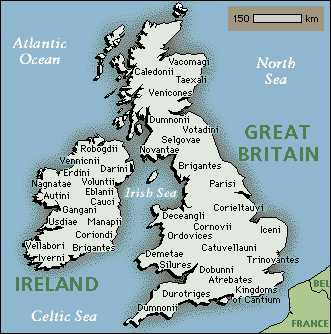
Celtic Britain was dominated by a number of tribes, each with their own well-defined territory. It is thanks to Roman chroniclers, such as Strabo, Julius Caesar, and Diodorus, that the names of individual tribes are known to us today, albeit in Romanized form.

Celtic Britain was dominated by a number of tribes, each with their own well-defined territory. It is thanks to Roman chroniclers, such as Strabo, Julius Caesar, and Diodorus, that the names of individual tribes are known to us today, albeit in Romanized form.

romantic reinterpretation of history. The “Celts” were warring tribes who certainly wouldn’t have seen themselves as one people at the time.

The “Celts” as we traditionaly regard them exist largely in the magnificence of their art and the words of the Romans who fought them. The trouble with the reports of the Romans is that they were a mix of reportage and political propaganda. It was politically expedient for the Celtic peoples to be coloured as barbarians and the Romans as a great civilizing force. And history written by the winners is always suspect.

Where did they come from? What we do know is that the people we call Celts gradually infiltrated Britain over the course of the centuries between about 500 and 100 B.C. There was probably never an organized Celtic invasion; for one thing the Celts were so fragmented and given to fighting among themselves that the idea of a concerted invasion would have been ludicrous.

The Celts were a group of peoples loosely tied by similar language, religion, and cultural expression. They were not centrally governed, and quite as happy to fight each other as any non-Celt. They were warriors, living for the glories of battle and plunder. They were also the people who brought iron working to the British Isles.

The advent of iron. The use of iron had amazing repercussions. First, it changed trade and fostered local independence. Trade was essential during the Bronze Age, for not every area was naturally endowed with the necessary ores to make bronze. Iron, on the other hand, was relatively cheap and available almost everywhere.

Hill forts. The time of the “Celtic conversion” of Britain saw a huge growth in the number of hill forts throughout the region. These were often small ditch and bank combinations encircling defensible hilltops. Some are small enough that they were of no practical use for more than an individual family, though over time many larger forts were built. The curious thing is that we don’t know if the hill forts were built by the native Britons to defend themselves from the encroaching Celts, or by the Celts as they moved their way into hostile territory.

Usually these forts contained no source of water, so their use as long term settlements is doubtful, though they may have been useful indeed for withstanding a short term siege. Many of the hill forts were built on top of earlier causewayed camps.

Celtic family life.
The basic unit of Celtic life was the clan, a sort of extended family. The term “family” is a bit misleading, for by all accounts the Celts practiced a peculiar form of child rearing; they didn’t rear them, they farmed them out. Children were actually raised by foster parents. The foster father was often the brother of the birth-mother. Got it?

Clans were bound together very loosely with other clans into tribes, each of which had its own social structure and customs, and possibly its own local gods.

Housing. The Celts lived in huts of arched timber with walls of wicker and roofs of thatch. The huts were generally gathered in loose hamlets. In several places each tribe had its own coinage system.

Farming. The Celts were farmers when they weren’t fighting. One of the interesting innovations that they brought to Britain was the iron plough. Earlier ploughs had been awkward affairs, basically a stick with a pointed end harnessed behind two oxen. They were suitable only for ploughing the light upland soils. The heavier iron ploughs constituted an agricultural revolution all by themselves, for they made it possible for the first time to cultivate the rich valley and lowland soils. They came with a price, though. It generally required a team of eight oxen to pull the plough, so to avoid the difficulty of turning that large a team, Celtic fields tended to be long and narrow, a pattern that can still be seen in some parts of the country today.

The lot of women. Celtic lands were owned communally, and wealth seems to have been based largely on the size of cattle herd owned. The lot of women was a good deal better than in most societies of that time. They were technically equal to men, owned property, and could choose their own husbands. They could also be war leaders, as Boudicca (Boadicea) later proved.

Language. There was a written Celtic language, but it developed well into Christian times, so for much of Celtic history they relied on oral transmission of culture, primarily through the efforts of bards and poets. These arts were tremendously important to the Celts, and much of what we know of their traditions comes to us today through the old tales and poems that were handed down for generations before eventually being written down.

Druids. Another area where oral traditions were important was in the training of Druids. There has been a lot of nonsense written about Druids, but they were a curious lot; a sort of super-class of priests, political advisors, teachers, healers, and arbitrators. They had their own universities, where traditional knowledge was passed on by rote. They had the right to speak ahead of the king in council, and may have held more authority than the king. They acted as ambassadors in time of war, they composed verse and upheld the law. They were a sort of glue holding together Celtic culture.

Religion. From what we know of the Celts from Roman commentators, who are, remember, witnesses with an axe to grind, they held many of their religious ceremonies in woodland groves and near sacred water, such as wells and springs. The Romans speak of human sacrifice as being a part of Celtic religion. One thing we do know, the Celts revered human heads.

Celtic warriors would cut off the heads of their enemies in battle and display them as trophies. They mounted heads in doorposts and hung them from their belts. This might seem barbaric to us, but to the Celt the seat of spiritual power was the head, so by taking the head of a vanquished foe they were appropriating that power for themselves. It was a kind of bloody religious observance.

The Iron Age is when we first find cemeteries of ordinary people’s burials (in hole-in-the-ground graves) as opposed to the elaborate barrows of the elite few that provide our main records of burials in earlier periods.

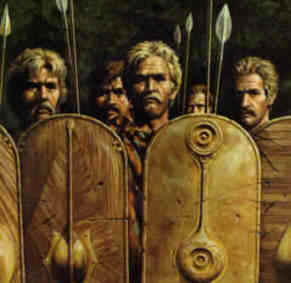
The Celts at War. The Celts loved war. If one wasn’t happening they’d be sure to start one. They were scrappers from the word go. They arrayed themselves as fiercely as possible, sometimes charging into battle fully naked, dyed blue from head to toe, and screaming like banshees to terrify their enemies.

They took tremendous pride in their appearance in battle, if we can judge by the elaborately embellished weapons and paraphernalia they used. Golden shields and breastplates shared pride of place with ornamented helmets and trumpets.

The Celts were great users of light chariots in warfare. From this chariot, drawn by two horses, they would throw spears at an enemy before dismounting to have a go with heavy slashing swords. They also had a habit of dragging families and baggage along to their battles, forming a great milling mass of encumbrances, which sometimes cost them a victory, as Queen Boudicca would later discover to her dismay.

As mentioned, they beheaded their opponents in battle and it was considered a sign of prowess and social standing to have a goodly number of heads to display.

The main problem with the Celts was that they couldn’t stop fighting among themselves long enough to put up a unified front. Each tribe was out for itself, and in the long run this cost them control of Britain.

(Note: The terms “England”, “Scotland”, and “Wales” are used purely to indicate geographic location relative to modern boundaries – at this time period, these individual countries did not exist).

Join us on a guided tour of Britain and learn more about the Celts
HisTOURies UK – The Best Tours in British History

Read Full Post »

« Newer Posts - Older Posts »