Feeds:
Posts
Comments

Archive for the ‘History’ Category

Falconry is a sport that involves the use of trained birds of prey to hunt game for humans. Although falconry is also known as hawking, in modern falconry buzzards are most commonly used.
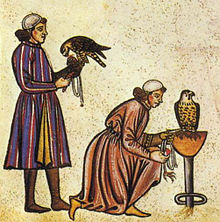
It is believed that falconry was well established in the Middle and Far East by 2000 BC despite the earliest evidence only coming from the era around the reign of Sargon II (722-705 BC).
The Romans probably learnt falconry from the Greeks although the practice does not appear to have been widespread and there are references to Caesar using falcons to kill carrier pigeons. Falconry was probably introduced to Europe in about 400 AD when the Huns and Alans invaded from the East.

More recently falconry has become more popular particularly as a sport of kings. It was reputedly the favourite sport of every King of England from Alfred the Great to George III except for James I who spent much of his time training cormorants and ospreys to catch fish.
A lot has been written about King John’s passion for crane hawking and he often brought hunting parties to the Test Valley to fly falcons at herons. The herons were ringed before they were re-released and information about their numbers and locations are documented in the Domesday Book.

In the Middle Ages it was not just the rich who hunted with hawks. Labourers used hawks to hunt for food, often illegally and King John who wanted to improve the rewards of his own personal hunting banned people taking all feathered game from the Royal Forests which at the time covered vast areas of the British countryside.

The law provided that a hundred paupers should be fed with the proceeds of each Royal hunt but despite this if it had been enforced effectively it would still have caused much suffering and hardship. During the Middle Ages a social custom evolved in falconry known today as the Laws of Ownership. Birds of prey were allocated a rank and a man could not hawk with a bird that had a higher rank than him. The hierarchy seems to have evolved around the cost of the bird and it is not known how strictly it was adhered to.

The original list was documented in the 15th Century ‘Boke of St Albans’ on hawking, hunting and cote-armour as follows:
Emperor – The Eagle, Vulture, and Merloun
King – The Ger Falcon and the Tercel of the Ger Falcon
Prince: The Falcon Gentle and the Tercel Gentle
Duke: The Falcon of the Loch
Earl: The Falcon Peregrine Baron: The Bustard
Knight: The Sacre and the Sacret
Esquire: The Lanere and the Laneret
Lady: The Marlyon
Young Man: The Hobby
Yeoman: The Goshawk
Poor Man: The Tercell
Priest: The Sparrowhawk
Holy Water Clerk: The Musket
Knave or Servant: The Kestrel

Today anyone can practice falconry in the UK and no license is required although only captive-bred birds can be used. Despite pressure to have falconry banned it has been allowed to carry on albeit with a number of conditions attached to it. Birds must be ringed and government registered. Wild birds must not be used for falconry and all birds are DNA tested to certify their origins.

FALCONRY IN ENGLISH LANGUAGE

As Falconry has been around in the UK for nearly 2,000 years, words and phrases that falconers use for their birds have crept into everyday language.

Fed up: A hawk is termed fed up when it has a full crop (storage pouch) and therefore would not be interested in food or flying. If you are fed-up you are sat around doing nothing or bored.

Mantle: To cover or shield the food by dropping their wings over. The cover over a fireplace is now called a mantlepiece.

Cadge: A wooden frame that falcons were traditionally carried out into the hunting field on. The person carrying the cadge became known as the cadger. At the end of the day the cadger would go to the local tavern and recount the tales of how the birds had flown and in turn expect money. To cadge, now means to scrounge or beg for.

Hoodwink: To cover the bird’s eyes to keep it calm and relaxed. It now means to fool someone into doing something.

Mews:  Nowdays this is something cottages or street names are called: “something mews”. A real mews is the home to hawks and falcons, the Royal Mews in London was set up to house the monarch’s birds. The name comes from the french word “muer” which means to moult. In James I’s reign the Royal Mews stood where the National Gallery stands today and extended across Trafalgar Square down Whitehall. Many stately homes also have a mews associated with them.

Wiltshire Falconry: http://www.meredownfalconry.co.uk/

Quiz:  Anyone know where the term “Under my thumb” comes from ?

Wiltshire Tour Guide
HisTOURies UK – The Best Tours in Wessex

Read Full Post »

Buy The Telegraph on Saturday and get a free copy of Trace Your Family History, The Essential Step-by-Step Guide which will show you how to discover your family background in only 14 days.

If you have ever put off researching your family history because you feel you do not have the time, then this guide will demonstrate just how much dramatic information you can uncover in a short period.

Free guide to tracing your family history

Free guide to tracing your family history

With so much material online, you will be astonished by what you can learn in a matter of hours once you know where to look. The forgotten facts about your family’s past that you will unearth will undoubtedly give you a taste for further inquiry.

With millions of records now online, the CD-Rom web directory, free inside The Sunday Telegraph, will point you towards the best and most relevant online resources.

The CD-Rom is a complete directory containing more than 1,400 sources to help you take your research further. By grouping websites into themes, the disc will prove invaluable in tracing your family’s past online. It is compatible with PC and Mac systems.

You will also find plenty of advice and inspiration at Who Do You Think You Are? LIVE at Olympia, London (25-27 February) where you can meet the Who Do You Think You Are? Magazine team.

Don’t miss The Telegraph on Saturday, February 19, and Sunday, February 20, for the FREE Trace Your Family History guide and CD-Rom which will give you the skills to discover your family’s past.

_____________________

We would like the thank the following websites for supporting this promotion.

www.traceyourancestors.co.uk/

Family history researcher offering three levels of service resulting in a bound book and scrolled family tree for all generations to treasure

http://www.debrettancestry.co.uk

Debrett Ancestry Research offers a highly professional service with a choice of fixed-budget programmes for anyone with UK ancestry. Free assessments and advice.

http://www.familytreeservice.co.uk

Family Tree Service research and create tailor-made family trees based on your own ancestry and genealogy. They are also dedicated to providing additional free content on census occupations, military history and geography.

www.familytreeuk.co.uk

The Family Tree UK has roots reaching back through 422 years of family history in the south and east of England

www.thegenealogist.co.uk

Start researching your family history with a 14-day free trial on the top rated site TheGenealogist.co.uk. With records back to 1100 to present day you never know where your research will take you.

British Tour Guide
HisTOURies UK – The Best Tours in Family History

Read Full Post »

  • The 15ft-high road ran from London to Exeter viaOld Sarum

    It was a route once trod by legionnaires as they marched across a conquered land.

    But, eventually, the Romans left Britain and the magnificent highway they created was reclaimed by nature and seemingly lost for ever.

    Now, some 2,000 years after it was built, it has been uncovered in the depths of a forest in Dorset.
    And, remarkably, it shows no sign of the potholes that blight our modern roads.

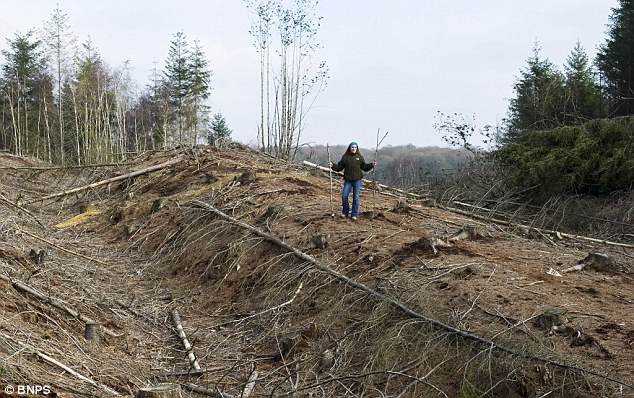
    Half-mile long: Laurence Degoul from the Forestry Commission stands on a 15ft-high section of Roman road uncovered in Puddletown Forest in Dorset

    Half-mile long: Laurence Degoul from the Forestry Commission stands on a 15ft-high section of Roman road uncovered in Puddletown Forest in Dorset

    Constructed by the Roman invaders as part of a route from London (Londinium) to Exeter (Isca), the 85ft wide earthwork stands more than 15ft high and consists of a sweeping road with deep ditches at the side.

    It was so densely covered by trees, however, that although its existence was known about, it simply could not be found until now.

    One of the country’s first roads, it was uncovered when the Forestry Commission, acting on advice from English Heritage expert Peter Addison, cleared the Norway spruce fir trees in Puddletown Forest.

    Mr Addison said it was the biggest Roman road he had come across and that it was probably designed to make a statement. It is thought that it might have been built shortly after the Roman conquest in the first century and its scale would have been chosen to intimidate people living nearby.

    The sight of a Roman legion marching along it would surely have had the desired effect.
    It is thought the road would have been made from layers of gravel and the fact it still exists is testimony to the skills of the builders.

    There is a central cobbled ‘street’, which would have been used for rapid troop movements, and outer ‘droving’ roads for livestock, as well as ditches for water drainage.

    Mr Addison said: ‘It’s extraordinary. It has been known about but when the Forestry Commission wanted to find it, they struggled.

    ‘The trees were planted so tightly it was difficult to move through them. But they called me in and I managed to find it.

    ‘It is part of the road that goes from Badbury Rings to the fort at Dorchester and was part of the network of roads from Old Sarum (now Salisbury) to Exeter.

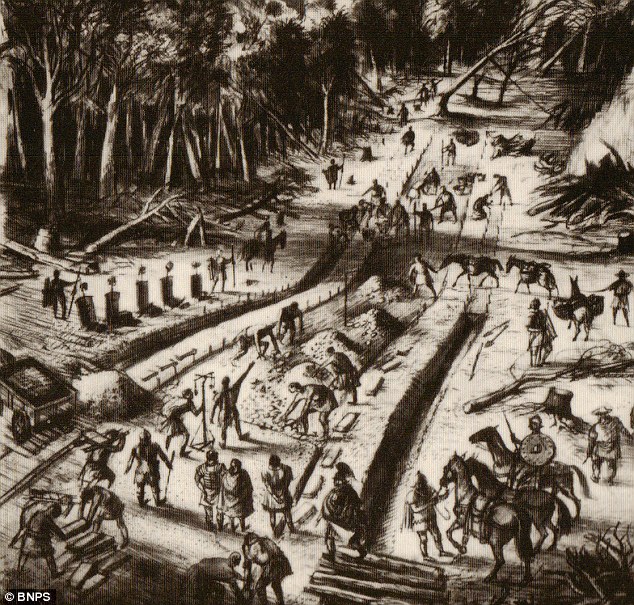
    Artist's impression: The Roman road being built in the Dorset forest 1,900 years ago

    Artist's impression: The Roman road being built in the Dorset forest 1,900 years ago

  • It is absolutely huge and unlike anything I have ever seen. Here you have a large road with huge ditches either side. It is raised very high which is unusual. It is only speculation, but the height might have been to make a statement.

    ‘It is thought this was a road made early in the occupation and not used for long. If so, then it would have been incredibly impressive to the local people.

    ‘In other parts of the forest we know the road was made using gravel and they probably used layers to build up the agger (embankment). They built ditches on either side to act as soakaways to prolong the life of the road.

    ‘But more work needs to be done to find out these details.’

    It is hoped that archaeologists will be able to examine the road.

    A Forestry Commission spokesman said it would not be planting any more trees on it.

    The road will probably be grassed over in the future, he added.

    ‘We have painstakingly uncovered one of the UK’s most remarkable sections of ancient Roman road,’ the spokesman said.

    Wessex Tour Guide
    HisTOURies UK – The Best Tours in History

    Read Full Post »

    Neil Oliver tells the epic story of how Britain and its people came to be over thousands of years of ancient history – the beginnings of our world forged in ice, stone, and bronze.

    About the Programme

    A History Of Ancient Britain will turn the spotlight onto the very beginning of Britain’s story. From the last retreat of the glaciers 12,000 years ago, until the departure of the Roman Empire in the Fifth Century AD this epic series will reveal how and why these islands and nations of ours developed as they did and why we have become the people we are today. The first series transmits in early 2011 and there will be a following series in 2012.

    As well as being a presenter, Neil is also an archaeologist, historian and author. He began his television career in 2002 with the BBC2 series ‘Two Men in a Trench’. This battlefield archaeology series explored iconic British battle sites, focusing on human stories, tragedies and drama.

    Neil became a familiar face on television thanks to the hugely popular, award winning programme, ‘Coast’, in which the landscapes, history, geography and people of the British Isles are given centre stage in a continuing voyage of discovery, remembrance and reminiscence.

    Neil also presented ‘A History of Scotland’ on BBC 1 and BBC2. In this series he revealed how the story of his native Scotland is instrumental to the history of, not only Britain, but also Europe and much of the wider world.
    Neil Oliver takes us on an epic journey expoloring how Britain and its people came to be.
    Watch the trail here
    Neil Oliver’s official website

    Stonehenge and Ancient Britain Tour Guide
    HisTOURies UK – The Best Tours in History

    Read Full Post »

    Bath Abbey Tours

    Bath Abbey Tours

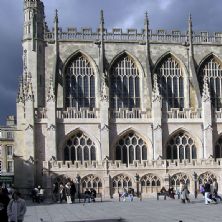
    As part of an on-going project, led by architects Feilden Clegg Bradley, looking at possible future improvements to the Abbey, this month sees the start of a series of archaeological digs in and around the building, which dates back to 1499, (it’s the third church on the site, the original Anglo-Saxon Abbey Church was founded in 757).  There will be seven digs in total, six in the Abbey: choir vestry, shop, near the Montague Tomb, Alphege Chapel, South Transept, and one near the font; the seventh will be outside, between Kingston Buildings and the Abbey.

    The digs, which will be carried out by two local firms, Emerys, who will be responsible for the building work and reinstatement, and Cotswold Archaeology, who will carry out the archaeological observation and recording.  The purpose of the digs is to discover what may or may not be possible in terms of ensuring the Abbey is fit for the 21st century.  One possibility to be explored is the installation of an underfloor heating system, drawing on the springs that feed the nearby Roman Baths.
    The Abbey will remain open during the work, and whilst visitors may find a few views to be limited and some of the Victorian pews missing, it is also hoped that they will be able to observe some of the archaeological work, perhaps via closed circuit television.

    There is an air of excitement at the Abbey as everyone looks forward to seeing ledger stones that have been invisible for 150 years and underground views that were hidden from their predecessors, as well as looking forward to new possibilities.

    The work has been made possible due to a generous donation from the Friends of Bath Abbey, who are very interested in the Abbey Development Project.   If you are interested in becoming a Friend, or making a donation, visit http://www.bathabbey.org/friends.htm

     For further information about the Abbey, including the times of services, its history and information about visiting, please visit www.bathabbey.org

    BBC – Historic Bath Abbey hosts big archaeological dig

    Tower ToursBath Abbey

    A Tower Tour gives visitors to the Abbey a chance to look at the building from a very different perspective. There are 212 steps to the top of the Tower

    Neeldess to say we offer guided tours of the Roman Baths and Bath Abbey.  Visit our website for more details.
    Bath Tourist Guide
    HisTOURies UK – The Best Tours in History

    Read Full Post »

    Archaeologists hail oldest wooden structure ever found on river, despite security services’ armed response to researchers
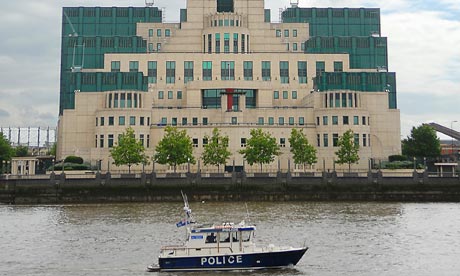
    The headquarters of MI6 on the banks of the Thames in London. Photograph: Bertrand Langlois/AFP/Getty Images
    The headquarters of MI6 on the banks of the Thames in London. Photograph: Bertrand Langlois/AFP/Getty Images

    When MI6 set up home on the banks of the Thames one secret escaped its watchful eyes. The oldest wooden structure ever found on the river, timbers almost 7,000 years old, have been discovered buried in the silt below the windows of the security services’ ziggurat headquarters at Vauxhall, south London.

    The archaeologists who uncovered the six hefty timber piles had to explain to the security services what they were up to when armed police turned up after they were spotted pottering about on a foggy day in the mud, armed only with tripods, cameras and measuring equipment – not, as one spectator had apparently reported, shoulder-mounted rocket launchers.

    “They accepted there wasn’t much damage we could do with a tripod,” said Gustave Milne, the archaeologist who leads the Thames Discovery programme that has been surveying the entire prehistoric foreshore, uncovering centuries of ancient wharves, fish traps, jetties and ship timbers.

    The timbers, partly scoured bare by erosion of the river bed, the largest up to a third of a metre in diameter, were discovered in work during exceptionally low tides last February, but carbon dating work – revealed in the new edition of London Archaeologist journal – has only recently been completed, proving that the trees were felled between 4790 BC and 4490 BC.

    Although the site is now exposed only at the lowest tides, the ancient Thames was narrower and deeper, and Milne believes that 7,000 years ago the timbers may have been built on dry land, possibly at the highest point of a small island.

    “The find is very interesting, because in the mesolithic period the people were nomadic hunter-gatherers, living in temporary camps – not at all given to building substantial structures like this,” Milne said.

    “At the moment we don’t have enough timbers to give any kind of alignment, they’re not in a straight or a circle – but they could have supported a substantial platform with some form of domestic structure or dwelling.”

    The site is just where a smaller river, the Effra, enters the Thames, and it was clearly important to the prehistoric Londoners. The archaeologists, working with experts from the Museum of London and English Heritage, also found worked flint from the same date as the timbers, older pottery, and just upstream, on the far side of the modern Vauxhall bridge, a much later Bronze Age structure.

    “There may have been a ford, it may have had some religious significance, or it may just have been very rich hunting grounds – but it was clearly what my colleague at the Museum of London calls ‘a memorable place’,” Milne said.

    “We’re just sorting out which are the lowest new year spring tides to go back for another look – if Mr Bond will let us.”

    External link: http://www.guardian.co.uk/science/2011/jan/06/ancient-timbers-mi6-headquarters
    Thames Tours: http://www.bestvaluetours.co.uk/

    British Tour Guide
    HisTOURies UK – The Best Tours in History

    Read Full Post »

    When we thing of chalk hill figures in Wiltshire we all immediatly think of ‘chalk horses’, however Britain has many other chalk hill figures scattered across the British Isles – some new, some old.
    Just west of Salisbury and close to Stonehenge is the Fovant Badges:

    The Fovant Badges, Wiltshire
    The Fovant Badges, Wiltshire

    History of the Fovant Badges
    When the 1914-1918 war broke out, there was a need to find accommodation for the New Army. In many areas, training and transit camps were established for troops leaving for, and returning from, the battlefields in northern France. One of these areas was the village of Fovant, in Wiltshire and its neighbours Compton Chamberlayne and Sutton Mandeville. The villages and the fields in the shadow of the chalk downs became a military camp, complete with barracks, a hospital, parade areas, shooting practice ranges, a camp cinema and YMCA huts. A military railway was constructed to serve the camp, branching off the main line railway from London to the southwest

    Thousands of men from all parts of Britain and overseas lived for a while in the area, passed on to the Western Front and returned from it. Many never returned but gave their lives on the battlefields in France. Others died of their wounds in the hospital or from disease. Rows of silent War Graves in Fovant and other nearby churchyards are testimony to their presence. In remembrance of their colleagues, many of the regiments carved into the hillside replicas of their cap badges. Many of these no longer survive, but by the end of WW1 there were some twenty discernible badges.

    Local workers from Fovant and the surrounding villages, supported by Regimental Associations maintained the Badges after WWI. During WWII, the badges became overgrown in order to disguise landmarks, which might assist enemy aircraft. Weather and time, as well as the effects of grazing cattle, caused decay. After the end of WWII, the Fovant Home Guard platoons formed themselves into an Old Comrades Association and undertook the task of restoration. It was in the period of 1948/51 that the two Wiltshire regimental badges were cut and in 1970 the Royal Signals badge was added.

    In 1961, the Old Comrades Association was reformed as ‘The Fovant Badges Society’ with redefined, more positive objectives related to the maintenance and preservation of the Badges and the holding of the annual Drumhead Service. The Society became a charitable organisation and in 1994 adopted a new constitution, which governs its operation and objectives; these are the preservation and maintenance of the Regimental Crests cut on the chalk downs.

    The Society was determined, aided by much public and international interest, that the Badges should remain an historic, fitting and truly visible memorial to the soldiers who passed through Fovant and its neighbouring villages on their way to the Great War, many never to return.


    By 2000, there were only twelve discernable badges on the downs. A new management structure was put in place and, in consultation with professional civil engineers, a survey of the condition of the badges was made. It appeared that the Fovant Badges were unique in their detail and posed difficult restoration problems relating to the slope of the hill, the complexity of design, and their sizes. These vary; the Australian Badge, the largest, measures 51m x 32m, which is just under half the area of a football pitch.

    The Trustees, faced with a potential bill of £350,000 upwards for restoration and large annual sums for increased maintenance thereafter, realised that the task facing them had to be brought to realistic proportions. They decided, with much sadness, that the objective should be the restoration and maintenance of the military crests on Fovant Down. These are clearly visible from a lay-by in Fovant whilst passing along the A30 road between Shaftesbury and Wilton. There is also a public footpath from the road to the village of Broad Chalke, which passes by the area of the Badges. This inevitably meant that the Map of Australia on Compton Down and the crests of the Royal Warwickshire Regiment and the 7th Battalion, City of London Regiment on Sutton Down would continue their decline. These badges would, in addition, have posed intractable problems because of the nature of the ground and their more advanced state of decay. Also, the YMCA badge on Fovant Down would be allowed to fade away.

    Since the badges lay on open private farmland, with the movement of cattle unrestricted, it was clearly essential that large expenditure had to be used with good effect. A crucial first step was, therefore, to ensure the long lasting protection of the Badges. In co-operation with the farm owners, application was made to English Heritage to have the Badges scheduled as Ancient Monuments. Scheduling was granted in 2001 by the Department of Culture, Media and Sport placing all twelve badges, including those not being restored, under the protection of the government.

    The estimated cost of the more limited objective was £220,000 and a national appeal was formally launched at the annual Drumhead Service in July 2001. The response to this was very positive and sufficient sums were assured by the end of 2001 to allow work to commence in 2002. Work experience by contractors, Dean and Dyball Construction Ltd, Ringwood, and favourable weather in 2002 allowed more work than anticipated to be done. This led to five badges being restored in 2002 and the remaining three (including the Royal Signals Badge who undertake their own maintenance and restoration) were completed in 2003.

    The appeal has been successful. We are enormously grateful to our many benefactors – too large to name them all – but special mention must be made of the significant support given by the Heritage Lottery Fund, the Daily Mail And General Trust, the Pilgrim Trust, the Clothworkers’ Foundation, the Australian Department of Veterans’ Affairs and Salisbury District Council. And also to the very many private donations from throughout the country.

    The Badges were originally constructed by cutting outlines into the rough tussocks of grass down to the underlying soil using such tools as were available in 1916. Chalk from external sources was then hauled manually from chalk dumps and used to fill in the areas exposed.

    SLOPE PROBLEMS
    profile before restoration – section through large chalk areas

    Restoration problems involved work being carried out on a hillside that sloped at about 30 degrees and where a combination of grass, chalk and rain makes for a hazardous working environment. All chalk hills suffer from surface soil movement or ‘creep’. This causes ridges to develop above and below the horizontal chalk outlines and distorts the view of the badges from the A30 road. These so-called ‘eyebrows’ had to be removed.

    Existing chalk on the Badges was removed to a depth of 150mm, stabilising the slope where necessary using geotextile materials together with one metre long metal rods, and replacing the excavated areas with compacted new chalk. On a large badge this required handling about 50 tonnes of chalk out of and into the site. As each badge is restored it is fenced to prevent cattle damage which had occurred in previous years.

    The restoration of the eight military crests on Fovant Down was completed by the end of June 2003.However that is not the end of the story. The annual cost of maintenance is above the current, and projected future, income level of the Society. If we cannot achieve the necessary level of funding to carry out effective annual maintenance work then the long-term existence of these memorials as visible emblems on the Downs must be in doubt.

    External links:
    WW1 military badges – Fovant Badges Society
    http://googlesightseeing.com/2009/08/the-fovant-badges/
    The Stonehenge Tour Company
    The Fovant Regimental Badges in Wiltshire England UK

    Fovant Badges – Fovant History
    Wiltshire Heritage Museum Home Page
    Related post Chalk Hill Figures – :
    Needless to say we offer guided tours of all the chalk hill figures in Wessex (some dating back to 3000BC) and can include other tourist attractions including Salisbury, Stonehenge, Bath, Avebury and Dorset

    Wessex Tour Guide
    HisTOURies UK – The Best Tours in Wiltshire and Dorset

    Read Full Post »

    More than 2,000 people gathered in the snow of Stonehenge to celebrate the winter solstice.

    Druids, lead by Arthur Pendragon (centre), take part in the winter solstice at Stonehenge in Wiltshire

    Druids, lead by Arthur Pendragon (centre), take part in the winter solstice at Stonehenge in Wiltshire

    Despite the actual sunrise, – which took place at 08.09am – being obscured by mist, Peter Carson of English Heritage said: “Stonehenge looked spectacular in the snow and it was a great way for people to start their festive season.”

    The Pagan community came out in force to celebrate the annual festival, along with many whom were merely curious to experience the event.

    As well as the traditional Druid and Pagan ceremonies, a snowball fight erupted as people enjoyed the cold weather.

    “The popularity of the winter solstice has grown over the years as more is known about Stonehenge and the winter solstice and the whole celebration has grown in popularity, ” Mr Carson said.

    Lance Corporal Paul Thomas, a serving soldier of 15 years who fought in Iraq, was “knighted” with a sword by a Druid calling himself King Arthur Pendragon.
    The word solstice comes from the Latin phrase for “sun stands still”. During the winter solstice the sun is closer to the horizon than at any other time in the year, meaning shorter days and longer nights. The day after the winter solstice marks the beginning of lengthening days, leading up to the summer solstice in June.

    The Sun’s passage through the sky appears to stop, with it seeming to rise and set in the same two places for several days. Then the arc begins growing longer and higher in the sky, reaching its peak at the summer solstice.

    The solstices happen twice a year because the Earth is tilted by 23.5 degrees as it orbits the sun. Since ancient times people have marked the winter and summer solstices.

    The stones at Stonehenge are aligned with the sunlight on both the summer and winter solstices. These times told prehistoric farmers that harvest was coming or that the shortest day of winter had passed.

    Recent excavations of animal bones at the site suggest that huge midwinter feasts were held at Stonehenge, with cattle moved there to be slaughtered for the solstice celebrations.
    External links:
    http://www.telegraph.co.uk/news/picturegalleries/uknews/8219063/Druids-gather-in-the-snow-and-ice-at-Stonehenge-for-the-winter-solstice-sunrise.html
    http://visit-stonehenge.blogspot.com/2010/12/stonehenge-summer-solstice-tour-2011.html
    http://blog.stonehenge-stone-circle.co.uk/2010/12/21/stonehenge-winter-solstice-21stdecember-2010/
    http://www.telegraph.co.uk/news/uknews/8219230/Druids-and-Pagans-celebrate-winter-solstice-at-Stonehenge.html

    Stonehenge Tour Guide
    HisTOURies UK – The Best Tours of Ancient Britain

    Read Full Post »

    The main Christmas customs were those that were common throughout

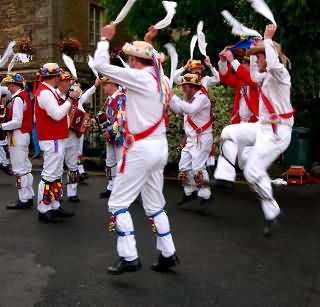
    Morris Dancers

    Morris Dancers

    the country and which came from a time when farm labourers worked most days of the year, and often on Christmas Day morning. Mummers plays were a favourite and would normally be performed in the evenings in the big houses and farmhouses of the area. The performers would be rewarded with food and drink and, sometimes, with money. Most villages had a group of men who were the mummers and both words and actions of the play and costumes and props would be handed down from one generation to the next. Places from which mummers’ plays are remembered include, Stourton, Cricklade, Limpley Stoke, Amesbury, Maiden Bradley, Horningsham, Wootton Rivers, Woodford, Quidhampton, Stockton and Winterslow. Around Swindon in the 1830s, when it was still a small market town, they are recorded as going from door to door and, more especially, from pub to pub.

    Carol singers were often groups of boys, or sometimes the church choir, who would visit the big houses of the neighbourhood collecting money. As with carol singers until the 1970s, these always gave good value by singing the full carol. At the larger houses they might sing two or three. There were some local carols, most of which have been lost, and some of these were original while others were adaptations of well known carols. At Berwick St. James it was the custom to wake up householders on Christmas morn by singing carols, which were learned by one generation from the preceding one.

    An earlier tradition was wassail. Originally a fertility rite with live animals this later degenerated into processing around the streets, singing and collecting money in the wassail bowl. This happened at Cricklade where a live ox was once involved; by the 19yth century this had become a withey frame covered with a cured ox hide. In a few parts of the county, such as Everleigh, the parson organised a Christmas Ale for his parishioners, where instead of money being raised for the church the participants were provided with bread, cheese and beer. These seem to have died out in the early 17th century.

    (Source: http://www.wiltshire.gov.uk/community/getfaq.php?id=194 and http://www.wiltshirefolkarts.org.uk/wfmummers.htm, A Wiltshire Christmas, by John Chandler. Alan Sutton, The Folklore of Wiltshire, by Ralph Whitlock. Batsford)

    Stonehenge Tour Guide
    HisTOURies UK – The Best Tours in Wesse

    Read Full Post »

    Wanted to claryfy that we have not misspelt our tour company name. HisTOURies comes from two words  ‘history’ and ‘stories’ – clever eh?
    We operate guided historical (hisTOURical) sightseeing tours of Britain.  Our expert guides (historians or hisTOURians) bring Britain’s rich history (hisTOURy) alive with tales’s and stoiries (sTOURys or sTOURies) of ancient England.
    ‘It is not spelt incorrectly.’
    Hope thats clear (clear as mud)……………..
    Our award winning tours can depart from London, Salisbury, Bath or Glastonbury.  Please visit our website:
    HisTOURies UK – The Best Tours in British History (hisTOURy)

    Histories (Herodotus)

    The Histories of Herodotus is considered one of the seminal works of history in Western literature. Written from the 450s to the 420s BC in the Ionic dialect of classical Greek, The Histories serves as a record of the ancient traditions, politics, geography, and clashes of various cultures that were known around the Mediterranean and Western Asia at that time. It is not an impartial record but it remains one of the West’s most important sources regarding these affairs. Moreover, it established without precedent the genre and study of history in the Western world, although historical records and chronicles existed beforehand.

    Perhaps most importantly, it stands as one of the first, and surviving, accounts of the rise of the Persian Empire, the events of, and causes for, the Greco-Persian Wars between the Achaemenid Empire and the Greek city-states in the 5th century BC. Herodotus portrays the conflict as one between the forces of slavery (the Persians) on the one hand, and freedom (the Athenians and the confederacy of Greek city-states which united against the invaders) on the other.

    The Histories was at some point through the ages divided into the nine books of modern editions, conventionally named after the Muses.

    Herodotus seems to have travelled extensively around the ancient world, conducting interviews and collecting stories for his book. At the beginning of The Histories, Herodotus sets out his reasons for writing it:

    British Tour Guide
    HisTOURies UK Stories in History

    Read Full Post »

    « Newer Posts - Older Posts »