Feeds:
Posts
Comments

Archive for the ‘History’ Category

New video explains geophysics, 3D laser scanning and finds processing

What technologies do modern archaeologists turn to? Mark Langdon speaks to experts at Wessex Archaeology to find out about the modern techniques employed at digs

Watch our experts explain how the techniques are used and how archaeology works in the supporting video:
http://kn.theiet.org/news/dec10/time-team.cfm

Geophysics is the physics of the Earth and its environment in space. Its subjects include the shape of the Earth, its gravitational and magnetic fields, the dynamics of the Earth as a whole and of its component parts, the Earth’s internal structure, composition and tectonics, the generation of magmas, volcanism and rock formation, the hydrological cycle including snow and ice, all aspects of the oceans, the atmosphere, ionosphere, magnetosphere and solar-terrestrial relations, and analogous problems associated with the Moon and other planets.

Geophysics is also applied to societal needs, such as mineral resources, mitigation of natural hazards and environmental protection. Geophysical survey data are used to analyze potential petroleum reservoirs and mineral deposits, to locate groundwater, to locate archaeological finds, to find the thicknesses of glaciers and soils, and for environmental remediation.

External links:
British Geophysical Association
Stonehenge Riverside Project
British Academy – Science and Stonehenge – summaries
Wessex Archaeology – One of the UK’s leading heritage practices

Stonehenge Tour Guide
HisTOURies UK – Private Guided Tours of Wiltshire

Read Full Post »

Vandals have destroyed one of the most celebrated Christian pilgrimage sites in Britain and chopped down a tree said to have sprouted from the staff of Joseph of Arimathea 2,000 years ago.

The Holy Thorn Tree of Glastonbury, Somerset, is visited by thousands every year to pay homage and leave tokens of worship. Those visiting today were moved to tears on finding the tree cut to a stump.

The sacred tree is unique in that it blossoms twice a year – at Christmas and Easter – and sprigs taken from the thorn are sent to The Queen each year for the festive table.

the vandalised holy thorn tree Police tape surrounds the vandalised Holy Thorn tree on Wearyall Hill in Glastonbury as stunned locals look on. The branches were cut off overnight and a police investigation has been launched


The tree in all its glory before it was hacked apart. Legend says it sprang from the staff of Joseph of Arimathea, the man who helped Jesus of the cross. To the right of the tree, in the distance, is Glastonbury TorThe tree in all its glory before it was hacked apart. Legend says it sprang from the staff of Joseph of Arimathea, the man who helped Jesus of the cross. To the right of the tree, in the distance, is Glastonbury Tor


A member of the public gathers sprigs from the vandalised Holy Thorn tree that was cut down overnight
People come to say prayers over the vandalised remains of the hawthorn tree on Wearyall Hill

A member of the public gathers sprigs from the chopped branches while (right) onlookers cry and say prayers

BROUGHT TO LIFE BY JOSEPH OF ARIMATHEA, CHOPPED DOWN BY CROMWELL’S ROUNDHEADS, REBORN THANKS TO LOCALS

oliver cromwell

Christian legend dictates that Jesus’s great uncle, Joseph of Arimathea, came to Britain after the crucifixion 2,000 years ago bearing the Holy Grail – the cup used by Christ at the Last Supper.

He visited Glastonbury and thrust his staff into Wearyall Hill, just below the Tor, planting a seed for the original thorn tree.

Roundheads felled the tree during the English Civil War, when forces led by Oliver Cromwell (pictured) waged a vicious battle against the Crown.

However, locals salvaged the roots of the original tree, hiding it in secret locations around Glastonbury.

It was then replanted on the hill in 1951. Other cuttings were also grown and placed around the town – including its famous Glastonbury Abbey.

Experts had verified that the tree – known as the Crategus Monogyna Bi Flora – originated from the Middle East.

A sprig of holy thorns was taken from the Thorn tree by Glastonbury’s St Johns Church on Wednesday and sent to the Queen.

The 100-year-old tradition will see the thorns sit on Her Majesty’s dinner table on Christmas Day

Avon and Somerset Police have launched an investigation after locals found that vandals had hacked off the branches of the iconic tree. They were dumped next to the trunk which is protected by a metal cage.

Locals wept openly today at the foot of the tree, on the town’s Wearyall Hill opposite its world-famous Tor as they struggled to contain their emotion.

Katherine Gorbing, curator of Glastonbury Abbey, said: ‘The mindless vandals who have hacked down this tree have struck at the heart of Christianity.

‘It holds a very special significance all over the world and thousands follow in the footsteps of Joseph Arimathea, coming especially to see it.

‘It is the most significant of all the trees planted here and can be linked back to the origins of Christianity.

‘When I arrived at the Abbey this morning you could look over to the hill and see it was not there.

‘It’s a great shock to everyone in Glastonbury – the landscape of the town has changed overnight.’

Glastonbury Mayor John Coles rushed to the tree site after he heard the news.

Mr Coles, 66, said: ‘I’m stood on Wearyall Hill looking at a sad, sad, sight. The tree has been chopped down – someone has taken a saw to it.

‘Some of the main trunk is there but the branches have been sawn away. I am absolutely lost for words – I just do not know why people would want to do this.

‘This tree was visited by thousands of people each year and is one of the most important Christian sites. It is known all over the world.’

Deputy Mayor William Knight, 63, added: ‘This is absolutely mindless. We are all devastated.’

I lived in Glastonbury for many years and this is a sad day……………

Stonehenge Tour Guide
HisTOURies UK – King Arthur Tours

Read Full Post »

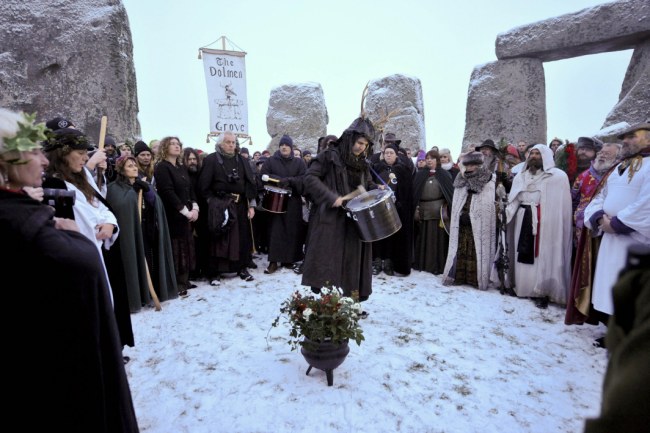
Few people realize that the origins of a form of Christmas was pagan & celebrated in Europe long before anyone there had heard of Jesus Christ.

Pagans at Stonehenge

Pagans at Stonehenge


No one knows what day Jesus Christ was born on. From the biblical description, most historians believe that his birth probably occurred in September, approximately six months after Passover

One thing they agree on is that it is very unlikely that Jesus was born in December, since the bible records shepherds tending their sheep in the fields on that night. This is quite unlikely to have happened during a cold Judean winter. So why do we celebrate Christ’s birthday as Christmas, on December the 25th?

The answer lies in the pagan origins of Christmas. In ancient Babylon, the feast of the Son of Isis (Goddess of Nature) was celebrated on December 25. Raucous partying, gluttonous eating and drinking, and gift-giving were traditions of this feast.

In Rome, the Winter Solstice was celebrated many years before the birth of Christ. The Romans called their winter holiday Saturnalia, honoring Saturn, the God of Agriculture. In January, they observed the Kalends of January, which represented the triumph of life over death. This whole season was called Dies Natalis Invicti Solis, the Birthday of the Unconquered Sun. The festival season was marked by much merrymaking. It is in ancient Rome that the tradition of the Mummers was born. The Mummers were groups of costumed singers and dancers who traveled from house to house entertaining their neighbors. From this, the Christmas tradition of caroling was born.

In northern Europe, many other traditions that we now consider part of Christian worship were begun long before the participants had ever heard of Christ. The pagans of northern Europe celebrated the their own winter solstice, known as Yule. Yule was symbolic of the pagan Sun God, Mithras, being born, and was observed on the shortest day of the year. As the Sun God grew and matured, the days became longer and warmer. It was customary to light a candle to encourage Mithras, and the sun, to reappear next year.

Huge Yule logs were burned in honor of the sun. The word Yule itself means “wheel,” the wheel being a pagan symbol for the sun. Mistletoe was considered a sacred plant, and the custom of kissing under the mistletoe began as a fertility ritual. Hollyberries were thought to be a food of the gods.

The tree is the one symbol that unites almost all the northern European winter solstices. Live evergreen trees were often brought into homes during the harsh winters as a reminder to inhabitants that soon their crops would grow again. Evergreen boughs were sometimes carried as totems of good luck and were often present at weddings, representing fertility. The Druids used the tree as a religious symbol, holding their sacred ceremonies while surrounding and worshipping huge trees.

In 350, Pope Julius I declared that Christ’s birth would be celebrated on December 25. There is little doubt that he was trying to make it as painless as possible for pagan Romans (who remained a majority at that time) to convert to Christianity. The new religion went down a bit easier, knowing that their feasts would not be taken away from them.Christmas (Christ-Mass) as we know it today, most historians agree, began in Germany, though Catholics and Lutherans still disagree about which church celebrated it first. The earliest record of an evergreen being decorated in a Christian celebration was in 1521 in the Alsace region of Germany. A prominent Lutheran minister of the day cried blasphemy: “Better that they should look to the true tree of life, Christ.”The controversy
External links:
http://ukpagan.com/
Stonehenge Stone Circle
http://www.paganfed.org/
http://www.pagan-network.org/site/

Stonehenge Tour Guide
HisTOURies UK – The Best Tours of Stonehenge

Read Full Post »

Mid-winter festivals were observed in Britain long before Christianity reached our shores. In ancient Britain, the Winter Solstice (near December 22) was seen as a turning point in the cold dark months. Rituals were held to encourage the return of the sun and banish evil spirits believed to lurk in the bleakest days. On the last day of winter, called Yule, a huge log was added to a bonfire and people gathered round to summon the sun by singing and dancing. Houses were decorated with green plants, particularly mistletoe and holly, as a symbol of fertility and rebirth the new season would bring.
Victorian Christmas Celebration

Saturnalia, a very popular Roman festival, was held in mid-December. It was celebrated in countries across the Empire, including Britain which was occupied by the Romans from 43 to the early part of the fifth century. The week long party was held in honour of the Roman God Saturn. Revellers enjoyed feasting, visiting family and sharing gifts. The festival offered temporary social freedom for slaves who were excused from work and allowed privileges, such as the right to gamble.

In 596, St. Augustine undertook a mission to bring Christianity to the Anglo Saxons. He and his monks introduced the Christian calendar to Britain, including the Christmas date. The Christian church decreed Christ’s birthday be celebrated on December 25, a decision made by the Pope in 336. As Christianity spread across Britain, pagan celebrations were mainly engulfed by or assimilated in to Christmas ritual.

Varied Christmas activities were adopted across Britain.

In England, people ate frumenty (a type of porridge made from corn) on Christmas morning. The recipe changed over time and eggs, fruit, spice, lumps of meat and dried plums were added. The whole mixture was wrapped in a cloth and boiled. This is the origin of plum pudding.

Christmas festivities in Ireland last from Christmas Eve to the feast of the Epiphany on 6th January, which is referred to as Little Christmas. Many Irish women bake a seed cake for each person in the house. It is also Irish tradition to bake three puddings, one for each key day of the Epiphany – Christmas, New Year’s Day and the Twelfth Night.

In Scotland, Christmas has traditionally been celebrated very quietly because the Presbyterian Church places no great emphasis on the date. The season is however enjoyed by many Scots. A popular Scottish festive party involved the building of big bonfires which people could gather round for warmth, dancing and to play bagpipes. A time-honoured Scottish Christmas treat is Bannock cakes made of oatmeal.

In Wales, music was vital to the festive celebrations. Christmas morning between 3am and dawn men gathered at churches to sing carols until the cockerel crowed. This was called Plygrain.

Taffy making on Christmas Eve was one of the most important festive traditions of the Welsh. Taffy is a special kind of chewy toffee made from brown sugar and butter. It is boiled and then pulled until it becomes lovely and glossy.

Britain today is home to many different cultures and mid-winter is, as it always has been, a time for diverse cultural celebration.

Thankyou for all your Christmas wishes.  Have a wonderful Christmas from all the Histouries UK team.

External Links:
http://www.welcome2london.org.uk/christmas-xmas-festive-new-year-london-tours-uk.htm
http://www.visitlondon.com/events/christmas/
http://www.christmasinlondon.net/

British Tour Guide
HisTOURies UK – The Best Tours in British History

Read Full Post »

A gentleman’s disagreement

© Hulton Archive - Getty

The contest for cricket’s Ashes is being fought again. Mike Cronin and Richard Holt consider the place of the Bodyline Series, in the context of its times
 (see bottom of blog for ‘The rules of cricket)

This winter, cricket fans in Australia and in England will be captivated by cricketing battles between the two nations. While this current Ashes series will be tense, it will surely never equal the notorious Bodyline Series of 1932–33 for drama on the field and rancorous politics off it.

Why is it still so controversial? Why do books and films still ponder the ethics of a test series of 70 years ago in which the gentleman amateur Douglas Jardine, (ex-Winchester School and Oxford University), ordered his fearsome fast bowlers, Larwood and Voce, both working class professionals, to bowl at the upper body of the Australian batsmen. The theory was that they would either be caught out by a ring of close leg side fielders or be so intimidated they would lose confidence and give their wicket away. Contrary to widespread public perception, there was no intention to knock them out though that was clearly a serious risk.

The plan worked. England regained the Ashes with a 4–1 series victory. The bodyline tactic was aimed at the brilliant young Australian batsman, Don Bradman, who had destroyed England’s team on their home ground in 1930 with an astonishing series average of 139.14. Jardine came to believe Bradman could be intimidated and that it was legitimate to do so. It was not forbidden by the laws of the game and therefore in his view not against the code of sportsmanship by which Englishmen were supposed to live and the ethic of fair play through which the British supposedly governed their vast Empire.

It was precisely this sacred code which the Australians claimed that Jardine had broken and his methods were denounced in a mysteriously leaked telegram to Lord’s as “unsportsmanlike”. In a reversal of the established stereotypes, the English became ruthless win-at-all-costs Aussies and the Australians the decent English gents.

  Cricket– but not as we know it

 England’s cricketing authorities defended their captain during the series, only to distance themselves later and dangerous fast bowling from both ends. In fact, it was the declare bodyline bowling against the laws of the game. After a couple of years the moral order of the British Empire symbolised by cricket had been restored. The narrative that wrapped itself round the Bodyline Series was simple and monolithic. Douglas Jardine emerges as an upper class snob who despised the Australians.

His bowlers, Harold Larwood and Bill Voce, are seen as honest but misdirected working class professionals who unquestioningly did the bidding of their fl awed captain. Set against the pantomime villain and his stooges there is Bill Woodfull, the brave Australian captain, and most famous victim of Larwood’s fast bowling onslaught, hit over the heart at Adelaide in the third test, and uttering the most famous words in the long history of the Ashes: “there are two teams out there. One is trying to play cricket and the other is not”.

While the established narrative of bodyline makes a nice moral tale – essentially a battle of good against evil – this history of the event is far too simple. Jardine is branded as the instigator of intimidating batsmen with dangerous fast bowling from both ends. In fact it was the massive Warwick Armstrong who started this in 1920 when he led the Australians to the only 5–0 whitewash of England in Ashes history. Armstrong used his fearsome pace attack of Jack Gregory and Ted Macdonald to terrify batsmen both in Australia and on the return trip to England in 1921 where one batsman after another was injured by the captain’s ruthless tactics.

Perhaps the 1932–3 Australians got things out of proportion.Warwick Armstrong, by then a journalist, thought so. Here the economic and political context come in, as the game was played against a background of world depression. Trade and constitutional disputes were aggravating the painful memories of the First World War, in which many Australians felt their lives were sacrificed because of the arrogance of the British public school officer class – the Jardine type, the colonial ruling class so many Australians had left Britain to escape.

As Brett Hutchins (author of a book on Don Bradman) noted, the whole series, for the Australians at least, spoke of “a transcendent nationalism represented by Bradman, ‘the legend’, is squared off against the English enemy”. In a similar vein, one writer in the Sydney Morning Herald noted “the Bodyline Series of 1932/3 had special significance. It was not only the Old Country determined to win in a way that was not cricket; it was young Australia coming to maturity and a new sense of independence. Leading the resistance, striking blows for Australia, was ‘our Don Bradman’. The Bradman legend was created by bodyline bowling”.

It’s war out there

 That Australia had its own national agenda tends to be forgotten in all the furore over bodyline. Another factor was that the British public was largely unaware of what was happening. Reports from the English press in Australia that arrived in England one or two days late largely ignored Australian reactions to Jardine’s tactics. Similarly newsreel footage didn’t make its way into English cinema until three or four weeks after the event. By the time the English team arrived home, in May 1933, what mattered to the public was not how Jardine had played the game, but the fact that England had won back the greatest prize in cricket. Despite his rejection by the gentlemanly establishment, Larwood remained popular with most fans, especially in the north.

As English supporters watch the Ashes unfold this winter they must decide what kind of captain they want. A man like Jardine who persevered, used everything in his cricketing arsenal and brought the Ashes home, or a captain who plays to the spirit of the game before he plays to win? Significantly neither England nor Australia seem to ask this question now.

The old cultural bond of sportsmanship has largely gone as the links between the two countries have been loosened by the nationalism on both sides. In the 2005 Ashes series, Australian batsman Ricky Ponting’s treatment at the hands of Steve Harmison and the refusal of the England captain, Vaughan, to show any concern for Ponting’s injuries (he had been hit in the face) prompted the other Australian batsman, Justin Langer, to remark “This really is war out here, isn’t it?” Like it or not, far from being the outcasts of English cricket, perhaps Jardine and Larwood have turned out to be its inspiration.


Jardine – the contemporary hero

 Born in India in October 1900, Jardine was very much a son of empire. He was not an aristocrat but the son of a solicitor and as such perhaps even more conscious of his status as a gentleman and more active in asserting it. Narrowly missing the First World War, he volunteered for the Second despite being past the normal age for active service. Between the wars he fought his own battles on the cricket field. He was aloof, superior, stern and commanding; he was also loyal, fiercely protective of his players and mellowed somewhat with the years, hardly the monster depicted in the Australian press. He left no autobiography and his deeper psychological motivations remain obscure.

His upbringing and education were rooted in Victorian certainties of class and behaviour, Britain’s role as an imperial power, and the superior place of Wykehamists (pupils from Winchester) within that society. But the First World War shook these certainties. The amateur ideal of sacrifice was challenged by a new emphasis on the popular hero as a winner.

The heroic ideal became more ambivalent, still influenced by imperial and Victorian visions but subtly transformed by the advent of the mass media, especially popular reconfigurations of the hero such as Bulldog Drummond, Sexton Blake, Tarzan and Biggles, who moved quickly from the pages of comics and novels into radio and cinema. These fictional heroes were accompanied by real life heroes such as Egyptologist Howard Carter, Everest climber George Mallory and world water speed record holder Sir Henry O’Neal de Hane Segrave.

What the fictional and real life heroes shared with Jardine was a degree of selfishness. None of them were particularly interested, as their Victorian counterparts had been, in ideas of service, team spirit and the common good, but were driven by a desire for mastery, success and recognition.

These were modern themes which challenged the established rules of society. Jardine, acting as he did in pushing the rules of cricket and seemingly caring little for the general good of the imperial game, challenged the committee men of cricket and pursued selfish victory whatever the cost. In that, he was a thoroughly modern and contemporary hero.
 Further reading

 Stiff Upper Lips and Baggy Green Caps: a Sledger’s History of the Ashes by Simon Briggs (Quercus 2006);

Bodyline Autopsy by David Frith (Aurum 2002);

Don Bradman. Challenging the Myth by Brett Hutchins (Cambridge University Press, 2002)

External Link: http://www.bbchistorymagazine.com/

Overseas visitors keep asking me about the rules of Cricket, here we go:

The Rules of Cricket

You have two sides, one out in the field and one in.

Each man that’s in the side that’s in goes out, and when he’s out he comes in and the next man goes in until he’s out.

When they are all out, the side that’s out comes in and the side thats been in goes out and tries to get those coming in, out.

Sometimes you get men still in and not out.

When a man goes out to go in, the men who are out try to get him out, and when he is out he goes in and the next man in goes out and goes in.

There are two men called umpires who stay out all the time and they decide when the men who are in are out.

When both sides have been in and all the men have out, and both sides have been out twice after all the men have been in, including those who are not out, that is the end of the game!

Hope that helps…………………………

British Tour Guide
HisTOURies UK – Bespoke Tours of Britain

Read Full Post »

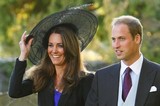
— Prince William is engaged to long-time girlfriend Kate Middleton, spokesmen for the monarchy announced Tuesday.

Royal engagement: Prince William proposes to Kate Middleton

Royal engagement: Prince William proposes to Kate Middleton

The pair will marry in the spring or summer of 2011, a statement from Clarence House, the prince’s official residence, said.

The price, second in line to the throne, proposed during an October vacation to Kenya, the statement said.

“Prince William has informed The Queen and other close members of his family,” the statement said. “Prince William has also sought the permission of Miss Middleton’s father.”

After they’re married, the couple will live in north Wales, where Prince William is currently serving with the Royal Air Force.

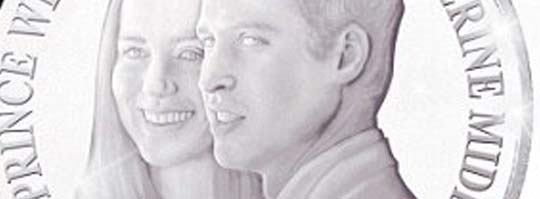
Royal wedding coin

Royal wedding coin

The Royal Mint has made preparations to begin production of a commemorative coin to celebrate the wedding of Prince William and Kate Middleton, fuelling speculation that they are poised to announce their engagement.

The project is so secret that staff at the Royal Mint’s plant at Llantrisant have been banned from talking about the coin, but insiders have confirmed that the initial design work has been done.

One source said: ‘I have seen the plaster model from which they will cast the die. They are ready to go. All they are waiting for is the date.’

Last night Clarence House said it was unaware that the Royal Mint had prepared for production of the coin.
Full story: http://www.dailymail.co.uk/news/article-1321225/Prince-William-Kate-Middletons-wedding-What-does-royal-mint-know-dont.html

The British Monarchy website
http://www.royal.gov.uk/
http://www.britishroyalwedding.com/category/royal-engagement/

I assume it will be in Westminster……………
Great news, just what England needs during these difficult times

British Tour Guide
HisTOURies UK – The Best Tours in British History

Read Full Post »

Rich in History is something Wiltshire is famous for, particularly Salisbury Plain, the large area of chalk downland within Wiltshire.

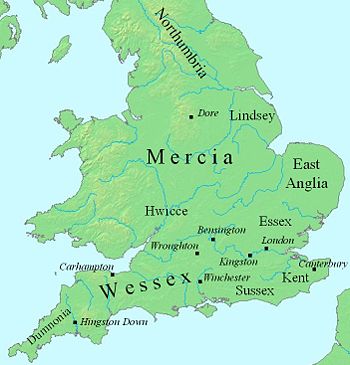
Salisbury Plain is steeped in history, both ancient and modern and can justifiably claim to be the cradle of English civilisation. In prehistory, tribes from Europe migrated north and settled on Salisbury Plain.

Wessex Map

Wessex Map

Remains of defence earthworks, burial and ceremonial grounds are scattered throughout Wiltshire. Many of these sites have public access. The most world renown is Stonehenge, a World Heritage Site, north of Salisbury and close to Amesbury. Also a World Heritage Site are the Avebury stone circles (both an outer and a smaller inner circle), not so famous as Stonehenge but equally impressive. Avebury is a few miles west of Marlborough in the north of Wiltshire.

From Overton Hill, near Avebury, the famous Ridgeway begins. This is thought to be Britain’s oldest road, used by prehistoric man, herdsmen and soldiers, and follows the northern escarpment of Salisbury Plain north-eastwards through the ancient landscapes of Wiltshire into the Chiltern Hills of Berkshire. The Ridgeway is 85miles (139km) in length, accessible to the public, and has National Trail status.

As well as the more ‘modern’ Roman Roads that criss-cross the Wiltshire countryside, Roman and Norman settlements continue very much in evidence, often developed on earlier Iron Age hill fort sites such as Old Sarum. This location was the original Salisbury site, a hill fort occupied by the Romans then latterly by Normans following the Norman Conquest of 1066. The exposed nature of the Old Sarum site and disagreements between the clergy and the military led to the building of the new Salisbury cathedral in 1220 A.D. to the south. The townspeople soon followed and medieval Salisbury grew to the city it is today. Old Sarum, rich in history, with its ruined fortifications is open to the public throughout the year.

The Middle Ages were a time of great prosperity for Wiltshire with sheep grazing the chalk downlands and the handwoven woollen cloth in great demand. Many famous buildings, villages and even towns were built from the proceeds. The Industrial Revolution changed everything as mechanical production took over and the weaving industry moved north into the West Riding of Yorkshire.

In more recent times much of Wiltshires rich prosperity has come from the many military establishments scattered over the Plain. Wiltshire airfields and army garrisons have trained and deployed troops and aircraft across the world on both fighting and peace-keeping operations and played pivotal roles in the great military campaigns of both World War I and II.

Each week I will be blogging on a specific area of Wilsthire and talking about its rich history.

Stonehenge Tour Guide
HisTOURies UK – The Best Tours in Wessex

Read Full Post »

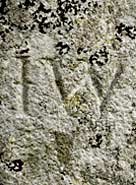
Sir Christopher Wren, the famous 17th century architect, left his mark on Stonehenge – but in a quite unexpected way. His name is skillfully chiselled into one of the 40-tonne sarsens that watches over the dig.
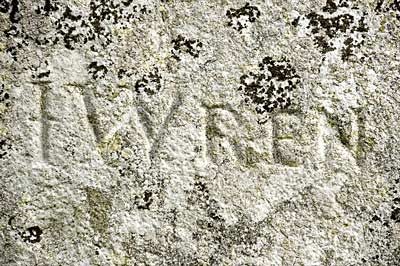
Christopher Wren Grafitti - Stonehenge

Christopher Wren Grafitti - Stonehenge

Was Christopher Wren a Mason ?

“Records of the Lodge Original, No. 1, now the Lodge of Antiquity No. 2”
mention him as being Master of the lodge.

Christopher WrenOne of the most distinguished architects of England was the son of Dr. Christopher Wren, Rector of East Knoyle in Wiltshire, and was born there October 20, 1632. He was entered as a Gentleman Commoner at Wadham College, Oxford, in his fourteenth year, being already distinguished for his mathematical knowledge. He has said to have invented, before this period, several astronomical and mathematical instruments. In 1645, he became a member of a scientific club connected with Gresham College, from which the Royal Society subsequently arose. In 1653, he was elected a Fellow of All Souls College, and had already become known to the learned men of Europe for his various inventions.
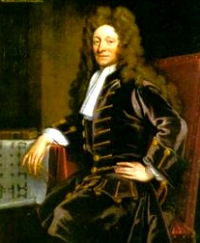
Christoher Wren

Christoher Wren

In 1657, he removed permanently to London, having been elected Professor of Astronomy at Gresham College. During the political disturbances which led to the abolition of the monarchy and the establishment of the Commonwealth, Wren, devoted to the pursuits of philosophy, appears to have kept away from the contests of party. Soon after the restoration of Charles II, he was appointed Savillian Professor at Oxford, one of the highest distinctions which could then have been conferred on a scientific man. During this time he was distinguished for his numerous contributions to astronomy and mathematics, and invented many curious machines, and discovered many methods for facilitating the calculations of the celestial bodies. Wren was not professionally educated as an architect, but from his early youth had devoted much time to its theoretic study. In 1665 he went to Paris for the purpose of studying the public buildings in that city. and the various styles which they presented.

He was induced to make this visit, and to enter into these investigations, because, in 1660, he had been appointed by King Charles II one of a Commission to superintend the restoration of the Cathedral of Saint Paul’s, which had been much dilapidated during the times of the Commonwealth. But before the designs could be carried into execution, the great fire occurred which laid so great a part of London, including Saint Paul’s, in ashes.

Wren was appointed assistant in 1661 to Sir John Denham, the Surveyor-General, and directed his attention to the restoration of the burnt portion of the city. His plans were, unfortunately for the good of London, not adopted, and he confined his attention to the rebuilding of particular edifices. In 1667, he was appointed the successor of Denham as Surveyor General and Chief Architect.

In this capacity he erected a large number of churches, the Royal Exchange, Greenwich Observatory, and many other public edifices. But his crowning work, the masterpiece that has given him his largest reputation, is the Cathedral of Saint Paul’s, which was commenced in 1675 and finished in 1710. The original plan that was proposed by Wren was rejected through the ignorance of the authorities, and differed greatly from the one on which it has been constructed. Wren, however, superintended the erection as master of the work, and his tomb in the crypt of the Cathedral was appropriately inscribed with the words Si monumentum requiris, circumspice; that is, If you seek his monument, look around.

Wren was made a Knight in 1672, and in 1674 he married a daughter of Sir John Coghill. To a son by this marriage are we indebted for memoirs of the family of his father, published under the title of Parentalia.

After the death of his wife, he married a daughter off Viscount Fitzwilliam. In 1680, Wren was elected President of the Royal Society, and continued to a late period his labors on public edifices, building, among others, additions to Hampton Court and to Windsor Castle. After the death of Queen Anne, who was the last of his royal patrons, Wren was removed from his office of Surveyor-General, which he had held for a period of very nearly half a century. He passed the few remaining years of his life in serene retirement. He was found dead in his chair after dinner, on February 25, 1723, in the ninety-first year of his age.

Notwithstanding that much that has been said by Doctor Anderson and other writers of the eighteenth century, concerning Wren’s connection with Freemasonry, is without historical confirmation, there can, Doctor Mackey believed, be no doubt that he tools a deep interest in the Speculative as well as in the Operative Order.

The Rev. J. W. Laughlin, in a lecture on the life of Wren, delivered in 1857, before the inhabitants of Saint Andrew’s, Holborn, and briefly reported in the Freemasons Magazine, said that “Wren was for eighteen years a member of the old Lodge of Saint Paul’s, then held at the Goose and Gridiron, near the Cathedral, now the Lodge of Antiquity; and the records of that Lodge show that the maul and trowel used at the laying of the stone of Saint Paul’s, together with a pair of carved mahogany candlesticks, were presented by Wren, and are now in possession of that Lodge.” By the order of the Duke of Sussex, a plate was placed on the mallet or maul, which contained a statement of the fact.

C. W. King, who was not a Freemason, but has derived his statement from a source to which he does not refer (but which was perhaps Nicolai) makes, in his work on the Gnostics (page 176) the following statement, which is here quoted merely to show that the traditionary belief of Wren’s connection with Speculative Freemasonry is not confined to the Craft. He says:
Another and a very important circumstance in this discussion must always be kept in view: our Freemasons (as at present organized in the form of a secret Society) derive their title from a mere accidental circumstances connected with their actual establishment. It was in the Common Hall of the London Gild of Freemasons (the trade) that their first meetings were held under Christopher Wren, president, in the time of the Commonwealth.

Their real object was political-the restoration of monarchy; hence the necessary exclusion of the public and the oaths of secrecy enjoined on the members. The presence of promoting architectures and the choice of the place where to hold their, meetings, suggested by the profession of their president, were no more than blinds to deceive the existing government.

Doctor Anderson, in the first edition of the Constitutions, makes but a slight reference to Wren, only calling him “the ingenious architect, Sir Christopher Wren.” Doctor Mackey was almost afraid that this passing notice of him who has been called “the Vitruvius of England” must be` attributed to servility. George I was the stupid monarch who removed Wren from his office of Surveyor-General, and it would not do to be too diffuse with praise of one who had been marked by the disfavor of the king. But in 1727 George I died, and in his second edition, published in 1738, Doctor Anderson gives to Wren all the Masonic honors to which he claims that he was entitled.

It is from what Anderson has said in that work, that the Masonic writers of the eighteenth century and the first half of the nineteenth, not requiring the records of authentic history, have drawn their views of the official relations of Siren to the Order. He first introduces Wren (page 101) as one of the Grand Wardens at the General Assembly held December 27, 1663, when the Earl of Saint Albans was Grand Master, and Sir John Denham, Deputy Grand Master. He says that in 1666 Wren was again a Grand Warden, under the Grand Mastership of the Earl of Rivers; but immediately afterward he calls him Deputy Wren, and continues to give him the title of Deputy Grand Master until 1685, when he says (page 106) that “the Lodges met, and elected Sir Christopher Wren Grand Master, who appointed Mr. Gabriel Cibber and Mr. Edmund Savage Grand Wardens; and while carrying on Saint Paul’s he annually met those Brethren who could attend him, to keep up good old usages.”

Brother Anderson (on page 107) makes the Duke of Richmond and Lennox Grand Master, and reduces Wren to the rank of a Deputy; but he says that in 1698 he was again chosen Grand Master, and as such “celebrated the Cape-stone” of Saint Paul’s in 1708. “Some few years after this,” he says, “Sir Christopher Wren neglected the office of Grand Master.” Finally he says (on page 109) that in 1716 “the Lodges in London finding themselves neglected by Sir Christopher Wren,” Freemasonry was revived under a new Grand Master. Some excuse for the aged architect’s neglect might have been found in the fact that he was then eighty-five years of age, and had been long removed from his public office of Surveyor-General. Brother Noorthouek is more considerate. Speaking of the placing of the last stone on the top of Saint Paul’s-which, notwithstanding the statement of Doctor Anderson, was done, not by Wren, but by his son-he says (Constitutions, page 204): The age and infirmities of the Grand Master, which prevented his attendance on this solemn occasion, confined him afterwards to great retirement; so that the Lodges suffered from many of his usual presence in visiting and regulating their meetings, and were reduced to a small number.

Brother Noorthouck, however, repeats substantially the statements of Doctor Anderson in reference to Wren’s Grand Mastership. How much of these statements can be authenticated by history is a question that must be decided only by more extensive investigations of documents not yet in possession of the Craft. Findel says in his History (page 127) that Doctor Anderson, having been commissioned in 1735 by the Grand Lodge to make a list of the ancient Patrons of the Freemasons, so as to afford something like a historical basis, “transformed the former Patrons into Grand Mastefs, and the Masters and Superintendents into Grand Wardens and the like, which were unknown until the year 1717.” Of this there can be no doubt; but there is other evidence that Wren was a Freemason. In Aubrey’s Natural History of Wiltshire (page 277) a manuscript in the library of the Royal Society, Halliwell finds and cites, in his Early History of Freemasonry in England (page 46) the following passage: This day, May the 15th, being Monday, 1691, after Rogation Sunday, is a great convention at Saint Paul’s Church of the Fraternity of the Accepted (the word Free was first written, then the pen drawn through it and the word Accepted written over it) Seasons, where Sir Christopher Wren is to be adopted a brothers and Sir Henry Goodrie of the Tower, and divers others. There have been Kings that have been of this sodality.

If this statement be true-and we have no reason to doubt it, from Aubrey’s general antiquarian accuracy-Doctor Anderson is incorrect in making him a Grand Master in 1685, six years before he was initiated as a Freemason. The true version of the story probably is this: Wren was a great architect-the greatest at the time in England. As such he received the appointment of Deputy Surveyor-General under Denham, and subsequently, on Ocnham’s death, of Surveyor-General. He thus became invested, by virtue of his office, with the duty of superintending the construction of public buildings.

The most important of these was Saint Paul’s Cathedral, the building of which he directed in person, and with so much energy that the parsimonious Duchess of Marlborough, when contrasting the charges of her own architect with the scant remuneration of Wren, observed that “he was content to be dragged up in a basket three or four times a week to the top of Saint Paul’s, and at great hazard, for £200 a year.”

All this brought him into close connection with the Gild of Freemasons, of which he naturally became the patron, and subsequently he was by initiation adopted into the modality Wren was, in fact, what the Medieval Masons called Magister Operis, or Master of the Work. Doctor James Anderson, writing for a purpose naturally transformed this title into that of Grand Master-an office supposed to be unknown until the year 1717. Aubrey’s authority, in Doctor Maelsey’s opinion, sufficiently establishes the fact that Wren has a Freemason, and the events of his life prove his attachment to the profession.

Whether Sir Christopher Wren was or not a member of the Fraternity has long been debated with lively interest. The foregoing statement by Doctor Mackey gives the principal facts and we may note that two newspapers announced his funeral, Lost boy (No. 5245, March 2-5, 1793) and the British Journal (No. 25, March 9, 1723).

Both of them allude to Wren as “that worthy Freemason.” Brother Christopher Wren, Jr., the son of Sir Christopher Wren, was Master of the famous Lodge of Antiquity in 1729. The subject is discussed in Doctor Mackey’s revised History of Freemason also by Sir John S. Cockburn, Masonic Record, March, 1923, in Square and Compass, September, 1923, and many other journals, as well as in Records of Antiquity Lodge, volume i, by Brother W. H. Rylands, and volume ii, by Captain C. W. Firebrace, there is much additional and valuable firsthand information favoring Wren’s active connection with the Fraternity, some items personally checked by us at the Lodge itself.

Brother K. R. H. Mackenzie in the Royal Masonic Cyclopaedia says,

There can be little doubt that Wren took a deep interest in speculative as well as operative Masonry (see Book of Constitutions) and that he was an eminent Member of the Craft cannot be doubted, but the dates respecting Wren’s initiation are vague and unsatisfactory, none of the authorities agreeing. It would seem certain, however, that for many years he was a member of the old Lodge of Saint Paul’s, meeting at the (Bose and gridiron, in Saint Paul’s Churchyard.

Brother Robert F. Gould (History of Freemasonry, me ii, page 55) says, The popular belief that Wren was a Freemason, though hitherto unchallenged, and supported by a great weight of authority, is, in my judgment, unsustained by any basis of well-attested fact. The admission of the great architect-at any period of his life-into the Masonic fraternity, seems to me a mere figment of the imagination, but it may at least he confidently asserted, that it cannot be proved to be a reality.

Rev. A. F. A. Woodford, Renning’s Cyclopedia of Freemasonry, says, In Freemasonry it has been general for many years to credit Sir Christopher Wren with every thing great and good before the ” Revival,” but on very slender evidence. He is said to have been a member of the Lodge of Antiquity for many years; “and the maul and trowel used at the laving of the stone of Saint Paul’s, with a pair of carved mahogany candlesticks, were presented ” by hind and are in the possession of the Lodge.

Doctor Anderson chronicles him as Grand Master in 16S5; but according to a manuscript of Aubrey’s in the Royal Society, he was not admitted a Brother Freemason until 1691. Unfortunately, the early records of the celebrated Lodge of-Antiquity have been lost or destroyed, so there is literally nothing certain as to Wren’s Masonic career, what little has been circulated is contradictory. It is, of course, more than likely he took an active part in Freemasonry, though he was not a member of the Masons Company; but as the records are wanting, it is idle to speculate, and absurd to credit to his labors on behalf of our Society what there is not a title of evidence to prove.

Brother Hawkins, an editor of this work, also prepared for the Concise Cyclopedia of freemasonry, the following summary of the arguments on both sides of the question at issue: Those who contend that he was not a Freemason reply as follows:

1. No reference to the convention mentioned by Aubrey has yet been discovered elsewhere, and it remains uncertain whether it ever was held and whether the proposed adoption of the illustrious architect took place or not; also it is inconsistent with the dates given in the 1738 Constitutions.

2. In the Constitutions of 1723, he is only described as lithe ingenious architect,” without any hint of his being a Freemason.

3. It is incredible that Doctor Anderson, when compiling the 1723 Constitutions, should have been ignorant of the details of Wren’s Masonic career which he gave so from in 1735; moreover, he has claimed as Grand Masters are most all distinguished men from Adam downwards, though there was no such office as Grand Master until 1117, and his dates are inconsistent with that given by Aubrey.

4. Subsequent writers all quoted from the 1738 Constitutions and therefore their evidence is worth no more than Doctor Anderson’s, and no such records as Preston refers to can now be found, nor can the legendary history of the candlesticks and the mallet be authenticated. Such are the arguments for and against Wren’s connection with the Craft; those who claim him as a Freemason must reconcile as best they can the conflicting dates given by Aubrey and Anderson: and those who regard his membership as equally a fable with his Grand Mastership must somehow explain away the contemporary evidence of the two newspapers that in the year of his death called him ‘ ‘ that worthy Freemason.”

– Source: Mackey’s Encyclopedia of Freema
sonry

External links:
http://www.freemasons-freemasonry.com/christopher_wren_freemasonry.html

http://www.themodernantiquarian.com/site/609

http://www.stonehenge-stone-circle.co.uk

http://www.StonehengeTours.com
The only way to get close up to the stones and see 5000 years of grafitti carved onto them is by joing in private access tout.  This is where you visit Stonehenge when the site is closed to the public, usually at sunrise or sunset. 

If you look very  closely at the heel (south west view)stonesits even possible  to se a funny carved handshake?

Stonehenge Tour Guide
HisTOURies UK Tours – The Best Tours in Wessex

Read Full Post »

Stone Age humans had to evolve a higher level of intelligence before they were able to develop real tools like axes, scientists have proved.

It took early man almost two million years to move form simply using sharp stones to more complex tools like a stone axe.

Scientists used computer modelling and tiny sensors embedded in gloves to assess the complex hand skills that early humans needed in order to make two types of tools during the Lower Palaeolithic period, which began around 2.5 million years ago

Stone Age man took two million years to move from simple stone tools to more complex ones like handheld axes

Stone Age man took two million years to move from simple stone tools to more complex ones like handheld axes

Researchers from Imperial College London employed a craftsman called a flintnapper to faithfully replicate ancient tool-making techniques.

The flintnapper created two types of axes wearing he data glove fabric to record hand and arm movements during the production of sharpened flints or more complex handheld stone axes.

This enabled the scientists to rule out motor skills as the principal factor for holding up stone tool development as both types were equally complex to produce.

Until now some scientists believed that it took Stone Age man so long to develop real tools because early humans may have had underdeveloped motor skills or abilities.

Bbut this study confirms that the evolution of the early human brain was behind the development of the axe.

The team say that comparing the manufacturing techniques used for both Stone Age tools provides evidence of how the human brain and human behaviour evolved during period.

Neuroscientist Dr Aldo Faisal said ‘The advance from crude stone tools to elegant hand-held axes was a massive technological leap for our early human ancestors. Hand-held axes were a more useful tool for defence, hunting and routine work.

‘Interestingly, our study reinforces the idea that tool making and language evolved together as both required more complex thought, making the end of the Lower Palaeolithic a pivotal time in our history.
‘After this period, early humans left Africa and began to colonise other parts of the world.’

They also believe that the development of hand-held axes may have also coincided with the development of language, as these functions overlap in the same regions of the modern and early human brains.

The results showed that the axe required a high level of brain processing in overlapping areas of the brain that are responsible for a range of different functions including vocal cords and complex hand gestures.

In the future, the team plan to use their technology to compare tools made by Neanderthals, an extinct ancestor of humans, to glean insights into their brain development.

Explore more:

Places:
Africa
Stonehenge
Organisations:
Imperial College

Read more: http://www.dailymail.co.uk/sciencetech/article-1326880/Why-Stone-Age-man-needed-evolve-brain-power-make-axes.html?ITO=socialnet-twitter-dmailscitech#ixzz14sKuiH4U

Stonehenge Tour Guide
HisTOURies UK – The Best Tours in ancient History

Read Full Post »

The British Flag: a symbol of Unity

The Union Jack is a transnational flag full of historical significance. It represents the union of different countries and the growth of a family of nations whose influence extends far beyond the British Isles. This far-reaching influence is still seen today in the incorporation of the Union Jack in other national flags such as that of Australia. The British flag is called the “Union Jack”, an expression that needs to be explained.

The Union Jack is a fine expression of unity as well as diversity. The British flag incorporates the national symbols of three distinct countries, England, Scotland and Northern Ireland. In fact its name “Union Jack” emphasises the very nature of the United Kingdom of Great Britain and Northern Ireland as a union of nations. The flag is also known by another name, this too, emphasising the idea of union: the “Union flag”, perhaps a less common term but a little more precise. The countries comprising the British Isles are not inward-looking or isolated states with an insular mentality; together they constitute a powerful union that has spanned centuries. Recent devolution that gave Scotland its own Parliament and Wales its own Assembly has also emphasised the importance of individual national identities within the union without affecting the essential unity of Great Britain. On the contrary, it has strengthened it. Recognition of, and respect for national identities are an essential ingredients for effective union. The Union Jack symbolises all this: respect for individuality within a closely knit community.

The “Union Jack” or “Union Flag” is a composite design made up of three different national symbols:

st_georges's_cross st_andrew's_cross
St. George’s Cross,
the flag of England
St. Andrew’s Cross,
the flag of Scotland


st_patrick's_cross
St. Patrick’s Cross,
the flag of Ireland

The cross represented in each flag is named after the patron saint of each country: St. George, patron saint of England, St. Andrew, patron saint of Scotland and St. Patrick, patron saint of Ireland.

The image below renders the idea of the union of the three flags forming one unified, transnational Flag.

The image below renders the idea of the union of the three flags forming one unified, transnational Flag.

union_jack

No mention has been made of the Welsh flag. The Welsh dragon was not incorporated into the Union Flag because Wales had already been united to England when the first version of the Union Flag was designed in 1606. It is, however, in common use:

welsh dragon
The Welsh Dragon

 THE HISTORY OF THE UNION JACK

The first step taken in the creation of the flag of Great Britain was on 12th April 1606. When King James VI of Scotland became king of England (King James I) it was decided that the union of the two realms under one king should be represented symbolically by a new flag. Originally It consisted in the red cross of England superimposed on the white cross of Scotland on the blue background of the Scottish flag as in this illustration:
gb-1606 

Thus we have the first flag of the union called, in fact, the “Union Flag”.

What was meant to be a symbol of unity actually became a symbol of international controversy. The English resented the fact that the white background of their cross had disappeared and that the new flag had the blue Scottish background. On the other hand the Scottish resented the fact that the English red cross was superimposed on the Scottish white cross!! The old adage says you cannot please everyone but this first version of the Union Flag seemed to please no-one!!

Apparently there was an unofficial “Scottish version” that attempted to rectify the sense of injustice that the Scottish felt at this innovatory flag. A distinct reference was made to this version when the King visited Dumfries in 1618. Here is what it looked like: 

gb-altsc 

The controversy was destined to last!! There is conflict in the best of families!!

However, the flag was usually restricted to use at sea until the two kingdoms of Scotland and England were united in 1707. It was most probably from this use at sea that it got the name “Jack” (“Union Jack“). It was usually flown at the bow end of the ship, from the jack staff.

An attempt was made to modify the flag under Oliver Cromwell. A harp was placed in the centre, representing Ireland. However, the original design was restored along with the restoration of the monarchy in 1660.

The flag continued to be used in its original form until Jan. 1, 1801. At that time, with the union of Ireland and Great Britain, it became necessary to represent Ireland in the Union Flag and so the cross of St. Patrick was include thus creating the flag as we now have it. When the southern part of Ireland gained its independence in 1921 and became the Irish Free State no alteration was made to the Union Jack.

The name “Union Jack” became official when it was approved in Parliament in 1908. It was stated that “the Union Jack should be regarded as the National flag”.

British Tour Guide – Fly the Flag!
HisTOURies UK Tours – See the very Best of Britain

Read Full Post »

« Newer Posts - Older Posts »