Feeds:
Posts
Comments

Archive for the ‘History’ Category

Guy Fawkes and Bonfire Night

Guy Fawkes Effigy

Guy Fawkes Effigy

The tradition of Guy Fawkes-related bonfires actually began the very same year as the failed coup. The Plot was foiled in the night between the 4th and 5th of November 1605. Already on the 5th, agitated Londoners who knew little more than that their King had been saved, joyfully lit bonfires in thanksgiving. As years progressed, however, the ritual became more elaborate.

Soon, people began placing effigies onto bonfires, and fireworks were added to the celebrations. Effigies of Guy Fawkes, and sometimes those of the Pope, graced the pyres. Still today, some communities throw dummies of both Guy Fawkes and the Pope on the bonfire (and even those of a contemporary politician or two), although the gesture is seen by most as a quirky tradition, rather than an expression of hostility towards the Pope.

Preparations for Bonfire Night celebrations include making a dummy of Guy Fawkes, which is called “the Guy”. Some children even keep up an old tradition of walking in the streets, carrying “the Guy” they have just made, and beg passersby for “a penny for the Guy.” The kids use the money to buy fireworks for the evening festivities.

On the night itself, Guy is placed on top of the bonfire, which is then set alight; and fireworks displays fill the sky.

The extent of the celebrations and the size of the bonfire varies from one community to the next. Lewes, in the South East of England, is famous for its Bonfire Night festivities and consistently attracts thousands of people each year to participate.

Bonfire Night is not only celebrated in Britain. The tradition crossed the oceans and established itself in the British colonies during the centuries. It was actively celebrated in New England as “Pope Day” as late as the 18th century. Today, November 5th bonfires still light up in far out places like New Zealand and Newfoundland in Canada.

The Gunpowder Plot of 1605

In 1605, thirteen young men planned to blow up the Houses of Parliament. Among them was  Guy Fawkes, Britain’s most notorious traitor.

After Queen Elizabeth I died in 1603, English Catholics who had been persecuted under her rule had hoped that her successor, James I, would be more tolerant of their religion. James I had, after all, had a Catholic mother. Unfortunately, James did not turn out to be more tolerant than Elizabeth and a number of young men, 13 to be exact, decided that violent action was the answer.

A small group took shape, under the leadership of Robert Catesby. Catesby felt that violent action was warranted. Indeed, the thing to do was to blow up the Houses of Parliament. In doing so, they would kill the King, maybe even the Prince of Wales, and the Members of Parliament who were making life difficult for the Catholics. Today these conspirators would be known as extremists, or terrorists.

To carry out their plan, the conspirators got hold of 36 barrels of gunpowder – and stored them in a cellar, just under the House of Lords.

But as the group worked on the plot, it became clear that innocent people would be hurt or killed in the attack, including some people who even fought for more rights for Catholics. Some of the plotters started having second thoughts. One of the group members even sent an anonymous letter warning his friend, Lord Monteagle, to stay away from the Parliament on November 5th. Was the letter real?

The warning letter reached the King, and the King’s forces made plans to stop the conspirators.

Guy Fawkes, who was in the cellar of the parliament with the 36 barrels of gunpowder when the authorities stormed it in the early hours of November 5th, was caught, tortured and executed.

It’s unclear if the conspirators would ever have been able to pull off their plan to blow up the Parliament even if they had not been betrayed. Some have suggested that the gunpowder itself was so old as to be useless. Since Guy Fawkes and the other conspirators got caught before trying to ignite the powder, we’ll never know for certain.

Even for the period which was notoriously unstable, the Gunpowder Plot struck a very profound chord for the people of England. In fact, even today, the reigning monarch only enters the Parliament once a year, on what is called “the State Opening of Parliament”. Prior to the Opening, and according to custom, the Yeomen of the Guard search the cellars of the Palace of Westminster. Nowadays, the Queen and Parliament still observe this tradition.

On the very night that the Gunpowder Plot was foiled, on November 5th, 1605, bonfires were set alight to celebrate the safety of the King. Since then, November 5th has become known as Bonfire Night. The event is commemorated every year with fireworks and burning effigies of Guy Fawkes on a bonfire.

Some of the English have been known to wonder, in a tongue in cheek kind of way, whether they are celebrating Fawkes’ execution or honoring his attempt to do away with the government.

Doing something different this November 5th – Go to the Ottery st Mary Tar barreling night

Roll Out the Barrel
Pagan Traditions survive in Devon Town

Driving through the main square of Ottery St Mary on the afternoon of November 6th, the only townspeople I see are two elderly gentlemen with sturdy little dogs and a young girl on a bicycle. The quiet Devonshire town in the beautiful Otter Valley shows no signs of the previous night’s revelry. Nearly a week before, on October 31st, the annual festival had started with the traditional procession through the village, complete with Carnival Queen and Princesses and brightly-coloured floats sponsored by local groups.

The final day, November 5th (Guy Fawkes’ Night), culminates in rituals far more hair-raising than the traditional bonfire and fireworks enjoyed by the rest of the country. Before dawn, the local people come out into the streets and fire ‘cannon’ – hand-held pieces of piping which are filled with gunpowder and fired in the traditional way, to create an almighty flash and a loud bang. This is repeated at 1pm and again at 4pm.

However, the real treat is kept for the evening, when thousands of people from across the county and beyond congregate to watch barrels full of burning tar being rolled up and down the streets and through the main square. This is an extremely ancient tradition, possibly older than that of the unhappy Guy Fawkes himself. Fire festivals around the time of Halloween are deeply rooted in British folklore and have been connected with the ritual burning of witches. It is a great honour to be allowed to take part in the barrel rolling and this has continued in some local families for generation after generation.

The weather was against us, both windy and raining hard and we arrived late, around 8pm. It was only a short walk into town from the car park, along the main street past the softly floodlit church. All the roads had been closed since 5pm and the reason was clear: all the public areas were filled with people from elderly pensioners to tiny children, watching the burning barrels and frantically trying to dodge as they came closer and then moved off again. The barrel rollers carry the barrels on their shoulders and protect their hands with dampened sacking. They run back and forth with the barrel until they can no longer stand the heat and then they pass it to the next person in line. The more experienced bearers achieve this by whirling the barrel around their heads until their successor is ready to accept it.

Some of the rollers are quite sedate, clearly experienced, travelling up and down amongst the crowd. Others are keen to prove their strength and race along, taking the crowd by surprise and scattering people in their wake. All end up sooty from head to foot. As I watched, one teenager’s hair caught fire but was rapidly extinguished by his neighbour. The emergency services stand by for more serious situations. Barrels are rolled at designated times at various sites across town, mostly associated with and sponsored by the nearest pub. They start with the smaller barrels for women and boys in the afternoon and progress to ever-larger barrels carried by the men late into the night. As the evening progresses, so the drinking takes effect, the atmosphere becomes wilder and the experience more hazardous. It is not unknown for people to break the glass shop fronts of the main square as the throng heaves to and fro.

For those who lose their nerve or simply want to take a break from the main spectacle, there is a vast bonfire with a traditional Guy on it down by the water. Across the river from the bonfire are the bright lights of the travelling funfair, with all kinds of stalls and rides. The thousands of visitors are catered for by mobile vans selling everything from candy floss to hog roast and the pubs are open all night, although you’d be lucky to get a drink with the numbers of people who gather there. The most highly prized souvenir of the evening is one of the metal rings from the burnt out barrels.

Since the traditional rolling of burning barrels at Lewes in Sussex was banned following a tragic accident some years back, this is probably the most important festival of its kind. The exemplary organisation of the Ottery event has warded off similar threats but be warned: on a damp night the car park becomes a marsh and if you don’t want to go through a change of clothes and several car washes, you might do well to join one of the many coach parties run from Exeter.

Ottery St Mary Tar Barrels link

Have a safe ‘Guy Fawkes’ night

British Tour Guide
HisTOURies UK – The Best Tours in History

For 400 years, bonfires have burned on November 5th to mark the failed Gunpowder Plot.

Read Full Post »

Engineers are to carry out emergency repairs on an 18th Century bridge in Bath after cracks were found in a support.

Subsidence was found in a basement built into the base of Pulteney Bridge.

Pultney Bridge

Pultney Bridge

Bath and North East Somerset Council (Banes) said mortar from previous repair work had shifted but there was no danger of the bridge collapsing.

The council wants to close the historic structure to traffic, but some residents are objecting to the plans.

Banes says the bridge – a Grade I listed structure – is unsuitable for modern traffic.

They submitted a closure plan before the current repair work was needed.

However, some residents fear the bridge’s closure would cut them off from the city centre.

The issue had been due to go before the council on 3 November, but this has now been put back to some time in 2011.

A temporary scaffolding system is being put in place to support the bridge until permanent repairs can get under way.

History of Pultney Bridge

Pulteney Bridge (Photo Bath and North East Somerset Council)

Pulteney Bridge is one of the most admired buildings in a beautiful city.

Pulteney Bridge is one of only four bridges lined with shops in the world, but Robert Adam’s creation has more than novelty value. His graceful composition is one of the unqualified successes of English Palladianism and provides the perfect integrating link between two halves of a Palladian city.

Across the River Avon from Bath lay the 600 acre estate of Bathwick. This was entirely rural when it was inherited by Frances Pulteney in October 1767, but its potential was obvious. No other English spa could rival Bath in this period and the city was in the midst of a building boom. Frances was married to an Edinburgh lawyer, William Johnstone Pulteney, and this energetic and frugal Scot immediately began to make plans to develop his wife’s estate. His first problem was that the only direct route from Bath to Bathwick was by ferry. By February 1768, he was conferring with Bath City Council about a new bridge. At first Pulteney contemplated just a simple, functional bridge, designed by a local architect, but by the summer of 1770 the brothers Adam were involved and the plans had undergone a dramatic change.

Pulteney Bridge by Thomas Malton 1785 (Victoria Art Gallery, Bath)

Pulteney had approached the Adams with his new town in Bathwick in mind. We may guess that Robert Adam then suggested putting shops on the bridge. He had visited both Florence and Venice, where he would have seen the ancient Ponte Vecchio and the striking Ponte di Rialto. But the most direct influence on Adam was clearly Andrea Palladio’s rejected design for the Rialto. Stripped of its heavier ornamentation, this tribute to ancient Rome emerged from Adam’s hands as the coolest of English understatements.

England also had housed bridges of medieval origin, but by the 18th century these were being seen as impediments to traffic. Adam’s designs therefore caused some consternation in Bath. The Corporation, who had not been consulted, wrote to Pulteney in protest. They evidently thought it perverse that after London and Bristol had cleared their bridges of houses, he was proposing to bring this outdated phenomenon to Bath. But Pulteney remained adamant. Perhaps the prospect of the bridge paying for itself through shop rents appealed to his love of economy. Pulteney Bridge by Thomas Malton 1779 (Victoria Art Gallery, Bath)

Adam planned a row of eleven small shops on each side, with staircases to attics above. Lofty Venetian windows formed the centrepiece of his design for the river façades, while matching Venetian doors faced the street. These were echoed in a pattern of recessed, columned windows, creating an interesting play of light and shadow for passers-by. Malton’s aquatint gives us our only view of these lovely street façades, subsequently much altered.

Pulteney Bridge was complete and ready for occupation in late 1773, but tenants were slow to come forward. The shock of the American War of Independence had fallen like an axe on Bath’s development. The plans for Bathwick were shelved and for many years, Adam’s elegant and urbane bridge led out onto meadows, rather than a Palladian townscape. When building eventually began in March 1788, it was Thomas Baldwin, a Bath architect, who provided the detailed plans. Pulteney Bridge was left as Adam’s only work in Bath.

Pulteney at least had the tact to see Adam to his grave before desecrating his handiwork. On 26 March 1792, less than a month after Adam’s death, a lease of most of the bridge was granted, with Baldwin’s plans for conversion to larger shops. The roof was raised and the windows transformed into bays. No doubt it all made sound commercial sense, but Adam’s street elevations were utterly ruined.

This was just the first of many distortions of Adam’s original vision. Disaster struck in September 1799, when a pier gave way after high floods. The remaining pier collapsed when the river rose in a great storm in November 1800. The houses on the north side were so badly damaged that Pulteney seriously considered dismantling the whole structure and building a single-span iron bridge, designed by his protégé Thomas Telford. But in the end only the north side was rebuilt. Adam’s pavilions were reduced to token pediments, but at least the design had unity.

It was not to last. 19th-century shopkeepers altered windows, or cantilevered out over the river as The north side of Pulteney Bridge in 1872 (Victoria Art Gallery, Bath)the fancy took them. By 1948, the buildings had become pathetic travesties of the original design, as Walter Ison sadly noted.

But the tide was already on the turn. Bath City Council showed concern to retain the Adam features of the bridge as early as 1903, when the south-west pavilion had to be moved. In January 1936, Pulteney Bridge was scheduled as a national monument. The Council already owned a few of the shops on it; now they bought the rest and the following year the City Surveyor carefully traced Adam’s own plans and designed a restored façade.

But war intervened. The restoration was finally executed in time for the Festival of Britain in 1951. Then in 1975 the Georgian Group partially restored the southern street facade to mark European Architectural Heritage Year. Now the restored bridge is a delight to photographers and one of the enduring images of Bath that visitors take away with them.

We operate tours of the city of Bath and they can depart from London or Salisbury

Stonehenge Tour Guide
HisTOURies UK – The Best Tours in History

Read Full Post »

On October 31st, we celebrate Halloween,thought to be the one night of the year when ghosts, witches, and fairies are especially active.

Most people think of Halloween today as simply a day when children dress up in costumes and go from home to home to “trick or treat” and collect enough candy to make any parent cringe. Halloween was much more significant in ancient times, however. October 31st was a very important day to the ancient Celts of Ireland, Scotland and Great Britain. No kidding around in costumes and trick or treat bags; Halloween was much more serious to the non-Christian Cults a thousand years ago.

Halloween remains a popular day in the U.S., Canada, Puerto Rico, Ireland, the UK, Australia, and New Zealand. Children get to dress up in their favorite costumes and ring doorbells throughout their neighborhood to collect as much candy as possible. In the United States’ Halloween is the second most popular holiday (after Christmas) for decorating and reaps a huge financial bounty of retail selling of frightening costumes to children and adults alike, decorations and candy. But for eons, the history of Halloween encompased ancient beliefs about the world – both living and dead.

Understanding the history of Halloween can perhaps help you decide what to let your children take part in, and what to keep your children away from. Also, knowing the origin of Halloween and its history can also help Christians view the adult, youth, and child activities associated with Halloween celebrations in the light of Christ’s truth.

What Is The History of Halloween?
Halloween originated among the Irish Celts, Scots and Anglo-Saxons in Britain long before the Christian era. Originally called Samhain, it was a time when they believed the division between the worlds of the living and the dead became very thin and when ghosts and spirits were free to wander as they wished. The name “Halloween” is a shorter form for the Gaelic name All-hallow-evening. Pope Boniface IV instituted All Saints’ Day in the 7th century as a time to honor saints and martyrs, replacing the pagan festival of the dead. In 834, Gregory III moved All Saint’s Day to Nov. 1, thus making Oct. 31 All Hallows’ Eve (‘hallow’ means ‘saint’).

On the night of Samhain, it was believed spirits of the restless dead and mischievous spirits would freely roam about with humans and during this one night spirits were able to make contact with the physical world as their magic was at its height. The Celts believed that by allowing the dead to have access to the world on this one evening, they would be satisfied to return to the land of the dead. The Celtic people would put out food offerings to appease the spirits who might inflict suffering and violence on them and Celtic priests would offer sacrifices, animal and human, to the gods for the purpose of chasing away the evil, frightening spirits. They built fires where they gave sacrifices to the Celtic deities to ensure protection from the dead spirits. Samhain was also a time when it was customary for the pagans to use the occult practice of divination to determine the weather for the coming year, the crop expectations, and even who in the community would marry whom and in what order.

When Rome took over their land, the Samhain was integrated with two other Roman festivals: Feralia and a festival to honor Pomona, the Roman goddess of fruit and trees. By the time Christianity come on the scene, Halloween had already taken root from the pagan beliefs and was integrated into Christian practices. As the Europeans found their way to the New World, they brought with them their traditions which soon evolved to fit their new country.

Many customs still observed today come from these ancient beliefs. For example, the elaborately carved jack-o-lantern is said to have been named after the Irish story of a greedy, hard-drinking gambling man, Stingy Jack, who tricked the Devil into climbing a tree and trapped him there by carving a crude cross into the trunk of the tree. In revenge for being stuck in the tree, the Devil cursed Jack and made him walk the earth at night for eternity. The jack-o-lantern of today is carved with a scary face to keep Jack and other spirits from entering their homes.

A problem for the Celtic people was… if the souls of dead loved ones could return that night, so could anything else, human or not, nice or not-so-nice. So, to protect themselves on such an occasion, these superstitious people would masquerade as one of the demonic hoard, wearing masks and other disguises and blackening the face with soot to hopefully blend in unnoticed among them. This is the source of modern day Halloween costumes portraying devils, imps, ogres, and other demonic creatures.

 Should Christians Celebrate Halloween?
For Christians, the origins, history, and current practices of Halloween has its root in Satan, the author of deception.

He was a murderer from the beginning, not holding to the truth, for there is no truth in him. When he lies, he speaks his native language, for he is a liar and the father of lies. [John 8:44]

While some might say that Halloween is now only a fun children’s holiday, it should be noted how much the modern day American practices and modern day witchcraft have in common with the ancient beliefs of the Celtic people. Contrary to some beliefs, the historic Samhain was not a time for witches and the worship Satan. Samhain was the end of the crop season and the official beginning of autumn. The ancient Celts celebrated a successful crop season on Samhain, giving thanks for the bounty of the harvested crops. The satanic celebrations now observed on Halloween is a more recent invention of more contemporary Satanists who have focused more on this season as a time when the dead can easily communicate with the living therefore making divinations and sacrifices more attainable. Modern day Halloween has thus become a mixture of ancient beliefs, occult practices and a highly commercialized children’s holiday.

While some people consider celebrating Halloween to be a sin, others simply feel that Halloween quite simply shouldn’t be a holiday at all! A few Southern states have been known to ban trick-or-treating on Halloween, especially when it happens to fall on a Sunday. Halloween parties are renamed “fall festivals” and children replaced scary costumes with costumes of Bible figures, historical figures, or no costume at all.

Considering that Satan is the father of lies, it can be understood how many are confused and deceived about this holiday. Like Christmas and Easter, both Christian celebrations, the true origins of Halloween, a non-Christian celebration, are eons old and some of the true meanings of the traditions of these celebrations have been distorted over time. In recent times, Christmas appears to be more about presents, parades and feasts than about celebrating the birth of Jesus Christ. Traditions surrounding Halloween have followed the same fate. All too often we think of Halloween merely as a time of dressing up in costumes in going trick or treating around the neighborhood. In antiquity, the traditions of Halloween were of enormous significance throughout Scotland, Ireland and Britain.

Have a spooky one!  I will be at Avebury Stone Circle for the Samhain gathering.

Stonehenge Tour Guide
HisTOURies UK – The Best Tours in Wessex

Read Full Post »

When one thinks of Wiltshire the images which spring most readily to mind are the spacious rolling downland of Salisbury Plain and associations with pre-history which are at their most stunning at Avebury and Stonehenge. Whilst Wiltshire is more complex than this a journey northwards to the Marlborough Downs will reinforce this picture of sweeping chalk downland and ancient times. Here, there is also the handiwork of more recent history, in the famous Wiltshire White Horses. There are now eight of them and they have their own newly opened long distance path, ‘The White Horse Trail’.

The Vale of Pewsey and Savenake Forest, part of the Kennet District, offer a complimentary landscape which also has many enjoyable walking opportunities; and the Kennet and Avon canal, joining the two rivers, provides delightful waterside rambling through peaceful rural countryside.

South of Salisbury Plain the Wylye and Nadder river valleys offer lovely walks, once again through a quiet rural landscape a million miles away from the hustle of industrial Swindon in the north of the county.

Guide Books:

  Guide Books: [For further information]
100 Walks in Wiltshire by: Various contributors. An omnibus of local walks covering the whole of Wiltshire. The book is ideal for family outings and as a valuable reference book for residents and visitors to the region. There is a wide choice of routes with perhaps two thirds spread over the northern part of the county. Salisbury Plain is not well represented, but this is largely due to Ministry of Defense activities, which do not co-exist well with peaceful country walking. However all the best parts of Wiltshire are covered. The walks vary in length from 2 to 12 miles, the majority being in the 4/6 mile range. Sketch maps and route descriptions are on facing pages.
Walks in Mysterious Wiltshire by: Laurence Main. Discover Wiltshire’s secret places. Wiltshire has long been associated with both historic and prehistoric sites, most notably Avebury and Stonehenge. See and experience these for yourself and contemplate their significance as temples, secular monuments or ancient observatories. Many more mysteries await walkers in this historic area; white horses carved on Wiltshire’s hillsides, sites of ancient battles, neolithic burial sites and a network of ley lines, those ancient trackways often associated with spirit pathways. There are stories of Wiltshire’s witches, folklore traditions, Arthurian legends and even UFO’s! These are just some of the prospects offered in 27 well planned routes of interest to all the family.
Waterside walks in Wiltshire by: Nick Channer. The 20 circular routes in this book are all between 2 and 9 miles in length. Each walk instruction also includes details on how to get to the start by car, where to park, and what food and drink are available locally. For greater clarity, the route descriptions are divided into numbered paragraphs, which correspond with the numbers on the accompanying sketch maps. There are also seperate sections about places of interest to visit nearby. From walks near Heytesbury, once the home of war poet Siegfried Sassoon, the Vale of Pewsey and the National Trust village of Laycock to Salisbury’s watermeadows and Devizes’ flight of 29 canal locks, this book provides the walker with many interesting and exhilarating hours in the open air.
50 Walks in Wiltshire by: David Hancock. 50 themed walks of between 2 and 10 miles, each with fascinating background reading, clear, easy-to-follow route descriptions and detailed sketch maps. Locations include: Chute Standen; Great Bedwyn; Savernake’s Royal Forest; Wootton Rivers; Ramsbury; Clarendon; Amesbury; Avon Valley from Downton; Pepperbox Hill; Vale of Pewsey and Oare Hill; Salisbury; Lydiard Park; Great Wishford; Till and Wylye Valleys; Fyfield Down; Old Sarum; Avebury; Barbury Castle; Cricklade; Dinton and the Nadder Valley; Ansty; Wardour Castle; Ebble Valley; Bowood Park; Bremhill; Heytesbury; Devizes; East Knoyle; Fonthill; Tollard Royal; Roundway Hill; Holt; Castle Combe; Lacock; Bowden Park; Malmsbury; Sherston; Box Hill; Stourhead; White Sheet Hill; Westbury White Horse; Corsham; Longleat Estate; Bradford-on-Avon; Frome Valley; Bath.
Ten Walks in West Wiltshire by: RA West Wilts Group. All are circular and they vary in length from 4 to 11 miles. Locations are as follows: Bradford on Avon – Little Ashley (6km); South Wraxall – Stonar School – Little Chalfield (8km); Warminster – Arn Hill – Upton Scudamore (9km); Holt – Staverton – Whaddon – Broughton Gifford – Great Chalford (10km); Brown’s Folly – Farleigh Wick – Monkton Farleigh (10km); Westbury – Upton Scudamore – Old Dilton (11km); Steeple Ashton – West Ashton – Yarnbrook (13km); Bradford on Avon – Westwood – Freshford – Farleigh Hungerford – Avoncliff (13km); Bratton – Bratton Castle – Edington (14km); Nockatt Coppice – Bidcombe Wood – Cold Kitchen Hill – Brimsdown Hill ( 18km).
Walking in West Wiltshire Book 2 by: RA West Wilts Group. The ten walks in this booklet have been devised and written by ten members of the group. Accordingly the descriptive narratives show a variety of different styles. For ease of use a detailed sketch map is shown opposite each walk description with the route clearly highlighted. Paragraph numbers in the description are shown on the maps at relevant points. This guide allows you to share in the discoveries of experienced ramblers with good local knowledge. The walk starting locations are as follows: North Bradley (8.5km); Semington (8km); Trowbridge (9km); Bradford on Avon (9km); Steeple Ashton (6.5km); Thoulstone (9km); Kingston Deverill (11.5km); Shearwater (10km); Melksham (10.5km); Heytesbury (7km).
Walking in West Wiltshire Book 3 by: RA West Wilts Group. In this book members of the RA West Wilts Group have devised a further ten interesting and enjoyable walks using their local knowledge and experience. For ease of use a detailed sketch map is shown opposite each walk description. Also highlighted are paths providing links with adjacent walks described in the book. The walk starting locations are: Edington (8.5km); Heytesbury (11km); Melksham (10.5km); Horningsham (10.5km); Bradford on Avon (11.5km); Codford (15km); Warminster (12km); Westbury (8km); Broughton Gifford (9.5km); Sutton Veny (15.5km).
Somerset, Wiltshire and the Mendips Walks by: Brian Conduit. 28 routes colour coded for difficulty, varying from extended strolls to exhilarating hikes.The guide introduces you to the area and highlights the most scenic walks. OS Explorer mapping is included. Locations include: Nunney Combe; Nettlebridge and Harridge Wood; Devizes and Caen Hill Locks; Ilminster and Herne Hill; Langport and Muchelney Abbey; Salisbury and Old Sarum; Lacock and Bowden Park; Fovant Down; Old and New Wardour Castles; Avebury; West Kennett and Silbury Hill; Glastonbury; Lambourne Downs; Uffington Monuments and Vale of the White Horse; Ham Hill, Montacute and Norton Sub Hamdon; Cadbury Castle and the Corton Ridge; Hinton Charterhouse and Wellow; Bradford-on-Avon, Pewsey Downs; Stonehenge; Barbury Castle and Ogbourne St Andrew; Wells, Ebbor Gorge and Wookey Hole; Savernake Forest.
Literary Strolls in Wiltshire ans Somerset by: Gordon Ottewell. 40 attractive strolls throughout Wiltshire and Somerset, each with a strong literary association. In Wiltshire, you follow in the footsteps of such remarkable people as multi-talented William Morris, architectural commentator Nikolaus Pevsner, war poet Siegfried Sassoon and Celia Fiennes, the pioneer travel writer. The walk locations include: Swindon and South Cotswold Area – Inglesham; Marston Meysey; Oaksey; Broad Town; Hodson; Barbury Castle; Bishopstone. Chippenham and Devizes Area – Kington St Michael; Kington Langley; Bremhill; Bromham; Broughton Gifford; Poulshot; Bishops Cannings. Salisbury and Warminster Area – Heytesbury; Steeple Langford; Hindon; Tisbury; Mere; Newton Tony; Pitton.
Ten Walks Around Devizes by: Graham Hillier and Ron Wiltshire. 10 circular walks created with the intention of starting and finishing at the focal point of Devizes Town – The Market Place. There is much of interest to see on these walks including a visit to the site of the Civil War battle of Roundway Down; a stroll along Quakers Walk, once an elm lined avenue from Roundway Park to Devizes; the remains of Devizes Castle and a medieval deer park enclosure; several stretches along the Devizes canal and the sites of several macabre events desribed in the text. Other locations visited on the walks are Gypsy Patch, Roundway Hill, Hartmoor, Potterne Village, Potterne Woods, Drew’s Pond, Hillworth Park, Sleight and Stert, Consciences Lane, Rowde, Lower Foxhanger’s, and Rangebourne Mill.
11 Half Day Walks in North East Wiltshire by: North East Wiltshire Group – Ramblers’ Association. All the walks are around five miles in length so that only a morning or afternoon is needed to complete them. The walks are well described and sketch maps are included. The walks have been chosen to show the variety of countryside in the area. The walk locations are: Avebury and the Sanctuary; Berwick Bassett Common and Windmill Hill; Love’s Copse and Love’s Lane; Poulton Downs and the Railway Path; Wexcombe and Grafton Downs; Castle Hill and Stanton Fitzwarren; Hare, Aughton and Inham Downs; Hippenscombe Bottom; The Kennet Valley; The Ridgeway and Hinton Downs; Rivers Key, Ray and Thames.
20 Walks Around Swindon by: North East Wilts Group – Ramblers’ Association. This booklet describes 20 circular routes from 2 to 7 miles. Locations are: Cotswold Water Park; Highworth, Red Down and Hannington; Cricklade and Cotswold Water Park; Blunsdon, Stanton Fitzwarren and Kingsdown; Lechlade, Buscot and Kelmscot; Bishopstone, The Ridgeway and Ashbury; Liddington Hill and Downs; Chiseldon and The Ridgeway; Upper Upham; Chilton Foliat and Hungerford; Downs and Og Valley; Barbury Castle, Smeathes Ridge and Burderop Down; Manton and Fyfield Downs; Wootton Bassett, Little Park Farm and Wilts and Berks Canal; Clouts Wood and Elcombe; Peatmoor, Shaw and River Ray Parkway; Lydiard Park and Purton; Coate, Day House Lane and Greenhill; Coate Water and Broome Manor; Old Town Railway and West Leaze.
12 Walks Around Marlborough by: Bert Toomer. The walks in this booklet were devised to take you to the best vantage points in the area and to bring you back to your starting point. Locations are: Circular from Ramsbury; Aldbourne, Ewin’s Hill and Ramsbury; Baydon, Hodd’s Hill and Membury; Great Bedwyn, Wilton and Kennet and Avon Canal; East Croft Coppice; Ramsbury and Littlecote; Piggledene, Stony Valley and Devil’s Den; Marlborough and Mildenhall; Martinsell Hill, Draycot and Gopher Wood; Martinsell Hill, Kennet and Avon Canal and Wootton Rivers; West Woods, Gopher Wood, Knap Hill and Wansdyke; Milk Hill, Wansdyke, Tan Hill and Kennet and Avon Canal; Milk Hill, Wansdyke, Stanton St Bernard and Kennet and Avon Canal.
Nine Downland Walks by: BertToomer. The collection of walks in this booklet will help you make the most of the fine countryside that lies between Swindon and Marlborough. Clear route instructions and sketch maps are provided. The walk locations are: Barbury Castle, The Ridgeway and Burderop Down; Upper Upham and Snap; Smeathe’s Ridge, the Ogbournes and Four Mile Clump; Chiseldon and Hodson; Rockley, Totterdown and Fyfield Down; Ridgeway Path, Shipley Bottom and Sugar Hill; Burderop Down and Smeathe’s Ridge; Hackpen Hill, Rockley, Totterdown and the Ridgeway; Ogbourne St. George, Whiteshard Bottom and Chase Woods.
8 Easy Walks Around Salisbury by: South Wilts Ramblers’ Association. This is a set of eight walk cards contained in a plastic wallet. Each card has a brief description of the walk, the starting point and a sketch map on the front and the route directions on the reverse. The walks are between 2 and 5 miles long. The walk locations are: Charlton All Saints and the River Avon; Godshill Enclosure and Millersford Circular; Breamore House and The Mizmaze; Bowerchalke and over Marleycombe Hill; Fovant Badges and Chiselbury Camp; Old and New Wardour Castles; Great Wishford, Grovely Wood and River Wylye; Battlesbury, Middle and Scratchbury Hills.
10 Short Walks Around Salisbury by: South Wilts Ramblers’ Association This is a set of ten walk cards contained in a plastic wallet. Each card has a brief description of the walk, the starting point and a sketch map on the front and the route directions on the reverse. The walks are between 4 and six miles long. The walk locations are: Salisbury to Old Sarum; Figsbury Ring and Winterbourne; East Grimstead, Bentley Wood, Blackmoor Copse, Farley; Pepperbox Hill and Barford Down; Charlton, Downton and Trafalgar House; Breamore and Whitsbury; Nunton and Odstock; Broad Chalke and The Ox Drove; Dinton, Compton Chamberlayne and Fovant; Great Wishford and Grovely Wood.
10 Longer Walks Around Salisbury by: South Wilts Ramblers’ Association. This is a set of ten walk cards contained in a plastic wallet. Each card has a brief description of the walk, the starting point and a sketch map on the front and the route directions on the reverse. The walks are between 8 and 13 miles long. The walk locations are: Old Sarum to Stonehenge and Amesbury; Around Downton; Woodfalls; Martin Down, Pentridge and Vernditch Chase; Downlands and Valleys; Swallowcliffe, Ansty and Alvediston; The Inner Chase; Old Wardour, Tisbury and Castle Ditches; Sherrington, Great Ridge Wood and Knook; Salisbury Plain and the Till Valley.

 Needless to say we feel its better to join a local guide to explore the area but if you are visiting the area then the books I have listed above may be of great use, enjoy!

Stonehenge Tour Guide
HisTOURies UK – The Best Tours in Wiltshire

Read Full Post »

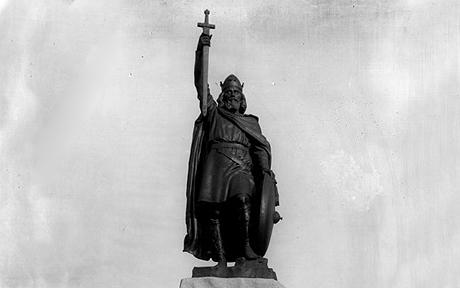
A project to find the 100 events and places that played the most significant role in shaping the English language has been launched.

King Alfred of Wessex, the first person to call the language 'English'
King Alfred of Wessex, the first person to call the language ‘English’


From the Anglo-Saxon invasion of the fifth century to modern-day waves of immigration, the English language has been shaped by countless episodes in history.

Now The English Project, a charity dedicated to promoting the language, is compiling a list of the 100 most important events and locations which have made English what it is today

The journey starts in Lakenheath in Suffolk, where the Undley Bracteate medallion was found, dated to 475 and bearing the first evidence of written English.

Then in 731 the Venerable Bede completed his Historia Ecclesiastica Gentis Anglorum in Jarrow, Tyne and Wear – the first text to speak of the English language and the English people.

And by 871 King Alfred of Wessex, the first person to call the language “English”, was ordering translations from Latin into West Saxon, a dialect of Old English.

In recent times the language has adapted again and again, on its way to becoming the common tongue of 1.8 billion people worldwide.

The charity has already compiled a list of 20 of the most important events in the history of the language, and wants the public to help produce the final list of 100 crucial events
Bill Lucas, a trustee of the English Project and professor of learning at the University of Winchester, said: “This is a wonderful way of engaging people in a wider conversation about the English Language.

“We want to get the nation really thinking about the stories behind our evolving language.

“How, for example, do you rate the relative significance of Shakespeare’s Stratford-upon-Avon, versus London’s part in the birth of the world wide web?

“English has now become the lingua franca of the world. It is the most exciting and exotic language partly because of its capacity to incorporate so many elements of other languages, and somehow to make these dynamic, descriptive and always exciting.

“The history of Britain and the history of the English language are also very closely intertwined.

“We’re excited about hearing people’s ideas about the places and events they think have shaped the language.”

Submit your suggestions on the charity’s website, www.englishproject.org

The 20 events and places nominated so far:

Date: 475

Lakenheath, Suffolk

The Undley Bracteate medallion, found at Lakenheath, has been dated to 475 and provides the first evidence of written English

Date: 731

Jarrow, Tyne and Wear

The Venerable Bede completed his Historia Ecclesiastica Gentis Anglorum. Although writing in Latin, he was the first person to speak of the English language and the English people.

Date: 871

Winchester, Hampshire

Translations from Latin into the West Saxon dialect of Old English were commissioned by King Alfred of Wessex between 871 and 899. He is the first person known to have called the language “English”.

Date: 1066

Hastings, Sussex

William the Conqueror and his Norman army defeated King Harold at the Battle of Hastings, bringing with them a language that transformed English over the next 300 years.

Date: 1171

Waterford, Ireland

King Henry II of England landed in Waterford, beginning the worldwide exportation of English beyond the island of Great Britain – even though he himself mainly spoke French.

Date: 1362

Westminster, London

On October 13 the Chancellor of England opened Parliament with a speech in English rather than French for the first time.

Date: 1400

Westminster Abbey, London

Geoffrey Chaucer was buried in the Abbey. In 1556 he was moved into a more splendid tomb, beginning the tradition of burying great writers in Poets’ Corner.

Date: 1476

Westminster, London

William Caxton introduced printing to England, which became a huge force in the spread of English language literature.

Date: 1564

Stratford-upon-Avon, Warwickshire

William Shakespeare, regarded by many as the greatest writer in the English language, is born.

Date: 1604

Hampton Court, Surrey

King James’s Hampton Court Conference set a translation team working on what came to be known as the King James Bible, published in 1611.

Date: 1665

Oxford

The first newspaper in English was the London Gazette, first published in Oxford in 1665 as the Oxford Gazette.

Date: 1709

Lichfield, Staffordshire

The birthplace of Samuel Johnson, creator of A Dictionary of the English Language. Published in 1755, it set new standards for the writing of English prose.

Date: 1847

South Charlotte Street, Edinburgh

The birthplace of Alexander Graham Bell who invented the telephone in 1876, initiating a major stage in worldwide communication.

Date: 1901

Poldhu, Cornwall

In 1901, Guglielmo Marconi sent the first radio transmission to St John’s, Newfoundland. North American and British English began to converge again after 300 years of separation.

Date: 1922

Portland Place, London

The British Broadcasting Company (BBC) begins transmission, influencing dramatically the way English language is used and spoken.

Date: 1945

Menlove Avenue, Liverpool

John Lennon lived here from the age of five. With his fellow Beatles, he revolutionised popular song.

Date: 1955

London

Tim Berners-Lee, who invented the World Wide Web, is born. English is the dominant language of the internet, and the net is a major factor in the globalisation of English.

Date: 1988

Plumstead, London

Patrick Chukwuem Okogwu, also known as rap artist Tinie Tempah, is born. Rap music shows the English language at its flexible best.

Date: 1997

Nicolson Street, Edinburgh

JK Rowling wrote much of Harry Potter and the Philosopher’s Stone in Nicolson’s Café. Published in June 1997, the series of books started a worldwide reading phenomenon.

Date: 2003

UK

On Valentine’s Day, mobile phone usage was so widespread that for the first time, more people said “I luv u” by text than said “I love you” by post. Text English is a new and thriving form of the language.

British Tour Guide
HisTOURies UK – The Besy Tours in British History

Read Full Post »

HISTORIANS in Penmaenmawr believe their ancient landscapes can rival some of the UK’s top tourist attractions.

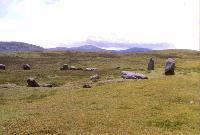
Druids Circle

Druids Circle

Dennis Roberts and David Bathers of the Stori Pen Historical Society hope to have historical sites such as the Graiglwyd axe factory and the Druid’s Circle in the Snowdonia National Park into a UNESCO World Heritage site.

“To have a World Heritage Site would be immense for Penmaenmawr and the whole of Conwy,” said David.

The Graiglwyd axe factory is a Neolithic site where it is thought funerary tools were forged for use at the nearby Druid’s Circle, a collection of 30 stones 80ft in diameter.

// <![CDATA[
if (typeof dartOrd == 'undefined') dartOrd=Math.random()*10000000000000000000;
if (typeof tm.zones == 'undefined') {tm.zones = "";}

(function (x) { if (tm.defer) {tm.defer.defer(x); } else { document.write(x);}})('’);
// ]]>

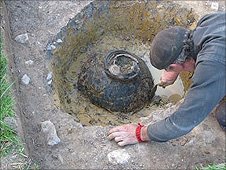
Excavations at this site have unearthed various relics, including the cremated remains of a child.

“There’s an Iron Age hill fort and there are also Bronze Age sites up there, where people came and settled,” said David.

“There’s a lot of stone areas where Neolithic man used to work.

“The area used to be immensely popular in the 19th century.

“With the right conditions put forward I’m confident it would be recognised.”

David added that it would be years until the site could be put forward for the UNESCO award.

Dennis Roberts is chairman of Penmaenmawr Historical Society.

“We are trying to make people aware of what is available in Penmaenmawr,” he said.

“There’s so much behind Penmaenmawr and Llanfairfechan, the area behind the mountains is extremely rich in prehistory. It would rival some of the Bronze Age sites in Britain.”

The historians plan to organise a trail in the mountains that will highlight the sites, before proposals are put to the United Nations Educational, Scientific and Cultural Organisation. They also plan to put a leaflet together.

Lesley Griffiths of the Penmaenmawr Tourist Association welcomed the proposals: “It’s brilliant news, if it comes to fruition.

“It would be extremely beneficial in that it would bring tourists to the sites. It would put Penmaenmawr back on the map.”

Cllr Ken Stevens added: “Areas of Penmaenmawr have some of the oldest industrial sites in Wales. Not a lot of people know what Penmaenmawr has. I wish them all the luck with it, I think we deserve it.”

Other British UNESCO World Heritage Sites include Stonehenge, the Giant’s Causeway, the Tower of London and Canterbury Cathedral

Stonehenge Tour Guide
HisTOURies UK – The Best Tours in Ancient History

Read Full Post »

David Crisp said the valuation was "fair"

David Crisp said the valuation was "fair"

A hoard of more than 52,500 Roman coins found in a field in Somerset has been valued at £320,250.

The coins were discovered in April by Dave Crisp, from Wiltshire, who will share the sum with the landowner.

Mr Crisp said: “I’m very, very happy with that. I think it’s a fair valuation.”

Somerset County Council hopes to buy the hoard, one of the largest finds of Roman coins in Britain, for display at the Museum of Somerset.

The Treasury Valuation Committee was responsible for determining a value for the find.

The council’s heritage service has received £40,250 from the Art Fund towards the appeal.

‘Important’ discovery

The charity will also match every pound donated by the public up to the value of £10,000.

Steve Minnitt, head of museums for Somerset County Council, said the Frome hoard was one of the most important discoveries made in Somerset in recent years.

He said: “As such, we feel that it’s a find that really needs saving for the people of Somerset, so we’re launching the campaign now.”

The Somerset Archaeological and Natural History Society has also donated £10,000 to the fund.

Under the Treasure Act, the local authority has four months to raise the money, although this deadline can be extended if necessary.

Mr Crisp, a hospital chef, intends to buy a new car with part of his reward money but intends to continue working until his retirement in August 2011.

Stonehenge Guide
HisTOURies UK – The Best Tours in History

Read Full Post »

First Time Visitors Itinerary

First time visitor to London? Make sure you see the best of London with our three-day itinerary.

See the London Eye, the Tower of London, Tower Bridge, Shakespeare’s Globe, the British Museum and lots more. You’re sure to want to return again and again!

Day One

Morning

Board a 30-minute flight on the London Eye and admire London from a height of 135 metres in one of 32 capsules.

Original London Sightseeing Tour and Big Bus Company run hop-on, hop-off open-top bus tours of the city centre passing all the major landmarks, and lasting approximately two hours. Catch either tour outside County Hall by Westminster Bridge and see what the city has to offer.  These could be booked at http://www.BestValueTours.co.uk

Lunch

Alight from the bus at Tower Bridge and take the stairs down to Shad Thames and Butler’s Wharf. The riverside Butler’s Wharf Chop House offers excellent value set menus during the week.

Afternoon

See London’s most notorious prison and the Crown Jewels at the Tower of London. A Yeoman Warder gives a tour of the Tower every half an hour.

Walk back to Tower Bridge and visit the Tower Bridge Exhibition. You’ll see some of the most spectacular views up and down the River Thames and learn about the history of one of London’s most famous landmarks.

Evening

Experience London theatre, from musicals such as Billy Elliot and Mamma Mia, to opera and ballet at the Royal Opera House and modern dance at Sadler’s Wells. There really is something for everyone.

After the show enjoy a post-theatre meal at Joe Allen, a favourite with actors and people that work in London’s theatre industry.

Day Two

Morning

Wander around Covent Garden, Neal Street and Seven Dials for a bit of shopping. Watch the street entertainers and explore the covered market. If the weather is good, you can sit outside and people-watch in the piazza.

Lunch

Board the Bateaux London lunch river cruise, and enjoy a three-course meal as you cruise along the River Thames.

Afternoon

Head to Shakespeare’s Globe, where a tour offers a fascinating insight into Shakespearean London and today’s working theatre.

Next door is Tate Modern, where you can browse the permanent collection or view one of the world-class exhibitions. Don’t miss coffee in Café 7, Tate Modern’s seventh floor café looking out over the Millennium Bridge and St Paul’s Cathedral.

Evening

Try Britain’s favourite dish for dinner – a curry in Brick Lane. A market by day, Brick Lane is lined with curry houses and trendy bars. Preem and Bengal Village offer good, value for money meals. Have a few drinks after your meal in the Vibe Bar, the Big Chill Bar or 93 Feet East, which has a great line-up of live music and DJs.

Day Three

Morning

Head to the British Museum, London’s single most visited museum, featuring exhibits such as the 2,000 year old Lindow Man, Egyptian pharaohs and treasures from all over the world.

Afternoon

Take the Tube to Camden Town and explore Camden Lock Market, where you’ll find clothing, jewellery, arts and crafts and some of London’s more interesting characters. The market is a great place for lunch, with stalls and shops cooking food from all over the world.

Walk from Camden to Primrose Hill, for one of the best views of London. This is a great spot for a picnic or a few pints in one of the nearby pubs.

Evening

You can’t come to London without visiting a traditional London pub. Many of London’s pubs offer delicious food, with menus ranging from typical British cuisine such as fish and chips to Thai. The Fire Station in Waterloo and The Anchor & Hope on The Cut (also Waterloo) both offer a traditional pub environment plus a fantastic menu.

Enjoy London!

Tourist Guide
HisTOURies UK – Bespoke Guided Tours from London

Read Full Post »

Wessex is the ancient kingdom of the West Saxons that defeated its rivals and created England. The counties of Essex, Middlesex and Sussex remain with us to recall the East, Mid and South Saxons that Wessex conquered but when King Edgar of Wessex was crowned as the first King of England in Bath in 973, Wessex, the dominant and most civilised of the Anglo-Saxon states, ceased to be a government entity.

Kingdom of Wessex Map

Kingdom of Wessex Map

The area with which Histouries UK is concerned was recognised in the early ninth century when the four West Saxon shires, now Counties, were created. The name of each reflected the name of the town on which the surrounding shire was dependent. They were:

West Saxon Shire Shire Town Present County
Dornsaete Dorchester Dorset
Somersaete Somerton Somerset
Wiltunscir Wilton Wiltshire
Hamtunscir Southampton Hampshire

The history of the area goes back much further than this. Its Neolithic inhabitants built a large number of sacred hills, camps, rings, barrows and henges to honour their dead, celebrate the seasons or mark their boundaries. Wessex has an almost unparallelled wealth of archaeological sites including Avebury and Stonehenge. It is a land of myths and legends. Among them are the story of Joseph of Aramathea bringing the Holy Grail to Glastonbury and, perhaps above all the legends, that of King Arthur and the Knights of the Round Table.

Wessex reached its peak in the ninth and tenth centuries and especially in the reign of Alfred the Great, one of the most remarkable men in England’s long history. He was not only a military genius who reformed the army and established the navy. He was also a learned man who greatly influenced the development of the English language and whose laws formed a base for much of the English law we know today.

In 1066, the Normans came to conquer and brought great changes with them. The name of Wessex fell into the background but the area remained important in the flow of English history. The concentration of its heritage with us now, bears witness to this. In more recent times, the work of writers, Thomas Hardy, in particular, has breathed new life into the use of “Wessex”to represent an area and now there are hundreds of companies that have it as part of their name.

WESSEX TODAY

Destination Wessex describes it this way:

“Wessex is the land of King Arthur and King Alfred, of Jane Austen and Thomas Hardy, of Bath and Stonehenge. It was the birthplace of England and England’s heritage remains very much part of the Wessex way of life. It is a land of beautiful countryside, historic market towns and ancient villages not far from London, but in every other way very far from the pressure, pace and congestion of the urban world.”

The four counties have a rural culture. Major urban communities such as Bristol, Swindon and Southampton are situated near the perimeter. Elsewhere, there is a feeling of timeliness. What you see has been there for hundreds of years and there it will be hundreds of years from now. The industrial revolution largely passed it by and, while the modern world may have a degree of physical presence, the flow of Wessex life and the priorities of its people stay much as they were.

The area has a common sense of place that is made up of green fields, hedges and woods, of stone, thatch, village churches and historic inns, of architecture and archaeology, of cows and sheep and horses and wildlife, and a serene balance between man and nature. County boundaries do not affect this. Unless there is a sign to tell you, you will not know when you cross, for example, from Somerset into Dorset. But, if you leave Wessex to go towards London, you feel the change. The pressure, the degree of urgency, the congestion begins to evidence itself. The sense of place has changed.

Wessex is a destination that overseas visitors will recognise, much as they recognise the Cotswolds or the Lake District. It is unique, compact and readily accessible. Beneath its common sense of place is a wealth of variety that can offer memorable holidays to a wide range of visitors. Come and stay for a few days and get to know Wessex, the heart of ancient England.

Cultural Wessex

Wessex Life. Rural, peaceful and timeless. The small market towns and villages, the churches and pubs, the local fairs and festivals, the farms and fields and hedgerows. And the people who live there. The annual Bath & West Show, market days in the small towns, race meetings, and village open garden days. They all reflect the Wessex way of life.

Christian Heritage Five cathedrals, twelve abbeys and some of the finest churches in England. Ecclesiastical history is also reflected in Bishop’s palaces, legends and tradition.

Family History Over the centuries, many people have migrated from Wessex, especially to North America. Wessex has excellent Records Offices where comprehensive data is maintained and family history associations keen to help visitors in tracing their ancestors.

Antiques Antique shops and dealers, shows and auctions are features of life in Wessex. Bath, Bradford on Avon, Shepton Mallet and Sherborne are well known antique centres .

Literary Wessex Jane Austen, Thomas Hardy, Anthony Trollope, William Wordsworth, Samuel Coleridge, Evelyn Waugh, T.S.Eliot, John Betjeman, Geoffrey Chaucer, T. E Lawrence and many other outstanding literary figures have close associations with Wessex.

Arts and Crafts The arts are very much in evidence. The Theatre Royal in Bath, the Bournemouth Symphony Orchestra and the choirs of the cathedrals are perhaps the best known but there are also the local theatres, auditoriums, art galleries and craft centres. Music and drama festivals, art exhibitions and book fairs are scheduled every year.

Historical Wessex

Wessex in History From prehistory to the age of aviation. Special periods of interest are the bronze and iron age settlements, the Roman Wessex, the Saxon kingdom that gave birth to England, the Norman Conquest, Elizabethan Wessex, the Civil War and the Eighteenth century.

Historic Houses of Wessex There are 75 historic houses from which to choose. Some of them medieval, some Tudor and many from the seventeenth and eighteenth centuries. Each reflects the society, culture and history of its time. Also included are some of the charming smaller manor houses.

Architecture The vast collection of ecclesiastical, military, manor house and domestic architecture in Wessex means that the area contains excellent examples of almost every period of architecture in England: Roman, Saxon, Norman, Medieval, Elizabethan, Jacobean, Georgian and Victorian.

Archaeology 40 archaeological sites are in the Wessex inventory including two World Heritage Sites, Stonehenge and Avebury, and the fortress of King Arthur at Cadbury.

Military Heritage This ranges from forts and castles and fortified manor houses to battle sites, regimental history and the outstanding naval, army and air force museums

Veterans Many military personnel from USA, Canada, Australia and elsewhere were based in Wessex during the Second World War. Many left from Wessex harbours on D-Day. The area has many memories for them and much interest for their families.

Download PDF  tourist map of the Wessex area

Wessex Tour Guide
HisTOURies UK  – The Best Guided Tours in Wiltshire

Read Full Post »

Set in the peaceful Wiltshire countryside beside a lake, Old Wardour Castle, near Tisbury was once one of the most daring and innovative homes in Britain. It was built in the 14th century as a lightly fortified luxury residence for comfortable living and lavish A knight holding a sword in the air with St George's Cross flag in the backgroundentertainment. Today the castle ruin provides a relaxed, romantic day out for couples, families and budding historians alike.

An audio tour, included in the ticket price, tells of Old Wardour’s eventful past and the fighting it saw during the Civil War. The badly damaged castle became a fashionable romantic ruin, and in the 18th century was incorporated into the landscaped grounds of the New Wardour House (not managed by English Heritage, no public access to New Wardour House or grounds).  Today, visitors can still climb the turrets and even imagine themselves as extras in the Hollywood blockbuster movie, Robin Hood Prince of Thieves, part of which was filmed here.

SPOOKY TOURS @ Wardour Castle – Hallowen 2010

  • Date: Sat 30 & Sun 31 Oct 2010
  • Property:
    Old Wardour Castle
  • <!–

  • Children’s Event :
  • –>

  • Time: Tours at 5pm (children’s tour), 6.15pm, 7.30pm and 8.30pm
  • <!–

  • Booking :
  • –>

  • Suitable for: Everyone

Experience the eerie night-time surroundings of this haunted heritage site. Travel back to a time when gruesome goings-on were commonplace. We dare those of you who think you are brave enough to join our seriously scary and sometimes light-hearted homage to the past residents of Old Wardour, who refuse to leave. For younger visitors and the faint-hearted a much less terrifying alternative will take place earlier in the day.

Wardour Castle is close to Salisbury, Stonehenge and Bath and could easily be combined into a day tour
Wiltshire Tour Guide
HisTOURies UK – The Best Tours in Wessex

Read Full Post »

« Newer Posts - Older Posts »