Feeds:
Posts
Comments

Archive for the ‘prehistory’ Category

Neil Oliver tells the epic story of how Britain and its people came to be over thousands of years of ancient history – the beginnings of our world forged in ice, stone, and bronze.

About the Programme

A History Of Ancient Britain will turn the spotlight onto the very beginning of Britain’s story. From the last retreat of the glaciers 12,000 years ago, until the departure of the Roman Empire in the Fifth Century AD this epic series will reveal how and why these islands and nations of ours developed as they did and why we have become the people we are today. The first series transmits in early 2011 and there will be a following series in 2012.

As well as being a presenter, Neil is also an archaeologist, historian and author. He began his television career in 2002 with the BBC2 series ‘Two Men in a Trench’. This battlefield archaeology series explored iconic British battle sites, focusing on human stories, tragedies and drama.

Neil became a familiar face on television thanks to the hugely popular, award winning programme, ‘Coast’, in which the landscapes, history, geography and people of the British Isles are given centre stage in a continuing voyage of discovery, remembrance and reminiscence.

Neil also presented ‘A History of Scotland’ on BBC 1 and BBC2. In this series he revealed how the story of his native Scotland is instrumental to the history of, not only Britain, but also Europe and much of the wider world.
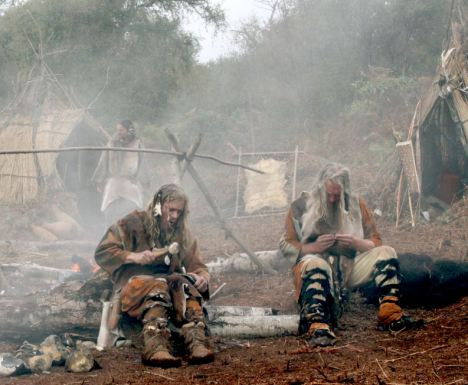
Neil Oliver takes us on an epic journey expoloring how Britain and its people came to be.
Watch the trail here
Neil Oliver’s official website

Stonehenge and Ancient Britain Tour Guide
HisTOURies UK – The Best Tours in History

Read Full Post »

A film is set to be made by Hollywood producers on the Glastonbury legend of Joseph of Arimathea and the Holy Thorn.

The £50m-budget film Glastonbury: Isle of Light is set for release in 2012 and has been written and produced by Daniel McNicholl with Galatia Films.

Holy Thorn - Glastonbury Holy Thorn – Glastonbury

A film is set to be made by Hollywood producers on the Glastonbury legend of Joseph of Arimathea and the Holy Thorn.

The £50m-budget film Glastonbury: Isle of Light is set for release in 2012 and has been written and produced by Daniel McNicholl with Galatia Films.

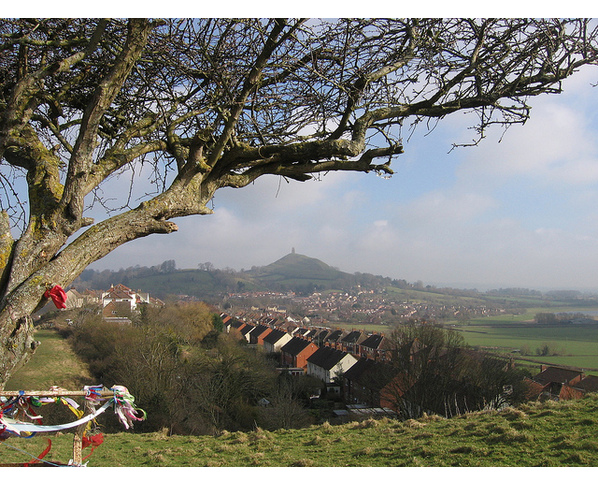
In December the Holy Thorn on Wearyall Hill was cut down by vandals but efforts are being made to re-grow it.

The legend relates to Joseph who planted Jesus’s staff into the ground on Wearyall Hill 2,000 years ago.

A tree grew, and it is believed the hawthorn sprouted from a cutting of the tree. It is one of several Holy Thorns planted around Glastonbury.

Daniel McNicholl said: “This is a British story so I think it needs to be told through British landscape.

“We want ancient Glastonbury to be shot in places like the Isle of Man, Ireland, Wales, and Somerset.

“Clearly the topography is much different than it was 2,000 years ago and we will be using digital effects to take out some of the modern buildings, so it is very much a different place.”

The film producer has said he was aware of the Holy Thorn being vandalised which he described as “punch in the gut” but believes the tree will re-grow successfully.

Avon and Somerset police are still continuing their enquires and a reward of £200 has been offered by the town council for more information.

Glastonburymovie.com
http://www.bbc.co.uk/news/uk-england-somerset-12160098

We offer guided tours of Glastonbury Tor (Isle of Avalon) , Glastonbury Abbey, Challice Well Gardens and King Arthurs Avalon

Glastonbury Tour Guide
HisTOURies UK – The Best Tours of Ancient Britain

Read Full Post »

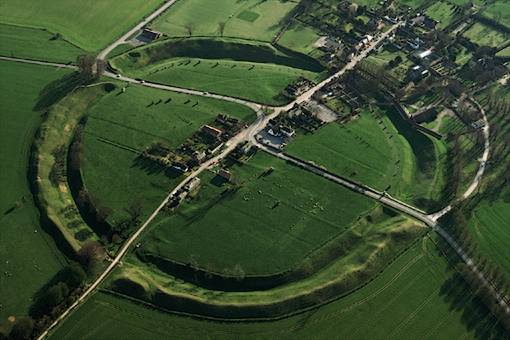
Today, we must celebrate John Aubrey’s dramatic rediscovery of Avebury – the world’s largest prehistoric stone circle. 

Avebury Stone Circle today: with its ditches excavated, unsightly cottages demolished, and unnecessary enclosures removed, it’s difficult to imagine the snarl of 17th-century domestic chaos that greeted John Aubrey’s visionary gaze that January morn.

Avebury Stone Circle today: with its ditches excavated, unsightly cottages demolished, and unnecessary enclosures removed, it’s difficult to imagine the snarl of 17th-century domestic chaos that greeted John Aubrey’s visionary gaze that January morn.

Whilst out hunting with fellow royalists during the English Civil War, exactly three hundred and sixty-two years ago. For Aubrey’s heroic retrieval of this vast but (by then) long forgotten Stone Age temple confronted the then-accepted notion that only the coming of the Romans had forced a degree of culture upon the barbaric Ancient British, and also confounded the then-popular 17th-century belief – propounded by the highly influential Scandinavian antiquaries Olaus Magnus and Ole Worm – that all such megalithic culture had its archaic origins in Europe’s far north. Indeed, so rich were the cultural implications of John Aubrey’s re-discovery that – come the fall of Oliver Cromwell’s 11-year-long Commonwealth and the subsequent Restoration of the Monarchy – even the returned King Charles II would himself insist on taking one of Aubrey’s celebrated tours of the Avebury area. But how could the world’s largest stone circle have suffered such a total cultural extinction in the first place? Why, the Avebury standing stones themselves must average at least ten feet in height apiece, while the temple’s enormously bulky northern and southern entrance stones rivalled even nearby Stonehenge’s celebrated trilithons. And how could Avebury’s vast 400-metre-diameter earthen embankment and the equally deep ditch that encircled these huge monoliths have for several centuries become invisible even to local historians? Ironically perhaps, the initial blame for this pagan temple’s centuries in cultural oblivion goes not to scheming Christians but to the 5th century arrival from Germany of another group of pagans – the invading Saxons – who, recognising Avebury’s possible use as a defended settlement, broke with the traditions of the previous Roman and Romano-British occupiers by setting up their homes and farmsteads directly within the mighty earth banks of the temple itself. Blasphemers! Thereafter, many centuries of harsh day-to-day living within the Avebury henge conspired to obscure then finally obliterate all physical traces of this vast Earthen Temple. Saxon ploughing within the henge tumbled soil into the deep ditches, which silted up considerably and became repositories of household refuse. Residents fearful of disturbing the ‘Devil’s work’ incorporated the Avebury megaliths into the hedges of their allotments, gardens, fields, and even saved energy by employing those monoliths most vertically aligned as supporting walls for their stone cottages. And when villagers lost their fears of the stones, deep pits were dug into whose depths several of the most intrusive monoliths were unceremoniously tumbled. Thereafter, the magnificent geometric shape of this robust 4,500 year-old landscape temple became lost in the chaos of domesticity; until that fateful day three hundred and sixty-two years ago, that is, when John Aubrey and his friend Dr. Walter Charleton joined their hunting party and galloped westwards across Fyfield Down along the chalky London-Bath ‘rode’. Aubrey himself recounts in his posthumously published two-volume tome Monumenta Britannica:

“The chase led us at length through the village of Avebury, into the closes there: where I was wonderfully surprised at the sight of those vast stones: of which I had never heard before… I observed in the enclosures some segments of rude circles, made with these stones; whence I concluded, they had been in the old time complete.”

It’s been my experience that no story about Avebury ever concludes without some vicious act of destruction by some pious know-it-all or other; this On This Deity entry is no different. For, despite King Charles II’s fascination with the Avebury stone circle, it was his return to the English throne that prompted the temple’s most vivid and desperate period of destruction. For in their determination to stamp out the Non-Conformism of Cromwell’s time, Charles II’s paranoid Restoration Government in 1665 passed the Five Mile Act (or Non-Conformist Act 1665), which specifically forbade all itinerant Non-Conformist preachers from speaking within five miles of their old parishes. Avebury stone circle is nine miles south of Swindon, eight miles north-east of Devizes, five miles west of Marlborough and six miles east of Calne. Non-conformist preachers throughout northern Wiltshire looked to the ancient pagan temple and regarded the Five Mile Act as a divine sign: let us make our new home here, and every pagan stone we break we’ll make righteous by incorporating it into our Non-Conformist church. And so to Avebury they did come and such destruction so they did: the church remains at the circle’s centre even to this day, self-effacing and easily overlooked but engorged nevertheless with as many splendid sarsen stones of that former 4,500 year-old monument as those Non-Conformist preachers could muster. Our hero John Aubrey would, for his pains, die unpublished and in penury. Today, however, his legend burns with an unquenchable fame due to that pioneering archaeological tome Monumenta Britannica, that gossipy biography of his many contemporaries Brief Lives, and – most of all – for that splendid vision of Avebury exactly three hundred and sixty-two years ago today. To John Aubrey – Culture Hero and how!
http://www.onthisdeity.com

Stonehenge and Avebury Tour Guide
HisTOURies UK – The Best Tours of Ancient Britain

Read Full Post »

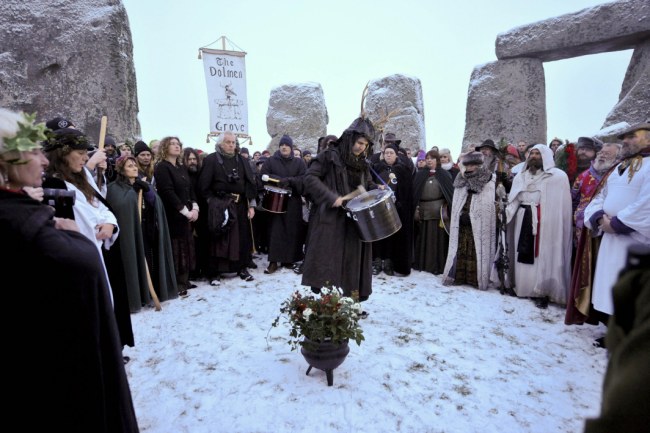
More than 2,000 people gathered in the snow of Stonehenge to celebrate the winter solstice.

Druids, lead by Arthur Pendragon (centre), take part in the winter solstice at Stonehenge in Wiltshire

Druids, lead by Arthur Pendragon (centre), take part in the winter solstice at Stonehenge in Wiltshire

Despite the actual sunrise, – which took place at 08.09am – being obscured by mist, Peter Carson of English Heritage said: “Stonehenge looked spectacular in the snow and it was a great way for people to start their festive season.”

The Pagan community came out in force to celebrate the annual festival, along with many whom were merely curious to experience the event.

As well as the traditional Druid and Pagan ceremonies, a snowball fight erupted as people enjoyed the cold weather.

“The popularity of the winter solstice has grown over the years as more is known about Stonehenge and the winter solstice and the whole celebration has grown in popularity, ” Mr Carson said.

Lance Corporal Paul Thomas, a serving soldier of 15 years who fought in Iraq, was “knighted” with a sword by a Druid calling himself King Arthur Pendragon.
The word solstice comes from the Latin phrase for “sun stands still”. During the winter solstice the sun is closer to the horizon than at any other time in the year, meaning shorter days and longer nights. The day after the winter solstice marks the beginning of lengthening days, leading up to the summer solstice in June.

The Sun’s passage through the sky appears to stop, with it seeming to rise and set in the same two places for several days. Then the arc begins growing longer and higher in the sky, reaching its peak at the summer solstice.

The solstices happen twice a year because the Earth is tilted by 23.5 degrees as it orbits the sun. Since ancient times people have marked the winter and summer solstices.

The stones at Stonehenge are aligned with the sunlight on both the summer and winter solstices. These times told prehistoric farmers that harvest was coming or that the shortest day of winter had passed.

Recent excavations of animal bones at the site suggest that huge midwinter feasts were held at Stonehenge, with cattle moved there to be slaughtered for the solstice celebrations.
External links:
http://www.telegraph.co.uk/news/picturegalleries/uknews/8219063/Druids-gather-in-the-snow-and-ice-at-Stonehenge-for-the-winter-solstice-sunrise.html
http://visit-stonehenge.blogspot.com/2010/12/stonehenge-summer-solstice-tour-2011.html
http://blog.stonehenge-stone-circle.co.uk/2010/12/21/stonehenge-winter-solstice-21stdecember-2010/
http://www.telegraph.co.uk/news/uknews/8219230/Druids-and-Pagans-celebrate-winter-solstice-at-Stonehenge.html

Stonehenge Tour Guide
HisTOURies UK – The Best Tours of Ancient Britain

Read Full Post »

Wanted to claryfy that we have not misspelt our tour company name. HisTOURies comes from two words  ‘history’ and ‘stories’ – clever eh?
We operate guided historical (hisTOURical) sightseeing tours of Britain.  Our expert guides (historians or hisTOURians) bring Britain’s rich history (hisTOURy) alive with tales’s and stoiries (sTOURys or sTOURies) of ancient England.
‘It is not spelt incorrectly.’
Hope thats clear (clear as mud)……………..
Our award winning tours can depart from London, Salisbury, Bath or Glastonbury.  Please visit our website:
HisTOURies UK – The Best Tours in British History (hisTOURy)

Histories (Herodotus)

The Histories of Herodotus is considered one of the seminal works of history in Western literature. Written from the 450s to the 420s BC in the Ionic dialect of classical Greek, The Histories serves as a record of the ancient traditions, politics, geography, and clashes of various cultures that were known around the Mediterranean and Western Asia at that time. It is not an impartial record but it remains one of the West’s most important sources regarding these affairs. Moreover, it established without precedent the genre and study of history in the Western world, although historical records and chronicles existed beforehand.

Perhaps most importantly, it stands as one of the first, and surviving, accounts of the rise of the Persian Empire, the events of, and causes for, the Greco-Persian Wars between the Achaemenid Empire and the Greek city-states in the 5th century BC. Herodotus portrays the conflict as one between the forces of slavery (the Persians) on the one hand, and freedom (the Athenians and the confederacy of Greek city-states which united against the invaders) on the other.

The Histories was at some point through the ages divided into the nine books of modern editions, conventionally named after the Muses.

Herodotus seems to have travelled extensively around the ancient world, conducting interviews and collecting stories for his book. At the beginning of The Histories, Herodotus sets out his reasons for writing it:

British Tour Guide
HisTOURies UK Stories in History

Read Full Post »

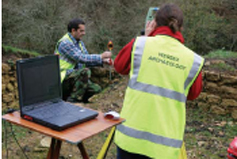
New video explains geophysics, 3D laser scanning and finds processing

What technologies do modern archaeologists turn to? Mark Langdon speaks to experts at Wessex Archaeology to find out about the modern techniques employed at digs

Watch our experts explain how the techniques are used and how archaeology works in the supporting video:
http://kn.theiet.org/news/dec10/time-team.cfm

Geophysics is the physics of the Earth and its environment in space. Its subjects include the shape of the Earth, its gravitational and magnetic fields, the dynamics of the Earth as a whole and of its component parts, the Earth’s internal structure, composition and tectonics, the generation of magmas, volcanism and rock formation, the hydrological cycle including snow and ice, all aspects of the oceans, the atmosphere, ionosphere, magnetosphere and solar-terrestrial relations, and analogous problems associated with the Moon and other planets.

Geophysics is also applied to societal needs, such as mineral resources, mitigation of natural hazards and environmental protection. Geophysical survey data are used to analyze potential petroleum reservoirs and mineral deposits, to locate groundwater, to locate archaeological finds, to find the thicknesses of glaciers and soils, and for environmental remediation.

External links:
British Geophysical Association
Stonehenge Riverside Project
British Academy – Science and Stonehenge – summaries
Wessex Archaeology – One of the UK’s leading heritage practices

Stonehenge Tour Guide
HisTOURies UK – Private Guided Tours of Wiltshire

Read Full Post »

Few people realize that the origins of a form of Christmas was pagan & celebrated in Europe long before anyone there had heard of Jesus Christ.

Pagans at Stonehenge

Pagans at Stonehenge


No one knows what day Jesus Christ was born on. From the biblical description, most historians believe that his birth probably occurred in September, approximately six months after Passover

One thing they agree on is that it is very unlikely that Jesus was born in December, since the bible records shepherds tending their sheep in the fields on that night. This is quite unlikely to have happened during a cold Judean winter. So why do we celebrate Christ’s birthday as Christmas, on December the 25th?

The answer lies in the pagan origins of Christmas. In ancient Babylon, the feast of the Son of Isis (Goddess of Nature) was celebrated on December 25. Raucous partying, gluttonous eating and drinking, and gift-giving were traditions of this feast.

In Rome, the Winter Solstice was celebrated many years before the birth of Christ. The Romans called their winter holiday Saturnalia, honoring Saturn, the God of Agriculture. In January, they observed the Kalends of January, which represented the triumph of life over death. This whole season was called Dies Natalis Invicti Solis, the Birthday of the Unconquered Sun. The festival season was marked by much merrymaking. It is in ancient Rome that the tradition of the Mummers was born. The Mummers were groups of costumed singers and dancers who traveled from house to house entertaining their neighbors. From this, the Christmas tradition of caroling was born.

In northern Europe, many other traditions that we now consider part of Christian worship were begun long before the participants had ever heard of Christ. The pagans of northern Europe celebrated the their own winter solstice, known as Yule. Yule was symbolic of the pagan Sun God, Mithras, being born, and was observed on the shortest day of the year. As the Sun God grew and matured, the days became longer and warmer. It was customary to light a candle to encourage Mithras, and the sun, to reappear next year.

Huge Yule logs were burned in honor of the sun. The word Yule itself means “wheel,” the wheel being a pagan symbol for the sun. Mistletoe was considered a sacred plant, and the custom of kissing under the mistletoe began as a fertility ritual. Hollyberries were thought to be a food of the gods.

The tree is the one symbol that unites almost all the northern European winter solstices. Live evergreen trees were often brought into homes during the harsh winters as a reminder to inhabitants that soon their crops would grow again. Evergreen boughs were sometimes carried as totems of good luck and were often present at weddings, representing fertility. The Druids used the tree as a religious symbol, holding their sacred ceremonies while surrounding and worshipping huge trees.

In 350, Pope Julius I declared that Christ’s birth would be celebrated on December 25. There is little doubt that he was trying to make it as painless as possible for pagan Romans (who remained a majority at that time) to convert to Christianity. The new religion went down a bit easier, knowing that their feasts would not be taken away from them.Christmas (Christ-Mass) as we know it today, most historians agree, began in Germany, though Catholics and Lutherans still disagree about which church celebrated it first. The earliest record of an evergreen being decorated in a Christian celebration was in 1521 in the Alsace region of Germany. A prominent Lutheran minister of the day cried blasphemy: “Better that they should look to the true tree of life, Christ.”The controversy
External links:
http://ukpagan.com/
Stonehenge Stone Circle
http://www.paganfed.org/
http://www.pagan-network.org/site/

Stonehenge Tour Guide
HisTOURies UK – The Best Tours of Stonehenge

Read Full Post »

New Stonehenge theory:
Neolithic engineers may have used ball bearings in the construction of Stonehenge, it was claimed today.
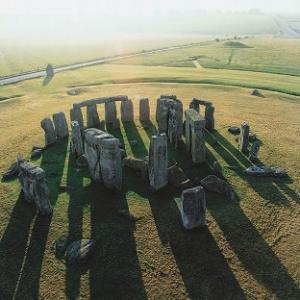
Stonehenge

Stonehenge Mystery

The same technique that allows vehicles and machinery to run smoothly today could have been used to transport the monument’s massive standing stones more than 4,000 years ago, according to a new theory.

Scientists showed how balls placed in grooved wooden tracks would have allowed the easy movement of stones weighing many tons.

No-one has yet successfully explained how the heavy slabs used to build Stonehenge were shifted from their quarries to Salisbury Plain.

Some, the bluestones, weighed four tons each and were brought a distance of 150 miles from Pembrokeshire, Wales.

Attempts to re-enact transporting the blocks on wooden rollers or floating them on the sea have not proved convincing.

The hard surfaces and trenches needed when using rollers would also have left their mark on the landscape, but are missing.

Experts hit on the new idea after examining mysterious stone balls found near Stonehenge-like monuments in Aberdeenshire, Scotland.

About the size of a cricket ball, they are precisely fashioned to be within a millimetre of the same size.

This suggests they were meant to be used together in some way rather than individually.

The Scottish stone circles are similar in form to Stonehenge, but contain some much larger stones.

To test the theory, researchers from the University of Exeter constructed a model in which wooden balls were inserted into grooves dug out of timber planks.

When heavy concrete slabs were placed on a platform above the balls, held in position by more grooved tracks, they could be moved with ease.

Archaeologist Andrew Young described the experiment in which he sat on top of the slabs to provide extra weight.

He said: “The true test was when a colleague used his index finger to move me forward – a mere push and the slabs and I shot forward.

“This proved the balls could move large heavy objects and could be a viable explanation of how giant stones were moved.”

The team went on to carry out a life-size test funded by an American TV documentary maker.

To reduce costs, the scientists used relatively soft green wood rather than the hard oak that would have been plentiful in Neolithic times, when Britain was covered in forest.

This time, the researchers used hand-shaped granite spheres as well as wooden balls.

The results proved the technique would have made it possible to move very heavy weights long distances.

Professor Bruce Bradley, director of experimental archaeology at the University of Exeter, said: “The demonstration indicated that big stones could have been moved using this ball bearing system with roughly 10 oxen and may have been able to transport stones up to 10 miles per day.

“This method also has no lasting impact on the landscape, as the tracks with the ball bearings are moved along leap-frogging each other as the tracks get moved up the line.”

Neolithic people were known to cut long timber planks, which they used as walkways across bogs, Prof Bradley pointed out.

Although the tests do not prove for certain that the ball bearing method was used, they show “the concept works”, he said.

He added: “This is a radical new departure, because previous ideas were not particularly effective in transporting large stones and left unanswered questions about the archaeological record they would have left behind.”

The next stage in the project is to provide mathematical evidence of how much force would be needed to keep a stone moving.

Ultimately, the scientists hope to conduct a full-scale experiment in Aberdeenshire using more authentic materials, stone balls and a team of oxen.

Stonehenge Tour Guide
HisTOURies UK – The Best Tours in Wiltshire

Read Full Post »

Rich in History is something Wiltshire is famous for, particularly Salisbury Plain, the large area of chalk downland within Wiltshire.

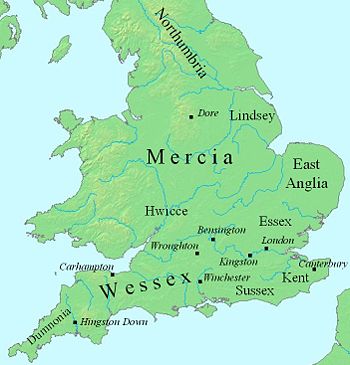
Salisbury Plain is steeped in history, both ancient and modern and can justifiably claim to be the cradle of English civilisation. In prehistory, tribes from Europe migrated north and settled on Salisbury Plain.

Wessex Map

Wessex Map

Remains of defence earthworks, burial and ceremonial grounds are scattered throughout Wiltshire. Many of these sites have public access. The most world renown is Stonehenge, a World Heritage Site, north of Salisbury and close to Amesbury. Also a World Heritage Site are the Avebury stone circles (both an outer and a smaller inner circle), not so famous as Stonehenge but equally impressive. Avebury is a few miles west of Marlborough in the north of Wiltshire.

From Overton Hill, near Avebury, the famous Ridgeway begins. This is thought to be Britain’s oldest road, used by prehistoric man, herdsmen and soldiers, and follows the northern escarpment of Salisbury Plain north-eastwards through the ancient landscapes of Wiltshire into the Chiltern Hills of Berkshire. The Ridgeway is 85miles (139km) in length, accessible to the public, and has National Trail status.

As well as the more ‘modern’ Roman Roads that criss-cross the Wiltshire countryside, Roman and Norman settlements continue very much in evidence, often developed on earlier Iron Age hill fort sites such as Old Sarum. This location was the original Salisbury site, a hill fort occupied by the Romans then latterly by Normans following the Norman Conquest of 1066. The exposed nature of the Old Sarum site and disagreements between the clergy and the military led to the building of the new Salisbury cathedral in 1220 A.D. to the south. The townspeople soon followed and medieval Salisbury grew to the city it is today. Old Sarum, rich in history, with its ruined fortifications is open to the public throughout the year.

The Middle Ages were a time of great prosperity for Wiltshire with sheep grazing the chalk downlands and the handwoven woollen cloth in great demand. Many famous buildings, villages and even towns were built from the proceeds. The Industrial Revolution changed everything as mechanical production took over and the weaving industry moved north into the West Riding of Yorkshire.

In more recent times much of Wiltshires rich prosperity has come from the many military establishments scattered over the Plain. Wiltshire airfields and army garrisons have trained and deployed troops and aircraft across the world on both fighting and peace-keeping operations and played pivotal roles in the great military campaigns of both World War I and II.

Each week I will be blogging on a specific area of Wilsthire and talking about its rich history.

Stonehenge Tour Guide
HisTOURies UK – The Best Tours in Wessex

Read Full Post »

Stone Age humans had to evolve a higher level of intelligence before they were able to develop real tools like axes, scientists have proved.

It took early man almost two million years to move form simply using sharp stones to more complex tools like a stone axe.

Scientists used computer modelling and tiny sensors embedded in gloves to assess the complex hand skills that early humans needed in order to make two types of tools during the Lower Palaeolithic period, which began around 2.5 million years ago

Stone Age man took two million years to move from simple stone tools to more complex ones like handheld axes

Stone Age man took two million years to move from simple stone tools to more complex ones like handheld axes

Researchers from Imperial College London employed a craftsman called a flintnapper to faithfully replicate ancient tool-making techniques.

The flintnapper created two types of axes wearing he data glove fabric to record hand and arm movements during the production of sharpened flints or more complex handheld stone axes.

This enabled the scientists to rule out motor skills as the principal factor for holding up stone tool development as both types were equally complex to produce.

Until now some scientists believed that it took Stone Age man so long to develop real tools because early humans may have had underdeveloped motor skills or abilities.

Bbut this study confirms that the evolution of the early human brain was behind the development of the axe.

The team say that comparing the manufacturing techniques used for both Stone Age tools provides evidence of how the human brain and human behaviour evolved during period.

Neuroscientist Dr Aldo Faisal said ‘The advance from crude stone tools to elegant hand-held axes was a massive technological leap for our early human ancestors. Hand-held axes were a more useful tool for defence, hunting and routine work.

‘Interestingly, our study reinforces the idea that tool making and language evolved together as both required more complex thought, making the end of the Lower Palaeolithic a pivotal time in our history.
‘After this period, early humans left Africa and began to colonise other parts of the world.’

They also believe that the development of hand-held axes may have also coincided with the development of language, as these functions overlap in the same regions of the modern and early human brains.

The results showed that the axe required a high level of brain processing in overlapping areas of the brain that are responsible for a range of different functions including vocal cords and complex hand gestures.

In the future, the team plan to use their technology to compare tools made by Neanderthals, an extinct ancestor of humans, to glean insights into their brain development.

Explore more:

Places:
Africa
Stonehenge
Organisations:
Imperial College

Read more: http://www.dailymail.co.uk/sciencetech/article-1326880/Why-Stone-Age-man-needed-evolve-brain-power-make-axes.html?ITO=socialnet-twitter-dmailscitech#ixzz14sKuiH4U

Stonehenge Tour Guide
HisTOURies UK – The Best Tours in ancient History

Read Full Post »

« Newer Posts