Feeds:
Posts
Comments

Archive for the ‘sightseeing tours’ Category

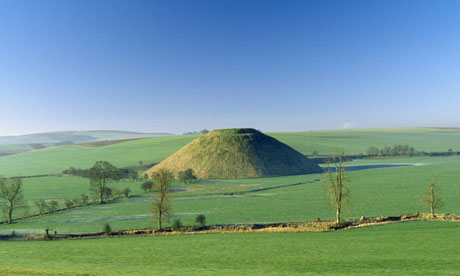
Silbury HillIN A modest house in Swindon, an 86-year-old man formulates exquisitely-detailed theories that turn conventional Wiltshire arch- aeology on its head.

If retired builder Eric Crook is right – and his belief that he’s right is unshakeable – the remains of a neolithic princess have lain deep beneath Silbury Hill for more than 4,000 years.

Even more startling is his insistence that the stones of Avebury once formed a carved amphitheatre of countless thousands of human and animal faces. These carvings would have appeared to move in flickering firelight; an illusion to thrill audiences of people who were centuries dead before Christ was born or the invading legions of Rome set foot on English soil.

These stone faces, Mr Crook says, can still be found in fragments hacked from the stones down the centuries, whether for buildings or perhaps because the powers that be disapproved of such images.

The reaction from the archaeological mainstream has so far been distinctly underwhelming, but Mr Crook, having spent well over 50 years researching and documenting his subject, is undaunted.

“Archaeologists are trained by other archaeologists,” he said. “But they are not trained in a natural learning process going through building technology.

“They learn only through what they can see. I heard of a professor who was asked the question, ‘when do you think you’ll get the answers to Silbury Hill and Avebury?’ “She said it would be another generation, but I thought to myself, ‘The answers are already there and you’re the generation behind.’”

Wiltshire, A Journeyman’s Tale, is £9.99 and can be ordered from Amazon and bookshops, ISBN978-0-7223-3900-8

Well worth touring Avebury and Silbury Hill at the moment.  There are several amazing crop circles in the area

Stonehenge and Avebury Tour Guide
HisTOURies UK – The Best Tours in Wiltshire

Read Full Post »

 The weather may not be anything to write a postcard home about – but the West’s tourism industry enjoyed a twin boost yesterday.

Key visitor attractions featured prominently in the first global TV adverts for a decade and new research showed up to 17 million Brits will holiday at home this year.

VisitBritain, the national tourism agency, yesterday unveiled its international TV campaign to attract overseas visitors to the country.

The adverts will be screened around the world, and include Stonehenge, Glastonbury and the Cotswolds.

Stonehenge is already in the spotlight because of the summer solstice, and VisitBritain say the UNESCO World Heritage Site is one of the most important prehistoric monuments on the planet.

As well as the 5,000-year-old site, there are money Neolithic and Bronze Age monuments in the surrounding landscape, and Avebury, the largest stone circle in Europe, is nearby.

Glastonbury is synonymous with the annual music festival taking place at the weekend, with international superstars such as U2, Coldplay and Beyonce, as well as theatre and circus performers and much more.but VisitBritain also point to the ruins of Glastonbury Abbey, and the iconic Tor, along with myths and legends about the Isle of Avalon, King Arthur, Joseph of Arimathea and the Holy Grail.

The agency adds: “For many visitors, the Cotswolds represent everything that is quintessentially ‘English’, with villages and churches of honey-coloured limestone set among gentle hillsides, cottage gardens, beech woods and drystone walls.”

Historic sites include Sudeley Castle and Chedworth Roman Villa, while VisitBritain urges tourists to sample local produce such as Gloucester Old Spot pork, Tewkesbury mustard and the famous Cotswold cheeses.

Other locations in the TV adverts include London landmarks such as the Houses of Parliament and St Paul’s Cathedral, the Lake District, Snowdon in Wales, Edinburgh Castle and the Highlands.

Celebrities such as actress Dame Judi Dench, fashion icon Twiggy and chef Jamie Oliver – who has restaurants in Bath and Bristol with another opening in Cheltenham this summer – star in them.

The campaign kicks off a major marketing push that seeks to build on the global impact of the Royal Wedding, with the Olympics next year also guaranteeing the international spotlight.

It will concentrate on the current most important tourism markets, such as the US and Western Europe, and the big growth areas for the future, including China and India.

VisitBritain chief executive Sandie Dawe said: “This is our first global TV campaign for 10 years and marks the start of an ambitious marketing programme. With the eyes of the world on us, we have an opportunity to showcase Britain and then to close the sale with great travel deals and offers from our partners.

“This campaign aims to inspire visitors to come and explore for themselves. Over four years, we aim to attract four million extra overseas visitors, who will spend £2 billion across Britain.”

Meanwhile a new survey has found nearly 40 per cent of Britons will stay at home this summer as families strive to balance household finances.

Many of them will instead enjoy ‘staycations’, with the West sure to cash in.

The poll was carried out for savings bank ING Direct, and chief executive Richard Doe said: “It’s not surprising that the summer holiday is often being sacrificed.”

Visiting Britain ? Visit the West Country!

Wessex Tour Guide
HisTOURies UK – the Best Tours in Wiltshire

Read Full Post »

What was there before Stonehenge?

Stonehenge is a multiphased monument ie built in phases over a long period of time. It was built between 3000 and 2000 BC, but is part of a much larger ceremonial landscape which dates back somewhere up to 10,500 years ago. The earliest monuments in the landscape are markedSite of mesolithic post holes in the car park at Stonehenge by 3 small white discs on the tarmac at the lower end of the car-park. Chances are you will drive over them if you visit! The white discs mark where wooden postholes stood during the early mesolithic – the hunter gatherers – at least 3,500 years before the first phase of Stonehenge.Later features which predate Stonehenge that can still be seen are the Cursus and barrows or burial mounds. You will need more time or to go on a specialist tour to see these features.

Early ditch and bank at Stonehenge.

Though people had been meeting and using the landscape for some considerable time beforehand, the first phase of Stonehenge dates to between 3000 and 2920 BC with the creation of a ditch with internal bank. The bank has the appearance of a ‘…string of sausages’ and may have been upto 2m high though it is now much eroded.The dating of this part of the monument is believed to be fairly accurate because of the large amount of good dating evidence from antler and bone found in the ditch. After that the date for every other stage of Stonehenge is somewhat tenuous and subject to great debate.

Was there a timber phase at Stonehenge?

At the moment the theory is that from its beginnings to around 2600 BC there was a timber phase at Stonehenge. This included 56 timber posts just inside the bank and the post holes were later filled with cremated human remains and now known as Aubrey holes.In 2008 Aubrey hole 7 was opened by the Stonehenge Riverside Project and it looks more like a hole for a stone rather than timber. It may be that stones were here from the start rather than later. The results from the most recent dig are due out in 2011 so we may have the 3rd major rewrite of the Stonehenge story within 20 years!

Early stone phase.

Current dating assumptions suggest the first stones to arrive were the ‘bluestones’ from the Preseli Hills in west Wales. Bluestones inside StonehengeBluestone is a generic term for several types of volcanic rocks and each of them at Stonehenge weighs 4 – 6 tons.They are the ones that stand about man height as one looks into the stones. They don’t look blue until dressed (ie shaped) and the outer covering of the stone removed.You can how blue on a tour out of hours to the inner circle.
The bluestones were originally set in double concentric arcs with the open end facing the south/southwest. When removed they were filled are now known as Q & R holes.
Artist's impression of bluestone henge discovered in September 2009.In its final layout there are estimated to be 79 or 80 bluestones. An exciting discovery in September 2009 at the end of the Avenue where it meets the River Avon was a series of stone holes possibly holding bluestones. This ‘Bluestone’ henge may have held 24 stones. If the 56 Aubrey holes held stone rather than timbers it may be that there were two separate monuments that became united as the finishing phase of Stonehenge.

Late stone phase.

Around 2400 BC sees the arrival from 19 miles to the north of 75 sarsen stones. A very hard form of silicified sandstone it lies on or just below the ground surface. A circle of 30 uprights were erected in the outer circle each weighing around 25 tonnes. These were topped with 30 lintels each weighing 6 – 7 tonnes. Jointing to sarsens at Stonehenge.The lintels don’t rely on gravity to keep them in place they have mortice & tenon, and tongue & groove joints that we would normally find in a wood setting, but in stone. Each of the lintels also has some shaping on the inner and outer circular face to produce not far off a perfect circle.

The 5 trilithons (tri=3, lithon=stone) stand like a set of croquet hoops arranged in a horshoe shape in the centre of the circle. They step up in height as they go from the outer two to the remains of the Great Trilithon in the centre. Only 3 of the 5 trilithons still stand.

Final phase.

Around 2000BC the bluestones were re-erected. The altar stone was placed in the circle. Some realignments of external stones took place.

What is Stonehenge for?

Hundreds if not thousands of theories abound. A temple to the sun? Probably, but more about winter solstice sunset after which the days get lighter and warmer, rather than the more popularly attended summer solstice sunrise. A necropolis? Certainly. There are probably more than a tousand burials in the immediate area. Druidic temple? Probably not. They were a later ‘priesthood’ and the neo druids are an 18th century invention. A mystery?. Certainly.

Links:  http://www.english-heritage.org.uk/daysout/properties/stonehenge/
http://www.StonehengeTours.com#

Stonehenge Guided Tours
HisTOURies UK – The Best Tours in Ancient History

Read Full Post »

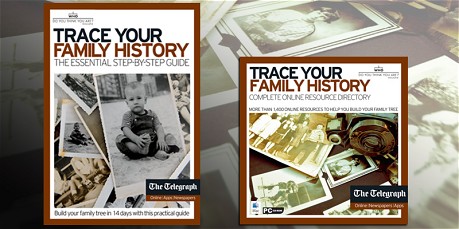
Buy The Telegraph on Saturday and get a free copy of Trace Your Family History, The Essential Step-by-Step Guide which will show you how to discover your family background in only 14 days.

If you have ever put off researching your family history because you feel you do not have the time, then this guide will demonstrate just how much dramatic information you can uncover in a short period.

Free guide to tracing your family history

Free guide to tracing your family history

With so much material online, you will be astonished by what you can learn in a matter of hours once you know where to look. The forgotten facts about your family’s past that you will unearth will undoubtedly give you a taste for further inquiry.

With millions of records now online, the CD-Rom web directory, free inside The Sunday Telegraph, will point you towards the best and most relevant online resources.

The CD-Rom is a complete directory containing more than 1,400 sources to help you take your research further. By grouping websites into themes, the disc will prove invaluable in tracing your family’s past online. It is compatible with PC and Mac systems.

You will also find plenty of advice and inspiration at Who Do You Think You Are? LIVE at Olympia, London (25-27 February) where you can meet the Who Do You Think You Are? Magazine team.

Don’t miss The Telegraph on Saturday, February 19, and Sunday, February 20, for the FREE Trace Your Family History guide and CD-Rom which will give you the skills to discover your family’s past.

_____________________

We would like the thank the following websites for supporting this promotion.

www.traceyourancestors.co.uk/

Family history researcher offering three levels of service resulting in a bound book and scrolled family tree for all generations to treasure

http://www.debrettancestry.co.uk

Debrett Ancestry Research offers a highly professional service with a choice of fixed-budget programmes for anyone with UK ancestry. Free assessments and advice.

http://www.familytreeservice.co.uk

Family Tree Service research and create tailor-made family trees based on your own ancestry and genealogy. They are also dedicated to providing additional free content on census occupations, military history and geography.

www.familytreeuk.co.uk

The Family Tree UK has roots reaching back through 422 years of family history in the south and east of England

www.thegenealogist.co.uk

Start researching your family history with a 14-day free trial on the top rated site TheGenealogist.co.uk. With records back to 1100 to present day you never know where your research will take you.

British Tour Guide
HisTOURies UK – The Best Tours in Family History

Read Full Post »

Filming in Wiltshire

Wiltshire is a perfect loction for film and television productions. Working with South West Screen, VisitWiltshire and Wiltshire Council seek to encourage new productions and film making in the area, making it a very ‘film friendly’ part of England. Film Friendly

Wiltshire is a favourite with filmmakers, taking centre stage in a whole range of productions from swashbuckling adventures to Jane Austin classics. Wiltshire continues to be popular with television and film crews, making an ideal location for anything from traditional period dramas to gothic horror films featuring Hollywood stars.

The county was used as the backdrop in productions such as The Wolfman, Harry Potter and the Half Blood Prince and Creation, as well as TV series such as Lark Rise to Candleford and Tess of the D’Urbervilles.

Wilton House (photo: Will Pryce)Anyone who enjoyed the cinema version of Pride and Prejudice, starring Keira Knightley and Matthew Macfadyen, will recognise not only Wilton House – which doubled as Pemberley, the family seat of Mr Darcy – but also the magnificent gardens at Stourhead, where Lizzie initially rejects his proposal of marriage.

Filming The Young Victoria at WiltonThe film on the life of Queen Victoria: Momentum Pictures’ The Young Victoria, features Wilton House. Wilton was used to double for Rosenau Castle, Prince Albert’s Coburg and Buckingham Palace.

The National Trust’s Mompesson House in Salisbury’s Cathedral Close achieved celebrity status as the London home of Mrs Jennings in the 1995 Oscar-winning version of Sense and Sensibility, when the leading parts were played by Emma Thompson, Kate Winslet and Alan Rickman. Wilton House’s Double Cube room was also used for ballroom scenes in the film.

Channel 4's Team Team at Salisbury Cathedral
Salisbury Cathedral took centre stage in the TV production of Mr Harvey Lights a Candle and Old Wardour Castle experienced some modern-day drama when it was used for the filming of Robin Hood, Prince of Thieves, while other starring roles have been played by Breamore House and Church (Thomas Hardy’s The Woodlanders); Heale House (The Portrait of a Lady) and Houghton Lodge (The Buccaneers and Agatha Christie’s Murder at the Vicarage).

Stonehenge is an iconic location – used in the BBC production of Tess of the D’Urbervilles; the lake at Fonthill Bishop was used in the film Chocolat, and Trafalgar House near Salisbury has been used for several films including Amazing Grace.

Filming Cranford at LacockThe village of Lacock, with its cottages and inns dating back to the 15th century was the backdrop to the recent BBC production of Cranford. The village is much admired by film makers; the National trust village and nearby Abbey has played host to a variety of classic films and costume dramas including Pride and LacockPrejudice, Harry Potter and the 2008 film production of The Other Boleyn Girl.

Castle Combe has been called the “prettiest village in England”. A favourite with film makers this stunning village is located at the southern tip of the Cotswolds. The village has played host to many filming productions, the most famous of these being Doctor Doolittle filmed in and around the village in 1966, and recently the village had a major role in Stardust and The Wolf Man.

Lark Rise to Candleford (photo: BBC)Pride and Prejudice was also filmed at Luckington Court, Chippenham, the BBC Tess of the D’Urbervilles was also filmed in Corsham, Walk Away and I Stumble for ITV was filmed in Calne and Chippenham, and North Wiltshire is also the location for the BBC’s Lark Rise to Candleford. The unspoilt streets of  Bradford on Avon make the town a perfect location for films. Scenes from the Charles Darwin biopic, Creation, were filmed in the town.

Longleat house and safari park has been used for a number of film productions and is the location for the BBC’s Animal Park.

Wiltshire also has more unusual film locations: aircraft hangars and runways at Kemble and Hullavington, and with such a big presence on Salisbury Plain, the British Army has many locations available for filming. Swindon provides a useful urban location a short distance from London along the M4 motorway or by train, the STEAM railway museum and designer shopping village provides hstorical and contemporary locations. Swindon has been used as a backdrop for film, television drama and advertising. Norman Foster’s Renault building in West Swindon appeared in the James Bond film A View to a Kill and the Motorola Building in North Swindon was used as a filming location for the James Bond film The World is Not Enough. The National Science Museum outpost at Wroughton airfield, the house of Lydiard Park and the Cotswold Water Park provide unique locations near Swindon.

The Young Victoria filmed at Wilton House

Scenes from Saving Private Ryan were set on the Wiltshire Downs.Kennet“Africa and the plains of America are just over an hour away from London”, or so the movie makers have found. Rolling hills, majestic horizons, open skies and a real sense of space, together with a South West Screen “Film Friendly” star rated council are just some of the reasons for filming in the area.

VisitWiltshire staff will smooth the way for a hassle free shoot.

>>Read more about filming in Wiltshire in an article in Your Wiltshire magazine

Wiltshire can offer Neolithic monuments, stone circles, Saxon and Civil War battlefields, peaceful villages where the old rural traditions are still alive, or historic towns such as Devizes and Marlborough both with unique shopping quarters which make them stand apart. Marlborough has reputedly one of the widest high streets in Europe and is home to Marlborough College, while Devizes has an impressive Market Place.
The area has first class road and rail links with the rest of the country and over half of it is designated an Area of Outstanding Natural Beauty. The area is rich in industrial heritage related to the Kennet and Avon Canal and local industries such as brewing still survive today, with beer still delivered to local hostelries by dray. 

Filming near Marlborough and Devizes include: Time Team – Reconstruction of a timber structure that was excavated at Durrington, Walk Away and I’ll Stumble – Tamzin Outhwaite (2 part drama featuring Avebury), Flog it – Pewsey, How Long is a Piece of String – Savernake Forest and Kennet and Avon Canal, History Mysteries – Open University, and Derek Acorah’s Ghost Town – Devizes, and Wilton Windmill was used for The Victorian Farm produced by Lion TV for the BBC series The Victorian Farm.

The Wolfman filmed in Wiltshire

  Latest NewsCastle Combe
Steven Spielberg  filming War Horse in Castle Combe

Hollywood director Steven Spielberg has to shot his most recent film in Castle Combe.  Based on the 1982 book by author Michael Morpurgo, the War Horse, it will feature Sherlock actor Benedict Cumberbatch and Harry Potter star Emily Watson among the cast. The film is now in post-production and is due for release by Disney in 2011.

>>View coverage of the filming in The Daily Telegraph
http://www.visitwiltshire.co.uk/

We offer private guided sightseeing tours of all these locations.
Wiltshire Tour Guide
HisTOURies UK – The Best Tours in History

Read Full Post »
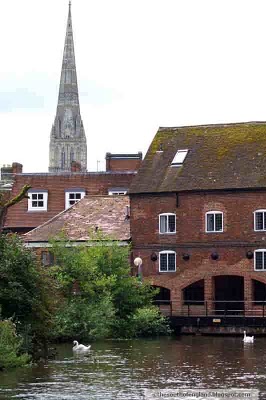
Salisbury and Stonehenge are separated by some 20 minutes drive, so after having had visited the prehistoric megaliths, it would be simply unforgivable to not pop in on this medieval town (though it has the status of city), which is first of all famed by its 13th century gothic cathedral.
The construction of Salisbury cathedral became one of those rare examples where only one generation of people was involved. That’s why, having had been erected during less than 40 years, this attired in stone lace structure represents a purest specimen of early English Gothic. The gracefully soared 123 metres spire is deceptively light. Actually its weight (with the weight of the tower) amounts to 6500 tonnes!

salisbury cathedral

Considering the fact that the foundation of Salisbury cathedral extends deep down the soggy ground only for 5 metres, it only remains to wonder how it has been still withstanding such load yet to admire the craftsmanship of medieval builders.
Inside of Salisbury cathedral it is as much mesmerizingly beautiful as outside. The sunlight, flowing through the vibrant stained glass windows, softens that characteristic gothic solemnity and makes it more warm and friendly. Apart from good looks the cathedral prides itself on keeping one of the 4 copies of Magna Carta, having been remained from the time of John Lackland, as well as the oldest working clock in the world dated by 14th century.

salisbury cathedral

In the confines of the spacious Cathedral Close nestle picturesque buildings of different époques and styles. Mompesson House (on the left from the High Street Gate) is a typical sample of English Baroque with gorgeous plasterwork and elegant interior that became the set for “Sense and Sensibility”, starring Emma Thompson and Hugh Grant. Malmesbury House (just by Sarum College) is quite often associated with the name of distinguished composer of the 18th century George Frideric Handel. It is believed that this is where he gave his first concert in Britain, to be exact in the room above the Saint Ann’s Gate. Salisbury and South Wiltshire Museum, situated in an ancient building of the 13th century opposite Salisbury cathedral, houses not only the curious artefacts having been found in the process of excavations near Stonehenge but also possesses the exhibits of the time of Romans and Saxons, the pieces telling about Salisbury’s social life in the Middle Ages, great collections of costumes and paintings.
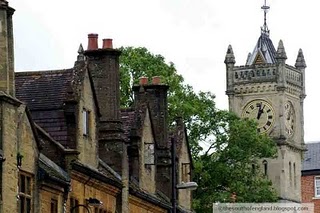
sarum collegeSalisbury is one of those provincial towns where no one can help oneself but meander around the narrow little streets enjoying the tranquillity far from boisterous metropolises. Everything is so snugly compact in comparison with the cities with high population. So there is even its own “Little Ben”, though probably “Little Tower” would suited this clock tower better, because it was built on the site of the former prison.
While walking along Salisbury, scrutinizing the old houses, amidst which there is a good deal of colourful timber-framed ones, and dropping in on little souvenir shops, the time unnoticeably flies by. And getting hungry organism suddenly begins to focus attention not on “that lovely little house” but on those with the signboards “pub”, “restaurant” or “café” on them. Though it doesn’t take too long to find a place for having a meal, because there are plenty of pubs and restaurants for every taste.
salisbury wiltshireSome of them can be interesting not only from gastronomic point of view, but also from historic. In this list for instance are: the restaurant at “The Old Mill” placed in the building of an old paper mill of the 12th century, “The coach and horses” built in 13th century, “The haunch of venison” on the Market Place. That last one exists at least from the 14th century and it doesn’t only keep a vivid atmosphere of the past. Between the ground and first floors is yet another one small area for visitors, pretentiously called “The house of Lords”. There, in the tiny baking oven, a cut mummified hand clenching the playing cards has been put on display. It was found during the refurbishment of the restaurant and alleged to be of an unlucky gambler, having had been punished for his cheating. That part of dead body doubtfully raises someone’s appetite but definitely increases the popularity of the place.
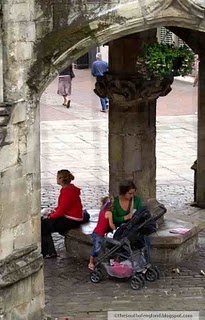
salisbury wiltshireAcross from “The haunch of venison” is an unusual stone construction. It’s called Poultry Cross, though visually it looks more like a stone marquee. In the 15th century, when Market Place was wider, there were four Crosses. In those days they functioned as departments in the modern supermarkets. So in the Middle Age there were: Cheese/ Milk Cross, Poultry Cross, Wool/Yard Cross and Barnwell Cross where the livestock was being sold. Nowadays this only remained Poultry Cross is the sort of a town summerhouse, a perfect spot for making a date or take shelter from a heavy shower.
In spite of such worldwide neighbour like Stonehenge, Salisbury, having its own charisma, doesn’t fade in the rays of the megaliths fame at all. Salisbury is like a main spice in the dish, it makes the trip to Stonehenge more complete. Without it that “megalithic delicacy” might be a little bit mild.
External links:
Visit Salisbury and Wiltshire Tourist website – www.VisitWiltshire.co.uk
Salisbury Cathedral – www.salisburycathedral.org.uk
Stonehenge – www.Stonehenge-Stone-Circle.co.uk
Salisbury and Stonehenge Tours – www.StonehengeTours.com

Southern England log : http://thesouthofengland.blogspot.com
Tours from London – www.Welcome2London.co.uk
Needless to say we can organise private guided tours of Salisbury and Stonehenge for small groups.  These tours can depart from Salisbury, Bath, Glastonbury or London

Salisbury Tour Guide
HisTOURies UK – The Best Tours in ancient Wiltshire

Read Full Post »

Had to share a few Wessex snowy pictures with you………

This slideshow requires JavaScript.

Stonehenge Tour Guide
HisTOURies UK – The Best Tours in bad weather

Read Full Post »

Wanted to claryfy that we have not misspelt our tour company name. HisTOURies comes from two words  ‘history’ and ‘stories’ – clever eh?
We operate guided historical (hisTOURical) sightseeing tours of Britain.  Our expert guides (historians or hisTOURians) bring Britain’s rich history (hisTOURy) alive with tales’s and stoiries (sTOURys or sTOURies) of ancient England.
‘It is not spelt incorrectly.’
Hope thats clear (clear as mud)……………..
Our award winning tours can depart from London, Salisbury, Bath or Glastonbury.  Please visit our website:
HisTOURies UK – The Best Tours in British History (hisTOURy)

Histories (Herodotus)

The Histories of Herodotus is considered one of the seminal works of history in Western literature. Written from the 450s to the 420s BC in the Ionic dialect of classical Greek, The Histories serves as a record of the ancient traditions, politics, geography, and clashes of various cultures that were known around the Mediterranean and Western Asia at that time. It is not an impartial record but it remains one of the West’s most important sources regarding these affairs. Moreover, it established without precedent the genre and study of history in the Western world, although historical records and chronicles existed beforehand.

Perhaps most importantly, it stands as one of the first, and surviving, accounts of the rise of the Persian Empire, the events of, and causes for, the Greco-Persian Wars between the Achaemenid Empire and the Greek city-states in the 5th century BC. Herodotus portrays the conflict as one between the forces of slavery (the Persians) on the one hand, and freedom (the Athenians and the confederacy of Greek city-states which united against the invaders) on the other.

The Histories was at some point through the ages divided into the nine books of modern editions, conventionally named after the Muses.

Herodotus seems to have travelled extensively around the ancient world, conducting interviews and collecting stories for his book. At the beginning of The Histories, Herodotus sets out his reasons for writing it:

British Tour Guide
HisTOURies UK Stories in History

Read Full Post »

Us Brits love Christmas. Our ancient streets come alive as thousands of shoppers and party-goers make their way past carol singers and chestnut vendors under a canopy of shimmering festive lights. The shops are overflowing with gifts, decorations and delicious food, and there are thousands of seasonal events from carol services to wild parties as the holiday spirit takes hold

Why is England a good place to visit at Christmas time?
Christmas is Britain’s most popular holiday and is characterised by traditions that date back hundreds of years. Many Christmas customs that originated in Britain have been adopted in the United States. There is nothing more magical than wandering through a British garden on a crisp, clear winter day: the sun, low in the sky, sparkling on elegant branches; the satisfying crunch of early morning frost underfoot; the delicate scent of winter-flowering shrubs. Holly berries bring a splash of colour to the festive season. Shortly after New Year, snowdrops poke their heads through the earth. Hints of spring arrive in late February as buds begin to appear on trees and the petals of early daffodils unfold.

Bath Christmas Market

Bath Christmas Market


1. Christmas Traditions • Pantomimes • Crackers • Dinner • Decorations • Mistletoe
2. Father Christmas
3. Queens Speech
4. Boxing Day

1: (Pantomines) In the UK, the word ‘Pantomine’ means a form of entertainment, generally performed during the Christmas season. Most cities throughout UK have a form of pantomine at this time of year. The origins of British pantomine, or ‘Panto’ as they are know as today, date back to the middle ages. Panto is generally aimed at children however adults from all ages thoughly enjoy this show. Pantos are based on childrens fairy tales and legends (Aladdin, Cinderalla, Jack and the Bean Stalk). It is traditional for the audience to join in with the panto – cheering the hero or heroine and hissing at the villains. Many phrases to be learnt before seeing a panto are “He’s behind you!” and “Oh yes he is!”, although this may seem strange to be reading all will become clear when watching a British pantomine.
(Cracker) The pulling of Christmas crackers often accompanies food on Christmas Day. Invented by a London baker in 1846, a cracker is a brightly coloured paper tube, twisted at both ends, which contains a party hat, riddle and toy or other trinket. When it is pulled by two people it gives out a crack as its contents are dispersed.
(Dinner) Christmas Day sees the opening of presents and many families attend Christmas services at church. Christmas dinner consists traditionally of a roast turkey, goose or chicken with stuffing and roast potatoes. This is followed by mince pies and Christmas pudding flaming with brandy, which might contain coins or lucky charms for children. (The pudding is usually prepared weeks beforehand and is customarily stirred by each member of the family as a wish is made.) Later in the day, a Christmas cake may be served – a rich baked fruit cake with marzipan, icing and sugar frosting.
(Decorations) Christmas decorations in general have early origins. Holly, ivy and mistletoe are associated with rituals going back beyond the Dark Ages. (The custom of kissing beneath a sprig of mistletoe is derived from an ancient pagan tradition.) The Christmas tree was popularised by Prince Albert, husband of Queen Victoria, who introduced one to the Royal Household in 1840. Since 1947, the country of Norway has presented Britain annually with a large Christmas tree which stands in Trafalgar Square in commemoration of Anglo-Norwegian cooperation during the Second World War.
(Mistletoe) Mistletoe, considered sacred by the British Druids, was believed to have many miraculous powers. Among the Romans, it was symbol of peace, and, it was said that when enemies met under it, they discarded their arms and declared a truce. From this comes our custom of kissing under the mistletoe. England was the first country to use it during the Christmas season. 2.
2. (Father Christmas) The English gift giver is called Father Christmas. He wears a long red or green robe, and leaves presents in stockings on Christmas Eve. However, the gifts are not usually opened until the following afternoon. Father Christmas delivers them during the night before Christmas. The Children leave an empty stocking or pillowcase hanging at the end of the bed. In the morning they hope it will be full of presents.
3. (Queens Speech) Another traditional feature of Christmas afternoon is the Queen’s Christmas Message to the nation, broadcast on radio and television. This normally occurs in the mid afternoon after most people have eaten their Christmas Dinner. The Queen summaries the events of the year past and looks to the future. 4. (Boxing Day) Christmas day is followed by Boxing day (26th December). which takes its name from a former custom of giving a Christmas Box – a gift of money or food inside a box – to the deliverymen and trades people who called regularly during the year. This tradition survives in the custom of tipping the milkman, postman, dustmen and other callers of good service at Christmas time normally on the run up to Christmas.

A Christmas Market Christmas Markets are loved by everyone – the little wooden chalets selling all sorts of goodies and the magical atmosphere created by special Christmas fragrances of pine branches and incense and of course the hot mulled wine to keep you warm! The stalls filled with wooden smoking men, Christmas pyramids, music boxes, straw stars, angels and all manner of wooden decorations. Then you have the stalls with the lebkuchen, stollen and fresh sugared almonds – tempting you with Christmas aromas. Friends and family meet up to enjoy the day together and everyone gets absorbed in the excitement of Christmas.

Bath Christmas Market – A very traditional style English Christmas Market will be runnning every day from December 2nd – 11th selling a a wide variety of original hand crafted gifts, decorations, cards and toys. With the famous Bath Abbey and Roman Baths providing an amazing backdrop to this event, you will know that the festive season has really arrived in Bath. You will have plenty of time on tour for some Christmas shopping!
Windsor Christmas Market – A traditional German market which will be running throughout December. There will be individual wooden chalets each offering a variety of hand-made goods or sumptuous fare! Perfect for Christmas shopping!

More historical Chrismas facts coming soon. 
External Links:
Welcome2London – Christmas in the Capital

Wiltshire Tour Guide
HisTOURies UK – The Best Tours at Christmas time

Read Full Post »

If websites like TripAdvisor are riddled with fake reviews, where will the traveller go for authentic advice ?

TripAdvisor
Bravo TripAdvisor

A report by the travel website, Travolution, this month, confirmed my suspicions that tour operators are being approached by companies promising to post positive reviews on websites in return for monthly fees or discounts on their services. The report claims that such companies can avoid the protection measures that websites have put in place, by posting the reviews from different locations around the world. The report even claimed that one tour company had received a number of reviews before it had even started operating tours.

 To be fair to TripAdvisor it has already begun imposing disclaimers. It admits that it is aware of several companies offering paid-for positive reviews and claims that they have been penalised appropriately.

But I fear that if it was possible to unearth all the fake reviews, there might not be enough red pen to go around. Like drug users in sport, the people committing the offences are nearly always one step ahead of those trying to catch them.

“In fact, all that is required to upload these travel “truths” is an anonymous username and email address (which can easily be faked).”

“TripAdvisor’s successful business model appears to be based upon a minimum of checks, an arrogant disregard for accuracy and truthfulness, and a customer-service regime that is virtually non-existent. It is too easy for tour companies to write their own reviews, or pay others to write them. It is too easy for reviewers to post untruthful or damaging reviews, or for travel companies to ‘sabotage’ their competitors”

“Why should the fate of a business be controlled by “anonymous” users who don’t even have to verify or validate their actual visit? ”

  Several travel companies have embraced these user-generated websites, employing staff to contact clients after they have completed their tour (to right any wrongs and encourage positive feedback). The bigger operators and some smaller ones (you know who you are) send out emails encouraging clients to post reviews; tourist boards, such as VisitScotland and VisitLondon, include TripAdvisor ratings on their websites.

TripAdvisor has taken steps to counter fake reviews. Last year disclaimers began appearing when reviews came under suspicion of being fake. The company said that it uses specialist software and algorithms to screen reviews and has a team of moderators to investigate suspicious postings.

“Advisor has turned into a whining fest where unhappy powerless people can become powerful…kind of like the kid that got picked on in school. “

Users are aware that little tricks – adding an element of critique to a glowing review, saying something positive before you slate a particular tour, using different email addresses and computers, reviewing other operators to establish a track record – can help them get around the detectors. Many UK tour operators are very active with this technique.

There are even websites to help you circumvent the rules. “Writing fake reviews is a great option for almost any business,” said Bob McClain of Wordsmithbob.com, a site that offers a masterclass in the craft.

www.ihateTripAdvisor.org.uk
http://www.Wordsmithbob.com
http://www.independent.ie/travel/travel-advice/tripadvisor-can-we-trust-it-2382242.html
http://tripadvisorwatch.wordpress.com/2010/10/10/tripadvisor-pay-review-fake/
http://www.travolution.co.uk/articles/2010/01/22/3184/exclusive-fake-review-firms-are-not-an-issue-says-tripadvisor.html
http://www.tripadvisor.co.uk

Fortunatly we have only great reviews on tripadvsor (not sure after this article is published  though?) However if I could easily manipulate tripadvisor reviews anyone could  – you have been warned!
Do more research, use your common sense and do not rely on Tripadvisor – dont believe everthing you read, good or Bad!

External Links

Stonehenge Tour Guide
HisTOURies UK The Best Tours in History

Read Full Post »

« Newer Posts - Older Posts »