Few things have helped create the look of the English countryside more 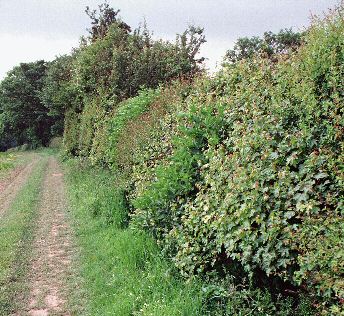 than hedgerows. Hedges have been used for a long time in England, yet for all their antiquity, much of the familiar checkerboard pattern they help create is of very recent vintage.
Hedges have been used as field boundaries in England since the times of the Romans. Excavations at Farmoor (Oxon) reveals Roman hedges made of thorn. The Anglo-Saxons also used hedgerows extensively, and many that were used as estate boundaries still exist. Although these early hedges were used as field enclosures or to mark the boundaries of one person’s property, there was no systematic planting of hedges in England until the first enclosure movement of the 13th century.
The pressures of population expansion led to a widespread clearing of land for agriculture, and the new fields needed to be marked clearly.
Later, farming expansion in the 15th century led to more widespread hedge planting, but the greatest use of hedges came in the Enclosure Movement of the 18th and 19th centuries.
The Enclosure Movement is a fancy term that historians use to describe the habit of wealthy landowners enclosing common fields for their own use, usually for the purpose of raising sheep.
Hedges are used as field boundaries in the lowland regions of England. In the highlands, such as the Yorkshire Dales, dry stone walls are commonly used.
 So great was the need for hedges during the Enclosures, that a whole new industry sprang up supplying hawthorn plants to be used in planting new hedges.
In the process of enclosure many rural labourers lost their livelihood and had to move to the new industrial urban centres. So the next time you sigh over the timeless quality of the English hedge-shaped countryside, spare a thought for the misery and hardship caused by the erection of hedged fields to much of England’s rural population.
|
Hedge Facts
|
| When: Roman, Anglo-Saxon, 13thC, 15thC, 18th-19thC Where: Lowland areas Why: Field boundaries How: planting bushes or trees and pleating them together at an angle as they grew Materials: huge variety based on local availability, but the most common were hawthorn, blackthorn, and holly |
A lot of effort and ingenuity has been brought to bear on the problem of dating hedges. Several historians have advanced mathematical formulae for calculating the age of a hedgerow based on the number of plant species found in a certain length of hedge. As an extremely rough rule of thumb, one species of hedge plant per 100 years seems to get close to the truth.
Unfortunately, recent years have seen the disappearance of many miles of English hedgerows. It is easier for modern farmers to string new metal fence wire than to maintain ancient hedgerows. Conservation efforts have introduced incentives to farmers to maintain the hedges, and losses have slowed somewhat. Estimates vary, but there may be upwards of 500,000 miles of hedgerows in England today.
Links:
http://en.wikipedia.org/wiki/Hedge
http://www.britainexpress.com
http://www.BestValueTours.co.uk
The Best Tours of the Britich Countryside
HisTOURies UK Private Guided Tours



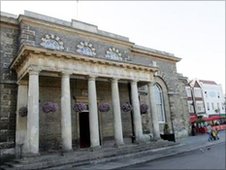

 This building is steeped in history and it has seen some things in its time and I imagine there’s one or two people still left in there who should have maybe left a while ago


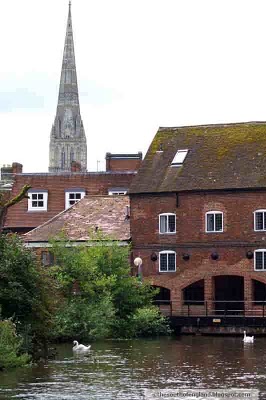


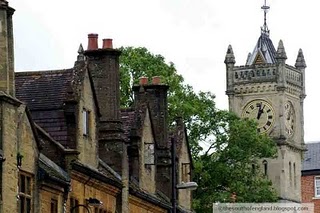 Some of them can be interesting not only from gastronomic point of view, but also from historic. In this list for instance are: the restaurant at “The Old Mill” placed in the building of an old paper mill of the 12th century, “The coach and horses” built in 13th century, “The haunch of venison” on the Market Place. That last one exists at least from the 14th century and it doesn’t only keep a vivid atmosphere of the past. Between the ground and first floors is yet another one small area for visitors, pretentiously called “The house of Lords”. There, in the tiny baking oven, a cut mummified hand clenching the playing cards has been put on display. It was found during the refurbishment of the restaurant and alleged to be of an unlucky gambler, having had been punished for his cheating. That part of dead body doubtfully raises someone’s appetite but definitely increases the popularity of the place.
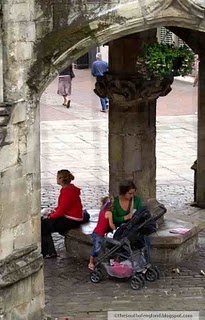 Across from “The haunch of venison” is an unusual stone construction. It’s called Poultry Cross, though visually it looks more like a stone marquee. In the 15th century, when Market Place was wider, there were four Crosses. In those days they functioned as departments in the modern supermarkets. So in the Middle Age there were: Cheese/ Milk Cross, Poultry Cross, Wool/Yard Cross and Barnwell Cross where the livestock was being sold. Nowadays this only remained Poultry Cross is the sort of a town summerhouse, a perfect spot for making a date or take shelter from a heavy shower.
 HisTOURies U.K Tours

 Wessex Guided Tours