Feeds:
Posts
Comments

Archive for the ‘Stonehenge’ Category

HISTORIANS in Penmaenmawr believe their ancient landscapes can rival some of the UK’s top tourist attractions.

Druids Circle

Druids Circle

Dennis Roberts and David Bathers of the Stori Pen Historical Society hope to have historical sites such as the Graiglwyd axe factory and the Druid’s Circle in the Snowdonia National Park into a UNESCO World Heritage site.

“To have a World Heritage Site would be immense for Penmaenmawr and the whole of Conwy,” said David.

The Graiglwyd axe factory is a Neolithic site where it is thought funerary tools were forged for use at the nearby Druid’s Circle, a collection of 30 stones 80ft in diameter.

// <![CDATA[
if (typeof dartOrd == 'undefined') dartOrd=Math.random()*10000000000000000000;
if (typeof tm.zones == 'undefined') {tm.zones = "";}

(function (x) { if (tm.defer) {tm.defer.defer(x); } else { document.write(x);}})('’);
// ]]>

Excavations at this site have unearthed various relics, including the cremated remains of a child.

“There’s an Iron Age hill fort and there are also Bronze Age sites up there, where people came and settled,” said David.

“There’s a lot of stone areas where Neolithic man used to work.

“The area used to be immensely popular in the 19th century.

“With the right conditions put forward I’m confident it would be recognised.”

David added that it would be years until the site could be put forward for the UNESCO award.

Dennis Roberts is chairman of Penmaenmawr Historical Society.

“We are trying to make people aware of what is available in Penmaenmawr,” he said.

“There’s so much behind Penmaenmawr and Llanfairfechan, the area behind the mountains is extremely rich in prehistory. It would rival some of the Bronze Age sites in Britain.”

The historians plan to organise a trail in the mountains that will highlight the sites, before proposals are put to the United Nations Educational, Scientific and Cultural Organisation. They also plan to put a leaflet together.

Lesley Griffiths of the Penmaenmawr Tourist Association welcomed the proposals: “It’s brilliant news, if it comes to fruition.

“It would be extremely beneficial in that it would bring tourists to the sites. It would put Penmaenmawr back on the map.”

Cllr Ken Stevens added: “Areas of Penmaenmawr have some of the oldest industrial sites in Wales. Not a lot of people know what Penmaenmawr has. I wish them all the luck with it, I think we deserve it.”

Other British UNESCO World Heritage Sites include Stonehenge, the Giant’s Causeway, the Tower of London and Canterbury Cathedral

Stonehenge Tour Guide
HisTOURies UK – The Best Tours in Ancient History

Read Full Post »

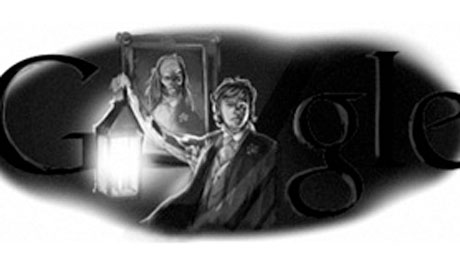
Oscar Wilde: Google doodle features The Picture of Dorian Gray

Oscar Wilde, writer, poet, playwright, wit and gay icon. His 156th birthday is celebrated with a Google doodle

“Illusion is the first of all pleasures”, Oscar Wilde once said.

So it is fitting then that the Google doodle has changed again, this time to celebrate what would have been the 156th birthday of one of the greatest writers, poets and playwrights who ever lived.

The design pays tribute to the Irishman by featuring a portrait from The Picture of Dorian Gray – the first and only novel published by Wilde.

The work was published in Lippincott’s Monthly Magazine in 1890. It was revised and published as a novel a year later.

“An artist should create beautiful things, but should put nothing of his own life into them,” Wilde wrote in the first chapter.

In a review of the 2009 film, starring Colin Firth and Ben Barnes, Darragh McManus said in the Guardian, “For me, Dorian Gray is special – not necessarily Wilde’s best work but unique in his canon – because it’s so sincere: ineffably, inescapably, absolutely. It’s a very good novel anyway: moving, exciting, full of dread, angst, horror, lucidity … and a great love, I think, for mankind and for the artist’s own self.”

Besides films, there have been plays, readings, exhibitions, walks and other events to mark Dorian Gray.

But Oscar Fingal O’Flahertie Wills Wilde, who came into the world in 1854 (“genius is born – not paid”, he once said), was most well known for his stage masterpiece, The Importance of Being Earnest. It opened in 1895 in London.

His other short stories and poems include The Happy Prince and Other Tales. For the stage he wrote Lady Windermere’s Fan, A Woman of No Importance and An Ideal Husband.

In addition to his literary fame, Wilde remains a gay icon.

Although he married and had two sons, in 1891 the writer started an affair with Lord Alfred Douglas, dubbed ‘Bosie’.

In 1895, Wilde sued Bosie’s father for libel as the Marquis of Queensberry had accused him of homosexuality.

He was arrested and tried for gross indecency, sentenced to two years hard labour for sodomy.

During his time in prison he penned De Profundis, a monologue and autobiography addressed to Bosie.

He also took up the issue of inhuman prison conditions in The Ballad of Reading Gaol, which he wrote on his release in 1897.

Wilde died broke in a hotel in Paris, aged 45, on November 30 1900.

One of many misconceptions about Wilde is that he died of syphilis, but recent research claims a rare ear infection took his life.

Writing about his “hero” in the Guardian last year, writer Michael Holroyd said, “What I came to value was the charming way he arrived at deeply unpopular opinions … He was an extraordinarily brave writer. ”

Wilde’s work touched many people. Even the Vatican’s official newspaper last year praised a book written about the playwright.

In 2000 Wilde fans marked the 100th anniversary of his death with a service in Westminster Abbey.

My personl favourite:

“It only tkes me one drin to get drunk, I just cant remember if its the 14th or 14th”

British Tour Guide
HisTOURies UK – The Best Tours in History

Read Full Post »

Wessex is the ancient kingdom of the West Saxons that defeated its rivals and created England. The counties of Essex, Middlesex and Sussex remain with us to recall the East, Mid and South Saxons that Wessex conquered but when King Edgar of Wessex was crowned as the first King of England in Bath in 973, Wessex, the dominant and most civilised of the Anglo-Saxon states, ceased to be a government entity.

Kingdom of Wessex Map

Kingdom of Wessex Map

The area with which Histouries UK is concerned was recognised in the early ninth century when the four West Saxon shires, now Counties, were created. The name of each reflected the name of the town on which the surrounding shire was dependent. They were:

West Saxon Shire Shire Town Present County
Dornsaete Dorchester Dorset
Somersaete Somerton Somerset
Wiltunscir Wilton Wiltshire
Hamtunscir Southampton Hampshire

The history of the area goes back much further than this. Its Neolithic inhabitants built a large number of sacred hills, camps, rings, barrows and henges to honour their dead, celebrate the seasons or mark their boundaries. Wessex has an almost unparallelled wealth of archaeological sites including Avebury and Stonehenge. It is a land of myths and legends. Among them are the story of Joseph of Aramathea bringing the Holy Grail to Glastonbury and, perhaps above all the legends, that of King Arthur and the Knights of the Round Table.

Wessex reached its peak in the ninth and tenth centuries and especially in the reign of Alfred the Great, one of the most remarkable men in England’s long history. He was not only a military genius who reformed the army and established the navy. He was also a learned man who greatly influenced the development of the English language and whose laws formed a base for much of the English law we know today.

In 1066, the Normans came to conquer and brought great changes with them. The name of Wessex fell into the background but the area remained important in the flow of English history. The concentration of its heritage with us now, bears witness to this. In more recent times, the work of writers, Thomas Hardy, in particular, has breathed new life into the use of “Wessex”to represent an area and now there are hundreds of companies that have it as part of their name.

WESSEX TODAY

Destination Wessex describes it this way:

“Wessex is the land of King Arthur and King Alfred, of Jane Austen and Thomas Hardy, of Bath and Stonehenge. It was the birthplace of England and England’s heritage remains very much part of the Wessex way of life. It is a land of beautiful countryside, historic market towns and ancient villages not far from London, but in every other way very far from the pressure, pace and congestion of the urban world.”

The four counties have a rural culture. Major urban communities such as Bristol, Swindon and Southampton are situated near the perimeter. Elsewhere, there is a feeling of timeliness. What you see has been there for hundreds of years and there it will be hundreds of years from now. The industrial revolution largely passed it by and, while the modern world may have a degree of physical presence, the flow of Wessex life and the priorities of its people stay much as they were.

The area has a common sense of place that is made up of green fields, hedges and woods, of stone, thatch, village churches and historic inns, of architecture and archaeology, of cows and sheep and horses and wildlife, and a serene balance between man and nature. County boundaries do not affect this. Unless there is a sign to tell you, you will not know when you cross, for example, from Somerset into Dorset. But, if you leave Wessex to go towards London, you feel the change. The pressure, the degree of urgency, the congestion begins to evidence itself. The sense of place has changed.

Wessex is a destination that overseas visitors will recognise, much as they recognise the Cotswolds or the Lake District. It is unique, compact and readily accessible. Beneath its common sense of place is a wealth of variety that can offer memorable holidays to a wide range of visitors. Come and stay for a few days and get to know Wessex, the heart of ancient England.

Cultural Wessex

Wessex Life. Rural, peaceful and timeless. The small market towns and villages, the churches and pubs, the local fairs and festivals, the farms and fields and hedgerows. And the people who live there. The annual Bath & West Show, market days in the small towns, race meetings, and village open garden days. They all reflect the Wessex way of life.

Christian Heritage Five cathedrals, twelve abbeys and some of the finest churches in England. Ecclesiastical history is also reflected in Bishop’s palaces, legends and tradition.

Family History Over the centuries, many people have migrated from Wessex, especially to North America. Wessex has excellent Records Offices where comprehensive data is maintained and family history associations keen to help visitors in tracing their ancestors.

Antiques Antique shops and dealers, shows and auctions are features of life in Wessex. Bath, Bradford on Avon, Shepton Mallet and Sherborne are well known antique centres .

Literary Wessex Jane Austen, Thomas Hardy, Anthony Trollope, William Wordsworth, Samuel Coleridge, Evelyn Waugh, T.S.Eliot, John Betjeman, Geoffrey Chaucer, T. E Lawrence and many other outstanding literary figures have close associations with Wessex.

Arts and Crafts The arts are very much in evidence. The Theatre Royal in Bath, the Bournemouth Symphony Orchestra and the choirs of the cathedrals are perhaps the best known but there are also the local theatres, auditoriums, art galleries and craft centres. Music and drama festivals, art exhibitions and book fairs are scheduled every year.

Historical Wessex

Wessex in History From prehistory to the age of aviation. Special periods of interest are the bronze and iron age settlements, the Roman Wessex, the Saxon kingdom that gave birth to England, the Norman Conquest, Elizabethan Wessex, the Civil War and the Eighteenth century.

Historic Houses of Wessex There are 75 historic houses from which to choose. Some of them medieval, some Tudor and many from the seventeenth and eighteenth centuries. Each reflects the society, culture and history of its time. Also included are some of the charming smaller manor houses.

Architecture The vast collection of ecclesiastical, military, manor house and domestic architecture in Wessex means that the area contains excellent examples of almost every period of architecture in England: Roman, Saxon, Norman, Medieval, Elizabethan, Jacobean, Georgian and Victorian.

Archaeology 40 archaeological sites are in the Wessex inventory including two World Heritage Sites, Stonehenge and Avebury, and the fortress of King Arthur at Cadbury.

Military Heritage This ranges from forts and castles and fortified manor houses to battle sites, regimental history and the outstanding naval, army and air force museums

Veterans Many military personnel from USA, Canada, Australia and elsewhere were based in Wessex during the Second World War. Many left from Wessex harbours on D-Day. The area has many memories for them and much interest for their families.

Download PDF  tourist map of the Wessex area

Wessex Tour Guide
HisTOURies UK  – The Best Guided Tours in Wiltshire

Read Full Post »
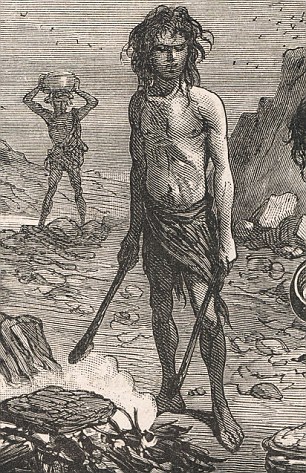
HE HAS become a byword for an unfeeling brute, but it now seems that Neanderthal Man could simply be deeply ­misunderstood.

Neanderthal Man had a sensitive and caring side, according to new research

Neanderthal Man had a sensitive and caring side, according to new research

Evidence unveiled yesterday suggests that behind that ­low-brow, sloping forehead and crudely ­jutting jaw, lurked a rather ­sensitive and compassionate soul.

Researchers said the sub-­species of modern humans, who lived in Europe and Asia between 230,000 and 29,000 years ago, were actually caring, sharing types who looked after the sick and vulnerable.

The evidence included the remains of a child with a ­congenital brain abnormality who, far from being abandoned, lived to be five or six years old because of ­nurturing.

The researchers, who used new techniques such as neuro-imaging, also cited a ­partially blind caveman with a deformed arm and feet who may have been looked after for 20 years.

Further proof that Neanderthals were committed to the welfare of others was said to lie in their long adolescence – which they could have reached only if older relatives had looked after them.

Dr Penny Spikins, who led the study byYork University’s Archaeology Department, said in the journal Time and Mind: “Compassion is perhaps the most fundamental human ­emotion. It binds us together. The archaeological record has an important story to tell about the prehistory of compassion.”

Stonehenge and Ancient Britain Tour Guide
HisTOURies UK – The Best Tours in History

Read Full Post »

Druidry has been recognised as an official religion in Britain for the first time, thousands of years after its adherents first worshipped in the country.

The Druid Network has been given charitable status by the Charity Commission for England and Wales, the quango that decides what counts as a genuine faith as well as regulating fundraising bodies.

It guarantees the modern group, set up in 2003, valuable tax breaks but also grants the ancient religion equal status to more mainstream denominations. This could mean that Druids, the priestly caste in Celtic societies across Europe, are categorised separately in official surveys of religious believers

Supporters say the Charity Commission’s move could also pave the way for other minority faiths to gain charitable status.

Phil Ryder, Chair of Trustees for The Druid Network, said it had taken four years for the group to be recognised by the regulator. “It was a long and at times frustrating process, exacerbated by the fact that the Charity Commissioners had no understanding of our beliefs and practices, and examined us on every aspect of them. Their final decision document runs to 21 pages, showing the extent to which we were questioned in order to finally get the recognition we have long argued for,” he said.

Emma Restall Orr, founder of The Druid Network, added: “The Charity Commission now has a much greater understanding of Pagan, animist, and polytheist religions, so other groups from these minority religions – provided they meet the financial and public benefit criteria for registration as charities – should find registering a much shorter process than the pioneering one we have been through.”

In its assessment of the Druid Network’s application, the Charity Commission accepts that Druids worship nature, in particular the sun and the earth but also believe in the spirits of places such as mountains and rivers as well as “divine guides” such as Brighid and Bran.

The document lists the “commonality of practice” in Druidry, including its eight major festivals each year; rituals at different phases of the moon; rites of passage and gatherings of bards on sacred hills, known as “gorsedd”.

All charities must now demonstrate their benefit to the public, and Druidry was said to qualify since its followers are keen to conserve Britain’s heritage as well as preserve the natural environment.

The document even addresses the claims made by the Romans about Druids committing human sacrifice, but finds “no evidence of any significant detriment or harm” arising from modern beliefs.

It notes that although there are only 350 members of the Druid Network, a BBC report in 2003 claimed as many as 10,000 people followed the ancient faith across the country.

Membership of the Network costs £10 a year but ritual ceremonies such as that marking the summer solstice at Stonehenge are open to all.

Stonehenge Tour Guide
HisTOURies UK.  The Best Tours in Wiltshire

Read Full Post »

Although Druids are believed to have existed throughout Celtic societies in Europe during the Iron Age, almost all the surviving evidence about them is found in the writings of later Roman authors.
Druids at Stonehenge

Julius Caesar wrote one of the first, and most detailed, accounts of Druids, explaining that along with the “knights” they were the highest-ranking orders in Gallic societies.

He said they were “engaged in things sacred” but Druids also appeared to function as judges, as they decreed “rewards and punishments” if there were murders or disputes over boundaries or inheritance.

Although they worshipped nature, Caesar claimed that Druids made human sacrifices to appease the gods including burning people to death inside “figures of vast size”, a ritual depicted vividly in the classic horror film, The Wicker Man.

Tacitus claimed the altars of Druids in Anglesey were “drenched with the blood of prisoners” while other Roman authors told how they sacrificed white bulls in groves formed of oak trees.

Pliny described Druids as “magicians” who wore white robes and used golden sickles to cut mistletoe, a sacred plant which they believed had healing powers. This description lives on in the figure of Getafix, the Druid in the Asterix books.

Druidry was suppressed during the Roman occupation but interest in it was revived in the 18th century as the ancient stone circles at Avebury and Stonehenge – which actually pre-date Druids – were examined properly for the first time.

Followers began to hold ceremonies known as “gorsedd”, where bards would gather on hills or sacred mounds, with the first held at Primrose Hill in 1792.

These events continue, particularly at the Eisteddfod celebration of traditional Welsh culture where the Archbishop of Canterbury, Dr Rowan Williams, and the former Chief Constable of North Wales, Richard Brunstrom, have both been inducted as honorary Druids and given Bardic names.

Druids hold festivals eight times a year to mark stages in the solar and lunar cycles. At the summer solstice, Druids gather at Stonehenge to greet the dawn. One of the best-known modern Druids, who has often led protests against restricted access to the site, is a former soldier who changed his name to King Arthur Pendragon.

See also ‘Stonehenge recognised as a religion in England’ October 2nd 2010

Stonehenge Tour Guide
HisTOURies UK – The Best Tours in Ancient History

Read Full Post »

Stonehenge was attracting sightseers thousands of years ago, archeologists say, after discovering the remains of a Bronze Age boy from the Mediterranean.

The teen is believed to have been part of a wealthy group that travelled 2,500 kilometres from southern Europe to Britain. He died, probably from illness, and was buried about a kilometre away while still wearing an expensive amber necklace.

The discovery of The Boy with the Amber Necklace suggests the stone circle would have been a place of pilgrimage or sightseeing as long as 4,000 years ago.

“They may have come to trade, but visited Stonehenge along the way. It would have been an awesome sight,” said Andrew Fitzpatrick, part of the Wessex Archeology team that made the find.

Stonehenge may have been a top international tourist attraction in prehistoric times – just as it is today.

Stonehenge Tour Guide
HisTOURies UK – The Best Tours in ancient History

Read Full Post »

With the market as the highlight, the UNESCO World Heritage city of Bath is fast becoming known as ‘the Christmas City’.

Each year, the beautiful area between the stunning Bath Abbey and the internationally renowned visitor attraction, the Roman Baths, is transformed into a Christmas shopper’s haven – the Bath Christmas Market.  Theyare delighted to announce that the Bath Christmas Market will run for an additional 7 days this year – a total of 18 days!  Dates for the Bath Christmas Market 2010 are 25th November – 12th December 2010. 

In the heart of Bath’s main shopping district, 123 traditional wooden chalets adorn the streets; each one offering unique, handmade and unusual gifts, decorations and food items – everything you will need for the perfect Christmas celebration. 

The sound of carols echoing around the Abbey creates an extra special atmosphere at the Bath Christmas Market.  This is complimented by a full programme of entertainment at the event – carol singers, children’s entertainers and musicians that add to the festive ambience. 

View of Main Square  View of chalets and Bath Abbey

View of chalets and Bath Abbey  View of chalets and shoppers 

View of Main Square and Roman Baths   View of Main Square and Bath Abbey

View of Main Square and Roman Baths  View of Main Square and Bath Abbey

 Its a great time of year to explore Bath, join a coach tour from London or organise a private guided tour (from London, Salisbury or Bath)

If you can stay a night or two.  Click here for discount Hotels in Bath

Bath Toursit Guide
HisTOURies UK – The Best Tours in History

Read Full Post »

A million visitors from around the world flock to Stonehenge every year. But the monument’s status as an international attraction is nothing new.

Yesterday scientists said the stones were attracting overseas tourists thousands of years ago – after discovering that a Bronze Age teenage boy buried there around 1550BC grew up in the Mediterranean.

The boy – aged 14 or 15 – had travelled to Britain from Spain, Italy, Greece or France, crossing the English Channel in a primitive wooden boat, they said.

He was placed in a simple grave alongside an amber necklace just a mile from the stone circle.

Known as the Boy in the Amber Necklace, his is the third burial site of a foreigner discovered at the World Heritage site in the past few years.

The finds raise the intriguing possibility that Stonehenge was attracting tourists and pilgrims from across the globe thousands of years ago.

Archaeologists have previously shown that the Amesbury Archer – a man buried with a treasure trove of copper and gold and discovered in 2002 – was born in the Alps.

They also believe that the Boscombe Bowmen – a group of seven men, women and children found the following year – originated from Wales, the Lake District or Brittany.

Professor Jane Evans, who traces the birthplace of Bronze Age skeletons using a chemical analysis of teeth, believes the visitors were travelling to Britain specifically to see Stonehenge.

‘If you went to Westminster Abbey today and looked at the people buried there, how many are Londoners?

‘I don’t think many because the great, the good and famous are buried at Westminster Abbey,’ said Prof Evans of the British Geological Survey.

The boy's skeleton was discovered in 2002.The boy’s skeleton was discovered in 2002 at Stonehenge. Today scientists revealed that he must have been born and brought up in the Mediterranean

‘Stonehenge in a similar way is obviously a very important place and people from all sorts of origins came to Stonehenge and were buried there.’

The boy’s virtually intact skeleton was discovered at Boscombe Down, a mile from Stonehenge, by Wessex Archaeology during a housing development.

The remains were radiocarbon dated to around 1550BC – a time when the monument was already more than 1,500 years old.

Prof Evans said: ‘He’s about 14 to 15 years old and he’s buried with this beautiful necklace. From the position of his burial, his age, and this necklace, it suggests he’s a person of significant status and importance.’

She used a slither of tooth enamel the size of a nail clipping to trace his origins.

BeadsThe amber beads that were found buried by his side more than 3,500 years ago

By analysing the ratio of two different forms – or isotopes – of oxygen, the professor found that the boy came from a warmer climate.

And an isotopic comparison of the mineral strontium, which is absorbed by the body from plants, revealed that he was born and grew up in the Mediterranean.

The boy's grave was alongside dozens of other graves at the site but it was the only one that was not from BritainThe boy’s grave was alongside dozens of other graves at the site but it was the only one that was not from Britain
In contrast, the Amesbury Archer, who was buried 1,000 years earlier, was most likely to have been raised in the Alpine foothills of Germany, Prof Evans said.

Mike Pitts, editor of British Archaeology, said: ‘Archaeologists for a long time have been fighting the idea that there was any migration going on at this time.

‘But, clearly, there were individuals moving across huge distances.’

The Boy with the Amber Necklace was found alongside dozens of other graves.

However, all other skeletons studied so far at the site were raised in Britain. Dr Andrew Fitzpatrick, of Wessex Archaeology, said: ‘We don’t know why these people made these long journeys.

‘It’s possible they were coming to visit Stonehenge but we know people had been travelling great distances for thousands of years for trade and exploration.’

Stonehenge was built by early Bronze Age farmers – who lived in homes made of wooden stakes, twigs, chalk and clay – in stages between 3000BC and 2400BC.

It was actively used for at least another 1,000 years.

Stonehenge Tour Guide
HisTOURies UK – The Best Tours in Ancient History

Read Full Post »

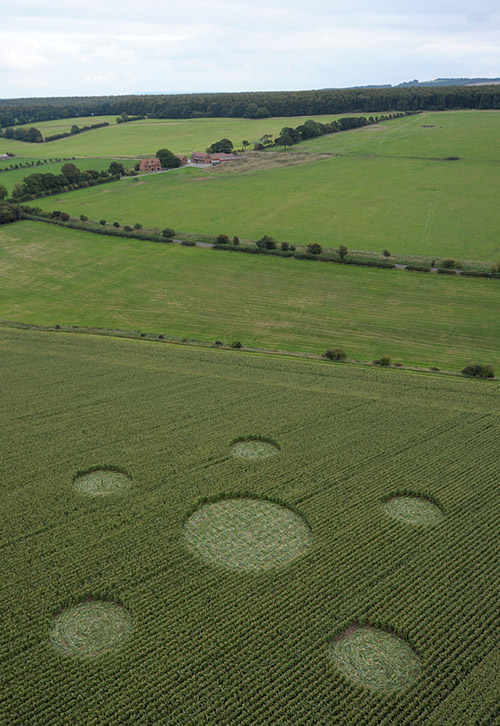
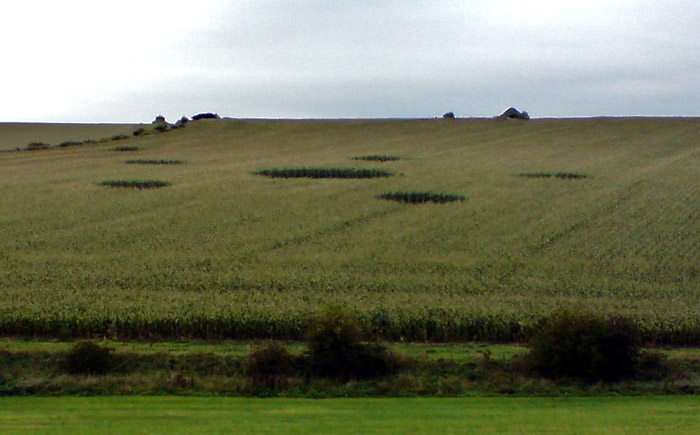
Just finished a guided tour of Avebury and discovered this stunning crop circle on Overton Hill, nr Lockeridge, Wiltshire.
 

I have included my image taken on my phone and managed to get hold of an aerial image.  It’s very unusual to discover crop circles this late in the year and particularly unusual to see one in the maize field.  To my knowledge this is the last remaining circle in Britain.  There is another one at Avebury, however the farmer got a little annoyed with people walking into his field and drove his tractor through the pattern.

I will be constantly in the area and will keep you ‘croppies’ updated

Stonehenge Tour Guide
HisTOURies UK

Map Ref: SU133666

Read Full Post »

« Newer Posts - Older Posts »