Feeds:
Posts
Comments

Archive for the ‘Stonehenge private tours’ Category

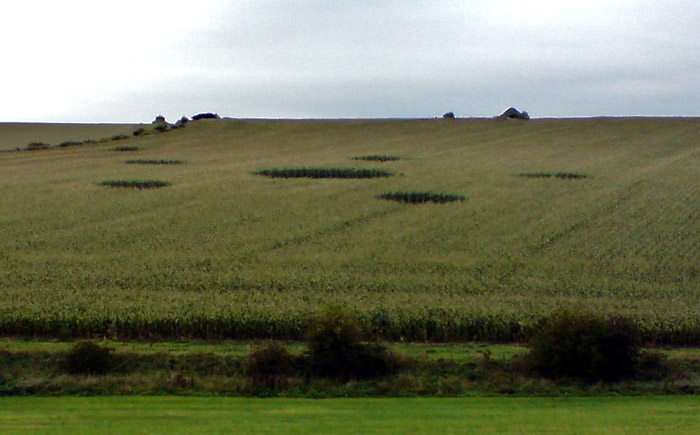
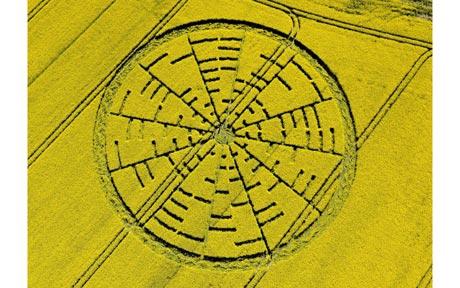
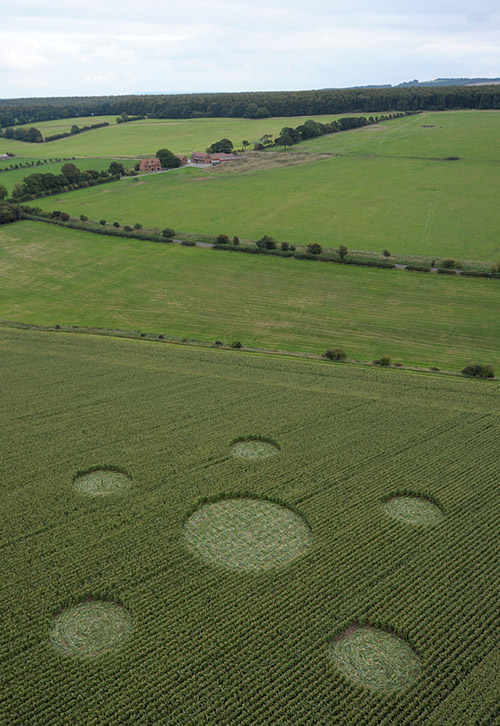
Just finished a guided tour of Avebury and discovered this stunning crop circle on Overton Hill, nr Lockeridge, Wiltshire.
 

I have included my image taken on my phone and managed to get hold of an aerial image.  It’s very unusual to discover crop circles this late in the year and particularly unusual to see one in the maize field.  To my knowledge this is the last remaining circle in Britain.  There is another one at Avebury, however the farmer got a little annoyed with people walking into his field and drove his tractor through the pattern.

I will be constantly in the area and will keep you ‘croppies’ updated

Stonehenge Tour Guide
HisTOURies UK

Map Ref: SU133666

Read Full Post »

LEADING experts on Stonehenge will be gathering in Salisbury to debate the monument’s purpose next weekend.

The event, called Solving Stonehenge, is part of Salisbury & South Wiltshire Museum’s 150th anniversary conference on October 2 and 3, 2010

The main speakers will be Professor Tim Darvill, Professor Mike Parker Pearson, Mike Pitts and Julian Richards.

The debate will be chaired by Andrew Lawson.

Museum director Adrian Green said: “This is the first time that all the leading Stonehenge archaeologists have been gathered together for a public debate in recent times.

“With all their conflicting opinions about the role of the monument, and the opportunity for the public to quiz the archaeologists, this promises to be a thought-provoking event.”

There will also be a paper about recent survey work at Stonehenge by English Heritage archaeologist David Field on Saturday afternoon and a tour of the Stonehenge landscape on Sunday afternoon.

Stonehenge has been a vital part of the history of Salisbury Museum. The first official guidebook to the stones was written by former curator and director Frank Stevens in 1916.

The museum’s collections contain finds from every major excavation at the site, and since Victorian times it has had permanent displays about the monument.

Tickets for the whole conference, including a buffet, are £60 for members and £75 for non-members. Separate tickets for the Stonehenge debate are £15.

Stonehenge Tour Guide
HisTOURies UK – Bespoke Guided Tours of Ancient Britain

Read Full Post »

Crop circles were revealed as a hoax almost 20 years ago, so why do so many people still flock to Wiltshire, convinced of their extraterrestrial powers?

Wiltshire’s a beautiful county and it’s an idyllic Friday evening at the Barge Inn, Honeystreet. Boats are moored on the canal that runs past the pub, there’s a White Horse etched into the chalk just down the road and in the pub’s back room the ceiling is painted with images of Stonehenge, errant cherubim and crop circles. ‘It is,’ one local tells me, ‘the Sistine Chapel of Wiltshire.’

The Barge indeed is Crop Circle Central – there’s even Croppie ale for sale – and circle aficionados arrive to camp here from all over the world: in the visitors’ book Kerry from Australia has written: ‘Great crop circles! Great people!’, while Miranda and Trond from Norway say: ‘Great to be back at Croppie HQ!’ No wonder an official at the Wiltshire Tourist Board tells me that they love crop circles; together with the numinous delights of Stonehenge and Avebury Rings they’re the county’s biggest draws.

Last year was a bumper year for fantastically elaborate, large crop formations – 70 or so, many within spitting distance of the Barge and one taking three nights to fully emerge – and in early August this year, more than 45 had been reported. And, remarkably, in June the scientific journal, Nature, ran a piece on them.

They’ve certainly lured a shaven-headed David Cheeseman down from Lewisham and he’s sitting in the pub’s back room, looking at photos of recent formations.
He has, he tells me, in the past done ‘night watches’ on nearby Milk Hill, hoping to see circles emerge, and he’s even photographed much-revered-in-Croppie-circles balls of light flying around. ‘What do I think make crop circles?’ he says. ‘Well, some are man-made and some aren’t. And the ones that aren’t man-made, it’s something energetic. I can’t say it’s extraterrestrials but…’

Andreas, Doreen, Pauline and Philip – four jolly Belgians camping in the Barge’s grounds – have no such caveats. ‘We come every year for the circles,’ says Doreen, a headmistress, unzipping her hoodie to reveal a sky-blue crop circle T-shirt. ‘And we’re normal! We’re just like you!’ Up to a point; they believe the ‘Space Brothers’ make some of the circles. ‘The man-made ones have no energy. We were in one today – so vulgar. But if you go into one made by the Space Brothers, you can’t stay too long – it’s so powerful it makes you feel ill.’

Mike and Sue are camping, too, and Sue is adamant. ‘They’re all man-made. And,’ she says with a grin, ‘there’s fewer this year because of the recession; cutbacks have to be made everywhere.’ That seems a bit unfair: 45 is a decent number, but it’s true to say they’re wider spread this year – possibly, one all-too-human circle-maker tells me, because the farmers near Honeystreet were miffed by last year’s abundance.

For, yes, humans have laid claim to making almost every circle known about. But their beauty, complexity and mysteriousness are such that not everyone is persuaded that a group of soi-disant artists, moving through the fields at night with planks, tape measures and garden rollers, could create such glorious formations. Particularly when the first circle-makers to tell their tale to the media were two pint-loving sixtysomething watercolourists from Hampshire called Dave Chorley and Doug Bower.

More spiritually, they’re documented by the Wiltshire Crop Circle Study Group, whose coordinator is a charming, softly spoken French-Canadian called Francine Blake. Their office, in Devizes, is stuffy and full of papers, so we speak in the car park; Francine – wavy, white hair, dark pink top, linen trousers – is excited because a new circle has been reported near Warminster: ‘The first since 1998!’ She has been studying the circles since 1989 and moved to Wiltshire in 1991, after a particularly beautiful, highly symbolic formation appeared at Barbury Castle.

In those pre-internet days, Francine only learnt of Barbury after it had been harvested – not for nothing are circles known as ‘temporary temples’ – and that prompted her move to Wiltshire. Now she and her ‘six or so’ staff send planes up to photograph the circles, publish a magazine called The Spiral and produce ravishing calendars of the best formations. She and her colleagues have also sent off soil samples from fields where formations have appeared to Defra’s predecessor and to laboratories abroad.

She spoke, she tells me, to ‘the head scientist’ at Defra’s predecessor and ‘he explained that the composition of the soil was completely changed – completely different to the rest of the field. That it had an input of energy so powerful it can create silica out of the soil. There are only two things that can do that: one is the passage of a glacier, which is obviously not happening. And the other one is the input of heat with the magnitude of a direct bolt of lightning. And that’s several thousand degrees of heat.’

There’s more: US labs have, she says, also found that the plants ‘have been subjected to very short, very intense bursts of energy. That burst of energy – before it disperses – affects our cameras, affects our compasses, makes people dizzy, makes dogs sick – a lot of people have had that.’

Ask Francine what she gets from the circles and she replies: ‘A sense of wonder. Which is something not many people feel these days. We’re so dull, so suspicious, so limited in our way of thinking.’ She speaks, tenderly, about the beauty of the circles, of how the lain corn seems to ‘flow like water’, of how each formation teaches each person something more about the field they’re expert in: the American Indian finds a message from Gaia, the Tai Chi guru a new form of Tai Chi, the physicist – well, one physicist said to her: ‘Quantum physics? Forget quantum physics. This is far beyond.’

As for mathematics, earlier this year a formation appeared at Wilton Windmill, which seemed like Euler’s Identity, one of the most beautiful equations known to man. Alas, one mathematician pointed out that the formulation was so executed that its translation from binary code was altered from an ‘i’ to a ‘hi’, which could, the mathematician said, ‘be somebody’s idea of a joke’. Worse, the ‘h’ could be a nod to Planck’s Constant – and planks are used by human circle-makers to create their formation.

No wonder Francine is suspicious of the media, and certainly of me. ‘My hopes,’ she says, sweetly, ‘are not very high for this interview. We tend to have very inaccurate, depressingly trivial articles on crop circles.’

But at least she’ll be interviewed, unlike Michael Glickman, a long-term luminary of the circle scene, whose mathematical interpretations of the phenomena are far too abstruse for me. Instead, he lets rip with a majestic telephonic tirade. ‘The media are stupid, narrow-minded, bigoted and boringly predictable. I want nothing more than sensible treatment of the most important event on planet Earth.

‘The hoaxers are the most constant con tricksters and liars in the world,’ Glickman says. ‘They are out fundamentally to deceive; we are out fundamentally to tell the truth. Hoaxers have never made a circle of quality. We’ve seen what they can do and it’s crummy. It’s the difference between a five-star meal in Lyons and a Big Mac.’

That’s Francine’s position, too, and the Earl of Haddington’s. ‘There are greater artists at work [than the hoaxers],’ he says. ‘Indeed there are. But so many are man-made. You have to wait.’

Lord Haddington, who’s taken a keen and sympathetic interest in circles since the late Eighties, tells me he thinks all this year’s are made by man; Francine disagrees and is certain that it’s physically impossible for such work to be done in a short summer’s night. So off she directs me to a recent circle near a Saxon flint church at Chisbury.

It’s a five-pointed star, surrounded by five chevrons, 10 diamond shapes and 41 mini-circles – I’ll later read, on Crop Circle Connector, that ‘it seems to call our attention to a close conjunction between Planet Venus and the bright star Regulus in Leo’. It’s gorgeous, though better in the photo, but I don’t feel anything. And my tape recorder works.

Which doesn’t surprise Rob Irving, the main author of The Field Guide: The Art, History and Philosophy of Crop Circle Making. It was to Irving that a Wiltshire policeman uttered the immortal line: ‘I don’t want to get involved in a philosophical discussion with you, sir, but they can’t all be hoaxes.’ Irving would take issue with the word ‘hoax’ because it presupposes that there are ‘genuine’ circles, though he does think it possible that weird winds may have brought about some circles.

Irving’s a big fellow, with a bit of beard below his lip, greying hair and a black T-shirt. He’s 53 and first got involved in the Croppie scene in ‘1990, 1991’. He started to make circles, he says, ‘because people said it couldn’t be done’. He’d gone to a talk about circles and the speaker, a ‘field officer’ for the Centre for Crop Circle Studies, had said: ‘While we don’t know what’s creating circles, we know what isn’t – and it’s not humans.’ He laughs.

Soon Irving was out in the fields, with planks, tape measures, ropes, gardening poles and a diagram: ‘You make your first circle and it’s visited and probably ridiculed as being man-made. And in the space of two or three outings, you learn quickly. You go from stumbling, blind human to God-like extraterrestrial within weeks. Within weeks, you’re producing “the real thing”.’

Now he’s a poacher turned gamekeeper, occasionally doing commercial circles for the likes of Mitsubishi, but essentially an artist and doctoral researcher into art and the landscape, which is, partly, what he sees crop circles as being about. As to their originators, Irving says, tongue only half in cheek, Doug Bower is ‘the greatest artist of the 20th century – or the most provocative’.

Doug Bower? Well, it was he and Dave Chorley who swirled the first crop circle, back in 1976, after a few drinks at the Percy Hobbs, at Cheesefoot Head, near Winchester. They’d been talking about UFOs and the books by Arthur Shuttlewood, a journalist on the Warminster Times, about UFOs over Warminster and what his paper called the ‘Warminster Thing’. Might it not be fun, they thought, to swirl some UFO landing pads of their own?

So, first with iron rods and then with plank stompers, a loping stride and a circular wire sight dangling from Doug’s cap, they started off. They kept it up for four years, barely creating a ripple of interest. Then the Wiltshire Times ran the headline: ‘Mystery circles – the return of “The Thing”?’

Cerelogogy, as crop circle study became known, was born. One researcher attributed the phenomenon to ‘plasma vortices’ – essentially wind effects that produced the swirling; and as Doug and Dave expanded their repertoire to incorporate straight lines and pictograms, so did the plasma vorticist expand his thesis. Others embraced more esoteric explanations, such as psychokinetic downloading from the collective unconscious, UFOs and higher intelligences. And the number of circles grew and grew, many of them 30 miles from Doug and Dave’s patch, and highly complicated. Doug and Dave were clearly not alone.

Still, it was Doug and Dave who went public in 1991: Doug told television cameras that there was nothing like being in a field of English corn at two in the morning, after a few pints and some cheese rolls, stomping corn.

Interestingly, the ITN report on their self-disclosure said: ‘This doesn’t mean all the circles are fake. After all, one counterfeit coin doesn’t make all coins counterfeit.’ And, among some devoted cerelogists, it became accepted wisdom that 80 per cent were man-made and 20 per cent ‘genuine’.

But a display of circle-making by a team of young engineers who won the 1992 International Crop Circle Making Competition was a revelation to the maverick biologist, Rupert Sheldrake: ‘For flattening the crop, they used a roller consisting of a piece of PVC piping with a rope through it, pushing it with their feet. To get into the crop without leaving footprints, they used two lightweight aluminium stepladders with a plank between them, acting as a bridge. For marking out a ring, they used a telescopic device projecting from the top of an aluminium stepladder. A string was attached to the end of it in such a way that by holding the string and walking in a circle around this central position a perfect ring could be marked out without leaving any trace on the ground in the middle.’ That’s complicated kit.

Mark Pilkington, a writer and publisher who helped with some of the more beautiful and complex late Nineties/early Noughties formations, talks of teams of three or four, using only the planks et al. It is, he says: ‘Physically and mentally hard work. Even after a modest job, you’re flat out. It’s often disorienting. I’ve worked on formations and when I’ve seen the photographs afterwards, I’ve thought: “Bloody hell! How did we do that?” ’

The designs are marvellous: perhaps it’s no wonder that, as Pilkington says, some cerelogists believe human ‘circle makers are channels for a greater force and that some formations are made by divine intervention’. Certainly, when Pilkington has told people what he’s done, he’s got into near fights: people want to believe. Such antipathy has gone to extremes: according to one of their number, one group of circle-makers had ‘potatoes stuck up their exhausts, wing mirrors ripped off our cars and threats of violence’.

Irving thinks people want to take ‘a vacation from rationalism’. And, he adds, it’s particularly the case that ‘people associate certain landscapes with legends. That’s why circles come to sacred sites: Avebury and Stonehenge galvanise this idea of mystery. I see it as a feedback route: people go to a certain place with certain expectations. Then something happens and they leave satisfied.’

It’s to sustain the mystery, he says, that circle-makers never claim authorship of a particular circle: ‘In our culture, art is all to do with artists: it’s about whodunit, not about what art does. With the circles, it’s about the effect they have on people.’

On the afternoon I meet him at the Barge Inn, Irving finishes his pint of Croppie and takes me to see what he classifies as ‘a schematic plan of a set of cruciform solids’ – or a formation that looks from above like a cross-hatched 3D image that reminds Irving of a pharmacist’s sign. It’s on Cley Hill, near Warminster, and in its middle are a collecting box (suggested fee £2) and a plastic folder containing an aerial photo and a copy of the Crop Circle Etiquette Guide. Irving nods appreciatively: ‘They’ve gone the extra mile. Normally, this would be set in a circle, but they’ve gone to the trouble of putting an outline round the thing.’

We move back towards my car. A couple appears and the woman asks if we’ve been at the circle. They’re Inga and Erik, and they’re Dutch, over here to look at circles. They were at Chisbury yesterday, and it was perfect: they’re very keen to see the Cley Hill formation. And what, I ask, do they think brought the circles into being?

Inga smiles, knowingly. ‘You mean, are they man-made, or not?’ She smiles again. ‘That’s mystic: that’s a mystery.’ And off they go, ready for a sense of wonder.

There are still some crop circles to view in the Wilthire area and Histouries UK will continue to offer private ‘crop circle’ tours.
Seeing is believing – the main crop circle saeson kinks off on May 2011 and contimues through to September 2011.  Why not join a guided tour of Stonehenge and Avebury and experience a ‘real’ crop circle for yourself.

HisTOURies UK – The Best Tours of Wiltshire
Wessex Tour Guide
Read Full Post »

Streaking down towards Stonehenge across the path of all the other stars in the sky, this shooting star is hurtling to Earth at 135,000 miles per hour – 100 times the speed of Concorde.

The smaller, diagonal lines on the photo are normal stars, with the long-exposure photography tracing their movement in the sky as Earth revolves.

The longer, almost vertical streak of light is the shooting star, which stems from grains of dust left behind by the comet Swift-Tuttle as it sweeps through space.

A meteor streaks past stars in the night sky over Stonehenge in Salisbury Plain

A meteor streaks past stars in the night sky over Stonehenge in Salisbury Plain.  More personal photos will be uploaded later this week.

Stonehenge Tour Guide
HisTOURies UK – Guided Tours of Stonehenge Stone Circle

Read Full Post »

First sighting of Perseids in Wiltshire

Perseids

The Perseids are particles left in the wake of the Swift-Tuttle comet

A Wiltshire man was startled to see a bright light in the sky travelling fast on Saturday 7 August.

Daniel Hodder from Salisbury was travelling along the A303 when he spotted the object.

He said: “We saw an enormous light in the sky north of Amesbury. We could only assume it was a meteorite.

“It was a very bright, white and blue light moving incredibly fast to our right-hand side, there was a long stream, a long tail of about 400 or 500 metres.”

Andy Burns from the Wiltshire Astronomical Society had a straightforward explanation for what Daniel and several other people witnessed on the day.

He said: “What has been seen is a meteor, not a meteorite. A meteorite actually lands on the earth and is a lump of rock or stone that you can pick up. A meteor is a stone in the atmosphere that burns up.

“What we are seeing is the beginnings of the Perseids meteor shower. This tallies with the very bright fireball that has been seen in the north. You don’t need a telescope to see this type of phenomenon, you can see it with the naked eye.”

Daniel Hodder from Salisbury spotted the Perseids on Saturday 7 August

The Perseids are visible between 23 July and 22 August every year, but peak activity is expected on the nights of 12 and 13 August with around 80 meteors per hour.

Like most meteor showers, the Perseids can be traced to the orbit of a comet, in this case that of Swift-Tuttle.

The meteors consist of dust-sized particles which burn up on entering the Earth’s atmosphere, at an altitude of 60 to 70 miles, as the Earth passes through the trail left by the comet.

It’s consistently impressive display can be traced as far back as 36AD when Chinese astronomers noted high numbers of meteors.

The best way to observe them is to look towards the northeast after dark. They appear to originate from the constellation of Perseus, which at midnight lies just below the easily recognisable ‘W’ of Cassiopeia.

The highest frequency of meteors is likely just after midnight but with the moon, just past full, the best time to look for the ‘shooting stars’ will be between 9:00pm and 10:00pm when the moon is still low.

The chalk downland of Salisbury Plain near Stonehenge was named by the National Trust in 2009 as one of the seven best places in the UK to witness the Perseids.

They consider that light pollution in towns and cities has increased so much in recent years, that the countryside is the perfect environment to witness such astronomical spectacles as the Perseids.

Stonehenge has been voted the best place to witnes this meteor shower

Stonehenge Tour Guide
HisTOURies UK – The Best Tours of Stonehenge and Wiltshire

Read Full Post »

Stonehenge - a wooden neighbour has been discovered
 Stonehenge – a wooden neighbour has been discovered

Stonehenge had a previously unknown wooden “twin” just 900m to its north-west, according to remarkable new archaeological investigations.

Using the ground-penetrating equivalent of an X-ray, scientists have discovered what appears to have been a circle of massive timber obelisks, constructed more than 4,200 years ago.

The newly discovered “henge” would have been visible from Stonehenge itself – and seems to have been part of a wider prehistoric ritual and religious landscape. Roughly 25m in diameter, it was almost the same size as the central part (the circle of standing stones) at Stonehenge itself.
The newly discovered monument – almost certainly some sort of Neolithic temple – is thought to have consisted of 24 wooden obelisks, each around 75cm in diameter and therefore potentially up to 8m high. The circle of obelisks was enclosed by an inner ditch and probable outer bank.

 Of potential significance is the fact that the newly found henge “mirrors” a similar monument (this time long known to archaeologists) on the other side of Stonehenge – 1,300m south-east of the famous monument. Like the newly discovered site, it is in direct line of sight of Stonehenge and had two entrances. All three monuments would have been roughly aligned.

 The discovery of the site north-west of the stone circle suggests that the Stonehenge landscape was even more complex than people have thought – and archaeologists are now keen to find further unknown elements of it.

The archaeologists – from Birmingham, Bradford, St Andrews and Vienna Universities – are trying to map the unknown aspects of the Stonehenge landscape without digging a single hole.

Instead of conventional excavations, they are using X-ray-style systems which look beneath the ground surface. The techniques – including magnetometry, ground-penetrating radar, electrical imaging and resistivity – are likely to yield huge amounts of previously unknown information about what the Stonehenge landscape looked like 40 to 50 centuries ago.

 Over the next four years the survey, led by Professor Vince Gaffney of Birmingham University’s Institute of Archaeology and Antiquity, is likely to produce hundreds of millions of pieces of information from 14 sq km of countryside which will then be collated and analysed to produce a detailed map.  “Some 90 per cent of the Stonehenge landscape is still terra incognita. Our survey will hopefully begin to remedy our current lack of knowledge,” explained Professor Gaffney. “The discovery will significantly change the way we think about the landscape around Stonehenge.”

 The newly discovered prehistoric temple was found using the subsurface archaeological detection system known as magnetometry, which measures the differences in interaction with the Earth’s magnetic field produced by different layers or deposits of earth or rock.

 Detecting variations in the strength of the magnetic field revealed the existence of the enclosure ditches and the pits believed to have held the timber obelisks at the newly discovered henge.

 Stonehenge Tourist Guide
HisTOURies UK – Stonehenge Guided Sightseeing Trips

Read Full Post »

Archaeologists have begun a major dig to unearth the hidden mysteries of a buried ancient stone circle site that is ten times bigger than Stonehenge.

The enormous 4,000 year old Marden Henge, in Wiltshire, is Britain’s largest prehistoric structure stretching for 10.5 hectares, the equivalent of 10 football pitches.

English Heritage is carrying out a six-week dig hoping to reveal the secrets behind the giant henge which has baffled historians for centuries.

Most of the Neolithic henge has been destroyed over the years due to farming and erosion but minor excavations in 41 years ago estimate the site to between 2,000 and 2,400BC.

Archaeologists are due to begin digging at the 4,000 year old Marden Henge, in WiltshireArchaeologists are due to begin digging at the 4,000 year old Marden Henge, in Wiltshire

Marden Henge was once a 45ft high mound surrounded by a water filled ditch which was used for sacrificial offerings.  

Although the henge no longer has its vast stone circle it has a large puzzling sunken circular feature which is almost unheard of at Neolithic sites.

A team of 15 archaeologists and historians believe the dig could show the ancient site is even more significant than both Stonehenge and Avebury stone circles.

Archaeologist Jim Leary, 34, said: ‘Virtually nothing is known about this vast circle. We are starting from point zero.

‘Marden Henge deserves to be understood more partly because of its size, but also due to its proximity to the more famous stone circles at Avebury and Stonehenge.

‘The relationship between the latter two sites – chronology of their construction, whether it is built by the same people, how they were used, is of immense interest.

‘How Marden relates to them is another layer of interest which we want to study.

‘We are potentially looking at a much more intricate system of Neolithic ritual sites in this part of the world than we previously thought.

‘The study of Prehistory is entering a very exciting phase with lots of fascinating research and dating techniques emerging.

‘The stunning discovery of Neolithic houses at Durrington Walls near Stonehenge a few years’ ago, for example, has really turned things on its head.

‘We certainly hope that this excavation will bring more pieces of the puzzle to light.’ 

Stonehenge on Salisbury Plain, Wiltshire.Stonehenge on Salisbury Plain, Wiltshire. Marden Henge has lost its stone circle but scientists are confident they will find some remnant of the ancient circle beneath the surface

The dig is the culmination of a two year English Heritage project including aerial, topographic and geophysical surveys.

It has not been touched since an investigation in 1969 by Professor Geoffrey Wainwright which dated the henge from fragments of deer antler found in the area.

Marden Henge is situated near to the source of the River Avon, in Marden, north of Devizes, between Avebury and Stonehenge and close to ancient Silbury Hill.

The henge comprises a well-preserved bank covering 10.5 hectares and an internal ditch.

Unlike Stonehenge and Avebury or Castlerigg, in Cumbria, Marden Henge no longer has any surviving stone monuments.

All that has remained is the evidence of a huge mound similar to a smaller at the centre of the henge, which collapsed in 1806 and was completely levelled by 1817.

Most experts now believe that significant ceremonial or ritual activity occurred within the ditches.

Archaeologists aim to find remnants of the Neolithic age within the remains of the mound.

The entire site is around 15 hectares and set within surrounding fields covering 40 hectares.

The dig began on Monday this week and will continue until August.

Stonehenge Tour Guide
HisTOURies UK – The Best Tours in History

Read Full Post »

More images will be uploaded shortly…
Stonehenge Tour Guide
Histouries UK

Read Full Post »

Stonehenge Summer Solstice

Sun rise at Stonehenge


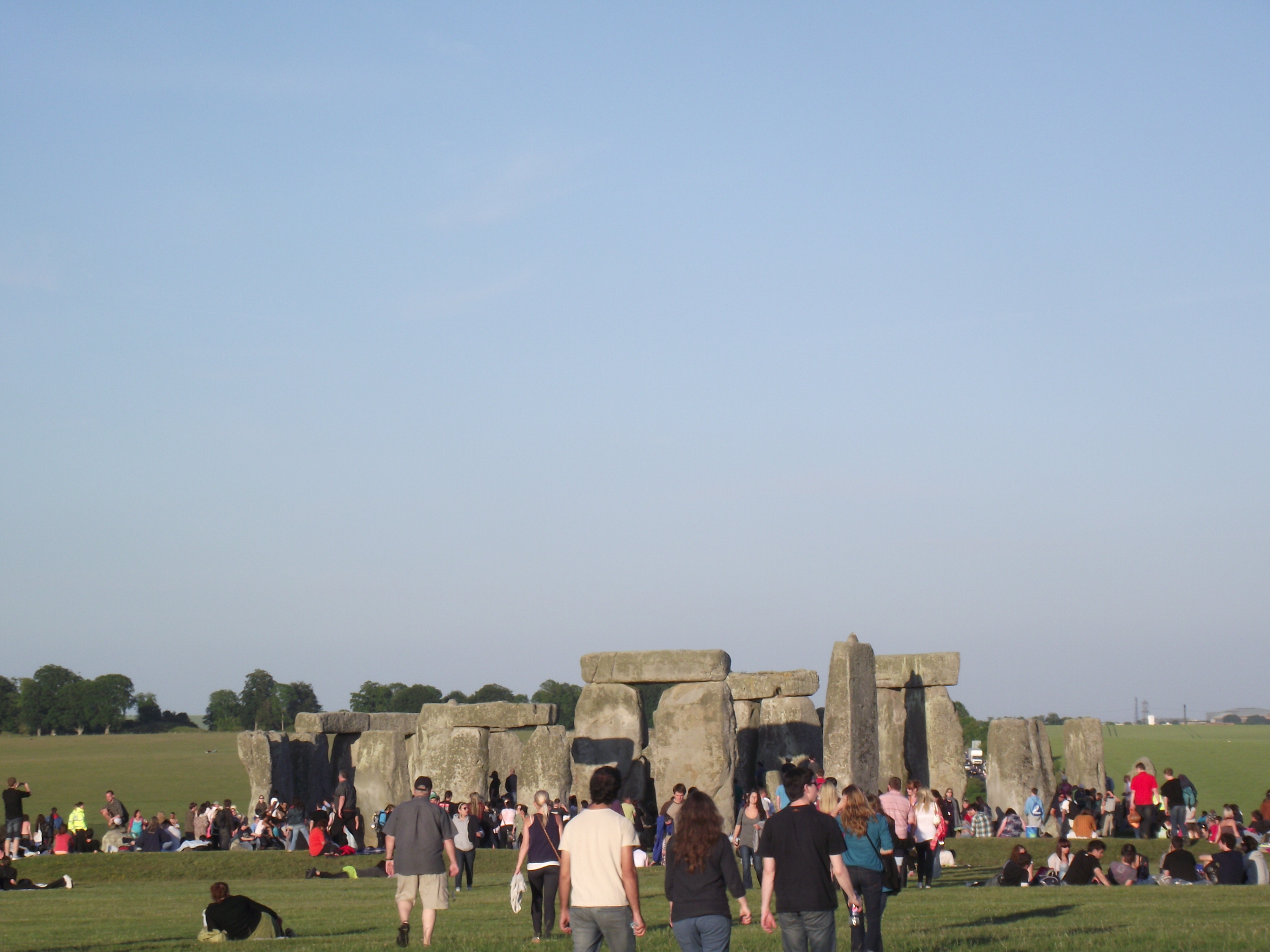
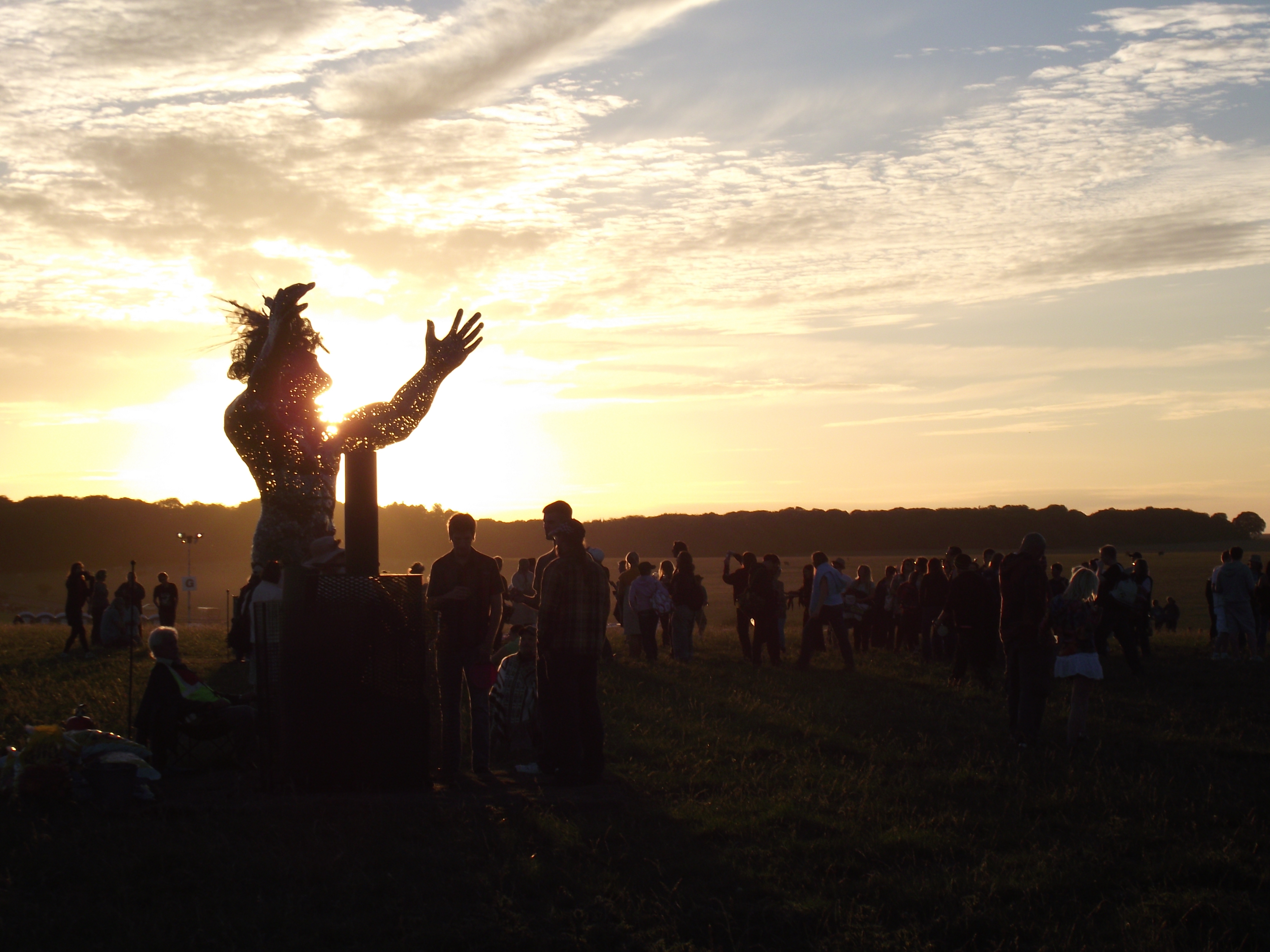
CLEAR skies meant the thousands of revellers who flocked to Stonehenge got to enjoy a beautiful sunrise at this year’s Summer Solstice on Monday morning.

About 20,000 druids, pagans and revellers from across the country and abroad travelled to the famous Wiltshire landmark to celebrate the longest day of the year.

Numbers were lower than last year’s record-breaking event, which fell on a weekend and had a crowd of 36,500, but for the first time in recent years clouds didn’t block the view of the sunrise at just before 5am.

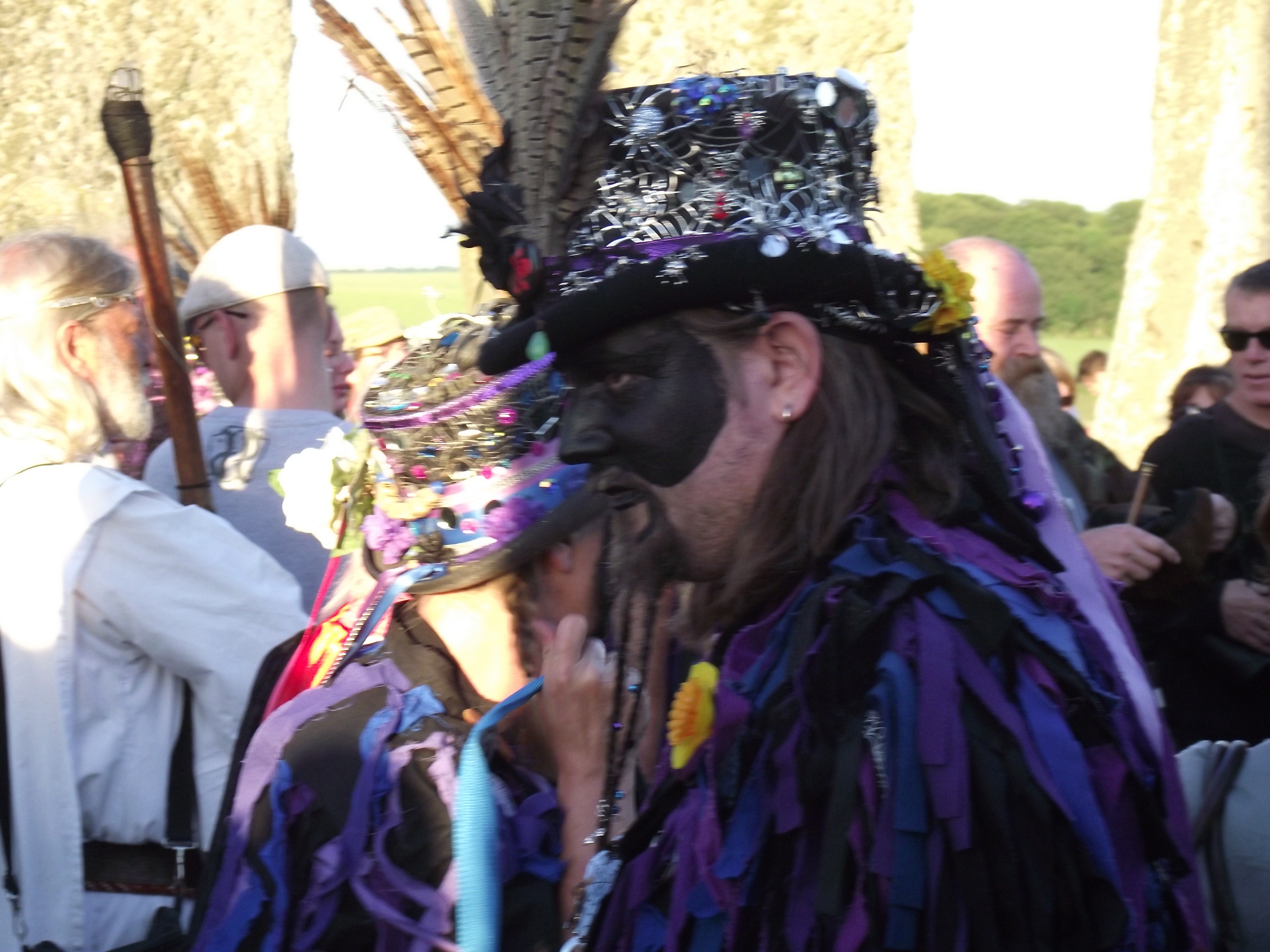
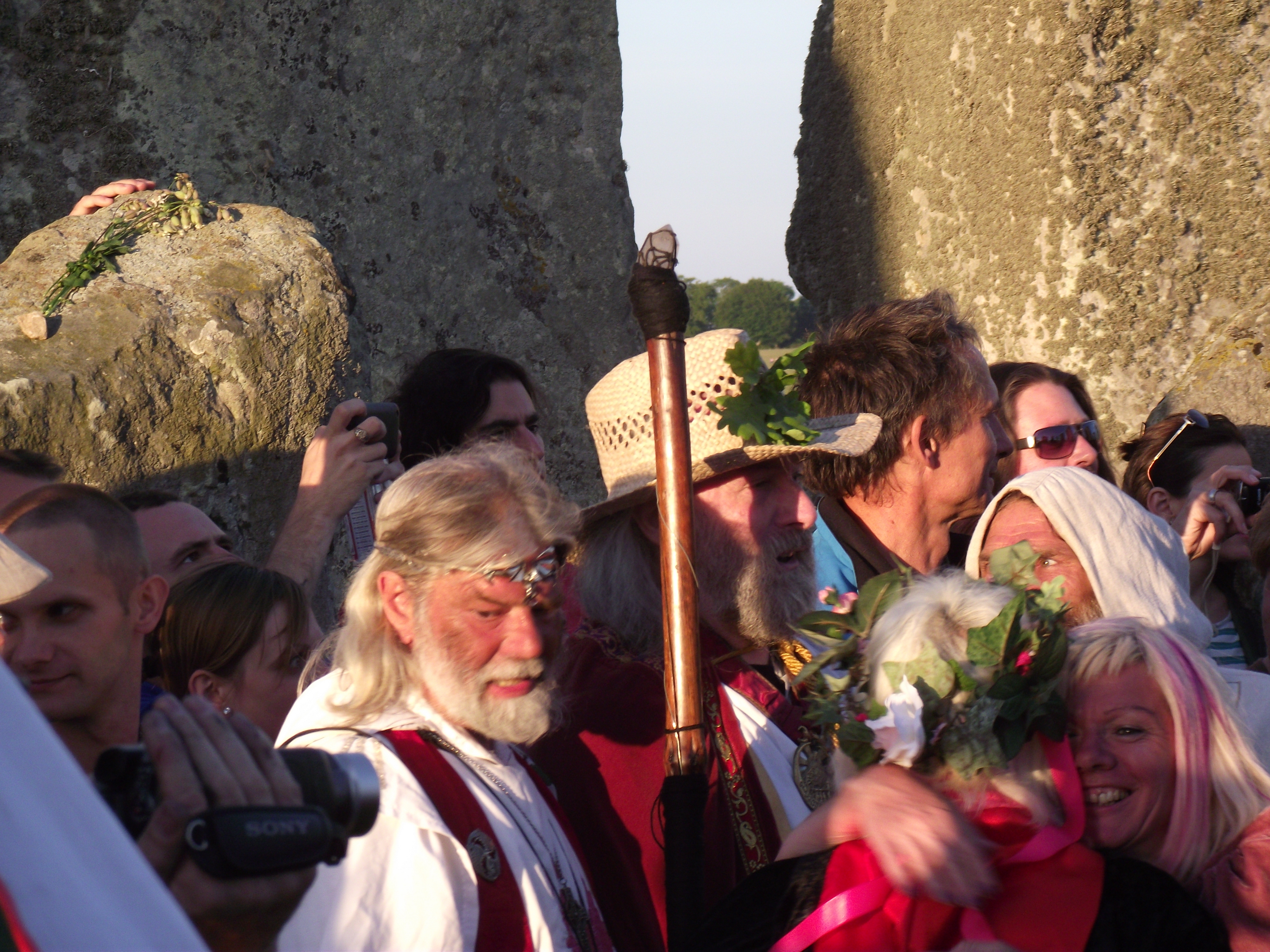
As the sky started to brighten the Widders Border morris dancers performed several routines next to the Hele Stone, before druids performed rituals and hailed the sun.

Revellers filled the stone circle and the crowd cheered as the sun came up between the stones.

Druid King Arthur Pendragon said: “I thought this year went exceedingly well. It was a nice crowd and a nice atmosphere and with a great spirit of co-operation – how could it not be a successful solstice?

“Lots of pagans say they are fed up with the revellers but I don’t have that view. Even if they initially come for the wrong reasons, they return for the right ones in the end.

“It’s the spirit of the place, Stonehenge itself, that draws people here and even if they don’t respect the stones the first time they do by the next year.”

No major incidents were reported. Wiltshire Police made 34 arrests – one on suspicion of possession of an offensive weapon, two minor thefts, two for assault, three for possession with intent to supply drugs, one drink driving, nine drunk and disorderly and 16 possession of drugs. A police spokesman said they were happy with how the event had gone and, despite the arrests, the solstice had been mostly peaceful.

Rhanks to all that joined me on the sunrise, a good time was hads by all.  I will be uploading my photos later in the day and would appreciate your input

Nicholas – Stonehenge Tour Guide
HisTOURies UK

Read Full Post »

Summer solstice revellers disappointed that coalition government will cut funding to new Stonehenge visitor centre

Summer solstice revellers disappointed that coalition government will cut funding to new Stonehenge visitor centre Sometimes the police come in for criticism, while at other times English Heritage attracts the ire of the druids, ravers, hippies and sun lovers who turn out for the summer solstice at Stonehenge. At today’s celebrations there was a political target – David Cameron and the coalition government – following the announcement that government funding for a visitor centre at the ancient monument was being cut. The outcry from solstice revellers was led by the unmistakeable figure of Arthur Pendragon, a druid who believes he is an incarnation of the once and future king. Pendragon, who rejoices in the title of battle chieftain of the council of British druid orders, said he was not surprised that the £10m funding was dropped. “I knew the writing was on the wall. I knew the new government wouldn’t stump up the money. It’s no surprise but, still, it’s a disgrace. This wouldn’t happen anywhere else in the world.” Pendragon has campaigned for 20 years for a new visitor centre at the World Heritage site and to close at least one of the busy roads that surround the stones. Tourists are often shocked at the state of the centre and amazed that traffic is allowed to roar past so close. Last year Gordon Brown promised £10m towards a £25m scheme to build a glass and timber centre and to shut the nearby A344. The scheme was expected to win planning permission soon and the project was due to be completed in 2012 to coincide with the staging of the Olympics in the UK. Last week the government announced the funding would be pulled. English Heritage, which manages the site, said it was “extremely disappointed”, arguing that transforming Stonehenge was “vital to Britain’s reputation and to our tourism industry”. It said it would try to find the funding from elsewhere. Pendragon said he was worried about how the shortfall would be met: “I don’t want to see them making up any shortfall with a public-private partnership. I don’t want to see Americans going home with T-shirts reading: ‘I’ve been to McDonald’s Stonehenge’. “All they’ve got to do is go to an investment banker with a decent proposal. Nearly a million visitors come through here every year. Any investment bank will see that it’s a money spinner. “It’s not as if they aren’t good for the money. Being English Heritage, they’ve got a castle or three they can put up as collateral. “We’ve been 20 years waiting for this visitor centre, faffing about. They can borrow the money and build the bloody visitor centre. That’s what I intend to make sure they do.” Rollo Maughfling, archdruid of Stonehenge and Britain, greeted the rising of the sun with a blast on his trumpet – which sounded not unlike a vuvuzela. “It’s been a wonderful, warm night,” he said. Around 20,000 people turned up to mark the solstice and by dawn there had been 30 arrests for minor offences. It was also the first time the solstice sun had peeped from behind the clouds since 2003. While campaigning tends to be left to Pendragon, Maughfling said it was a druid’s duty to get involved in politics when the need arose – and it had now arisen. “You have to tangle with politics to make sure that, for example, our national shrines and temples are looked after,” he said. “Look at any of the stories of druids in ancient British literature and ancient Irish literature, there have been times when the security of the land has been in the hands of druids as well as kings. Druids have taken sides in all kinds of matters. We can’t stand apart from it all.” Peter Carson, head of Stonehenge for English Heritage, said he was pleased at how the solstice went but disappointed at the withdrawal of funding. “But it’s not over yet,” he said. “Let’s see what we can do. Maybe there is a way forward. The project has a great deal of support. It will ensure a suitable setting for Stonehenge and it will upgrade considerably the very poor facilities we currently have.” Sky, a pagan from Devon, broke off from a drumming session to explain how crucial it was that Stonehenge was improved. “It’s the most wonderful place and it’s a disgrace that we’re still waiting for a new visitor centre and for improvements to the roads. I bring people here from abroad sometimes. They’re amazed by the stones – but also amazed at how crummy the facilities are. I’d like that David Cameron to come down here and tell us why Stonehenge, our national treasure, is being treated so shabbily.”

Nicholas – Stonehenge Tour Guide
HisTOURies UK Tours

Read Full Post »

« Newer Posts - Older Posts »