Feeds:
Posts
Comments

Archive for the ‘visit wiltshire’ Category

Tour: Fri 31st Aug – Sun 2nd Sept 2012
Henges, burial mounds of all shapes and sizes, causewayed camps, early field systems and ‘cursus’ monuments are scattered everywhere in Wessex, forming a landscape which hints at its past, but whose story is unintelligible to the untrained eye.
Our experts have been introducing people to this, one of the richest prehistoric landscapes in the world, which lies on our very doorstep, since Andante’s inception.

Day One
Meet in the evening for an introductory lecture and dinner together in a local restaurant. Overnight in Sarum College in the beautiful Cathedral Close.

Day Two
By coach to Avebury for a full exploration of the huge Neolithic henge, so large that part of the village lies within it. It is one of the largest and best preserved of 1300 stone circles known in the British Isles. Morning walk around the henge and along the ceremonial Avenue.  We approach the stones of Avebury just as one would have done in prehistoric times.

Afternoon circular walk (2 hours) past Silbury Hill, the largest man-made mound in Europe.  The most famous of its excavators crawled into an earlier excavation chamber and recorded later:
“the sides of the open chamber provided one of the most astonishing sights that I have ever seen…it was clear that this innermost mound had been covered by a series of conical shells or cappings…the effect was of finding oneself in an enormously complicated and highly coloured layer cake of gigantic size..”
The walk continues to the Long Barrow at West Kennet and a chance to explore the chambered tomb within.  This kind of monument is the earliest known to have been built in Britain – in commemoration of the dead. Continue to the ‘Sanctuary’, a small, complex timber and stone circle on the top of Overton hill. Walking in our ancestors’ footsteps helps us try to understand their motives and methods.

Day Three
Stonehenge for an early (7.30am) visit inside the stone circle before the public arrives. This will be followed by a walk (2 hours) through the wider religious landscape – the cursus, King Barrows and Stonehenge Avenue.
A short drive takes us to Woodhenge, where the remains of wooden post settings have been found – now marked by concrete. From here there is a good view over the huge henge at Durrington Walls, site of exciting recent excavations which revealed the settlement which may have housed the builders of Stonehenge.

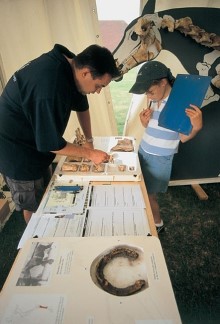
Return to Salisbury Museum for a visit to the Stonehenge and Prehistory Galleries. We have arranged a private demonstration of flint-knapping in the gardens here, which is not only much enjoyed, but adds considerably to your understanding of the way in which our prehistoric forebears were able to fashion all manner of implements and tools from our good local flint supplies.  In a world without metal technology this was a critical and highly sophisticated art.
Disperse about 5pm.

Should you choose to arrive earlier or stay later, you might like to visit Old Sarum, the hillfort to the north of Salisbury which was later chosen as the site of our first cathedral, or, of course,  our beautiful Gothic cathedral – straight in front of the College.

NB Most of every day will be spent walking, and you must be prepared for this, with suitable footwear and weatherproof clothing. You will also have to carry your own water, and negotiate a variety of stiles.

  • The original Andante Tour – accept no imitations!
  • We have been introducing guests to these monumental prehistoric landscapes for 26 years
  • Accommodation spectacularly situated within Salisbury cathedral close
  • Bring your hiking boots!
  • Several good cross-country walks

Read Full Post »

ARCHAEOLOGY WEEKEND

It’s the Festival of British Archaeology – this is your chance to meet a real archaeologist and to uncover artefacts from Old Sarum’s history. Enjoy a weekend for all the family with plenty of hands-on activities and crafts to keep everyone busy! Take part in a mini-dig and have a go at identifying objects lost over time.

About Old Sarum

Discover the story of the original Salisbury and take the family for a day out to Old Sarum, 2 miles north of where the city stands now. The mighty Iron Age hill fort was where the first cathedral once stood and the Romans, Normans and Saxons have all left their mark.

Today, 5,000 years of history are told through graphic interpretation panels on site. Families, heritage lovers and walkers can enjoy a great value day out at Old Sarum- you could even bring a picnic and enjoy the fantastic views across the Wiltshire countryside. The gift shop has a delicious range of ice-creams and exclusive English Heritage gifts and produce. Wooden bows and arrows are also on sale to help the kids imagine what life was like all those years ago!
DON’T MISS
The spectacular view from the ramparts at Old Sarum to the ‘new’ cathedral in the centre of Salisbury
Our interesting interpretation panels bringing 5,000 years of history to life
Old Sarum’s literary connections- you can buy some of the famous books written about the site in our shop

English Heritage: http://www.english-heritage.org.uk/daysout/properties/old-sarum/

HisTOURies UK – www.Histouries.co.uk
Mystical Landscape, Magical Tours

Read Full Post »

The 2012 Circles of Knowledge Conference will take place on 14th and 15th July 2012 (with extra tours on the 13th and 16th).  Once again we will welcome crop circle and ancient knowledge enthusiasts from all over the world and bring them together in the beautiful surroundings of Marlborough College in Wiltshire.  This year the lectures will be taking plave in the modern Ellis Theatre, offering us state of the art audio and visual facilities.

There are many unknown factors to the crop circle phenomenon and under such circumstances it is best to

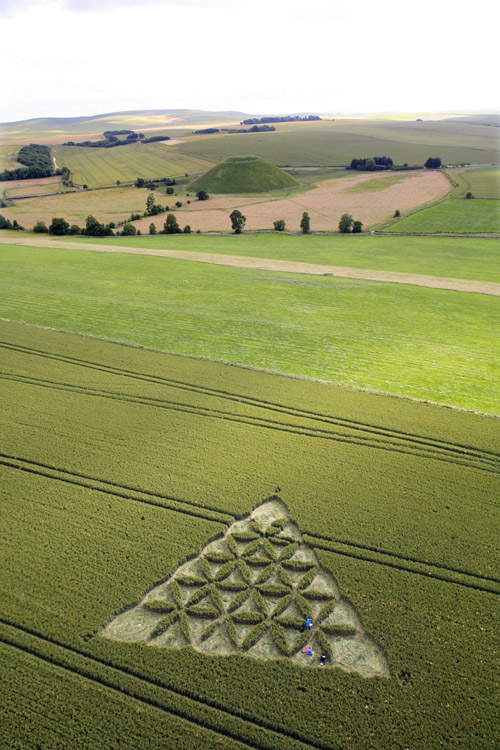
July 2012 Crop Circle

July 2012 Crop Circle near Avebury

stick to facts. Crop circles are happening in our reality here and now, and as the designs are imprinted in real fields in the countryside, they can be visited and studied at close hand.

Many people, several of whom live in Wiltshire full time, are actively engaged in full time research in an attempt to establish what this phenomenon is about and where it is leading us.  Since 1980 thousands of designs have been investigated and recorded in databases worldwide. This is impressive by anyone’s standard.

The Study of Crop Circles is based on facts:

  • Crop Circles exist.
  • They are found all over the world.
  • More than 6,000 have been documented since 1980.
  • Over the last twenty years analyses of thousands of plant and soil specimens from hundreds of formations worldwide have been carried out in laboratories in various countries, and most extensively in the UK and in the USA.
  • These analyses show that the cellular structure of the plants has been strongly affected and that the composition of the soil greatly altered in crop circles (man made designs exhibit no such results).
  • Their designs are based on complex geometry, ancient symbology and advanced mathematics.
  • They can be decoded.
  • The message that comes through is important for mankind at present.

HisTOURies UK
Mystical Landscape, Magical Tours 
Read Full Post »

Chalke Valley History Festival near Salisbury is Britain’s biggest festival devoted entirely to history.

The 2012venue is the second such festival to be held in a 22 acre field set amongst the gentle downs of the Chalke Valley, surely one of the most beautiful landscapes in Britain, 12 miles south-west of Salisbury.

Chalke Valley History Festival

Chalke Valley History Festival

The Chalke Valley History Festival is in its second year now & really getting into its stride. The festival is being held just outside Ebbesbourne Wake, one of the villages within the Wilton Community Area. As well as literary talks covering an amazing variety of topics & periods in history, there are also other activities to get involved in. Among the impressive line-up of speakers at the festival, there are many household names such as Sir Max Hastings, Amanda Vickery, Jeremy Paxman, Michael Morpurgo, Ian and Victoria Hislop, Tom Holland, Dan Snow and Michael Wood.

If you’re interested in history, this is an event you won’t want to miss: “The Chalke Valley History Festival is Britain’s biggest festival devoted entirely to history. This is our second Festival and we are much bigger this year with over fifty events and an extraordinary array of speakers. Joining us are some of this country’s most popular and influential historians who are shaping our understanding of the past and setting the context for understanding the future.”

Check out the Chalke Valley History Festival website for more information & to buy tickets. http://www.cvhf.org.uk/

Another good reason to visit Wiltshire…………………..

HisTOURries UK
Mystical Landscape, Magical Tours.

Read Full Post »

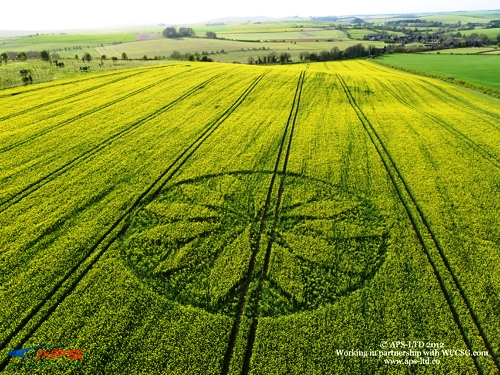
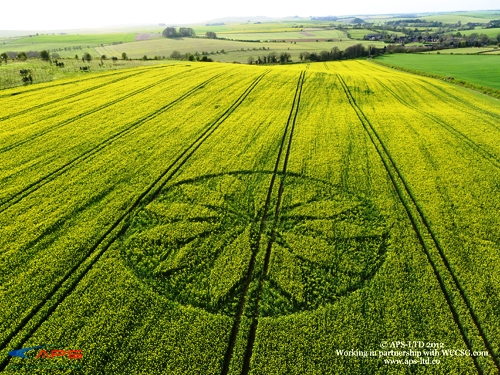
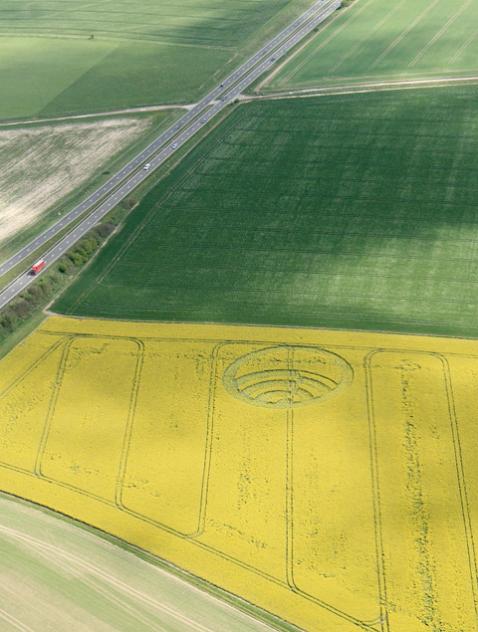
The weather may be more like November than May but the first crop circles have appeared in Wiltshire fields.Wilshire Crop Circle 2012

The first one was reported on April 15 at Hill Barn, near East Kennett in oil seed rape but a more striking one is currently visible, also in oil seed rape, also known as canola, at Yarnbury Castle  near Winterbourne Stoke.

This one was reported on April 28. It will be interesting to see how drier weather and more prolific crops affect the number of formations that appear over the next three months.

Mystical Landscape, Magical Tours

Read Full Post »

The first formation to be reported in 2012. It was first reported on Sunday 15th April and is in oilseed rape (canola/colza) measuring approx. 140 feet in diameter. A pretty 12 pointed double flower at Lurkeley Hill on the outskirts of the village of East Kennett close to Marlborough in Wiltshire

East Kennett, Wiltshire
Crop Circle 2012
 This is a beautiful pattern to open the 2012 season, although because we were unable to photograph it straight away (the pictures here were taken when the formation was approximately 5 days old), we assume the plants have sprung back up quite a lot. 

Follow our Blogs and on Twitter for all the latest Crop Circle news (https://twitter.com/#!/HisT0URies)

Wiltshire Crop Circles

In the early 1970’s Crop circles used to be unexplained patterns that were generally found in corn fields – hence the terminology ‘corn circles’. However, in more recent years teams of ‘circle-makers’ within the South of England have openly admitted creating some of these fantastic formations, and have constructed them in crops as diverse as Linseed and Rapeseed.

Most frequently these art forms have appeared in Wiltshire near ancient monuments that are themselves considered to be built on sites of powerful natural energies. Many people believe that it’s no coincidence that the phenomenon appears close to these ancient sites, and some have even reported crop circles forming in under 20 seconds under incandescent or brightly coloured balls of light.

Whatever you choose to believe about the crop circle phenomenon, there is no doubt that the circles are responsible for attracting huge amounts of media attention, which consequently results in thousands of visitors coming to Wiltshire every year in order to catch a glimpse of some of the more spectacular ones.

Link: http://www.wccsg.com
Link:  http://www.visitwiltshire.co.uk/

Needless to say we will be offering guided tours of all the best formations in the Wiltshire throughout 2012

HisTOURies UK
Mystical Landscape, Magical Tours
Read Full Post »

The Chalke Valley History Festival is planning to launch a series of History Tours in 2012, some in conjunction with the Natural High travel company.

We want to capitalise on our relationship with this country’s most compelling and authoritative historians by offering some as guides for historic tours and holidays.

Both dates and itineraries are yet to be confirmed, as are costs.  However, we are very interested to know whether there is demand for the idea from those who have enjoyed our Festival.

These Chalke Valley History Tours will vary between a few days and a week’s duration, and will be of general rather than specialist interest.

Below are some of the initial tours we are hoping to organise in our first programme of History Tours.  If you would like to learn more about them, please do let us know on info@cvhf.org.uk

THE INDIAN MUTINY
led by Professor Saul David
It began as a mutiny of East India Company sepoys in Meerut in May 1857 and was only contained after the fall of Gwalior a year later.  It rocked the British Empire to its foundations and led to the downfall of the Company.  This tour, by the world’s leading authority on the subject, will tell the story of the Indian Mutiny by visiting its main sites amidst the drama of central India.

Saul David is Professor of War Studies at the University of Buckingham and a specialist in the wars of the Victorian period.  He is particularly well placed to lead this tour; not only is he well-known and popular television historian, the Indian Mutiny was the subject matter of his PhD, and his subsequent book is considered the definitive history of this dark episode from the Raj.

ANCIENT ROME
led by Tom Holland
Was it the greatest empire the world has ever seen?  Certainly, it lasted almost a thousand years and incorporated, at its zenith, most of the known world.  This tour will focus on the city of Rome and those towns to the south, Pompeii and Herculaneum, recapturing the spirit and glory of Ancient Rome.

Tom Holland is an award-winning and highly acclaimed historian of antiquity.  Rubicon, his book on the rise and fall of the Roman Republic, was an international best-seller and was short-listed for the Samuel Johnson Prize.  He is currently working on a new book about the first Emperors.  A brilliant raconteur, Tom Holland is working exclusively for Chalke Valley History Holidays.

THE ZULU WARS
led by Dr Peter Caddick-Adams
The Battle of Isandlwana and the defence of Rorke’s Drift are two of the most dramatic events in the British Imperial story.  For the victors of each, both were triumphs over incredible odds; at Isandlwana, it was the Zulus who won the day, while at Rorke’s Drift, it was the British, in one of the most astonishing last stands in British history.  At both, many men on both sides showed incredible courage.  This tour to some of the most unspoiled battlefields in the world, will tell the story and characters of a war that resonates still to this day, and against the captivating landscape of South Africa.

Peter Caddick-Adams is the doyen of battlefield guides.  Learning his craft from the legendary Richard Holmes, he also chose Battlefield Tourism as the subject matter for his PhD.  Since then, he has worked with British and American armed forces on numerous staff rides, as well as guided politicians and leading public figures around some of the best-known battlefields in Europe and further afield.  Quite simply, Peter Caddick-Adams is one of the very best Battlefield Guides we have.

D-DAY & THE BATTLE FOR NORMANDY 1944
led by James Holland
The Battle for Normandy was one of the fiercest battles ever fought, with higher daily casualty rates than were suffered at the Somme, Passchendaele or Verdun.  From the landings themselves to the bitter fighting as the Allies inched inland, this is a tour that will include little-known sites and bunkers as well as some of the more iconic beaches and D-Day locations.  Told with a mass of anecdotes and new, searing, analysis, this will be a comprehensive guide to the D-Day battlefields, and set to the backdrop of the glorious Normandy countryside, with its wonderful food, wine and calvados.

James Holland is one of the country’s leading authorities on the Second World War, and has written and broadcast on the Battle of Britain and Dams Raid amongst other subjects. With an encyclopaedic knowledge and understanding of the war, he has also conducted Staff Rides for the military and a number of historic tours around many of the Second World War battlefields.

The excellent Chalke Valley History Festival 26th June – 1st July 2012 – http://www.cvhf.org.uk/

HisTOURies UK
Mystical Landscape, Magical Tours

Read Full Post »

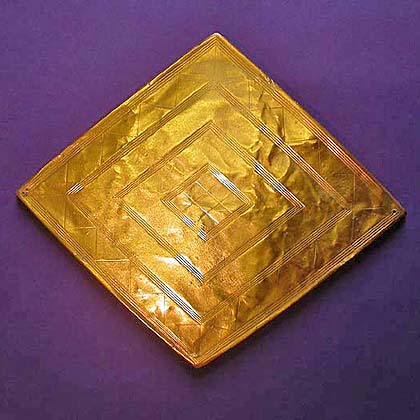
Bronze Age items which were excavated in Wiltshire200 years ago are to go on display in the county after spending

A picture of a gold bronze age diamond shaped lozenge found in Wiltshire

A picture of a gold bronze age diamond shaped lozenge found in Wiltshire

recent years in a bank vault.

The Wiltshire Heritage Museum in Devizes, which had been at risk of closure, has been awarded a £370,000 lottery grant to create a new gallery.

The new Prehistoric Galleries will display Wiltshire’s gold and amber finds dating back to before 2,000 BC.

Museum director David Dawson said he was “absolutely delighted”.

“The best thing is we’ve got completely unique gold items from the time of Stonehenge and we’ve been able to put those on display for the first time in generations,” he said.

‘More visitors’

“It was excavated almost 200 years ago but it’s been buried away in bank vaults for the last few generations – simply because we’ve not been able to display it.

“We haven’t had the security in place but this lottery cash means that we’ll be able to.”

The museum currently receives a grant of £35,500 per year from Wiltshire Council.

But last month, the council rejected the museum’s request to increase its grant despite the trustees claiming it could run out of cash within two years.

Negley Harte, the museum chairman, said the new gallery would be “vital for the future sustainability of the museum”.

“It will bring more visitors to the museum and help us with our battle to make the museum financially sustainable.”

Link Sourc: http://www.bbc.co.uk/news/uk-england-wiltshire-17553249
Link: http://www.wiltshireheritage.org.uk/
Link: http://www.salisburymuseum.org.uk/
Linl: http://www.HisTOURies.co.uk

HisTOURies UK
Mystical Landscape, Magical Tours 
Read Full Post »

The Marlborough Downs is to be part of a government project to create wildlife havens.

Twelve places out of 76 in England that applied to become Nature Improvement Areas have been chosen.

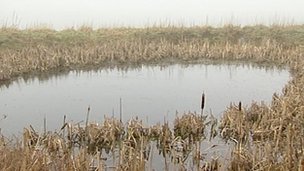
Defra said establishing dewponds would encourage birds, newts and other amphibians

Defra said establishing dewponds would encourage birds, newts and other amphibians

The project aims to restore habitats and encourage local communities to get involved with nature.

The work will be carried out by partnerships involving community groups, conservation organisations and landowners.

The 12 areas will share £7.5m of government funding.

Defra said establishing dewponds would encourage birds, newts and other amphibians and help re-establish viable grazing.

The Wiltshire project is the only farmer-led scheme in the country to have won government funding.

‘Educating people’

Environment Minister Richard Benyon visited the site on Monday.

He said: “We’re standing beside a classic Wiltshire downs dewpond.

“What’s really exciting about what we’re announcing today is that this is going to be a feature people will see right across the Wiltshire downs.”

Chris Musgrave, estate manager at Temple farm in Rockley, near Marlborough, said: “All 41 farmers said they would be interested in joining together in terms of having wildlife corridors running through their estates, dewponds linking chalk grassland and also involving the community as well.

“I think if you were walking down the Ridgeway, which is a spine going right through this area, you would see dewponds, you would see wildlife corridors.

“It’s educating people, it’s getting people involved.”

Link source: http://www.bbc.co.uk/news/uk-england-wiltshire-17176283

HisTOURies UK


Read Full Post »

Around 8,000 years ago, prehistoric hunters killed an aurochs and their grilling techniques were frozen in time.

THE GIST

Remains of a butchered and cooked female aurochs (a prehistoric cow) have been identified from a Stone Age Netherlands site.
The hunters appear to have cooked the meat over an open fire, eating the bone marrow first and then the ribs.
Aurochs hunting was common at the site for many years, but humans drove the large horned animals to extinction

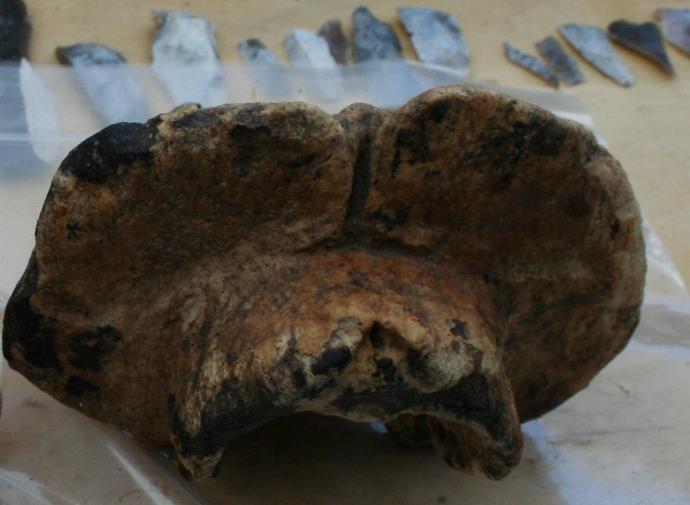
aurochs bones AmesburyStone Age barbecue consumers first went for the bone marrow and then for the ribs, suggest the leftovers of an outdoor 7,700-year-old meaty feast described in the July issue of the Journal of Archaeological Science.

The remains, found in the valley of the River Tjonger, Netherlands, provide direct evidence for a prehistoric hunting, butchering, cooking and feasting event. The meal occurred more than 1,000 years before the first farmers with domestic cattle arrived in the region.

Although basic BBQ technology hasn’t changed much over the millennia, this prehistoric meal centered around the flesh of an aurochs, a wild Eurasian ox that was larger than today’s cows. It sported distinctive curved horns.

Another big difference is how meat was obtained then.

NEWS: Mammoths Roasted in Prehistoric Kitchen Pit

“The animal was either caught in a pitfall trap and then clubbed on the head, or shot with a bow and arrow with flint point,” co-author Wietske Prummel, an associate professor of archaeozoology at the University of Groningen, told Discovery News.

Prummel and colleague Marcel Niekus pieced together what happened by studying an unearthed flint blade found near aurochs bones. These show that after the female aurochs was killed, hunters cut its legs off and sucked out the marrow.

According to the study, the individuals skinned the animal and butchered it, reserving the skin and large hunks of meat for carrying back to a nearby settlement. Chop marks left behind by the flint blade show how the meat was meticulously separated from the bones and removed.

Burn marks reveal that the hunters cooked the meaty ribs, and probably other smaller parts, over an open fire. They ate them right at the site, “their reward for the successful kill,” Prummel said.

The blade, perhaps worn down from so much cutting, was left behind and wound up slightly scorched in the cooking fire.

Niekus told Discovery News, “The people who killed the animal lived during the Late Mesolithic (the latter part of the middle Stone Age). They were hunter-gatherers and hunting game was an important part of their subsistence activities.”

The researchers suspect these people lived in large settlements and frequented the Tjonger location for aurochs hunting. After the Iron Age, the area was only sparsely inhabited — probably due to the region becoming temporarily waterlogged — until the Late Medieval period.

NEWS: Pre-Stonehenge Megaliths Linked to Death Rituals

Aurochs must have been good eats for Stone Age human meat lovers, since other prehistoric evidence also points to hunting, butchering and feasting on these animals. A few German sites have yielded aurochs bones next to flint tool artifacts.

Aurochs bones have also been excavated at early dwellings throughout Europe. Bones for red deer, roe deer, wild boar and elk were even more common, perhaps because the aurochs was such a large, imposing animal and the hunters weren’t always successful at killing it.

At a Mesolithic site in Onnarp, Sweden, for example, scientists found the remains of aurochs that had been shot with arrows. The wounded animals escaped their pursuers before later dying in a swamp.

The aurochs couldn’t escape extinction, though.

“It became extinct due to the destruction of the habitat of the aurochs since the arrival of the first farmers in Europe about 7500 years ago,” Prummel said. “These farmers used the area inhabited by aurochs for their dwellings, arable fields and meadows. The aurochs gradually lost suitable habitat.”

The last aurochs died in 1627 at a zoo in Poland.

Source: http://news.discovery.com/history/ancient-barbeque-aurochs-110627.html

HisTOURies – The Best of Wiltshire History 

Read Full Post »

« Newer Posts - Older Posts »