Feeds:
Posts
Comments

Archive for the ‘Wiltshire’ Category

It’s the Festival of British Archaeology – this is your chance to meet a real archaeologist and to uncover artefacts from Old Sarum’s history. Kids will love getting involved with archaeological activities, including: a sand-pit excavation, to learn how archaeologists uncover, recover and record evidence, and a finds washing, to learn how archaeologists process the evidence! Plus, there are lots of fun and games to take part in like our Beat the Archaeologist Challenge or Guess the Mystery Object from Old Sarum’s past.

Old Sarum Hillfort

Discover the story of the original Salisbury and take the family for a day out to Old Sarum, 2 miles north of where the city stands now. The mighty Iron Age hill fort was where the first cathedral once stood and the Romans, Normans and Saxons have all left their mark.

Today, 5,000 years of history are told through graphic interpretation panels on site. Families, heritage lovers and walkers can enjoy a great value day out at Old Sarum- you could even bring a picnic and enjoy the fantastic views across the Wiltshire countryside. The gift shop has a delicious range of ice-creams and exclusive English Heritage gifts and produce. Wooden bows and arrows are also on sale to help the kids imagine what life was like all those years ago!

Don’t Miss…

  • The spectacular view from the ramparts at Old Sarum to the ‘new’ cathedral in the centre of Salisbury
  • Our interesting interpretation panels bringing 5,000 years of history to life
  • Old Sarum’s literary connections- you can buy some of the famous books written about the site in our shop

    Wiltshire Tour Guide
    HisTOURies UK – The Best Tours in British History

Read Full Post »

Archaeologists have begun a major dig to unearth the hidden mysteries of a buried ancient stone circle site that is ten times bigger than Stonehenge.

The enormous 4,000 year old Marden Henge, in Wiltshire, is Britain’s largest prehistoric structure stretching for 10.5 hectares, the equivalent of 10 football pitches.

English Heritage is carrying out a six-week dig hoping to reveal the secrets behind the giant henge which has baffled historians for centuries.

Most of the Neolithic henge has been destroyed over the years due to farming and erosion but minor excavations in 41 years ago estimate the site to between 2,000 and 2,400BC.

Archaeologists are due to begin digging at the 4,000 year old Marden Henge, in WiltshireArchaeologists are due to begin digging at the 4,000 year old Marden Henge, in Wiltshire

Marden Henge was once a 45ft high mound surrounded by a water filled ditch which was used for sacrificial offerings.  

Although the henge no longer has its vast stone circle it has a large puzzling sunken circular feature which is almost unheard of at Neolithic sites.

A team of 15 archaeologists and historians believe the dig could show the ancient site is even more significant than both Stonehenge and Avebury stone circles.

Archaeologist Jim Leary, 34, said: ‘Virtually nothing is known about this vast circle. We are starting from point zero.

‘Marden Henge deserves to be understood more partly because of its size, but also due to its proximity to the more famous stone circles at Avebury and Stonehenge.

‘The relationship between the latter two sites – chronology of their construction, whether it is built by the same people, how they were used, is of immense interest.

‘How Marden relates to them is another layer of interest which we want to study.

‘We are potentially looking at a much more intricate system of Neolithic ritual sites in this part of the world than we previously thought.

‘The study of Prehistory is entering a very exciting phase with lots of fascinating research and dating techniques emerging.

‘The stunning discovery of Neolithic houses at Durrington Walls near Stonehenge a few years’ ago, for example, has really turned things on its head.

‘We certainly hope that this excavation will bring more pieces of the puzzle to light.’ 

Stonehenge on Salisbury Plain, Wiltshire.Stonehenge on Salisbury Plain, Wiltshire. Marden Henge has lost its stone circle but scientists are confident they will find some remnant of the ancient circle beneath the surface

The dig is the culmination of a two year English Heritage project including aerial, topographic and geophysical surveys.

It has not been touched since an investigation in 1969 by Professor Geoffrey Wainwright which dated the henge from fragments of deer antler found in the area.

Marden Henge is situated near to the source of the River Avon, in Marden, north of Devizes, between Avebury and Stonehenge and close to ancient Silbury Hill.

The henge comprises a well-preserved bank covering 10.5 hectares and an internal ditch.

Unlike Stonehenge and Avebury or Castlerigg, in Cumbria, Marden Henge no longer has any surviving stone monuments.

All that has remained is the evidence of a huge mound similar to a smaller at the centre of the henge, which collapsed in 1806 and was completely levelled by 1817.

Most experts now believe that significant ceremonial or ritual activity occurred within the ditches.

Archaeologists aim to find remnants of the Neolithic age within the remains of the mound.

The entire site is around 15 hectares and set within surrounding fields covering 40 hectares.

The dig began on Monday this week and will continue until August.

Stonehenge Tour Guide
HisTOURies UK – The Best Tours in History

Read Full Post »

More images will be uploaded shortly…
Stonehenge Tour Guide
Histouries UK

Read Full Post »

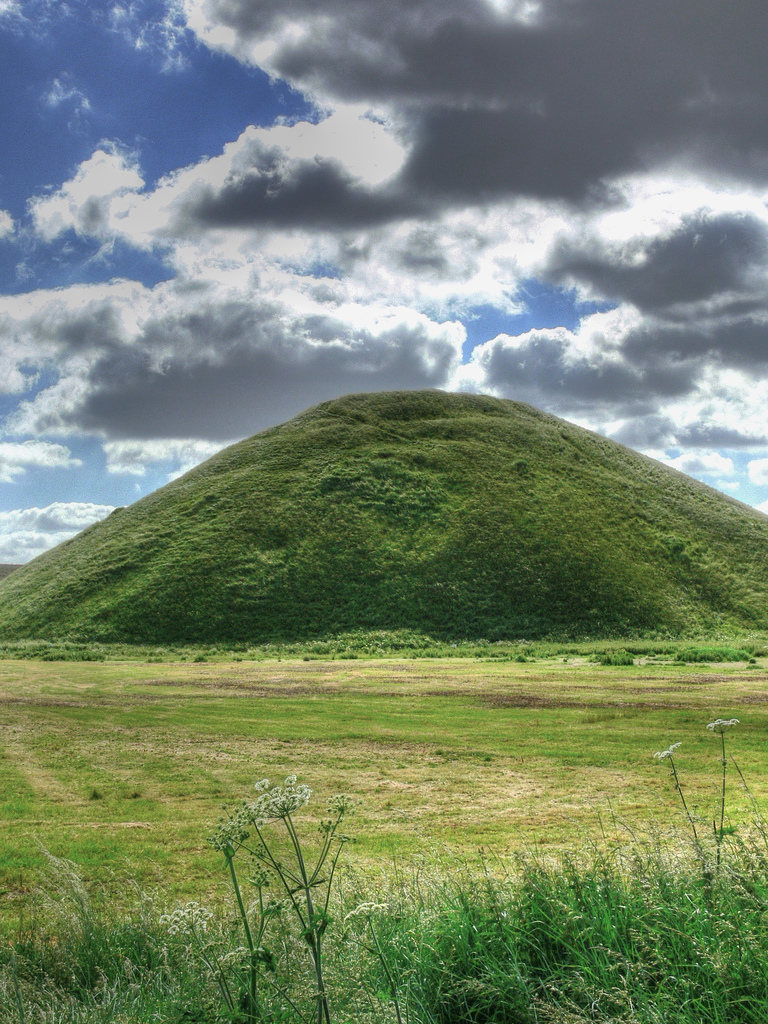
Letters that lay undiscovered in national archives for more than 230 years suggest that Silbury Hill, the enigmatic man-made mound that stands between Marlborough and Beckhampton, may have originally be constructed around some sort of totem pole.

Historians have uncovered in the British Library in London letters written in 1776 that describe a 40ft-high pole which once stood at the centre of Silbury Hill. Europe’s largest man-made mound.

The letters detail an 18th century excavation into the centre of the man-made mound, where archaeologists discovered a long, thin cavity six inches wide and about 40ft deep.

A separate excavation found fragments of oak timber within the cavity leading historians to believe that the mound was built around the pole dating from around 2,400 BC.

David Dawson, director of the Wiltshire Heritage Museum in Devizes, said: “This is important, lost information dug out of the library, rather than through field work.

“It tells us that in one of its earliest phases some kind of totem pole was erected on the mound, then subsequent additions to build the hill up were piled up around that timber.”

The 18th century letters, written from Edward Drax to Lord Rivers, described excavations Drax had supervised at Silbury Hill.

He oversaw the digging of a vertical shaft from top to bottom that is sometimes claimed to be the work of the Duke of Northumberland.

Drax, a wealthy landowner who lived in Bath, had hired a team of miners to dig a shaft from the top of Silbury Hill, to the centre of the hill, 125 feet below.

To begin with the miners found little but chalk and pieces of deer antler, but 95 feet down – some 30 feet above where they expected the base of the mound to be – they stumbled upon a deep, narrow cavity.

The hole was six inches across but Drax noted: “We have already followed it already about 20 feet, we can plumb it about eleven feet more.”

In his letter he wrote that “something now perished must have remained in this hole to keep it open”.

Together with a later, independent account of fragments of oak timber found at the centre of the mound, the evidence adds weight to the totem pole theory.

Last year English Heritage completed a £2 million restoration programme on the mound to prevent it from collapsing after previous excavations, including the one by Drax, had left the structure weakened and prey to erosion.

Drax’s letters have been published for the first time in the new volume of the Wiltshire Archaeological and Natural History Magazine.

I highy recommend a visit to Silbury Hill if you are visiting the Stonehenge and Avebury area – the best view of Silbury Hill is if you walk up to West Kennet Long Barrow.

Nicholas – Avebury Tour Guide
HisTOURies – The Best Tours in History

Read Full Post »

The summer solstice is traditionally a time of peace and love.

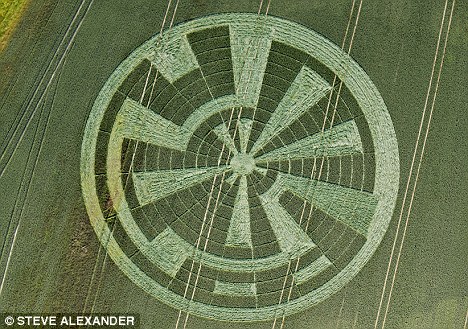
So it was particularly fitting that this crop circle should appear in a field in Wiltshire yesterday – right next to a heart-shaped wood.

But the sentiment wasn’t exactly shared by the farmer whose land the circle appeared on. He blasted the design an ‘act of vandalism’.

Unusual: The 200-foot crop circle appeared alongside a heart-shaped wood on the Summer SolsticeUnusual: The 200-foot crop circle appeared alongside a heart-shaped wood on the Summer Solstice

A man claiming to be Gavin Davies, the farm’s manager, posted an angry message on a website run by crop circle enthusiasts, urging them not to encourage people to visit the field.

He said: ‘I have this morning noticed the circle on land that I manage.

‘I do not support this vandalism, and demand that this circle, and the location are not reported on your website. 

‘We will be posting notices on the field stating we do not allow access to the circle, and will regularly monitor the field to ensure this is obeyed.’

Mr Davies said he was concerned visitors could trample on his crops, destroying them in the process.
More…

 He said: ‘At this stage, the crop remains harvestable, and as a result, we will leave the circle intact.

‘If visitors to the site ignore our notices, and continue to walk into the crop, we will mow out the circle.

‘I will be taking advice from the local police, and legal advice from our solicitors to counter this act of vandalism. 

‘Please let the teams behind the circles know they are not welcome here.  If we get anymore, we will be forced to mow them out to avoid the hassle. I thank you for your assistance.’ 

Detailed: The design is striking - but it has angered the farm manager, who branded the crop circle an 'act of vandalism'Detailed: The design is striking – but it has angered the farm manager, who branded the crop circle an ‘act of vandalism’

Crop circle fans were earlier trying to de-code the 200 foot design which sprung up in a field near Marlborough on the longest day of the year.

Crop circle expert Karen Alexander said: ‘It appears to be a complicated mathematical formula and there have been several circles in the area over the years that represent Pi.

‘The fact it has appeared next to a heart-shaped wood suggests there is something more significant to the message, especially as it appeared on the Summer Solstice – the longest day of the year.’

Nicholas – Crop Circle Tour Guide
HisTOURies UK – The Best Tours in History

Read Full Post »

Stonehenge Summer Solstice

Sun rise at Stonehenge


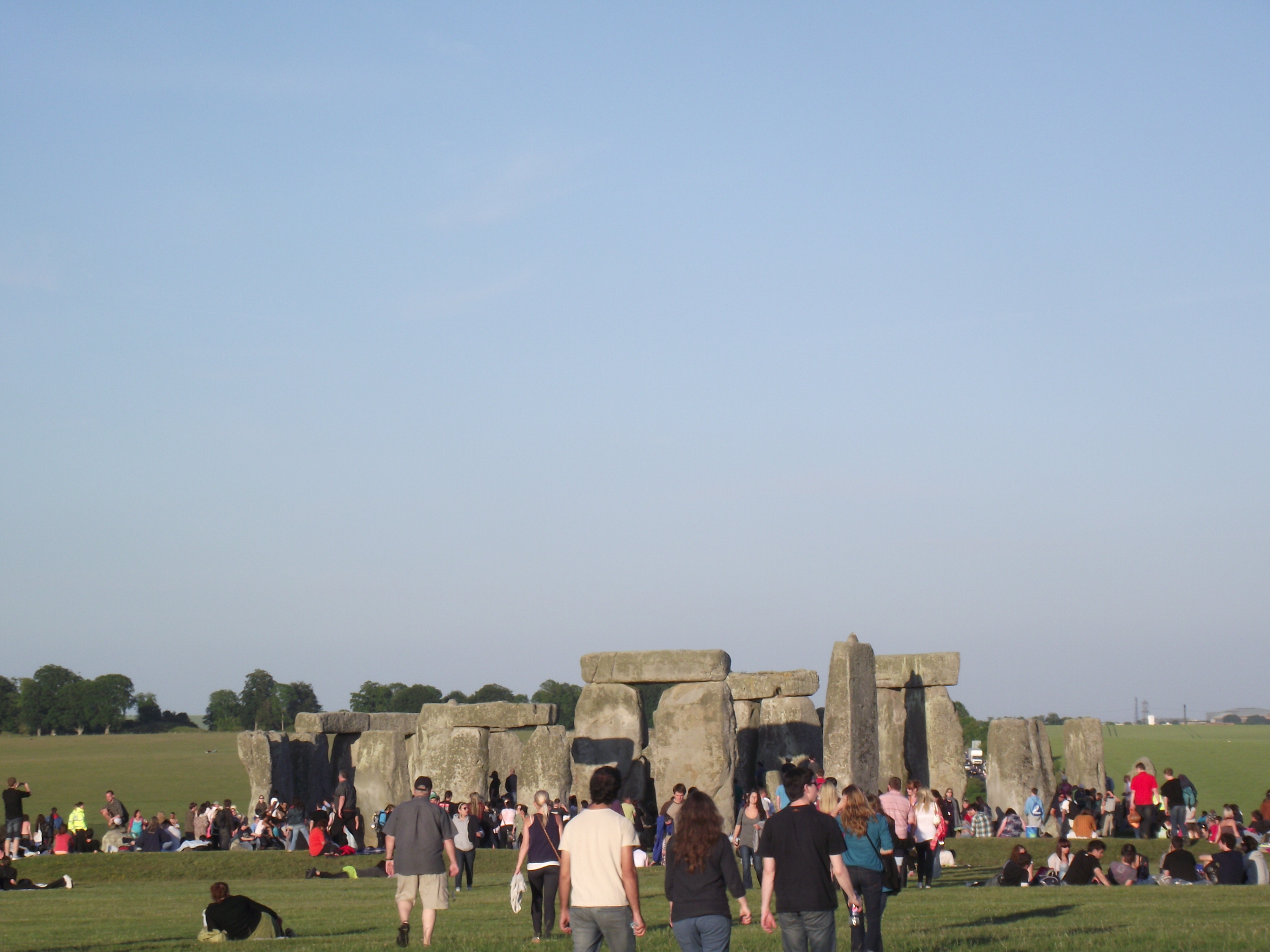
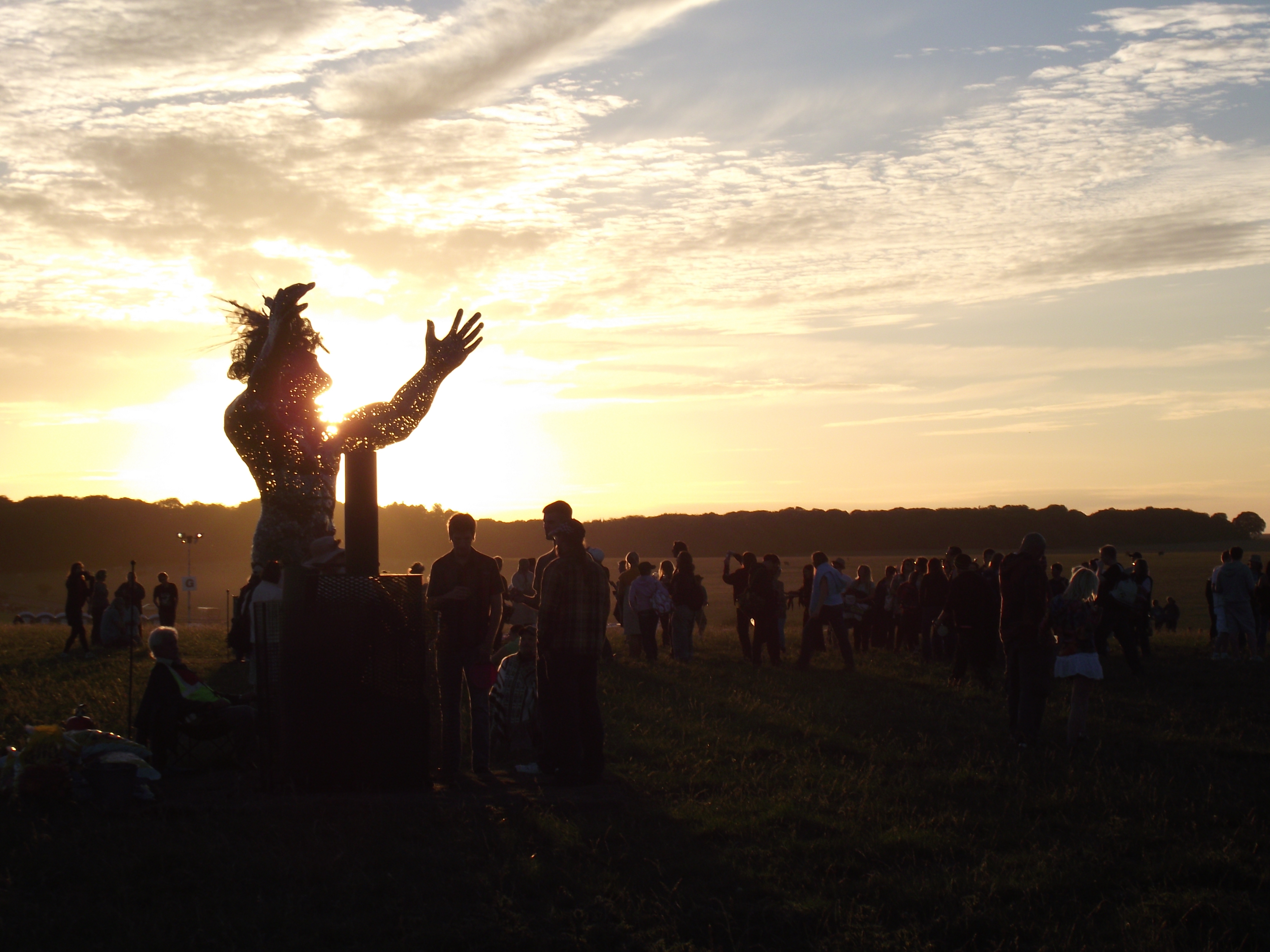
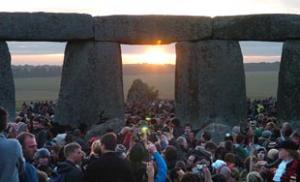
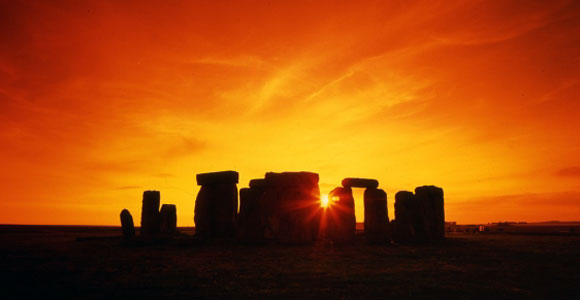
CLEAR skies meant the thousands of revellers who flocked to Stonehenge got to enjoy a beautiful sunrise at this year’s Summer Solstice on Monday morning.

About 20,000 druids, pagans and revellers from across the country and abroad travelled to the famous Wiltshire landmark to celebrate the longest day of the year.

Numbers were lower than last year’s record-breaking event, which fell on a weekend and had a crowd of 36,500, but for the first time in recent years clouds didn’t block the view of the sunrise at just before 5am.

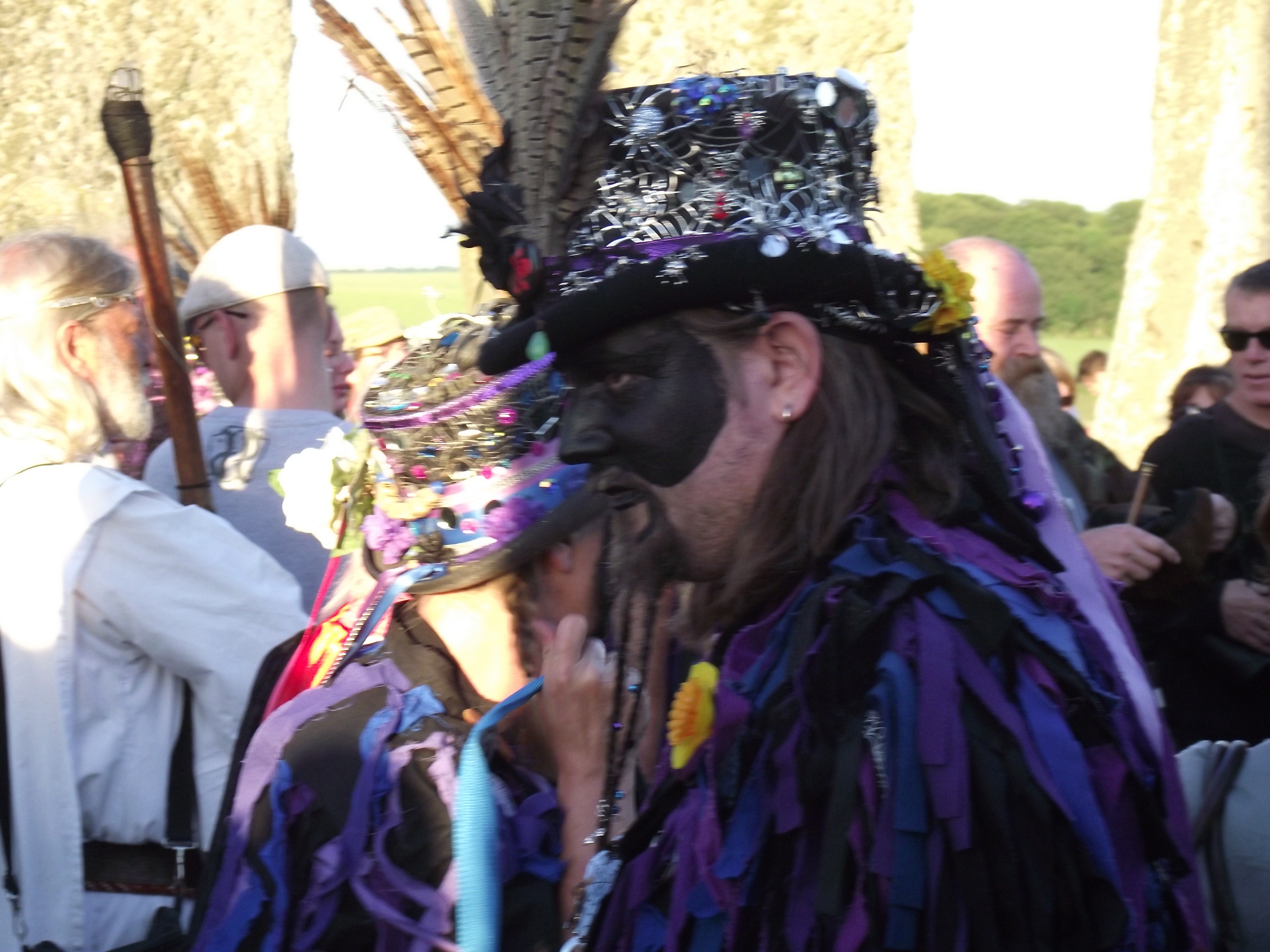
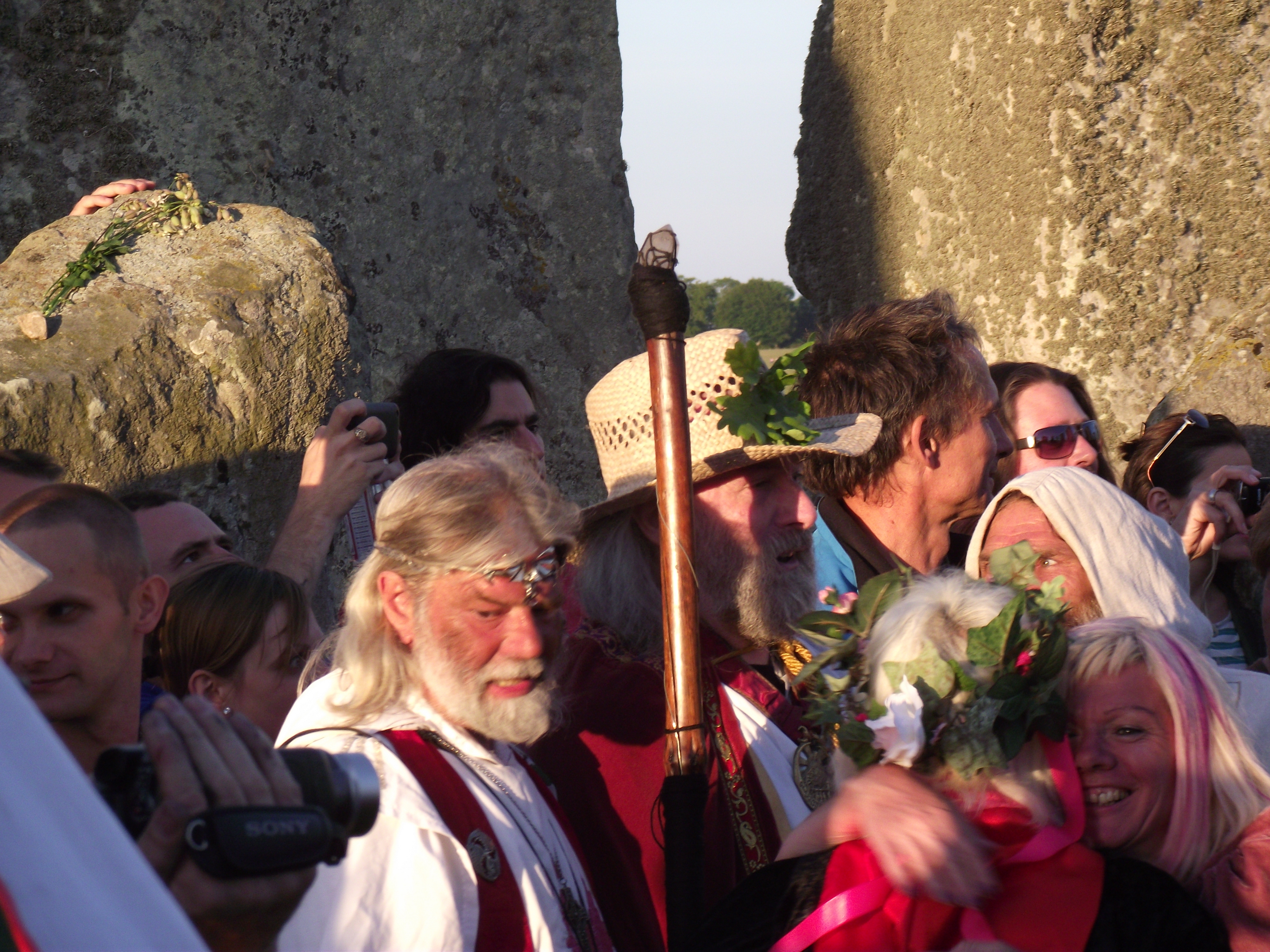
As the sky started to brighten the Widders Border morris dancers performed several routines next to the Hele Stone, before druids performed rituals and hailed the sun.

Revellers filled the stone circle and the crowd cheered as the sun came up between the stones.

Druid King Arthur Pendragon said: “I thought this year went exceedingly well. It was a nice crowd and a nice atmosphere and with a great spirit of co-operation – how could it not be a successful solstice?

“Lots of pagans say they are fed up with the revellers but I don’t have that view. Even if they initially come for the wrong reasons, they return for the right ones in the end.

“It’s the spirit of the place, Stonehenge itself, that draws people here and even if they don’t respect the stones the first time they do by the next year.”

No major incidents were reported. Wiltshire Police made 34 arrests – one on suspicion of possession of an offensive weapon, two minor thefts, two for assault, three for possession with intent to supply drugs, one drink driving, nine drunk and disorderly and 16 possession of drugs. A police spokesman said they were happy with how the event had gone and, despite the arrests, the solstice had been mostly peaceful.

Rhanks to all that joined me on the sunrise, a good time was hads by all.  I will be uploading my photos later in the day and would appreciate your input

Nicholas – Stonehenge Tour Guide
HisTOURies UK

Read Full Post »

Summer solstice revellers disappointed that coalition government will cut funding to new Stonehenge visitor centre

Summer solstice revellers disappointed that coalition government will cut funding to new Stonehenge visitor centre Sometimes the police come in for criticism, while at other times English Heritage attracts the ire of the druids, ravers, hippies and sun lovers who turn out for the summer solstice at Stonehenge. At today’s celebrations there was a political target – David Cameron and the coalition government – following the announcement that government funding for a visitor centre at the ancient monument was being cut. The outcry from solstice revellers was led by the unmistakeable figure of Arthur Pendragon, a druid who believes he is an incarnation of the once and future king. Pendragon, who rejoices in the title of battle chieftain of the council of British druid orders, said he was not surprised that the £10m funding was dropped. “I knew the writing was on the wall. I knew the new government wouldn’t stump up the money. It’s no surprise but, still, it’s a disgrace. This wouldn’t happen anywhere else in the world.” Pendragon has campaigned for 20 years for a new visitor centre at the World Heritage site and to close at least one of the busy roads that surround the stones. Tourists are often shocked at the state of the centre and amazed that traffic is allowed to roar past so close. Last year Gordon Brown promised £10m towards a £25m scheme to build a glass and timber centre and to shut the nearby A344. The scheme was expected to win planning permission soon and the project was due to be completed in 2012 to coincide with the staging of the Olympics in the UK. Last week the government announced the funding would be pulled. English Heritage, which manages the site, said it was “extremely disappointed”, arguing that transforming Stonehenge was “vital to Britain’s reputation and to our tourism industry”. It said it would try to find the funding from elsewhere. Pendragon said he was worried about how the shortfall would be met: “I don’t want to see them making up any shortfall with a public-private partnership. I don’t want to see Americans going home with T-shirts reading: ‘I’ve been to McDonald’s Stonehenge’. “All they’ve got to do is go to an investment banker with a decent proposal. Nearly a million visitors come through here every year. Any investment bank will see that it’s a money spinner. “It’s not as if they aren’t good for the money. Being English Heritage, they’ve got a castle or three they can put up as collateral. “We’ve been 20 years waiting for this visitor centre, faffing about. They can borrow the money and build the bloody visitor centre. That’s what I intend to make sure they do.” Rollo Maughfling, archdruid of Stonehenge and Britain, greeted the rising of the sun with a blast on his trumpet – which sounded not unlike a vuvuzela. “It’s been a wonderful, warm night,” he said. Around 20,000 people turned up to mark the solstice and by dawn there had been 30 arrests for minor offences. It was also the first time the solstice sun had peeped from behind the clouds since 2003. While campaigning tends to be left to Pendragon, Maughfling said it was a druid’s duty to get involved in politics when the need arose – and it had now arisen. “You have to tangle with politics to make sure that, for example, our national shrines and temples are looked after,” he said. “Look at any of the stories of druids in ancient British literature and ancient Irish literature, there have been times when the security of the land has been in the hands of druids as well as kings. Druids have taken sides in all kinds of matters. We can’t stand apart from it all.” Peter Carson, head of Stonehenge for English Heritage, said he was pleased at how the solstice went but disappointed at the withdrawal of funding. “But it’s not over yet,” he said. “Let’s see what we can do. Maybe there is a way forward. The project has a great deal of support. It will ensure a suitable setting for Stonehenge and it will upgrade considerably the very poor facilities we currently have.” Sky, a pagan from Devon, broke off from a drumming session to explain how crucial it was that Stonehenge was improved. “It’s the most wonderful place and it’s a disgrace that we’re still waiting for a new visitor centre and for improvements to the roads. I bring people here from abroad sometimes. They’re amazed by the stones – but also amazed at how crummy the facilities are. I’d like that David Cameron to come down here and tell us why Stonehenge, our national treasure, is being treated so shabbily.”

Nicholas – Stonehenge Tour Guide
HisTOURies UK Tours

Read Full Post »

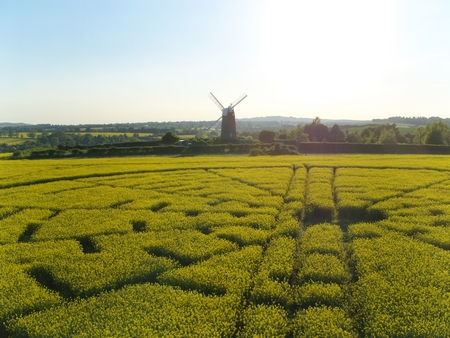
This fantastic formation lies in a beautiful location adjacent to Wilton Windmill. An extremely picturesque and quiet part of the Wiltshire countryside, the calm and tranquil atmosphere was accentuated on the still summers evening when we visited. With only the odd car driving past the field and a couple of late evening explorers, this really was the peaceful and magical experience visiting crop circles should be, rather than the rush to keep up!

The wide outer ring of laid crop here is striking. As can be seen from some of the aerial shots, the crop is laid in a ‘herring bone’ pattern around the entire ring. The effect this creates on the ground is stunning. Throughout the central section of the outer ring, the crop is laid in so many layers it is raised a foot or more off the ground

 Of course when walking around this area, the crunching underfoot gives the impression that this crop circle was not crushed to the ground with excessive force initially, rather that the stems were gently laid to continue growing, as they have.

There are many areas in which the layers of overlapping stems are visible and show little or no sign of damage.

While there are lots of stems which have been broken at or near the base of the plant, this does seem consistent with visitors. This is particularly evident in the central laid circle which looks totally trampled, as is often the case as people flock towards the centre of many formations. There are also ‘walked’ pathways in some parts of the outer ring, consistent with people following a common path towards the centre.

The abundance of bent stems, reassuringly, counteracts the variable damage throughout. Untouched stems are visible throughout every area of the formation (except the centre as discussed) including the herringbone pathway in the outer ring. Stems are bent to varying degrees and more often than not, at the very point the stems emerge from the ground.

This would be impressive enough but is taken to another level by the way at certain points in the design, two of these pathways flow towards one another and then stop short of meeting, but only by a few inches of standing crop in between. The image below does not really do this justice but to see it is so impressive!

Another great addition to the early stages of the 2010 season!

Needless to say, anyone joining a private tour in the Wiltshire area will get a chance to see this amazing formation.

Wessex Tour Guide
HisTOURies UK – The Best Tours in History

Read Full Post »


Here’s a novel suggestion for how the government can help reduce the massive public deficit: sell Stonehenge. A survey of 500 estate agents, among other monuments studied, has placed the price of the ancient stone circle at a cool £51 million. It’s a drop in the ocean of the £156 billion gap between government income and expenditure. But it’s a start.

 Okay, so we’re not really advocating putting one of Britain’s most prized historic monuments up for sale: UNESCO would have some angry words to say about that. And it doesn’t even bare thinking how the druids will react. But the survey does shed light on just how much heritage sites are worth. Elsewhere, a price tag of £5.2 million was placed on 10 Downing Street, while Windsor Castle’s value was reckoned at £391 million.

 But are the sums on Stonehenge correct? Shouldn’t such an internationally-renowned, popular and iconic monument be worth so much more?

 In recent years Christie’s auction house has sold the likes of the Egyptian statue of Ka-Nefer and his family for a tidy £1.9 million, the Canford Assyrian relief for the princely sum of £7.7 million, and the Jenkins Venus for a whopping £7.9 million.

 Counting just the 18 large standing stones, the 10 giant stones of the inner circle and the central altar stone at Stonehenge, by a very unscientific breakdown, that £51 million price tag on the Neolithic monument gives its 29 key constituent parts an approximate value of just £1.7 million a piece. That’s lower than each of the Christie’s sales listed above.

 Theoretically speaking, don’t these figures at least suggest the total price tag should be a bit higher? Surely a super-wealthy antiquities collector would be prepared to pay megabucks to have a Stonehenge megalith in their living room? Or possibly even a trilith framing their front door?

 And what about admission fees? Stonehenge presently attracts around 900,000 visitors a year, at an average price of about £5 per head. Multiply that long-term – by 25 years, say – and that means the monument is worth over £112 million. Consider too that visitor figures will most likely increase in years to come, and factor in revenue from merchandising, and £51 million begins to sound like a snip.

  “It’s quite a challenge for estate agents more used to valuing suburban semis to put an accurate valuation on a royal castle or ancient monument,” commented Nigel Lewis, a property analyst at FindaProperty.com, who ran the survey. “But there was a surprising amount of agreement between the different agents we spoke to.”

  Clearly estate agents have done their sums, too. They consider many different factors when it comes to judging the value of a property – location, age, whether it’s in need of improvement and so on. Stonehenge doesn’t lack for a good spot, situated on sheep-nibbled rolling Wiltshire countryside. But at 4,500 years vintage it could hardly be described as a new build, while its state of repair is questionable to say the least. And then there’s that ugly car park plonked right across the road since the 1960s (although it’s soon to be removed).

 Also, unless Stonehenge’s new owners were to scrap already scaled-down plans for a new visitor centre – current cost £25 million – then that’s a big chunk of change they’ll need to lay out straight after being handed the keys to the front gate. But £51 million still sounds like far too low an asking price.

 Someone buying a historic British monument isn’t actually as ridiculous as it sounds. Missourian businessman Robert P. McCulloch in 1968 purchased the old 19th century London Bridge designed by engineer John Rennie (or at least its stone cladding) from the City of London for $2 million dollars. He then shipped it to the United States, where it was rebuilt across Lake Havasu in Arizona as the gateway to a mock-English community. Legend has it that McCulloch mistakenly believed he was actually buying Tower Bridge – a story he vehemently denied.

 It’d be a tragedy to see Stonehenge similarly packed-up and shipped off elsewhere. But Number 10 or Windsor Castle? Times are tight, after all.

Video: Spring Equinox Celebrations and Druids at Stonehenge

Digs, Discovery and Disaster: A History of Archaeology at Stonehenge

How to Celebrate the Summer Solstice 2010 at Stonehenge

The Stonehenge Stone Circle website

Article from the Heritage Key website with thanks

Nicholas – Stonehenge Tour Guide
HisTOURies UK – The Best Tours in History

Read Full Post »

Magical Glastonbury
Glastonbury is unique, sacred, spell-binding. It is a small town town in Somerset, cradled in a cluster of hills that are all different shapes. The highest is the Tor, a whaleback formation with a tower on top, once part of a church dedicated to the Archangel Michael. Near the Tor is the smooth dome of Chalice Hill. Wearyall Hill is a long narrow ridge pointing toward the Bristol Channel. Windmill Hill, on the side facing the cathedral city of Wells, is less clearly defined and covered with houses, Below are the ruins of a great medieval abbey.

Early in the Christian era, the hill-cluster was nearly encircled with shallow water, the river Brue provided a deeper channel enabling sea-going craft to reach it. An old name for it is Ynys-witrin, the Island of Glass; “island” because, from most angles of approach, it would have looked like one. A more famous name is Avalon, the Apple-place. In Celtic lore Avalon was an isle of enchantment.

This area was probably sacred long before Christianity. Around the sides of the Tor is a strange system of terracing. Much weathered and eroded, but still well-defined, it has been interpreted as a maze following an ancient magical pattern, which is found in Cornwall, Wales, Ireland, Pompeii, Crete and India, and even among the Hopi of Arizona, who call it the Mother Earth Symbol. If the maze on the Tor is real, human labour formed it four or five thousand years ago, during the period of vast ritual works that created Stonehenge and Avebury. There are grounds for thinking that the Tor would have been a sanctuary of Goddess-worship. To come down to a somewhat later time, archaeology has shown that toward the beginning of the Christian era, this neighbourhood became an important centre of Celtic population, with far-flung trade. The inhabitants lived on small artificial islands.

According to a much-loved legend, Christian Glastonbury began with the arrival of Joseph of Arimathea. He figures in the Gospels as a rich disciple who obtained the body of Christ and laid it in the tomb. Some say he was an older kinsman and had brought Jesus here as a boy, perhaps on a trading voyage to Britain. Reputedly, in the years after the Crucifixion, he came to this remote country on a mission with several companions. They made their home in Avalon and remained there as a community of hermits. An offshoot of the legend concerns a local variety of hawthorn known as the Glastonbury Thorn. It is said that Joseph planted his staff in the ground, and it became a tree that blossomed at Christmas. Descendants of a medieval hawthorn on Wearyall Hill actually do blossom at Christmas or thereabouts, While no other English hawthorn does this, there are some that do in the Middle East, including Palestine.

Whatever the facts may have been, the basic Joseph legend grew around something that was real and solid, an ancient church constructed of wattles – interlaced twigs or rods – with reinforcements of timber and lead. Bound with clay, wattle-work can be a stalwart material. It was used by early settlers in Wisconsin, and the remains of a wattle structure can be seen at New Harmony, Indiana, among the buildings in a community founded by the philanthropist Robert Gwen.

In the centuries after Britain broke from the Roman Empire, a group of Celtic British monks lived beside Glastonbury’s small wattle church. It may already have been so old that no one knew who the builder was. Chroniclers decided eventually that it was Joseph of Arimathea, and that idea was the nucleus of the tale of his coming to Glastonbury. There were other stories connecting him with Britain, but no one knows which came first, or why such an unlikely person was ever thought of. The belief may reflect a lost tradition. At any rate, the site of the “Old Church” came to be known as “the holiest earth of England,” where the Christian Faith was first planted. Today, the Lady Chapel among the ruins marks the place.

Hard evidence is lacking. Archaeologists have found traces of Christian settlement at least as early as the sixth century, on the Abbey site and on the upper part of the Tor. Gildas, a British author, seems to mention the Old Church about the year 530. Hermits may have lived hereabouts farther back, and there was some kind of Roman presence. But the more distant past is lost in obscurity. Those who wish to believe in Joseph are free to do so. Certainly, after the Gospel incident, history says nothing about his later life anywhere else.

When Christian Glastonbury began, most of the people of what is now England were British Celts, ancestors of the Welsh. But the pagan Anglo-Saxons, ancestors of the English, moved in from across the North Sea and gradually overran the country. At first they wiped out whatever Christian institutions they found. However, their advance slowed down. The West Saxon kingdom of Wessex did not expand far enough to absorb Glastonbury until the middle of the seventh century. By then its kings were Christians, themselves, and they took over the British community peaceably. At Glastonbury, as nowhere else in England, we have a major instance of Christian continuity right through from Celtic times, As one historian has put it, the Saxon kings made the place a temple of reconciliation between previously hostile peoples.

Its monastery grew into an abbey of the Benedictine Order. The greatest abbot, St. Dunstan, in the tenth century, started the drainage of the still-waterlogged country round about, embanking the river to prevent flooding. He launched the restoration of learning and religion in England after the Norse destruction of monasteries and monastic schools. His successors continued the reclamation of most of the territory down to the Bristol Channel, and protected it with sea-walls, so that it is now farming land.

Medieval Glastonbury played a part in the making of the legends of Arthur. Joseph of Arimathea, or a companion of his, was said to have brought the Holy Grail, the wonder-working vessel of the Last Supper, to Britain., From a first Avalonian resting-place, it had been removed to a mysterious castle, and, four hundred years later, many of Arthur’s knights rode out in quest of it. The King himself had at least one personal connection with Glastonbury: he had besieged it to rescue Guinevere from an abductor, and visited the Old Church when the matter was settled.

In 1191, the monks of the Abbey claimed to have found his grave in their cemetery. Guided by a hint from a Welsh bard, they had dug down and discovered a stone slab. Under it was a cross of lead with a Latin inscription saying “Here lies buried the renowned King Arthur in the Isle of Avalon.” Digging farther down, they had unearthed a coffin made from a hollowed-out log. Inside were the bones of a tall man who appeared to have been killed by a blow on the head, because the skull was damaged. Some smaller bones were taken to be Guinevere’s. Modern excavation has shown that the monks did dig at a place south of the Lady Chapel, and did find an early burial. Most historians would deny that the bones were Arthur’s, and dismiss the inscribed cross as a fake. But some have been willing to accept the identity as possible, even probable.

Throughout the Middle Ages the Abbey was growing. Its main church, nearly 600 feet long, was the largest in England after St Paul’s Cathedral in London, with space for thousands of pilgrims on the principal holy days. The Abbot was Chief Justice in central Somerset, and the people for many miles around were his tenants. The Abbey maintained a school, and one of the finest libraries in England. It flourished until 1539, when Henry VIIl’s policy of dissolution caught up with it. The last abbot, Richard Whiting, was convicted on trumped-up charges and hanged on the Tor, and his Abbey was dissolved like the rest.

Surveying this long record, we can see that Glastonbury has been a place of great beginnings. It has a strange vitality. Its Christian community, if not literally the first in Britain, was the first that survived, carrying on without a break from early times. It brought together Celts and Saxons; in a symbolic sense, the United Kingdom was born here. It was the fountainhead of cultural recovery in the aftermath of the Norse. Its legends were at the roots of the national saga of King Arthur.

The Abbey’s downfall looked like the end. The buildings passed into private hands, and a succession of owners, who had no interest in preservation, used them as a quarry for saleable stone. Yet after all, Glastonbury was not dead, or reduced to a country town like many others. According to tradition, in 1587 an old man named Austin Ringwode, who had formerly been employed by the Abbey, prophesied on his deathbed that Glastonbury would be reborn and then “peace and plenty would for a long time abound.” The rebirth began (if in ways that Austin Ringwode hardly foresaw) in the twentieth century. The extraordinary spell of the place began to work again.

Several things happened. The Abbey’s last owner put it on the market, and the Church of England acquired it and has looked after it ever since. Each summer Anglican and Catholic pilgrims gather in thousands. Other developments were due to people with interests that were more secular, or, if religious, frequently offbeat and eccentric. In the 1920’s, Glastonbury was the venue of the first major English festival of music and drama, founded by the operatic composer, Rutland Boughton, with support from celebrities such as George Bernard Shaw and Sir Thomas Beecham. Rutland Boughton’s festival was the ancestor of others at Bath, Malvern, and elsewhere. Later came the establishment of a trust to preserve what is believed to be an ancient sacred spring, mentioned in one of the Grail stories and now called Chalice Well (pictured at right). The Chalice Well garden is a famous meeting place for visitors from many countries, with a variety of interests. Later again came a surprising discovery of Glastonbury by the alternative society, the so-called hippies. The “Glastonbury Fayre” in 1971 was a sort of mystical Woodstock. After much strife and controversy, it is still repeated in most summers and attracts tens of thousands, though, of course, it has changed considerably.

Today, Glastonbury’s role as a spiritual focus outside the churches is shown in a restored community centre, in a special-interest Library of Avalon, in healing clinics, in New Age conference rooms. Numerous tourists and seekers converge here especially from America. Some of the developments may look odd, but they cannot be ignored, and they involve many people of goodwill and intelligence. For a long time, “straight” and “alternative” elements in the town were sharply divided. The summer of 1996, however, may resolve some of the divisions with a new festival commemorating Rutland Boughton and bringing together musicians, artists, authors and others from different strata of the population. Is the reborn Glastonbury taking coherent shape? It may well be.

Visit Glastonbury with an expert local guide and perhaps combine it with Stonehenge and Avebury Stone Circle for a truly magical day.  We offer guided trips visiting these locations and others that depart from Salisbury, Bath or London.

Henry – British Tour Guide
Histouries UK – Bringing History alive

Read Full Post »

« Newer Posts - Older Posts »