Feeds:
Posts
Comments

Archive for the ‘Wiltshire’ Category

Round Barrows – That’s where Bronze Age people buried their dead init! Nuff said”. Factually correct, if a tad simplistic, but of course the potential for learning more about society from studying these monuments it could be argued is still in its infancy. The landscape of Cranborne Chase has been at the forefront of British prehistory and archaeology since the middle of the 19th century, it having one of the densest concentrations of prehistoric monuments in north-west Europe.

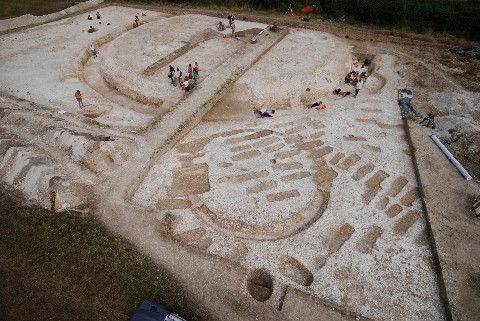
image credit: High Lea Farm excavation © Bournemouth University

image credit: High Lea Farm excavation © Bournemouth University

In 2003 John Gale embarked upon a seasonal campaign of excavations at the little known and apparently flattened barrow group at High Lea Farm near Hinton Martell north of Wimborne. The fieldwork was completed in 2009 and the analysis currently under way is discovering information which suggests that we still have a lot to learn about these ‘familiar’ monuments of the Wessex landscape.  

John will also be incorporating some early results of his recent survey work at the Clandon Barrow in west Dorset which has a bearing on the lecture title.

 A lecture in the Salisbury Museum Archaeology Lectures (SMAL) series. SMAL lectures are held on the second Tuesday of each month from September to April (2011)

A talk by John Gale, Senior Lecturer in Archaeology, Bournemouth University.

Link: http://www.salisburymuseum.org.uk/what-s-on/lectures/188-the-knowlton-prehistoric-landscape-project-–-we-know-a-lot-about-round-barrows-dont-we.html

Mystical Landscape, Magical Tours
HisTOURies UK – The Best Tours in British History

Read Full Post »

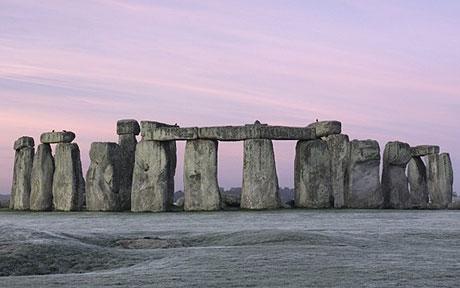
No comprehensive guide to our islands’ buildings should exclude Hadrian’s Wall or Stonehenge
Stonehenge

Jonathan Glancey’s introduction to the Guardian’s Guide to British Architecture encourages a reading of architecture and an immersion in its language (Architecture: an autobiography, 10 September). The buildings “tell tales of people who have lived, loved and worked inside them”. The stories of buildings’ birth, life and death, their design and fabrication, use and abuse, rebirths and ruin, are indeed the narrative that describes a society and its architecture.

Yet the guide as a whole surely misses the deep and longer story of British architecture. Joseph Rykwert’s seminal work The Idea of the Town views the myths and rituals of many previous civilisations; Glancey only allows a brief view of “eight millennia” of architecture with a mention of “the cities and ziggurats (towers) of ancient Sumeria, now hidden from the world in the deserts of southern Iraq”.

Surely Britain is allowed its ancients: does the history of architecture only start with the arrival of Christianity, the dominant force in architecture? Surely it should include places deep in our psyche and defining the last six millennia. Where are the precise fabrications of Stonehenge, and the domestic and environmental connectivity exhibited at Skara Brae? Where are the Romans’ technical marvels, Hadrian’s Wall, and their integrated plumbing and heating?

Are we witnessing an editing moment similar to the TV series Civilisation; or perhaps these Unesco world heritage sites are seen as just buildings, like Nikolaus Pevsner’s bicycle shed – and therefore written out of the story? They were important enough for John Wood, the designer of the Circus in Bath, to survey Stonehenge; and earlier Christopher Wren, a great baroque master, allegedly visited and marked the stones. Peter Ackroyd, in his Hawksmoor novel, develops a narrative that connects Wren at Stonehenge to the death of Wren’s son at the Pyramids of Giza.

Glancey compares the reading of literary greats to the reading of buildings, yet he misses the sensory duet between body and buildings, exemplified by Georges Perec, who combined mathematical and literary puzzles across the life of a Parisian apartment block in Life: a Users Manual. My own favourite from Dickens is a body landscape duet from Great Expectations as Magwitch turns Pip in Cooling churchyard, creating a large-scale metaphoric Thames rotation, moving London west to east.

For me as an architect and tutor, the longer view of British architecture, with civilisations waxing and waning in the face of creative and destructive environmental change, wields salutary lessons.

We can take fictional futures that use the deep and modern past such as those of China Miéville, JG Ballard and Italo Calvino. Digging beyond Calvino’s Invisible Cities, one arrives at the architecture of Cosmicomics, and a fascination in new and rare materials, scientific concepts that become mythical in the Italian’s hand – they are hinted at in your guide’s article on new materials.

Guided tours of Stonehenge
HisTOURies UK – Mystical Landscape, Magical Tours

Read Full Post »

Two children have found “rare” specimens of a fossilised sea creature at the Cotswold Water Park.

Another Rieneckia ammonite was found in the park several years ago

Another Rieneckia ammonite was found in the park several years ago

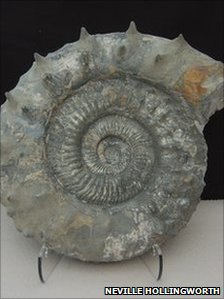
Emily Baldry, five, from Chippenham, discovered the Rieneckia ammonite during a fossil hunt organised by the Cotswold Water Park Society on Sunday.

Hugo Ashley, from Poulton, and his grandfather also found an ammonite cadoceras, and another Rieneckia ammonite.

A society spokeswoman said Rieneckia ammonites were “extremely rare”.

Ammonites were free-swimming molluscs of the ancient oceans, living around the same time as dinosaurs.

‘Quite phenomenal’

Society spokeswoman Jill Bewley said: “The chances of finding something like this [Rieneckia ammonites] are really, really slim.

“It’s the proverbial needle in a haystack so to hit upon something like this is quite phenomenal.”

After Emily hit upon the fossil with a spade, her father and palaeontologist Dr Neville Hollingworth helped her dig out the block of mudstone the 162.8 million-year-old object, which had spikes to ward off predators, was encased in.

A range of other fossils, including many ammonites, were also found during the hunt, in a sand and gravel quarry within the water park.

Ms Bewley said that once work to expose the Rieneckia ammonite, which measures about 40cm (16in) in diameter is complete, it will go on display at the Gateway Information Centre along with a range of other fossils.

She said Dr Hollingworth found another Rieneckia ammonite in a similar quarry in the park several years ago.

The 42 sq mile site of the Cotswold Water Park, which has 150 lakes, is on the Gloucestershire-Wiltshire border.

During the Jurassic period, 165 million years ago, the area was a warm shallow sea.

The Best Tours in British History
HisTOURies UK – Private Guided Tours of Britain

Read Full Post »

Archaeologists searching for King Arthur’s round table have found a “circular feature” beneath the historic King’s Knot in Stirling.

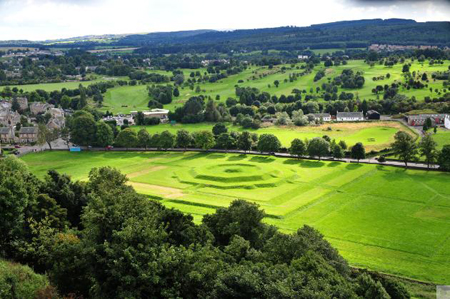
The King's Knot in the grounds of Stirling Castle

The King's Knot in the grounds of Stirling Castle

The King’s Knot, a geometrical earthwork in the former royal gardens below Stirling Castle, has been shrouded in mystery for hundreds of years.

Though the Knot as it appears today dates from the 1620s, its flat-topped central mound is thought to be much older.

Writers going back more than six centuries have linked the landmark to the legend of King Arthur.

Archaeologists from Glasgow University, working with the Stirling Local History Society and Stirling Field and Archaeological Society, conducted the first ever non-invasive survey of the site in May and June in a bid to uncover some of its secrets.

Their findings were show there was indeed a round feature on the site that pre-dates the visible earthworks.

Historian John Harrison, chair of the SLHS, who initiated the project, said: “Archaeologists using remote-sensing geophysics, have located remains of a circular ditch and other earth works beneath the King’s Knot.

“The finds show that the present mound was created on an older site and throws new light on a tradition that King Arthur’s Round Table was located in this vicinity.”

Stories have been told about the curious geometrical mound for hundreds of years — including that it was the Round Table where King Arthur gathered his knights.

Around 1375 the Scots poet John Barbour said that “the round table” was south of Stirling Castle, and in 1478 William of Worcester told how “King Arthur kept the Round Table at Stirling Castle”.

Sir David Lindsay, the 16th century Scottish writer, added to the legend in 1529 when he said that Stirling Castle was home of the “Chapell-royall, park, and Tabyll Round”.

It has also been suggested the site is partly Iron Age or medieval, or was used as a Roman fort.

Extensive work on the royal gardens was carried out in the early 17th century for Charles I, when the mound is thought to have taken its current form.

The first known record of the site being called the King’s Knot is from 1767, by which time it was being leased for pasture.

Locals refer to the grassy earthworks as the “cup and saucer”, but aerial photographs taken in 1980 showed three concentric ditches beneath and around the King’s Knot mound, suggesting an earthwork monument had preceded it.

The new survey — funded by Historic Scotland and Stirling City Heritage Trust — used the latest scientific techniques to showing lost structures and features up to a metre below the ground.

It also revealed a series of ditches south of the main mound, as well as remains of buildings, and more recent structures, including modern drains which appear at the northern end of the gardens.

Mr Harrison, who has studied the King’s Knot for 20 years, said: “It is a mystery which the documents cannot solve, but geophysics has given us new insights.

“Of course, we cannot say that King Arthur was there, but the feature which surrounds the core of the Knot could explain the stories and beliefs that people held.”

Archaeologist Stephen Digney, who coordinated the project, said: “The area around Stirling Castle holds some of the finest medieval landscapes in Europe.

“This investigation is an exciting first step in a serious effort to explore, explain and interpret them. The results so far suggest that Scotland’s monarchs integrated an ancient feature into their garden, something we know happened in other countries too.

“We are looking forward to the next stage in September when we hope to refine some of the details.”

Dr. Kirsty Owen, Cultural Heritage Adviser at Historic Scotland, added: “The project has the potential to add to our knowledge of the landscape context of the medieval and early modern occupation of Stirling Castle.

“The ditches identified may intriguingly be part of historically documented earlier garden features, or if prehistoric in origin could add to our scant knowledge of prehistoric activity at Stirling Castle.

“We look forward to seeing the results of the next phase of investigations.”Futher work including a ground-penetrating radar survey, is now planned to take place next month to find out more.

A small display of the interim results can be seen close to the site at the Smith Museum.

Wessex Tour Guide – Mystical Landscape, Magical Tours
HisTOURies UK – Private Guided Tours

Read Full Post »

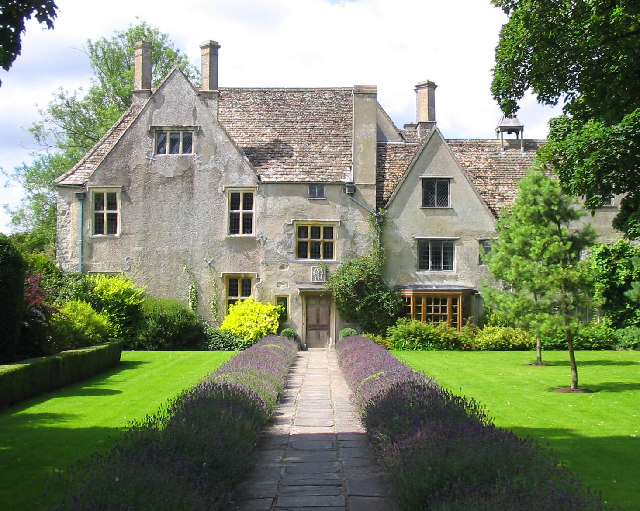
Penelope Keith hosts To The Manor Reborn at AveburyA manor house in Wiltshire is to be completely restored for a new BBC One series presented by Penelope Keith.

Avebury Manor House

Avebury Manor House

The four hour-long episodes will see the National Trust property Avebury Manor refurbished by a team of historians, experts, and volunteers.

Keith, who played snobbish aristocrat Audrey fforbes-Hamilton in the sitcom To The Manor Born, will be joined by Flog It! presenter Paul Martin.

To the Manor Reborn will be broadcast later in the year.

The series will follow the refurbishment of the 500-year-old property in Avebury as it is brought back to life.

Teams of craftsmen, furniture makers and interior design experts will restore the interior of the Grade I listed house to reflect its long history.

‘Push the boundaries’

BBC One controller Danny Cohen said: “Our partnership with the National Trust on this ambitious project encapsulates so many of the BBC’s ambitions.

“The channel aims to keep engaging audiences in new ways and this series offers them the chance to follow the story on screen, and to experience it first hand.”

Sarah Staniforth, the museums and collections director for the National Trust, said: “It is not only a unique opportunity to engage viewers in the history of interior design and architecture but is also a way for the trust to push the boundaries in bringing properties to life.”

Among the guests on To The Manor Reborn will be architectural expert Dan Cruickshank and gardener David Howard.

Avebury Manor will be closed for much of the year while the series is being filmed. It will be reopened as an “immersive experience” in the autumn.

Avebury Manor and Garden

An establishment of monastic origins, the present buildings dates from early 16th century with Queen Anne alterations and Edwardian renovations. The gardens are of an Edwardian style and features much topiary.

Link: http://www.nationaltrust.org.uk/main/w-vh/w-visits/w-findaplace/w-avebury/w-visit-avebury_filming-at-avebury-manor.htm

Wessex Tour Guide – The Best Tours in Ancient Histort
HisTOURies UK – Mystical landscape, magical tours

Read Full Post »

The ancient standing stones at Avebury, lie between Swindon and Devizes on the A4361. Avebury rings are a World Heritage site and attracts thousands of visitors annually, who are no doubt intrigued by the mystery that surrounds their construction.
Avebury Stone Circle
The henge is believed to date back to around 2600BC; just what motivated our ancestors to construct such an elaborate site and their ultimate purpose in doing so remains largely a mystery. It has been suggested (one of many theories) it may have been used as a place of worship and sacrifice. Some favour an astral observatory, difficult to prove I shouldn’t wonder, in view of the fact that many of the stones are missing and any alignment with the stars must be considered near impossible. Others believe it had a connection with Silbury Hill (see sidebar for more info)and was used to gauge the seasons for agriculture. Whatever the reasons for its construction, its true purpose still eludes archaeologists and scholars to this day.

It is unfortunate that not all of Avebury’s 154 sarsen stones (most likely quarried and transported on wooden rollers from the Marlborough hills) have survived. Of the three rings and the Avenue that make up the henge, only 36 stones are still standing. Many were destroyed or buried (some still are) in massive pits during the 14th century by devout local Christians because a) they believed them to be the harbingers of ill luck and b) to eradicate pagan worship from the monument.

It was during the 18th century that the stones came under attack once more, not from zealous Christians this time but from local construction workers who decided it would be a jolly good idea to utilizes the stones to construct several of the cottages in the village; the grand 15th century Tudor manor and the modernization of 12th century church of St. James. Some of these magnificent stones even went to cobble the streets of Devizes seven miles to the south.

It wasn’t until the intervention and purchase of the site by Marmalade tycoon and archaeologist – Alexander Keiller in the 1930’s, that the destruction ceased. Keiller was responsible for much of the conservation and re-erection of the stones. His work was interrupted during the outbreak of the WWII and remains unfinished to this day, unfinished because there are still stones which lay buried.

Keiller purchased Avebury Manor in 1937 and utilized and modernized the stable block to house a museum of his work and findings. Although small, it is well worth a visit.

Folklore

Folklore has evolved over a millennia regarding the alleged power of Avebury’s standing stones. A fascination has grown for these enigmatic sarsens, which appear to cast their spell on many who see them. The stones are often referred to as ‘grey wethers’ on account of their resemblance to grazing sheep when seen from a distance. Some believe the sarsens have healing properties and by a ‘hugging’ one, it will release its magical properties and cure most ills. Others have claimed whilst hugging a stone, to have felt vibrations emanating from within its very core. ‘Stone hugging’ is a common sight at Avebury. Often when I have been driving past, I can pretty much guarantee that someone will be flat against a stone, adopting a pose reminiscent of the crucifixion and gazing heavenward in eager anticipation of “the vibe‘. I think “the vibe,” can more than likely be attributed to the rumble and subsequent vibration of traffic passing close by on the A4361. There’s nout queerer than folk and Avebury attracts them in swarms – bless ‘em. As mentioned earlier, the locals used to believe the stones were harbingers of ill luck, so hugging one is probably not such a good idea.

Dowsers, crystal pendulum swingers, new age folk, druids, pagans and an assortment of other folk all looking for that something, descend on the village annually, and why not, everyone to their own I say.

With all the magic, mystery and ancient rituals which have grown up around the stones, you would have thought the circle would be a paranormal hotspot. If truth be known, the opposite is very much the case, especially when compared to the generous helping of ghostly history from the likes of The Red Lion pub, which stands within the circle; the resplendent Tudor Manor and the 12th century church of St. James. All these buildings positively exude tales to chill you to the marrow. The few hauntings and folklore that have been reported from the henge are as follows:

Back in the Sixties, a woman driving through the village late at night, reported seeing ghostly figures dressed in period costumes dancing amongst the stones. I would question, that what she actually saw, was probably nothing more than one of the many rituals and parties which take place regularly at Avebury.

There are claims of dwarf like creatures seen darting amongst the stones in the dead of night and of a spectrum of tiny twinkling lights believed by some to be fairy folk. These lights have been seen countless times dancing above the stones, especially the mysterious Diamond Stone, which is located at the north-west quadrant, a stone incidentally, said to uproot itself and crosses the A4361 at the stroke of midnight, no mean feat at around 40 tonnes.

The henge is thought to have several ley lines (hypothetical veins of invisible energy beneath the earth, said to connect ancient megalithic sites, monuments and even buildings, particularly churches) which dowsers especially believe crisscross beneath the henge and are most likely responsible for generating subterranean “earth energy.”

Avebury is a fascinating place and well worth a visit, if only to marvel at its construction and debate its mystery. That said, the claims surrounding the stones abilities will, I’m sure, stretch even the most vivid of imaginations.

Links:
http://hauntedwiltshire.blogspot.com
http://www.nationaltrust.org.uk/main/w-avebury
http://www.StonehengeTours.com

Guided tours of Stonehenge and Avebury Stone Circle
HisTOURies UK – The Best Tours in Ancient History
Mystical Landscape, magical tours………….

Read Full Post »

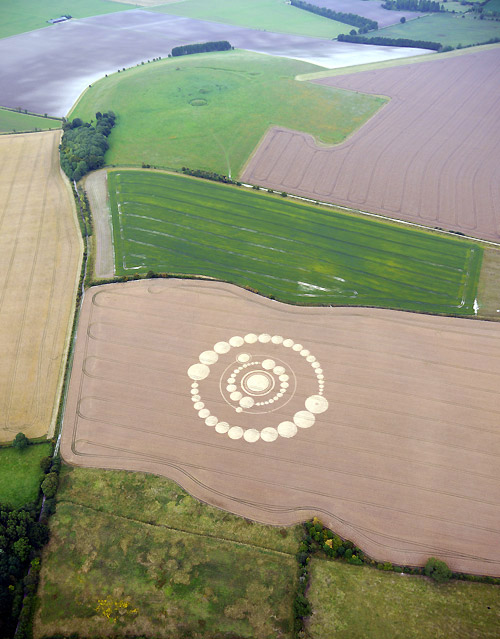
Another circle ‘crops up’ in Wiltshire -Windmill Hill (2), nr Avebury Stone Circle , Wiltshire. Reported 26th July.

Another amazing cropcircle has appeared in Wiltshire.  If you are not visiting with a local tour guide please respect the ‘crop circle etiquette’-see below.


CROP CIRCLE ETIQUETTE: Guidelines for visiting formations
FOR VISITING THE CROP CIRCLES.

In our attempt to become more responsible for giving out information on the locations for the Circles, we have published a Code of Conduct which was drawn up by the National Farmers Union in collaboration with the Centre for Crop Circle Studies. The Connector does not want to deny our readers the chance to visit a Crop Circle. It merely reminds you to ask for their permission to enter their fields.
 

Do not go onto private land unless you have permission from the farmer or landowner. If you can’t find the farmer or landowner to ask permission-you have no right to enter private property.

IF you can not find the farmer DO NOT enter the field.

IF you wander into a formation without permission and a farmer catches you, DO NOT argue with him if he wishes you to leave his land.

Better still – go with a local tour guide who knows exactly where they are, how to get there and has permission from the farmer.

Wilthire Crop Circle Tour Guide
HisTOURies UK – Mystical landscape, magical tours……..

Read Full Post »

THE first two crop circles of the summer have appeared close to Stonehenge.Stonehenge crop circle

Both lie in a barley field just off the A360, near Airman’s Corner.

Francine Blake of the Wiltshire Crop Circle Study Group said the first, which is 170ft in diameter, is an important symbol similar to one from the ancient Mayan culture, lying east-west and linking past and future.

Some enthusiasts have pointed out that it is identical to a logo used by the anarchist punk band Crass 30 years ago, representing the idea that great power will eventually destroy itself.

The second symbol, of two circles touching, measures 130ft by 80ft, and is said to relate to a partial solar eclipse on July 1.
Link: http://www.salisburyjournal.co.uk/news/9132878.Crop_circles_appear/?ref=ms

Visit this and other mysterious crop circles in the Wessex area with one of our private guided tours
HisTOURies UK – Mystical landscape, magical tours…………

Read Full Post »

Stories of yokels getting the better of townies pepper British folklore – perhaps the best known being one reading of the Nottinghamshire legend The Wise Men of Gotham .
Wiltshire MoonrakerRivalling that tale is the Wiltshire story of The Moonrakers, so dear to the heart of the county that to this day anyone born in Wiltshire is known as a Moonraker.
The story goes that a couple of lads from a village near Devizes were involved in the spirits trade, and were not troubling the Excise with paperwork or duties. Depending on the source they were either distilling ‘brandy’ themselves, or obtaining it through illicit channels. These two entrepreneurs were warned of a raid by the Revenue, so for want of time and better cover they hid their contraband, including a couple of barrels of the good stuff, in a pond.

When the customs officials arrived it was unfortunately a clear night, with a full moon and not a breath of wind to stir the water’s surface. The Wiltshire lads could see the barrels clearly, so they quickly came up with a ruse: grabbing rakes they waded into the pond and used the implements to disturb surface and silt, masking the tuns. When the Revenue men spotted them and asked what they were doing, the yokels replied they were raking the moon in the pond in order to gather cheese from it. The clever Revenue men shook their heads at the peasants’ stupidity and searched the rest of the village, then finding nothing moved on.

Wiltshire Tour Guide
HisTOURies UK – The Best Tours in British History

Read Full Post »

Legends of Glastonbury

There are so many myths associated with Glastonbury that it is difficult
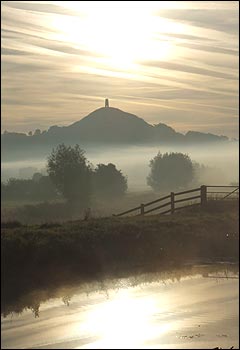
Glastonbury Tor

Glastonbury Tor

to know where to begin to talk about them. There are two main streams of legend that surround Glastonbury, though they twine around each other to some degree. The two streams revolve around the romantic figures of Joseph of Arimathea and King Arthur. Let’s take them one at a time.

Joseph of Arimathea
Joseph was the Biblical figure who took Jesus’ body after the crucifixion. According to some legends he was actually Jesus’ uncle, and had visited Britain years before with Jesus in the pursuit of his interests in the tin trade. It appears that there actually was a strong Jewish presence in the west of England at that time, and many of the tin miners may have been Jewish settlers.

At any rate, when Jesus died, Joseph thought it prudent to flee Palestine, and after many travails he came to Britain with a company of followers. He brought with him the Holy Grail, the cup used by Jesus at the Last Supper. Some versions of the legend have it that the Grail contained two drops of blood captured from Jesus’ side when he was wounded on the cross.

When Joseph came to Britain he was granted land at Glastonbury by the local king. When he arrived at Glastonbury, Joseph stuck his thorn staff in the earth, whereupon it rooted and burst into bloom. A cutting from that first tree was planted in the grounds of the later Glastonbury Abbey, where it continued to bloom every year therafter at Christmas time. There is still a thorn tree in the Abbey grounds, of a variety native to the Holy Lands, and it does indeed bloom around Christmas time.

Joseph was said to have established the first church in England at Glastonbury, and archaeological records show that there may well have been an extremely early Christian church here. What happened to the Holy Grail is another matter. Some legends have it that Joseph buried the Grail at the foot of Glastonbury Tor, whereupon a spring of blood gushed forth from the ground.

There is a well at the base of the Tor, Chalice Well, and the water that issues from it does indeed have a reddish tinge to it, from the iron content of the water.

Other legends have it that the Holy Grail was interred with Joseph when he died, in a secret grave. The search for the mysterious Grail emerges again and again in the tales of Glastonbury.

Further legends tell that the church founded by Joseph continued for many years. Eventually it became a monastery, and one of the first abbots was the future St Patrick, who was born in the west country.

King Arthur and Glastonbury

Glastonbury Abbey, where King Arthur is said to lie buriedLegends of King Arthur swirl about Glastonbury like a tantalizing fog from the nearby Somerset marshes. The nearby hill fort at South Cadbury has long been suggested as the location for Camelot. Indeed, excavations of South Cadbury suggest that it was in use during the early 6th century, which is the likeliest era for the real Arthur to have lived.

The association of Arthur and Glastonbury goes back at least to the early Middle Ages. In the late 12th century the monks of Glastonbury Abbey announced that they had found the grave of Arthur and Guinivere, his queen. According to the monks, an excavation found a stone inscribed “Here lies Arthur, king.” Below the stone they found the bones of a large man, and the smaller skeleton of a woman. The monks reburied the bones in the grounds of the abbey, where they were a very handy draw for pilgrims. The site of the grave can be seen today in the abbey grounds.

Glastonbury Tor, the enigmatic conical hill that rises above Glastonbury, has been linked with the Isle of Avalon, where King Arthur was buried after his death. This isn’t so farfetched as it may sound, for a millennium ago the water level was much higher, and the tor would indeed have been an island. Avalon was also called “the isle of glass” which does suggest similarities to the name “Glastonbury”.

The Holy Grail, the object of Arthur’s questing, is said to be buried beneath Glastonbury Tor, and has also been linked to Chalice Well at the base of the Tor.

One final myth of Arthur at Glastonbury: the landscape around Glastonbury is said to have been moulded and shaped so that the features (such as roads, churches, and burial mounds) create a zodiac calendar replete with Arthurian symbology. Like so many of the Arthurian myths, so much is open to interpretation and your own predisposition to believe or disbelieve.

Glastonbury Abbey
Is there a place more steeped in legend and myth than Glastonbury? Glastonbury AbbeyProbably not. Legend holds that the earliest church here was founded by St. Joseph of Arimathea in about 60AD, and that when he planted his staff in the earth a thorn tree burst forth.

In the grounds of the ruined Benedictine monastery there is a thorn tree of a variety common to the Middle East which is given to bloom around Christmas time.

By the late Middle Ages Glastonbury had become the richest abbey in England, due to the heavy pilgrimage trade. It was rich enough to build an inn for well-to-do pilgrims (the George Inn, on nearby High Street, which still welcomes guests 500 years later). The best preserved building in the abbey grounds is the old Abbot’s Kitchen (see photo), a curious square building which appears round due to its octagonal roof. In the abbey grounds are the reputed graves of King Arthur and Queen Guinevere, which were conveniently discovered by the Glastonbury monks in the 12th century, when the abbey needed a financial boost. Outside the grounds are the abbey tithe barn, which now serves as the Somerset Rural Life Museum (well worth a visit), and 4 miles away at Mere is the abbey’s Fish House, were fish was salted and cured.

The abbey is entered through the Abbey Gatehouse  an imposing arched gateway located on off Magdalene Street. Visitors pass through a fascinating museum depicting life at Glastonbury during the Middle Ages, and then enter the Abbey grounds proper. The first building you see on entering the grounds is St Mary’s Chapel, a roofless structure that boasts wonderful architectural details, from the recessed arches of the door to the repetitive arcading that rings the interior. Look up, where the curious small towers at each corner of the chapel seem almost Georgian in style.

If you continue past the chapel you will soon reach the Abbot’s Kitchen, probably the most recognizable symbol of the Abbey, and subject of numerous postcards! This is a peculiar building, with a high octagonnal tower over a square base bedecked with gargoyles. The interior is notable for the very large ovens and the high dome supported on reed-thin vaulting ribs.

Return from the Abbot’s Kitchen towards St Mary’s Chapel and you will pass a small sign on the green lawn. This marks the old burial ground, where, in the 12th century, monks conveniently found bones beneath an engraved stone indicating the burial place of legendary King Arthur. The bones and those presumed to belong to Arthur’s queen, Guinivere, were reburied within the Abbey Church, where a small memorial can be seen.

The grounds of Glastonbury Abbey emanate a sense of calm and peace; it is truly a magical place, and taken as a whole with the other attractions of this ancient town, make Glastonbury well worth an extended visit.

Visitor Information
Glastonbury Abbey
The Abbey Gatehouse
Magdalene Street
Glastonbury
Somerset
UK
BA6 9EL
Web: http://www.glastonburyabbey.com
Email: nfo@glastonburyabbey.com
 
Join us on a private guided tour of the West Country.   Visit Glastonbury, Stonehenge and Avebury Stone Circle.

Mystical Landscape, Magical Tours……………….
HisTOURies UK – The Best Tours in History

Read Full Post »
« Newer Posts - Older Posts »