Feeds:
Posts
Comments

Historical high points
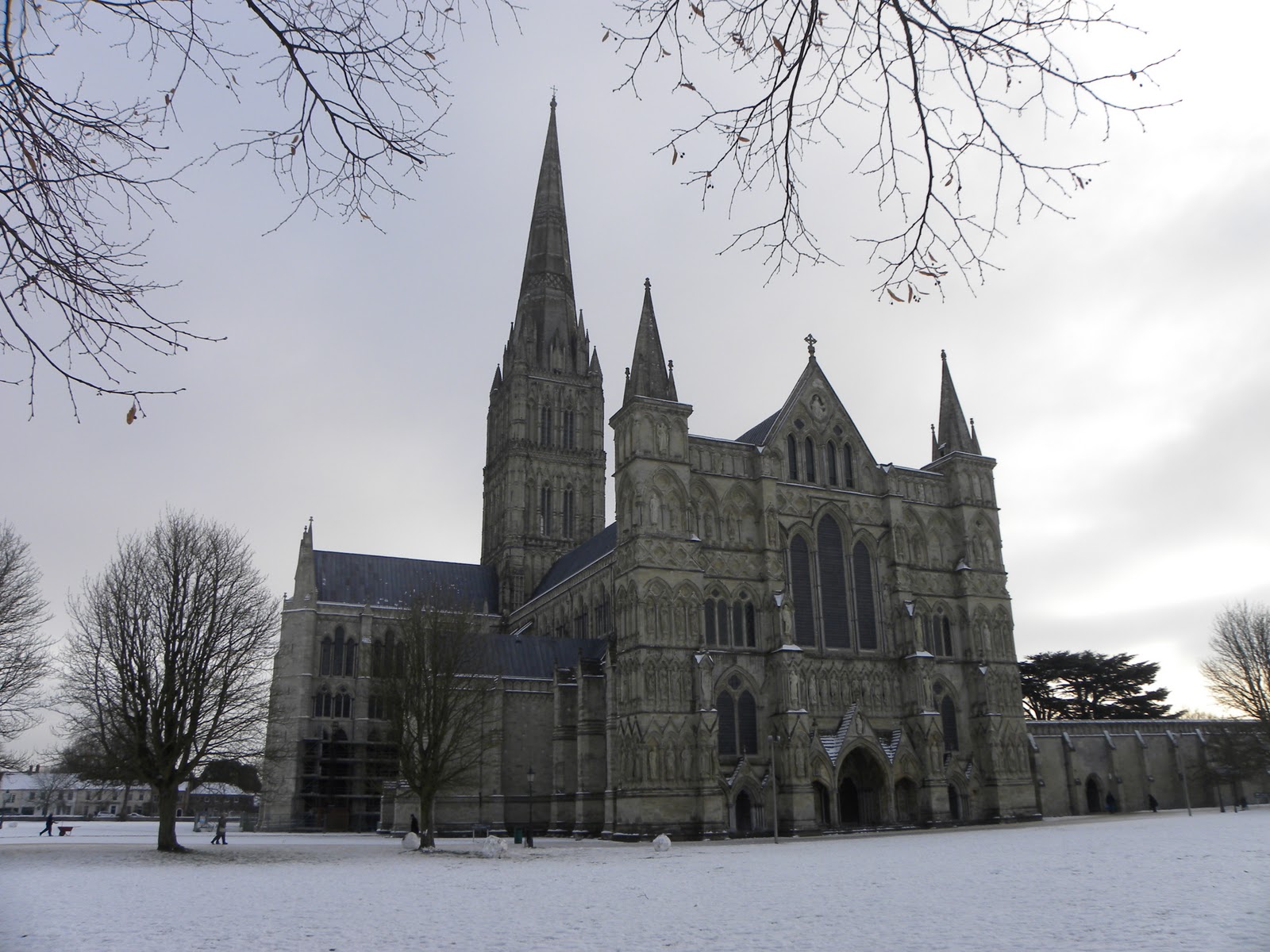
The only city in Wiltshire has an incredible heritage. In 1069, William the Conqueror built a wooden castle at Salisbury Hill, overlooking a small settlement with a mint and a market. In 1220, building work started on Salisbury Cathedral, a key part of our country’s history too. Its construction was masterminded by William Elias of Dereham, one of the key negotiators of the Magna Carta. You can find one of the finest preserved copies of the 1215 charter inside the gothic cathedral, as well as 332 steps up Britain’s tallest spire. After your tour of the building, take a trip to Salisbury Museum. The atmospheric Grade I-listed, 13th-century building houses a fine collection of prehistoric and medieval artefacts.

The construction of Salisbury Cathedral was masterminded by William Elias of Dereham, one of the key negotiators of the Magna Carta. Photograph: Greg Funnell for the Guardia

The construction of Salisbury Cathedral was masterminded by William Elias of Dereham, one of the key negotiators of the Magna Carta. Photograph: Greg Funnell for the Guardian

Ancient and mystical monuments
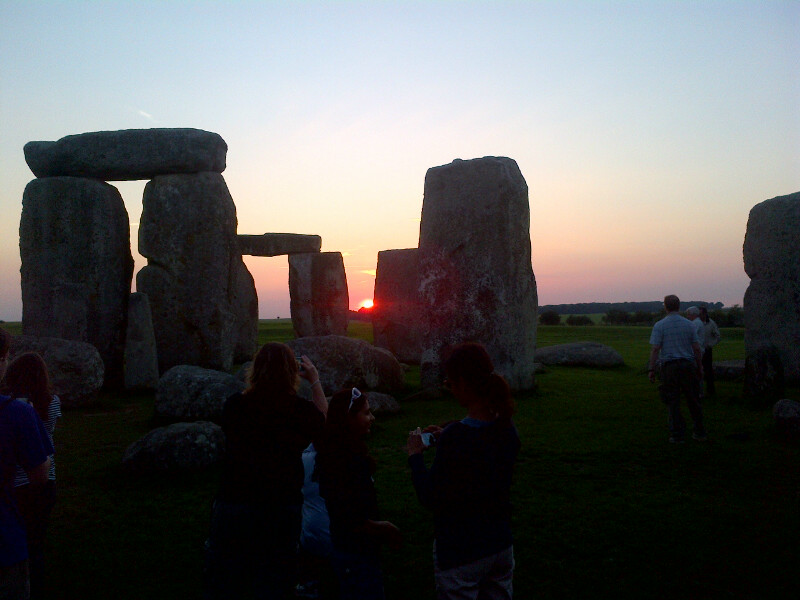
Just beyond the compact city lies a magical prehistoric landscape. Explore it with the experts, Spire Travel, who offer luxury one-day tours. You’ll take in the Unesco world heritage site Avebury and Stonehenge, which was completed 3,500 years ago and is thought to have been a temple for worshipping the sun and the moon. The megalithic henge and stone circles, looked after by English Heritage, are considered to be the most important prehistoric earthworks in Europe. For an unforgettable experience, snap up limited camping places for the summer or winter solstice.

Green and pleasant land
The ancient sites are surrounded by glorious Wiltshire countryside. Hudson’s Field, situated below the remains of the iron age hillfort Old Sarum, is ideal for walkers and kite-flyers. Further into the city, you can cycle or walk around the water meadows and river banks that captivated English Romantic painter John Constable from his first visit in 1811. There are three main parks to stroll through, as well as several open spaces. Alternatively, go on a romantic adventure through the area by VW campervan: Stonehenge Campervans have three to hire.

Cultural corners
There’s a thriving arts scene in Salisbury and a strong theatre tradition that helped to launch the careers of household names such as Prunella Scales and Kenneth Williams. The Salisbury Playhouse is the south-west’s leading producing theatre, while one of this year’s cultural highlights will be the Salisbury international arts festival (24 May to 8 June). One high point is King Lear, which will be performed at 14th-century Old Wardour Castle in Tisbury, a historic village 13 miles from the city and the site of a bronze age settlement. Refresh en route in the local tearooms and bookshop, Beatons; they have 25 varieties of loose tea.

Shop, drink, then drop
Thanks to its annual fair, Salisbury has been a shopping destination since 1075. Two current gems are the art and design studios at Fisherton Mill and the Cambridge Wine Merchants. As the city has been awarded a Purple Flag for the quality of its nightlife, head to The Chapel or The Cathedral Hotel for a cocktail before checking into your hotel. Luxury city-centre accommodation includes the Grade II-listed Milford Hall. Or try a more rural experience at Shepherds Hut at Marshwood Farm, Dinton, close to the city (pictured left).

Getting there

Salisbury is well connected to the majority of the UK, by road via the A30 and M3, and by the city’s train station.

From London: 90 minutes by road, and one hour and 20 minutes on the train from Waterloo. Prices from £34.70
From Bristol: one hour and 10 minutes. Prices from £4 
From Birmingham: two hours and 50 minutes. Prices from £28.50
London Tour Operators: Stonehenge Tours | Best Value Tours

Full article in the Guardian today: http://www.guardian.co.uk
Great for Wiltshire Tourism!

Wessex Guided Tours
Mystical Landcape, Magical Tours

View Sillbury Hill from West Kennet Long Barrow!

heritageaction's avatarThe Heritage Journal

Postcards to friends of the Stonehenge and Avebury World Heritage Site

Silbury_Scar_sml

Every year hundreds of people climb Silbury Hill, ignoring signs explaining why they should not. Until recently, all used an ancient spiral path that is conspicuously visible from the roadside, but after Silbury’s 2008 restoration at least half a dozen new routes appeared, each producing an ugly, vertical scar. Most climbers preferred the same ‘discrete’ route least visible from the road; after only a few years their collective boots formed steps, as they cut through the turf into bare soil. In this record year of rainfall that soil has eroded away, leaving a foot-deep scar. Those that climb assume that one individual cannot make any difference to a monument so vast – but there are people on the hill virtually every day of the year. Hundreds of individuals do make a difference, as this picture clearly shows: crossing the…

View original post 88 more words

With the World Heritage Site of Stonehenge, equally remarkable Avebury and the mighty Iron Age hill fort of Old Sarum, there really is plenty for the whole family to enjoy on a day out in Wiltshire. Discover the secrets of this seemingly ‘sacred landscape’ or get away from it all and explore a romantic ruined castle.

Please note English Heritage have now switched to our winter opening hours, meaning that while many properties are open at weekends, there may be restricted access during the week. Please check opening times before travelling.

PLACES TO VISIT : WILTSHIRE (ENGLISH HERITAGE)

Stonehenge

Stonehenge

Visit Stonehenge! Sun worship temple? Healing centre? Huge calendar? How did they carry the great stones so far and build this amazing structure using only basic tools?

Old Sarum

Old Sarum

Site of the original Salisbury, this mighty Iron Age hill fort was where the first cathedral once stood and the Romans, Normans and Saxons have all left their mark during 5000 years of history.

Old Wardour Castle

Old Wardour Castle

Set in landscaped grounds beside a lake in peaceful Wiltshire countryside, these 14th century ruins provide a relaxed, romantic day out for couples, families and budding historians alike.

Avebury

Avebury

With its huge circular bank and ditch and inner circle of great standing stones, covering an area of over 28 acres, Avebury forms one of the most impressive prehistoric sites in Britain

Hatfield Earthworks (Marden Henge)

Hatfield Earthworks (Marden Henge)

The earthworks of a Neolithic henge and monumental mound, by a loop in the River Avon. Recent archaeological find of building equivalent to a priest’s quarters.

Woodhenge

Woodhenge

Dating from about 2300 BC, markers now replace rings of timber posts, which once possibly supported a ring-shaped building. Discovered in 1925 when rings of dark spots were noticed in a crop of wheat.


Wessex Guided Tours
Mystical Landscape, Magical Tours

Civilisations around the world have been celebrating the start of each new year for at least four millennia. Today, most New Year’s festivities begin on December 31st (New Year’s Eve), the last day of the Gregorian calendar, and continue into the early hours of January 1 (New Year’s Day). Common traditions include attending parties, eating special New Year’s foods, making resolutions for the new year and watching fireworks displays.

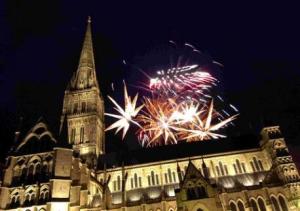
Salisbury Cathedral New Year Fireworks

Salisbury Cathedral New Year Celebration Fireworks

Early New Year’s Celebrations

The earliest recorded festivities in honor of a new year’s arrival date back some 4,000 years to ancient Babylon. For the Babylonians, the first new moon following the vernal equinox—the day in late March with an equal amount of sunlight and darkness—heralded the start of a new year. They marked the occasion with a massive religious festival called Akitu (derived from the Sumerian word for barley, which was cut in the spring) that involved a different ritual on each of its 11 days. In addition to the new year, Atiku celebrated the mythical victory of the Babylonian sky god Marduk over the evil sea goddess Tiamat and served an important political purpose: It was during this time that a new king was crowned or that the current ruler’s divine mandate was symbolically renewed.

Throughout antiquity, civilisations around the world developed increasingly sophisticated calendars, typically pinning the first day of the year to an agricultural or astronomical event. In Egypt, for instance, the year began with the annual flooding of the Nile, which coincided with the rising of the star Sirius. The first day of the Chinese new year, meanwhile, occurred with the second new moon after the winter solstice.

A move from March to January

The celebration of the new year on January 1st is a relatively new phenomenon. The earliest recording of a new year celebration is believed to have been in Mesopotamia, c. 2000 B.C. and was celebrated around the time of the vernal equinox, in mid-March. A variety of other dates tied to the seasons were also used by various ancient cultures. The Egyptians, Phoenicians, and Persians began their new year with the fall equinox, and the Greeks celebrated it on the winter solstice.

Early Roman Calendar: March 1st Rings in the New Year

The early Roman calendar designated March 1 as the new year. The calendar had just ten months, beginning with March. That the new year once began with the month of March is still reflected in some of the names of the months. September through December, our ninth through twelfth months, were originally positioned as the seventh through tenth months (septem is Latin for “seven,” octo is “eight,” novem is “nine,” and decem is “ten.”

January Joins the Calendar

The first time the new year was celebrated on January 1st was in Rome in 153 B.C. (In fact, the month of January did not even exist until around 700 B.C., when the second king of Rome, Numa Pontilius, added the months of January and February.) The new year was moved from March to January because that was the beginning of the civil year, the month that the two newly elected Roman consuls—the highest officials in the Roman republic—began their one-year tenure. But this new year date was not always strictly and widely observed, and the new year was still sometimes celebrated on March 1.

Julian Calendar: January 1st Officially Instituted as the New Year

In 46 B.C. Julius Caesar introduced a new, solar-based calendar that was a vast improvement on the ancient Roman calendar, which was a lunar system that had become wildly inaccurate over the years. The Julian calendar decreed that the new year would occur with January 1, and within the Roman world, January 1 became the consistently observed start of the new year.

Middle Ages: January 1st Abolished

In medieval Europe, however, the celebrations accompanying the new year were considered pagan and unchristian like, and in 567 the Council of Tours abolished January 1 as the beginning of the year. At various times and in various places throughout medieval Christian Europe, the new year was celebrated on Dec. 25, the birth of Jesus; March 1; March 25, the Feast of the Annunciation; and Easter.

Gregorian Calendar: January 1st Restored

In 1582, the Gregorian calendar reform restored January 1 as new year’s day. Although most Catholic countries adopted the Gregorian calendar almost immediately, it was only gradually adopted among Protestant countries. The British, for example, did not adopt the reformed calendar until 1752. Until then, the British Empire —and their American colonies— still celebrated the new year in March.

For more New Year’s features see New Year’s Traditions and Saying “Happy New Year!” Around the World.

Read more: A History of the New Year — Infoplease.com
http://www.history.com/topics/new-years

Did you know ?In order to realign the Roman calendar with the sun, Julius Caesar had to add 90 extra days to the year 46 B.C. when he introduced his new Julian calendar”

Wessex Tours – Making History!
www.HisTOURies.co.uk

Human remains found in the resting place of Richard III have already been identified as those of the king but information is being held back ahead of a major press conference next month, sources close to the project claim

A source with knowledge of the excavation told the Telegraph archaeologists will richard_3
name the skeleton found beneath a Leicester car park in September as the
Plantagenet king even if long-awaited DNA results on the bones prove
inconclusive.

Additional evidence not revealed at a major press conference after the remains were found demonstrates beyond all reasonable doubt that the body is the King’s, even without genetic proof, the source said.

Leicester University experts announced earlier this year that there was convincing evidence suggesting the remains were those of Richard III, but have always insisted DNA analysis is needed before a conclusion can be reached.

Clues to the body’s identity include a wound to the skull and a twist in the spine which match historical accounts of the King and his death in battle, but these alone are not enough to prove it is the King, archaeologists said at the time.

A spokesman for Leicester University denied any information had been withheld from the public at the press event in September, but said various new evidence gathered since then will be announced to the public next month.

This will include the results of radiocarbon dating tests, which will indicate the date the individual died within an 80-year range, and analysis of dental calculus which could reveal details about their and lifestyle, as well as the first images of the body.

The spokesman said: “There will be things that have been discovered during the course of the investigation that will be announced at the press conference, but everything we were willing to reveal and that we were sure of, we revealed [in September].”

A Channel Four documentary, which initially led to the university’s involvement, will also be screened in January and is expected to reveal new information about the project.

The University insists it has been open about the analysis of the skeleton from the start, but a number of people close to the study have become uncomfortable that new evidence is not being published.

A source told the Telegraph: “Unfortunately, an awful lot of stuff is being kept from the public.

“I am told that circumstantial evidence of the find which is not going to be broadcast until this programme (on Channel Four) is brought out in January will confirm the body is Richard III’s, even if the DNA does not.”

The University said all available information will be announced at the press event and insisted it had no knowledge of any information which is being withheld for the documentary.

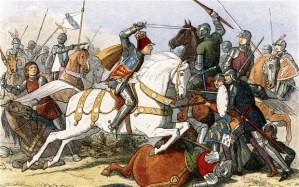
The body was identified just weeks into a project which began when experts identified a council car park in Leicester as the most likely historical location of the church of Grey Friars, where the King was said to have been buried after his defeat in the Battle of Bosworth in 1485.

The archaeologists initially described the dig as a “long shot” but have since uncovered the foundations of a church along with two bodies, one of which is thought to be that of the King.

By , Science Correspondent – Full article

Wessex Guided Tours
Mystcal Landscape, Magical Tours

Tower Tours at Salisbury Cathedral are regarded as the ‘ultimate’ visitor experience. Led by one of our knowledgeable and enthusiastic guides, you climb 332 steps in five stages to discover the hidden medieval structure that supports the amazing spire, see behind the scenes, hear the Cathedral’s history, and see the breathtaking views over Salisbury and beyond from 224 feet above ground level.
Salisbury Cathedral Guided ToursThis Christmas there are four ways to experience a tower tour at Salisbury Cathedral.
29 November – 24 December 2012

Daily from 29 November through to 24 December there are two options available to choose from:
Tower Tour 12.15pm (90 minutes tour) Climb to the base of the spire and see the views over the city and surrounding countryside whilst learning about the history of the Cathedral from a specialist guide. £10.00 per person (£8.00 seniors, students and children 7-17 years)
Tower Tour and Tea 2.15pm (please note there will be no Tower Tour and Tea on Sunday 2 December and Sunday 16 December) A shorter Tower Tour (60 minutes maximum) followed by tea in the Cathedral’s award-winning Refectory with Christmas cake/mince pies. £13.00 per person (£11.00 seniors, students and children 7-17 years)
Pre-book your place online at http://www.salisburycathedral.org.uk or call 01722 555156.

Christmas Spire Special
And for six days, we are offering a Christmas Spire Special providing the opportunity to see Salisbury City’s Christmas Lights from above. Beginning at 4.30pm, visitors enjoy a guided tour of the Cathedral and Chapter House with Magna Carta before climbing 332 steps to the base of the Cathedral spire on a ‘Tower Tour Teaser’ *, finishing with either a 2-course supper or seasonal refreshments.
Saturday 8, Thursday 13 and Thursday 20 December – with 2 course supper £20.00 (ends 7.30pm)
Friday 7, Tuesday 11 and Wednesday 19 December – seasonal refreshments £13.00 (ends 7.00pm)
*alternatively move into the quire and experience the beauty and peace of Evensong sung by our superb Cathedral Choir. 

To book please call 01722 555120.

Tower Tours

Enjoy spectacular views as you explore the roof spaces and tower, climbing 332 steps in easy stages by narrow winding spiral staircases to reach the foot of the spire 225 feet above ground level. From here you can see up into the spire through the medieval scaffold, and from the outside you can look over the city and surrounding countryside.

Tower tours cost £10.00 for adults, £8.00 for children/seniors and £27.00 family (2 adults + 3 children) which includes a donation to the Cathedral. Scheduled tours run at least once a day for 11 months of the year (subject to daily conditions).
From Monday to Saturday, scheduled tours run between 1 -5 times a day all year round (see timetable below). There are two scheduled tours on Sundays between April – September.

http://www.salisburycathedral.org.uk

Wessex Guided Tourswww.Histouries.co.uk
Mystical Landscape, Magical Tours


Military environmentalism.  An ocean of grassland  and a sweep of big sky. Ancient monuments loom out of the mist; camouflaged soldiers crouch in the undergrowth. Salisbury Plain is a landscape of extremes. It is the largest remaining area of chalkgrassland  in Northwest Europe and home to 2,300 prehistoric sites yet also the largest military training area on British soil.

Salisbury Plain WalkingTourYou may be surprised to discover that the presence of the military has benefitted archaeological sites and natural habitats. The walk follows public footpaths that penetrate deep into the heart of the military training area taking you out of your comfort zone and to experience a totally new kind of landscape (don’t worry, it’s safe and legal).

Walk along the largest prehistoric long barrow in Britain to a 20th century East German village. Hunt in puddles for a tiny translucent shrimp and look out for the largest bird species in Europe. The extremes of Salisbury Plain sit side by side. Use this spectacular landscape to stretch your legs, blow away the cobwebs and fire the imagination.


Map and full details: http://www.discoveringbritain.org/walks/region/south-west-england/salisbury-plain.html

HisTOURies UK
Mystical Landscape, Magical Tours

The outer circle was composed of 30 sarsen uprights with a similar number of lintels: this enclosed five sarsen trilithons (pairs of uprights with a lintel across each), arranged in a horseshoe shape, with the open end towards midsummer sunrise.

Stonehenge Bluestones, which clearly had a special significance for the builders, were re-erected in a circle between the outer sarsen circle and horseshoe, and inside the horseshoe. Some bluestones were later removed to leave the final setting, the remains of which can be seen today.

In the landscape immediately around Stonehenge there are visible remains of many different types of monuments, and many more have been detected. Neolithic monuments include long barrows, and the long rectangular earthwork to the north, the Cursus ( so called because it was once thought to resemble a chariot racecourse): together with the henge monuments at Woodhenge and Durrington Walls, contemporary with the middle phases at Stonehenge. The most numerous monuments are the remains of many Bronze Age round barrows, which were built after Stonehenge Stone Circle was complete.
***source: english-heritage.org.uk

Stonehenge is a prehistoric monument located in the English county of Wiltshire, about 3.2 kilometres (2.0 mi) west of Amesbury and 13 kilometres (8.1 mi) north of Salisbury. One of the most famous sites in the world, Stonehenge is composed of earthworks surrounding a circular setting of large standing stones. It is at the centre of the most dense complex of Neolithic and Bronze Age monuments in England, including several hundred burial mounds.[1]

Archaeologists had believed that the iconic stone monument was erected around 2500 BC, as described in the chronology below. One recent theory, however, has suggested that the first stones were not erected until 2400-2200 BC,[2] whilst another suggests that bluestones may have been erected at the site as early as 3000 BC (see phase 1 below). The surrounding circular earth bank and ditch, which constitute the earliest phase of the monument, have been dated to about 3100 BC. The site and its surroundings were added to the UNESCO’s list of World Heritage Sites in 1986 in a co-listing with Avebury Henge monument. It is a national legally protected Scheduled Ancient Monument. Stonehenge is owned by the Crown and managed by English Heritage, while the surrounding land is owned by the National Trust.[3][4]

Archaeological evidence found by the Stonehenge Riverside Project in 2008 indicates that Stonehenge served as a burial ground from its earliest beginnings.[5] The dating of cremated remains found on the site indicate burials from as early as 3000 BC, when the initial ditch and bank were first dug. Burials continued at Stonehenge for at least another 500 years.[6]”
***source: wikipedia.org

Stonehenge Access Tours – go beyond the fences! 

HisTOURies UK
Mystical Landscape, Magical Tours

Had the question been posed at the dawn of time – which is the species most likely to survive and dominate the planet? – mankind would probably not even have featured.

After all, we’re a somewhat puny lot. We don’t have claws or sharp teeth to help us hunt, or fur to keep us warm. We’re neither the tallest nor the fastest animals on Earth.

Our babies are born pitifully weak. As species go, you’d have been crazy to have bet on us.

Jane's new TV series Mankind: The Story Of All Of Us on the History Channel tells the whole story of humankind in 12 hours

Jane’s new TV series Mankind: The Story Of All Of Us on the History Channel tells the whole story of humankind in 12 hours

Yet survive we have, while 99 per cent of all life forms have become extinct. How on Earth did we do it? My new TV series Mankind: The Story Of All Of Us on the History Channel sets out to answer this question. It tells the whole story of humankind in 12 hours.

We wanted to take a completely new look at who we are and where we came from, and make it thrilling television at the same time.

It’s a ridiculously huge undertaking, but with the world beset by economic crisis and threatened by climate change, we wanted to tell an optimistic story of the incredible things that we, as a species, have accomplished.

We have, after all, manipulated the forces of our planet. We used fire to cook our food, making it easier to digest – giving us smaller stomachs and bigger brains (they’ve doubled in size in  2 million years). We turned other animals into companions – our Ice Age enemy, the wolf, became a hunting buddy and man’s best friend.

These ancient wolves are the ancestors of all the dogs alive today. And we unravelled the chemistry of our planet, unlocking nitrogen from the atmosphere to use as fertiliser – revolutionising food production and helping our population to grow faster in the first 50 years of the 20th century than it did in the previous 50,000.

Mankind’s journey from a few thousand hunter-gatherers on the African savannah 100,000 years ago to a population of seven billion today has been one built around science, invention and warfare.

Along the way we have learned about the weather, navigation and trade, about medicine, evolution and the explosive power of the atom. The sacking of Rome, the industrial revolution and mapping our own DNA are just a handful of the pivotal points along the route.

Today, one in three people on the planet is Christian, but word of the death of a man called Jesus from Nazareth 2,000 years ago might never have spread across the world if it hadn’t been for the might of the Roman Empire.

It was the Romans who mastered road-building and built a vast network of shipping lanesIt was the Romans who mastered road-building and built a vast network of shipping lanes, allowing goods and ideas to flow across three continents. In the Andes, the Spanish opened up the largest silver mine in the world in the 16th century, minting millions of coins which transformed the global economy – filling the chests of pirates, fuelling a stock market boom and, via the British Empire, helping to pay for the Taj Mahal.

As trade boomed, millions of people came into the New World as slaves, bringing their customs and culture with them and creating a diaspora that has spread around the planet.

The tale we’re telling is a global story. What most of us learn at school is our own history: I learned British history, but now I live in America with my British husband and very American seven-year-old daughter, Molly.

She gets taught American history and knows everything about George Washington, but not so much about Brunel. It’s the same story across the world: in Shanghai you learn Chinese history, in Lima, Peruvian history. None of us grows up thinking about how astoundingly interconnected the whole world is.

How many of us realise that ancient Britons built Stonehenge around the same time as the Egyptians constructed the pyramids, over 2,000 miles away? Or that farming was discovered – across the world – at almost exactly the same time?

How different would the world be if every child, everywhere, grew up thinking about all the things that have united mankind for millions of years, rather than the things that divide us right now?

People ask me how you go about condensing so much information into 12 hours of television, and the answer is prodigious planning, then breaking it down into manageable nuggets. We decided where we wanted to start (the Big Bang) and end (the near future).

Then our team spoke to an awful lot of people. Our main consultant was Ian Morris, the British professor of History and Classics at America’s Stanford University, but we also spoke to a further 200 or so historians across the globe.


When we made the series The British for Sky TV earlier this year we had experts who knew our entire history. With Mankind we had to find the one person who knew about the Vikings in America, for example, then someone else who knew about corn in the Mayan diet, and so on.

Most importantly we wanted to create must-see television. I want there to be a buzz and for people to want to be at home for it. To realise that feeling of excitement we’ve tried not only to tell incredible tales from the past, but to show them in a totally different way.

We spent two years filming in four different countries to give the shows a variety of landscapes that would make them visually astounding.

We’ve tried to give people a feature-film experience. I want the audience to feel as though the history is growing around them – which we’ve attempted to do with computer graphics to complement the drama.

The final piece of the jigsaw was securing Stephen Fry for the voice-over. His excitement about knowledge is a joy to behold and very close to the heart of what we’re trying to do.

I hope everyone watching will discover something new. For me, it all comes down to one big thing. The world we live in has to contend with ferocious storms and economic meltdowns, but in the mid-14th century plague wiped out a third of the population of Europe in a couple of years.

Mankind survived, and a new world emerged. We are incredibly resilient and we go on and on. If you take the really long view, things always get better.

Mankind: The Story Of All Of Us, Wednesday, 10pm, History Channel

Link source and ful ariticle: http://www.dailymail.co.uk/femail/article-2233399/Former-BBC2-controller-Jane-Root-ambitious-TV-project–condensing-entire-history-human-race-just-12-hours.html

HisTOURies UK
Mystical Landscape, magical Tours

An adaptation of William Golding’s powerful novel dramatising the building of the spire of Salisbury Cathedral in the 14th century is full of strong performances, writes Jane Shilling.

The Spire, an adaptation of William Golding's novel of the same name, performed at Salisbury Playhouse.

The Spire, an adaptation of William Golding’s novel of the same name, performed at Salisbury Playhouse.

The spire of Salisbury cathedral rears over the city, its apex surmounted by an oddly festive bobble of red light. The novelist William Golding lived and taught in Salisbury for many years and his novel, The Spire, imagines the building of the great pinnacle — the tallest in England — which was added to the original structure in 1320, a century after the foundation stone was laid.

Its construction was a miracle of faith over physics. The land on which the cathedral stood was swampy, and the foundations seemed insufficient to support the additional weight. Golding’s novel imagines the spire as the vision of a driven man, Dean Jocelin, who believes that he has been commanded by God to build it to glorify Him and bring the congregation closer to heaven.

As in all acts of spiritual conviction, there is a fine tension between the exaltation of God and Jocelin’s sinful human pride. Golding’s novel brilliantly conveys this by means of Jocelin’s interior monologue. Roger Spottiswoode, who has adapted Golding’s novel for the stage, has a harder task.

Gareth Machin, the artistic director of the Salisbury Playhouse, sets his production on an all-but-bare black set of cloistral simplicity, beautifully lit by Philip Gladwell to define the sharp angles of stone and flesh – we see mortality as a constant haunting presence in the skulls so clearly visible beneath the actors’ skins.

Mark Meadows as Dean Jocelin is the image of a man in whom spiritual and temporal desires are irreconcilably and, in the end, fatally at war. He is able to override the doubts of his brethren at the Cathedral by sheer force of will, combined with the wealth of his aunt Lady Alison (a spirited performance by Sarah Moyle) who takes a highly pragmatic attitude to atoning for the sins of the flesh committed in her youth by putting the riches thus acquired to holy use. The scene in which she explains to her nephew the venal means by which his early preferment came about is a fine study in tragic-comic devastation.

Strong performances by the supporting cast, particularly Vincenzo Pellegrino as the master mason, Roger, animate this gallant essay in dramatising Golding’s vastly complex fiction. So powerful a presence is the cathedral in the drama that it would be perverse not to combine a visit to the play with a trip to the beautiful building that inspired it.

Full article: http://www.telegraph.co.uk/culture/theatre/theatre-reviews/9672496/The-Spire-Salisbury-Playhouse-review.html

Link: http://www.salisburycathedral.org.uk/news.php?id=682

Until Nov 24. Tickets:             01722 329333      ;
www.salisbury playhouse.com

On Friday 16 November, 7.30pm – 9.00pm, the Dean of Salisbury, the Very Revd June Osborne, and Gareth Machin, the play’s director, can be heard in conversation as they explore Golding’s tale of Jocelin’s vision in the very location itself, sitting underneath the spire. There will also be readings from the novel and an opportunity to ask questions. Themes include: Jocelin’s vision – was it foolish or inspired? Golding’s juxtaposition of faith and science, the challenges of staging ‘The Spire’ – and the challenges of maintaining the real spire.
Tickets, £8.00 (adults) and £2.50 (students) for ‘A burning will….exploring The Spire’ are available online from http://www.salisburycathedral.org.uk here or from Salisbury Playhouse box office,            01722 320333      . All proceeds towards the Cathedral’s Major Repair Programme.

Special tower and floor tours at Salisbury Cathedral focussing on what really happened when the 6500 tonnes tower and spire were added take place on Saturdays 3, 10 and 24 November, and Monday 5, Tuesday 13 and Thursday 22 November.
‘The Spire’ tower tours, £10.00 (£8.00 concessions), begin at 2.15pm (allow 90 minutes) Pre-booking essential online at: http://www.salisburycathedral.org.uk here or telephone            01722 555156      .
Floor tours begin at 11.00am (allow 60 minutes) No booking or tickets required – just turn up. Visitors are requested to make a donation to help towards the fabric of the Cathedral.

Further information:
Salisbury Cathedral special events based on ‘The Spire’:

Sarah Flanaghan,             01722 555148       /             07771 510811       or s.flanaghan@salcath.co.uk
Salisbury Playhouse production of The Spire
Gemma Twiselton,             01722 320117       or press@salisburyplayhouse.com
Salisbury Playhouse production of The Spire can be seen from 1 – 24 November, box office            01722 320333      .

HisTOURies UK
Mystical Landscape, Marical Tours