Feeds:
Posts
Comments

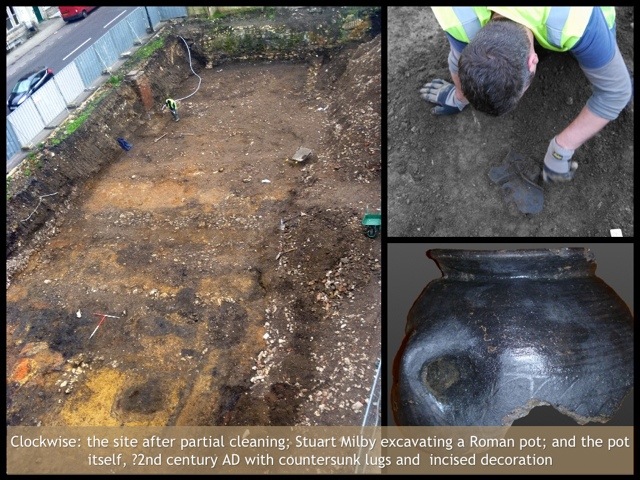
An archaeological excavation currently being undertaken by Context One, on behalf of Ashford Homes, on the corner of Bathwick Street and Henrietta Road, Bathwick, have uncovered the remains of several Roman structures with associated features, as well as a Roman road surface.

Based on some of the finds recovered so far, it appears to be an early Roman site. A preliminary look at the structures suggests we’ve discovered at least one dwelling, divided into both domestic and industrial areas, the latter comprise various external surfaces and boundary walls.

We have also revealed a Roman road crossing the site. This is constructed from a number of layers that have built up over some time, suggesting the road was in continued use. Several exterior (possible yard) surfaces have also been uncovered adjacent to the road.

A large number of smaller features (including various pits) have been revealed during the initial cleaning of the site. Whilst some of these almost certainly post-date the structures and road surface, others may prove to be contemporary.

We are in the initial stages of our investigation and are likely to be on site for at least the next month. Updates on our progress will be forwarded to the local press but for more immediate information we will be posting here on their website. http://www.contextone.co.uk

HisTOURies UK

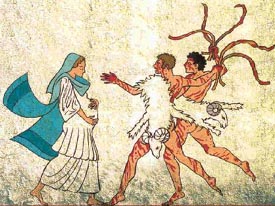
While some believe that Valentine’s Day is celebrated in the middle of February to commemorate the anniversary of Valentine’s death or burial–which probably occurred around A.D. 270–others claim that the Christian church may have decided to place St. Valentine’s feast day in the middle of February in an effort to “Christianize” the pagan celebration of Lupercalia. Celebrated at the ides of February, or February 15, Lupercalia was a fertility festival dedicated to Faunus, the Roman god of agriculture, as well as to the Roman founders Romulus and Remus.

To begin the festival, members of the Luperci, an order of Roman priests, would gather at a sacred cave where the infants Romulus and Remus, the founders of Rome, were believed to have been cared for by a she-wolf or lupa. The priests would sacrifice a goat, for fertility, and a dog, for purification. They would then strip the goat’s hide into strips, dip them into the sacrificial blood and take to the streets, gently slapping both women and crop fields with the goat hide. Far from being fearful, Roman women welcomed the touch of the hides because it was believed to make them more fertile in the coming year. Later in the day, according to legend, all the young women in the city would place their names in a big urn. The city’s bachelors would each choose a name and become paired for the year with his chosen woman. These matches often ended in marriage.


The Legend of St. Valentine

The history of Valentine’s Day–and the story of its patron saint–is shrouded in mystery. We do know that February has long been celebrated as a month of romance, and that St. Valentine’s Day, as we know it today, contains vestiges of both Christian and ancient Roman tradition. But who was Saint Valentine, and how did he become associated with this ancient rite?

The Catholic Church recognizes at least three different saints named Valentine or Valentinus, all of whom were martyred. One legend contends that Valentine was a priest who served during the third century in Rome. When Emperor Claudius II decided that single men made better soldiers than those with wives and families, he outlawed marriage for young men. Valentine, realizing the injustice of the decree, defied Claudius and continued to perform marriages for young lovers in secret. When Valentine’s actions were discovered, Claudius ordered that he be put to death.

Other stories suggest that Valentine may have been killed for attempting to help Christians escape harsh Roman prisons, where they were often beaten and tortured. According to one legend, an imprisoned Valentine actually sent the first “valentine” greeting himself after he fell in love with a young girl–possibly his jailor’s daughter–who visited him during his confinement. Before his death, it is alleged that he wrote her a letter signed “From your Valentine,” an expression that is still in use today. Although the truth behind the Valentine legends is murky, the stories all emphasize his appeal as a sympathetic, heroic and–most importantly–romantic figure. By the Middle Ages, perhaps thanks to this reputation, Valentine would become one of the most popular saints in England and France.

Link Source: http://www.history.com/topics/valentines-day

Happy Valentines Day

For a 200-year-old literary figure, Charles Dickens has much to say about the issues of today.

So believes Queen’s University English Prof. Robert Morrison, who says Dickens — born Feb. 7, 1812 — was both a man of his times and a forward-thinker.

In his many novels — including such classics as “A Christmas Carol,” “David Copperfield” and “Oliver Twist” — Dickens wrote about issues that still resonate today.

Morrison says Dickens brought attention to child poverty, over-population, environmental degradation and greed.

The popular storyteller’s 200th birthday is being celebrated Tuesday by admirers around the world.

Morrison says Dickens, who visited Canada briefly while on a reading tour, was the most popular author of his day and known world-wide.

“He is a man of his time but … he does map in a lot of what still preoccupies us today.”

“One of the things that I find really compelling about Dickens is his discussion of and sympathy for the vulnerable in society, especially children.”

Dickens was able to depict 19th-century Britain as a powerful country at the forefront of progress and technology, Morrison said.

But as Dickens so cleverly put it: “It was the best of times, it was the worst of times.”

“There’s a tremendous amount of wealth and there are a whole bunch of people who are not sharing in any of it,” said Morrison.

“That alienation and sadness in the lower classes among poor people, Dickens gives these people an incredibly powerful voice.”

While a master at creating entertaining stories, comical characters and biting caricatures, the 19th-century writer also had his finger on the pulse of his times, says Morrison.

“Dickens represents alienation and poverty with a vividness and a chillingness that is remarkable. He really is very socially minded.”

Link: http://www.huffingtonpost.ca

HisTOURies UK – Who the Dickens

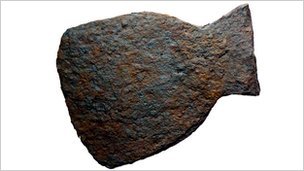
A Viking axe head found in a Gloucestershire village could be evidence of a battle more than 1,100 years ago, according to archaeologists.

The wrought iron object, found in Slimbridge in 2008, has now been identified as being of Viking origin.

Archaeologists think the axe head could be evidence of a battle in 894 AD

Archaeologists think the axe head could be evidence of a battle in 894 AD

Historians say a band of Vikings sailed up the River Severn and fought against the Anglo-Saxons in 894 AD.

Archaeologists say where the axe head was found is where they could have tied up their ships.

It was discovered by Ian Hunter Darling under a hedge in his garden.

Bloody battle

“I couldn’t believe what I saw. I thought it could have been an agricultural implement of some description,” he said.

He said an archaeological visit to the the farm where he lives had got the experts “quite excited”.

“They said I should take it to a museum to have it looked at.”

According to historians King Alfred the Great fought the Vikings in a bloody battle at Minchinhampton, about 10 miles from Slimbridge, in 894 AD.

Three Viking princes were killed in the battle, and fighting could have ranged over a wide area of the Berkeley Vale.

For over a century archaeologists have speculated where the Vikings could have moored their ships.

“They realised my driveway would have been creek in those days before there was a sea wall on the River Severn,” said Mr Hunter Darling.

“The boats could have tied up at the bottom of my garden.”

‘Viking sword’

Members of Slimbridge local history society now want to gather further evidence of Viking activity in the village.

Peter Ballard, from the society, said: “A member of a local family claimed he found a Viking sword in a ditch by the River Cam many years ago, but that has now been lost.”

They are asking for residents who may have found other Viking objects to come forward.

A meeting to highlight the importance of the discovery will be held in Slimbridge Village Hall on 21 February.

The axe head is to go on display at Stroud Museum in the Park.

Link: http://www.bbc.co.uk/news/uk-england-gloucestershire-16829808

HisTOURies UK

For 24 hours, on the last Tuesday of January, the town of Lerwick goes more than a little mad.

uphellyaa-shetland-festival“There will be no postponement for weather”. That’s a defiant boast by Shetland’s biggest fire festival, considering it’s held in mid-winter on the same latitude as southern Greenland. But it’s true: gales, sleet and snow have never yet stopped the Up Helly Aa guizers of Lerwick from burning their Viking galley – and then dancing the dawn away.

Amazing Blaze

Up Helly Aa is a lot more than a sub-arctic bonfire and booze-up. It’s a superb spectacle, a celebration of Shetland history, and a triumphant demonstration of the islanders’ skills and spirit. This northern Mardi Gras lasts just one day (and night). But it takes several thousand people 364 days to organise. Much of the preparation is in strictest secrecy. The biggest secret of all is what the head of the festival, the ‘Guizer Jarl’, will wear and which character from the Norse Sagas he’ll represent.

The Guy’s A Jarl!

The Jarl will have been planning (and saving up for) the longest day of his life for 12 years or more, before he dons his raven-winged helmet, grabs axe and shield, and embarks on a 24-hour sleepless marathon.

On the evening of Up Helly Aa Day, over 800 heavily-disguised men (no women, thank you, we’re vikings!) form ranks in the darkened streets. They shoulder stout fencing posts, topped with paraffin-soaked sacking.

On the stroke of 7.30pm, a signal rocket bursts over the Town Hall. The torches are lit, the band strikes up and the amazing, blazing procession begins, snaking half a mile astern of the Guizer Jarl, standing proudly at the helm of his doomed replica longship, or ‘galley’.

It takes half an hour for the Jarl’s squad of burly Vikings to drag him to the burning site, through a crowd of four or five thousand spectators.

Amazing Blazing

The guizers circle the dragon ship in a slow-motion Catherine Wheel of fire. Another rocket explodes overhead. The Jarl leaves his ship, to a crescendo of cheers. A bugle call sounds, and then the torches are hurled into the galley.

As the inferno destroys four months of painstaking work by the galley builders, the crowd sings ‘The Norseman’s Home’ – a stirring requiem that can brings tear to the eyes of the hardiest Viking.

The Procession

Tears of mirth are more likely as the night rolls on and more than 40 squads of guizers visit a dozen halls in rotation. They’re all invited guests at what are still private parties – apart from a couple of halls where tickets are on sale to the general public.

At every hall each squad performs its ‘act’, perhaps a skit on local events, a dance display in spectacular costume, or a topical send-up of a popular TV show or pop group.

 Every guizer has a duty (as the ‘Up Helly Aa Song’ says) to dance with at least one of the ladies in the hall, before taking yet another dram, soaked up with vast quantities of mutton soup and bannocks.

The All-Nighter to End All-Nighters

It’s a fast and furious night – and a lucky guizer who arrives home with a completely clear head before 8.30am the next morning which, not surprisingly, is a public holiday. Lerwick’s a ghost town but by evening the hardier merrymakers are out dancing again, this time at the ‘Guizer’s Hop’.

The Burning Galley

That’s not the end of it, for throughout the rest of the winter each gang of guizers will hold their own ‘squad dances’ for family and friends. By early autumn, there’ll be the first meetings to arrange the next year’s performance, while at the Galley Shed in St Sunniva Street the shipwrights, carpenters and their helpers will be starting work on the new galley, not forgetting ‘the boys who made the torches’.

‘From grand old Viking centuries, Up Helly Aa has come…’ That’s what the guizers sing but in fact the festival is only just over 100 years old in its present, highly organised form. In the 19th century Up Helly Aa was often riotous. Special constables were called in to curb trigger-happy drunks firing guns in the air – and dragging a blazing tar barrel through the streets, sometimes leaving it on the doorstep of the year’s least popular worthy burgher. Today’s festival is much better behaved.

Fire, Feasting and Fancy Dress

The ingredients in the Up Helly Aa recipe go back 12 centuries and more – fire, feasting, fancy dress and, above all, fun. The torchlit procession and galley burning echo pagan Norse rituals at the cremation of great chieftains, and religious ceremonies to mark the Sun’s return after the winter solstice.

Elaborate disguise was part of prehistoric fertility rites. Mediaeval Shetland guizers were called ‘skeklers’ and wore costumes of straw. The feasting and dancing continue saga traditions from the winter drinking halls of Viking warriors, while the satirical ‘Bill’ or proclamation, lampooning local worthies and fixed to the Lerwick Market Cross on Up Helly Aa morning, has precedents in the sharp wit of the Norse skalds.

If you should miss the Lerwick Up Helly Aa (or if it gives you the taste for more of the same), don’t despair – there are another eight fire festivals in various districts of Shetland during the late winter.

And the country Up Hellies A’ do NOT ban women from being torch-bearers and guizers. Don’t mention that in Lerwick, though – where the men-only rule is a ticklish topic in these politically correct days.

The Up Helly Aa Exhibition in the Galley Shed, St Sunniva Street, Lerwick, welcomes visitors. Shetland Museum also has extensive photographic archives of the festival.

For more information please visit the dedicated Up Helly Aa website.

Rural Up Helly Aa Celebrations:

Scalloway – 13th January 2012
Nesting – 3rd February 2012
Uyeasound, Unst – 10th February 2012
Northmavine – 17th February 2012
Bressay – 24th February 2012
Cullivoe, Yell – 24th February 2012
Norwick, Unst – 25th February 2012
South Mainland – 9th March 2012
Brae – 16th March 2012

Histouries UK
A medieval barn described by the poet John Betjeman as the ‘cathedral of Middlesex’ has been rescued from decay and neglect for the nation, English Heritage said today.

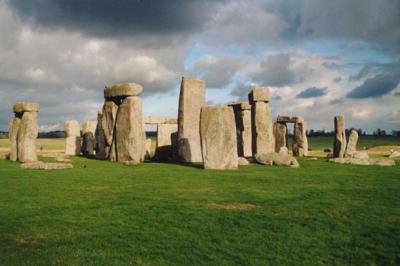
Grade I-listed Harmondsworth Barn in west London joins the likes of Stonehenge, Osborne House and parts of Hadrian’s Wall in the national collection of historic sites and monuments under the guardianship of English Heritage.

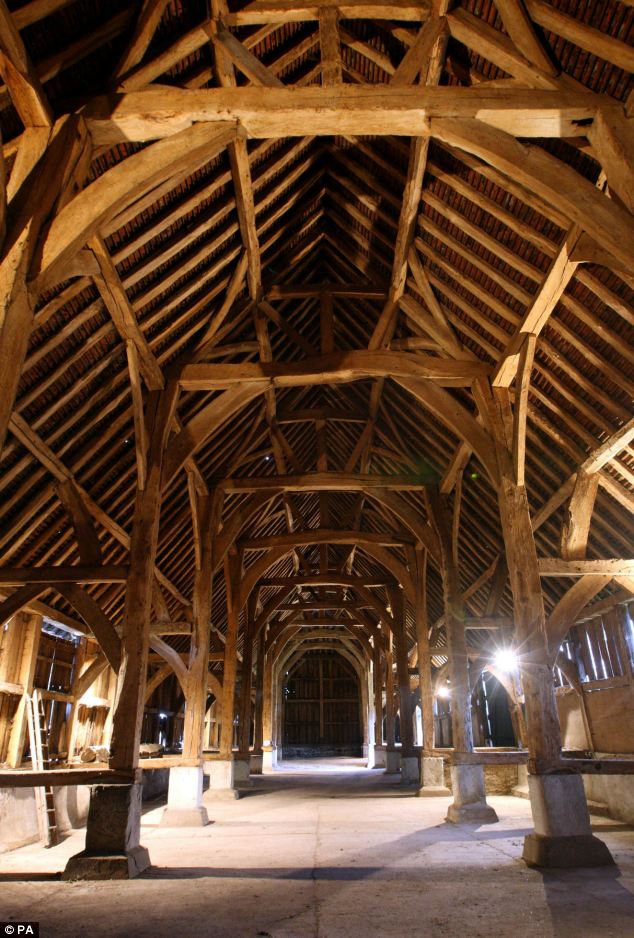
Historic: The exquisite oak structure was created by skilled carpenters, whose signature marks can still be seen, in the 15th Century

Historic: The exquisite oak structure was created by skilled carpenters, whose signature marks can still be seen, in the 15th Century

Built by Winchester College in 1426, the barn would have been used to store grain from the surrounding manor, owned by the Bishop of Winchester, with profits from the produce used to pay for the school

The structure resembles the nave of a large church, standing at nearly 60 metres (200ft) long, 12 metres (40ft) wide, and 11 metres (36ft) high, with 13 huge oak trusses resting on stone blocks holding up the roof.

While it has had some repairs over the years, most recently by English Heritage to make it weather-proof and keep out pigeons, the structure is largely as it was built, with the timber and stones still bearing original carpenter and mason marks.

The oak-framed barn, which the heritage agency said ranks alongside the Houses of Parliament and Buckingham Palace for its historic value, was used up until the 1970s but fell into disrepair in the ownership of an offshore company which had bought it in 2006

It is thought the purchase by a Gibraltar-based company for £1 was a speculative one, as the barn stands just metres from where Heathrow’s third runway – had it gone ahead – would have been built.

In 2009, English Heritage became concerned about the barn’s deteriorating condition and issued an urgent works notice for emergency repairs to keep it water and wind-tight.

The barn became known as “Cathedral of Middlesex”

A dispute over payment for the emergency works led to English Heritage buying the barn, which lies between the M25 and M4 motorways, for £20,000.

The barn’s precarious state was publicised in 2009 when building-preservation journal Cornerstone published an article on the gaping holes and disrepair.

Michael Dunn, historic buildings inspector for English Heritage, said the building was the best preserved and largest surviving medieval timber barn in England, probably in Europe.

It is the ninth largest in Europe he said, adding that ‘for its size , and its state of preservation, it is unique.’

‘This is high status, this is the finest timber, and a very confident carpenter. This is as good as it gets,’ he said.

Simon Thurley, chief executive of English Heritage, said: ‘Harmondsworth Barn is one of the greatest medieval buildings in Britain, built by the same skilled carpenters who worked on our magnificent medieval cathedrals.

‘Its rescue is at the heart of what English Heritage does – protecting this nation’s architectural treasures and helping people discover our national story through them.

‘We will complete the repair of this masterpiece and, working with local people, will open it to the public to enjoy.’

A local group, the Friends of the Great Barn at Harmondsworth, formed around six years ago and have been dedicated to preserving the building, researching its history and keeping up the interest in its future, opening it each year to around 400-500 visitors during the Open House weekend.

The barn will now be open for free two Sundays a month between April and October, staffed by volunteers, with plans to open it every Sunday from next year.

Phil Rumsey, chairman of the group, said: ‘After working to save the barn over the last six years, it is wonderful that English Heritage have rescued this much-loved building. It will provide a great lift to the community.’

Archaeologist Justine Bayley told The Guardian: ‘If we had a pound for everyone who walks in here and says “wow!” we could have re-roofed the building twice over. It’s really the only appropriate response.’

Source: http://www.dailymail.co.uk/news/article-2093598/Medieval-barn-described-cathedral-Middlesex-joins-Stonehenge-national-collection-historical-sites.html#ixzz1kxEY35Ci

HisTOURies UK

Saturday 28 January – Saturday 12 May 2012.  When the climate changes from warm to freezing, the plants and animals you rely on for food and clothing die out or disappear, how would YOU survive? 

Packed full of fun activities set alongside Ice Age animal bones and the oldest objects made by people found in this area, this exhibition looks at how the earliest people survived over 300,000 years ago. 

Specially suited for primary school ages or families, but with something of interest for everyone, you will be asked to think about whether you think you could have lived in a time before farming, when people survived by hunting and gathering and when extreme climate change threatened their existence. 

 Plus, there is free admission for children (with an accompanying paying adult) if you enter our Cave Art competition. Click here to print out one of the cave art pictures to colour in or complete with your own design. Bring your finished work into the museum together with a completed entry form to claim your free entry to the exhibition. We will also display your picture in the exhibition and you have chance to win a special Behind the Scenes tour with the Museum’s Director who will even let you touch a real mammoth bone!

To give you a few ideas about what real cave art was like, follow these links.

http://www.bbc.co.uk/history/handsonhistory/ancient-britain.shtmlhttp://www.bbc.co.uk/history/handsonhistory/ancient-britain.shtml

Mystical Landscape, Magical Tours
HisTOURies UK – Salisbury and Stonehenge Guided Tours

Intense and brooding images of Stonehenge and other prehistoric monuments in a new exhibition are taking visitors deep into the heart of Thomas Hardy’s ‘Wessex’.

Archaeologists debate the purpose of Stonehenge, but for Hardy it was a haunting symbol of isolation and suffering.

The exhibition by three artists at Salisbury Museum mirrors the Dorset author’s emotional response to the archaeological sites he knew and used with such effect in his novels.

His use of landscape was highly symbolic and deeply emotive. Nowhere is that more clear than in his description of Stonehenge, which features in the climactic scene of Tess of the d’Urbervilles.

In the dead of night, Tess stumbles upon the monument, and lies down to rest on an ancient altar, giving the allusion of her character as a sacrificial offering to a society that has cast her out. Hardy describes the isolation of the monument on Salisbury Plain, and once inside, the feeling of enclosure.

Symbolism is central to Hardy’s writing, which may be why so many artists use his work as their inspiration.

Artists Dave Gunning, David Inshaw and Rob Pountney have collaborated to show the dramatic landscapes and archaeology in media ranging from charcoal to steel etching and oil paint.

They share a common interest in how Hardy used landscape to symbolise the emotional and physical experiences of his characters.

He revived the Saxon name ‘Wessex’ as a part-real, part-dream landscape, thinly disguising place names so that Salisbury becomes Melchester and Dorchester becomes Casterbridge. Salisbury Plain is sometimes called the “Great Grey Plain”.

Dave Gunning, who was awarded the Year of the Artist Award in 2000-1 by the British Arts Council, has spent more than 25 years studying the prehistoric landscape in the West Country, particularly the ancient monuments within the World Heritage Site of Stonehenge and Avebury.

David Inshaw is one of Britain’s leading contemporary artists. His work is often inspired by literature that takes landscape and nature as its focus.

Rob Pountney has always been fascinated by Thomas Hardy’s work, and says the use of dramatic contrasts of light and shade in his work captures the striking visual aspects of the geological and archaeological features of the Wessex landscape, and his interpretation of Hardy’s response to them.

Salisbury Museum is the perfect place for the exhibition, which opened on Saturday and runs until April 14.

In Jude the Obscure, Hardy bases the college that Sue Bridehead attends on the training college for schoolmistresses that his sisters attended. This was the King’s House, Salisbury, and is now home to the museum.

Thomas Hardy was born at Higher Bockhampton, a hamlet in the parish of Stinsford to the east of Dorchester.

He became ill with pleurisy in December 1927 and died at Max Gate just after 9pm on January 11, 1928, having dictated his final poem to his wife on his deathbed. The cause of death was cited, on his death certificate, as “cardiac syncope
Link: http://www.dorchesterpeople.co.uk

Mystical Landscape, Magical Tours
HisTOURies UK – Private Guided Tours of Stonehenge and the West Country

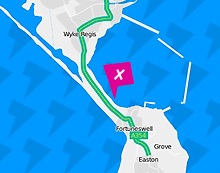
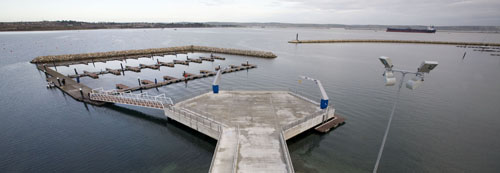
Weymouth Bay and Portland Harbour will be the venue for the Olympic and Paralympic Sailing competitions. It was the first London 2012 Games venue to be finished.
 

Key facts

Sport: Sailing, Paralympic Sailing
Location: Dorset, on the south coast of England
New or existing: Existing
Permanent or temporary
: Permanent
Number of events: 13

About Weymouth and Portland

The venue comprises the Weymouth and Portland National Sailing Academy (WPNSA) and the adjoining commercial marina.

It has kick-started the regeneration of the former Naval Air Station at Portland, now known as Osprey Quay, where new residential, commercial and marina facilities are already underway.

Weymouth and Portland provides some of the best natural sailing waters in the UK, with facilities on land to match. The site has already hosted numerous international sailing events, including the 2006 ISAF World Youth Championships attended by over 60 nations.

Work to enhance the sailing facilities at Weymouth and Portland has been completed. The enhancements to the existing WPNSA facilities include a new permanent 250m slipway and new lifting and mooring facilities.

The project was completed on budget and ahead of schedule, providing world-class facilities for elite athletes and the local community more than three years before the Games.

During the Games

Weymouth and Portland Bay is a natural amphitheatre and there are several vantage points to watch the Sailing events from if you do not have a ticket. The Local Authority will be also providing a big screen to watch the Games coverage on Weymouth beach, and putting on a range of free sporting and cultural activities.

There is no seated ticketing for the Sailing event, so spectators will be sitting on the ground or standing..

 After the Games

The National Sailing Academy will benefit from the improved facilities that the Games will leave behind, providing a state-of-the-art facility for elite training, competition and local community use.

This use has already started: from a community programme through to hosting the Olympic Windsurfing discipline, RS:X class World Championship in 2009, and the IFDS (Paralympic Sailing) World Championship in 2011.

Travel to Weymouth and Portland

Weymouth and Portland are located in Dorset, on England’s south coast, approximately 215km south-west of London and around three hours from London by train. Weymouth and Portland is the venue for Sailing and Paralympic Sailing

Weymouth and Portland is not a London venue and travel to this event is not included in the event ticket price. Park-and-ride is the recommended option for spectators attending this event from outside of the Weymouth area. Park-and-ride services are not included in the price of your event ticket and must be booked in advance.

Spectators within the Weymouth area are recommended to walk, cycle or use local bus services wherever possible.

As you approach the venue, please follow any signs showing the way or directions given to you by transport staff and volunteers.

While it is best to plan your journey in advance, remember to check for any last-minute changes before you travel

PRIVATE TOURS AND COACH TRANSPORT

We can easily organise private guide tours and transport from London or Weymouth for families and small groups.  Why not visit Stonehenge and Salisbury on-route to Weymouth (from London) or take a sightseeing tour from Wemouth ?  Needless to say it is busy so plan ahead!
Visit our website: http://www.HisTOURies.co.uk

UK Travel and Transport – Olympics 2012
HisTOURies UK

THE discovery of a Stone Age temple on Orkney looks set to rewrite the archeological records of ancient Britain with evidence emerging it was built centuries before Stonehenge.

Stonehenge Wiltshire

Stonehenge

 Archeologists have so far found undisturbed artefacts including wall decorations, pigments and paint pots, which are already increasing their understanding of the Neolithic people.

Experts believe the huge outer wall suggests the site was not domestic, while the layout of the buildings has reinforced the view it might have been a major religious site. Archaeologists think the temple was built 500 years before Stonehenge, regarded as the centre of Stone Age Britain.

However, only 10% of the site at Ness of Brodgar has been excavated and it could be years before the scale and age of the discovery is fully understood.

It sits close to the existing Ring of Brodgar stone circles and the standing stones of Stenness, near to the town of Stromness.

The uncovered wall around the edges of the site was built with 10,000 tonnes of quarried rock and may have been up to 10 ft high.

Thermal technology also indicates the site could cover the same area as five football pitches, with some parts potentially older than Stonehenge, in south-west England, by as much as 800 years.

Charcoal samples from beneath the wall indicate it was built around 3200 BC. A 30mm high figurine with a head, body and two eyes, and called the “Brodgar Boy”, was also unearthed in the rubble of one of the structures.

About 18 months ago, a remarkable rock coloured red, orange and yellow was unearthed. This is the first discovery in Britain of evidence that Neolithic peoples used paint to decorate their buildings.

Project manager Nick Card said the discoveries are unparalleled in British prehistory and that the complexity of finds is changing the “whole vision of what the landscape was 5000 years ago.” He said it was of “a scale that almost relates to the classical period in the Mediterranean with walled enclosure and precincts”.

Mr Card added: “It’s a huge discovery; in terms of scale and complexity there really is nothing else quite like it.

“At first we thought it was a settlement but the scale and complexity within the buildings makes you think along the lines of a temple precinct. It’s something you would associate with the classical world.”

Archeologist Julian Richards, who has written several books on Stonehenge, added: “The indication is that building was taking place when Stonehenge was still, relatively speaking, insignificant. We have tended to think we know how things were in the Neolithic period, then something like this turns that on its head.”

Full story: http://www.heraldscotland.com/news/home-news/orcadian-temple-predates-stonehenge-by-500-years.16330802

Stonehenge Tourist Guide
HisTOURies UK – Mystical Landscape, Magical Tours