Feeds:
Posts
Comments

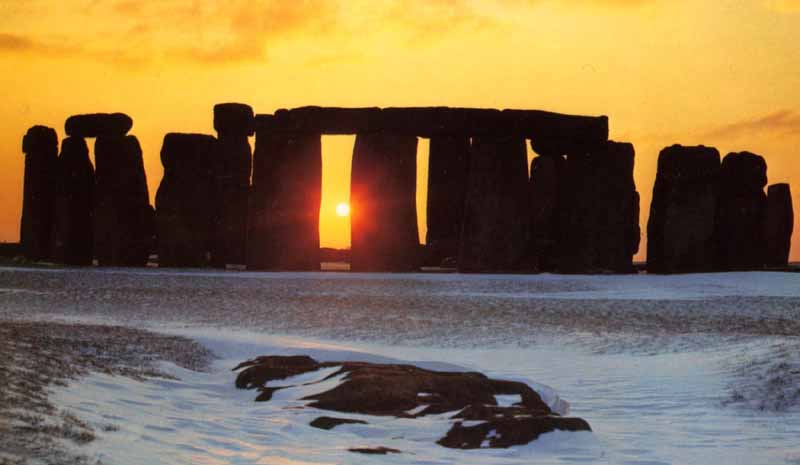
A huge winter solstice feast might have taken place around Stonehenge some 4,500 years ago.

Abundant cattle and pig bones recently unearthed a few miles from the megalithic site suggest that prehistoric people celebrated the connection between the stone circle and the sky with hundreds of roasts.
Stonehenge

According to initial research led by Mike Parker Pearson of the University of Sheffield, U.K., the animals were walked from different places and for hundreds of miles to be slaughtered immediately after arrival at Durrington Walls, a massive circular earthwork, or henge, two miles northeast of Stonehenge. 

Parker Pearson’s research has shown that this site attracted people in droves as far back as Neolithic times.

“The considerable quantities of pig and cattle bones, pottery, flint arrowheads and lithic debris indicate that occupation and consumption were intense,” wrote Parker Pearson, who has was awarded a grant of £750,000 to analyse a range of materials found at the site.

So far, the archaeologist has found no evidence that Durrington was permanently inhabited. He believes that the intense human activity was linked to feasting during the solstices.

“The small quantities of stone tools other than arrowheads, the absence of grinding querns and the lack of carbonised grain indicate that this was a ‘consumer’ site. The midsummer and midwinter solstice alignments of the Durrington and Stonehenge architecture suggest seasonal occupation,” Parker Pearson said.

This year the winter solstice will be celebrated at Stonehenge on the morning of Thursday, December 22nd 2011

Stonehenge will open at 7.45 a.m. for people who brave the cold to watch the sun rise shortly after 8 a.m.

Full Article:  http://news.discovery.com/

 
Stonehenge Tour Guide.  Mystical Landscape, Magical Tours….
HisTOURies UK – The Best Tours in Ancient Britain

The lights are up, Noddy Holder’s voice is ringing in your ears and you’ve already eaten all your advent chocolate in a gluttonous frenzy. Yes it’s Christmas; that time of year reserved for frantic last-minute shopping, burnt turkeys and half-drunk carols in the front room. It’s also the Christian celebration of Jesus’ birth, of course: and even that bears more than a passing similarity to the ancient god Mithra.
So where did some of the Christmas traditions we take for granted actually come from? The truth stretches back a lot longer than you might think. Here are ten yuletide customs born in the ancient world.

1. Christmas Trees

Our Christmas Tree We might curse the fact that we’re still picking pine needles out of our toes come spring, but the idea of decorating your house with greenery at winter goes back thousands of years. King Tut may never have seen the multicoloured mess we put up with nowadays, but he would have had date palm leaves scattered around his royal abodes on the winter solstice.Evergreens were celebrated in Egypt as a reminder that, though the winter was harsh and yielded little, spring would come just as inevitably. The palm also spawned a shoot each month, meaning that by December (as it would become known) Egyptians weilded the leaves to show that the year was over. They’d have decorated with entire forests if they ever saw a European winter.

Soon Egypt’s tree-hugging tradition spread north to Italy, during the height of the Roman Empire. Palms were substituted for firs and other native species, on which tapers would be lit and burned in honour of Saturn, god of agriculture and justice, during the notoriously raucous Saturnalia festival. The custom migrated north to Germany and Scandinavia during the Middle Ages, resulting in today’s obsession.

2. Christmas Carols


Carol Singing Whether you enjoy strangers caterwauling on your doorstep or not, you can thank ancient pagans and their joyous celebrations of the stars. Song and dance were commonplace at the earliest stone circles of Europe: some think even Stonehenge was built with acoustics in mind.

As with the trees, special songs would be created for the winter solstice. In fact songs would be sung for each of the seasons, but the Christmas tradition stuck with the newly-created Christian faith, eager to commemorate Jesus Christ.

The first ‘proper’ Christmas carol can be dated back to ancient Rome in 129 AD, when a Roman bishop decreed that a song called ‘Angel’s Hymn’ should be sung during the Christmas service at Rome. Fast forward a few hundred years, and a Greek Orthodox Priest named Cosmas of Jerusalem (or Maiuma) wrote another famous hymn. Soon, the whole of Europe was singing at Christmas. Incidentally the tradition of singing to people whether they want to or not was invented some time around the 17th century. If someone had shown Cosmas he might not have bothered.

3. Santa 

 Santa ClausMillions of people still think Santa owes his current scarlet clobber to canny ad men at Coca-Cola. But it’s a belief that should have been consigned to the ‘urban myth’ bin many moons ago. The western world’s enduring image of a red-and-white-robed Santa owes more to his ancient ecclesiastical roots then a syrupy soft drink. Saint Nicholas was the Bishop of Myra, an Ancient Greek town of Lycia, modern Turkey, during the 4th century AD. Popular throughout the Christian world, he’s also known as ‘Nicholas the Wonderworker’ thanks to the large number of miracles attributed to him.

Nicholas’ association with the reindeer-propelled giver of gifts we all know today stems from his propensity for leaving coins in the shoes of those who gave to him (see stockings story below). This grew into a European Catholic tradition, whereby the poor would leave their shoes in church overnight. Coins would then be donated by rich patrons in a homage to Saint Nick’s generosity. Present-hungry kids also can thank Nicholas’ status as the patron saint of children when they’re maniacally tearing open a box of badly-rendered plastic rubbish.

 The name ‘Santa Claus’, incidentally, didn’t come until the 19th century, as an evolution of the Dutch colloquialism Sinterklass. His name may have changed, but Santa still kept the ceremonial red robes of his ancient forebear. However many think the clothing may be an amalgam of Saint Nicholas’ and those of the Norman god of misrule, a red-robed character who would go about causing havoc during the winter solstice period. Santa didn’t always use reindeer to power him from house to house, either: many believe they are an evolution of the eight-legged grey horse of the Norse god Odin called Sleipnir, who could leap huge distances. Middle Ages children would leave out food for Sleipnir, a custom which continues to this day.

 4. Yule Log

  Yule LogLike most things associated with Yule, a pagan festival largely attributed to the Germanic peoples of the medieval period, the yule loge can trace its roots back through some of the world’s most successful ancient civilisations. Today the burning of the yule log has become a marginalised affair, and can be carried out pretty much any time leading up to Christmas Day. Yet the log began its life as a yuletide tradition thousands of years back, in the earliest cities of Sumer and Egypt.

Egyptians believed that the winter solstice period marked the death and rebirth of their national god Horus, the god of the sky and the sun. Thus light was shed to celebrate him, and since Egypt was about 5,000 years from electricity a log would be burned for 12 days. This tradition carried into the cities of Sumer and Mesopotamia via the winter festival of Zagmuk, and would later become one of the features of the Roman celebration of Saturnalia, when a yule-style log was burned for ten days to usher in the strength of Mithra.

Saxons and Visigoths would latch onto the log as a symbol of good, or light prevailing over darkness, or evil. Ashes were prized for their supposed magical powers. Christians, most likely taking their lines from the Romans, would later adopt the log as a symbol for the light of Christ bringing the world from darkness.

5. Christmas Cards


Christmas cardsChristmas cards may only have come into European vogue during the 15th century (thanks to the Germans, again). But their origins go back thousands of years before, to the greetings given in Ancient Egypt via ornately decorated papyrus. Related or not, the ancient Chinese are thought to be some of the greetings card’s earliest fans, exchanging simple messages to celebrate the New Year.

The invention of printing, and the west’s popularising of card-giving, wouldn’t arrive for another 1,500 years or so. You might expect the Chinese, with their longstanding obsession with fireworks (and blowing things up in general) to have invented the Christmas cracker too. Not so: desperate London sweet-seller Tom Smith invented it as an explosive panacea to his ailing bonbon trade, in 1847.

6. Mistletoe

  When Tara from IT starts waving mistletoe at you from across the office fix023with one suggestive eye on the stationery cupboard, you can thank ancient pagans for the group email the next day. Druids, to be precise: the ancient mystics saw the herb as having magical powers thanks to its evergreenness. Amongst its miraculous characteristics – curing illness, countering poison etc – mistletoe was thought to enhance virility.

Kissing under the mistletoe may date all the way back to the ancient Greeks; no strangers to free lovin’. Traditionally, kissing beneath the magical mistletoe would ensure a couple stayed happy. It was even used as a sort of natural proposal, and hung at marital ceremonies. Saxons then took on the mantle, associating the plant with Freya, goddess of love, beauty and fertility. Men could kiss any woman who found herself beneath a sprig of mistletoe, plucking a berry with each kiss. When the berries had all gone, the kissing was over. One suspects mistletoe was never in short supply at Saxon parties.

7. Presents

  For retailers at least, Christmas is the biggest gift of all: whether we want Oxford Street Xmasto or not (boo to those in the latter category) we’ll all be trapsing the high street in search of something we can pass off as thoughtful, with more than half an eye on our wallets. Yet as much as the world hasn’t always been obsessed with Furbies, novelty ties and shaving kits, we’ve been giving and receiving gifts since the beginnings of society. Archaeologists have found evidence of personal decoration as far back as 70,000 years ago – and French anthropologist Marcel Israel Mauss establishes social bonds which establish respect and interdependence – key to social cohesion.

Fast forward a few thousand years, and gift-giving was a key part of Saturnalia, when masters would ceremoniously be ruled over by their slaves. Gifts were also seen as an important way to keep up good spirits during the long, cold winter. Of course Christians point to the Gold, Frankincense and Myrrh given to baby Jesus by the three wise men, though it’s worlds away from the capitalist scrums of today. The idea of presents being stuffed down the chimney pot may also have derived from ancient times. Germanic tribes would throw gifts onto fires as sacrifices for the gods. Thankfully my slippers stayed flame-free last year.

8. Feasting

 It wouldn’t be Christmas without unholy doses of Turkey (or Goose, or Christmas Dinnernuts), bread sauce, potatoes and, of course, the only batch of Brussels sprouts you’ll eat all year. But, like most Christmas customs, feasting to see in the day has its roots in the earliest civilisations on the planet. The Mesopotamian festival of Zagmuk would traditionally involve great feasting, as the height of the winter ended, days became longer and farming could continue once more. Food was one way to usher in the sun, as was the case in Egypt with Horus – and later became part of the Saturnalia festival, a Roman middle-finger to the harsh European winter.

Goose had been used since ancient Egyptian times as the meat of choice for Winter Solsticers, a tradition which continued in Britain until the 16th century. Some credit Henry VIII with having introduced turkeys to our Christmas platters. The Spanish allegedly took on the turkey mantle from their conquered Aztec subjects, who had long domesticated the far juicier bird.

The Romans frequently ate Christmas ham, a custom still followed in many countries today, to celebrate the life of Adonis, god of rebirth and vegetation, who was killed by the tusks of a wild boar sent either by Artemis or Ares. A boar’s head is still roasted ceremonially each year at Oxford University. Though fruits, berries and spices had been used to make cakes in ancient times, the Christmas Pud we all know and love (and hate in equal measure) didn’t enter the annals of history until the 15th century.

9. Stockings

 There are no steadfast stories as to the origin of the Christmas stocking, Stockings for Allbut one apocryphal tale has stood the test of time, true or not. And unsurprisingly it comes courtesy of Saint Nicholas’ legendary generosity. A poor man in Myra lost his wife, and was left to bring up his three young daughters alone. He became poor, and worried that he would not have enough money to pay any of his daughters’ dowries, as was the custom back then.

Enter Saint Nick, who, knowing the father would be too proud to accept money for his daughters, surreptitiously threw coins into his house, beside the hearth over a few nights. The family were drying their clothes by the fire at the time, so each day each daughter would wake up to receive a coin in their shoe or stockings. Some stories even say Nicholas chucked coins down the chimney; another reason why we have Santa throwing presents down the chimney nowadays.

10. The Nativity

 Pushing the boundaries of ‘ancient’ somewhat, you can thank Saint Francis of Assisi for that heart-in-mouth moment you forgot your one and only line, ‘Sorry no room’, in front of over a hundred parents armed with cameras and pitiful expressions (or was that just me?). The famous Catholic deacon set up a living tableau in memory of Christ’s birth, using the accounts in the Gospels of Luke and John, in Greccio, near Rome, in 1223.

The tradition spread fast, leading to the annual humiliation of children that occurs in nearly every school in the western world, if not more. Catholics in Spain and Latin America also celebrate Las Posadas, a ritual re-enactment of the tribulations Mary and Joseph enduring before giving birth to Jesus. This can take place on any day from the 16th to the 24th of December.

Link: http://heritage-key.com

 Happy Christmas everyone………

The Best Tours during the Festive Period
HisTOURies UK – Magical Landscape, Mystical Tours

Scarce images of life, one here, one there,
Lay vast and edgeways; like a dismal cirque
Of Druid stones, upon a forlorn moor,
When the chill rain begins at shut of eve,
In dull November, and their chancel vault,
The Heaven itself, is blinded throughout night.
Each one kept shroud, nor to his neighbour gave
Or word, or look, or action of despair.

Keats Stonehenge

When we stand amid the columns of broken temples, gaze upon riddling hieroglyphics or trace the spiral patterns on cavern walls, we glimpse the gods of ancient times. Who or what were they? Did they really walk upon the earth? And could their weird and twisted forms possibly return to haunt our imagination?

In this extract from his poem “Hyperion,” Keats describes the Titans, the gods who ruled before the Olympians. Their power is waning. Try as they might, they cannot rouse themselves from lethargy and confusion. Soon, the charismatic Jupiter will wrest the throne from Saturn, the King of the Titans, and the names of Coeus, Gyges, Dolor, and Porphyrion will be banished forever—except perhaps to live on in poetry.

Every epoch must end, every vision of perfection replaced by another. (The Olympians will, of course, be themselves deposed by the God of the Christian era.) Take the idea of the zeitgeist. Changes in culture dictate what people believe and what they don’t believe, but where such changes spring from is remarkably tricky to pin down. They just happen to be blowing in the wind.

In a brilliant phrase, Keats compares the old gods to a “dismal cirque/ Of Druid stones,” linking the image of a stone circle with a dreary circus out of a nightmare, maybe because it goes nowhere, endlessly.

He evokes Stonehenge, whose massive blocks of granite have stood on Salisbury plain for more than 3,500 years. Was it a temple? An astronomical clock? A place for storing grain? Despite all the theories, no one has ever worked out its purpose. Even the Druids are a mystery, their way of life obliterated by the invading Romans.

Stonehenge is only one of hundreds of stone circles that dot the British countryside. West Cornwall, in particular, is full of sites such as the Merry Maidens, the Nine Maidens, the Hurlers and the Pipers. As the names suggest, there is a persistent myth that these stones were once human, whether women punished for dancing on a Sunday, or men for playing games—and it’s easy to imagine that it’s true, seeing their silent forms at dawn or dusk, on the borderline of reason and wonder.

Keats shows us the stones with the “chill rain” pattering down “at shut of eve,” as night takes hold and the light is extinguished. This is our world too, as we read the poem at the end of “dull November” and we prepare for the rigors of winter. The heavenly blue sky has turned into a “chancel vault,” enclosing the gods—and us—in a slate gray tomb. We all await our rebirth in the spring.

Beyond joy and despair, and through every season, the stones remain as an essential part of the landscape. Here are the thoughts of the artist JT Blight writing in The Gentleman’s Magazine back in 1868: “Nor is there any more impressive evidence of the mutability of human affairs than these rude, lichen-stained stones. They, themselves but the relics of once perfect structures, have yet, even in their ruined condition, outstood the downfall of cities, and have yet remained whilst palaces and the finest works of art have become mere refuse heaps, or have crumbled to dust.”

A Reading from ‘Lamia’ by John Keats

So what happens to the Titans in the poem? Do they die or do they return? It seems oddly fitting that we never discover. Keats abandoned his work halfway through, frustrated he couldn’t find a voice that was independent of Milton, author of the epic “Paradise Lost.” Keats’ decision was an act of rebellion, mirroring Jupiter’s insurrection against Saturn. Today, “Hyperion” resembles the Druid circle it describes: a magnificent, melancholy ruin, full of secrets for every reader who wanders in.

http://www.theepochtimes.com/n2/arts-entertainment/the-antidote-classic-poetry-for-modern-life-2-150671.html

 John Keats (1795–1821) was an English Romantic poet. His most famous works include “Ode to a Nightingale,” “The Eve of St. Agnes” and “Lamia.”

Christopher Nield is a poet living in London. 

Join us on ‘Stonehenge Special Access Tour’ and one of our experienced guided nwill show you where Keats carved his name onto one of the upright megaliths (1814) 

Stonehenge Tour Guide
HisTOURies UK – Mysical Landscape, Magical Tours

A TRADITION dating back 5,000 years is to be recreated in Amesbury to mark the mid-winter solstice.

Stonehenge Winter Solstice

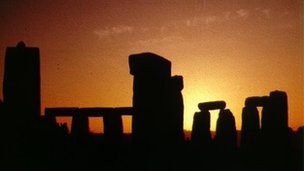
Stonehenge Winter Solstice

The town is holding its first lantern parade for centuries and hundreds of people are expected to take part.

The procession will take place on Wednesday, December 21 and walkers will set off from Stonehenge as the sun sets at about 4pm.

Carrying glowing lanterns, they will follow the original processional route of the Avenue away from the stones and walk across farmland before entering Amesbury and arriving in the town centre at 5.30pm.

Mulled wine, mince pies, craft stalls and plenty of festive cheer will be there to greet the walkers as they arrive.

Art students at Avon Valley College have teamed up with Amesbury based A&R Metalcraft to produce a lantern to lead the procession.

The lantern, which will be carried by a Solstice Fairy, will be kept burning through the night before being retured to Stonehenge at sunrise on the mid winter solstice.

It will then go on show at the Forge Gallery in Amesbury where people will be able to display their photographs, poems and pictures of the lantern parade in a large community collage.

“It’s going to be wonderful,” said Michelle Topps from the gallery. “Salisbury has its cathedral, Bath its waters and Amesbury has its ancestors.

“By remembering them we can establish a real sense of place for both locals and visitors alike. People have settled in Amesbury for 8,000 years and their influence is everywhere”. Mayor Andy Rhind-Tutt said: “This is a fantastic opportunity for our community to come together for this magical experience, recreating a 5,000 year old tradition and especially during the build up to the Olympics, when we will see the real torch travel through our town. I hope this will create a legacy for the future at this festive time of year and as many people as possible join in.”

Everyone is invited to take part in the parade and lantern kits and vouchers are available from the Bowman Centre, community shop or the Forge Gallery for £5 from Wednesday, December 7.

The voucher will entitle you to a lift to Stonehenge from Amesbury town centre on a Wilts & Dorset bus and refreshments after the parade. They are available to buy separately for £2 if people already have a lantern.

Full article: http://www.salisburyjournal.co.uk

Stonehenge Guided Tours
HisTOURies UK – Mystical Landscape, Magical Tours

Two previously undiscovered pits have been found at Stonehenge which point to it once being used as a place of sun worship before the stones were erected.

The pits are positioned on celestial alignment at the site and may have contained stones

The pits are positioned on celestial alignment at the site and may have contained stones

The pits are positioned on celestial alignment at the site and may have contained stones, posts or fires to mark the rising and setting of the sun.

An international archaeological survey team found the pits as part of the Stonehenge Hidden Landscapes Project.

The team is using geophysical imaging techniques to investigate the site.

The archaeologists from the University of Birmingham and the Ludwig Boltzmann Institute for Archaeological Prospection in Vienna have been surveying the subsurface at the landmark since summer 2010.

Procession route

It is thought the pits, positioned within the Neolithic Cursus pathway, could have formed a procession route for ancient rituals celebrating the sun moving across the sky at the midsummer solstice.

A Cursus comprises two parallel linear ditches with banks either side closed off at the end.

Also discovered was a gap in the northern side of the Cursus, which may have been an entrance and exit point for processions taking place within the pathway.

These discoveries hint that the site was already being used as an ancient centre of ritual prior to the stones being erected more than 5,000 years ago, the team said.

Archaeologist and project leader at Birmingham University, Professor Vince Gaffney, said: “This is the first time we have seen anything quite like this at Stonehenge and it provides a more sophisticated insight into how rituals may have taken place within the Cursus and the wider landscape.”

More on this story: http://www.bbc.co.uk/news/uk-england-wiltshire-15917921

Stonehenge Special Acess Tours  – beyond the fences: http://www.histouries.co.uk/stonehenge/private-access-tour.htm

Tours of Stonehenge and Wessex
HisTOURies UK – Mystical Landscape, Magical Tours

An exciting new Bronze Age hoard discovered in west Wiltshire (near Stonehenge)  has just gone on display at Salisbury Museum. It was found a month ago in a field near Tisbury by a metal detectorist. He reported the first object, a spearhead, to the Wiltshire Finds Liaison Officer. A team of archaeologists then excavated the remaining objects and recorded how they lay in the ground.

The hoard of over 100 copper alloy objects is over 2,700 years old and dates to the late Bronze Age and early Iron Age. It consists of tools – axe heads, chisels, sickles, gouges, and weapons – spearheads, daggers, knives, swords and scabbard fittings. It is the most important hoard to have been found in Wiltshire since the discovery of the Salisbury Hoard in the 1980s.

It is very unusual for a hoard of this significance to be on display in a regional museum before it has been assessed by the experts at the British Museum. The hoard will only be on display until Saturday 26 November – it will then go to the British Museum for assessment and the local coroner will need to hold an inquest to determine whether it is Treasure Trove.

See the Salisbury Journal for an article about the hoard.

 The hoard will only be on display until Saturday 26 November

Salisbury Museum – http://www.salisburymuseum.org.uk/

Wessex Guided Tours
HisTOURies UK – Mystical Landscape, Magical Tours

Out of Earth Exhibition

Out of Earth Exhibition

Renowned potter Chris Carter and archaeologist Martin Green share their fascination with the prehistoric past of Cranborne Chase.  Through art and artefact, they reveal a story of the humans that occupied the landscape before history was written.

Out of the Earth explores a dialogue between artist and archaeologist as they respond to the objects excavated from flint-rich soils of Cranborne Chase.  Artefacts from Martin’s own museum, which displays the finds he has discovered over the years, will be on display alongside Chris’s artwork and objects from Salisbury Museum and Wiltshire Heritage Museum.  Together, the objects describe and uncover the imprints left by farming, community and ritual activities in the past.

Chris and Martin describe themselves as ‘sons of the soil’, both having been raised on farms in the countrysides of Warwickshire and Dorset.  They met following a BBC4 radio show ‘Open Country’ which featured Down Farm on Cranborne Chase.  Martin had been excavating there since he inherited it in 1979 and Chris’s interest in the Chase landscape soon developed into a passion for exploring it through his art.

The exhibition shows new developments in Chris’s work and is itself a testimony to the continuing influence of prehistoric people on us today as their artistry, communities and ritual activities are re-discovered through archaeology.  Chris describes the way he searches for his pots in the clay as akin to the archaeologist’s search for an object in the earth.  Cranborne Chase has encouraged his art to take new routes which have seen him sculpting from flint and creating 2D collage works.  A deep-seated influence of the landscape and farming is apparent in his work; his pots suggest the sinuous twist of the plough and the symmetry of the stone axe, whilst the surface textures reflect the processes of people and nature on the landscape.

Both pot and artefact have a power and contemplative quality that makes Out of the Earth an exhibition not to be missed.  Here, the passion for the Cranborne landscape and for the people who lived on and moulded it, is deep-seated, inherent and heartfelt.  The stories revealed are told by two people who know the landscape intimately, both inside and out, and can tell those stories with an authority and understanding that cannot be disputed. 

Link: http://www.salisburymuseum.org.uk/exhibitions/exhibitions/174-out-of-the-earth.html
Sponsors: The Stonehenge Tour Company – www.StonehengeTours.com

Well worth a visit!

HisTOURies UK – Mystical Landscape, Magical Tours
The Best Tours in British History

The detailed route for the Olympic torch announced today sees the flame visiting more than 50 West Country communities, and passing historic landmarks including Stonehenge and Glastonbury Tor.

Olympic FlameMore than 95 per cent of the population will be within ten miles of the torch as it makes a snaking journey from Cornwall to London’s Olympic Stadium.

Torchbearers will carry it in relay. On parts of the journey it will go via horseback, bicycle, tram and steam-train.

People in Somerset will have plenty of opportunity to see the torch, despite the fact that back in 2009 the Conservative-led County Council refused to bid for it to pass through.

Resources portfolio holder Councillor David Huxtable said at the time that the cost in traffic management and disruption would be too high. But the London Organising Committee of the Olympic and Paralympic Games had an ambition to ensure that it reached most people. Many thousands of people are expected to welcome the flame along the route each day and celebrate the achievements of the torchbearers in parks, squares and streets.

Lord Coe, chairman of the Games organising committee, said: “I’m delighted that the Olympic torch relay will take the 2012 Games to almost every corner of the UK and that we have achieved our ambition to take the flame to within an hour’s journey of 95 per cent of the population.”

The route in the West

On May 21 the torch will travel to Porlock, Minehead, Dunster, Carhampton, Washford, Williton and Taunton.

May 22: Ilminster, Yeovil, Ilchester, Somerton, Street, Glastonbury, Coxley, Wells, Croscombe, Shepton Mallet, Frome, Southwick, Trowbridge, Bradford-on-Avon, Bath, Bitton, Longwell Green, Hanham, and Bristol.

May 23: Flax Bourton, Backwell Farleigh, Backwell West Town, Nailsea, Failand, Leigh Woods, back to Bristol, then on to Chippenham, Calne, Marlborough, Chiseldon, Wroughton, Royal Wootton Bassett, Swindon, Stroud, Painswick, Brockworth, Shurdington and Cheltenham.

May 24: Gloucester, Maisemore, Hartpury, Corse and Staunton and on to Ledbury, Bartestree, Lugwardine and Hereford.

July 11: Ludgershall, Tidworth, Amesbury, The Winterbournes and Salisbury.

July 12: Salisbury, Wilton, Barford St Martin, Fovant, Ludwell, Shaftesbury, Fontmell Magna, Iwerne Minster, Stourpaine, Blandford Forum, Winterborne Whitechurch, Milborne St Andrew, Puddletown, Dorchester, Winterbourne Abbas, Bridport, Chideock, Lyme Regis, Burton Bradstock, Abbotsbury, Portesham, Chickerell, Wyke Regis, Osprey Quay, Portland, Weymouth.

July 13: Portland Bill, Southwell, Weston, Easton, Fortuneswell, Weymouth, Preston, Osmington, Winfrith Newburgh, Wool, Corfe Castle, Swanage, Stoborough, and Wareham.

HisTOURies UK – Ready for the 2012 Olympics

A metal detector enthusiast located more than 100 bronze items, thought to be about 2,700 years old, on a farmland site which is being kept secret.

Having first found a spearhead, he decided not to disturb the ground and notified archaeologists, who were able to conduct a meticulous excavation.

The finds, from the late Bronze Age and early Iron Age, include tools such as chisels, axe heads and gouges, and weapons including fragments of a sword and scabbard and more spearheads.

Experts are hugely excited about the hoard, which is still being catalogued. They are not prepared to guess at its value yet but say it is the biggest in the area since the Salisbury Hoard – now in the British Museum – was discovered in the 1990s.

Salisbury & South Wilts Museum director Adrian Green said: “It’s a very rare and important find, and it’s still fresh out of the ground. This was not previously a known archaeological site. The guy was just metal detecting as a hobby.

“What was significant about it was that he very responsibly told the finds liaison officer for the county, Katie Hinds, who is paid by the British Museum to record finds made by chance like this, rather than just digging it up himself and potentially losing valuable archaeological information.

“This was brilliant, and exactly what we want detectorists to do. She was able to arrange a specialist team to go and dig it up. That’s very important from an academic point of view.

“You could count on two hands the number of Bronze Age hoards which have been recorded professionally by archaeologists in this way.”

The hoard will go to the British Museum to be assessed and there will be an inquest to determine whether it is treasure trove.

If so, Salisbury Museum will have a chance to raise funds to buy it.

Neither the finder nor the landowner wish to be identified
Link : http://www.salisburyjournal.co.uk/news/9336972.Ancient_artefacts_unearthed_in_Tisbury/

The Best Tours in Wessex
HisTOURies UK.  Mystical Landscape, Magical Tours

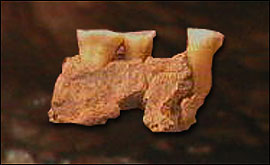
The jawbone which has caused so much excitement

The jawbone which has caused so much excitement

Could a piece of jawbone found at Torquay’s famous Kents Cavern caves be the oldest part of modern human to be unearthed in Europe?

A piece of jawbone excavated from a prehistoric cave in England is the earliest evidence for modern humans in Europe, according to an international team of scientists. The bone first was believed to be about 35,000 years old, but the new research study shows it to be significantly older — between 41,000 and 44,000 years old, according to the findings that will be published in the journal Nature. The new dating of the bone is expected to help scientists pin down how quickly the modern humans spread across Europe during the last Ice Age. It also helps confirm the much-debated theory that early humans coexisted with Neanderthals. Beth Shapiro, the Shaffer Associate Professor of Biology at Penn State University and a member of the research team, explained that the fragment of maxilla — the upper jaw — containing three teeth was unearthed in 1927 in a prehistoric limestone cave called Kent’s Cavern in southwestern England. Records from the original excavations, undertaken by the Torquay Natural History Society located in Devon, England, indicate that the jawbone was discovered 10 feet 6 inches beneath the surface and was sealed by stalagmite deposits. “In 1989, scientists at Oxford University dated the bone as being about 35,000 years old. However, doubts were later raised about the reliability of the date because traces of modern glue, which was used to conserve the bone after discovery, were found on the surface,” Shapiro said. “We knew we were going to have to do additional testing to re-date the bone.” Because the remaining uncontaminated area of bone was deemed too small to re-date, the research team searched through the excavation archives and collections in the Torquay Museum to obtain samples of other animal bones from recorded depths both above and below the spot where the maxilla was found.

Members of the research team then obtained radiocarbon dates for the bones of wolf, deer, cave bear, and woolly rhinoceros, all of which were found close to the maxilla, and all of which could be dated at between 50,000 and 26,000 years old. Using a Bayesian statistical-modelling method, the scientists then were able to calculate an age for the maxilla. The new date indicates that the bone is between 41,000 and 44,000 years old.

Tom Higham, Deputy Director of Oxford University’s Radiocarbon Accelerator Unit and a member of the research team, said “Radiocarbon dating of ancient bones is very difficult to do. Because the initial date from this fragment of jawbone was affected by traces of modern glue, the initial measurement made in 1989 was too young. The new dating evidence we have obtained allows us, for the first time, to pinpoint the real age of this key specimen. We believe this piece of jawbone is the earliest direct evidence we have of modern humans in northwestern Europe.”

Shapiro explained that the new and more-accurate date is especially important because it provides clearer evidence about the coexistence of Neanderthals and anatomically modern humans. “If the jawbone is, in fact, 41,000 to 44,000 years old, that means it was from a time when Neanderthals were still present in Europe, so we first had to confirm that the bone was from an anatomically modern human, and not a Neanderthal,” Shapiro said. Shapiro and her team first tried to extract mitochondrial DNA from one of the teeth, but there were insufficient amounts for valid DNA sequencing. Eventually, team members were able to use a virtual three-dimensional model based on a CT scan of the jawbone to carry out a detailed analysis of the fossil. They compared the external and internal shapes of the teeth with those of modern human and Neanderthal fossils from a number of different sites. They found early modern human characteristics in all but three of the 16 dental characteristics.

Studies of the maxilla have been under way for the last decade, but it was only with the application of the latest investigative and dating techniques that the research team was able to make this breakthrough in identifying the jawbone as the earliest modern human so far known from Europe.

“Comparative data were lacking for some of the traits our team was studying,” Shapiro said. “So, thankfully, our team member Tim Compton of the Natural History Museum in England helped by building a completely new database to help discriminate modern features from Neanderthal features. While the dominant characteristics are certainly modern, there are some that are ambiguous, or that fall into the Neanderthal range.” The research team believe that these ambiguous features may reflect inadequate sampling of modern human variation, shared primitive features between early modern humans and Neanderthals, or even interbreeding between the two species. “We’ll have to delve a little deeper and do more work to resolve these questions,” Shapiro said.

Another exciting feature of the new study is that it could help solve the apparent discrepancy about the known dates of the Aurignacian period — a time of cultural development in Europe and southwest Asia that lasted from around 45,000 to 35,000 years ago. Previous researchers have discovered artefacts and tools from this period that are thought to have been produced by the earliest modern humans in Europe. However, strangely, these artifacts have been found to be much older than the rare skeletal remains found in the same vicinity. While Aurignacian tools and ornaments have been dated at as old as 44,000 years, tests to pinpoint the age of relevant human remains have resulted in dates that reach no further than between 41,000 and 39,000 years ago, indicating a significant gap.

“The new date and identification of this bone from Kent’s Cavern is very important, as we now have direct evidence that modern humans were in northwest Europe about 42,500 years ago,” Higham said. “It confirms the presence of modern humans at the time of the earliest Aurignacian culture, and tells us a great deal about the dispersal speed of our species across Europe during the last Ice Age. It also means that early humans coexisted with Neanderthals in this part of the world, something that a number of researchers have doubted.”

In addition to Shapiro, Higham, and Compton, other members of the research team include Chris Stringer, Roger Jacobi, and Chris Collins of the Natural History Museum in the United Kingdom; Erik Trinkaus of Washington University in the United States; Barry Chandler of the Torquay Museum in the United Kingdom; Flora Gröning, Paul O’Higgins, and Michael Fagan of the University of Hull in the United Kingdom; Simon Hillson of University College London in the United Kingdom; and Charles FitzGerald of McMaster University in Canada.

The research was funded by two organizations in the United Kingdom: the Leverhulme Trust, established at the wish of William Hesketh Lever, the first Viscount Leverhulme, and the Natural Environment Research Council.
Link: http://esciencenews.com

The Best Tours in Ancient History
HisTOURies UK – Guided Tours of Britain