Feeds:
Posts
Comments
Archaeologists hail oldest wooden structure ever found on river, despite security services’ armed response to researchers
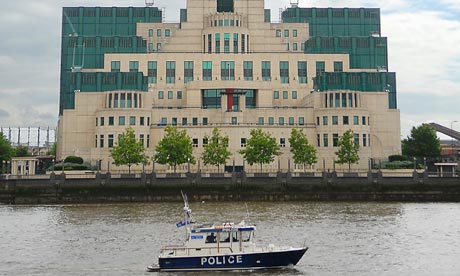
The headquarters of MI6 on the banks of the Thames in London. Photograph: Bertrand Langlois/AFP/Getty Images

When MI6 set up home on the banks of the Thames one secret escaped its watchful eyes. The oldest wooden structure ever found on the river, timbers almost 7,000 years old, have been discovered buried in the silt below the windows of the security services’ ziggurat headquarters at Vauxhall, south London.

The archaeologists who uncovered the six hefty timber piles had to explain to the security services what they were up to when armed police turned up after they were spotted pottering about on a foggy day in the mud, armed only with tripods, cameras and measuring equipment – not, as one spectator had apparently reported, shoulder-mounted rocket launchers.

“They accepted there wasn’t much damage we could do with a tripod,” said Gustave Milne, the archaeologist who leads the Thames Discovery programme that has been surveying the entire prehistoric foreshore, uncovering centuries of ancient wharves, fish traps, jetties and ship timbers.

The timbers, partly scoured bare by erosion of the river bed, the largest up to a third of a metre in diameter, were discovered in work during exceptionally low tides last February, but carbon dating work – revealed in the new edition of London Archaeologist journal – has only recently been completed, proving that the trees were felled between 4790 BC and 4490 BC.

Although the site is now exposed only at the lowest tides, the ancient Thames was narrower and deeper, and Milne believes that 7,000 years ago the timbers may have been built on dry land, possibly at the highest point of a small island.

“The find is very interesting, because in the mesolithic period the people were nomadic hunter-gatherers, living in temporary camps – not at all given to building substantial structures like this,” Milne said.

“At the moment we don’t have enough timbers to give any kind of alignment, they’re not in a straight or a circle – but they could have supported a substantial platform with some form of domestic structure or dwelling.”

The site is just where a smaller river, the Effra, enters the Thames, and it was clearly important to the prehistoric Londoners. The archaeologists, working with experts from the Museum of London and English Heritage, also found worked flint from the same date as the timbers, older pottery, and just upstream, on the far side of the modern Vauxhall bridge, a much later Bronze Age structure.

“There may have been a ford, it may have had some religious significance, or it may just have been very rich hunting grounds – but it was clearly what my colleague at the Museum of London calls ‘a memorable place’,” Milne said.

“We’re just sorting out which are the lowest new year spring tides to go back for another look – if Mr Bond will let us.”

External link: http://www.guardian.co.uk/science/2011/jan/06/ancient-timbers-mi6-headquarters
Thames Tours: http://www.bestvaluetours.co.uk/

British Tour Guide
HisTOURies UK – The Best Tours in History

When we thing of chalk hill figures in Wiltshire we all immediatly think of ‘chalk horses’, however Britain has many other chalk hill figures scattered across the British Isles – some new, some old.
Just west of Salisbury and close to Stonehenge is the Fovant Badges:

The Fovant Badges, Wiltshire

History of the Fovant Badges
When the 1914-1918 war broke out, there was a need to find accommodation for the New Army. In many areas, training and transit camps were established for troops leaving for, and returning from, the battlefields in northern France. One of these areas was the village of Fovant, in Wiltshire and its neighbours Compton Chamberlayne and Sutton Mandeville. The villages and the fields in the shadow of the chalk downs became a military camp, complete with barracks, a hospital, parade areas, shooting practice ranges, a camp cinema and YMCA huts. A military railway was constructed to serve the camp, branching off the main line railway from London to the southwest

Thousands of men from all parts of Britain and overseas lived for a while in the area, passed on to the Western Front and returned from it. Many never returned but gave their lives on the battlefields in France. Others died of their wounds in the hospital or from disease. Rows of silent War Graves in Fovant and other nearby churchyards are testimony to their presence. In remembrance of their colleagues, many of the regiments carved into the hillside replicas of their cap badges. Many of these no longer survive, but by the end of WW1 there were some twenty discernible badges.

Local workers from Fovant and the surrounding villages, supported by Regimental Associations maintained the Badges after WWI. During WWII, the badges became overgrown in order to disguise landmarks, which might assist enemy aircraft. Weather and time, as well as the effects of grazing cattle, caused decay. After the end of WWII, the Fovant Home Guard platoons formed themselves into an Old Comrades Association and undertook the task of restoration. It was in the period of 1948/51 that the two Wiltshire regimental badges were cut and in 1970 the Royal Signals badge was added.

In 1961, the Old Comrades Association was reformed as ‘The Fovant Badges Society’ with redefined, more positive objectives related to the maintenance and preservation of the Badges and the holding of the annual Drumhead Service. The Society became a charitable organisation and in 1994 adopted a new constitution, which governs its operation and objectives; these are the preservation and maintenance of the Regimental Crests cut on the chalk downs.

The Society was determined, aided by much public and international interest, that the Badges should remain an historic, fitting and truly visible memorial to the soldiers who passed through Fovant and its neighbouring villages on their way to the Great War, many never to return.


By 2000, there were only twelve discernable badges on the downs. A new management structure was put in place and, in consultation with professional civil engineers, a survey of the condition of the badges was made. It appeared that the Fovant Badges were unique in their detail and posed difficult restoration problems relating to the slope of the hill, the complexity of design, and their sizes. These vary; the Australian Badge, the largest, measures 51m x 32m, which is just under half the area of a football pitch.

The Trustees, faced with a potential bill of £350,000 upwards for restoration and large annual sums for increased maintenance thereafter, realised that the task facing them had to be brought to realistic proportions. They decided, with much sadness, that the objective should be the restoration and maintenance of the military crests on Fovant Down. These are clearly visible from a lay-by in Fovant whilst passing along the A30 road between Shaftesbury and Wilton. There is also a public footpath from the road to the village of Broad Chalke, which passes by the area of the Badges. This inevitably meant that the Map of Australia on Compton Down and the crests of the Royal Warwickshire Regiment and the 7th Battalion, City of London Regiment on Sutton Down would continue their decline. These badges would, in addition, have posed intractable problems because of the nature of the ground and their more advanced state of decay. Also, the YMCA badge on Fovant Down would be allowed to fade away.

Since the badges lay on open private farmland, with the movement of cattle unrestricted, it was clearly essential that large expenditure had to be used with good effect. A crucial first step was, therefore, to ensure the long lasting protection of the Badges. In co-operation with the farm owners, application was made to English Heritage to have the Badges scheduled as Ancient Monuments. Scheduling was granted in 2001 by the Department of Culture, Media and Sport placing all twelve badges, including those not being restored, under the protection of the government.

The estimated cost of the more limited objective was £220,000 and a national appeal was formally launched at the annual Drumhead Service in July 2001. The response to this was very positive and sufficient sums were assured by the end of 2001 to allow work to commence in 2002. Work experience by contractors, Dean and Dyball Construction Ltd, Ringwood, and favourable weather in 2002 allowed more work than anticipated to be done. This led to five badges being restored in 2002 and the remaining three (including the Royal Signals Badge who undertake their own maintenance and restoration) were completed in 2003.

The appeal has been successful. We are enormously grateful to our many benefactors – too large to name them all – but special mention must be made of the significant support given by the Heritage Lottery Fund, the Daily Mail And General Trust, the Pilgrim Trust, the Clothworkers’ Foundation, the Australian Department of Veterans’ Affairs and Salisbury District Council. And also to the very many private donations from throughout the country.

The Badges were originally constructed by cutting outlines into the rough tussocks of grass down to the underlying soil using such tools as were available in 1916. Chalk from external sources was then hauled manually from chalk dumps and used to fill in the areas exposed.

SLOPE PROBLEMS
profile before restoration – section through large chalk areas

Restoration problems involved work being carried out on a hillside that sloped at about 30 degrees and where a combination of grass, chalk and rain makes for a hazardous working environment. All chalk hills suffer from surface soil movement or ‘creep’. This causes ridges to develop above and below the horizontal chalk outlines and distorts the view of the badges from the A30 road. These so-called ‘eyebrows’ had to be removed.

Existing chalk on the Badges was removed to a depth of 150mm, stabilising the slope where necessary using geotextile materials together with one metre long metal rods, and replacing the excavated areas with compacted new chalk. On a large badge this required handling about 50 tonnes of chalk out of and into the site. As each badge is restored it is fenced to prevent cattle damage which had occurred in previous years.

The restoration of the eight military crests on Fovant Down was completed by the end of June 2003.However that is not the end of the story. The annual cost of maintenance is above the current, and projected future, income level of the Society. If we cannot achieve the necessary level of funding to carry out effective annual maintenance work then the long-term existence of these memorials as visible emblems on the Downs must be in doubt.

External links:
WW1 military badges – Fovant Badges Society
http://googlesightseeing.com/2009/08/the-fovant-badges/
The Stonehenge Tour Company
The Fovant Regimental Badges in Wiltshire England UK

Fovant Badges – Fovant History
Wiltshire Heritage Museum Home Page
Related post Chalk Hill Figures – :
Needless to say we offer guided tours of all the chalk hill figures in Wessex (some dating back to 3000BC) and can include other tourist attractions including Salisbury, Stonehenge, Bath, Avebury and Dorset

Wessex Tour Guide
HisTOURies UK – The Best Tours in Wiltshire and Dorset

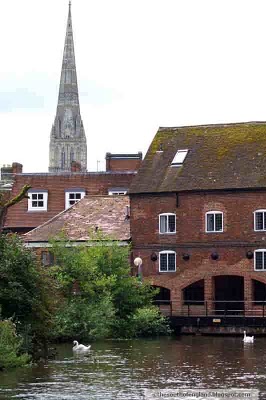
Salisbury and Stonehenge are separated by some 20 minutes drive, so after having had visited the prehistoric megaliths, it would be simply unforgivable to not pop in on this medieval town (though it has the status of city), which is first of all famed by its 13th century gothic cathedral.
The construction of Salisbury cathedral became one of those rare examples where only one generation of people was involved. That’s why, having had been erected during less than 40 years, this attired in stone lace structure represents a purest specimen of early English Gothic. The gracefully soared 123 metres spire is deceptively light. Actually its weight (with the weight of the tower) amounts to 6500 tonnes!

salisbury cathedral

Considering the fact that the foundation of Salisbury cathedral extends deep down the soggy ground only for 5 metres, it only remains to wonder how it has been still withstanding such load yet to admire the craftsmanship of medieval builders.
Inside of Salisbury cathedral it is as much mesmerizingly beautiful as outside. The sunlight, flowing through the vibrant stained glass windows, softens that characteristic gothic solemnity and makes it more warm and friendly. Apart from good looks the cathedral prides itself on keeping one of the 4 copies of Magna Carta, having been remained from the time of John Lackland, as well as the oldest working clock in the world dated by 14th century.

salisbury cathedral

In the confines of the spacious Cathedral Close nestle picturesque buildings of different époques and styles. Mompesson House (on the left from the High Street Gate) is a typical sample of English Baroque with gorgeous plasterwork and elegant interior that became the set for “Sense and Sensibility”, starring Emma Thompson and Hugh Grant. Malmesbury House (just by Sarum College) is quite often associated with the name of distinguished composer of the 18th century George Frideric Handel. It is believed that this is where he gave his first concert in Britain, to be exact in the room above the Saint Ann’s Gate. Salisbury and South Wiltshire Museum, situated in an ancient building of the 13th century opposite Salisbury cathedral, houses not only the curious artefacts having been found in the process of excavations near Stonehenge but also possesses the exhibits of the time of Romans and Saxons, the pieces telling about Salisbury’s social life in the Middle Ages, great collections of costumes and paintings.
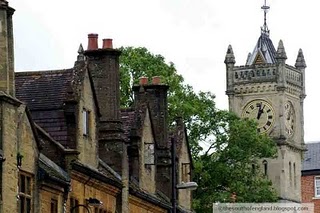
sarum collegeSalisbury is one of those provincial towns where no one can help oneself but meander around the narrow little streets enjoying the tranquillity far from boisterous metropolises. Everything is so snugly compact in comparison with the cities with high population. So there is even its own “Little Ben”, though probably “Little Tower” would suited this clock tower better, because it was built on the site of the former prison.
While walking along Salisbury, scrutinizing the old houses, amidst which there is a good deal of colourful timber-framed ones, and dropping in on little souvenir shops, the time unnoticeably flies by. And getting hungry organism suddenly begins to focus attention not on “that lovely little house” but on those with the signboards “pub”, “restaurant” or “café” on them. Though it doesn’t take too long to find a place for having a meal, because there are plenty of pubs and restaurants for every taste.
salisbury wiltshireSome of them can be interesting not only from gastronomic point of view, but also from historic. In this list for instance are: the restaurant at “The Old Mill” placed in the building of an old paper mill of the 12th century, “The coach and horses” built in 13th century, “The haunch of venison” on the Market Place. That last one exists at least from the 14th century and it doesn’t only keep a vivid atmosphere of the past. Between the ground and first floors is yet another one small area for visitors, pretentiously called “The house of Lords”. There, in the tiny baking oven, a cut mummified hand clenching the playing cards has been put on display. It was found during the refurbishment of the restaurant and alleged to be of an unlucky gambler, having had been punished for his cheating. That part of dead body doubtfully raises someone’s appetite but definitely increases the popularity of the place.
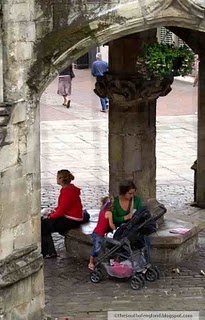
salisbury wiltshireAcross from “The haunch of venison” is an unusual stone construction. It’s called Poultry Cross, though visually it looks more like a stone marquee. In the 15th century, when Market Place was wider, there were four Crosses. In those days they functioned as departments in the modern supermarkets. So in the Middle Age there were: Cheese/ Milk Cross, Poultry Cross, Wool/Yard Cross and Barnwell Cross where the livestock was being sold. Nowadays this only remained Poultry Cross is the sort of a town summerhouse, a perfect spot for making a date or take shelter from a heavy shower.
In spite of such worldwide neighbour like Stonehenge, Salisbury, having its own charisma, doesn’t fade in the rays of the megaliths fame at all. Salisbury is like a main spice in the dish, it makes the trip to Stonehenge more complete. Without it that “megalithic delicacy” might be a little bit mild.
External links:
Visit Salisbury and Wiltshire Tourist website – www.VisitWiltshire.co.uk
Salisbury Cathedral – www.salisburycathedral.org.uk
Stonehenge – www.Stonehenge-Stone-Circle.co.uk
Salisbury and Stonehenge Tours – www.StonehengeTours.com

Southern England log : http://thesouthofengland.blogspot.com
Tours from London – www.Welcome2London.co.uk
Needless to say we can organise private guided tours of Salisbury and Stonehenge for small groups.  These tours can depart from Salisbury, Bath, Glastonbury or London

Salisbury Tour Guide
HisTOURies UK – The Best Tours in ancient Wiltshire

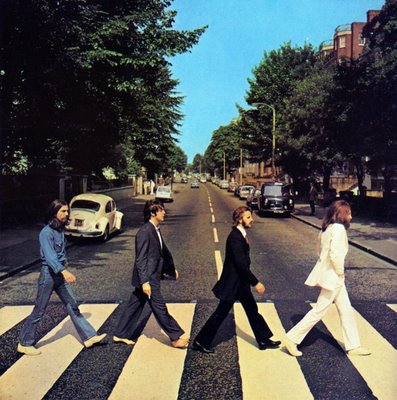
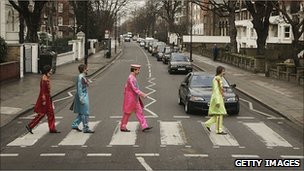
The Abbey Road zebra crossing in north London – made famous after appearing on a Beatles album cover – has been given Grade II listed status.The crossing – the first of its kind to be listed – is being recognised for its “cultural and historical importance” following advice from English Heritage.

Abbey Road Beatles crossing

Abbey Road Beatles crossing


The Beatles were photographed on Abbey Road in Ian Macmillan’s iconic cover shot for the 1969 album Abbey Road.
Sir Paul McCartney said it was the “icing on the cake” in a great year.
‘Huge cultural pull’The original zebra crossing, where the photograph was taken, was moved several metres for traffic management reasons more than 30 years ago, and no original features remain.

A spokesman for Westminster City Council said: “The detail of exactly when and why the crossing was moved from its original location have been lost in the annals of time.

“But by comparing photographs with the Ordnance Survey maps, we believe that the crossing might have been further north nearer 3 Abbey Road, which was the front house of the EMI Studios, because the steps of Neville Court appear to the right of the crossing in original photographs of the crossing, whereas the present crossing is near the junction of Abbey Road and Grove End Road.”

But John Penrose, Minister for Tourism and Heritage, said: “This London zebra crossing is no castle or cathedral but, thanks to the Beatles and a 10-minute photo-shoot one August morning in 1969, it has just as strong a claim as any to be seen as part of our heritage.”

Roger Bowdler, head of designation at English Heritage, said: “This is obviously an unusual case and, although a modest structure, the crossing has international renown and continues to possess huge cultural pull – the temptation to recreate that iconic 1969 album cover remains as strong as ever.

“Together with the nearby Abbey Road studios, also listed at Grade II on our advice, they remain a Mecca for Beatles fans the world over.”

Sir Paul said: “It’s been a great year for me and a great year for the Beatles and hearing that the Abbey Road crossing is to be preserved is the icing on the cake.”

The crossing is outside the Abbey Road studios, where the Beatles recorded much of their output.

That building was granted Grade II listed status in February.

A Grade II listing, the most common protected status, means that a building or monument is recognised as nationally important and of special interest.

External links:
Abbey Road Live (streaming) Webcam http://www.beatlesradio.com/AbbeyWebCam.aspx
Abbey Road Studios
http://www.abbeyroad.com/
London Beatles Tour
http://www.partner.viator.com/en/6215/tours/London/London-Rock-Music-Tour/d737-5081ROCKMUSIC

Wessex Tour Guide
HisTOURies UK – The Best Tours in British History

The crossing is described as a Mecca for Beatles fans

The crossing is described as a Mecca for Beatles fans

More than 2,000 people gathered in the snow of Stonehenge to celebrate the winter solstice.

Druids, lead by Arthur Pendragon (centre), take part in the winter solstice at Stonehenge in Wiltshire

Druids, lead by Arthur Pendragon (centre), take part in the winter solstice at Stonehenge in Wiltshire

Despite the actual sunrise, – which took place at 08.09am – being obscured by mist, Peter Carson of English Heritage said: “Stonehenge looked spectacular in the snow and it was a great way for people to start their festive season.”

The Pagan community came out in force to celebrate the annual festival, along with many whom were merely curious to experience the event.

As well as the traditional Druid and Pagan ceremonies, a snowball fight erupted as people enjoyed the cold weather.

“The popularity of the winter solstice has grown over the years as more is known about Stonehenge and the winter solstice and the whole celebration has grown in popularity, ” Mr Carson said.

Lance Corporal Paul Thomas, a serving soldier of 15 years who fought in Iraq, was “knighted” with a sword by a Druid calling himself King Arthur Pendragon.
The word solstice comes from the Latin phrase for “sun stands still”. During the winter solstice the sun is closer to the horizon than at any other time in the year, meaning shorter days and longer nights. The day after the winter solstice marks the beginning of lengthening days, leading up to the summer solstice in June.

The Sun’s passage through the sky appears to stop, with it seeming to rise and set in the same two places for several days. Then the arc begins growing longer and higher in the sky, reaching its peak at the summer solstice.

The solstices happen twice a year because the Earth is tilted by 23.5 degrees as it orbits the sun. Since ancient times people have marked the winter and summer solstices.

The stones at Stonehenge are aligned with the sunlight on both the summer and winter solstices. These times told prehistoric farmers that harvest was coming or that the shortest day of winter had passed.

Recent excavations of animal bones at the site suggest that huge midwinter feasts were held at Stonehenge, with cattle moved there to be slaughtered for the solstice celebrations.
External links:
http://www.telegraph.co.uk/news/picturegalleries/uknews/8219063/Druids-gather-in-the-snow-and-ice-at-Stonehenge-for-the-winter-solstice-sunrise.html
http://visit-stonehenge.blogspot.com/2010/12/stonehenge-summer-solstice-tour-2011.html
http://blog.stonehenge-stone-circle.co.uk/2010/12/21/stonehenge-winter-solstice-21stdecember-2010/
http://www.telegraph.co.uk/news/uknews/8219230/Druids-and-Pagans-celebrate-winter-solstice-at-Stonehenge.html

Stonehenge Tour Guide
HisTOURies UK – The Best Tours of Ancient Britain

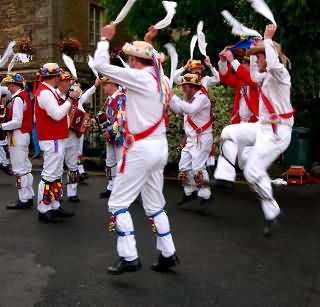
The main Christmas customs were those that were common throughout

Morris Dancers

Morris Dancers

the country and which came from a time when farm labourers worked most days of the year, and often on Christmas Day morning. Mummers plays were a favourite and would normally be performed in the evenings in the big houses and farmhouses of the area. The performers would be rewarded with food and drink and, sometimes, with money. Most villages had a group of men who were the mummers and both words and actions of the play and costumes and props would be handed down from one generation to the next. Places from which mummers’ plays are remembered include, Stourton, Cricklade, Limpley Stoke, Amesbury, Maiden Bradley, Horningsham, Wootton Rivers, Woodford, Quidhampton, Stockton and Winterslow. Around Swindon in the 1830s, when it was still a small market town, they are recorded as going from door to door and, more especially, from pub to pub.

Carol singers were often groups of boys, or sometimes the church choir, who would visit the big houses of the neighbourhood collecting money. As with carol singers until the 1970s, these always gave good value by singing the full carol. At the larger houses they might sing two or three. There were some local carols, most of which have been lost, and some of these were original while others were adaptations of well known carols. At Berwick St. James it was the custom to wake up householders on Christmas morn by singing carols, which were learned by one generation from the preceding one.

An earlier tradition was wassail. Originally a fertility rite with live animals this later degenerated into processing around the streets, singing and collecting money in the wassail bowl. This happened at Cricklade where a live ox was once involved; by the 19yth century this had become a withey frame covered with a cured ox hide. In a few parts of the county, such as Everleigh, the parson organised a Christmas Ale for his parishioners, where instead of money being raised for the church the participants were provided with bread, cheese and beer. These seem to have died out in the early 17th century.

(Source: http://www.wiltshire.gov.uk/community/getfaq.php?id=194 and http://www.wiltshirefolkarts.org.uk/wfmummers.htm, A Wiltshire Christmas, by John Chandler. Alan Sutton, The Folklore of Wiltshire, by Ralph Whitlock. Batsford)

Stonehenge Tour Guide
HisTOURies UK – The Best Tours in Wesse

Had to share a few Wessex snowy pictures with you………

This slideshow requires JavaScript.

Stonehenge Tour Guide
HisTOURies UK – The Best Tours in bad weather

This is a subject very close to my heart and it saddens me that over 50

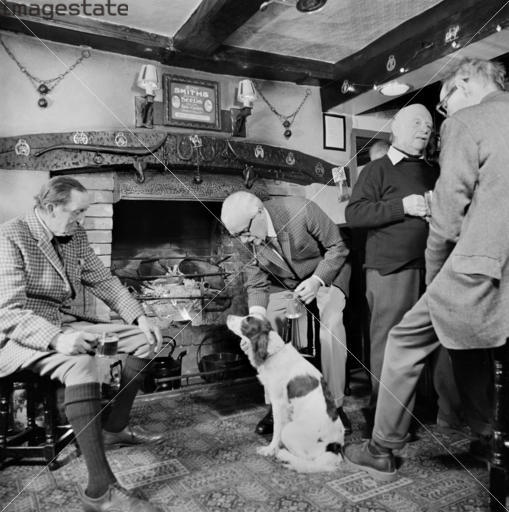
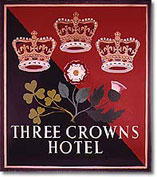
Traditional British Pub

pubs per week are currently closing?  I encorage all Brits to visit your local pub at least once a week – not for half a pint but a few drinks and someting to eat.  If you are visiting England please take the time to visit a tradtional English Pub or three. Our tour guides will always recommend a local tavern should you need some guidance.

The English pub, or public house, is an institution in British community life as a place to imbibe, eat and converse with neighbors dating back nearly 2,000 years to the time of the Roman colonization of the British Isles.

Origins

  • While the inhabitants of Great Britain are known to have drank ale since the Bronze Age, the English pub stems from Roman colonizers that built places where travelers could get food, wine and rest along the roads of Great Britain.
  • Post-Roman Pubs

  • When the Romans left England they took the early public houses, or tabernae, with them. Still, a love for ale kept locals brewing and selling their own spirits in unsanctioned alehouses.

    Increased Popularity and Regulation

  • By the 10th century so many alehouses had popped up throughout the country that King Edgar the Peaceful created a law in 965 A.D. that only one alehouse be allowed per village
  • Pubs in the Middle Ages

  • The Middle Ages saw an increase in population and subsequent industry that polluted many of Britains waterways. The alehouse grew still more in popularity as Britains looked to ale as a safe source of drinking water.

    Modern Pubs

  • The term “pub” originated in Victorian-era England as a shortening of “public house.” There are currently more than 50,000 pubs throughout England.
    History of the pub Alcohol has been drunk and served throughout the British Isles in one form or another since the Bronze Age. However, the origins of what we may now recognise as the pub began to appear during the Roman colonisation of Britain, as places where travellers could obtain rest and refreshment sprang up along the new road networks.

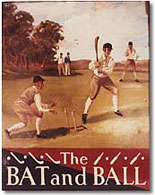
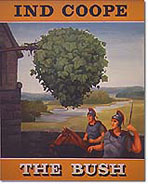
    These Roman taverns remained even after the withdrawal of the Romans from Britain. During the Middle Ages the pub sign came into existence – the earliest versions being green bushes set upon poles to indicate the sale of beer, stemming from the earlier Roman tradition of vines being displayed to advertise wine. By the fourteenth century, more abstract names were common, as evidenced by Chaucer’s description of the Tabard Inn in Southwark. The ‘Hostellers of London’ were granted guild status in 1446, showing that these medieval inns and hostelries were important in continuing the practice of offering rest and refreshment to travellers.

    During the sixteenth and seventeenth centuries these establishments primarily sold beer and ale, until the first half of the eighteenth century when the so-called ‘Gin Craze’ took hold, especially amongst the poorer classes as the production of gin had increased to six times that of beer. The 1751 Gin Act forced gin makers to sell only to licensed premises and put drinking establishments under the control of local magistrates.

    During the 19th Century the Wine and Beerhouse Act was introduced to restrict the hours Public Houses could sell alcohol. This was further compounded by the Defence of the Realm Act 1914 which set the 11pm limit on the sale of alcohol throughout the twentieth century. The Licensing Act 2003 repealed the previous licensing laws for England and Wales, taking responsibility away from magistrates and placing it in the hands of local councils.

    British Tour Guide
    HisTOURies UK – The Best Tours in British History

  • Wanted to claryfy that we have not misspelt our tour company name. HisTOURies comes from two words  ‘history’ and ‘stories’ – clever eh?
    We operate guided historical (hisTOURical) sightseeing tours of Britain.  Our expert guides (historians or hisTOURians) bring Britain’s rich history (hisTOURy) alive with tales’s and stoiries (sTOURys or sTOURies) of ancient England.
    ‘It is not spelt incorrectly.’
    Hope thats clear (clear as mud)……………..
    Our award winning tours can depart from London, Salisbury, Bath or Glastonbury.  Please visit our website:
    HisTOURies UK – The Best Tours in British History (hisTOURy)

    Histories (Herodotus)

    The Histories of Herodotus is considered one of the seminal works of history in Western literature. Written from the 450s to the 420s BC in the Ionic dialect of classical Greek, The Histories serves as a record of the ancient traditions, politics, geography, and clashes of various cultures that were known around the Mediterranean and Western Asia at that time. It is not an impartial record but it remains one of the West’s most important sources regarding these affairs. Moreover, it established without precedent the genre and study of history in the Western world, although historical records and chronicles existed beforehand.

    Perhaps most importantly, it stands as one of the first, and surviving, accounts of the rise of the Persian Empire, the events of, and causes for, the Greco-Persian Wars between the Achaemenid Empire and the Greek city-states in the 5th century BC. Herodotus portrays the conflict as one between the forces of slavery (the Persians) on the one hand, and freedom (the Athenians and the confederacy of Greek city-states which united against the invaders) on the other.

    The Histories was at some point through the ages divided into the nine books of modern editions, conventionally named after the Muses.

    Herodotus seems to have travelled extensively around the ancient world, conducting interviews and collecting stories for his book. At the beginning of The Histories, Herodotus sets out his reasons for writing it:

    British Tour Guide
    HisTOURies UK Stories in History

    New video explains geophysics, 3D laser scanning and finds processing

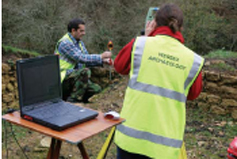
    What technologies do modern archaeologists turn to? Mark Langdon speaks to experts at Wessex Archaeology to find out about the modern techniques employed at digs

    Watch our experts explain how the techniques are used and how archaeology works in the supporting video:
    http://kn.theiet.org/news/dec10/time-team.cfm

    Geophysics is the physics of the Earth and its environment in space. Its subjects include the shape of the Earth, its gravitational and magnetic fields, the dynamics of the Earth as a whole and of its component parts, the Earth’s internal structure, composition and tectonics, the generation of magmas, volcanism and rock formation, the hydrological cycle including snow and ice, all aspects of the oceans, the atmosphere, ionosphere, magnetosphere and solar-terrestrial relations, and analogous problems associated with the Moon and other planets.

    Geophysics is also applied to societal needs, such as mineral resources, mitigation of natural hazards and environmental protection. Geophysical survey data are used to analyze potential petroleum reservoirs and mineral deposits, to locate groundwater, to locate archaeological finds, to find the thicknesses of glaciers and soils, and for environmental remediation.

    External links:
    British Geophysical Association
    Stonehenge Riverside Project
    British Academy – Science and Stonehenge – summaries
    Wessex Archaeology – One of the UK’s leading heritage practices

    Stonehenge Tour Guide
    HisTOURies UK – Private Guided Tours of Wiltshire