Feeds:
Posts
Comments

StonehengeNews's avatarStonehenge Stone Circle News and Information

There are many questions surrounding the ancient stone circle of Stonehenge but might sound help in the search for answers?

Virtual reality allows new ways to examine Stonehenge's history Virtual reality allows new ways to examine Stonehenge’s history

Thomas Hardy said it had a strange “musical hum”. Tess of the d’Urvbervilles ends at Stonehenge and features the “sound”. Modern-day druids also say they experience something special when they gather at Stonehenge and play instruments within the stone circle.


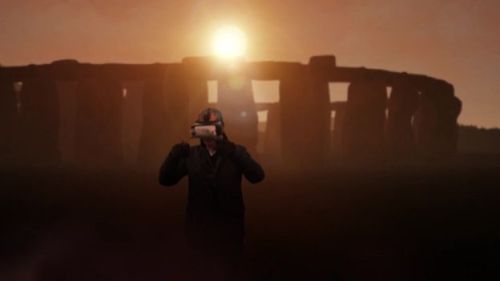
However, Stonehenge is a ruin. Whatever sound it originally had 3,000 years ago has been lost but now, using technology created for video games and architects, Dr Rupert Till of the University of Huddersfield has – with the help of some ancient instruments – created a virtual sound tour of Stonehenge as it would have sounded with all the stones in place.

Arriving at 07:00 on a decidedly chilly January morning, I was sceptical. Dr Till had arrived with a…

View original post 465 more words

StonehengeNews's avatarStonehenge Stone Circle News and Information

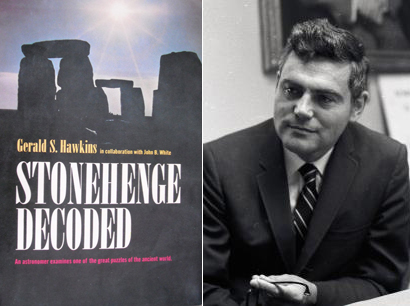
Astronomer Prof. Gerald Hawkins wrote two articles for “Nature” in 1963 and 1964 in which he pointed out several new Stonehenge alignments to the Sun and Moon and proposed that the 56 Aubrey Holes could be used to predict eclipses. His subsequent popular book “Stonehenge Decoded” gave the world the idea that the monument was a Neolithic computer.

stonehenge-decoded-and-gh

Archaeologists were horrified at the thought and the leading authority on Stonehenge at the time, one Richard Atkinson, wrote a rebuttal paper in 1966 called “Moonshine on Stonehenge” which heavily criticised Hawkins conclusions. Atkinson considered the builders of Stonehenge to be “howling barbarians” – a statement he later came to regret.

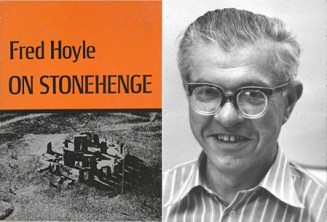
on-stonehenge-and-fhProf. Fred Hoyle followed up Hawkins’ work on the eclipse predictor idea and came up with a relatively simple recipe for moving markers around the 56 Aubrey Holes to keep track of the Sun, Moon and the two points in the…

View original post 1,023 more words

StonehengeNews's avatarStonehenge Stone Circle News and Information

Stonehenge Opening Times and Entrance Prices.
English Heritage advise to expect a visit to last around two hours. Please see the table below for opening times for 2017/18, with some seasonal variability, and entrance prices for adults, children, families, seniors and groups.

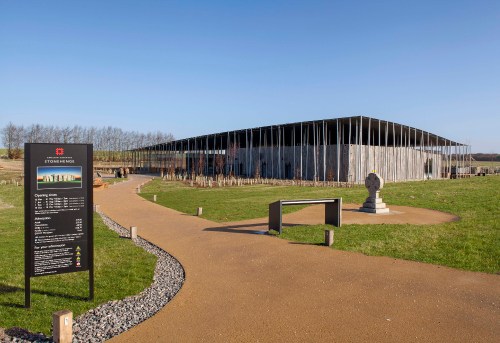
visitor-centre2 The Stonehenge Exhibition and Visitor Centre

There is 10% discount for groups of 11 or more visitors paying together plus a free place for every additional 20 paying passengers. Free entry for coach driver and tour leader.

If you come by car you will park in the car park outside the visitor centre. It is free for people purchasing tickets to enter Stonehenge, there is a charge if you are not. Tour buses have their own separate coach park.

All Members of English Heritage or National Trust must show a valid membership card on arrival to be granted free parking and site access.

To enter the Stonehenge Exhibition…

View original post 420 more words

This year has been memorable for many reasons – some bad, and some good. But in the world of archaeology, a veritable smorgasbord of discoveries have been unearthed over the last 12 months, allowing us to dig deeper into our history. As 2016 comes to an end, we took a look at some of the most interesting archaeological finds in Britain. (IB Times)
gstonehenge

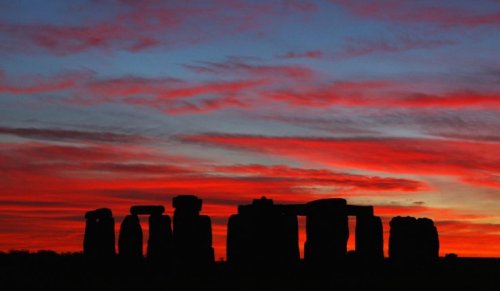
Remains of women at Stonehenge challenge assumptions about their role in neolithic times (Getty)

The women of Stonehenge

The origin and purpose of Stonehenge, one of the world’s most famous prehistoric monuments, is an enduring mystery – but scientists are gradually finding out more about the rocks. In April, archaeologists discovered the cremated remains of 14 women at the site, revealing more about the status of women in thousands of years ago.

A recent excavation of “Aubrey Hole 7″– one of 56 pits dug outside of the circle of stones – uncovered the bodies of the women, who were buried between 3100 BCE and 2140 BCE. Archaeologists believe anyone buried at the site had a high social status, so the find challenges assumptions about the role of women in neolithic times.

Lindisfarne monastery

An amateur archaeologist stumbled upon an incredible find in Northumberland in July: a rare grave marker from the mid 7th to 8th Century believed to be evidence of Britain’s most famous monastery, Lindisfarne.

One of England’s earliest Christian monasteries, it was originally founded by in 635AD but was was ransacked by the Vikings around 1,300 years ago. The Lindisfarne monastery is home to one the most beautiful books in Europe, the Lindisfarne Gospels, which incorporates Celtic, Mediterranean and Anglo-Saxon designs and is thought to be dedicated to Saint Cuthbert.

Black Death plague pit

An extremely rare mass grave of plague victims in was discovered at 14th century monastery hospital in Lincolnshire by University of Sheffield archaeologists in November. The 48 skeletons – 27 of which were children – show how the small community was overwhelmed by the Black Death, one of the worst pandemics in human history.

The Black Death, which was most likely bubonic plague, claimed the lives of an estimated 75 to 200 million people across Europe between 1346 and 1353.

One of the archaeologists on the dig, Dr Hugh Willmott, said: “The finding of a previously unknown and completely unexpected mass burial dating to this period in a quiet corner of rural Lincolnshire is thus far unique, and sheds light into the real difficulties faced by a small community ill prepared to face such a devastating threat.”

Earliest surviving fresco from Roman Britain

In February, archaeologists at the Museum of London found a wall painting dating back to the late 1st century AD – one of the earliest surviving frescos from Roman Britain.

The painting most likely to have been used to decorate a reception room where guests were entertained. Researchers are now studying the elaborate fresco further to find out more about the fashions and interiors favoured by London’s first wealthy citizens.

Oldest handwritten documents

In June, archaeologists discovered the earliest-known handwritten documents in Britain among a haul of more than 400 waxed writing tablets, used by Romans for note-taking. The artefacts were discovered during excavations for Bloomberg’s new London-based headquarters and reveal what life was like in the city under Roman rule. Some of the wooden tablets have been deciphered to reveal names, events and business transactions.

Latin expert Roger Tomlin, who translated the tablets, said: “The Bloomberg writing tablets are very important for the early history of Roman Britain, and London in particular. I am so lucky to be the first to read them again, after more than 19 centuries, and to imagine what these people were like, who founded city of London.”
Read the full story at the IB Times website

Wessex Guided Tours conduct guided tours of Stonehenge and the surrounding landscape. These specialist tours can depart from Bath or Salisbury.

Wessex Guided Tours
Step into England’s History with HisTOURies U.K
http://www.HisTOURies.co.uk


StonehengeNews's avatarStonehenge Stone Circle News and Information

As you might expect for such an imposing stone monument, people have sometimes associated Stonehenge with Freemasonry.

Oddly there is actually not much in the way of direct evidence that the Brotherhood ever took much interest in it apart from the odd article in ACQ (“Ars Quatuor Coronatorum”) discussing various aspects of its construction and history.

Various attempts have been made down the years to find a link between Druidism and Freemasonry with some authors claiming that the Druids were the original basis for it – notably G.S. Faber (“Origins of Pagan Idolatry”, 1816), Winwood Reade (“The Veil of Isis”, 1861) and Dudley Cory-Wright (“Druidism – The Ancient Faith of Britain”, 1924).

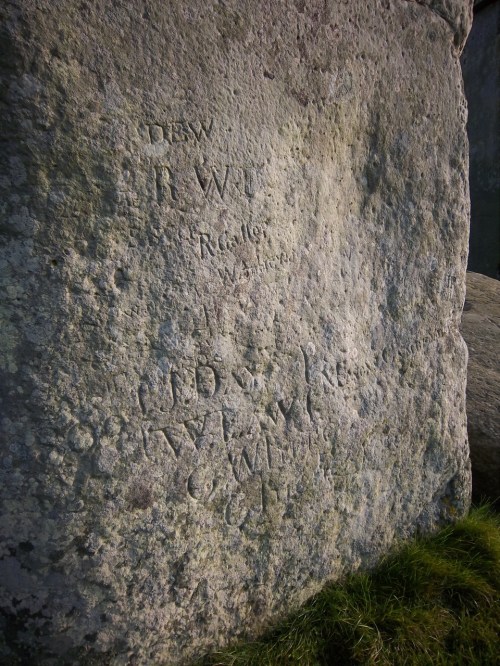
masons-camberwellThere’s even some graffiti that refers to masons – on the southwest side of the tallest stone still standing these lines appear:

           (J.DAY           )

1802    (                       ) MASONS CAMBERWELL

            (W.LAW         )

… although it’s not clear…

View original post 860 more words

THE Netheravon Barrow Rescue project in Wiltshire has won the coveted Heritage Award from the MoD for its work to save important archaeological remains near Stonehenge.

Each year the Defence Infrastructure Organisation (DIO) which manages thousands of military sites in the UK and overseas, makes a series of awards on behalf of the MoD to recognise work that promotes environmental protection on the Defence Estate.

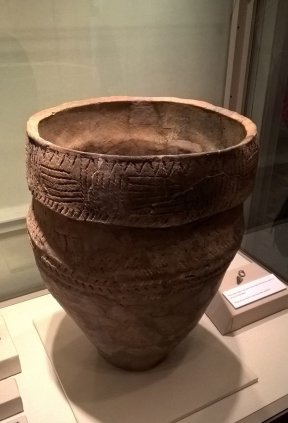
urnThe Netheravon Barrow Rescue saved an important early Bronze Age site close to Stonehenge, which was being destroyed by burrowing badgers.

The excavation team was led by Wessex Archaeology’s Jackie McKinley, Phil Andrews and Dave Murdie, and supported by the Bulford Conservation Group, Landmarc Services and veterans taking part in Operation Nightingale.

They discovered a wealth of items including a large collared urn dating back over 4,000 years. Wessex Archaeology described the Netheravon Barrow as yielding one of the most important Early Bronze Age discoveries of recent years – alongside the Boscombe Bowman and Amesbury Archer.

The team from Operation Nightingale – which helps injured military personnel with their recovery by working on archaeological projects – won a Historic England Heritage Angel award for their work earlier this year.

DIO senior archaeologist Richard Osgood said: “I am delighted that this award has recognised the efforts made to save a four thousand year old burial mound and some beautiful artefacts which are now on display to the public. I’m especially pleased this award also recognises the contribution made by Operation Nightingale which has made such a tangible difference to all those injured service men and women who have been involved in the project.”

Project director Richard Bennett said: “We are soldiers, sailors, airmen and women and marines and we have proved that we can turn our very unique skill sets to benefit our heritage and its preservation. Being on projects like this provides solace that there is life after the military no matter how hard the journey is along the way.”

Minister for Defence, Veterans, Reserves and Personnel Mark Lancaster, said: “Today is all about celebrating the men and women responsible for a remarkable and diverse range of sustainability, conservation and environmental projects and initiatives delivered across the Defence Estate on behalf of the MoD each year. The diversity of these brilliant projects is dazzling.”

You can read the full article in the Gazatte and Hereld newspaper.

Wessex Guided Tours conduct guided tours of Stonehenge and the surrounding landscape. These specialist tours can depart from Bath or Salisbury.

Wessex Guided Tours
Step into England’s History with HisTOURies U.K
http://www.HisTOURies.co.uk
StonehengeNews's avatarStonehenge Stone Circle News and Information

Archaeologists have found new evidence that rewrites the history of the Stonehenge landscape.  One of the newly-discovered sites even predates the construction of the world famous monument itself.

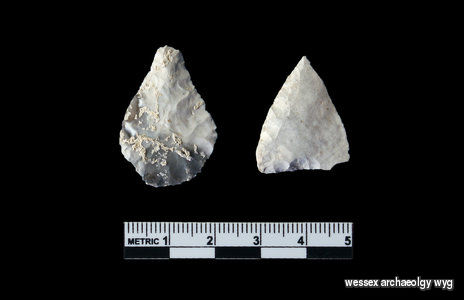
arrow-stones FASCINATING FINDS: Flint arrow heads give a secure early Neolithic date

The remains, found at LarkhillandBulford, were unearthed during excavations being carried out before the building of a series of brand new Army houses.

At Larkhill, the discovery of a Neolithic causewayed enclosure – a major ceremonial gathering place some 200 meters in diameter – dating from around 3650 BC radically changes our view of the Stonehenge landscape. About 70 enclosures of this type are known across the UK, although this is only the second discovery in the Stonehenge landscape, with the other further to the northwest at Robin Hood’s Ball on the Salisbury Plain Training Area. In the Wessex region they occur on hilltops and, along with long…

View original post 577 more words

Cold stones

Mike Pitts's avatarMike Pitts Digging Deeper

stonehenge gate.jpg

I was down at Larkhill this morning to visit a large excavation. The Ministry of Defence is building a new housing estate for soldiers and their families, and Wessex Archaeology has found all sorts of interesting things, among them the edge of a new causewayed enclosure, which you’ll be able to read about in the new British Archaeology, out next week.

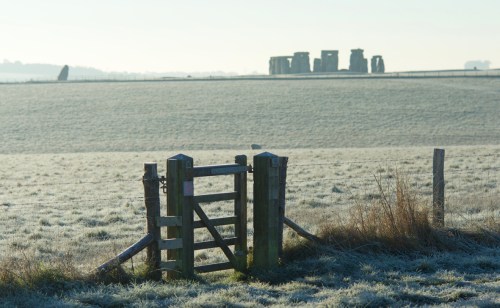
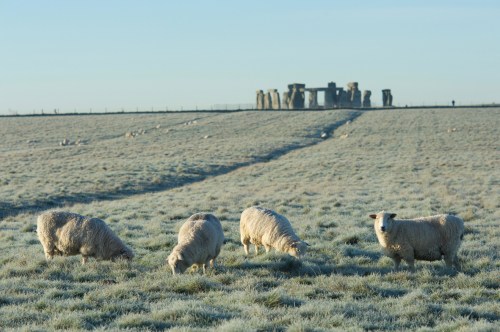
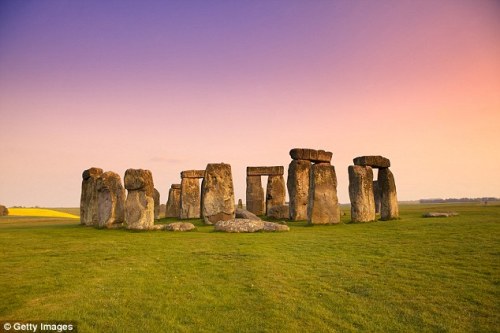
_MP26303.jpgIt was cold, and there’d been a hard frost. Early at Stonehenge you could see scoring in the turf running parallel to the edges of the Avenue earthwork, most clearly between its banks, but also outside them. It’s a curious effect. The Stonehenge Riverside project excavated grooves that run like this in the soil, and interpreted them as natural periglacial structures left over from the ice age, that – because they are aligned on the solstice axis – were partly responsible for where Stonehenge is: neolithic people saw the…
View original post 437 more words

  • The large complex was found in a city around 1.5 miles from Stonehenge
  • The 656 foot diameter complex consists of around 3,000 feet of ditches 
  • Around 300 feet (100 metres) of the ditches have been excavated so far
  • Evidence of cattle bones, ceramic dishes and human remains were found

A new discovery could help shed light on why the mysterious Stonehenge was built.

Visit Stonehenge

A new discovery could help shed light on why the mysterious Stonehenge was built. The large complex, found in a city around 1.5 miles (2.4 km) from the famous stone circle, is thought to date back more than 1,000 years before Stonehenge (pictured) Daily Mail

The large complex, found in a city around 1.5 miles (2.4 km) from the famous stone circle, is thought to date back more than 1,000 years before Stonehenge.

The researchers say the complex was a sacred place where Neolithic people performed ceremonies, including feasting and the deliberate smashing of ceramic bowls.

The new discovery shows the entire area around Stonehenge was even more sacred and ritually active than archaeologists had thought, hundreds of years before Stonehenge appeared.

The complex was built about 5,650 years ago, around 3650 BC, more than 1,000 years before the stones of Stonehenge were erected.

The 656 foot (200 metre) diameter complex consists of around 3,000 feet (950 metres) of ditches and is the first major early Neolithic monument discovered in the Stonehenge area for more than a century.

It was discovered in a village called Larkhill in Wiltshire, just 1.5 miles (2.4 km) north east of the famous site.

A group of archaeologists found the site after the UK Ministry of Defence was preparing to build British Army houses on the land.

The researchers, led by Wessex Archaeology, found evidence of cattle bones, ceramic dishes and human remains.

Freshly broken pottery, dumps of worked flint and even a large stone saddle quern used to turn grain into flour were also found.

The researchers will now test the remains of the the findings, including the ceramic bowls, to try to determine what they were used for.

Each bowl could have held up to 10.5 pints (six litres) of beverage or partially liquid food, potentially a broth.

‘The newly found site is one of the most exciting discoveries in the Stonehenge landscape that archaeologists have ever made,’ a prehistorian from Wessex Archaeology said.

‘These discoveries are changing the way we think about prehistoric Wiltshire and about the Stonehenge landscape in particular,’ said Martin Brown, Principal Archaeologist for WYG, consultancy company WYG, which is leading the Larkhill housing development.

‘The Neolithic people whose monuments we are exploring shaped the world we inhabit: They were the first farmers and the first people who settled down in this landscape, setting us on the path to the modern world.

‘It is an enormous privilege to hold their tools and investigate their lives.’

Around 300 feet (100 metres) of the ditches have been excavated so far.

Read the full article in the Daily Mail. written by ABIGAIL BEALL

Wessex Guided Tours
The Best Tours in British History
http://www.HisTOURies.co.uk

Trethevy Quoit

David Gill's avatarHeritage Futures

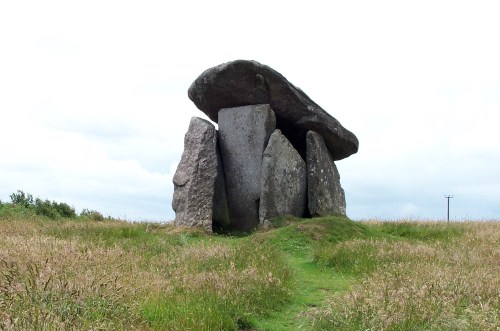
DCP_3234.JPG Trethevy Quoit © David Gill

The neolithic burial chamber of Trethevy Quoit in Cornwall was given to the nation in November 1931. It is now in the care of English Heritage and is managed by the Cornwall Heritage Trust.

For other prehistoric sites in the care of English Heritage see here.

View original post