Feeds:
Posts
Comments

Just read this in my morning newspaper – wow. I will do some more reserach and update you all.
For Dr. Robert Mason, an archaeologist with the Royal Ontario Museum, it all began with a walk last summer. Mason conducts work at the Deir Mar Musa al-Habashi monastery, out in the Syrian Desert. Finds from the monastery, which is still in use today by monks, date mainly to the medieval period and include some beautiful frescoes.

Photo courtesy Dr. Robert Mason. One of the corbelled stone structures found in the Syrian desert. Archaeologists suspect that its an ancient stone tomb. In the front of it are the remains of a stone circle.

Dr. Mason explains that he “went for a walk” into the eastern perimeter of the site – an area that hasn’t been explored by archaeologists. What he discovered is an ancient landscape of stone circles, stone alignments and what appear to be corbelled roof tombs. From stone tools found at the site, it’s likely that the features date to some point in the Middle East’s Neolithic Period – a broad stretch of time between roughly 8500 BC – 4300 BC.

It is thought that in Western Europe megalithic construction involving the use of stone only dates back as far as ca. 4500 BC. This means that the Syrian site could well be older than anything seen in Europe.

At a recent colloquium in Toronto, Canada, Mason described his shock at discovering the apparent tombs, stone circles and stone alignments: “I was standing up there thinking, oh dear me, I’ve wandered onto Salisbury Plain,”

At the southern end of the landscape there are three apparent tombs. They are about eight metres in diameter and each of them “actually has a chamber in the middle”. The roof is corbelled which suggests that beneath them is “something you would want to seal in.” Each of these corbelled structures had a stone circle beside it, which is about two meters in diameter.

Dr. Mason cautioned that the team did not have the chance to do more than survey the area, so it’s still possible that these corbelled structures could have a purpose other than burial. More work also needs to be done to get a precise date of construction.

Dr. Mason set out to look for more stone circles and chambered structures. This time he brought a monk with him, from the monastery:

“Lurking around in the hills above a Syrian military base with a digital camera in one hand and a GPS unit in the other is the sort of thing that makes you want to have a monk in your presence,” he explained.

The two of them went to a rock outcrop – a place that would have been a good source of flint in ancient times – where he found the remains of several corbelled structures. In the valley below they found another corbelled structure with a stone circle right beside it.

The monk who travelled with him sensed that this high outcrop would have been of great importance to the people who lived here. “This is a high place” he told Mason.

As Mason gazed at the landscape, from the height of the outcrop, he saw stone lines, also known as alignments, going off in different directions. Dr. Mason has a strong background in geology, and knew immediately that these could not be natural features.

“I know what rocks look like, where they belong – these rocks don’t belong in that.”

One of stone lines was “very bizarre,” snaking its way up a hill. Mason followed the line and found that it led to the “biggest complex of tombs of all.”

This particular stone structure has three chambers and was probably the burial place for “the most important person.” In the front of the tomb are the remains of a stone circle. Dr. Mason can’t confirm for sure that this was used as a tomb, until further archaeological work takes place.

The lithics the team found in the landscape are also quite unusual – they don’t seem to be made from local material. Mason explained that local flint is white or dark red, but the material they found is “very good quality brown chert.”

The Neolithic period is a time period when people in the Middle East were beginning to grow crops and adopt farming. They didn’t live in settlements larger than a village. There were no cities in the Middle East or anywhere else in the world.

Professor Edward Banning is a University of Toronto anthropology professor and Neolithic period expert, and has done extensive fieldwork in the Middle East, including Jordan. He said that we need to be careful about drawing conclusions before more fieldwork is done.

“Virtually all the burials that archaeologists have ever discovered from Neolithic sites in that part of the world come from inside settlements – in fact even below floors and houses,” he said. If the corbelled structures are confirmed as burial structures, then this site will represent something new.

“It’s possible that this landscape that Dr. Mason has identified could be an example of off-site burial practices in the Neolithic which would be very interesting.”

This would help settle a mystery that archaeologists have long faced. Banning said that while burials have been found in Neolithic settlements, “Those burials are not high enough in number to account for the number of people who must have died in those settlements. So a number of us for many years have assumed that there must have been off-site mortuary practices of some kind.”

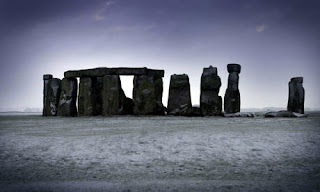
Dr. Mason goes a step further. He says that this site “sounds like Western Europe” and he wonders if this could be an early example of the stone landscapes seen at places like Stonehenge.

Dr. Julian Siggers of the Royal Ontario Museum, another Neolithic specialist, pointed out that it has been argued that agriculture spread from the Near East to Europe. This find creates a question – could these stone landscapes have travelled with them?

“It’s such an important hypothesis if it’s right that it’s worth telling people about now,” said Mason. “We’ve found something that’s never been found in the Middle East before.”

Professor Banning is sceptical about this idea. He said that stone structures are found throughout the world, pointing to the dolmens found in East Asia. He claims that people in Western Europe could have developed the techniques independently of the people who built the landscape near the Deir Mar Musa al-Habashi monastery.

Prof. Banning also said that Mason’s site may not be entirely unique in the Near and Middle East. He said that archaeologists have detected, via satellite photos, what appear to be cairns and stone circles in other areas, including the deserts of Jordan and Israel. However, he admits that most of these things have not received a lot of archaeological investigation.

That situation is about to change. Dr. Mason plans to return to the Deir Mar Musa al-Habashi site this summer with a team of Neolithic experts. The results of their investigations may well put Britain’s Stonehenge in the shade.

Top 10 Ancient Sites in Syria

Bluestonehenge and other recent results from The Stonehenge Riverside Project

Neolithic Europe

Nicholas – Tour Guide
HISTOURIES UK – Stonehenge Tours

Stonehenge was a popular area for feasting in the Neolithic period Stonehenge attracts thousands of Druids, tourists and music festival revellers from far afield each year. Now a new analysis of ancient animal teeth has revealed it was a popular feasting area as far back as 5,000 years ago.
Stone-age people drove cattle across the country to ‘bring-your-own’ beef barbecues near Stonehenge, the tests revealed.
The analysis of the teeth found at Durrington Walls, a 5,000-year-old village, showed the animals had come from at least 60 miles away.

Dr Jane Evans from the British Geological Survey said the discovery showed a number of feasts were held at the Stonehenge site.
She added that people travelled from as far away as Wales to get there but brought their own food rather than shopping for beef locally.
‘People are coming from considerable distances and dispersion in order to have feasts,’ Dr Evans said.
‘People were bringing their food supplies to this site. There wasn’t a farming community that supplied travellers with local beef. It was a case of bringing your own beef barbecue.’
The discovery was made by analysis of different types of a chemical element called strontium found in the soil and absorbed through food into animal and human teeth.
Different types or isotopes of strontium are found in soils of different geological make-up, and the nearest match to those found in the cattle teeth are in Wales, Dr Evans said at the BA Festival of Science in Liverpool.
The Stone Age Neolithic site is a massive circular earthwork close to Stonehenge that was used from around 3,000 BC to 2,500 BC, until around the time the stones at Stonehenge were put in place in the Bronze Age.
An archaeological dig at the site in the 1960s revealed a circular timber structure and a vast collection of animal bones.

Dr Evans added the discovery shed light on communications and movement in the Neolithic period, and showed the already-known relationship between the Stonehenge area and Wales stretched back into the Stone Age.

Pat – Tour Guide
HISTOURIES UK – Stonehenge Tours

Ponty Python Sketch – I still laugh out loud with this one.

This is for you Bob!  Was great to meet you at the weekend, hope you enjoyed the Stonehenge Tour.
 Trust you got back the the States OK 

Simon – Tour Guided
HISTOURIES UK – Stonehenge Tours

What has Europe ever done for us ?

A new fuuny addition

Simon – Tour Guided
HISTOURIES UK – Stonehenge Tours

What we know about the life of Saint David, the patron saint of Wales and one of the early saints who helped to spread Christianity among the pagan Celtic tribes of Western Britain.

Introduction

Saint David

St David's Cross monument Saint David’s Cross, St Davids, Pembrokeshire, WalesSaint David, or Dewi Sant as he’s called in the Welsh language, is the patron saint of Wales. His day is 1st March

His influence is shown in the number of churches dedicated to him in Wales and the celebrations each Saint David’s Day. Saint David factfile

There aren’t many facts about St David; but here are the only undisputed ones. 

  • He really existed
  • He was at the heart of the Welsh church in the 6th century
  • He came from an aristocratic family in West Wales
  • His mother was a saint, Saint Non
  • His teacher was also a saint, St Paulinus
  • He founded a large monastery in West Wales
  • He was one of the early saints who helped to spread Christianity among the pagan Celtic tribes of Western Britain
  • He became Archbishop of Wales, but remained in his community at Menevia (now called St Davids)
  • He was active in supressing the Pelagian heresy
  • His shrine became a great place of pilgrimage; four visits to the shrine at St David’s were considered the equivalent of two to Rome, and one to Jerusalem!

The most famous story about Saint David tells how he was preaching to a huge crowd and the ground is said to have risen up, so that he was standing on a hill and everyone had a better chance of hearing him. St David’s day celebrations

Celebrations

Girl in national costume of Wales, with a tall black hat over a lace bonnet and bright red flannel overcoat Girl in national costume of Wales ©St David’s Day has been a national festival in Wales since the 18th century, and is still marked with gusto. Many people will wear either a daffodil or a leek, which are both symbols of Wales.

 The other Welsh symbol, Y Ddraig Goch (the Red Dragon, Wales’s national flag), will be flown on many more buildings than usual.

Concerts are held to mark the occasion, particularly male voice choirs.

Primary schools

Saint David’s Day begins in many Welsh primary schools with a religious service.
Children dress in the traditional Welsh costumes. 

Boys and girls in traditional outfits dancing in rows inside the ruins of a cathedral Folk dancing in the ruins at Saint David’s ©Girls wear a petticoat and overcoat, made of Welsh flannel, and a tall hat, worn over a frilled bonnet. Boys wear a white shirt, a Welsh flannel waistcoat, black trousers, long wool socks and black shoes. 

Chilldren enjoy traditional Welsh dances, sing Welsh folk songs and recite Welsh poems. 

Secondary schools

Some secondary schools in Wales celebrate the Saint’s day with an Eisteddfod, a festival of singing, dancing, and reciting. The climax of the Eisteddfod is often a choir competition. 

David’s life

Saint David and the spin doctor

Most information about the Saint comes from a biography written by Rhygyfarch in the eleventh century. But because it was written so long after the Saint’s death, it isn’t likely to be very reliable.Anyway, Rhygyfarch was a bit of a spin-doctor, and slanted his book to make the case for the Welsh church being independent of Canterbury. One writer describes Rhygyfarch’s book as “chiefly a tissue of inventions”.
So most of what we know about Saint David is really legend; and none the less inspiring for it.

Before his birth

The first legend is set 30 years before David was born when an angel foretold his birth to Saint Patrick.The legend of his birth

Saint David’s father was a prince called Sant, son of the King of Cardigan.
His mother, Non, was the daughter of a local chieftan (and possibly the niece of King Arthur). But David wasn’t the child of a love-filled marriage. He was born after his father either seduced or raped Non, who went on to become a nun.
Non left her family and gave birth by the sea. So intense was the birth that her fingers left marks where she grasped the rocks. As David was born a bolt of lightning from heaven struck the rock and split it in two. 

The legend of his baptism

St David was baptised by Saint Elvis of Munster, and it is said that a blind man was cured by the water used for the baptism. 

David’s early life, and another legend

David was schooled at the local monastery, Hen Fynyw, which is south of present day Aberaeron, and was taught by Paulinus, a blind monk. David cured Paulinus of his blindness by making the sign of the cross. Realising that David was a special and holy person, Paulinus sent him off as a missionary to convert the pagan people of Britain. 

Cathedral in verdant Welsh countryside Saint David’s Cathedral, near his original community ©

David the monk

In the course of his travels, David is said to have founded twelve monasteries. 

David escapes poison

At one of his monasteries David became so unpopular with his monks for the life of austerity he made them live, that they tried to poison him. David was warned about this by St Scuthyn, who travelled from Ireland on the back of a sea-monster for the purpose. David blessed the poisoned bread and ate it; and came to no harm.

Life and teachings

The message of Saint David

Statue of Saint David with some of his writings Saint David the preacher ©David was a great church leader, but not in the sense of a present day bishop or archbishop. 

He was a prophet and a teacher, a man of prayer and a miracle worker. He was the heart of the monastic community he founded in what is now St Davids, and through his direct teaching, and the work of the monks he influenced, he shaped the spirituality of his time and place.

 A monk’s life

David believed that monks should live simply, and he prescribed a harsh life for his followers. As well as praying and celebrating mass, the brothers had to work hard. They rose at dawn for prayer, and then worked in the monastery and the fields around it. David would not allow them to make animals work for them, but made them pull the plough themselves, saying, “every man his own ox.” And while they worked, they continued to pray. They had a spare diet, too, eating only vegetables and bread, and having only milk and water to drink.
St David himself drank only water, and is sometimes known in Welsh as ‘Dewi Ddyfrwr’ (David the water drinker).
St David’s monks were expected to remain silent, except for prayer or in emergency. But though it was a hard life, David’s holiness and personal charisma were enough to hold the community together in the service of God. The example of his life, and the modernity of his most famous saying – that we should concentrate on “doing the little things in God’s presence with conscientiousness and devotion,” make St David a figure with a contemporary appeal.

David’s last message

Statue of Saint David showing a dove, representing the Holy Spirit, on his shoulder Saint David is represented with a dove ©St David is often shown with a dove on his shoulder. The bird symbolises the Holy Spirit which gave David the gift of eloquence as he preached the Good News of Christianity. 

But although he was a great preacher, the message by which St David is most remembered is not a flowery piece of preaching but a simple statement about simplicity. It comes from his last sermon… 

In his last sermon David told his monks to “do the little things, the small things you’ve seen me doing”. 

Archbishop Rowan Williams thinks that phrase resonates with modern people because… 

…it reminds us that the primary things for us are the relationships around us, the need to work at what’s under our hands, what’s within our reach. 

We can transform our domestic, our family relationships, our national life to some extent, if we do that with focus and concentration in the presence of God.

 David UK- Tour Guide
HISTOURIES UK – Stonehenge Tours

The mysterious Stonehenge was a dance arena for ancient revellers listening to ‘trance-style’ music, according to one professor who is an expert in sound.

Stonehenge has baffled archaeologists who have argued for decades over the stone circle’s 5,000-year history – but now academic Dr Rupert Till believes he has solved the riddle by suggesting it may have been used for ancient raves.
Part-time DJ Dr Till, an expert in acoustics and music technology at Huddersfield University, believes the standing stones of Stonehenge had the ideal acoustics to amplify a ‘repetitive trance rhythm’ not dissimilar to some kinds of modern trance music.

Stonehenge would have had strange acoustic effects thousands of years ago

The original Stonehenge probably had a ‘very pleasant, almost concert-like acoustic’ that our ancestors slowly perfected over many generations. Because Stonehenge itself is partially collapsed, Dr Till, used a computer model to conduct experiments in sound.
The most exciting discoveries came when he and colleague Dr Bruno Fazenda visited a full-size concrete replica of Stonehenge, which was built as a war memorial by American road builder Sam Hill at Maryhill in Washington state.
He said: ‘We were able to get some interesting results when we visited the replica by using computer-based acoustic analysis software, a 3D soundfield microphone, a dodecahedronic (12-faced) speaker, and a huge bass speaker.
‘We have also been able to reproduce the sound of someone speaking or clapping in Stonehenge 5,000 years ago.

‘The most interesting thing is we managed to get the whole space (at Maryhill) to resonate, almost like a wine glass will ring if you run a finger round it.

‘While that was happening a simple drum beat sounded incredibly dramatic. The space had real character; it felt that we had gone somewhere special.’

Building on previous research, Dr Till believes ancient Britons had a good ear for sounds and shaped the stones to create the best acoustics.

He went on: ‘Other archaeologists’ research shows that Stonehenge has a specific acoustic design. The stones are all curved and reflect the sound perfectly. The lintels are also curved. They must have noticed that when they placed a stone in a particular place it would have sounded different.’
Dr Till recently spoke to academics at Bristol University about Stonehenge rituals and a research network is being set up to look closer at Neolithic sites.

‘There are two main theories about what Stonehenge was used for,’ he says.

‘One is that it was a healing space, the other that it was a place of the dead.
‘Both of these imply ritual activity, but very little is actually known about the way people sang, danced or performed rituals there because these things left no trace in the archaeological record.

‘However, our research shows that there are particular spots in the site that produce unusual particular acoustic effects, intimating that perhaps a priest or a shaman may have stood there, leading the ritual.

‘This kind of ritual may also have been for healing, so this acoustic study may tie the two main competing theories about Stonehenge together.’
The data is still being analysed, but it is clear that Stonehenge did have a ‘very unusual sound’ says Dr Till.

‘By simulating this sound we can hope to understand more about English culture from 5,000 years ago, and perhaps better understand both our ancestors and our culture today.’

Pat – Tour Guide

Virtual Stonehenge

Heritage Key invites you on an exclusive tour back thousands of years to the dawn of British history with Stonehenge Virtual.

•Explore the Neolithic settlement of Durrington Walls
•See the wonder of Stonehenge as it once stood over four thousand years ago.
•Interact with the people of the time, and take part in an ancient sunset ritual.
•Experience life as one of the ancient people who built Stonehenge.
Learn everything about Britain’s most spectacular prehistoric landmark. Explore the plants, animals and food which made Bronze Age Britain such an awe-inspiring place. Invite your friends along to a modern-day Druid ritual at the world-famous summer solstice festival, and learn about its greatest characters.

Incredible people

There’s so much more to the story of Stonehenge than its magnificent stones – fierce foreign warriors who came seeking magical medical redemption; powerful leaders who lived and died for the magnificent monument.

An amazing place

Stonehenge is one of the world’s greatest landmarks, with a history that never ends – and we want you to be able to explore it in all its incredible glory while you enjoy our Virtual Experience.

Unlock the wonders of Stonehenge with Stonehenge Virtual: Visit  Heritage Key. Go to website

Simon – Tour Guide
Histouries UK – Stonehenge Tours

Ha Ha

English Heritage, working in conjunction with The National Trust, are fighting ‘tooth and nail’ to preserve the newly discovered ancient Henge found in Wiltshire, England.

English Heritage, working in conjunction with The National Trust, are fighting ‘tooth and nail’ to preserve the newly discovered ancient Henge found in Wiltshire, England.

Also located in Wiltshire is Stonehenge thought to have been erected in around 3000BC. Coincidently, Concrete Post Henge is only, a remarkable, fifty feet away from the former, just over a small hill. Chartered Surveyors were called to the scene immediately and were able to verify that the structure had been around since at least two days after The Big Bang. Primitive drill bit markings and circular saw striations were, apparently, the most obvious clues in the age determining process.

“I can’t believe we didn’t spot it before; it was right under our noses. The significance of this find cannot be underestimated. I’ve seen a few henges in my time, nobody knows what the heck a henge is yet, but I know this is a good one.”

National Trust stalwart Walter Ernest made only one comment to The Spoof:

“It’s a sad day here for us in Wiltshire. I’ve put my life, heart and soul into promoting ‘old stoney’ as the nation’s oldest treasure, since my divorce it’s been like a friend to me. No doubt some young bucks will get the job of looking after the new find and I’ll probably have to go back to a career
in druid stone circles now…”

Now that was funny! The story above is a satire or parody. It is entirely fictitious.

Nicholas – Tour Guide
Histouries UK – Stonehenge Tours
This was from the Spoof website.
.

Stonehenge 2010

Our friends at the Stonehenge Tour Company have just announced their 2010 Summer Solstice Tour. See itinerary below. Works out cheaper and far less hassle if you are travelling from London. See link at bottom of page.

STONEHENGE SUMMER SOLTICE ‘EXCLUSIVE’ TOUR – JUNE 21st 2010
After the huge success of our tours in previous years we are delighted to announce our 2010 departure.

Each year on the 21 June visitors from around the world gather at Stonehenge overnight to mark the summer solstice and to see the sunrise above the stones. At dawn the central Altar stone aligns with the Slaughter stone, Heel stone and the rising sun to the northeast.

“A Once in a Lifetime Opportunity!”

STONEHENGE SPECIAL ACCESS TOUR

Each year on the 21 June visitors from around the world gather at Stonehenge overnight to mark the summer solstice and to see the sunrise above the stones. At dawn the central Altar stone aligns with the Slaughter stone, Heel stone and the rising sun to the northeast.

The Summer Solstice is the most important day of the year at Stonehenge and a truly magical time to be there. It’s an ad hoc celebration that brings together England’s New Age Tribes (neo-druids, neo-pagans, Wiccans) with ordinary families, tourists, travelers and party people – 1000’s of them!
For many the impulse to arrive at Stonehenge in time for the Solstice is a little like all those people drawn to the strange rock in Close Encounters of the Third Kind. It’s akin to a spiritual experience. Anyone who has witnessed the crowd become silent as the sky begins to brighten can attest to that. You will enjoy 3 – 4 hours within the circle at sunset on June 20th or sunrise on June 21st. The small group (16 people) nature of this tour means you can have a real personal experience.

We are offering two departure options for this special tour:

TOUR OPTION 1:
Depart central London at 5pm June 20th. Mini Coach Travel to Stonehenge with guide and spend 3 – 4 hours inside the circle and witness the sun setting, Druid Ceremony and festivities. Back to London at 1am

TOUR OPTION 2:
Depart central London at 1am June 21st. Mini Coach Travel to Stonehenge with guide and spend 3 – 4 hours in side the circle and witness the sun rising, Druid Ceremony and festivities. Back to London at 8am

IMPORTANT INFORMATION:
This is not like our traditional guided ‘Private Access’ tour. Although this tour is guided it does not visit other attractions and is not everyone’s cup of tea, however those who do participate will never forget it and will surely ‘tell the tale’ for many years to come…… Please take the time to view our images / video of previous ‘Solstice Tours’.
For those of you who have not visited this sacred site, we should mention that the complex is roped off. Visitors observe the stones from a distance and are not permitted within the temple complex……….our ‘Summer Solstice’ tours allow you to be amongst the stones and to actually touch them.

N.B. With this exception English Heritage do not allow any other ‘private access’ tours between 16th June and 1st July

English Heritage provides Managed Open Access to Stonehenge for the Summer Solstice and works closely with agencies, and people from all sectors of the community, in order to create a peaceful occasion – ensuring an event that can be safely enjoyed by all and protects Stonehenge and its surrounding Monuments.

Due to the nature of this ‘special access’ tour and the strict entry conditions that English Hritage impose please register your interest for this tour on the form below and we will contact you with booking details and terms and conditions. This is on a first come first serve’ basis.

Click here to view full details

David  – Tour Guide
Histouries UK – Stonehenge Tours

THE new Stonehenge visitor centre will show off artefacts from Salisbury and South Wiltshire Museum’s collection to a wider audience English Heritage is collaborating with the museum and Wiltshire Heritage Museum to present and interpret the story of the World Heritage Site in a dedicated exhibition space in the centre, at Airman’s Corner.

In returning for loaning items from their collections, the museums will get help from English Heritage with their own displays and with enhancing their archives.

Loraine Knowles, Stonehenge project director at English Heritage, said: “The exhibition will be part of an overall experience that will draw on all the senses and lead people to a greater understanding, not just of Stonehenge, but of the people who built it.”

Salisbury museum director Adrian Green said: “We look forward to supporting the development of the visitor centre, and also redisplaying our own nationally important collections from the World Heritage Site to complement the new exhibition at Stonehenge.”

David Dawson, director of the Wiltshire Heritage Museum, said “Together we can present the full story of Stonehenge and encourage visitors to explore Wiltshire.”

Stone Circle

The team who worked on the Stonehenge Riverside Project in 2009 are to return to their findings to explain the eating habits of the people who built and worshipped at the stone circle over four thousand years ago. Once again led by Professor Mike Parker Pearson from the University of Sheffield, the new ‘Feeding Stonehenge’ project will analyse a range of materials including cattle bones and plant residue.
At the time of the Winter Solstice experts believe people would have brought livestock with them to Stonehenge for a solstice feast. Initial research suggests the animals were brought considerable distances to the ceremonial site at this time of year. “One of the unforeseen outcomes (of the Stonehenge Riverside Project) is the vast quantity of new material – flint tools, animal bones, pottery, plant remains, survey data, and chemical samples – which now needs analysing,” explained Professor Parker Pearson. “We are going to know so much about the lives of the people who built Stonehenge – how they lived, what they ate, where they came from.”
A large collection of cattle jaws collected during the last few years’ excavations will now undergo strontium and sulphur isotope analysis to establish where they originally came from and when they were culled. This will give experts a better idea of where people had travelled from to visit the site. The research will also offer a better understanding of the dressing of the famous sarsen stones of Stonehenge and insights into how the public and private spaces at Durrington Walls and Stonehenge differ from each other. Researchers will also try and ascertain whether Britain’s Copper Age started 50 years earlier than first thought. Circumstantial evidence points to copper tools being in use at Durrington Walls earlier than originally thought. Cut-marks on animal bones should reveal whether they were made by copper daggers as opposed to flint tools.
“I’ve always thought when we admire monuments like Stonehenge, not enough attention has been given to who made the sandwiches and the cups of tea for the builders,” said Parker Pearson. “The logistics of the operation were extraordinary. Not just food for hundreds of people but antler picks, hide ropes, all the infrastructure needed to supply the materials and supplies needed. Where did they get all this food from? This is what we hope to discover.”
‘Feeding Stonehenge’, will take place over the next three years. Find out more about the Stonehenge Riverside Project at: www.shef.ac.uk/archaeology/research/Stonehenge

Pat – Tour Guide
Histouries UK – Stonehenge Tours