Feeds:
Posts
Comments

The Heritage Trust's avatarThe Heritage Trust

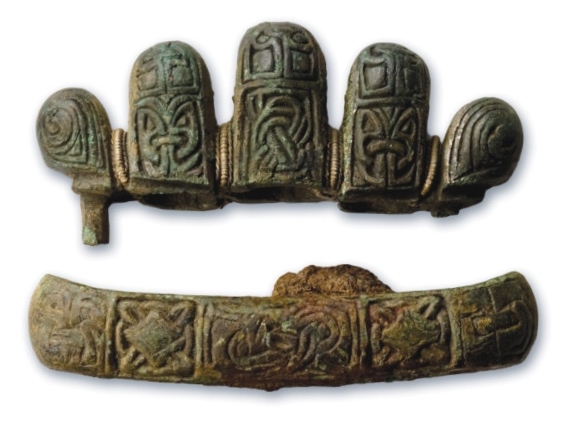
West Midlands History explores a mystery object from the Staffordshire Anglo-Saxon Hoard

After hours of research, this is an object which still baffles the team of Anglo Saxon experts in the project team. As far as they know no comparable piece has ever been found and it has no immediately obvious use.


View original post

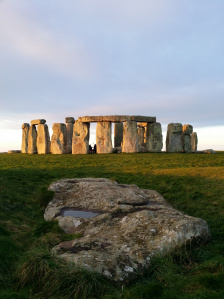
New testing at the highest stone circle in southern England show that it could be as old as Stonehenge.

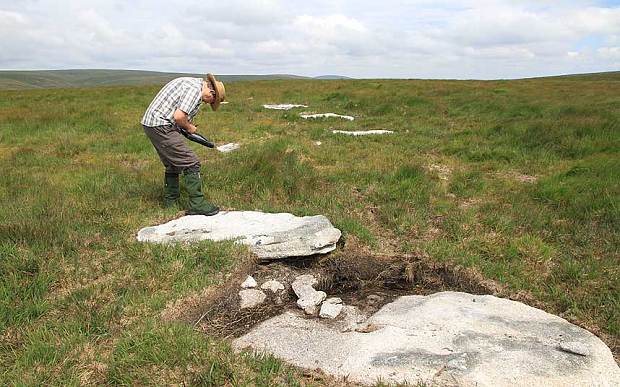
Geophysical testing at the Sittaford Tor site has enabled researchers to date it to at least 4,000 years ago. Photo: Dartmoor National Park Authority

Geophysical testing at the Sittaford Tor site has enabled researchers to date it to at least 4,000 years ago. Photo: Dartmoor National Park Authority

The first radio-carbon testing ever carried out on a stone circle on Dartmoor’s open moorland show that the stones at the ring near Sittaford Tor fell over some 4,000 years ago, meaning they could have been built considerably before this.

Mike Nendick, from Dartmoor National Park authority, said the dating showed that the ring, 34 metres in diameter, could be “of a similar age to Stonehenge”, which was built between 2,000 and 3,000 BC.

The circle, on the northern part of the moor, is the first on Dartmoor to have been investigated in 100 years, and at an altitude of 525 metres is the highest in southern England.

It is the second largest ring in the Devon national park, the biggest being Mardon Down near Moretonhampstead, at 38.2 metres in diameter.

Thirty of the stones in the ring are now lying flat, but researchers believe they once stood upright because of packing material found around their bases.

Mr Nendick said that the discovery allowed researchers to “begin to build a picture” of the communities that lived on Dartmoor in the Neolithic era. “We think that the stone circles were part of their religious practices, and some excavations show that fires were burnt in the middle of the rings.”

He said that the building of the sacred arc showed, “a level of co-operation between tribal communities” for religious purposes, adding that this and other discoveries in the national park suggested “not primitive peoples but highly skilled artisans,” who traded internationally and with other coastal communities.

Dartmoor has about 15 stone circles, which are typically 20-40 metres in diameter and mostly similar in design, excluding characteristics such as central pillars, which are found in formations in other parts of the West Country. One example is Scorhill, near the village of Gidleigh, which is an English Heritage scheduled monument and has been described as one of Dartmoor’s finest rings.

The full report from the geophysical testing is expected in a few weeks’ time, when researchers expect to further their knowledge of the Sittaford Tor site. During the research, a trench was discovered running up to one side of the circle, but its purpose remains unknown at present.

The research was made possible by funding from Moor Than Meets The Eye, a Heritage Lottery funded scheme.

The Sittaford Tor circle is also a similar age to the Ring of Brogdar on Orkney, and 500 years older than Flag Fen near Peterborough. Dartmoor is one of the most significant sites of Neolithic ruins in Western Europe, home to about 5,000 prehistoric houses and many dozens of stone circles.

Read the full story in the Telgraph

HisTOURies
The Best Tours in British Pre-History
http://www.HisTOURies.co.uk

Two gold rings, possibly used as earrings or to hold hair in place, have been found in Rosset, Wrexham, Wales. Archaeologists say the rings date back 3,000 years to the Bronze Age.

The person who wore the rings was most likely wealthy or had status in the community in some other way, says ITV News.

Archaeologists are uncertain whether the gold rings were used as earrings or to hold locks of hair in place. ‘Lock rings,’ as hair locks are called, have been found in Wales in Pembrokeshire, Conwy, Gaerwen, Newport, Anglesey and the Great Orme.

ITV describes the concentric-ring pattern on the locks as a ‘coastal pattern’ that suggests trade and communication between Ireland and Wales.

‘Northeast Wales was a hotspot for the use and burial of gold ornaments during the Bronze Age. These small but exquisitely made lock-rings add further to this growing pattern, suggesting long lived connections with communities living in Ireland and other parts of Atlantic Europe. …We think that these complete and prized objects of gold were carefully buried in isolated places as gifts to the gods, perhaps at the end of the lives of their owners. – Adam Gwilt, Curator for Prehistory at Amgueddfa Cymru – National Museum Wales

The Wrexham County Borough Museum and Archives will take possession of the pair of golden rings after they are valuated independently.

Wales has had other spectacular gold finds from the Bronze Age. The Mold Cape is a 3,700-year-old solid gold artifact found in the 19th century within a Bronze Age burial mound at Mold, in Flintshire, Wales. It was finely crafted out of a single sheet of gold, then embellished with exceptional decoration designed to mimic multiple strings of beads amid folds of cloth.  The cape is regarded as one of the finest examples of prehistoric sheet-gold working in Europe and perhaps the world. Its unique form and design demonstrates highly advanced craftsmanship in Bronze Age Europe.

Mold cape

Mold cape (Photo: Wikipedia)

The Bronze Age burial mound was found in a field named Bryn yr Ellyllon (Fairies’ Hill) by workmen in 1833. It had been placed on the body of a person who was interred inside a cist (stone-lined grave) within a burial mound. Inside the mound, archaeologists also found the remains of woven textile, 16 fragments of sheet bronze, a bronze knife, fragments of a second gold cape, two gold ‘straps’, an urn with large quantities of burnt bone and ash, and the remains of hundreds of amber beads, which would have originally been on the cape.

Archaeologists and scholars were stunned. At the time and place this gold cape was made, people in Britain lived in temporary settlements and fluid communities, and they moved with their livestock and possessions through the landscape. They did not build cities or palaces, yet they were capable of creating incredibly sophisticated objects like the Mold Gold Cape.

Not far away, in England, archaeologists recently explained how intricate gold pieces like those found at Stonehenge could be fashioned by people with relatively crude technology. One piece alone was estimated to have taken 2,500 hours to complete. These pieces from near Stonehenge used a different gold-smithing process than the Welsh pieces.

Detail of the decoration of the dagger handle showing the zig-zag pattern made by the tiny studs.

Featured image: Detail of the decoration of the dagger handle showing the zig-zag pattern made by the tiny studs. (University of Birmingham and David Bukach photo)

According to Discovery News, the gold work involved such tiny components that optical experts believe they could only have been made by children or adults with extreme short-sightedness, and would have caused lasting damage to their eyesight.

In 1808, William Cunnington, one of Britain’s earliest professional archaeologists, discovered what has become known as the crown jewels of the King of Stonehenge. They were found within a large Bronze Age burial mound just a short distance from Stonehenge, known today as Bush Barrow. Within the 4,000-year-old barrow, Cunnington found ornate jewelery, a gold lozenge that fastened the owner’s cloak, and an intricately decorated dagger.

A report in The Independent explained the amazing process involved in creating the handle of just one dagger, adorned with up to 140,000 tiny gold studs just a third of a millimetre wide. The first stage involved manufacturing extremely fine gold wire, just a little thicker than a human hair. The end of the wire was then flattened to create a stud-head, and was then cut with a very sharp flint or obsidian razor, just a millimetre below the head. This delicate procedure was then repeated literarily tens of thousands of times.

“Next, a tiny bronze awl with an extremely fine point was used to create minute holes in the dagger handle in which to position the studs,” wrote The Independent. “Then a thin layer of tree resin was rubbed over the surface as an adhesive to keep the studs in place. Each  stud was then carefully placed into its miniscule hole – probably with the help of a very fine pair of bone or wooden tweezers,  because the studs are too small to have been placed in position directly by the artisan’s fingers.”

Featured image: Archaeologists are unsure whether a pair of gold rings found in Wales were used as earrings or hair locks. (Photo by Amgueddfa Cymru)
Read more: http://www.ancient-origins.net/news-history-archaeology/bronze-age-gold-rings-high-status-person-found-wales-002831#ixzz3VnGJYgJA

Wessex Guided Tours
http://www.HisTOURies.co.uk

exploringlondon's avatarExploring London

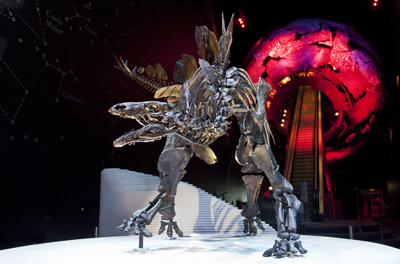
StegosaurusA new addition inside the Natural History Museum’s Exhibition Road entrance in South Kensington, the 150 million-year-old Stegosaurus stenops – the first complete dinosaur specimen to go on display in the museum in almost 100 years – is the only Stegosaurus on display in a public museum outside of the US.

Featuring more than 300 bones, the 5.6 metre long and 2.9 metre high specimen was found in the US about 11 years ago. Missing only the base of the tail and the left arm, it is the most complete Stegosaurus skeleton in the world. It had been excavated from a site on the Red Canyon Ranch in Wyoming after being discovered in 2003 by Bob Simon, who runs a dinosaur quarry on the property.

The skeleton, which took three weeks to excavate, had 18 months of ‘preparation’ work carried out at the Swiss Saurier Museum before arriving at the NHM in December, 2013.

The…

View original post 66 more words

Hannah's avatarPrehistories

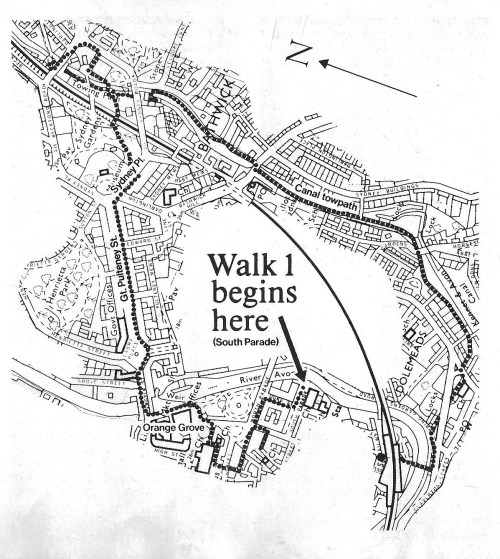
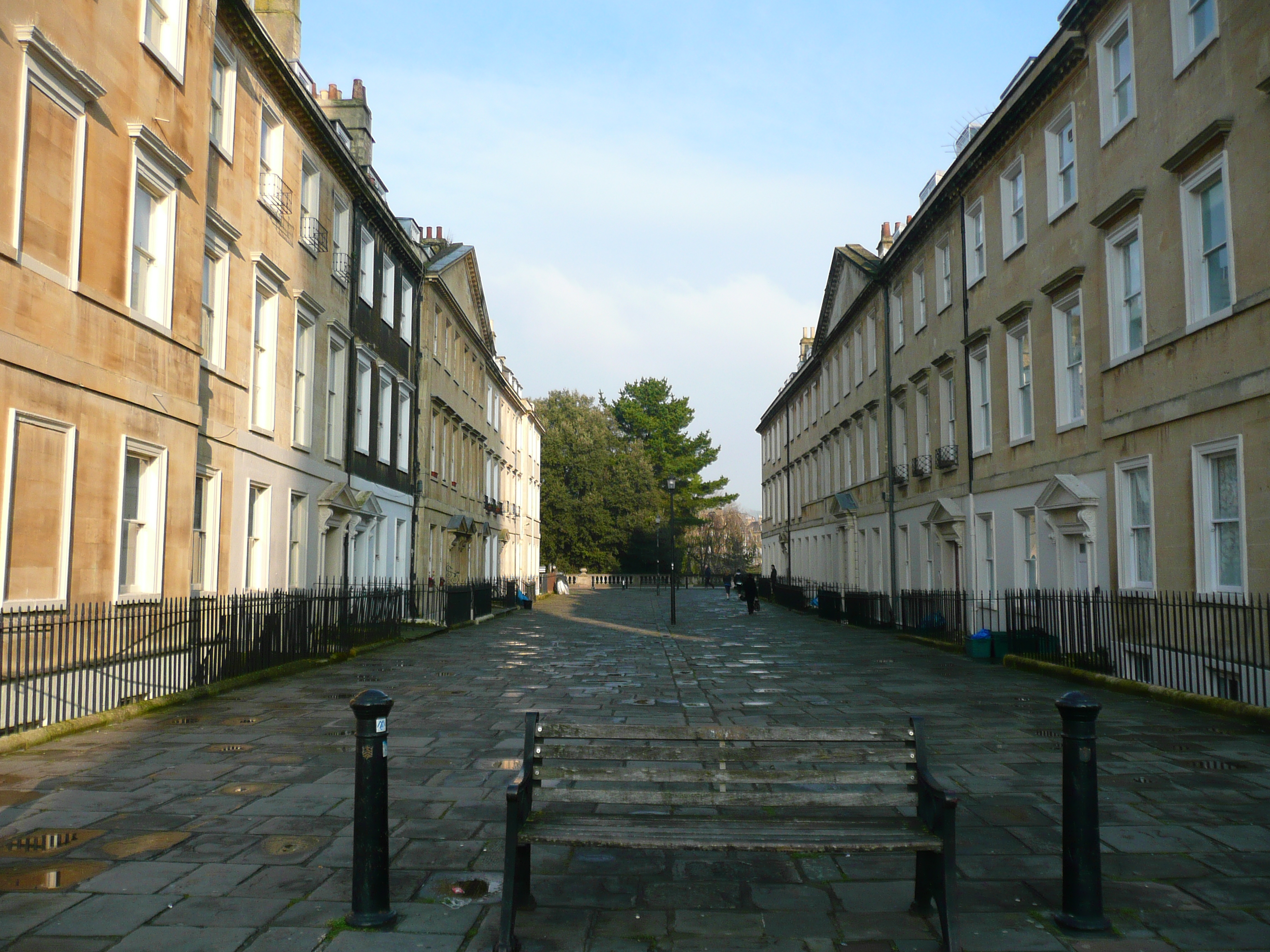
A bright (though cold) day lured me out of the house to follow Peter Smithson’s Walk One from his book Bath: Walks Within the Walls.

Bath Walk 1

Dr A and I had chosen to start with Walk Two, as Walk One runs along a route that we often follow into and out of town. We thought that Walk One might be of less interest, as it features familiar paths. But seen through Smithson’s eyes, the city takes on new dimensions.

Photos by Dr H. Quotes by Peter Smithson are written in orange.

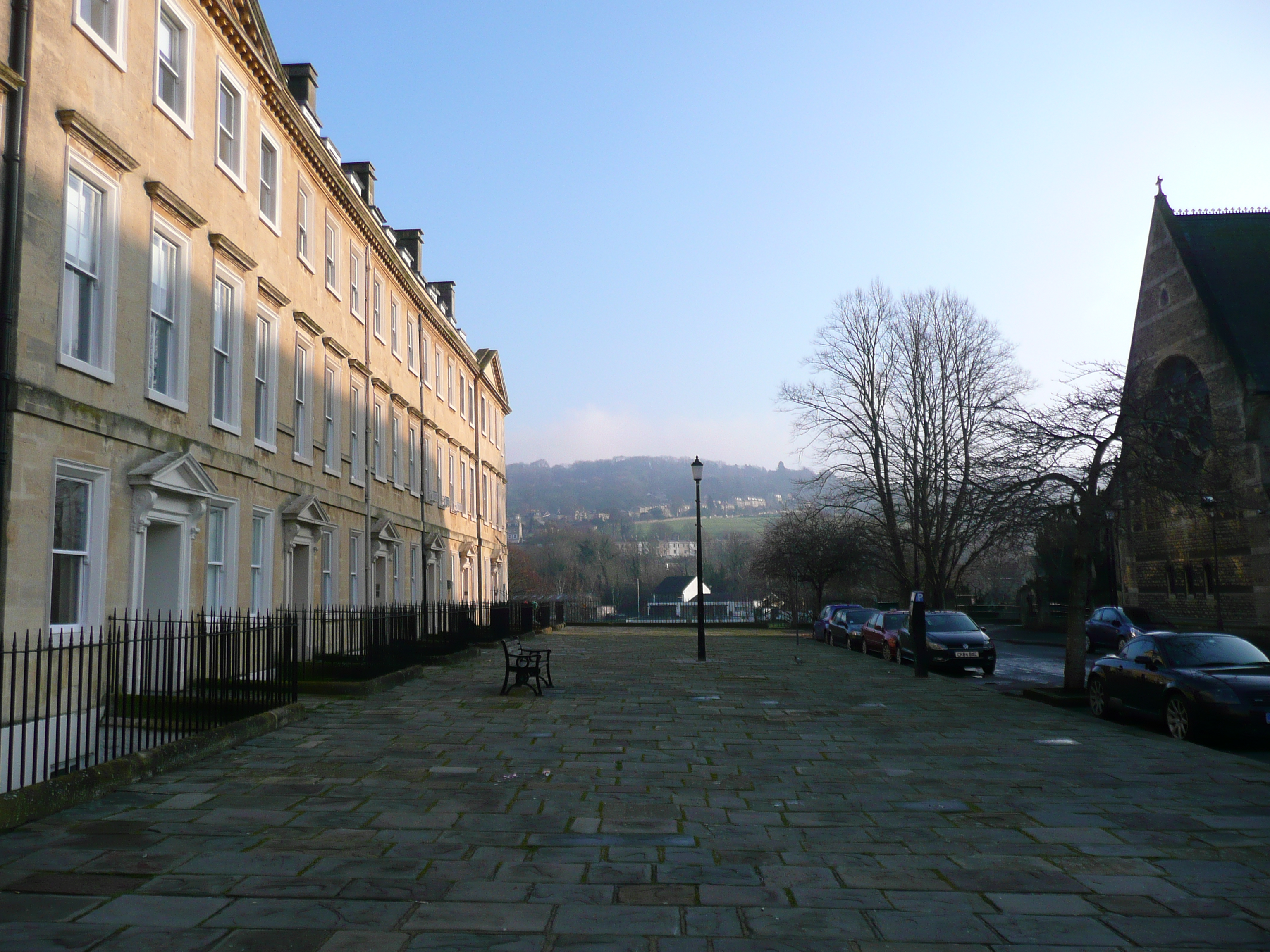
P1080882

The walk starts in South Parade.

This is my favourite part of Bath. Decent snuff-coloured buildings and the widest pavement I know.

Smithson has a thing about wide, raised pavements. Raised walkways were a feature of the recently demolished Robin Hood Gardens, designed by Alison and Peter Smithson.

The walk moves into the car-free Duke Street.

P1080883

Notice…

View original post 346 more words

Alan S's avatarThe Heritage Journal

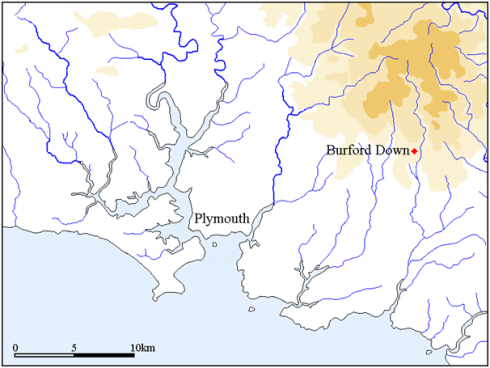
We continue our series looking at Dr Sandy Gerrard’s research into stone row monuments of the South West. This time the Burford Down stone alignment on Dartmoor is examined.

BurfordDownMap

The Burford Down single stone alignment includes a 508m long line of stones leading north from a kerbed cairn at SX 63697 60170 and incorporates at least 100 stones, many of which are now recumbent.  The alignment is situated on a pronounced north to south promontory extending from the higher ground of Dartmoor to the north and offers two separate views towards the sea. Indeed the sea is visible only from either end and is not visible from much of the central length.  Clearly it is impossible to demonstrate that the particular visual changes experienced as you move along the alignment were deliberately contrived but the accumulation of evidence strongly supports the idea that many of the alignments were positioned to…

View original post 535 more words

exploringlondon's avatarExploring London

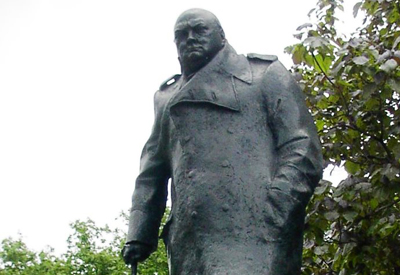
Winston-ChurchillFormer British PM, Sir Winston Churchill, died 50 years ago tomorrow, so we thought it was a good time to take a look at one of London’s most iconic statues.

Standing tall among some of the towering figures of British politics (and others), the over life-sized bronze statue of Sir Winston Churchill on Parliament Square in Whitehall was designed by Welsh sculptor Ivor Roberts-Jones and is located on a site on the square’s north-east corner chosen by the great man himself.

Standing 12 feet (3.6 metres) high on an eight foot (2.4 metre) high pedestal opposite the Houses of Parliament (which he faces), Churchill, who was 90 when he died, is portrayed during the years of World War II wearing a navy greatcoat but wears no hat and leans on a cane.

The full length, Grade II-listed statue, which Roberts-Jones was commissioned to create in 1970, was unveiled by Lady Churchill with the aid…

View original post 56 more words

StonehengeNews's avatarStonehenge Stone Circle News and Information

There will be a lecture by Sharon Soutar of English Heritage at Devizes Town Hall, Wiltshire, England from 2:30 pm on Saturday, 31 January 2015.  

20141227_083502With the construction of the new Visitor Centre at Airman’s Corner it was vital that Stonehenge and its surrounding landscape were re-presented with the fullest and most up-to-date information available. Fantastic as it may seem very few of the monuments, not even Stonehenge itself, had been surveyed to modern standards. To rectify this English Heritage set up a project to significantly enhance the record and understanding of all upstanding archaeological monuments within the World Heritage Site. The fieldwork was conducted between 2009 and 2012 and the book is nearing publication, while a number of research reports on the different areas are available through the website (see below).

The fieldwork covered just over 15% of the World Heritage Site in detail. It included Stonehenge, the Greater Cursus…

View original post 277 more words

The Heritage Trust's avatarThe Heritage Trust

 
Sword pommel
©
Manx National Heritage/John Caley
 
Discover Britain reports that –
 
Parts of a Viking sword, glass beads, bronze pins and iron nails from a Viking ship burial are amongst items that will be on loan for a new exhibition opening on 20 March 2015 at Falmouth’s National Maritime Museum Cornwall. Nationally and internationally historically significant items will be on display during the two-year exhibition, which aims to show the Vikings as a maritime culture rather than an ethnic group. Visitors to the museum will be able to discover what is behind the popular myth of the bloodthirsty raiders, what it meant to be a Viking and how their mastery of maritime technology was the secret to their success.
 
More here.
   

View original post

Behind the Scenes at the Museum.