
Text and images © Roy Goutté
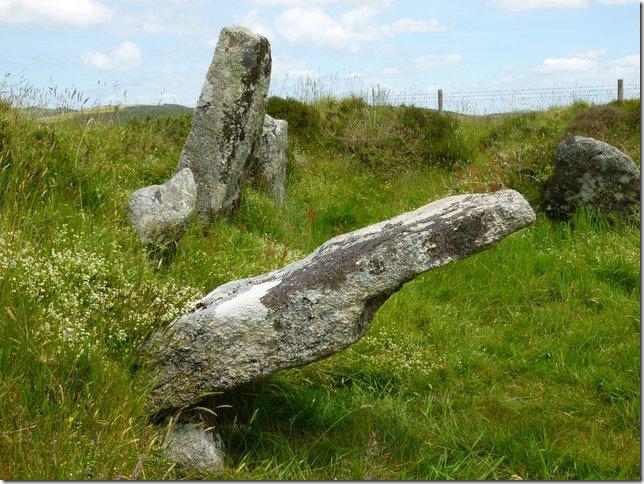
King Arthur’s Hall, Bodmin Moor, Cornwall
After many previous visits to King Arthur’s Hall on King Arthur’s Down to the North-West of Bodmin Moor in Cornwall and a few Heritage Trust articles later, I thought a further visit, but this time with a Cornish group of dowsers, would be of interest to readers.
A very well-known group are the West Cornwall Dowsers led by Bart O’Farrell, a well respected and experienced Cornish dowser, so I knew if they accepted my invitation to make a site visit a thorough and enlightening investigation would take place. This was something I was really looking forward to with relish. Alternative views are something one should always take into account, or most certainly be prepared to consider at least on sites of particular interest and intrigue as one can get very set and focused in their ways and see…
View original post 2,146 more words
Posted in Uncategorized | Leave a Comment »
British archaeologists have created a map of a medieval settlement using state-of-the-art scanning techniques without having to dig in to the ground.
Relying on magnetometry, ground-penetrating radar and electric resistive tomography, the team from the University of Southampton uncovered the footprint of a town located at the Old Sarum archaeological site near Salisbury, Wiltshire.
![Non-invasive survey methods such as ground penetrating radar have helped archeologist to create a detailed map of Old Sarum without any digging [Credit: Scriniary]](https://blog.histouries.co.uk/wp-content/uploads/2014/12/old-sarum-castle.jpg)
Non-invasive survey methods such as ground penetrating radar have helped archeologist to create a detailed map of Old Sarum without any digging [Credit: Scriniary]
“Our survey shows where individual buildings are located and from this we can piece together a detailed picture of the urban plan within the city walls.”
Old Sarum is believed to have been one of the oldest settlements in England. Located about ten miles from the iconic Stonehenge monument, the site was inhabited as early as the Iron Age and bears some evidence of the presence of Roman soldiers in the early centuries AD.
In the recent survey, the archaeologists focused on the area around the inner and outer baileys of what was once a fortification. They discovered foundations of multiple large buildings concentrated along the southern edge of the outer defensive wall, which probably used to serve military purposes.
Some of the structures are believed to date back to the 11th century, about the time when the Salisbury (New Sarum) cathedral was built.
The researchers also found a large open area behind the big buildings, residential areas in the south-east and south-west quadrants of the outer bailey and evidence of deposits indicating industrial features, such as kilns or furnaces as well as signs of quarrying after the 1300s.
“Our research so far has shown how the entire outer bailey of the monument was heavily built up in the Middle Ages, representing a substantial urban centre,” Strutt said. “Results have given us compelling evidence as to the nature of some of the structures,” he said, adding that additional non-intrusive work will have to be carried out to further expand the knowledge about the site.”
The medieval city is believed to had been inhabited for at least three centuries but was eventually abandoned as the importance of the neighbouring Salisbury grew.
“The use of modern, non-invasive surveying is a great start to further research at Old Sarum,” said Heather Sebire, property curator at English Heritage, which is managing the site.
“From this work we can surmise much about the site’s past and, whilst we can’t conclusively date the findings, it adds a new layer to Old Sarum’s story.”
The team hopes to perform the next phase of non-invasive surveying in Easter 2015.
The research was conducted as part of the Old Sarum and Stratford-Sub-Castle Archaeological Survey Project, directed by Kristian Strutt and fellow Southampton archaeologists Timothy Sly and Dominic Barker.
Similar technology was recently deployed by archaeologists and scientists from Birmingham University and the Ludwig Boltzmann Institute of Vienna to survey the landscape around Stonehenge. The results from there revealed that Stonehenge did not sit alone within its Neolithic landscape.
Full article by by Tereza Pultarova: http://eandt.theiet.org/news/2014/dec/old-sarum-non-invasive-archeology.cfm
Posted in Old Sarum Guided Tours | Tagged archaeological tours, Edward Rutherford, Neolithic, Old Sarum Castle, Salisbury Cathedral, stonehenge tours, Tours from Bath | Leave a Comment »

It’s that time of year again. With just 3 months to go before the Current Archaeology Live! conference in London, the nominations for the Current Archaeology Awards have been released.

The awards are designed to celebrate some of the stories and people featured in the magazine throughout the course of the year. There is no panel of judges, the only votes that count are those from the readership in the public vote via the website, so it really is just down to you (collectively) as to who the winners are.
As in previous years, there are four main categories to vote for:
- Research Project of the Year
- Archaeologist of the Year
- Rescue Dig of the Year
- Book of the Year
The nominees in each category are as follows:
Research Project of the Year
- How to build a dolmen: exploring Neolithic construction at Garn Turne
- Maryport’s mystery monuments: investigating gigantic timber…
View original post 216 more words
Posted in Uncategorized | Leave a Comment »
The Making of a Roman Silver Cup. Getty Museum
Ancient Roman silversmiths developed their craft to the highest levels of refinement and beauty. Applying fire and basic tools to the shaping of precious metals, many of their sophisticated techniques are still used today. This video illustrates the making of a stunning silver cup that has survived from the first century, A.D.
This cup is on view at the Getty Villa from November 19, 2014 to August 17, 2015 in the exhibition Ancient Luxury and the Roman Silver Treasure from Berthouville.
Subscribe NOW to the Getty Museum channel.
Posted in Uncategorized | Leave a Comment »
The Bath Christmas Market offers 18 days of magical festive shopping, as the areas between the stunning Bath Abbey and the renowned Roman Baths are transformed into a Christmas shopping wonderland. Right in the heart of Bath’s main shopping district, more than 170 traditional wooden chalets line the streets; each one offering handmade and beautiful gifts from Christmas decorations and food to toys and festive tipples; everything you need for the perfect Christmas.
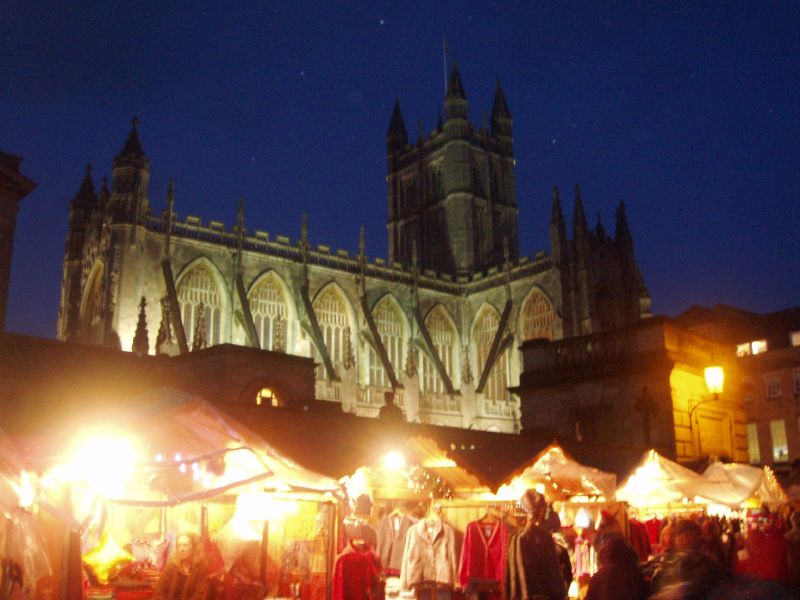 Once in Bath this Christmas, you’ll find that there is a lot to explore and experience beyond the market too. The city centre is a shopper’s haven, plus there are many festive experiences for all the family to enjoy. It’s simply a question of what to do first: ice-skating in the crisp winter air, bathing in the warm spa water overlooking the twinkling city or enjoying a mulled wine in the Après Ski Bar. More family fun can be found at the beautiful Victorian Carousel in Stall Street, perfect for creating unforgettable festive memories.
Visit the Christmas market website here
Why not combine a visit to Bath with a private guided tour to nearby Stonehenge and Wiltshire. You could always take the train from London and enjoy the Christmas market, The Roman Baths and City and then join a guided private tour through ancient Wiltshire and then be dropped off for Salisbury Cathedral and Christmas market for your return to London via train from Salisbury.
Touring Wiltshire
The sweeping landscape of high chalk downs is a fitting backdrop to the great stone circles of Avebury and Stonehenge. From the intimacy of villages such as Castle Combe and Lacock, there are the stately homes of Longleat, Stourhead and Wilton, not to mention Salisbury Cathedral and more.
Wessex Guided Tours
Private Guided Tours of Bath and the West Country
http://www.Histouries.co.uk
Posted in Private Tours of Bath | Tagged Castle Combe, Christmas Markets, Christmas Tours, Local Tourist Guides, Private tours of Bath, Salisbury Cathedral, stonehenge tours, The Cotswolds, The Roman Baths, Visit Avebury | Leave a Comment »

Have you been keeping an eye on our Events Diary (see the link on the left)? You should. Here are a couple of things you could have missed this month if you haven’t ….
View original post 364 more words
Posted in Uncategorized | Leave a Comment »

The Stonehenge Hidden Landscapes Project is an unprecedented initiative to survey a vast tract of land around the iconic stones. Now that the bulk of the practical work is complete, Carly Hilts spoke to Vince Gaffney and Chris Gaffney to find out more.
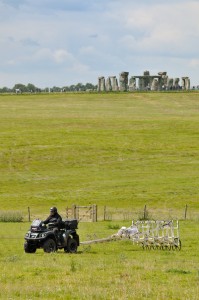 An ambitious programme of geophysical survey, covering 12 square kilometres around Stonehenge, has revealed a landscape scattered with previously-unknown features. Credit: All images courtesy of the University of Birmingham and LBI ArchPro
Stonehenge could confidently claim to be one of the most-studied, and certainly most hotly debated, prehistoric sites in Britain. However, much of the local landscape, so important to any interpretation or understanding of the site, was largely terra incognita – until the launch of The Stonehenge Hidden Landscapes Project, the largest geophysical mapping survey of its kind yet undertaken.
Begun in July 2010, and headed by the University of Birmingham and the Ludwig Boltzmann Institute for…
View original post 942 more words
Posted in Uncategorized | Leave a Comment »

Posted in Uncategorized | Leave a Comment »

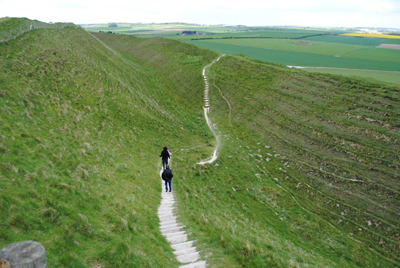
Located just outside the town of Dorchester in southern Dorset to the south-west of London, Maiden Castle is the largest extant Iron Age hillfort known to have been built in Britain and among the largest and most complex in all of Europe.
Featuring multiple earthen ramparts (pictured above is the ditch between two of them) – from the top of which you can see spectacular views of the surrounding countryside – and well-defended entrances, it would have once been home to several hundred people. It’s been speculated the name may come from the Celtic word “mai-dun”, meaning a great hill.
 The first archaeological excavations were carried out here in the 1930s by Mortimer Wheeler and then later in the 1980s.
Initially built between 800 and 550 BC, the first Iron Age hillfort – built on the site of an earlier Neolithic enclosure with settlement dating back some 6000 years – was enclosed by a single…
View original post 344 more words
Posted in Uncategorized | Leave a Comment »
Blog Archive
-
HisTOURies U.K Tours
- There’s more to this English county than just Stonehenge. Visit Wiltshire.
- Private Driver Guided Stonehenge Tours Departing from Salisbury.
- Private Driver-Guided Stonehenge Sightseeing Tours Departing from Bath.
- Stonehenge special access guided inner circle trips from London, Bath or Salisbury. Experience Stonehenge at dawn or dusk with a private VIP tour!
- Visiting Stonehenge? Our expert tour guides can turn the amazing experience of seeing the stones for the first time, into an enlightening one.
-
HISTOURIES PAGES
HISTOURICAL BLOGS
- January 2025 (1)
- December 2024 (1)
- October 2023 (1)
- February 2022 (1)
- March 2021 (1)
- December 2019 (1)
- January 2019 (2)
- June 2018 (2)
- December 2017 (3)
- June 2017 (1)
- May 2017 (5)
- February 2017 (5)
- January 2017 (9)
- December 2016 (5)
- November 2016 (5)
- October 2016 (3)
- July 2016 (1)
- April 2016 (1)
- March 2016 (1)
- February 2016 (5)
- January 2016 (1)
- October 2015 (2)
- September 2015 (2)
- May 2015 (3)
- March 2015 (1)
- February 2015 (2)
- January 2015 (7)
- December 2014 (3)
- October 2014 (5)
- September 2014 (4)
- March 2014 (2)
- February 2014 (1)
- January 2014 (4)
- November 2013 (4)
- October 2013 (8)
- September 2013 (6)
- August 2013 (7)
- July 2013 (3)
- June 2013 (5)
- May 2013 (10)
- April 2013 (8)
- March 2013 (6)
- February 2013 (2)
- January 2013 (3)
- December 2012 (3)
- November 2012 (7)
- October 2012 (7)
- September 2012 (5)
- August 2012 (2)
- July 2012 (6)
- June 2012 (3)
- May 2012 (5)
- April 2012 (3)
- March 2012 (4)
- February 2012 (7)
- January 2012 (5)
- December 2011 (3)
- November 2011 (7)
- October 2011 (8)
- September 2011 (9)
- August 2011 (7)
- July 2011 (7)
- June 2011 (4)
- May 2011 (5)
- April 2011 (4)
- March 2011 (10)
- February 2011 (7)
- January 2011 (11)
- December 2010 (12)
- November 2010 (12)
- October 2010 (17)
- September 2010 (13)
- August 2010 (9)
- July 2010 (12)
- June 2010 (6)
- May 2010 (6)
- April 2010 (13)
- March 2010 (22)
- February 2010 (26)
HISTOURIES UK

STONEHENGE TOURS
March 2026 M T W T F S S 1 2 3 4 5 6 7 8 9 10 11 12 13 14 15 16 17 18 19 20 21 22 23 24 25 26 27 28 29 30 31  Visit London
- An error has occurred; the feed is probably down. Try again later.
 Wessex Guided Tours