Feeds:
Posts
Comments

Archive for the ‘british history’ Category

Although Druids are believed to have existed throughout Celtic societies in Europe during the Iron Age, almost all the surviving evidence about them is found in the writings of later Roman authors.
Druids at Stonehenge

Julius Caesar wrote one of the first, and most detailed, accounts of Druids, explaining that along with the “knights” they were the highest-ranking orders in Gallic societies.

He said they were “engaged in things sacred” but Druids also appeared to function as judges, as they decreed “rewards and punishments” if there were murders or disputes over boundaries or inheritance.

Although they worshipped nature, Caesar claimed that Druids made human sacrifices to appease the gods including burning people to death inside “figures of vast size”, a ritual depicted vividly in the classic horror film, The Wicker Man.

Tacitus claimed the altars of Druids in Anglesey were “drenched with the blood of prisoners” while other Roman authors told how they sacrificed white bulls in groves formed of oak trees.

Pliny described Druids as “magicians” who wore white robes and used golden sickles to cut mistletoe, a sacred plant which they believed had healing powers. This description lives on in the figure of Getafix, the Druid in the Asterix books.

Druidry was suppressed during the Roman occupation but interest in it was revived in the 18th century as the ancient stone circles at Avebury and Stonehenge – which actually pre-date Druids – were examined properly for the first time.

Followers began to hold ceremonies known as “gorsedd”, where bards would gather on hills or sacred mounds, with the first held at Primrose Hill in 1792.

These events continue, particularly at the Eisteddfod celebration of traditional Welsh culture where the Archbishop of Canterbury, Dr Rowan Williams, and the former Chief Constable of North Wales, Richard Brunstrom, have both been inducted as honorary Druids and given Bardic names.

Druids hold festivals eight times a year to mark stages in the solar and lunar cycles. At the summer solstice, Druids gather at Stonehenge to greet the dawn. One of the best-known modern Druids, who has often led protests against restricted access to the site, is a former soldier who changed his name to King Arthur Pendragon.

See also ‘Stonehenge recognised as a religion in England’ October 2nd 2010

Stonehenge Tour Guide
HisTOURies UK – The Best Tours in Ancient History

Read Full Post »

Not since 1996, when England hosted the European Championships, has the country held a major sporting event. In 2012 that is set to change as London becomes the venue for the Olympic Games.

Having hosted the Summer Olympics twice previously – in 1908 and 1948 – the English capital certainly has history with the event, but even still there are surprises abound with improvements needed to stadiums, transport and accommodation.

With around seven million permanent residents, it’s hard to imagine how the city’s infrastructure will cope with the extra influx of athletes and sports fans that will be descending on the city from the end of July – traditionally a busy tourist season in any year.

The International Olympic Committee has been thinking about this since 2005 – when the games were awarded to London – so big changes are expected in the city. The world famous underground has seen changes, with an expansion made to the East London Line and upgrades have been made to the North London Line and the Docklands Light Railway as well.

On top of this a brand new rail service has been created – named in Olympic fashion as the Javelin – which features bullet trains that will speedily take passengers across the city.

There are expected to be around eight million tickets for the Olympics available, with half of them priced under £20 to ensure bustling crowds at all events. This means all visitors – from those in top range hotels to those in budget hotels in London – will be able to snap up tickets for at least part of the extravaganza.

Sensibly, accommodation for the Olympians will be spread across the city to ensure all competitors are housed close to where they need to be to compete, rather than in an all encompassing Olympic Village as per tradition, but a tradition that has become outdated as the games have grown and the events no longer all take place in one place.

The events will be taking place in a mixture of old venues that the city is known for – such as Wembley, Lord’s and the O2 Arena – as well as specially constructed arenas. As well as new sporting venues, the city will see other new buildings going up. The Shard, for example, is due to be finished in May 2012 and standing at 1017 feet it is sure to be a major sight on the London skyline.

Paul Buchanan writes for a digital marketing agency. This article has been commissioned by a client of said agency. This article is not designed to promote, but should be considered professional content.

Hotels in London Must Shape Up for 2012 Olympics

Not since 1996, when England hosted the European Championships, has the country held a major sporting event. In 2012 that is set to change as London becomes the venue for the Olympic Games.

Having hosted the Summer Olympics twice previously – in 1908 and 1948 – the English capital certainly has history with the event, but even still there are surprises abound with improvements needed to stadiums, transport and accommodation.

With around seven million permanent residents, it’s hard to imagine how the city’s infrastructure will cope with the extra influx of athletes and sports fans that will be descending on the city from the end of July – traditionally a busy tourist season in any year.

The International Olympic Committee has been thinking about this since 2005 – when the games were awarded to London – so big changes are expected in the city. The world famous underground has seen changes, with an expansion made to the East London Line and upgrades have been made to the North London Line and the Docklands Light Railway as well.

On top of this a brand new rail service has been created – named in Olympic fashion as the Javelin – which features bullet trains that will speedily take passengers across the city.

There are expected to be around eight million tickets for the Olympics available, with half of them priced under £20 to ensure bustling crowds at all events. This means all visitors – from those in top range hotels to those in budget hotels in London – will be able to snap up tickets for at least part of the extravaganza.

Sensibly, accommodation for the Olympians will be spread across the city to ensure all competitors are housed close to where they need to be to compete, rather than in an all encompassing Olympic Village as per tradition, but a tradition that has become outdated as the games have grown and the events no longer all take place in one place.

The events will be taking place in a mixture of old venues that the city is known for – such as Wembley, Lord’s and the O2 Arena – as well as specially constructed arenas. As well as new sporting venues, the city will see other new buildings going up. The Shard, for example, is due to be finished in May 2012 and standing at 1017 feet it is sure to be a major sight on the London skyline.

London is the most expensive place to stay in Europe, according to a recent survey, and that news has emerged at the same time as tourism minister Margaret Hodge has warned that hotels in the capital must shape up in order to be ready for the 2012 Olympics.

 The average cost of staying in a London hotel has leapt by a staggering 12% since April, and now averages £119 per night across the capital. Although not as expensive as New York or the world’s most expensive place for a one-night stay, Moscow, the rates are remarkably high considering that two-thirds of all London hotels are unrated. The figures show that even relatively meagre two-star accommodation in London averages £88 per night and guests have to typically stump up £109 to stay in three-star rated hotels.

 Tourism minister Hodge is worried that the combination of highly priced accommodation and the large percentage of non-rated hotels will damage the reputation of the city, and is keen for the hotel industry to get itself in order. She said: “If the tourist industry is to reap the potential £2.1 billion from the 2012 Olympic Games, then 85% of London’s hotels must be accredited before then.”

 Hodge is concerned that many people attending the 2012 Olympics will be coming to London for the first time and therefore wants their experience of the city to be a positive one. She added:

 “Hosting the 2012 Olympics is a huge opportunity for London and the UK tourism industry. In five years London will welcome millions of first-time visitors and we will want them to come back time and again – hopefully bringing their family and friends. It’s all about creating a lasting and positive legacy for the capital.”

But, the government doesn’t expect the capital’s hotels to do it all by themselves. A recently unveiled multi-agency strategy entitled: “Winning – A Tourism Strategy for 2012 and Beyond” has been drawn up by the Department for Culture, Media and Sport aided by Visit Britain, Visit London, and an assortment of Regional Development Agencies, aiming to give positive advice and limited financial assistance to the hotel industry throughout London and the UK.

Now that the gauntlet has been thrown down for hotels in London to make significant improvements, it is important that they respond positively if they are to fulfil the government’s aim of making the 2012 Olympic Games the start of a lasting legacy
If you are planning a trip to the UK in 2012 you may save some time and money visiting these web sites:
http://www.Welcome2London.org.uk
http://www.BestValueTours.co.uk
http://www.HisTOURies.co.uk
http://www.LondonTown.com

British Tourist Guide
HisTOURies UK – The Best Tours in British History

Read Full Post »

Today is Wednesday, September 16th, the 265th day of 2010. There are 100 days left in the year.

Highlights in history on this date:
1499 – Turks ravage Vicenza in Italy.

1550 – Holy Roman Empire fleet captures vessel Port of Africa at Mehedia in Tunis, naval headquarters of Turkish corsair Dragut.

1609 – The king of Spain orders the deportation of the baptized former Muslims known as Moriscos.

1711 – Rio de Janeiro is captured by the French.

1792 – French Republic is proclaimed and revolutionary calendar goes into effect.

1862 – U.S. President Abraham Lincoln issues the Emancipation Proclamation, declaring all slaves in the Confederate States free as of Jan. 1, 1863.

1914 – A German submarine sinks three British cruisers in one hour off the Dutch coast; the German cruiser Emden shells Madras in India.

1927 – Slavery is abolished in Sierra Leone in Africa.

1940 – The Vichy French governor-general concludes an agreement that makes Indochina the largest Japanese military staging ground in southeast Asia.

1949 – The Soviet Union explodes its first atomic bomb.

1955 – Hurricane Janet, the most violent Caribbean hurricane of the season, causes almost 600 deaths around the islands.

1960 – A U.S. Marine Corps DC-6 plane en route from Japan to the Philippines crashes in the ocean 290 kilometers (180 miles) south of Okinawa. All 29 passengers are killed.

1965 – A cease-fire is declared in the war between India and Pakistan, but both sides subsequently violate it.

1970 – Arab chiefs of state send envoys to meet with King Hussein and Yasser Arafat to persuade them to find a way to contain the fighting between the Jordanian Army and Palestinian guerrillas.

1974 – Official death toll in hurricane that swept Honduras is put at 5,000.

1975 – Sara Jane Moore fails in an attempt to shoot U.S. President Gerald Ford outside a San Francisco hotel.

1980 – Iraqi tanks enter Iran, marking the beginning of the Iran-Iraq War as a full-scale conflict.

1986 – Two hijackers seize Soviet airliner at Ural Mountains airport and kill two passengers before security agents recapture plane and shoot the hijackers.

1988 – The government of Canada apologizes for the World War II internment of Japanese-Canadians and promises compensation.

1989 – F. W. De Klerk takes over as president of South Africa.

1990 – Jordan’s King Hussein appeals to United States in televised message to withdraw its troops from Saudi Arabia to avert “death, destruction and misery.”

1992 – Azerbaijani-armed forces mount an offensive against the disputed enclave Nagorno-Karabakh.

1993 – Abkhazian rebels in Georgia shoot down second passenger plane in two days, killing 80.

1994 – NATO aircraft strike at Serbian targets near Sarajevo after U.N. troops patrolling the city came under machine-gun and rocket fire.

1995 – America’s Time Warner Inc. and Turner Broadcasting System Inc. announce a merger with Time Warner purchasing TBS in a deal valued at $7.5 billion, creating the world’s largest media company.

1996 – Typhoon Violet veers into the North Pacific after killing seven and setting off landslides that paralyzed transportation in Japan.

1997 – U.S. President Bill Clinton, speaking at the United Nations, announces he will submit to the Senate a treaty banning all nuclear explosions.

1998 – Troops from South Africa and Botswana cross into Lesotho and storm the royal palace, touching off a gunbattle with protesters.

1999 – Dutch journalist Sander Thoenes is killed and two others assaulted in separate attacks in East Timor blamed on anti-independence militiamen.

2001 – Pope John Paul II visits Kazakhstan and Armenia and cautions against allowing Sept. 11 terrorist attacks on the United States to create divisions between Muslims and Christians.

2004 – The U.S. military drops an espionage charge against a Muslim interpreter accused of spying at the camp for terror detainees at the U.S. military base in Guantanamo Bay, Cuba. It is the third Guantanamo spy case of the year to fall apart.

2005 – Bosnia’s top international official orders the Bosnian Serb Finance Minister to identify the origins of illegal payments made to the Serb Democratic Party after the party’s bank accounts were frozen because of fraud.

2006 – Pope Benedict XVI invites Muslim envoys to meet with him at his summer residence for what the Holy See says is urgently needed dialogue following a crisis ignited by his remarks on Islam and violence.

2007 – Monks leading swelling demonstrations against Myanmar’s military regime march past barricades to the home of Nobel Peace laureate Aung San Suu Kyi, increasing pressure on the junta.

2008 _ The first excavation of Stonehenge in more than 40 years has uncovered evidence that the stone circle drew ailing pilgrims from around Europe for what they believed to be its healing properties, archaeologists say.

2009 – Al-Qaida releases a new 106-minute long video predicting President Barack Obama’s downfall at the hands of the Muslim world to mark the 8th anniversary of the Sept. 11, 2001 attacks against the U.S.

Today’s Birthdays:

Michael Faraday, British physicist (1791-1862); Caroline Astor, U.S. aristocrat of New York high society (1830-1908); Erich von Stroheim, German director and actor (1885-1957); Louis Botha, South African soldier-statesman (1862-1919); John Houseman, U.S. stage/radio actor (1902-1988); Fay Weldon, British writer (1931–); Joan Jett, U.S. rock singer (1960–).

Most importantly
100 Shopping days to Christmas!

British Tour Guide
HisTOURies UK Tours – The Best Tours in History

Read Full Post »

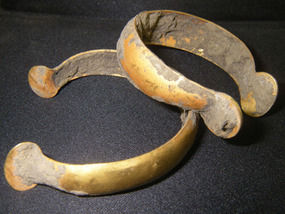
THESE beautiful Bronze Age gold bracelets are the highlights of finds at the site of a new road.

The bracelets, nearly 3,000 years old, were spotted lying on top of a pile of earth dug up from a trench.

Archaeologists are digging on the site of the planned road near Ramsgate, Kent, before builders move in

The bracelets are among 10,000 finds unearthed so far.

The dig on the East Kent Access Road on the Isle of Thanet between Ramsgate and Sandwich is the biggest archaeological excavation in the country this year, involving 150 archaeologists supported by 91 volunteers. It has revealed a huge amount about how people were living on the Isle of Thanet from earliest times.

The remains of prehistoric burial monuments, Iron Age enclosures and a village which would have seen the Roman invasion are among the remarkable discoveries made by the dig, now almost complete.

Simon Mason, Kent County Council’s principal archaeological officer, found the bracelets, dating back to around 700BC.

He said: “It was incredible – a really exciting find. I couldn’t believe it when I saw them. It’s the first time I have found gold in 20 or 30 years as an archaeologist. “They looked too good to be real. When we washed them and cleaned them we realised they were something special.”

It is thought they were child­ren’s bracelets that may have been buried as a worship offering. They were found together, one pushed inside the other.

There is evidence of a Bronze Age settlement on the find site, and five hoards of bronze objects of a similar age have been found in the same area. Mr Mason added: “Their real value to me as an archaeologist is how they contribute to the story we are putting together from our excavations on the road.

“With all the thousands of everyday objects we have dug up they are really helping to shed new light on the lives of prehistoric, Roman and Saxon people in Thanet.”

Dr Andrew Fitzpatrick from Oxford Wessex Archaeology said: “The gold bracelets are stunning.”

The Portable Antiquities Scheme

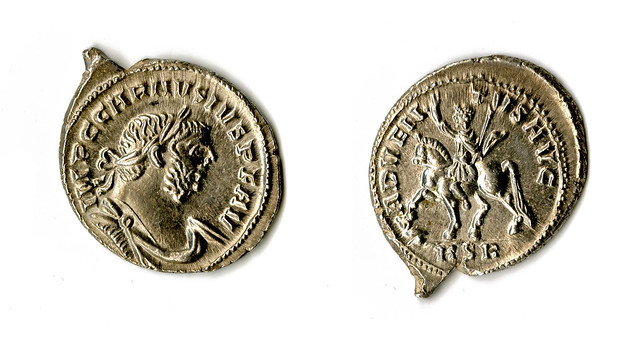
Frome Silver denarius of Carausius 286-93 Adventus (13 3) Composite image

The Portable Antiquities Scheme is a voluntary scheme to record archaeological objects found by members of the public in England and Wales. Every year many thousands of objects are discovered, many of these by metal-detector users, but also by people whilst out walking, gardening or going about their daily work. Such discoveries offer an important source for understanding our past.

This website provides background information on the Portable Antiquities Scheme, news articles, events listings and access to our database of objects and images.

The Treasure Act

All finders of gold and silver objects, and groups of coins from the same findspot, which are over 300 years old, have a legal obligation to report such items under the Treasure Act 1996. Now prehistoric base-metal assemblages found after 1st January 2003 also qualify as Treasure. This website provides further information for finders of potential Treasure

Bespoke Guided Tours of Ancient Britain
HisTOURies UK – The Best Tours in Wiltshire

Read Full Post »

Pope Benedict will soon be arriving in the UK.  I am surprised at the lack of tacky Papal souvenirs for sale on the streets of Britain. Past Papal visits in other countries have produced such wonders as this Pope Soap on Rope

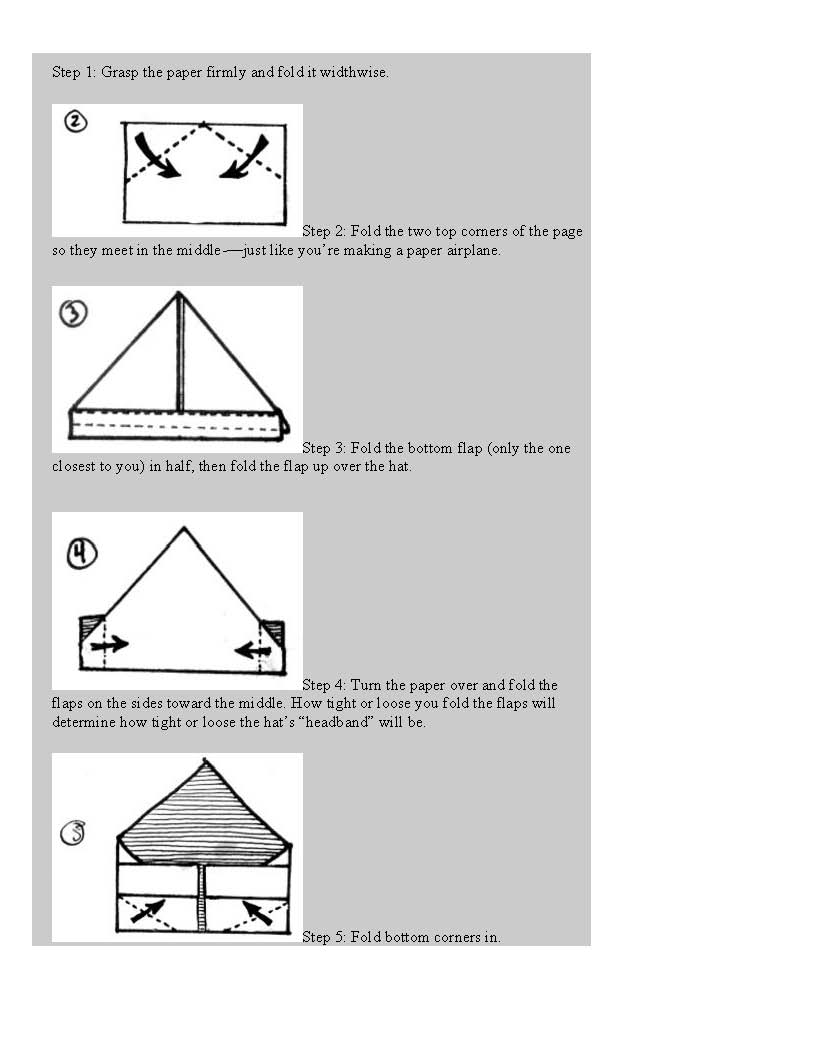
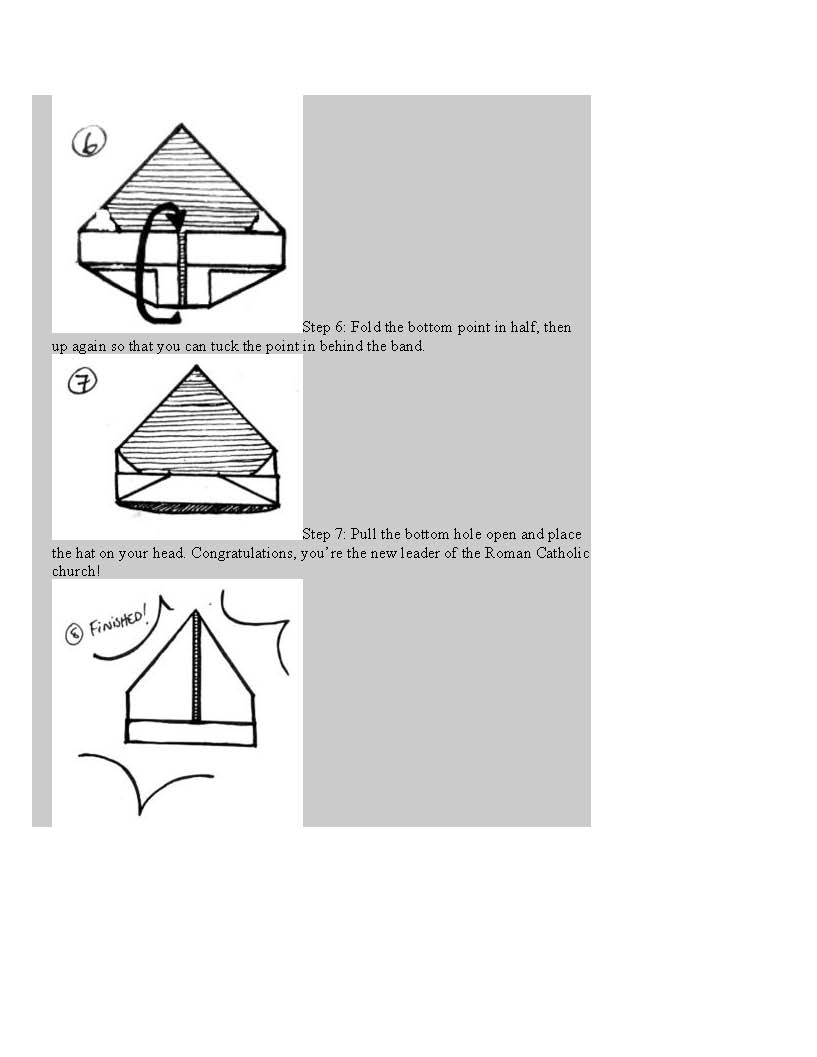
So in the spirit of his arrival, I offer you simple instructions on how to make your very own Pope Hat. Any newspaper will do, but I prefer to use the News of the World. There’s a link at the top of my blog page that will take you to a pdf version of this. Print it out and freak your friends out at the office, on the street, on the underground. Just a little fun arts and crafts for those with slightly twisted minds.

No offence intended!  I did promise some funny blogs……….

British Tour Guide
HisTOURies UK – The Best Tours in Catholic History

Read Full Post »

When Pope John Paul II arrived in 1982, he famously kissed the ground and declared: “Today, for the first time in history, a Bishop of Rome sets foot on English soil. This fair land, once a distant outpost of the pagan world, has become, through the preaching of the Gospel, a beloved and gifted portion of Christ’s vineyard.”

He went on to preach in Canterbury Cathedral and during the visit became friends with the Archbishop of Canterbury, Robert Runcie. It seemed to set the seal on an end to centuries of anti-Catholicism in Britain, and open the door to a new era in ecumenical endeavour where anything, even reunion, seemed possible.

But that was in a different century, and that Pope and that Archbishop are dead.

This Pope will walk into a storm of protest. Secularists are already planning a series of marches against him wherever he goes. The National Secular Society will launch its Protest the Pope Coalition later this week.

Peter Tatchell, the gay rights campaigner, is among those planning online petitions against the visit.

There will be no visit to Canterbury Cathedral this time, after the Pope announced plans for the Anglican Ordinariate to welcome into the church of Rome disaffected members of the Church of England and other present and former Anglicans.

Even the Queen sent an emissary, Earl Peel, her Lord Chamberlain, to talk to the Archbishop of Westminster, Vincent Nichols, and find out what was intended by the new conversion plans.

The Pope is certain to use his civic address at Westminster Hall, a place revered by Catholics as the place where martyrs for the faith such as St Thomas More and the Jesuit St Edmund Campion were tried and condemned, to issue challenges to the Government on social and moral issues.

The Pope, 83, has a commendable lack of regard for protocol. Maybe he feels time is running out and he cannot hang around on niceties.

The Archbishop of Canterbury, Dr Rowan Williams, had merely a few days notice of the Anglican Ordinariate and was visibly discomfited.

But even the Pope’s own Archbishop of Westminster, highly rated in Rome, had almost no notice of the “conversion” plan. Archbishop Nichols was also taken by surprise by the Pope’s confirmation of his visit to Britain in September.

The Queen issued the formal invitation to the Pope only last month after months of negotiations between government departments and the Holy See as to what status the visit should have.

Although the itinerary is still in draft form, the Pope’s visit is scheduled to begin in Scotland.

Pope Benedict XVI will fly straight from Rome to Edinburgh on September 16, where, as a head of state, he will be received by the Queen at Holyrood Palace in the afternoon. He is due to see the monarch there rather than Buckingham Palace because the visit coincides with her annual holiday to Balmoral.

He will also visit Glasgow, before making his way south in what is only the second papal visit to Britain since the Reformation and the first state visit.

The high point will be the beatification of Cardinal Newman, the 19th-century Anglican convert to Catholicism, in Birmingham on September 19.

The Pope has since his youth as a seminarian been an avid student of the writings of Cardinal Newman and in his address to the bishops yesterday he described him as an “outstanding example of faithfulness to revealed truth”.

As well as his address in Westminster Hall there is likely to be an academic address at Oxford University.

Having spoken at the Catholic Chaplaincy at Fisher Hall at Cambridge University in 1988, Pope Benedict XVI has for years nurtured a dream of speaking at Oxford. He raised the possibility of such an occasion with the last Archbishop of Westminster, Cardinal Cormac Murphy-O’Connor, in Rome shortly after becoming Pope. Lord Patten of Barnes, Chancellor of Oxford and a leading lay Catholic, has formally invited the Pope to speak there.

The only departure from normal protocol around formal visits by heads of state will be that the Pope, 83, will stay with the Papal Nuncio in Wimbledon rather than in Buckingham Palace.

Perhaps, all things considered, that is for the best.

British Tour Guide
HisTOURies UK – The Best Tours in History

Read Full Post »
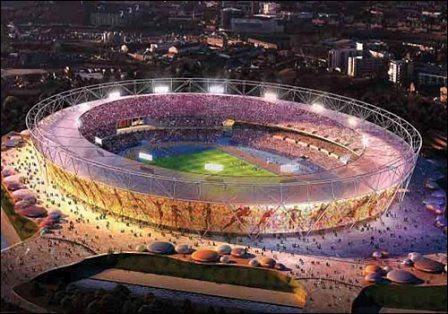
They were crammed together and buried side by side, stripped of all clothing and personal possessions.

Force of circumstance determined this most impersonal and undignified resting place.

For the men buried in mass graves at a ruined York church were the soldiers of Oliver Cromwell’s Parliamentary army.

Roundhead soldiersSkeleton army: The remains found in York, one of 10 mass graves containing Roundhead soldiers

The Roundheads were not killed in combat but probably by infectious disease during the gruelling English Civil War siege of the city.

Oliver CromwellLeader: Oliver Cromwell led the Roundhead cavalry

Their comrades went on to defeat King Charles I’s Cavaliers at the Battle of Marston Moor in 1644 and turn the tide of the war.

But history forgot the more than 100 souls who probably never made it to the battleground.

Now, more than 350 years later, archaeologists have unearthed the graves and their skeletons to reveal the story of Cromwell’s forgotten soldiers.

Routine excavations in 2007 at the site of a medieval church, south of York’s historic city walls, led to the uncovering of ten mass graves.

Archaeologists knew from previous discoveries that the ‘lost’ 11th century church of All Saints in Fishergate had once been there. However, these newlydiscovered graves took archaeologists forward 600 years to a time when the country was split in two by a bloody civil war.

The position of the graves showed they were dug at a time when only the shell of the abandoned church remained. They varied in size, with the smallest containing four skeletons and the largest 18.

RoundheadsDelicate work: An archaeologist examines one of the 350-year-old bodies


RoundheadsNo ceremony: The bodies were evidently buried with some haste

The skeletons were arranged neatly in parallel rows, mostly laid on their side or face down in the dirt, and were packed together like sardines in a can. Larger graves had a second row where the heads of one row overlapped the feet of another.

PSALMS BEFORE BATTLE

Roundheads

Cromwell’s Parliamentary army in 1644 was a loose collection of regional fighting groups, unified the following year as the New Model Army.

The intention was to enforce strict discipline in return for regular pay of eight pence per day for the infantry and two shillings for the cavalry.

It was the first British army to wear the famous red coat uniform. The infantry had muskets or pikes, the troopers carried a sword and two pistols.

Derided by Royalists as the ‘new noddle’ army, it became an effective force under the command of Sir Thomas Fairfax, with Cromwell initially in charge of the cavalry

Officers were appointed on merit rather than status. One colonel was a shoemaker.

Cromwell preferred soldiers who were devoted Puritans like himself and sang psalms before battle. Their close-cropped hair led to the term Roundheads.

No buckles, buttons or jewellery were found, indicating they were probably buried naked. In total there were 113 skeletons.

It was not possible to establish the sex of them all, but 87 were male, most between the ages of 35 and 49.

Details of the find are revealed in Current Archaeology magazine in a report by experts Lauren McIntyre and Graham Bruce.

Analysis of the skeletal remains indicated they were not wounded and did not die in battle. But most had conditions, such as spinal joint disease, caused by excessive physical labour.

‘The skeletons are likely to represent a military group who all died within a short period,’ said the authors.

‘Given the probable 17th century date, it is likely that they relate to the Civil War.’

York was a Royalist stronghold and was besieged by a Parliamentary force of 30,000 between April and July 1644.

The siege ended soon after both armies clashed in fields outside York at Marston Moor  –  the largest single battle of the Civil War.

Evidence suggests that the 113 bodies could well have been Cromwell’s soldiers who died from disease while laying siege to the city.

Although the Royalist army was well-provided for behind the city walls, the besieging Parliamentary forces suffered severe deprivation, making them susceptible to illness and diseases such as dysentery and typhoid.

The skeletons are being kept for further study at the University of Sheffield’s archaeology department.

British Tour Guide.  Bespoke Guided Sightseeing Tours
HisTOURies – The Best Tours in History

Read Full Post »

If you are heading northwards into Shakespeare country independantly, choose the route the Bard himself would have travelled.  Stratford-upon-Avon from Chipping Norton through chocolate box Olde England

The Rollwrights

When Shakespeare made his way from London to the family home in Stratford-upon-Avon, it is safe to assume he did not shove his quills in the boot of a Vauxhall Astra and tear along three lanes of tarmac. No.

The M40 is hardly a journey fit for the Bard and – anachronisms aside – the road he would have taken after Oxford is the current A3400.

On the map it looks fairly unremarkable: the names of the villages it passes through are not well known; the countryside is not national parkland, and there are few sites you would find in a guidebook to Britain. Yet the journey through the Cotswolds is unrivalled for capturing the kind of rural England not often seen outside E H Shepard illustrations. If there was one road on which to dump a Japanese tourist in search of that long-lost lid-of-the-biscuit-tin scene, this is it.

The road begins as a branch from the A44 just outside the market town of Chipping Norton. Though the A3400 continues northwards beyond Stratford, we will focus on the first stretch, which would have made up the final hours of the Bard’s commute from London. If you want to make the journey from London, turn off the M40 at junction 10 and follow signs to Chipping Norton – a market town that is well worth stopping in, despite it being home to Jeremy Clarkson.

Within a few minutes of beginning the road, a stone sign reads “Cotswolds: area of outstanding natural beauty”. Then as if on cue, the countryside unfurls itself in front of the road, a cliché of English charm. Even the forecourt shop at the Shell garage is built in the warm yellow of Cotswold limestone.

It is easy to miss the road’s first notable landmark, but it is worth studying the map to make sure you don’t. The Rollright Stones – otherwise known as the Stonehenge of Oxfordshire – are not signed from the road, but lie just next to it. After three miles of the A3400, you will find a small turn-off to the village of Little Rollright – the stones are just a few hundred yards down this turning, hidden behind a rather unpromising-looking layby. Far from the fenced off slabs at Stonehenge, this Neolithic site is completely unguarded, allowing you to see it almost in its original setting. The most impressive of the ancient monuments is The King’s Men, a ceremonial stone circle dating from 2500BC.

Back on the road, it is now time to cross a county border, an event which is worth noting, if only because – unlike Oxfordshire – Warwickshire has not taken pity on its motorists and turned off its speed cameras. Soon after, you reach Long Compton, a village which, as its name suggests, is the longest in the Cotswolds. If you have been driving from London, this is an ideal spot to stop and eat, firstly because it has a fine gastro pub and a farm shop selling delicious home-made rolls, but also because it’s a picturesque place to stretch your legs.

The road continues through the village until you reach Long Compton’s church, St Peter and St Paul on the left. The 13th-century building boasts a unique lychgate which has a small room above it, giving it the look of a tree-less treehouse.

The next big place is Shipston on Stour. This market town, built around a pretty cobbled square, has seen better days. It is worth a stop, however, if you have a fondness for the kind of shops rendered redundant elsewhere. Expect to find bric-a-brac shops with genuine antiques next to rather threadbare Paddington Bears and broken teapots; hardware stores that still sell nails by the nail, and window displays that have the owner’s dog wandering through them.

After Shipston, the road reverts to small villages and fields. Hedgerows and small farms pass by on either side, punctuated by “tractors turning” signs, stone walls so neatly tessellated they have made concrete superfluous and shut-looking farm shops. The prettiest of these villages is Newbold on Stour, which still has its traditional pub, village green and bowls club and is the kind of village that – from the outside at least – seems to have been unblemished by the designer welly brigade.

A couple more miles later you reach the River Avon. Crossing over it on a bridge flanked by armies of swans and barges, the Royal Shakespeare Company’s theatre comes into view – now you are officially in Shakespeare country.

Bespoke Guided sightseeing tours
Needless to say, we feel the best way to explore the Cotswolds is to arrange a private tour.  Your own vehicle and expert local guide!   This can often be cheaper than the larger more in-personal coach tours and offer greater flexibility.

British Tour Guide
HisTOURies UK – The Best Tours in British History

Read Full Post »

Dry weather makes 2010 ‘vintage year for archaeology’ says English Heritage Britain’s dry early summer has made 2010 a “vintage year for archaeology” with crop marks revealing several hundred new sites, according to English Heritage.

The hot, dry conditions in May and June allowed aerial researchers to identify ancient sites visible through the appearance of crop marks in one of the busiest years for such finds since the long, hot summer of 1976. A Roman camp near Bradford Abbas, Dorset, was revealed in June after three sides became visible in rain-parched fields of barley. The lightly built defensive enclosure would have provided basic protection for Roman soldiers while on manoeuvres in the first century AD and is one of only four discovered in the south west of England.

  Crop marks are produced when barley or wheat growing over buried features develop at a different rate from those growing next to them because differences in the depth of soil and the availability of nutrients. English Heritage said ”full advantage” was taken of the conditions, which allowed hundreds of crop mark sites to be photographed from the air. The conditions also allowed existing sites to be photographed in greater detail. Newton Kyme, near Tadcaster, North Yorkshire, was shown to not only be home to a Roman fort dating back 2,000 years but also a larger, stronger defence built in 290AD. Stone walls up to three metres thick and a ditch 15 metres wide were revealed by an image taken from a Cessna light aircraft. Dave MacLeod, an English Heritage senior investigator based in York, said: ”It’s hard to remember a better year. ”Cropmarks are always at their best in dry weather, but the last few summers have been a disappointment. ”This year we have taken full advantage of the conditions. We try to concentrate on areas that in an average year don’t produce much archaeology. ”Sorties to the West Midlands and Cumbria, together with more local areas such as the Yorkshire Wolds and Vale of York, have all been very rewarding.” Flights over the Holderness area of the East Riding proved particularly productive with around 60 new sites, mainly prehistoric, found in just one day including livestock and settlement enclosures. English Heritage said some sites which have not been visible since the drought of 1976 reappeared this summer. Damian Grady, a Swindon-based English Heritage senior investigator, said: ”Promising signs started to emerge in late May when the dry conditions had started to reveal cropmarks on well drained soils, especially river gravels and chalk in the east and south east of England. ”By June it became clear that the continuing dry conditions would produce good results across most of the country. ”We then targeted areas that do not always produce cropmarks, such as clay soils, or have seen little reconnaissance in recent years due to recent wet summers or busy airspace. ”Unfortunately July saw deterioration in the weather which reduced the amount of flying we could do and the cropmarks started to disappear just before the harvest got under way.” Mr Grady added: ”It will take some time to take stock of all the sites we have photographed, but we expect to discover several hundred new sites across England.” Crop marks are produced when crops growing over buried features develop at a different rate to those growing immediately adjacent. For example, over a soil filled ditch the deeper soil may provide better moisture retention and more nutrients allowing the crop to grow faster and taller. Over a buried wall, for example, the shallower soil may produce a stunted crop and one more liable to parching under dry conditions.
The first record of aerial surveys dates back to 1906 when Stonehenge was photographed from above from a hot air balloon.
Wiltshire Tour Guide
HisTOURies – The Best Tours in British History

Read Full Post »

Later Silbury – Archaeological evaluation of the fields south of Silbury Hill, Wiltshire.

This project aims to evaluate the Roman settlement in the fields south of Silbury Hill, to improve our understanding of a poorly-understood phase of activity around the monument and to provide information to help with its future care within the Stonehenge, Avebury and Associated Sites World Heritage Site.

English Heritage’s Silbury Hill Conservation Project started in 2001, following a series of collapses within the Hill. In 2007, and research and rescue excavation stabilised the Hill and consolidated it for the future.

As part of the Conservation Project, English Heritage’s Geophysical Survey team carried out extensive surveys of the fields around the monument. You can read a summary of their results in Research News (Issue 10: Winter 2008-09, pages 10-13).

In the large field south of the A4 – a Roman road – extensive evidence for archaeological features shows clearly in the magnetometer survey, and ground-penetrating radar has added the details of several large stone buildings to the picture.  We think that this is a Roman roadside settlement or small town. Roman activity around Silbury has been known since the 19thcentury, when wells and middens were excavated. In the 1990s, air photographs and excavation provided new evidence for stone buildings set along a trackway on the slopes of Waden Hill, east of Silbury.

Being able to see the layout of an extensive settlement was a new and exciting discovery. It has raised many questions about the area around Silbury Hill and how it was used in the Roman period – and many of these can only be answered by excavation.

So this summer, as part of the new Later Silbury project, archaeologists and archaeological scientists from our Research Department based at Fort Cumberland are excavating some evaluation trenches in the fields south of the Hill.

We aim to: 

  • Understand more about the settlement itself – what activities can we find evidence for? When was it occupied? Is there any evidence for its ritual or religious role?
  • Investigate its relationship to Silbury Hill and surroundings – how did it fit in with the ritual landscape of Silbury Hill and Avebury, more than 2000 years after they were built?
  • Find out more about the past environment and use of the landscape around the hill and in the Winterbourne and Kennet valleys.
  • See how well the archaeological remains survive, and how deeply they are buried – this will help plan the management of the site and its safe preservation.
Silbury Hill

Silbury Hill

Silbury Hill is huge; it is likely to have involved roughly 4 million man-hours of work and 500,000 tonnes of material.

The largest man-made mound in Europe, mysterious Silbury Hill compares in height and volume to the roughly contemporary Egyptian pyramids. Probably completed in around 2400 BC, it apparently contains no burial. Though clearly important in itself, its purpose and significance remain unknown. There is no access to the hill itself.

It is part of the Avebury World Heritage Site.

Stonehenge and Avebury Stone Circle Tour Guide
HisTOURies UK Tours – Bringing History alive

Read Full Post »

« Newer Posts - Older Posts »