Feeds:
Posts
Comments

Archive for the ‘Stonehenge’ Category

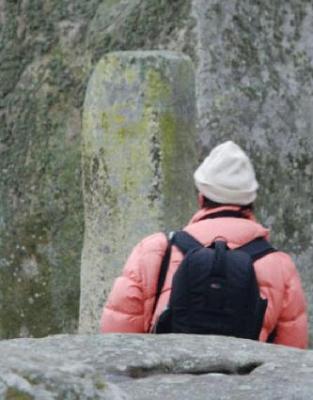
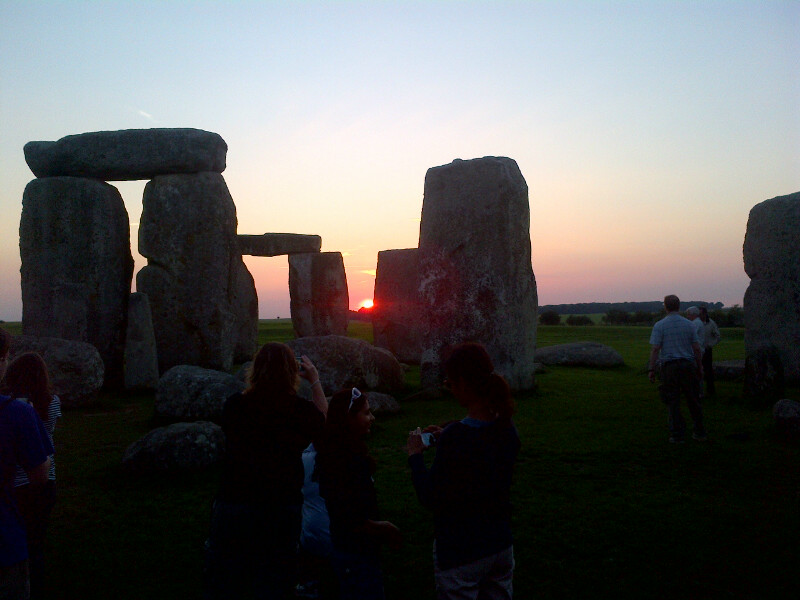
The outer circle was composed of 30 sarsen uprights with a similar number of lintels: this enclosed five sarsen trilithons (pairs of uprights with a lintel across each), arranged in a horseshoe shape, with the open end towards midsummer sunrise.

Stonehenge Bluestones, which clearly had a special significance for the builders, were re-erected in a circle between the outer sarsen circle and horseshoe, and inside the horseshoe. Some bluestones were later removed to leave the final setting, the remains of which can be seen today.

In the landscape immediately around Stonehenge there are visible remains of many different types of monuments, and many more have been detected. Neolithic monuments include long barrows, and the long rectangular earthwork to the north, the Cursus ( so called because it was once thought to resemble a chariot racecourse): together with the henge monuments at Woodhenge and Durrington Walls, contemporary with the middle phases at Stonehenge. The most numerous monuments are the remains of many Bronze Age round barrows, which were built after Stonehenge Stone Circle was complete.
***source: english-heritage.org.uk

Stonehenge is a prehistoric monument located in the English county of Wiltshire, about 3.2 kilometres (2.0 mi) west of Amesbury and 13 kilometres (8.1 mi) north of Salisbury. One of the most famous sites in the world, Stonehenge is composed of earthworks surrounding a circular setting of large standing stones. It is at the centre of the most dense complex of Neolithic and Bronze Age monuments in England, including several hundred burial mounds.[1]

Archaeologists had believed that the iconic stone monument was erected around 2500 BC, as described in the chronology below. One recent theory, however, has suggested that the first stones were not erected until 2400-2200 BC,[2] whilst another suggests that bluestones may have been erected at the site as early as 3000 BC (see phase 1 below). The surrounding circular earth bank and ditch, which constitute the earliest phase of the monument, have been dated to about 3100 BC. The site and its surroundings were added to the UNESCO’s list of World Heritage Sites in 1986 in a co-listing with Avebury Henge monument. It is a national legally protected Scheduled Ancient Monument. Stonehenge is owned by the Crown and managed by English Heritage, while the surrounding land is owned by the National Trust.[3][4]

Archaeological evidence found by the Stonehenge Riverside Project in 2008 indicates that Stonehenge served as a burial ground from its earliest beginnings.[5] The dating of cremated remains found on the site indicate burials from as early as 3000 BC, when the initial ditch and bank were first dug. Burials continued at Stonehenge for at least another 500 years.[6]”
***source: wikipedia.org

Stonehenge Access Tours – go beyond the fences! 

HisTOURies UK
Mystical Landscape, Magical Tours

Read Full Post »

Cruising from Southampton? Flying home? Time to spare?
Why not explore some of England’s finest locations with your own personal guide. We can accommodate groups of all sizes, from individuals to large tour groups.

You choose the place, at your own pace, the itineraries are created especially for you……

Guided Tours From A Few Hours To A Day

Mini Coach Hire and ToursThere are so many wonderful places to visit within the catchment area of Southampton. Below are some of the more popular itineraries available to give you a taster of what is possible.

Our professional driver/guides are proud to showcase this region of England. You can choose from classic traditional sightseeing of places like Stonehenge, Salisbury or Winchester Cathedral, Georgian’ Bath, Glastonbury or perhaps pursue a theme where it be literary, English gardens or a pub crawl.

Our free tour planning service take great pleasure in assisting you to formulate an itinerary that fits your own individual requirements. We have a variety of guides with their own specialties and areas of interest and will assign one that is right for your tour profile.

Some Popular Itineraries From Southampton

Southampton & The Titanic

Come and discover Southampton’s Old Town, one of the gems of England. A place, with some unique features, that has played its part in history.

Go back in time at award winning museums, explore historic buildings; see how people lived here in past centuries and why the loss of the Titanic had such a devastating effect on Southampton.

Salisbury & Stonehenge Guided Tours

Just 30 minutes from Southampton is Salisbury. Famous for its Cathedral and Magna Carta this medieval city has much else besides. Stonehenge needs no introduction, you are so close to Stonehenge from Southampton its a shame if you don’t make a visit and experience the mysteries of the Stonehenge landscape.

Bath

Visit the beautiful Georgian City of Bath and take a panoramic tour of some of the finest architectural sights in Europe, including Bath Abbey, the Royal Crescent, the Circus, Assembly Rooms and the famous Pulteney Bridge. Explore the Roman Baths, built around thermal springs, which have been supplying water for over 2,000 years.

Portsmouth

Portsmouth Historic Dockyard allows you to discover these exquisite world renowned historic ships: HMS Victory and the Royal Navys most famous war ship and the worlds’ oldest commissioned ship. The Mary Rose – the only surviving 16th century warship on display anywhere in the world & HMS Warrior 1860 who made her triumphant return to Portsmouh in 1987 and now fully restored to her Victorian glory. These ships have shaped British history.

Countryside & Cottages, Cream Teas and Village Pubs

The New Forest is a former royal hunting area in the south of England. It was created in 1079 by William I (known as William the Conqueror) as a hunting area, principally of deer. It is a unique area of historical, ecological and agricultural significance, and retains many of the rural practices conceded by the Crown in historical times to local people

Picturesque Villages, bustling market towns and a special atmosphere and timelessness. Ponies and cattle roam freely around villages, following ancient forest tracks used for centuries by Commoners and their livestock. Picturesque thatched cottages tucked away in unexpected places, the New Forest has remained untouched by time, steeped in old customs and history, enabling visitors to unwind and enjoy its tranquil atmosphere.

Get To Understand Stonehenge Like Few Others From Southampton

The average tour bus spends at the very most one hour at Stonehenge. Time enough for those just curious to witness in person this world famous monument, get a few photographs, a better understanding of the mysteries of Stonehenge and perhaps a memento from the gift shop.

If you want something more than this, then this maybe is for you.

We have a team of local guides who specialise in Stonehenge and the Neolithic era. We can offer a detailed tour that explores all facets connected to Stonehenge, going well beyond what you hear on the audio tape.

Nothing is taboo, we cover in depth the archeological, planetary and mystical/pagan strands that intertwine in uncovering what Stonehenge is, and what it is all about.

Its not a dry lecture tour either, its very much a hands-on tour, we’ll track ley lines,enter inside Neolithic burial mounds and walk the ceremonial routes into the henges. You’ll also see some of the very best of the English Countryside and if you wish visit a village pub, away from the tourist crowds.

Links:
http://www.visit-southampton.co.uk/
http://www.southamptonairport.com/
http://www.londontoolkit.com

 HisTOURies UK – www.HisTOURies.co.uk
Mystical Landscape, Magical Tours

Read Full Post »

Long before the Egyptians began the pyramids, Neolithic man built a vast temple complex at the top of what is now Scotland. Robin McKie visits the astonishing Ness of Brodgar
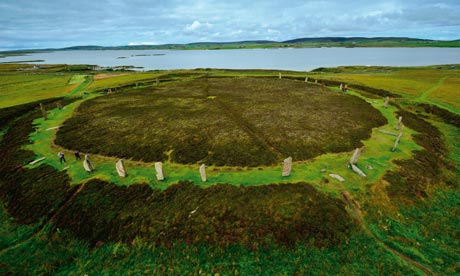
Circle of life: the Ring of Brodgar – a stone circle, or henge – is a World Heritage Site. Photograph: Adam Stanford

Circle of life: the Ring of Brodgar – a stone circle, or henge – is a World Heritage Site. Photograph: Adam Stanford

Drive west from Orkney’s capital, Kirkwall, and then head north on the narrow B9055 and you will reach a single stone monolith that guards the entrance to a spit of land known as the Ness of Brodgar. The promontory separates the island’s two largest bodies of freshwater, the Loch of Stenness and the  Loch of Harray. At their furthest edges, the lochs’ peaty brown water laps against fields and hills that form a natural amphitheatre;  a landscape peppered with giant rings of stone, chambered cairns, ancient villages and other archaeological riches.

This is the heartland of the Neolithic North, a bleak, mysterious place that has made  Orkney a magnet for archaeologists, historians and other researchers. For decades they  have tramped the island measuring and ex- cavating its great Stone Age sites. The land was surveyed, mapped and known until a recent chance discovery revealed that for all their attention, scientists had completely overlooked a Neolithic treasure that utterly eclipses all  others on Orkney – and in the rest of Europe.

This is the temple complex of the Ness of Brodgar, and its size, complexity and sophistication have left archaeologists desperately struggling to find superlatives to describe the wonders they found there. “We have discovered a Neolithic temple complex that is without parallel in western Europe. Yet for decades we thought it was just a hill made of glacial moraine,” says discoverer Nick Card of the Orkney Research Centre for Archaeology. “In fact the place is entirely manmade, although  it covers more than six acres of land.”

Once protected by two giant walls, each more than 100m long and 4m high, the complex at Ness contained more than a dozen large temples – one measured almost 25m square – that were linked to outhouses and kitchens by carefully constructed stone pavements. The bones of sacrificed cattle, elegantly made pottery and pieces of painted ceramics lie scattered round the site. The exact purpose of the complex is a mystery, though it is clearly ancient. Some parts were constructed more than 5,000 years ago.

The people of the Neolithic – the new Stone Age – were the first farmers in Britain, and they arrived on Orkney about 6,000 years ago. They cultivated the land, built farmsteads and rapidly established a vibrant culture, erecting giant stone circles, chambered communal tombs – and a giant complex of buildings at the Ness  of Brodgar. The religious beliefs that underpinned these vast works is unknown, however, as is the purpose of the Brodgar temples.

“This wasn’t a settlement or a place for the living,” says archaeologist Professor Colin Richards of Manchester University, who excavated the nearby Barnhouse settlement  in the 1980s. “This was a ceremonial centre, and a vast one at that. But the religious beliefs of its builders remain a mystery.”

What is clear is that the cultural energy of the few thousand farming folk of Orkney dwarfed those of other civilisations at that time. In size and sophistication, the Ness of Brodgar is comparable with Stonehenge or the wonders of ancient Egypt. Yet the temple complex predates them all. The fact that this great stately edifice was constructed on Orkney, an island that has become a byword for remoteness, makes the site’s discovery all the more remarkable. For many archaeologists, its discovery has revolutionised our understanding of ancient Britain.

“We need to turn the map of Britain upside down when we consider the Neolithic and shrug off our south-centric attitudes,” says Card, now Brodgar’s director of excavations. “London may be the cultural hub of Britain today, but 5,000 years ago, Orkney was the centre for innovation for the British isles. Ideas spread from this place. The first grooved pottery, which is so distinctive of the era, was made here, for example, and the first henges – stone rings with ditches round them – were erected on Orkney. Then the ideas spread to the rest of the Neolithic Britain. This was the font for new thinking at the time.”

It is a view shared by local historian Tom Muir, of the Orkney Museum. “The whole text book of British archaeology for this period will have to be torn up and rewritten from scratch thanks to this place,” he says.


Farmers first reached Orkney on boats that took them across the narrow – but treacherously dangerous – Pentland Firth from mainland Scotland. These were the people of the New Stone Age, and they brought cattle, pigs and sheep with them, as well as grain to plant and ploughs to till the land. The few hunter-gatherers already living on Orkney were replaced and farmsteads were established across the archipelago. These early farmers were clearly successful, though life would still have been precarious, with hunting providing precious supplies of extra protein. At the village of Knap o’Howar on Papay the bones of domesticated cattle, sheep and pigs have been found alongside those of wild deer, whales and seals, for example, while analysis of human bones from the period suggest that few people reached the age of 50. Those who survived childhood usually died in their 30s.

Discarded stone tools and shards of elegant pottery also indicate that the early Orcadians were developing an increasingly sophisticated society. Over the centuries, their small farming communities coalesced into larger tribal units, possibly with an elite ruling class, and they began to construct bigger and bigger monuments. These sites included the 5,000-year-old village of Skara Brae; the giant chambered grave of Maeshowe, a Stone Age mausoleum whose internal walls were later carved with runes by Vikings; and the Stones of Stenness and the Ring of Brodgar, two huge neighbouring circles of standing stones. These are some of the finest Neolithic monuments in the world, and in 1999 they were given World Heritage status by Unesco, an act that led directly to the discovery of the Ness of Brodgar.

“Being given World Heritage status meant we had to think about the land surrounding the sites,” says Card. “We decided to carry out geophysical surveys to see what else might be found there.” Such surveys involve the use of magnetometers and ground-penetrating radar to pinpoint manmade artefacts hidden underground. And the first place selected by Card  for this electromagnetic investigation was the Ness of Brodgar.

The ridge was assumed to be natural. However, Card’s magnetometers showed that it was entirely manmade and bristled with features that included lines of walls, concentric pathways and outlines of large buildings.  “The density of these features stunned us,”  says Card. At first, given its size, the team assumed they had stumbled on a general site  that had been in continuous use for some  time, providing shelter for people for most  of Orkney’s history, from prehistoric to  medieval times. “No other interpretation seemed to fit the observations,” adds Card. But once more the Ness of Brodgar would confound expectations.

Test pits, a metre square across, were drilled in lines across the ridge and revealed elaborate walls, slabs of carefully carved rock, and pieces of pottery. None came from the Bronze Age, however, nor from the Viking era or medieval times. Dozens of pits were dug over the ridge, an area the size of five football pitches, and every one revealed items with  a Neolithic background.

Then the digging began in earnest and quickly revealed the remains of buildings of startling sophistication. Carefully made pathways surrounded walls – some of them several metres high – that had been constructed with patience and precision.

“It was absolutely stunning,” says Colin Richards. “The walls were dead straight. Little slithers of stones had even been slipped between the main slabs to keep the facing perfect. This quality of workmanship would not be seen again on Orkney for thousands of years.”


Slowly the shape and dimensions of  the Ness of Brodgar site revealed themselves. Two great walls, several metres high, had been built straight across the ridge. There was no way you could pass along the Ness without going through the complex. Within those walls  a series of temples had been built, many on top of older ones. “The place seems to have been in use for a thousand years, with building going on all the time,” says Card.

More than a dozen of these temples have already been uncovered though only about 10% of  the site has been fully excavated so far.

“We have never seen anything like this before,” says York University archaeologist Professor Mark Edmonds. “The density of the archaeology, the scale of the buildings and the skill that was used to construct them are simply phenomenal. There are very few dry-stone walls on Orkney today that could match the ones we have uncovered here. Yet they are more than 5,000 years old in places, still standing a couple of metres high. This was a place that was meant to impress – and it still does.”

But it is not just the dimensions that have surprised and delighted archaeologists. Two years ago, their excavations revealed that  haematite-based pigments had been used to  paint external walls – another transformation  in our thinking about the Stone Age. “We see Neolithic remains after they have been bleached out and eroded,” says Edmonds. “However, it is now clear from Brodgar that buildings could have been perfectly cheerful and colourful.”

The men and women who built at the Ness also used red and yellow sandstone to enliven their constructions. (More than 3,000 years later, their successors used the same materials when building St Magnus’ Cathedral in  Kirkwall.) But what was the purpose of their construction work and why put it in the Ness of Brodgar? Of the two questions, the latter is the easier to answer – for the Brodgar headland  is clearly special. “When you stand here, you find yourself in a glorious landscape,” says Card. “You are in the middle of a natural amphitheatre created by the hills around you.”

The surrounding hills are relatively low, and a great dome of sky hangs over Brodgar, perfect for watching the setting and rising of the sun, moon and other celestial objects. (Card believes the weather on Orkney may have been warmer and clearer 4,000 to 5,000 years ago.) Cosmology would have been critical to society then, he argues, helping farmers predict the seasons –  a point supported by scientists such as the late Alexander Thom, who believed that the Ring of Brodgar was an observatory designed for studying the movement of the moon.

These outposts of Neolithic astronomy, although impressive, were nevertheless  peripheral, says Richards. The temple complex at the Ness of Brodgar was built to be the most important construction on the island. “The stones of Stenness, the Ring of Brodgar and the other features  of the landscape were really just adjuncts to that great edifice,” he says. Or as another archaeologist put it: “By comparison, everything else  in the area looks like a shanty town.”

For a farming community of a few thousand people to create such edifices suggests that the Ness of Brodgar was of profound importance. Yet its purpose remains elusive. The ritual purification of the dead by fire may be involved, suggests Card. As he points out, several of the temples at Brodgar have hearths, though this was clearly not a domestic dwelling. In addition, archeologists have found that many of the stone mace heads (hard, polished, holed stones) that litter the site had been broken in two in exactly the same place. “We have found evidence of this at other sites,” says Richards. “It may be that relatives broke them  in two at a funeral, leaving one  part with the dead and one with family as a memorial to the dead. This was a place concerned with death and the deceased, I believe.”

Equally puzzling was the fate of the complex. Around 2,300BC, roughly a thousand years after construction began there, the place was abruptly abandoned. Radiocarbon dating of animal bones suggests that a huge feast ceremony was held, with more than 600 cattle slaughtered, after which the site appears to have been decommissioned. Perhaps a transfer of power took place or a new religion replaced the old one. Whatever the reason, the great temple complex – on which Orcadians had lavished almost a millennium’s effort – was abandoned and forgotten for the next 4,000 years.
Full Article by Robin McKie – The Observer,            

For more information or to donate to the dig, go to orkneyarchaeologysociety.org.uk

HisTOURies U.K
Mystical Landscape, Magical Tours

Read Full Post »
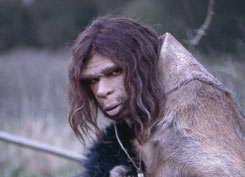
The people who built Stonehenge 5000 years ago probably had the same pallid complexion of many modern inhabitants of the UK. Now it seems that the humans occupying Britain and mainland Europe only lost the darker skins of their African ancestors perhaps just 6000 years earlier, long after Neanderthals had died out. The finding confirms that modern Europeans didn’t gain their pale skin from Neanderthals – adding to evidence suggesting that European Homo sapiens and Neanderthals generally kept their relationships strictly platonic.

There is a clear correlation between latitude and skin pigmentation: peoples that have spent an extended period of time at higher latitudes have adapted to those conditions by losing the skin pigmentation that is common at lower latitudes, says Sandra Beleza at the University of Porto in Portugal. Lighter skin can generate more vitamin D from sunlight than darker skin, making the adaptation an important one for humans who wandered away from equatorial regions.

Those wanderings took modern humans into Europe around 45,000 years ago – but exactly when the European skin adapted to local conditions had been unclear.

Three genes

Beleza and her colleagues studied three genes associated with lighter skin pigmentation. Although the genes are found in all human populations, they are far more common in Europe than in Africa, and explain a significant portion of the skin-colour differences between European and west African populations.

By analysing the genomes of 50 people with European ancestry and 70 people with sub-Saharan African ancestry, Beleza’s team could estimate when the three genes – and pale skin – first became widespread in European populations. The result suggested that the three genes associated with paler skin swept through the European population only 11,000 to 19,000 years ago.

“The selective sweeps for favoured European [versions of the three genes] started well after the first migrations of modern humans into Europe,” says Beleza.

The finding agrees with earlier studies suggesting that modern humans did not lose their dark skins immediately on reaching Europe, says Katerina Harvati at the University of Tübingen in Germany. “[The new study] is interesting because it suggests a very late differentiation of skin pigmentation among modern humans,” she says.

An earlier analysis of ancient DNA in 40,000 and 50,000-year-old Neanderthal bones, respectively from Spain and Italy, suggested that our extinct cousins had light-coloured skin and reddish hair in their European heartland. But the Neanderthals went extinct around 28,000 years ago – long before modern humans in Europe gained a pale skin. Evidently Neanderthals did not pass these useful local adaptations on to modern humans, despite genetic evidence that the two species interbred.

Middle Eastern contact

That might seem unusual given that the two species lived cheek-by-jowl in Europe for several thousand years. But it makes sense if the interbreeding evident in the genes occurred in the Middle East, where modern humans and Neanderthals first met, says Chris Stringer at the Natural History Museum, London.

In that region, Neanderthals may have had darker skins, explaining why our species did not gain a pale skin after interbreeding with them. Indeed, a study earlier this year of ancient DNA suggested that Neanderthals living in what is now Croatia had dark skin and brown hair.

“Neanderthal skin colour was probably variable, as might be expected for a large population spread out over a large territorial expanse,” says Harvati.

Journal reference: Molecular Biology and Evolution, doi.org/h9h
Source: http://www.newscientist.com

HisTOURies UK
Mystical Landscape, magical Tours

Read Full Post »

Saturday 13 October 2012 – Saturday 26 January 2013.

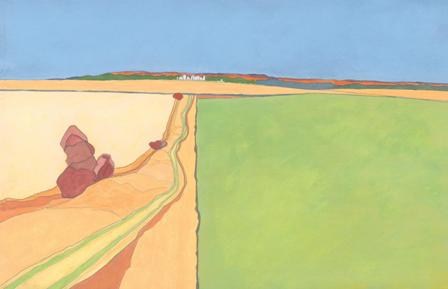
An exhibition of paintings and drawings that reflect one artist’s travels through the ancient sites of Wiltshire.  Over the last 50 years, Stonehenge and Salisbury MuseumPhilip Hughes has returned time and again to the Ridgeway, Avebury, Silbury Hill and Stonehenge.   Informed by maps, photography and electronic survey techniques, his work ranges from accurate topographical observation to abstract and emotional representation of the landscape.

The exhibition coincides with the publication of the book on Hughes’s work: Tracks: Walking the Ancient Landscapes of Britain (Thames & Hudson, 2012).

Hughes is represented by the Francis Kyle Gallery.

Salisbury Museum is based in the King’s House, a grade I listed building located opposite Salisbury Cathedral. We have a small but friendly staff, supported by over 100 volunteers. We offer a variety of services, including the opportunity to hire this unique location for corporate events and activities.

http://www.salisburymuseum.org.uk/

HisTOURies UK
Mystical Landscape, Magical Tours.

Read Full Post »

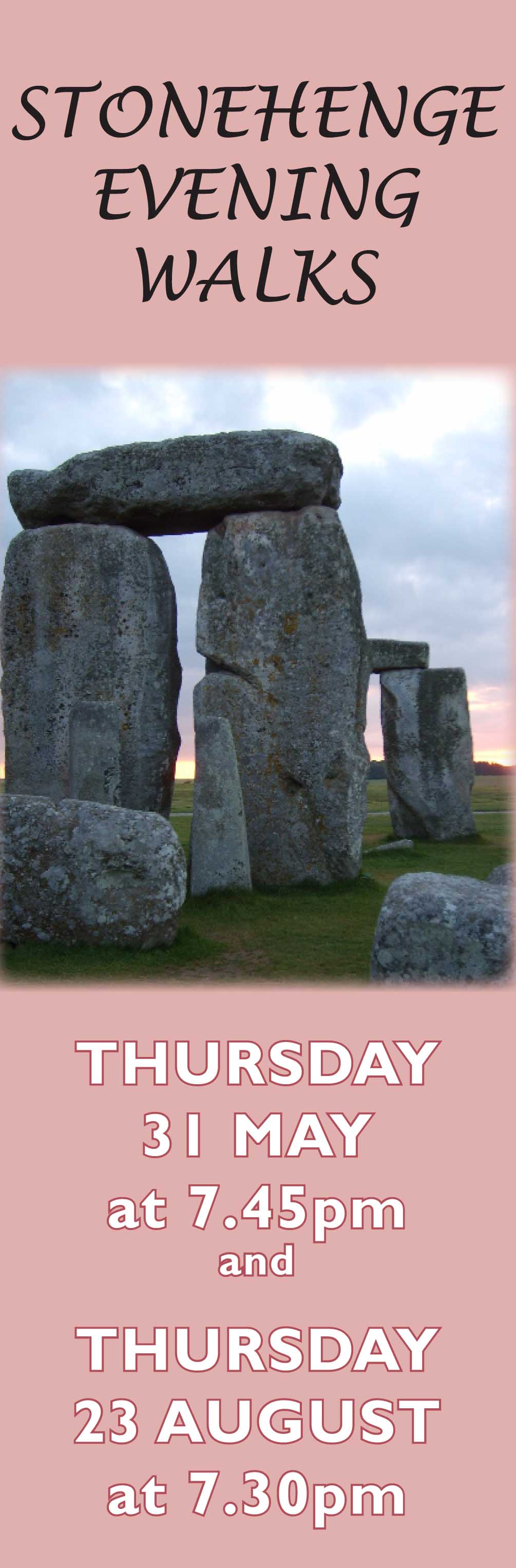
Stonehenge access toursAn opportunity to get close to the stones and learn more about the monument and the surrounding landscape.

The visits will be led by David Dawson, Director of the Society, who will point out the main features of the circle and its surrounding landscape and explain the cycle of its construction and rebuilding during the Bronze Age.

This is an opportunity to inspect and photograph (for non-commercial purposes only) the stones closely, and see the inscriptions, including the famous ‘daggers’ believed to date from prehistoric times, Wander at will inside the circle, indeed do whatever you wish other than touch, climb on the stones, picnic or play music, none of which is allowed!

23rd August (from 7.30pm to 8.30pm).

Meet at Stonehenge car park 10 minutes before booked time. Tour lasts no more than one hour.

COST
Adults £22 (WANHS members £20)*
Children £13*

Book here: http://www.wiltshireheritage.org.uk/events/index.php?Action=2&thID=710&prev=1

For information on special access inside the Stone Circle see below:


Please note that special access is limited, open to no more than groups of 20 or so, and outside normal hours. Visits are either early mornings or evenings, and not every day (the English Heritage Website has details).


It is well worth making the effort to go inside the Circle, especially if you are travelling from abroad, and it may be your only opportunity. You may hear people who have only walked around the rope barrier at a distance describe Stonehenge as ‘a pile of rocks in a field’, that’s their preception on viewing it at a distance – but nothing could be further from the truth. It is only when you get close to the stones the true and awesome scale of the structure becomes apparent. If you have read ‘Solving Stonehenge’, with the aid of its many plans and illustrations, the extraordinary achievement of the prehistoric builders in designing and setting out the massive structure to an accuracy of just a few centimetres will astonish you


HisTOURies UK
Mystical Landscape, Magical tours

Read Full Post »

Beginning at sundown on the eve of July 31st to sundown on August 1st

The Celtic Harvest Festival – Lughnasadh – also known as Lammas – is a harvest celebration beginning at sundown on the eve of the 31st of July until sundown on August 1st and derives its name from the Irish God Lugh. In Wales, this time is known simply as Gwl Awst, the August Feast. Lugh is associated with the power of sun and light, and so fires were burned in honor of Him on this day. In addition to His associations with light, Lugh is a God of Skill and Craft, a master of all human skills. On this His feast day, it is particularly appropriate that we celebrate our own abilities and skills.

“Celtic Festival of the first fruits and ripening corn “

Lugh dedicated this Celtic festival to his foster-mother, Tailtiu, the last queen of the Fir Bolg, who died from fatigue after working and clearing a great forest so that the land could be cultivated. When the men of Ireland gathered at her death-bed, she told them to hold funeral games and celebrations in her honor. As long as they were held, she prophesied Ireland would not be without song.

Lammas (was christianized as Lammas:  the word ‘Lammas’ is an Old English word meaning ‘Loaf Mass’) celebrates the first harvesting of crops, the first of three harvest festivals.  The Earth yields up Her first gifts to us … a blessing from the Mother and the product of our human hands.  It is a time to celebrate the fruitfulness of the Earth and fruits of our labors.  We have sown and nurtured, and now we are reaping the benefits in rhythm with the Earth.  In later times, the festival of Lughnasadh, but in rural areas it was often remembered as “Bilberry Sunday,” the people would gather the earth’s freely-given gifts of black berries.  As well people sang and danced jigs and reels to the music of melodeons, fiddles and flutes, and held uproarious sporting contests and races.

Corn, grains and berries are of particular significance at this holiday (see recipes below from corn, flour and grains).  Traditionally, the newly harvested grain is made into bread to be shared with all in this celebration.  Fruits and vegetables are ripe and ready for canning and preserving.  We celebrate and partake in the fullness of the Earth while beginning to make provision for the cold months ahead.

This was also an occasion for handfasting and displaying of their skills and specialized crafts.  Through the centuries, Ireland’s country-people have celebrated the harvest at revels, wakes and country fairs. Some still continue this festival today with an entertaining manner and it is usually celebrated on the nearest Sunday to August 1st, as so that a whole day could be set aside from work.

It is a time to ask ourselves:  “What are my talents?  What are my skills?   How do I express my creativity?  How do I use my abilities to re-craft my world … to add beauty …. color … richness?  Our skills may include woodworking, designing, creating, sewing and needlecraft, art, music, dance, sports or communication, organizing, healing, parenting, problem solving etc.  Whatever our talents or abilities, this is a time to recognize them and honor them, and to share our recognition of the talents and abilities of others around us.  If you have had an interest or urge to develop a particular skill or creative outlet, now might be the time to make a pledge or commitment to yourself to pursue your interest.  By offering the fruits of our labors back to the Universe we enrich both ourselves and our world.

Because Lughnasadh is a celebration of the new harvest, people cooked special ritual foods and festive meals.  If you are curious about this historic celebration and the abundance of foods prepared, please search the internet. It is a wonderful time to celebrate the abundance we receive from mother earth and be with our special loved ones.

Lammas Traditions

Lammastide was the traditional time when craft fairs and pageants were held. Long Summer evenings are beginning to get shorter.
In Ireland Lammas is traditionally a time for buying and selling, horse trading and music.
The ‘Oul Lammas Fair’, Ireland’s oldest traditional market fair, which takes place in Ballycastle, Co Antrim on the last Monday and Tuesday in August, attracts people in their thousands at festival time.

Saint Catherine was celebrated – ‘ The Catherine Wheel’ came from the Pagan rites when a wagon wheel would be tarred, set on fire and rolled down a hill – symbolizing the decline of the Sun God as the seasos wheel turns to Autumn Equinox. If the wheel went out before it reached the bottom – poor harvest, abundant if it remained lit.

St. Ciaran’s Well, Clonmacnois, County Meath – pilgrims go with torches at midnight on the first sunday in August – looking for a trout. The sun was believed to live in holy wells during the night.

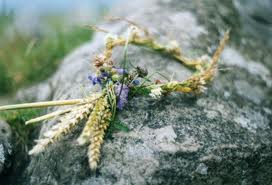
Celts erected temporary hills to celebrate the harvest festival of Lammas. In Ireland a girl would be seated on the hill-top, garlanded with flowers and proclaimed the goddess of the hill. Celts would climb hills to pray to the gods and gather bilberries at Lammas.
The raising up of Celtic crosses onto stone steps recalls the Lammas tradition – Perrons – a type of man-made holy terraced mountain.

Making of the Corn Dolly from the best ears of corn taken from the last sheaf to be harvested.
This was usually kept hanging over the hearth to bring good luck, and the seeds were added to the new seeds in the Spring.

Link: http://www.mysticfamiliar.com/library/witchcraft/lughnasadh.html
L
ink: http://www.new-age.co.uk/celtic-festivals-lammas.

HisTOURies UK
Mystical Landscape, Magical Tours

Read Full Post »

Tour: Fri 31st Aug – Sun 2nd Sept 2012
Henges, burial mounds of all shapes and sizes, causewayed camps, early field systems and ‘cursus’ monuments are scattered everywhere in Wessex, forming a landscape which hints at its past, but whose story is unintelligible to the untrained eye.

Our experts have been introducing people to this, one of the richest prehistoric landscapes in the world, which lies on our very doorstep, since Andante’s inception.

Day One
Meet in the evening for an introductory lecture and dinner together in a local restaurant. Overnight in Sarum College in the beautiful Cathedral Close.

Day Two
By coach to Avebury for a full exploration of the huge Neolithic henge, so large that part of the village lies within it. It is one of the largest and best preserved of 1300 stone circles known in the British Isles. Morning walk around the henge and along the ceremonial Avenue.  We approach the stones of Avebury just as one would have done in prehistoric times.

Afternoon circular walk (2 hours) past Silbury Hill, the largest man-made mound in Europe.  The most famous of its excavators crawled into an earlier excavation chamber and recorded later:
“the sides of the open chamber provided one of the most astonishing sights that I have ever seen…it was clear that this innermost mound had been covered by a series of conical shells or cappings…the effect was of finding oneself in an enormously complicated and highly coloured layer cake of gigantic size..”
The walk continues to the Long Barrow at West Kennet and a chance to explore the chambered tomb within.  This kind of monument is the earliest known to have been built in Britain – in commemoration of the dead. Continue to the ‘Sanctuary’, a small, complex timber and stone circle on the top of Overton hill. Walking in our ancestors’ footsteps helps us try to understand their motives and methods.

Day Three
Stonehenge for an early (7.30am) visit inside the stone circle before the public arrives. This will be followed by a walk (2 hours) through the wider religious landscape – the cursus, King Barrows and Stonehenge Avenue.
A short drive takes us to Woodhenge, where the remains of wooden post settings have been found – now marked by concrete. From here there is a good view over the huge henge at Durrington Walls, site of exciting recent excavations which revealed the settlement which may have housed the builders of Stonehenge.

Return to Salisbury Museum for a visit to the Stonehenge and Prehistory Galleries. We have arranged a private demonstration of flint-knapping in the gardens here, which is not only much enjoyed, but adds considerably to your understanding of the way in which our prehistoric forebears were able to fashion all manner of implements and tools from our good local flint supplies.  In a world without metal technology this was a critical and highly sophisticated art.
Disperse about 5pm.

Should you choose to arrive earlier or stay later, you might like to visit Old Sarum, the hillfort to the north of Salisbury which was later chosen as the site of our first cathedral, or, of course,  our beautiful Gothic cathedral – straight in front of the College.

NB Most of every day will be spent walking, and you must be prepared for this, with suitable footwear and weatherproof clothing. You will also have to carry your own water, and negotiate a variety of stiles.

  • The original Andante Tour – accept no imitations!
  • We have been introducing guests to these monumental prehistoric landscapes for 26 years
  • Accommodation spectacularly situated within Salisbury cathedral close
  • Bring your hiking boots!
  • Several good cross-country walks

Read Full Post »

Go rambling around England with your little ones, on these 10 buggy friendly walks, selected by Richard Happer from his new book Beautiful Buggy Walks: England

Avebury, Wiltshire

Avebury

Avebury

Strolling through an ancient stone circle is just the start of this adventure. Avebury’s fine historical monument also forms the hub of a cracking day’s countryside wandering. Avebury is the world’s biggest stone circle – so large it has a whole village in its centre – but it doesn’t attract the huge numbers that Stonehenge does. This walk introduces you to the circle via West Kennet Avenue, a ceremonial approach that originally had 100 pairs of stones. It’s half a mile long and still impressive. People can wander freely among the ancient monoliths, unlike Stonehenge. Tourists touch them, kids lean on them and wild-bearded men in rainbow trousers do yoga beneath them. Our tour concludes with a relaxing stretch through the surrounding fields.

OS map: Explorer 157
How far: about 3 miles
Route: Enter the field to the west of the parking area.

• Walk between the stones up West Kennet Avenue.

• When the road to your right joins the main road, cross the smaller road and walk past the trees to the embankment that runs around the ditch.

• Follow the path on top to your right. When you reach a small road, cross it and continue around the circle.

• At the main road follow the path in, towards the centre of the circle, cross the road and take the path out and around the next sector of the circle.

• Detour to your right to visit the café and visitor centre.

• Join the minor road in the village and walk west to east, right through the circle, passing the pub and the point at which you crossed the road earlier.

• You are now walking away from the circle, down a country lane; continue for 1/2 mile, passing Manor Farm, then turn right, down a byway.

• After 1/2 mile, turn right along the edge of a fi eld. Another 1/2 mile will take you back to the start.

Rest and refresh: The Red Lion pub has outdoor space (01672 539266, red-lion-pub-avebury.co.uk). The National Trust visitor centre has a spacious cafe with outside benches. Visitor centre: 01672 539250,nationaltrust.org.uk/avebury

Article Source and more walks:http://www.guardian.co.uk/travel/2012/may/06/buggy-walks-family-holidays-england 

 HisTOURies UK –www.Histouries.co.uk
Mystical Landscape, Magical tours

Read Full Post »

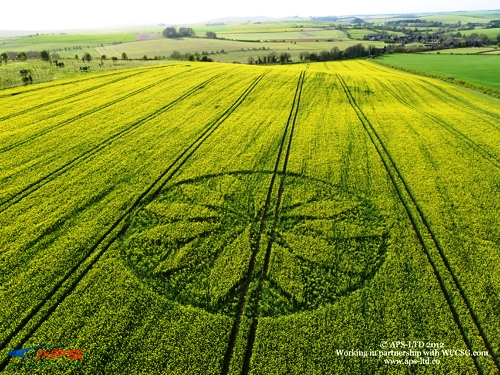
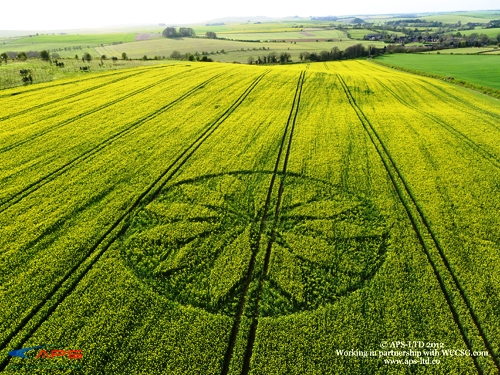
The first formation to be reported in 2012. It was first reported on Sunday 15th April and is in oilseed rape (canola/colza) measuring approx. 140 feet in diameter. A pretty 12 pointed double flower at Lurkeley Hill on the outskirts of the village of East Kennett close to Marlborough in Wiltshire

East Kennett, Wiltshire
Crop Circle 2012
 This is a beautiful pattern to open the 2012 season, although because we were unable to photograph it straight away (the pictures here were taken when the formation was approximately 5 days old), we assume the plants have sprung back up quite a lot. 

Follow our Blogs and on Twitter for all the latest Crop Circle news (https://twitter.com/#!/HisT0URies)

Wiltshire Crop Circles

In the early 1970’s Crop circles used to be unexplained patterns that were generally found in corn fields – hence the terminology ‘corn circles’. However, in more recent years teams of ‘circle-makers’ within the South of England have openly admitted creating some of these fantastic formations, and have constructed them in crops as diverse as Linseed and Rapeseed.

Most frequently these art forms have appeared in Wiltshire near ancient monuments that are themselves considered to be built on sites of powerful natural energies. Many people believe that it’s no coincidence that the phenomenon appears close to these ancient sites, and some have even reported crop circles forming in under 20 seconds under incandescent or brightly coloured balls of light.

Whatever you choose to believe about the crop circle phenomenon, there is no doubt that the circles are responsible for attracting huge amounts of media attention, which consequently results in thousands of visitors coming to Wiltshire every year in order to catch a glimpse of some of the more spectacular ones.

Link: http://www.wccsg.com
Link:  http://www.visitwiltshire.co.uk/

Needless to say we will be offering guided tours of all the best formations in the Wiltshire throughout 2012

HisTOURies UK
Mystical Landscape, Magical Tours

Read Full Post »

« Newer Posts - Older Posts »