|
HisTOURies UK – Bringing History Alive |
Archive for the ‘UK Tourism updates’ Category
Living History Events in the UK – 2010
Posted in archaeology, british history, England facts, History, sightseeing tours, UK Tourism updates, wessex, Wiltshire on August 16, 2010| Leave a Comment »


Brits Given Tips On How To Treat Foreigners – Olympics 2012
Posted in England facts, Funny, London Olympics 2010, sightseeing tours, UK Tourism updates on August 13, 2010| Leave a Comment »

The Worlds gone mad…………………..
The ‘quango’ VisitBritain has issued a guide book aimed at the British on how to treat overseas visitors during the Olympics. Unbelievable ???
Please take the time to read some of the advice below, this is not one of my hoax blogs – its completely true! The ironic thing is that VisitBritain is staffed with ‘non Brits’………………
If you happen to meet a Mexican during the 2012 Olympics, don’t mention the war – that is just one of the pieces of advice being given to Brits on how to treat foreign visitors during the Games.
The war in question is the 1845-6 war with the United States. Instead you should try talking about Mexican art or museums.
They have been written by the agency’s staff, who are natives of the countries featured.
Britain is ranked 14th out of 50 when it comes to the welcome it gives to foreign visitors, but some wish they had received a more exuberant welcome from their hosts.
The comprehensive catalogue of cultural norms and traditions should ensure that you do not unwittingly offend any guests – or feel slighted because of a lack of understanding.
For example, the advice says that you should never call a Canadian an American.
Similarly, steer clear of physical contact when meeting someone from India for the first time.
Pouring wine for an Argentinean may seem to be an innocuous enough task, but it is in fact a cultural minefield – pouring it backwards represents hostility.
When Japanese people smile they may not be happy, in fact they could be the complete opposite.
Talking to them with your hands in your pockets will cause offence.
Remember Arabs are not used to being told what to do.
VisitBritain advice
Sandie Dawe MBE, CEO of VisitBritain, said making visitors to Britain feel welcome was “absolutely vital” for the UK economy.
She said: ”Overseas visitors spend more than £16bn a year in Britain, contributing massively to our economy and supporting jobs across the country.”
She added: “With hundreds of thousands of people thinking of coming to Britain in the run up to the Olympic and Paralympic Games in 2012, this new advice is just one of the ways that VisitBritain is helping the tourism industry care for their customers – wherever they come from.”
Other pieces of advice include:
:: Winking is considered a rude gesture in Hong Kong.
:: The Chinese are very suspicious – talking about poverty, failure or death could cause offence.
:: Visitors from the United Arab Emirates don’t take kindly to being bossed around.
:: When accepting thanks, Koreans will typically say “No, no.” The remark should be interpreted as “You are welcome”.
:: The term “Poms”, which is used by Australians and New Zealanders, is a term of endearment, rather than a insult.
:: Snapping your fingers in the presence of a Belgian is regarded as impolite.
:: Do not imply that Polish people drink too much.
For those visiting London and the UK during the Olympics 2012 remember to book well in advance, we already have private tours booked for the summer of 2012.
Personalised tours of London and Britain
HisTOURies UK – The Best Tours during the London Olympics
Castle Combe Village – Spielberg’s ‘Warhorse’ being filmed in September 2010
Posted in England facts, History, sightseeing tours, UK Tourism updates, Wiltshire on August 9, 2010| Leave a Comment »
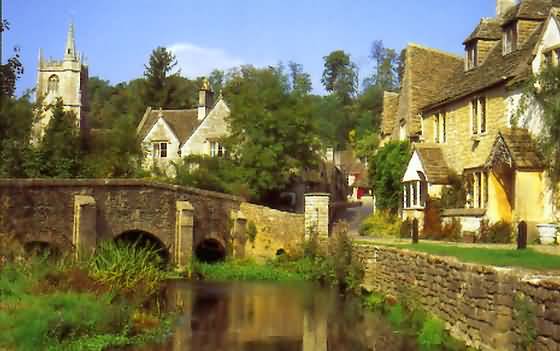
War Horse is a film that Steven Spielberg announced plans for production. War Horse is intended for release in 2011. It will be the film version of the play of the same name, which is a stage adaptation of the book War Horse, a children’s fiction novel by Michael Morpurgo first published in Great Britain in 1982.
OSCAR-winning actor Sir Anthony Hopkins is set to shoot scenes for his latest film in Castle Combe and Lacock this Autumn.
Hollywood film crews have approached both village parish councils after finding perfect locations for the remake of the 1941 horror flick The Wolfman.
The news comes just months after the penultimate Harry Potter movie was filmed in Lacock.
Chairman of the Lacock Tenants Association Leo Stevens attended a meeting with 50 residents last Tuesday.
He said: “The general reaction was positive and people seemed interested in getting involved with the project.
“As long as the filmmakers take our needs into consideration I think everything will go smoothly.
“I am involved with the project and am tracking down a blacksmiths for them to use in the movie.
“Filming in Lacock has just become an ordinary event these days and people don’t really batter an eyelid when a famous actor crosses the path in front of them.
“We are just waiting for more details from the production company and then we can move forward.”
The production company, part of Universal Pictures, is keen to use the Tithe Barn as the main location and possibly some shots of the High Street.
They want to fill the inside of the barn with blocks of ice, to resemble an ice house, used in the nineteenth century to store dead bodies.
The period film follows the life of Laurence Talbot, a successful actor, who returns to his hometown after his brother goes missing amid rumours of werewolves.
Film crews were also keen to shoot some scenes in Castle Combe, which is still reeling from its Hollywood debut in Stardust last year.
Jean Sheard, who owns the Lacock bakery on Church Street said: “I am really excited about seeing Sir Anthony Hopkins – he is such a huge star.
Lets hope we dont have a repeat of previous holywood films ?
Castle Combe never recovered from its engineered fame. In 1966 it was occupied for three months by a film company making Dr Dolittle with Rex Harrison, Samantha Eggar and Anthony Newley. Men with loud voices and earth-moving equipment built a harbour below Castle Combe’s bridge and made everyone take down their television aerials and link their sets to a communal cable attached to a hidden mast during the filming
Filming starts in September and we will continue to take small group tours to Castle Combe and Lacock – a great phot opportunity.
Cotswolds Tour Guide
HisTOURies UK – The Best Tours in History
What have the Romans ever done for us ?
Posted in british history, England facts, Funny, History, UK Tourism updates, Wiltshire on July 27, 2010| Leave a Comment »
For the ‘Monty Python’ fans……………………
This scene still bring tears to my eyes.
Life of Brian (1979) (aka Monty Python’s Life of Brian) is a satirical film by the Monty Python comedy troupe about a man who is born at the same time as (and next door to) Jesus, and whose life parallels his.
Reg: What Jesus blatantly fails to appreciate is that it’s the meek who are the problem.
Hope you enjoyed as much as I did.
HisTOURies UK – The Best Tours in Roman History
Salisbury and Wiltshire Museum
Posted in archaeology, british history, History, Salisbury Cathedral, sightseeing tours, Stonehenge, UK Tourism updates, wessex, Wiltshire on July 27, 2010| Leave a Comment »
Salisbury Museum is based in the King’s House, a grade I listed building located opposite Salisbury Cathedral. We have a small but friendly staff, supported by over 100 volunteers. We offer a variety of services, including the opportunity to hire this unique location for corporate events and activities.
About the Museum
|
||
 The Museum is located in the King’s House, situated in the glorious setting of the Cathedral Close. The King’s House is a Grade I listed building, the history of which stretches back to the 13th Century. It formerly housed a teacher training college and was the inspiration for an episode in Thomas Hardy’s novel Jude the Obscure.
ARCHAEOLOGY WEEKEND – OLD SARUM CASTLE – Sat 24 & Sun 25 Jul 2010
Posted in british history, History, Salisbury Cathedral, sightseeing tours, UK Tourism updates, Wiltshire on July 9, 2010| Leave a Comment »
It’s the Festival of British Archaeology – this is your chance to meet a  real archaeologist and to uncover artefacts from Old Sarum’s history. Kids will love getting involved with archaeological activities, including: a sand-pit excavation, to learn how archaeologists uncover, recover and record evidence, and a finds washing, to learn how archaeologists process the evidence! Plus, there are lots of fun and games to take part in like our Beat the Archaeologist Challenge or Guess the Mystery Object from Old Sarum’s past.
Old Sarum Hillfort
Discover the story of the original Salisbury and take the family for a day out to Old Sarum, 2 miles north of where the city stands now. The mighty Iron Age hill fort was where the first cathedral once stood and the Romans, Normans and Saxons have all left their mark.
Today, 5,000 years of history are told through graphic interpretation panels on site. Families, heritage lovers and walkers can enjoy a great value day out at Old Sarum- you could even bring a picnic and enjoy the fantastic views across the Wiltshire countryside. The gift shop has a delicious range of ice-creams and exclusive English Heritage gifts and produce. Wooden bows and arrows are also on sale to help the kids imagine what life was like all those years ago!

Don’t Miss…
- The spectacular view from the ramparts at Old Sarum to the ‘new’ cathedral in the centre of Salisbury
- Our interesting interpretation panels bringing 5,000 years of history to life
- Old Sarum’s literary connections- you can buy some of the famous books written about the site in our shop
Wiltshire Tour Guide
HisTOURies UK – The Best Tours in British History
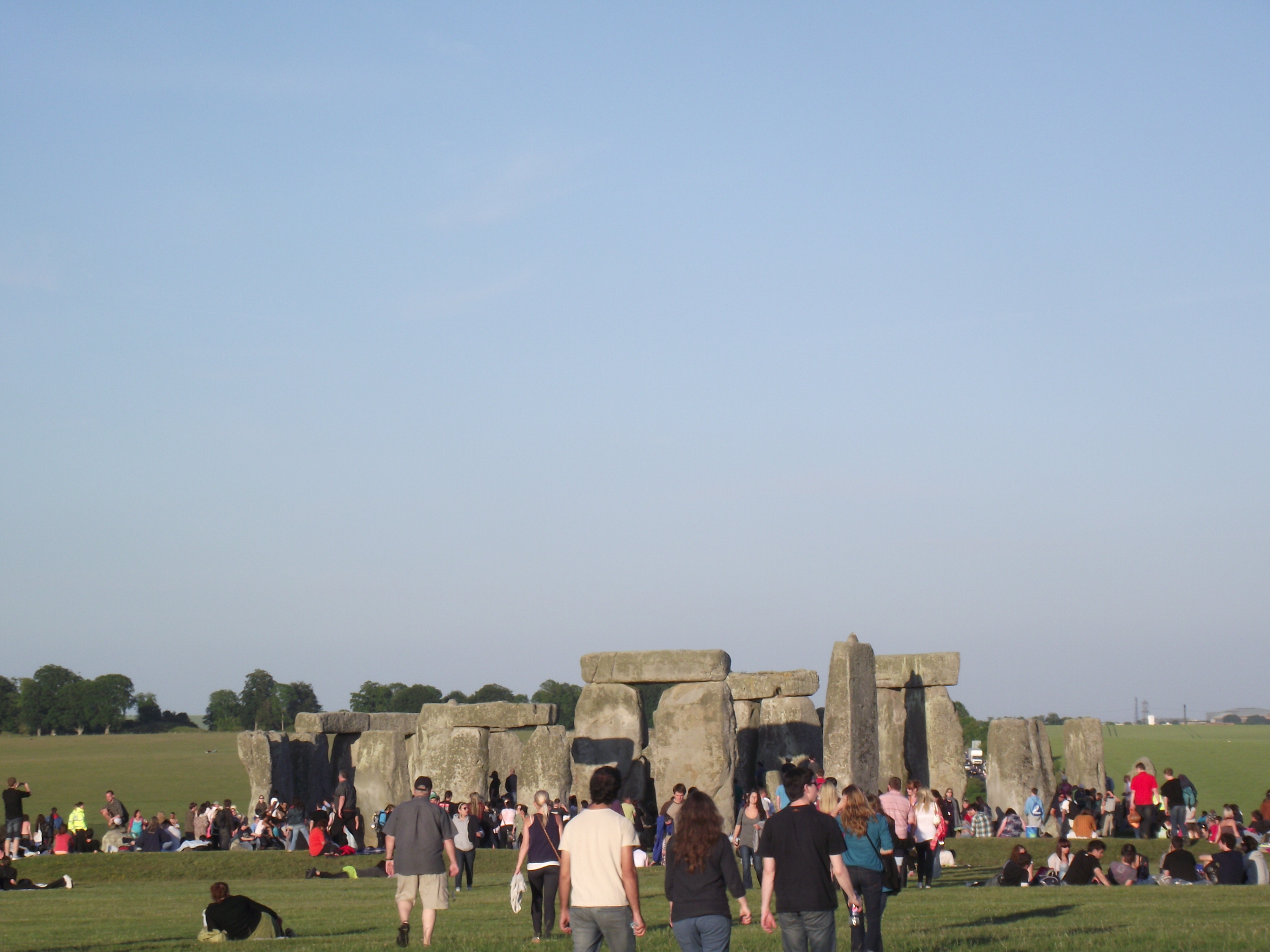
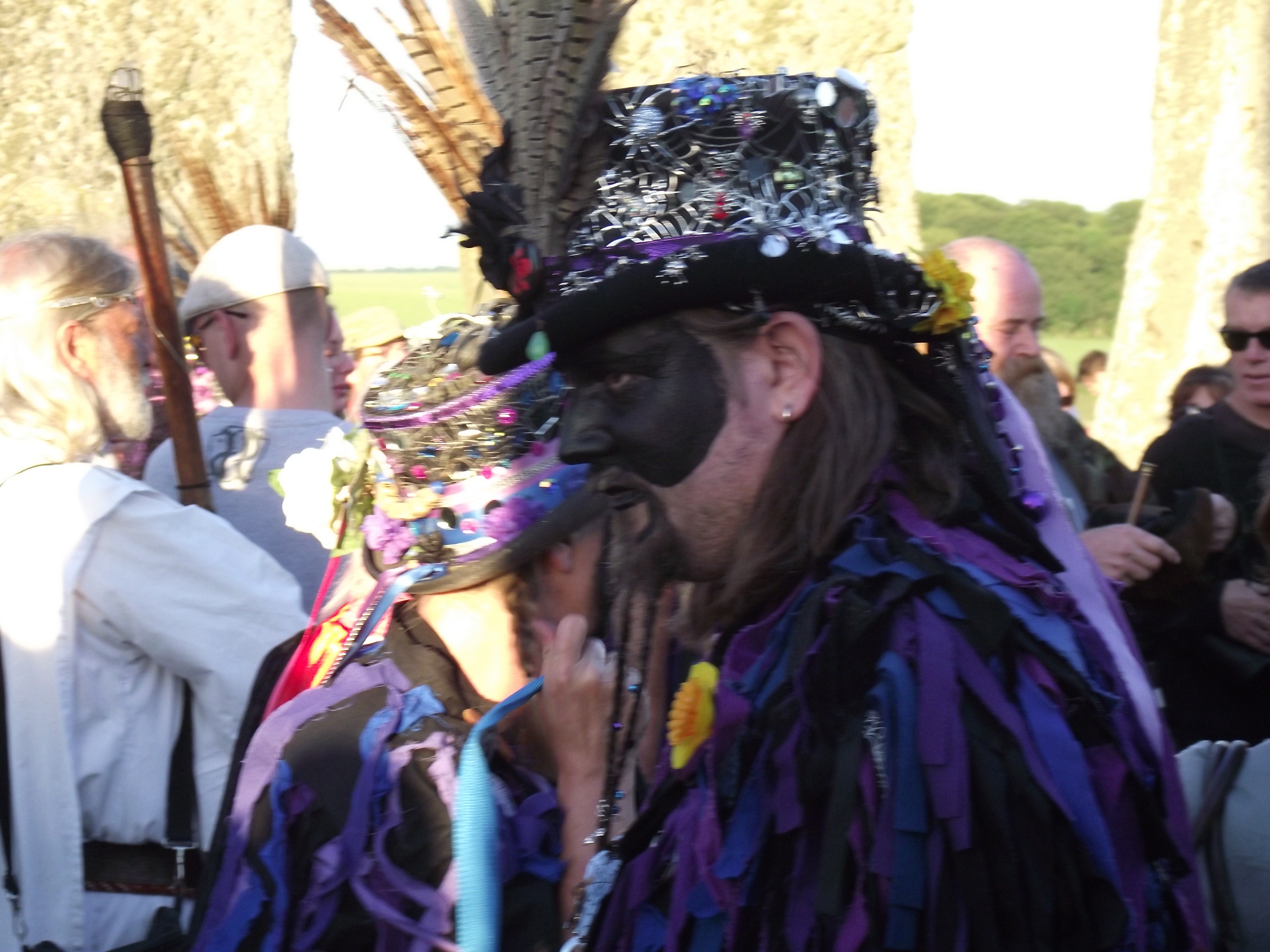
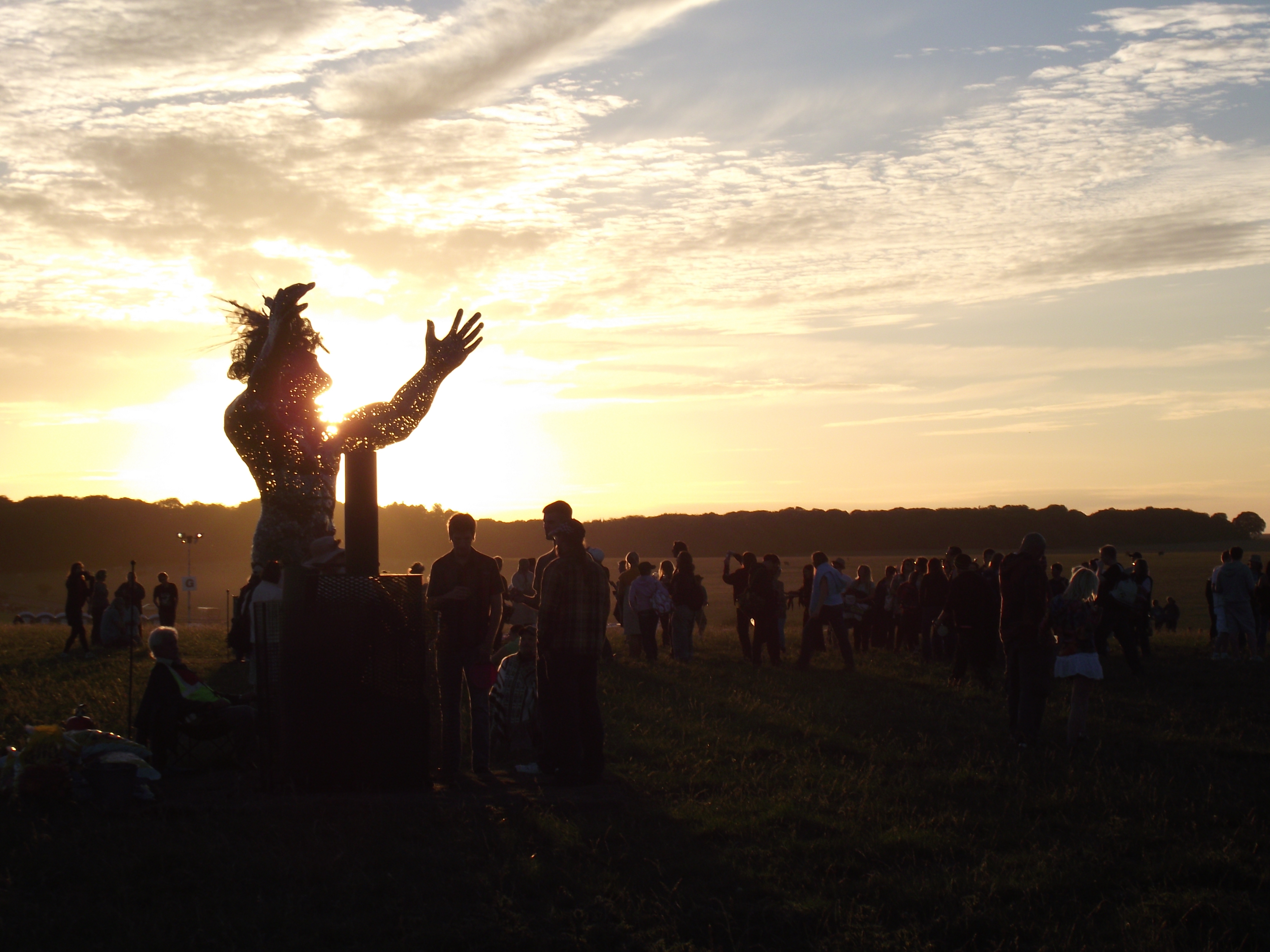
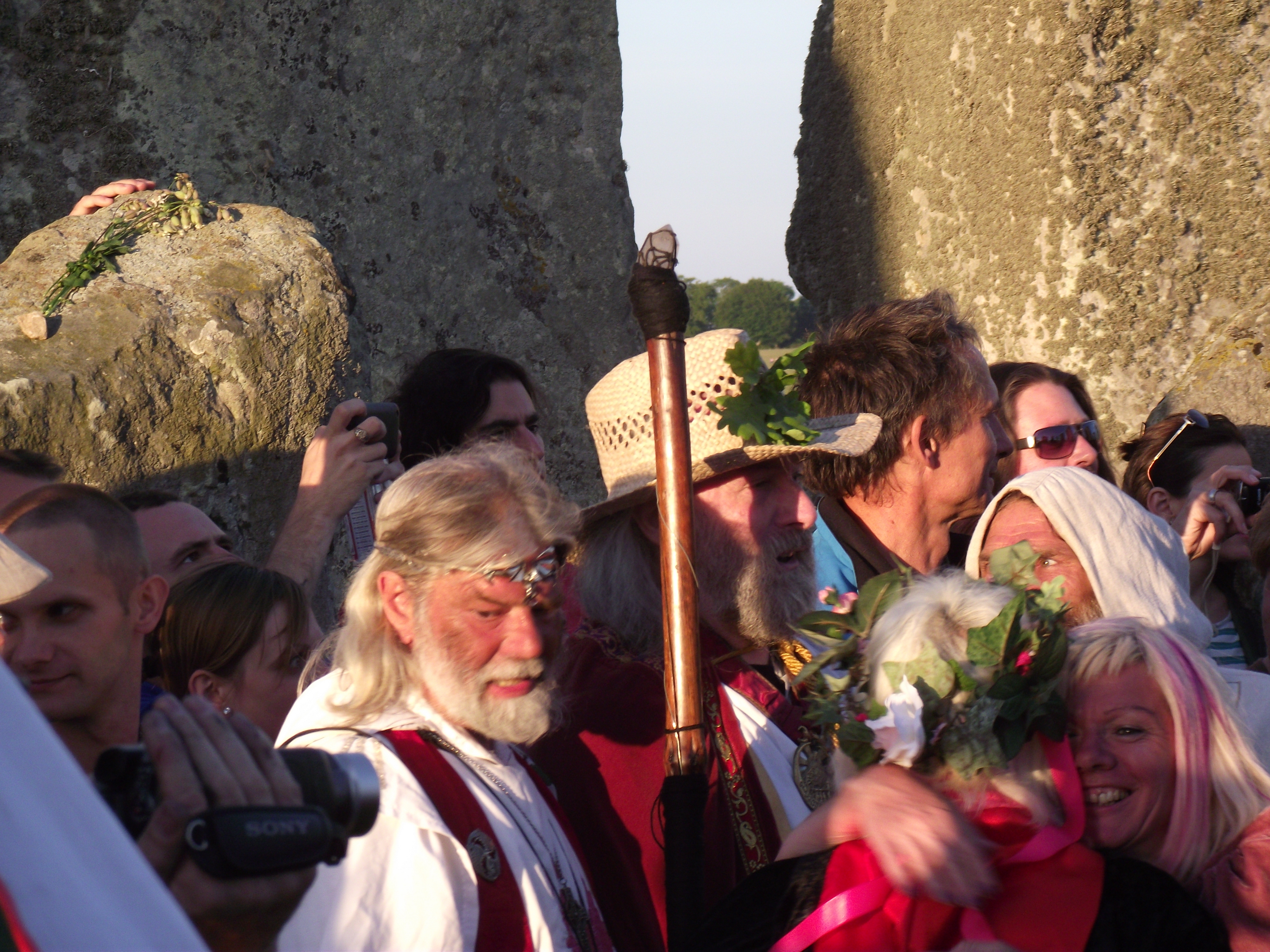
Stonehenge Summer Solstice Celebrations 2010
Posted in Stonehenge, Stonehenge private tours, UK Tourism updates, Wiltshire, Wiltshire Crop Circles on June 30, 2010| Leave a Comment »
Is Stonehenge worth £51m? Doing the maths on the famous stone circle
Posted in England facts, Stonehenge, Stonehenge private tours, UK Tourism updates, Wiltshire on May 28, 2010| Leave a Comment »
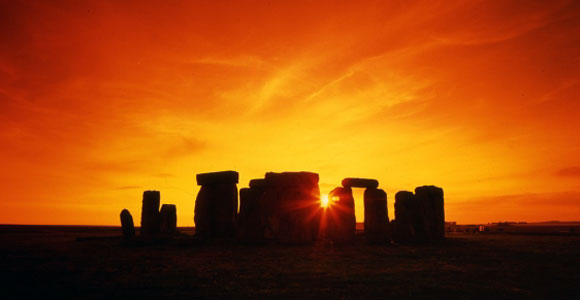
Here’s a novel suggestion for how the government can help reduce the massive public deficit: sell Stonehenge. A survey of 500 estate agents, among other monuments studied, has placed the price of the ancient stone circle at a cool £51 million. It’s a drop in the ocean of the £156 billion gap between government income and expenditure. But it’s a start.
Okay, so we’re not really advocating putting one of Britain’s most prized historic monuments up for sale: UNESCO would have some angry words to say about that. And it doesn’t even bare thinking how the druids will react. But the survey does shed light on just how much heritage sites are worth. Elsewhere, a price tag of £5.2 million was placed on 10 Downing Street, while Windsor Castle’s value was reckoned at £391 million.
But are the sums on Stonehenge correct? Shouldn’t such an internationally-renowned, popular and iconic monument be worth so much more?
In recent years Christie’s auction house has sold the likes of the Egyptian statue of Ka-Nefer and his family for a tidy £1.9 million, the Canford Assyrian relief for the princely sum of £7.7 million, and the Jenkins Venus for a whopping £7.9 million.
Counting just the 18 large standing stones, the 10 giant stones of the inner circle and the central altar stone at Stonehenge, by a very unscientific breakdown, that £51 million price tag on the Neolithic monument gives its 29 key constituent parts an approximate value of just £1.7 million a piece. That’s lower than each of the Christie’s sales listed above.
Theoretically speaking, don’t these figures at least suggest the total price tag should be a bit higher? Surely a super-wealthy antiquities collector would be prepared to pay megabucks to have a Stonehenge megalith in their living room? Or possibly even a trilith framing their front door?
And what about admission fees? Stonehenge presently attracts around 900,000 visitors a year, at an average price of about £5 per head. Multiply that long-term – by 25 years, say – and that means the monument is worth over £112 million. Consider too that visitor figures will most likely increase in years to come, and factor in revenue from merchandising, and £51 million begins to sound like a snip.
“It’s quite a challenge for estate agents more used to valuing suburban semis to put an accurate valuation on a royal castle or ancient monument,” commented Nigel Lewis, a property analyst at FindaProperty.com, who ran the survey. “But there was a surprising amount of agreement between the different agents we spoke to.”
Clearly estate agents have done their sums, too. They consider many different factors when it comes to judging the value of a property – location, age, whether it’s in need of improvement and so on. Stonehenge doesn’t lack for a good spot, situated on sheep-nibbled rolling Wiltshire countryside. But at 4,500 years vintage it could hardly be described as a new build, while its state of repair is questionable to say the least. And then there’s that ugly car park plonked right across the road since the 1960s (although it’s soon to be removed).
Also, unless Stonehenge’s new owners were to scrap already scaled-down plans for a new visitor centre – current cost £25 million – then that’s a big chunk of change they’ll need to lay out straight after being handed the keys to the front gate. But £51 million still sounds like far too low an asking price.
Someone buying a historic British monument isn’t actually as ridiculous as it sounds. Missourian businessman Robert P. McCulloch in 1968 purchased the old 19th century London Bridge designed by engineer John Rennie (or at least its stone cladding) from the City of London for $2 million dollars. He then shipped it to the United States, where it was rebuilt across Lake Havasu in Arizona as the gateway to a mock-English community. Legend has it that McCulloch mistakenly believed he was actually buying Tower Bridge – a story he vehemently denied.
It’d be a tragedy to see Stonehenge similarly packed-up and shipped off elsewhere. But Number 10 or Windsor Castle? Times are tight, after all.
Video: Spring Equinox Celebrations and Druids at Stonehenge
Digs, Discovery and Disaster: A History of Archaeology at Stonehenge
How to Celebrate the Summer Solstice 2010 at Stonehenge
The Stonehenge Stone Circle website
Article from the Heritage Key website with thanks
Nicholas – Stonehenge Tour Guide
HisTOURies UK – The Best Tours in History
Wiltshire Crop Circle Tours
Posted in british history, Funny, Stonehenge, Stonehenge private tours, UK Tourism updates, Wiltshire, Wiltshire Crop Circles on May 13, 2010| 2 Comments »
We were excited to see news of the first crop circles in Wiltshire, home to Histouries UK. We have already been taking private groups to see them and have a great relationship with local farmers allowing us to enter the fields when other can’t. Many locals have reported strange lights in the skies and hearing srtange noises at the same time as the mysterious circles appear (serach on YouTube to view video footage)
Whatever your thoughts on this phenomena they are fantastis to see both form a distance and up-close giving some amazing and unique phot opportunites. We do offer dedicated crop circles, however our regular historical guided tours visiting Stonehenge, Salisbury, Old Sarum Hillfort, Glastonbury and the Wessex are will pass these crop circles and the topic will be discussed in depth.
We expect to see crop circles between May and September this year (2010)
Some more information on the recent circles………….
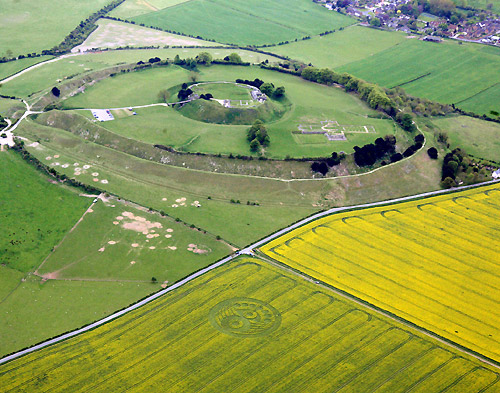
Herewith the first crop circle of 2010. It is in oil seed rape and measures approx: 180 foot diameter. It is a circle containing six arcs intercepted by a small circle surrounded by a larger circle. A lozenge shape lies alongside the sixth arc with seven circles lying in an arc below. It lies below the ancient Hill Fort Old Sarum in Hampshire. Sadly due to the fact that it lies in Boscombe Military Air space it is also directly below the helicopter low flight approach zone, the images were taken from 2000 feet and also the crop is not yet in full bloom so the imprint is poor
The first week in May we witness the first English Crop Circle in southern Wiltshire. The area around Old Sarum is certainly not an active part of the countryside for the phenomenon. In fact it has only witnessed a few events of the last two decades, which makes this ‘Curtain Opener’ to the 2010 season quite a surprise.
UPDATE
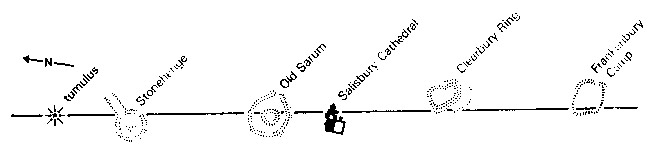
On further investigation, it would appear the positioning of the crop circle in relation to Old Sarum, actually lies on the direct path of a very well know Ley Line which has an alignment with Stonehenge, and cuts the nearside edge of the inner banks of the fortified encampment of Old Sarum. This Ley Line then straight through Salisbury Cathedral itself, and the hill forts of Clearbury Rings and then Frankenbury Camp in Hampshire.
This clearly indicates that the positioning of Crop Circles could indeed be connected with Ley Lines, which are aligned to well known Ancient Sites. Are we being shown a doorway to ancient knowledge? Will we find the key in 2010?
Heather
HisTOURies UK – The Best Tours in Wiltshire – Salisbury and Stonehenge Guided Tours
First UK Crop Circle – Wiltshire 2010
Posted in Funny, Salisbury Cathedral, Stonehenge, Stonehenge private tours, UK Tourism updates, Wiltshire, Wiltshire Crop Circles on May 11, 2010| Leave a Comment »
The cuckoo traditionally marks the beginning of spring and right on cue to mark the first day of summer a crop circle has been spotted.
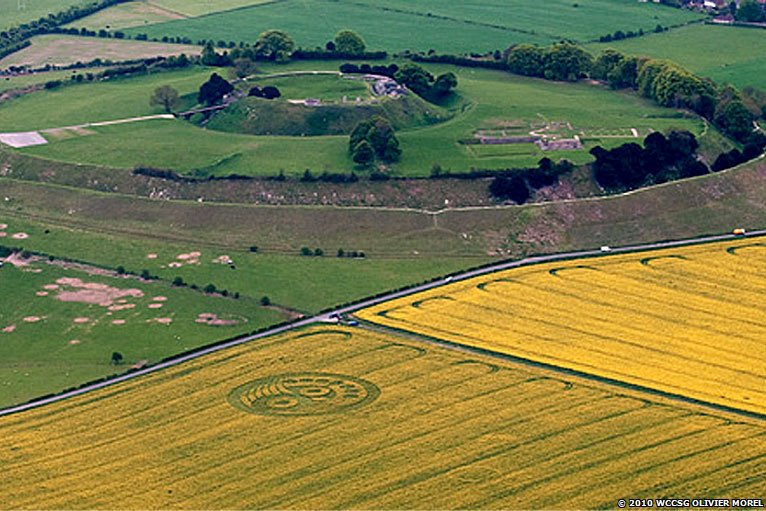
The first to be seen of that seasonal staple it is made up of curious swirls and has been ‘discovered’ in a field of oil seed rape in Wiltshire close to the remains of an Iron Age hill fort.
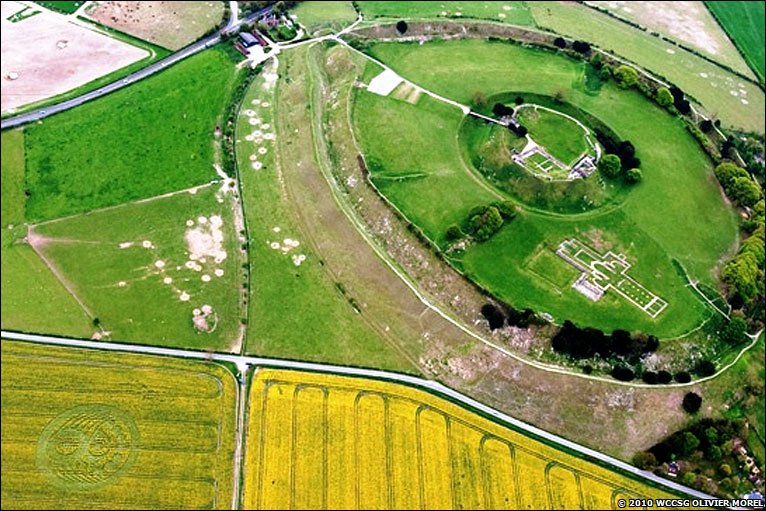
The crop circle lies close to the Iron Age hill fort of Old Sarum where Romans, Normans and Saxons have all since left their mark. To the right of the mound lies the outline of where the first Salisbury cathedral stood
The county is a popular spot for crop circle sightings and this one was found overlooking the historic site of Old Sarum, near Salisbury, near to where a 150ft dragonfly appeared in a field last year.
The bizarre shapes and designs are predominately found in the counties of South West England. However, they tend to pop up in other regions too and last year a 600ft jellyfish appeared in Oxfordshire – becoming the first jellyfish crop circle in the world.
The crop circle season normally begins in April with them increasing in number to a high point in July and August.
Just how these creations come into being is the subject of heated debate with some arguing they are the work of artists, while others feel they are deliberately created to bring in tourism.
The fact that many appear on ancient ‘ley lines’ leads others to believe they carry a mystical meaning.
Ley lines are supposed straight lines connecting three or more prehistoric or ancient sites which are associated by some with lines of energy and other paranormal phenomena.
However they’re formed though, tourists keep flocking to the circles every year to get a glimpse of the giant patterns.
OLD SARUM
Old Sarum was a mighty Iron Age hill fort which became the site of the first Salisbury cathedral. Chosen because of its strategic importance it was where two trade routes and the River Avon meet.
The Romans installed a garrison in the river valley below the site which was named Sorviodunum. Under the Anglo Saxons it ranked among the most considerable towns of the West Kingdom before the Normans arrived and built a castle there in 1069. The construction of the cathedral began in 1075 and it was nearly 200 years later that the second cathedral that stands today was built.
Nicholas – Stonehenge and Salisbury Tour Guide
Histouries UK – The Best Tours of Wessex
Blog Archive
-
HisTOURies U.K Tours
- There’s more to this English county than just Stonehenge. Visit Wiltshire.
- Private Driver Guided Stonehenge Tours Departing from Salisbury.
- Private Driver-Guided Stonehenge Sightseeing Tours Departing from Bath.
- Stonehenge special access guided inner circle trips from London, Bath or Salisbury. Experience Stonehenge at dawn or dusk with a private VIP tour!
- Visiting Stonehenge? Our expert tour guides can turn the amazing experience of seeing the stones for the first time, into an enlightening one.
-
HISTOURIES PAGES
HISTOURICAL BLOGS
- January 2025 (1)
- December 2024 (1)
- October 2023 (1)
- February 2022 (1)
- March 2021 (1)
- December 2019 (1)
- January 2019 (2)
- June 2018 (2)
- December 2017 (3)
- June 2017 (1)
- May 2017 (5)
- February 2017 (5)
- January 2017 (9)
- December 2016 (5)
- November 2016 (5)
- October 2016 (3)
- July 2016 (1)
- April 2016 (1)
- March 2016 (1)
- February 2016 (5)
- January 2016 (1)
- October 2015 (2)
- September 2015 (2)
- May 2015 (3)
- March 2015 (1)
- February 2015 (2)
- January 2015 (7)
- December 2014 (3)
- October 2014 (5)
- September 2014 (4)
- March 2014 (2)
- February 2014 (1)
- January 2014 (4)
- November 2013 (4)
- October 2013 (8)
- September 2013 (6)
- August 2013 (7)
- July 2013 (3)
- June 2013 (5)
- May 2013 (10)
- April 2013 (8)
- March 2013 (6)
- February 2013 (2)
- January 2013 (3)
- December 2012 (3)
- November 2012 (7)
- October 2012 (7)
- September 2012 (5)
- August 2012 (2)
- July 2012 (6)
- June 2012 (3)
- May 2012 (5)
- April 2012 (3)
- March 2012 (4)
- February 2012 (7)
- January 2012 (5)
- December 2011 (3)
- November 2011 (7)
- October 2011 (8)
- September 2011 (9)
- August 2011 (7)
- July 2011 (7)
- June 2011 (4)
- May 2011 (5)
- April 2011 (4)
- March 2011 (10)
- February 2011 (7)
- January 2011 (11)
- December 2010 (12)
- November 2010 (12)
- October 2010 (17)
- September 2010 (13)
- August 2010 (9)
- July 2010 (12)
- June 2010 (6)
- May 2010 (6)
- April 2010 (13)
- March 2010 (22)
- February 2010 (26)
HISTOURIES UK

STONEHENGE TOURS
March 2026 M T W T F S S 1 2 3 4 5 6 7 8 9 10 11 12 13 14 15 16 17 18 19 20 21 22 23 24 25 26 27 28 29 30 31  Visit London
- An error has occurred; the feed is probably down. Try again later.
 Wessex Guided Tours