Feeds:
Posts
Comments

Mike Pitts's avatarMike Pitts Digging Deeper

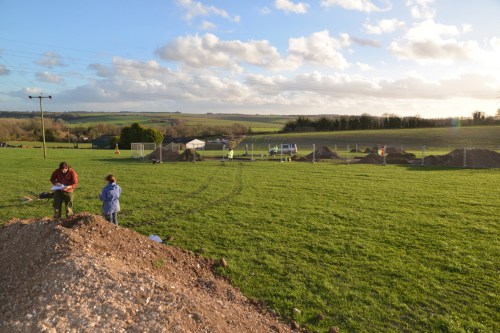
west-amesbury-digThe new British Archaeology, which went live online today (February 8), reports significant new discoveries near Stonehenge, among them the grave of a man who might have seen the earliest megaliths erected at the site.

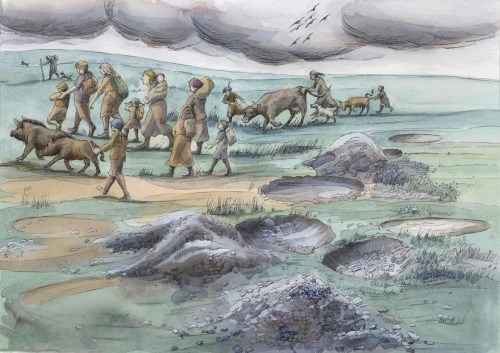
West Amesbury Farm copyright Judith Dobie .jpgCremated remains of over 100 people were buried at the first Stonehenge, from 3100BC – the largest cremation cemetery in prehistoric Britain. Human remains of this age are otherwise rare in the world heritage site, or across Britain as a whole. So it is noteworthy that the man buried at West Amesbury, who was not cremated, probably saw funerals at Stonehenge quite different to his own.

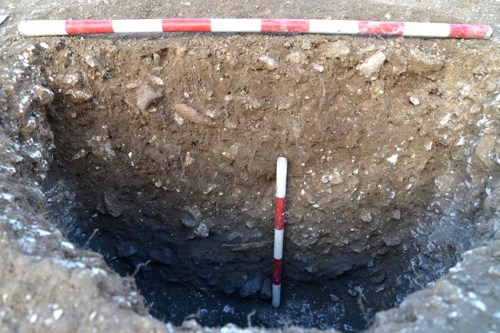
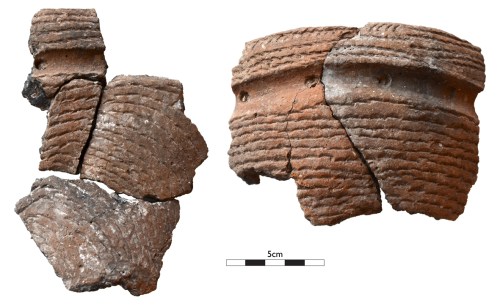
W Amesbury pit.jpgFive pits in the chalk contemporary with the henge’s origins contained huge amounts of artefacts. These include quantities of Peterborough pottery, in large fresh sherds, all in the Fengate style (one of these pits has more pottery in it than the whole of prehistoric Stonehenge).

Stonehenge W Amesbury pot.jpgHitherto, discussions about the…

View original post 246 more words

StonehengeNews's avatarStonehenge Stone Circle News and Information

Sarsen boulders lie scattered in substantial “drifts” across the landscape of the Marlborough Downs near Avebury.

By contrast, close to Stonehenge there are almost none. This is one of the reasons why most archaeologists believe that the large sarsens for the monument were not locally sourced.

There are, however, a few examples of substantial sarsens dotted about Salisbury Plain within a couple of miles of Stonehenge. And there are tantalising hints that others used to exist.

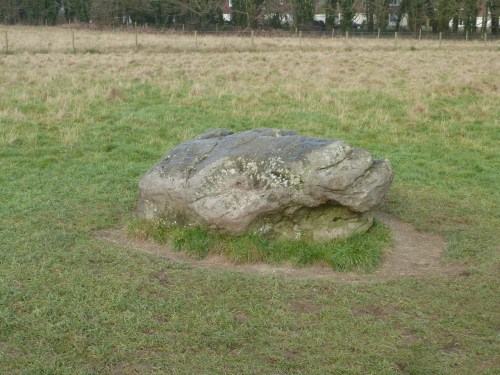
The most obvious, and easily accessible, is the Cuckoo Stone. This stone is about 2m long by 1.5m wide by 1.5m thick and lies in the field immediately west of Woodhenge.

Cuckoo Stone

The Stonehenge Riverside Project excavated around the Cuckoo Stone in 2007 and discovered that the stone once had been set upright right next to the hollow in which it had originally formed.

Close by were two neolithic pits containing pottery worked…

View original post 805 more words

StonehengeNews's avatarStonehenge Stone Circle News and Information

Respecting the Stones
The conditions of entry for the Managed Open Access events at the Solstices and Equinoxes contain the following statements:

Stonehenge is a world renowned historic Monument and part of a World Heritage Site. It is seen by many who attend as a sacred place.  Please respect it and please respect each other.

Do not climb or stand on any of the stones – this includes the stones that have fallen.  This is in the interest of personal safety, the protection of this special site and respect for those attending.  As well as putting the stones themselves at risk, climbing on them can damage the delicate lichens.

… but some people seem happy to ignore these requests. I’m going to take a little time to explain that, strange as it may seem, the monument is actually quite delicate and damage to it does occur.

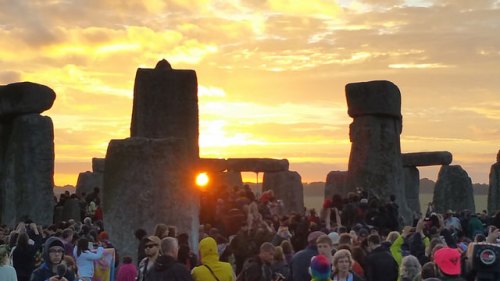
Sunrise at Stonehenge on the summer solstice The popularity of the…

View original post 894 more words

Mike Pitts's avatarMike Pitts Digging Deeper

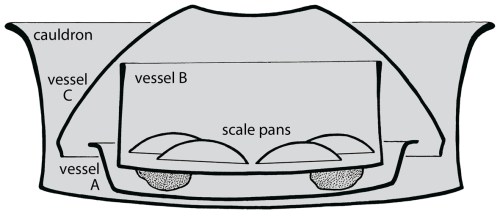
vessels drawing tinned.jpgHere’s another great story from the new British Archaeology, which went live online today (February 8). Conservation of a hoard of late Roman bronze pots and pans found near Pewsey, Wiltshire, has revealed they were packed with plants, among which were bracken and knapweed flowers.

Eight mostly plain vessels had been carefully nested inside each other. There’s a bit of tinning on some of them, so I coloured the diagram silver rather than a reddish bronze.

The plants gave a rare radiocarbon date for a hoard, of AD380–550, placing its burial most probably in post-Roman (after AD410) or Anglo-Saxon times. It may be contemporary with a nearby early Anglo-Saxon cemetery at Blacknall Field.

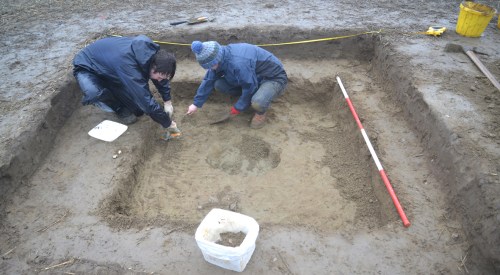
dig-ph13Richard Henry, Wiltshire finds liaison officer, and Rachel Foster, assistant county archaeologist, excavating the hoard site in 2014. Photo Past Landscapes Project

Three men and a woman with metal detectors made the discovery in late 2014 (Tony…

View original post 169 more words

StonehengeNews's avatarStonehenge Stone Circle News and Information

“A little further on the right of the road leading to Amesbury, we see the mutilated remains of an enormous Druid barrow”

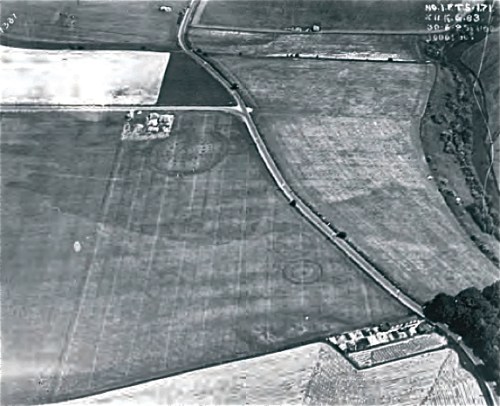
This is how Richard Colt Hoare described Woodhenge in the early 19th century, and it continued to be viewed as a disc barrow (with the name “Dough Cover”)  until 30th June 1926.

On that day, Squadron Leader Gilbert Insall VC took an aerial photograph that showed a series of dark circular cropmarks inside the area enclosed by what had been regarded as the barrow’s ditch.

Insall’s photo is shown below, Woodhenge is just above left of the centre.

gilbert-insall-woodhenge

These marks later proved to be the surface traces of six concentric rings of postholes, uncovered by Maud and Ben Cunnington in their excavations between 1926 and 1928. These posts date to between 2600 and 2400BC.

When their excavations were over, they installed short concrete markers to show…

View original post 683 more words

Our private guided Stonehenge tours that depart from Bath and Salisbury are the most popular with our overseas visitors. Stonehenge is the most famous and enigmatic Megalithic site in the United Kingdom. Dominating the landscape of Salisbury Plain in the county of Wiltshire, the giant standing stones of Stonehenge – some weighing up to 50 tonnes – are a mysterious icon left by mysterious ancient peoples. Our Stonehenge Inner Circle VIP Access Tours allow you to enter the inner circle at sunrise or sunset.

Stonehenge Inner Circle VIP Access Tours

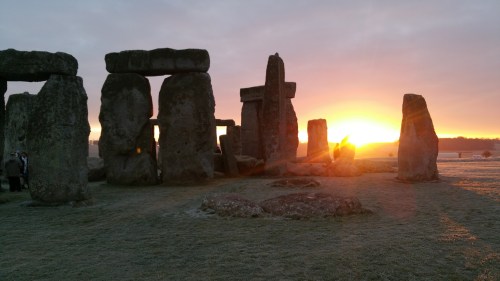
A midwinter sunrise at Stonehenge. A private guided inner circle tour from Bath.

Why did our ancestors build the circle – as a temple, a burial site, a place of healing, or a calendar? And how did they transport the massive stones weighing up to 50 tonnes from so far away? Arthurian legend has it that the circle was built by Merlin, assisted by giants. The purpose and the construction of this awe-inspiring monument is one of the world’s most enduring mysteries. Find out on one of lecture standard custom tours.

Stonehenge Inner Circle VIP Access Tours
We can arrange with English Heritage for you to experience a unique visit to this ancient sacred site – beyond the fences & after the crowds have gone home. Walk amongst the stones & experience the magical atmosphere within the inner circle.
There will be time to enjoy the peace, away from the crowds, as we experience Stonehenge at its most mystical and atmospheric best. Not to be missed!

Popular attraction combinations include Stonehenge, Avebury Stone Circle, Bath, Glastonbury and King Arthur Country, Salisbury Cathedrall and Magna Carta, Windsor Castle, The Cotswolds, Oxford, Wells Cathedral, Lacock Village, Castle Combe, The Cotswolds or simply Stonehenge at sunset or sunrise.

Private tours from Bath with an expert driver-guide
Enjoy the wonder of Stonehenge on our custom private guided tours with a local prehistory and Stonehenge expert. Bath, Salisbury and London departures.

HisTOURies U.K
Mystical Country, Magical Tours!
www.Histouries.co.uk


StonehengeNews's avatarStonehenge Stone Circle News and Information

In the early 2000s, Professor David Jacques was researching the estate records of Amesbury Abbey and realised that the archaeology around the Iron Age hillfort known as Vespasian’s Camp had probably not been obliterated by landscaping of the parkland in the 18th Century, as had previously been assumed.

The subsequent excavations, from 2005 onwards, around the spring pool at Blick Mead have transformed the understanding of the Stonehenge landscape.

historic-amesbury Archaeologists at the University of Buckingham, led by David Jacques found the ancient site in October 2014, which is around one-and-a-half miles (2.4km) from Stonehenge

The earliest datable “monumental” activity at Stonehenge comes from pine charcoal found at the bottom of two of the three enormous post pits that were discovered in the late 1960s when the old car park was being extended.

Radiocarbon-dated to around 7,500 – 7,900 BC these almost 1m diameter pine posts were erected back…

View original post 730 more words

StonehengeNews's avatarStonehenge Stone Circle News and Information

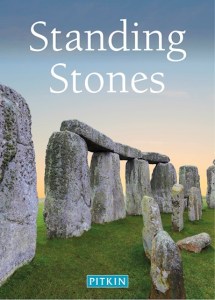
Standing stones come in a variety of guises. Some are erected in circles; some make up megalithic tombs; some have intriguing patterns on them, or are steeped in myth.

Standing Stones by Steve MarshallLong-standing questions include why they were erected and how? What do they tell us about Britain’s cultural history? As a standing stones enthusiast, Steve Marshall has travelled the British Isles to inspect these fascinating monoliths.

Stonehenge and Avebury are possibly the most famous sites in Britain, but the Standing Stones of Callanish on the Isle of Lewis also have a magical quality; and at the Ness of Brodgar, a Neolithic complex has recently been uncovered by archaeologists. With accompanying photographs taken by the author, this accessible guide to standing stones in Britain will tell you all you need to know.

Publication Date: 2nd Marh 2017
Buy Now

Steve Marshall: Independent archaeological researcher writer & musician. Author of ‘Exploring Avebury: The Essential…

View original post 53 more words

Mystical Glastonbury – Druids, Earth Goddesses, Myths and Legends, Ley Lines …

Glastonbury, like Tintagel in Cornwall, South Cadbury in Somerset and Caerleon in South Wales, is linked by tradition to King Arthur; Glastonbury Abbey is said to have been his final resting place. 
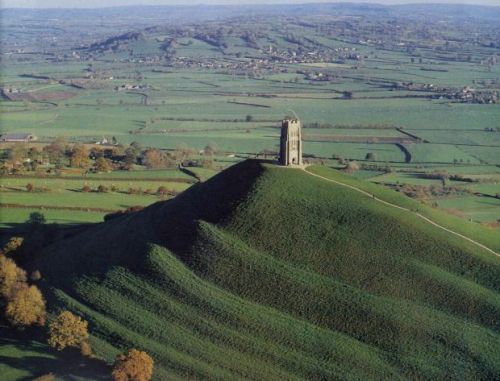
Our private guided tours allow you to climb Glastonbury Tor

Our private guided tours allow you to climb Glastonbury Tor (King Arthur’s Avalon)

The Historical Figure of Arthur

Very little reliable evidence survives from the fifth and sixth centuries when the historical Arthur lived. This period is known as the Dark Ages or Post-Roman period which followed the departure of the Romans from Britain. Some historians doubt whether Arthur really existed; others see him as a warrior king who led the Britons in their resistance against the Anglo-Saxon conquest of England.

Glastonbury is a centre for mystics, earth spirits and such like, a substantial part of what makes Glastonbury unique.

The Arthur of Medieval Literature

From the 12th century Arthur became the central figure of one of the great cycles of medieval European literature – the Arthurian romances. These have their origin in Geoffrey of Monmouth’s imaginative History of the Kings of Britain, completed in 1138. Geoffrey’s account provided many of the elements of the story, from Arthur’s conception at Tintagel to his last battle against Mordred at Camlann and final rest in Avalon, and featured his father Uther Pendragon, his wife Guinevere, his sword Excalibur and the wizard Merlin. Later writers added further characters and many variations on Geoffrey’s tale, depicting Arthur as a great warrior defending Britain from human and supernatural enemies, with related themes of the Holy Grail and the Knights of the Round Table.
Glastonbury Abbey link

Join us on a  Quest for King Arthur’s Avalon and the Holy Grail will weave myth and legends with the splendours of the English landscape.

  • We offer private guided tours departing from Bath , Salisbury or even London exploring the many Myths and Legends of King Arthur

    King Arthur’s Avalon
    Glastonbury TorChallice Well and the Holy Grail
    Stonehege Stone Circle
    Cadbury Castle and Camelot
    Tintagel Catle
    Glastonbury Abbey
    King Arthur’s Grave
    Winchester and the Round Table
    Challice Well and the Holy Grail
    Stonehege Stone Circle
    Cadbury Castle and Camelot
    Tintagel Catle

HisTOURies U.K
Wessex Guided Tours
The Best Tours in British History