Feeds:
Posts
Comments

StonehengeNews's avatarStonehenge Stone Circle News and Information

Lead archaeologist at Stonehenge discusses his team’s discoveries in new book

The eerie megaliths of Stonehenge have inspired speculation for centuries.

Druids—and sometimes aliens—have been suspected of planting the 4,500-year-old stones. Is Stonehenge an astronomical calendar or a place of healing or a marker for magical energy lines in the ground? For a long time, no one really knew, though some theories were more grounded in reality than others.

But now, we may be a little bit closer to understanding the monumental Neolithic site. Archaeologist Mike Parker Pearson and his colleagues at the Stonehenge Riverside Project, whose research was funded in part by the National Geographic Society, spent seven years excavating Stonehenge and its surroundings. This month, Parker Pearson published the project’s findings in a new book, Stonehenge—A New Understanding: Solving the Mysteries of the Greatest Stone Age Monument.

National Geographic writer Rachel Hartigan Shea spoke with Parker Pearson…

View original post 900 more words

neolithichouses's avatarStonehenge Neolithic Houses

Since construction work on the houses ended in May, we’ve been using the Neolithic houses at Old Sarum for all kinds of activities, including the education workshops we’ve been explaining in the few previous posts. We’ve been busy!

Open days

We hosted two hugely successful open weekends over the two May bank holidays, helped by some lovely sunny weather. We had lots of visitors coming to see the houses, ask questions and find out about the project. As well as showing off our lovely houses, we’ve been using these open days to collect information about how visitors move around the houses, what sort of questions people are asking, and also asking people to fill in a survey about how they’d like to see the houses presented at the Stonehenge visitor centre. If you’ve received a survey in your e-mail inbox, please respond!

The good news is that we will be…

View original post 516 more words

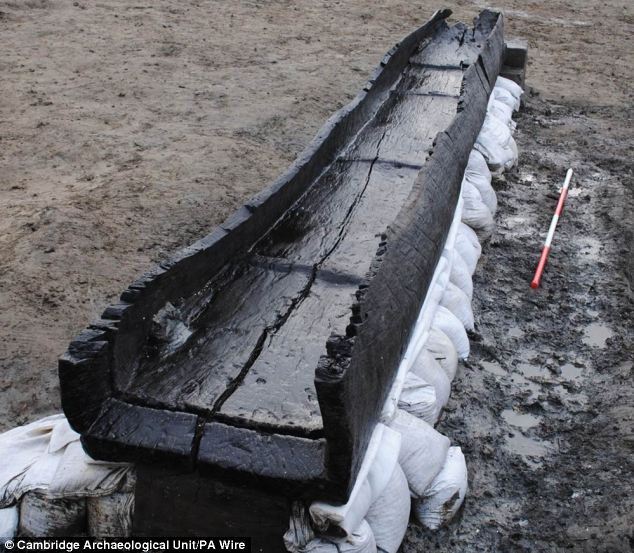
  • The boats, the largest of them 28 feet long,  are thought to have been used for ferrying cargo and  passengers in the Fens  some 3,500 years ago
  • Now being preserved for future study and as  a tourist attraction
  • Log boats from the Bronze Age have been  found before, but never have so many been found in the same place
  • Each of the boats was hewn from a single  tree trunk, six of them oaks, one alder and one lime

Bronze age boats

Eight amazingly preserved log boats have been  hailed as ‘more important than the Mary Rose’ after being dug up from a  silted-up river.

The boats, the largest of them 28 feet (8.5m)  long, are thought to have been used for ferrying cargo and passengers in the  Fens some 3,500 years ago.

They are now being preserved for future study  and as a tourist attraction using the same conservation techniques that saved  the Mary Rose from falling apart when raised from the Solent.

One of them was decorated with a pattern of  crosses on the inside and outside of the log, but the significance is  unclear.

Quite why each of them ended up at the bottom  of an old course and now silted up course of the River Nene remains a  mystery.

It appears that they were all, separately,  sunk deliberately over a period of about 600 years when the transom board from  the stern was removed.

Because of the way the boats were made, they  had to have a transom fitted at one end to replace wood that would have rotted.  All eight have been found with a slot for the transom board.

‘All the transom boards have been removed and  we didn’t find them. That suggests they have been sunk intentionally,’ said Mr  Panter.

Aricle by Lewis Smith in the Daily Mail: http://www.dailymail.co.uk/sciencetech/article-2335273/Eight-Bronze-Age-log-boats-important-Mary-Rose-emerge-silted-river-thousands-years-left-rot.html

Wessex Tours
The Best Tours in British History


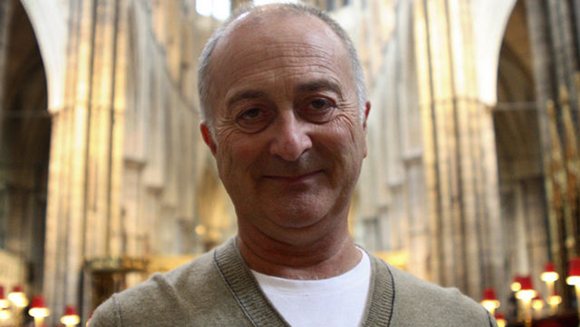
Time Team itself may have gone, but there’s still plenty of our history left for Tony Robinson to explore. I first misread the title of this TT special as Britain’s Stonehenge Tsunami, which would have been truly eye-opening, but this is still fascinating. Eight thousand years ago, there were no arguments about Britain’s links with Europe: we were still physically tied to the continent by a vast area of land, now known as Doggerland, that was home to a sophisticated population. But a tidal wave and catastrophic flooding destroyed a vast strip of our island. Britain_s_Stone_Age_Tsunami

New research is revealing just how much devastation it brought to the land and its people.

About this programme Tony Robinson reveals new evidence that shows how a huge tsunami swamped the east coast of Britain 8,000 years ago, and explores the lives of those it affected. For years, these Mesolithic communities were thought to be primitive hunter-gatherers, but through archaeological excavation, Tony discovers they were living comfortable existences in their own houses, with varied diets and sophisticated skills. Scientists take him on a virtual journey through the rich landscape of Doggerland – the area of dry land that connected Britain to Europe – which was destroyed by the wave and persistent flooding

Review by: Gill Crawford: http://www.radiotimes.com/episode/wvpjn/britains-stone-age-tsunami

Watch it on Channel 4: http://www.channel4.com/programmes/time-team-specials/episode-guide/series-8/episode-1

Wessex Guided Tours
The Best Tours in British History

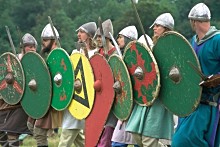
Journey back to the Dark Ages this Bank Holiday weekend at Old Sarum as the Vikings take resident.

Discover more about this fascinating period with displays of weaponry and archery. Also witness combat shows where warriors go

Vikings at Old Sarum Castle

Brute Force and wily tactics.

head-to-head in competitions that will test their strength and skill in a fierce fight to the finish!  Also find out more about domestic life during the period with displays of cooking and talks on diet and lifestyle.  For our junior warriors there’s also a chance to take part in a mini battle.

Date: Sat 25 – Mon 27 May 2013 (bank holiday)

How to Book

Tickets will be available to purchase at the event site on the day

http://www.english-heritage.org.uk/daysout/events/the-vikings-os-25-may/

Prices

Ticket price includes entry to event & Old Sarum Castle

Wessex Guided Tours
Mystical County, Magical Tours

SIX Saxon skeletons dating back over a thousand years and Bronze Age round barrows have been discovered in Amesbury.

The remains, unearthed at a brownfield development site in London Road, are thought to be those of adolescent to mature
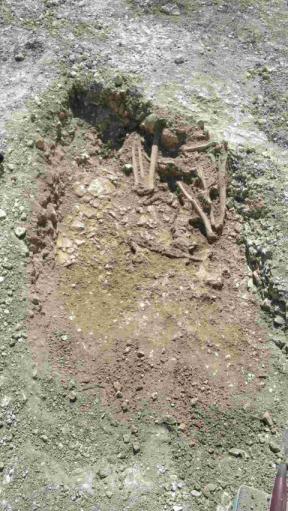
Ancient skeletons uncovered in Amesbury

Ancient skeletons uncovered in Amesbury

males and females.

Five skeletons were arrayed around a small circular ditch, with the grave of a sixth skeleton in the centre. Two lots of beads, a shale bracelet and other grave goods were also found.

The site is now being excavated for other artefacts by Wessex Archaeology led by Phil Harding from Channel 4’s Time Team.

Mr Harding said: “Given that the Stonehenge area is a well-known prehistoric burial site, it was always very likely some interesting discoveries would be made here. The fact that these round barrows were previously unknown makes this particularly exciting.

“Finding the skeletons also helps us to get a clearer picture of the history of this area. To my knowledge these are the first Pagan Saxon burials to be excavated scientifically in Amesbury.”

Contractor Mansell Ltd, part of the Balfour Beatty Group, was preparing the site for a housing development for Aster Group, when the discovery was made.

Site manager Brian Whitchurch-Bennett, said: “When we’re working in an area of historical importance we always undertake archaeological investigations to make sure that our construction works don’t damage hidden remains or artefacts. The findings within this particular site really are a one off. We’ve been amazed by the number of discoveries and the level of preservation. It’s certainly a project to remember.”

In May 2002 the Amesbury Archer was discovered during excavations of a new housing development.

The archaeologists are expected to be on site for six weeks. Footage from the site may also be included in an archaeological production for ITV’s History Channel, due to be aired in January 2014

By Elizabeth Kemble (Salisbury Journal) : http://www.salisburyjournal.co.uk/news/10428999.Ancient_skeletons_uncovered_in_Amesbury/

Wessex Guided Tours
Mystical Landscape, Magical Tours

VisitWiltshire has launched the county’s first ever tourism App, which showcases the best of the Wiltshire tourism offering and provides unique content, including App-only special offers, and will be an interactive and invaluable source of information for visitors.

The App is part of VisitWiltshire’s marketing strategy to boost tourism visits and spend to the county. Wiltshire snow

The mobile app is now available to download for free from the Apple and Google Play stores. The wide range of content on the app will reflect the breadth of attractions and activities the county has to offer, including Salisbury Cathedral; the Stonehenge and Avebury World Heritage Site; Longleat and Wiltshire’s renowned white horses; the Kennett and Avon Canal and Caen Hill Locks; and Wiltshire’s variety of scenic villages and historic market towns.

It also includes details of all VisitWiltshire’s 480+ tourism partners, as well as sections on towns and villages, things to do, accommodation, shopping, food and drink, outdoor activities, and what’s on in the county. Other features include interactive mapping – so visitors will be able to find places nearby, special offers, Wiltshire-themed games, and weather updates.

Fiona Errington, Marketing Manager, VisitWiltshire said:

We’re delighted to be launching our new VisitWiltshire App, which will showcase Wiltshire as a fantastic tourist destination and offer visitors a wealth of ideas and information on what to see and do when out and about or planning a visit to our county. The VisitWiltshire App shows visitors our fantastic attractions, great range of accommodation, restaurants, pubs, great shops, and many other highlights and locations. Having over 480 Wiltshire tourism businesses contribute makes this a tremendous resource for our visitors.

Almost a third of visitors to visitwiltshire.co.uk now use a smart phone or tablet and are increasingly looking for tourist information in their hand and on the move. This new App gives them access to the best of Wiltshire at their fingertips .”
Wiltshire tourism business interested in being included on the App should contact Fiona Errington on: fionaerrington@visitwiltshire.co.uk

Full story: http://www.heart.co.uk/wiltshire/news/local/first-tourism-app-wiltshire/

Wessex Guided Tours
Mystical Landscape, Magical Tours

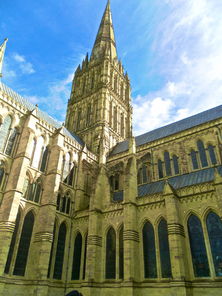
Salisbury Cathedral is running an action-packed free open evening Night Visions: An Evening at Salisbury Cathedral on Friday 17 May from 6.30pm to 10.00pm.  The event is part of Culture 24s nationwide Museums at Night initiative, the annual festival of late night openings when hundreds of museums, galleries and heritage sites open their doors for special evening events.

Salisbury Cathedral ToursDavid Coulthard, Director of Marketing and Visitor Services, said “Last year’s Night Visions was an extraordinary success with more than a thousand visitors enjoying a fabulous evening in the Cathedral with music, stories, special tours and hands on activities.  This year we’re doing even more and look forward to having a cathedral full of people joining in the fun.  Starting at 6.30pm we’ve devised three and a half fast moving hours of different activities to entertain and appeal to families and our younger and older visitors alike.  There are four elements to the evening: music, stories, tours and hands-on activities. Come along, we might just surprise you!”

Musical activities include a ‘come and sing’ workshop, a short performance by Salisbury Cathedral Junior Choir, and organ demonstrations. Outside, you can enjoy stories in the lantern-lit cloister garden, follow the special mystery object treasure hunts in both the cathedral and cloisters, and especially for children there’s a picture quiz on the medieval frieze in the Chapter House and historical costumes to try on – even have your photo taken with King John!  There’s a quirky history ‘Things-you-never-knew’ trail of the Cathedral and exhibitions of embroidery and copes.  ‘Hands-on’ activities include decorating beautiful illuminated letters and patterned candle-holders, or creating a collage using stone rubbings with a touch of gold leaf.  Or there’s decorating biscuits, ‘Have-a-go’ stonemasonry and even some medieval games.

For the more energetic there are swift ‘roof tour tasters’ to see some of the Cathedral’s roof spaces and get a brief taste of what our full tower tours are like.

And while you’re in the Cathedral Close, visit Salisbury & South Wiltshire Museum for their Museums at Night event Music for All between 6.00pm  9.00pm. There’s live music from local music groups, meet historical figures behind Salisbury’s musical past, see the museum collections come to life, enjoy story-telling with Lizzie Bryant and gallery activities with artist Susie Gutteridge

Salisbury Cathedral link: http://www.salisburycathedral.org.uk

Wessex Tours
Mystical Landscape.  Magical Tours

StonehengeNews's avatarStonehenge Stone Circle News and Information

Who built Stonehenge?
A visit to Stonehenge is bound to make you ask: who built it?  It is a question nearly as old as the stones themselves.  And what do we know about the people who achieved this prehistoric marvel? Words Susan Greaney

Wizard Ideas 

In the early medieval period, writers thought they knew who had built Stonehenge—Merlin. But by the early 17th century, scholars were looking for a more plausible answer. In 1620, architect Inigo Jones thought it was based on classical geometry and constructed by the Romans. Antiquary John Aubrey thought that the native Britons, in particular the Druids, were the builders of Stonehenge. Antiquary William Stukeley’s 1740 book firmly established the idea that it was a Druid temple.

Towards the end of the 19th century, archaeologists began to realise that Stonehenge could be much older, linking finds to the Bronze Age. William Gowland’s excavations in 1901 showed…

View original post 716 more words